
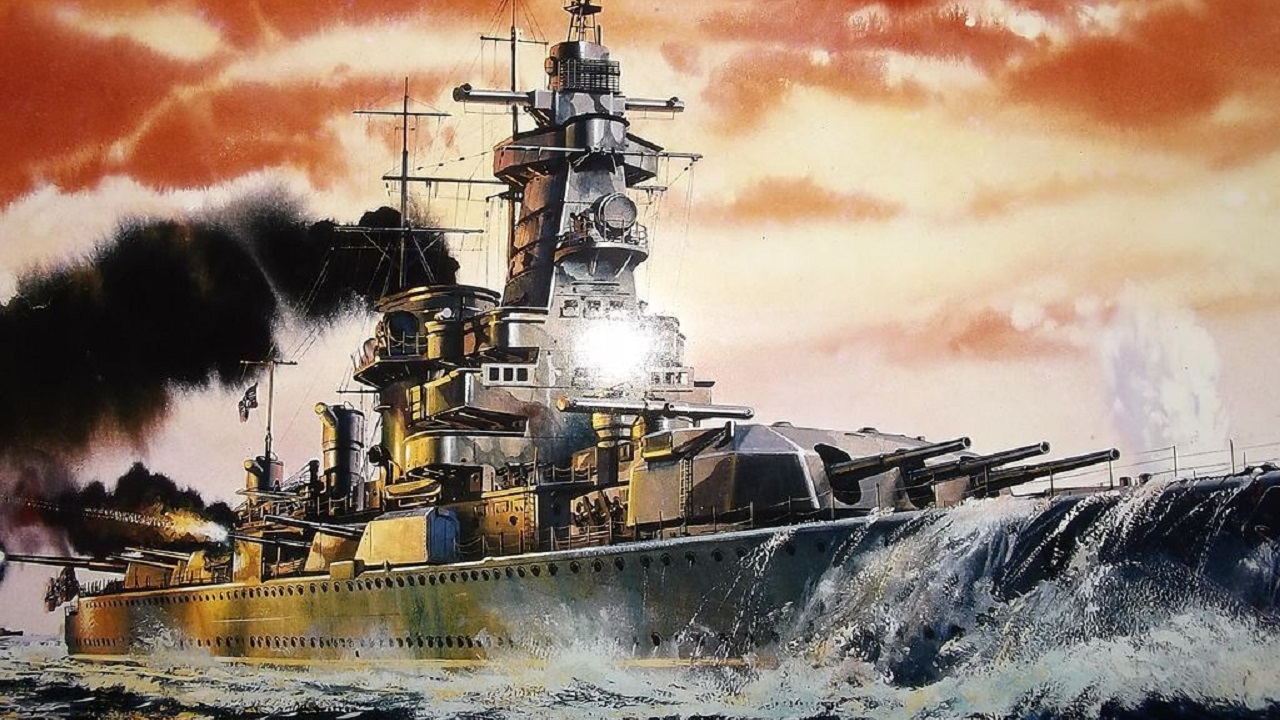
Key Points and Summary – Germany’s so-called “pocket battleships” — Deutschland, Admiral Scheer, and Admiral Graf Spee — were Hitler’s workaround to interwar naval limits, combining diesel propulsion, 11-inch guns, and long range in relatively light hulls.
-Optimized to terrorize merchant shipping, they found early success in commerce raiding but proved too lightly armored and under-gunned to survive against modern cruisers, destroyers, and submarines.
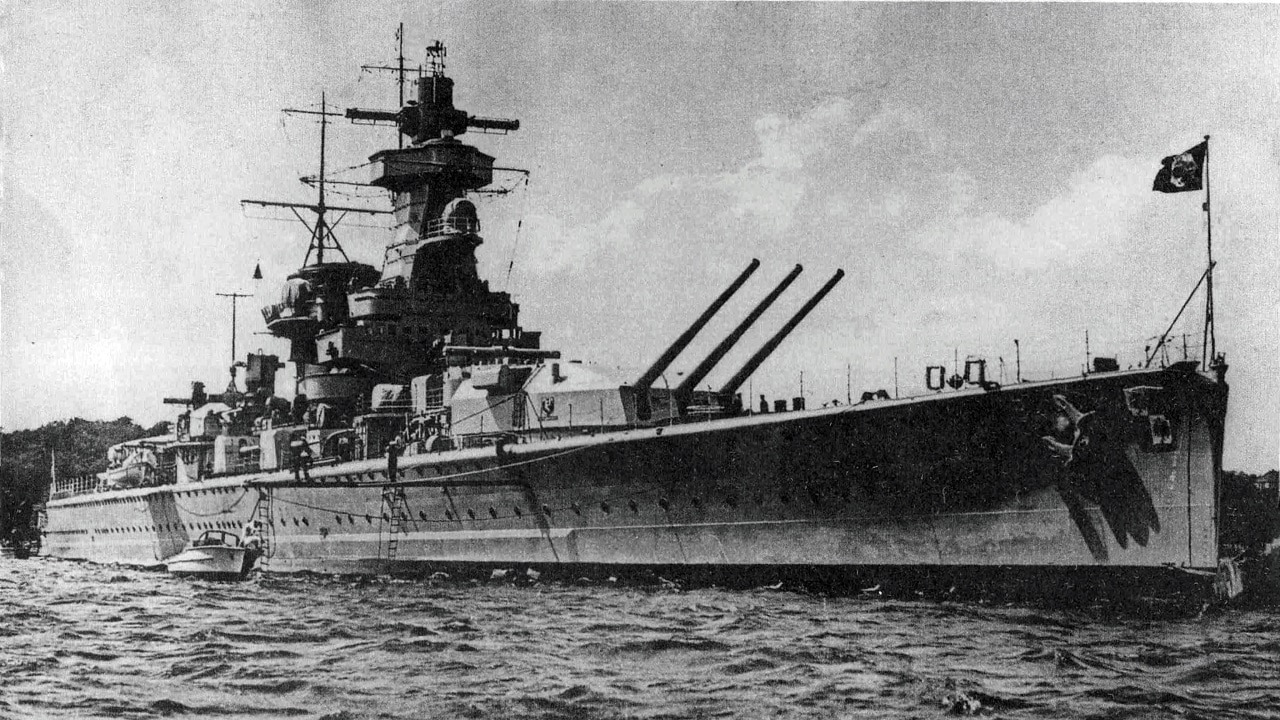
Admiral Graf Spee Pocket Battleship.
-Deutschland ended the war battered and scuttled; Graf Spee was lost after the Battle of the River Plate; Admiral Scheer was eventually destroyed in port.
-Intended as prestige tools of sea power, the Deutschland-class instead became curiosities of a failed naval strategy.
The Forgotten German Pocket Battleships of World War Two
For Adolf Hitler, the German Navy always played second fiddle. The evil dictator was a greater adherent of land warfare—he served in the German Army during World War I.
Of course, he thought U-boats were a decisive asset, but surface ships did not catch his interest. However, the Kriegsmarine thought it had an ace to play with a different kind of warship.
The German navy had three moderately armed vessels known as “pocket battleships.” The Nazis referred to these as Panzerschiffe (armored ships), and they were grouped within the Deutschland-class. These pocket battleships displaced 10,770 to 12,540 tons; they were first laid down in 1929 and completed in 1936.
Three Pocket Battleships Reported for Duty
WW2Ships.com has an excellent profile of the Deutschland-class. The Deutschland, Admiral Scheer, and Admiral Graf Spee had six 11-inch main guns in two turrets, as well as eight 5.9-inch secondary guns. For anti-aircraft defense. eight 1.5-inch guns were included. The stern had eight torpedo tubes, four on each side of the ship. The main belt was 3.1 inches thick, and deck armor was 1.8 inches deep.

The German pocket battleship ADMIRAL GRAF SPEE in flames after being scuttled off Montevideo, Uruguay, after the Battle of the River Plate, 17 December 1939.
Diesel Engines Instead of Steam
German engineers designed the pocket battleships to run on all-diesel engines instead of steam turbines, a change that was also designed to reduce weight. The ships had eight engines and two shafts that enabled a top speed of 28 knots.
The pocket battleships could launch two Arado Ar 196 float aircraft for reconnaissance purposes in another departure from normal battleships.
No Match For Enemy Submarines
The Deutschland-class saw action during the Spanish Civil War and stayed busy during World War Two.
“The Deutschland supported the Norway campaign in 1940 and was in action in the Battle of the Drobak Narrows where she was hit three times by the shore battery there. On her way back to Germany for repairs she was torpedoed by the submarine HMS Spearfish, losing her rudder and causing the stern to hang off, and was towed back to Kiel,” according to WW2ships.com.
The Deutschland ran aground in 1942. After repairs it was turned into a training ship due to its advanced age. The Germans would need it later to serve as an escort ship. though a duty it conducted in the Baltic Sea in 1944. The Deutschland was hit by enemy fire and later scuttled in 1945.

Image: Creative Commons.
Better Match-up Against Commercial Shipping
The Admiral Scheer was more successful in battle. Its first victim was a merchant ship, which it sank quickly in 1940, and it later attacked a convoy and sank six commercial vessels. The Admiral Scheer was also considered a training ship but was later called back to active duty in the Baltic Sea in 1944. It was assigned to support the army with close air support, and it fired so many shells its guns melted down.
The Admiral Graf Spee was quickly baptized in combat. The pocket battleship engaged in battle with merchant shipping, destroying nine commercial ships in 1939. However, this activity alerted warships in the vicinity.
Three British cruisers damaged the Admiral Graf Spee in the Battle of the River Plate. The German ship fought back and damaged one enemy cruiser. “It escaped to Monte Video for repairs. She was finally scuttled in Monte Video harbor on 17 December 1939, after being convinced that a superior force was awaiting her at sea,” WW2Ships.com wrote.
The Legacy of the Pocket Battleship
The pocket battleship was a way for Germany to get around weight limitations on ships after World War One. They were able to menace merchant vessels, but they were overcome by better warships, such as destroyers and cruisers, that were fast and maneuverable.
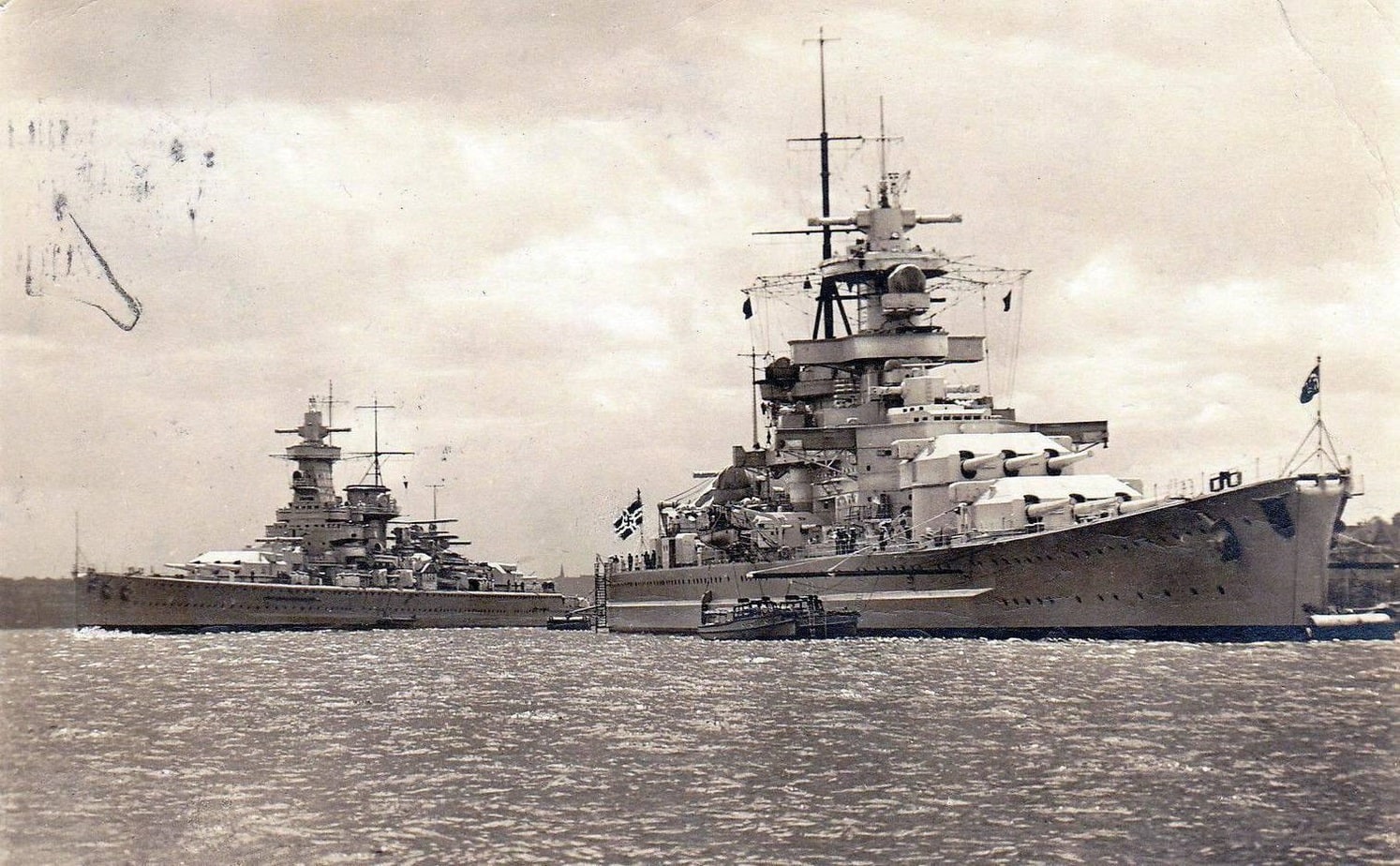
Pocket Battleship. Image: Creative Commons.
The Americans wanted much heavier battleships for World War Two and meant for these to be more decisive without having any restrictions. The German Navy wished to grow, but Hitler was noncommittal. There were, however, plans for Germany to build 10 battleships, 3 battlecruisers and 15 Panzerschiffe from 1946 to 1950, had the war lasted that long.
The pocket battleship was used during the war but did not have the kind of power and armament that could dominate a fight. The boats were effective at eliminating commercial shipping, but they became obsolete and were relegated to part-time duty for most of the war.
At the time of construction, the Germans thought the pocket battleship would be able to operate far from Germany’s shores. The Reichsmarine was not able to make that happen, but the pocket battleship would be forced eventually to conduct homeland defense.
The Deutschland-class was not that survivable since its armor was not very thick. Its guns were also less powerful than enemy battleships’, and ship-on-ship warfare was not its forte. The Deutschland-class was something of an afterthought for the German Navy.
About the Author: Brent M. Eastwood
Author of now over 3,000 articles on defense issues, Brent M. Eastwood, PhD is the author of Don’t Turn Your Back On the World: a Conservative Foreign Policy and Humans, Machines, and Data: Future Trends in Warfare plus two other books. Brent was the founder and CEO of a tech firm that predicted world events using artificial intelligence. He served as a legislative fellow for US Senator Tim Scott and advised the senator on defense and foreign policy issues. He has taught at American University, George Washington University, and George Mason University. Brent is a former US Army Infantry officer. He can be followed on X @BMEastwood.

