
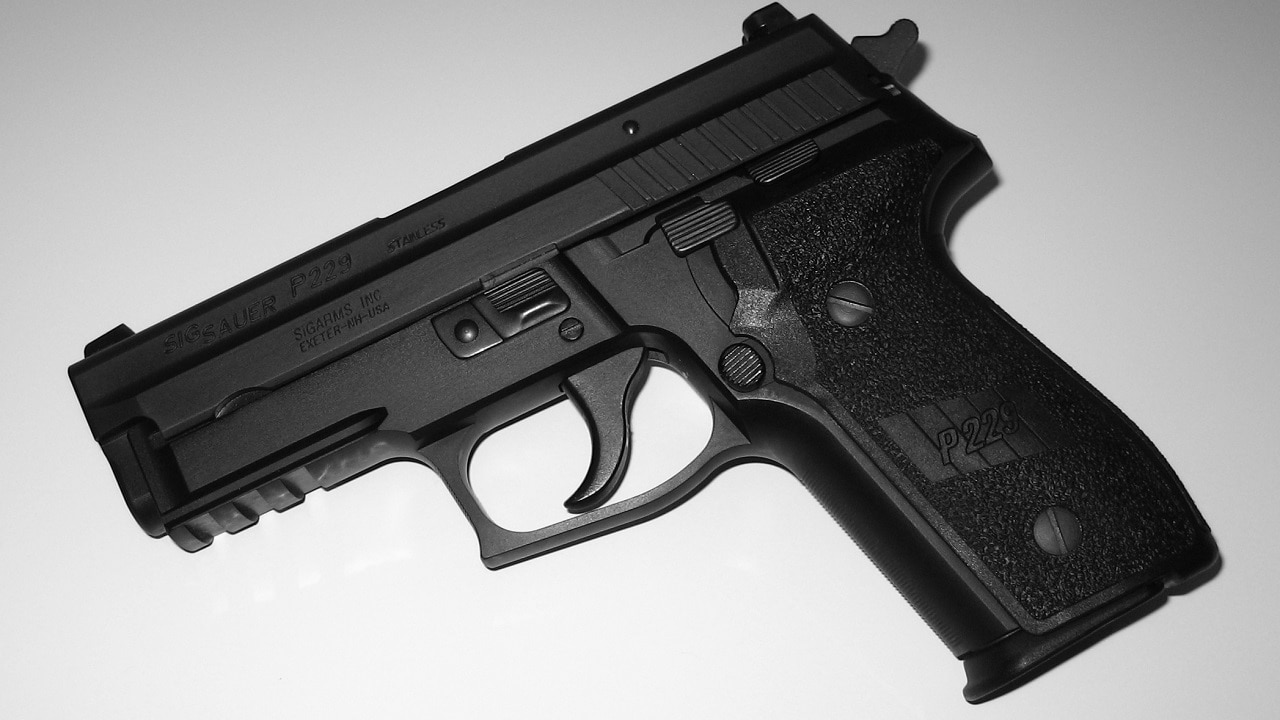
The P229 was built for a round most shooters forgot. The SIG Sauer P229 was introduced in 1992 as an upgrade to the P228. Two years later, SIG and Federal released the .357 SIG, a necked-down 10mm cartridge that required a pistol capable of handling the pressure. The P229 became the first production handgun chambered for it. The cartridge has since faded from most holsters. The pistol has not.
SIG Sauer P229: Built To Take The Pressure
The P228 wore a stamped steel slide. The P229 got a CNC-milled stainless slide instead, because the .357 SIG and .40 S&W loads produced higher slide velocities than the older design was meant to handle.
It also came in 9mm, with a .22 LR option, and capacity runs from 10 to 15 rounds depending on caliber.
The numbers hold up. In one Athlon Outdoors review, a P229 in .357 SIG held 12+1, weighed about 32 ounces, and ran Speer Gold Dot 125-grain loads at 1,350 to 1,375 feet per second.
That works out to roughly 505 to 525 foot-pounds of energy. The best three shots at 25 yards measured 0.70 inches. Reliability was 100 percent.
That is right where the cartridge was designed to land.
It sits inside the 488 to 583 foot-pound range listed for premium .357 SIG loads, and it matches a 125-grain .357 Magnum load out of a compact autoloader. That was the whole idea.
Why The Feds Carried It
The Secret Service settled on the P229 DAK in .357 SIG after reportedly researching “many different firearms and calibers.” Federal Air Marshals carried it in the same chambering.
Delaware State Police was the first major department to adopt the .357 SIG P229, and Virginia State Police traded its P228 9mm pistols for it.
The Coast Guard went with the P229R DAK in .40 S&W, replacing the Beretta 92F. Overseas, it has served with Germany’s SEK units, Spain’s GEO and the UK’s Ministry of Defence Police.
However, the run at the top ended.
In August 2019, Military Times reported that the Secret Service would move to the Glock 19 Gen 5 MOS in 9mm over roughly two years.
The P228 that preceded the P229 lasted only seven or eight years in the same role.
Adoption of the .357 SIG has remained limited, and 9mm is now the preferred round for numerous agencies.
That’s a fair reading of where the market went.
It doesn’t rewrite what the P229 did while it was there. SIG wrote that, “The SIG SAUER P229 incorporates all the features of the P226 in a smaller, more compact package.”
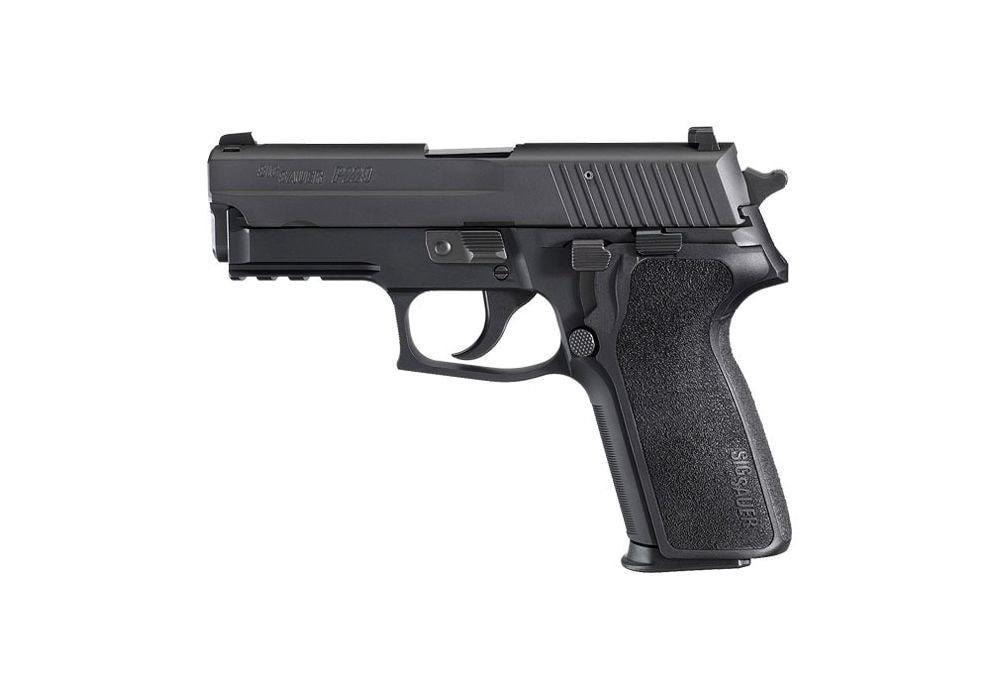
Sig Sauer P229.
As anyone who has read any of my earlier handgun articles knows, I absolutely loved the P226 back in the day.
The Weight Is The Honest Trade-Off
The P229 is not a light gun.
An alloy frame and a milled steel slide put it around 32 ounces empty.
The traditional DA/SA trigger measured 11.03 pounds on the first shot and 5.07 pounds on subsequent shots in the same Athlon test.
Say what you want about the long first pull.
That’s beside the point for anyone who has put in the practice.
The DAK version, built on the Kellerman system, cleans that up with a trigger pull of about 6.5 pounds on every shot.
None of it is quick to learn.
All of it rewards the shooter who does.
It Carries Better Than It Looks
Size is the appeal.
The Athlon reviewer carried his test gun in a Ted Blocker 5B concealment holster without discomfort.
The E2 grip is slimmer, the short trigger trims finger travel, and the accessory rail took a SureFire 200 light with no measurable effect on accuracy.
The same reviewer noted the gun shot low out of the box, a fix the factory can handle.
That’s worth knowing before you buy.
He also admitted to a certain confidence in carrying the same pistol as the presidential protection detail. I understand the feeling.
Is It Still Worth Buying?
SIG’s current P229 lineup includes the Legion, the M11-A1, and the Elite.
The P229 Legion in 9mm gives you 15+1 rounds, a 3.9-inch barrel, a 7.1-inch overall length, X-ray sights, and G10 grips.
The USCCA review listed an MSRP of $1,200 and measured the flat single-action trigger at 3 pounds, 4 ounces. The reviewer called it “an absolutely superb handgun,” and it is.
Is it worth that money?
In my opinion, yes, if you value a gun with a track record over a gun with a spec sheet.
Personally, I’d opt for the 9mm. The .357 SIG lost most of its agency customers, and the 9mm did not.
You get the same proven frame without betting on a cartridge that keeps shrinking its audience.
The market moved on. The pistol kept working, and that counts for a lot after thirty years of hard use by people who could not afford a jam.
The P229 was built for a round most shooters forgot. The gun is still here.
About the Author: Steve Balestrieri
Steve Balestrieri is a National Security Columnist. He served as a US Army Special Forces NCO and Warrant Officer. In addition to writing on defense, he covers the NFL for PatsFans.com and is a member of the Pro Football Writers of America (PFWA). His work was regularly featured in many military publications.