

Summary and Key Points: In a handgun market dominated by striker-fired polymer pistols, the Ruger GP100 has stayed one of the company’s best-selling guns for more than 40 years without chasing capacity. Ruger built it in 1985 to take a steady diet of full-power .357 Magnum, and today the family also covers .327 Federal Magnum, .44 Special, 10mm Auto, and .22 LR. It isn’t a concealed-carry gun for most people. As a house gun, trail gun, or first revolver for learning a proper double-action trigger pull, it is hard to beat at this price.
The Ruger GP100: The Strong, Durable Working Revolver
Some revolvers are built to be admired. The Ruger GP100 was built to be shot. A lot.
Ruger launched the GP100 in 1985, and nearly four decades later, it remains one of the company’s best-selling models. In a market owned by striker-fired polymer pistols, that’s no small feat.
However, the GP100 was never trying to win a capacity contest. It was designed to take a steady diet of full-power .357 Magnum and keep coming back for more.
Many consider wheelguns to be obsolete. However, there’s a reason so many shooters still keep one in the safe, and this is usually the one.
Built Like A Tank, On Purpose
The GP100 replaced Ruger’s Security-Six and Service-Six revolvers, with production starting in 1985 and a stainless version following in 1987. The “GP” is widely believed to stand for “General Purpose,” and that’s exactly how Ruger pitched it.
What sets it apart is what’s missing. There’s no sideplate. According to American Rifleman, the frame is machined from a 410 stainless steel casting, and the internals are inserted from the top or bottom.

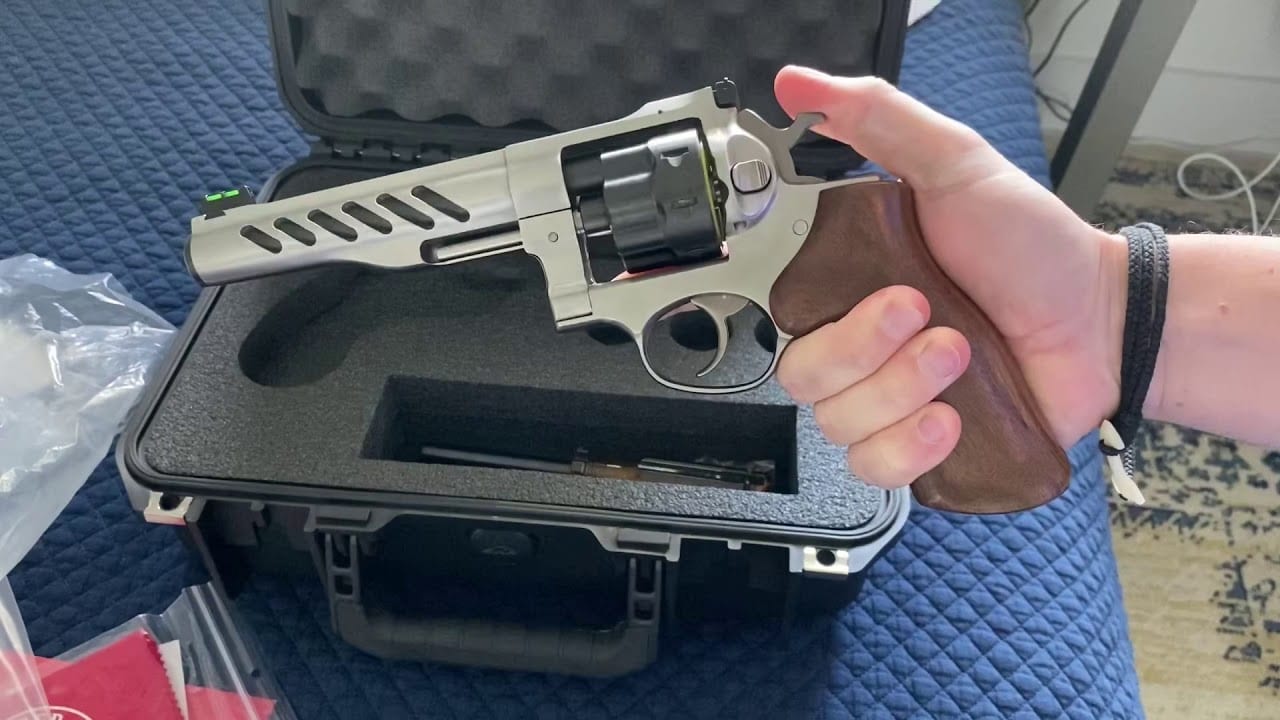
Ruger GP100. Image Credit: Creative Commons.
Ruger Super GP100. Image Credit: Creative Commons.
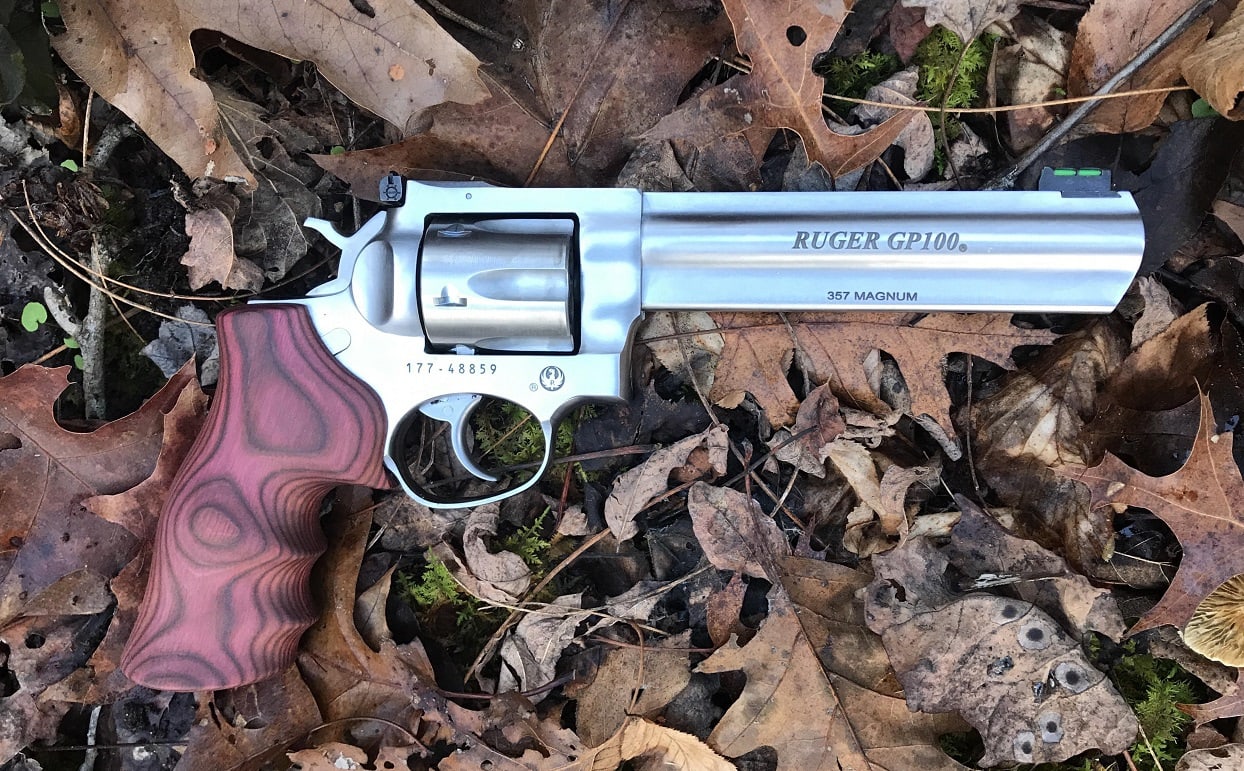
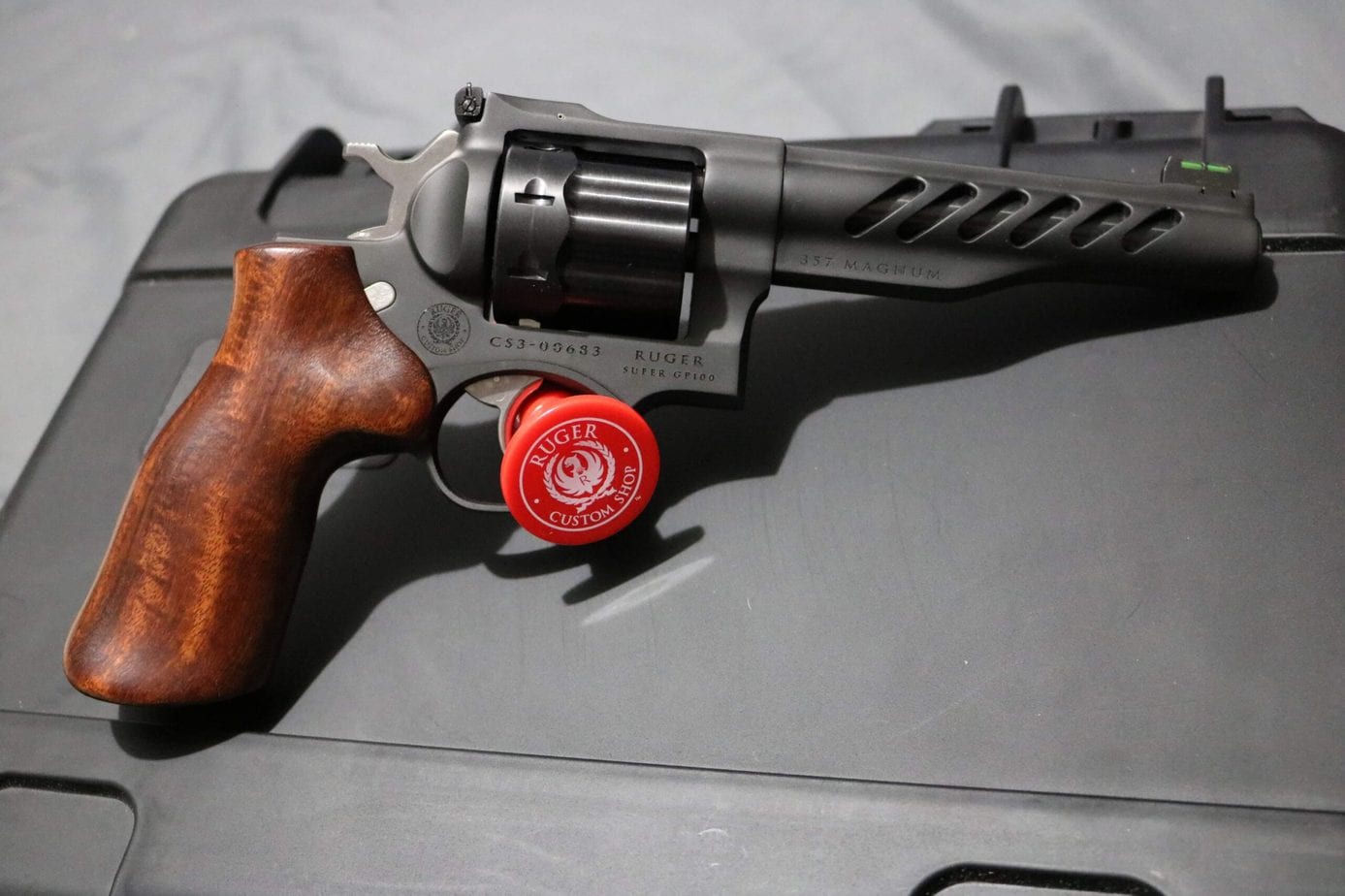
Image: Creative Commons.
Fewer seams mean fewer weak points. Smith & Wesson loyalists will argue the point. However, it’s hard to argue with a frame that doesn’t flex.
Then there’s the cylinder. Ruger’s triple-locking design locks it into the frame at the front, rear, and bottom. The full underlug puts weight out front, which helps tame muzzle flip. Add a transfer bar safety and lockwork that field-strips without a trip to the gunsmith, and you get the idea.
The Firearm Blog called it “a stout, working man’s revolver.” That is a very fair assessment.
The GP 100 Family Keeps Growing
For years, GP100 meant six rounds of .357 Magnum. That’s changed. Ruger now chambers it in .357 Magnum, .327 Federal Magnum, .44 Special, 10mm Auto, and .22 LR, with barrels from 2.5 to 6 inches. Standard models carry an MSRP of roughly $1,029 to $1,149.
In 2019, Ruger squeezed a seventh round into the .357 cylinder. Handguns magazine tested all three barrel lengths, and the 6-inch gun averaged just over 1.5 inches at 25 yards. Seven rounds of .357. Out of a revolver.
The .44 Special version holds five rounds in an unfluted cylinder, has a 3-inch barrel, and weighs 36 ounces. RevolverGuy pegged it as a woods gun that can pull double duty as a carry piece.
In my opinion, the .44 Special has never gotten its props because its recoil is more of a smooth, push-like rather than a snap, and this is a fine home for it. The only drawback is the price of its ammo.
Then there’s the 10mm GP100 Match Champion, introduced in 2018. It runs on full-moon clips, weighs 37 ounces with a 4.2-inch half-lug barrel, and American Rifleman measured its single-action pull at 3 pounds, 15 ounces. The rimless auto cartridge in a wheelgun sounds like a gimmick. But it isn’t, and it works just fine.
The Weight Is The Trade-Off With The GP 100
You remember the old saying that “there’s no such thing as a free lunch.” Well, none of that steel comes free. A 4.2-inch .357 GP100 tips the scale at about 40 ounces, and that’s a lot of gun on your belt all day.
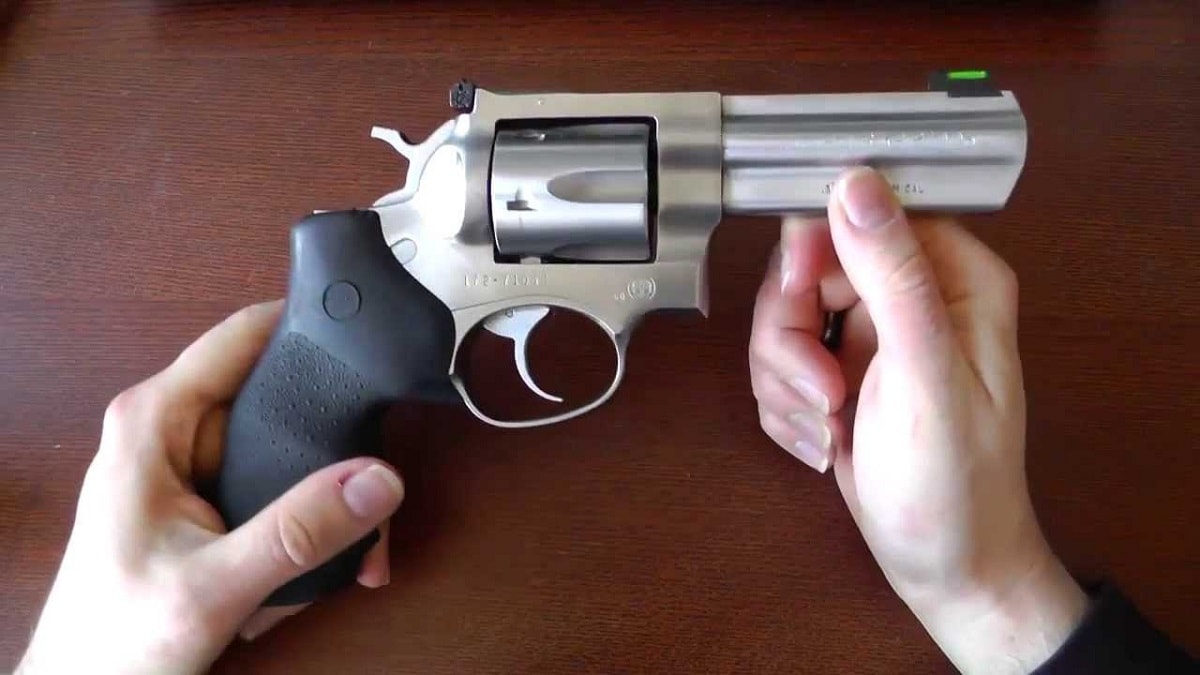
Ruger Super GP100. Image: Creative Commons.
Ruger GP 100. Image: Screenshot.
However, that mass is exactly why it’s so pleasant to shoot. American Rifleman noted that even recoil-timid shooters can comfortably handle .357 Magnum loads out of it. Anyone who has touched off a magnum in a 17-ounce airweight knows how much that matters.
The trigger is the other conversation. Handguns measured the 7-shot models at 10.4 to 10.6 pounds double action and roughly 4 pounds single action. Some users felt that the trigger had a “tough, gritty feel” to it.
But that’s still heavy by modern standards.
However, it’s consistent, and a spring kit and a few hundred rounds of dry fire will do wonders.
So, is it a concealed-carry gun? For most people, no.
The GP100 is a house gun, a trail gun, a truck gun, and a range gun. It is also an excellent choice for a new shooter who wants to learn the double-action trigger the right way. It is not, however, a weapon for a shooter with smaller hands.
Why It Still Earns A Spot In The Safe
Revolvers aren’t coming back to police duty belts. That ship pretty much sailed decades ago. However, for the shooter who wants one handgun that will eat magnum loads for decades, shrug off neglect, and still put rounds where they belong, the GP100 is hard to beat at the price.
It’s the kind of gun that gets passed down from father to son, and there’s a reason Ruger has barely had to change it.
Some revolvers are built to be admired. This one was built to work. And it handles full-power magnum loads with ease while remaining one of the most reliable handguns out there.
About the Author: Steve Balestrieri
Steve Balestrieri is a National Security Columnist. He served as a US Army Special Forces NCO and Warrant Officer. In addition to writing for 19FortyFive, he covers the NFL for PatsFans.com and is a member of the Pro Football Writers of America (PFWA). His work was regularly featured in many military publications