
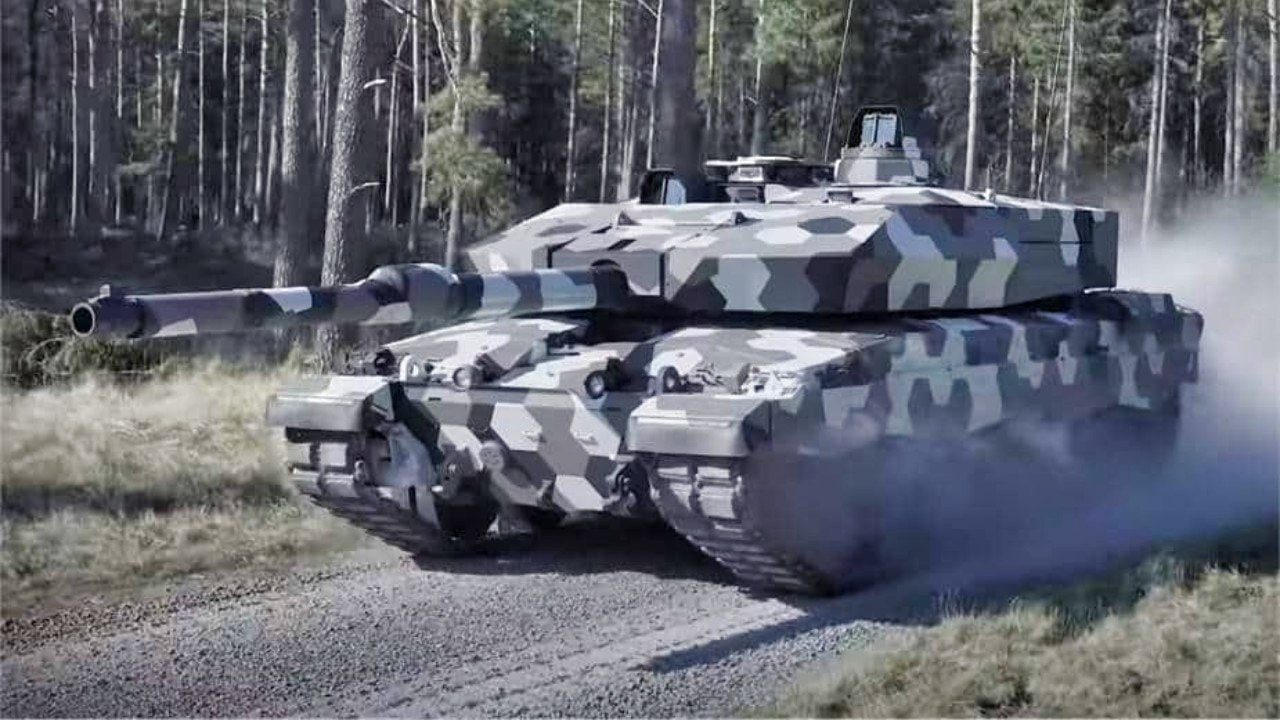
Here comes the Leopard 2AX tank: Germany is moving ahead with an upgraded version of the Leopard 2 main battle tank.
The new vehicle has been dubbed by some as the “Leopard 3,” though “Leopard 2AX” more accurately conveys the nature of the design. It is intended as an interim tank between the current Leopard 2 and the Main Ground Combat System (MGCS), a joint project between France and Germany to field a next-generation main battle tank by 2040.
But at best, the 2040 deadline would leave a 15-year gap before Western Europe’s two largest armies received more advanced tanks. At worst (which is the more likely outcome), any technical glitches, budget woes and political upheaval in Berlin and Paris could delay the Leopard 2AX project for many years.
Thus it is not surprising that BAAINBw, the procurement agency for the German military, has contracted with three German defense companies – KNDS, Rheinmetall and Hensoldt – to conduct technical studies of how to modernize the tank Germany already has, according to the German defense Web site Hartpunkt. The studies – due in 2026 — will examine potential new features including a more powerful engine and gun, better armor, more lethal ammunition and improved fire control systems for Leopard 2AX.
“According to insiders, the bridge solution – which is adapted to the current threat level in terms of performance and will have additional capabilities compared to the A8 – is to be introduced starting in the 2030s,” Hartpunkt said. “It is apparently planned to have a service life of around 25 years.”
What Makes Leopard 2AX Special
Most striking is that the upgraded Leopard 2 would replace its 120-mm cannon – a standard caliber for Western tanks – with a 130-mm gun (the MGCS will have an even bigger 140-mm weapon). “Rheinmetall first presented the prototype of the 130-mm smoothbore gun with 52 caliber lengths and a length of around 6.6 meters [22 feet] at the Eurosatory arms fair in Paris in 2016, Hartpunkt noted. “According to the company’s information at the time, the eight percent increase in caliber leads to a 50 percent increase in kinetic energy compared to the 120-mm gun of the Leopard 2.”
However, Rheinmetall’s prototype 130-mm gun was heavier than the Leopard 2’s 120-mm cannon, and the 130-mm shells weighed around 70 pounds and were more than 4 feet long. “Due to these parameters, the weapon can only be used with an automatic loader and a new turret design,” said Hartpunkt.
The modernized Leopard will also have a more automated fire control system. The current Leopard 2 requires the gunner to manually adjust the aiming system for factors that could affect the gun barrel and thus accuracy. BAAINBw wants an automated system that will ease the tank crew’s workload and speed up precise aiming adjustments for long-range gunnery.
The improved Leopard will also feature better defensive systems, with BAAINBw apparently leaning toward an enhanced version of Hensoldt’s Multifunctional Self-Protection System (MUSS). The new system will have four separate sensors points equipped with missile and laser detectors, infrared jammers, and pyrotechnic decoys.
German government contract documents suggest that new With the sensor network, the system can now detect not only threats such as wire- and laser-guided missiles (anti-tank guided missiles, ATGMs), but also tracer bullets, anti-tank grenades, muzzle flashes and shots from impact projectiles (KE), the statement says. MUSS 2.0 is also able to precisely detect and classify low-power lasers, such as those found in beam riders and second-generation laser rangefinders.
MUSS will be able to “detect not only threats such as wire- and laser-guided missiles, but also tracer bullets, anti-tank grenades, muzzle flashes and shots from impact projectiles,” said Hartpunkt. “MUSS 2.0 is also able to precisely detect and classify low-power lasers, such as those found in beam riders and second-generation laser rangefinders.”
The Germany army also wants the enhanced MUSS to have to be a unique capability to detect enemy weapons and sensors by the reflections from their optical sights, in the same way that cats can be seen at night by the reflections from their eyes. Hartpunkt speculated that this could allow could mean a tank could “actively ‘illuminate’ its surroundings and use the further developed MUSS to detect and classify reflections generated by optics. Theoretically, even well-camouflaged combat vehicles or reconnaissance systems could be detected in this way, since the respective observation optics must remain ‘free.’”
The contract documents don’t appear to include an active protection system – such as Israel’s Trophy system – to shoot down anti-tank rockets. Nor is there mention of any specific defenses against drones, which have devastated armored vehicles in the Ukraine war.
A Tank That Won’t Go Away
The original Leopard 1 entered service in 1965, followed by the heavier Leopard 2 in 1979. Which means the Leopard family had been around for more than 50 years. If MGCS is canceled or delayed, the Leopards could be around a lot longer.
Leopard Tanks: A Photo Essay
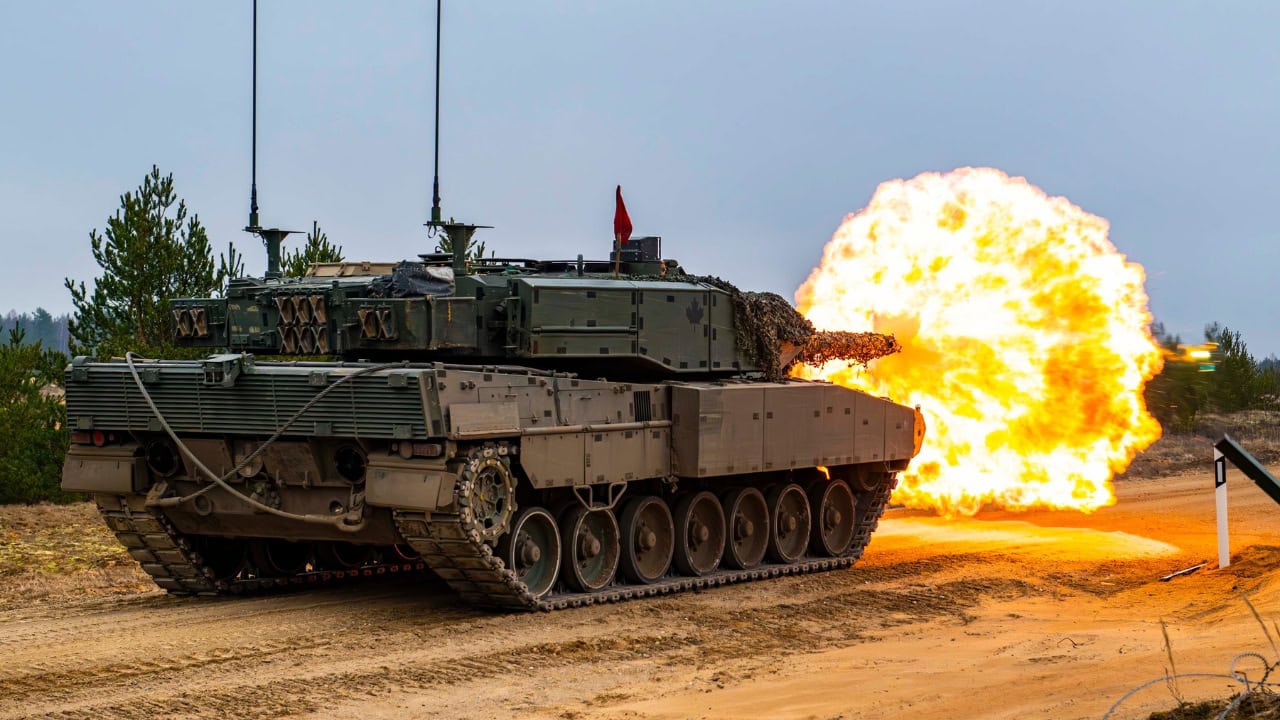
Canadian Armed Forces members with the Royal Canadian Dragoons, currently deployed on Operation REASSURANCE, take part in a live fire range for the Leopard 2 Main battle tank, with High Explosive ammunition, at Camp Adazi, in Adazi, Latvia, on 24 March, 2024.
Photo Credit: Corporal Bryan Bodo, Canadian Armed Forces Imagery Technician
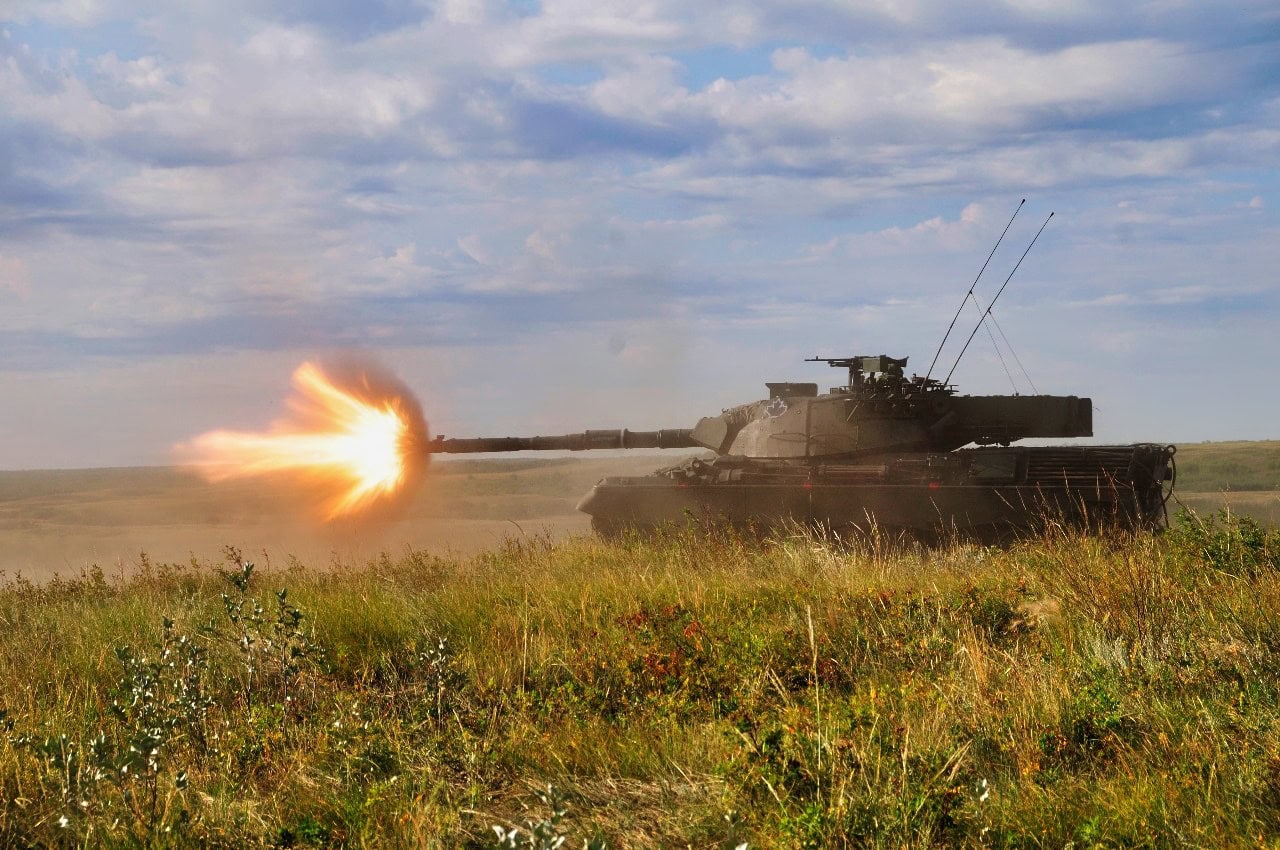
Canada’s tanks training: CFB Wainwright 26 August 2011 Photo Credit: Master Corporal Holly Cowan. A Lord Strathcona’s Horse (Royal Canadian’s) Leopard tank fires at the top of a hill during a live fire demonstration held in Wainwright, AB. CFB Wainwright hosted the Level 3.5 Live Fire Demonstration which allowed the military to show its capability to conduct strategic engagement and communications.

Leopard 2 Tank Canada.
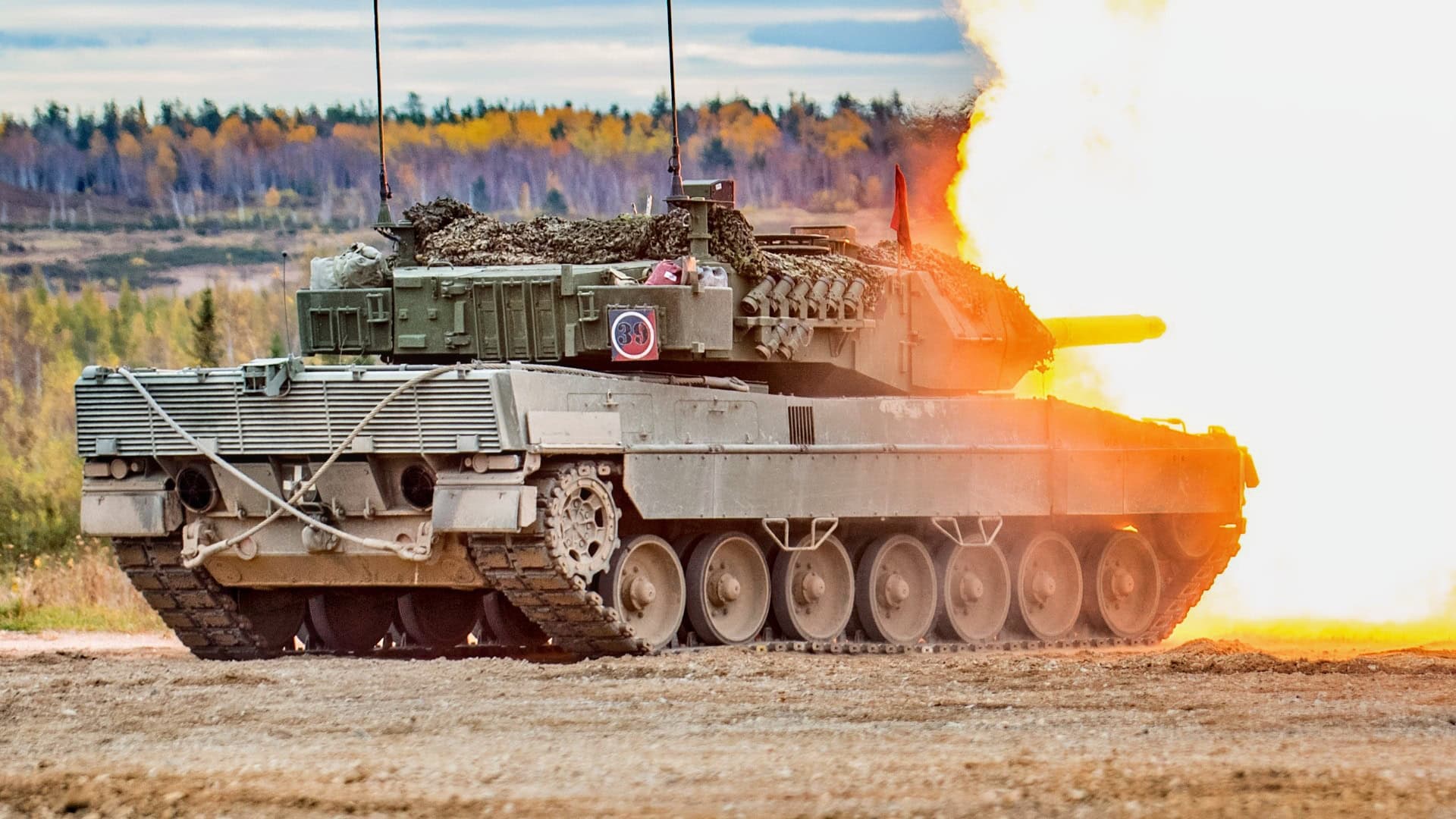
The Royal Canadian Dragoons, C Squadron, conducts a Leopard 2A4 tank shoot during an exercise at 5 Canadian Forces Support Base (5 CDSB) Gagetown, New Brunswick, October 23, 2020.
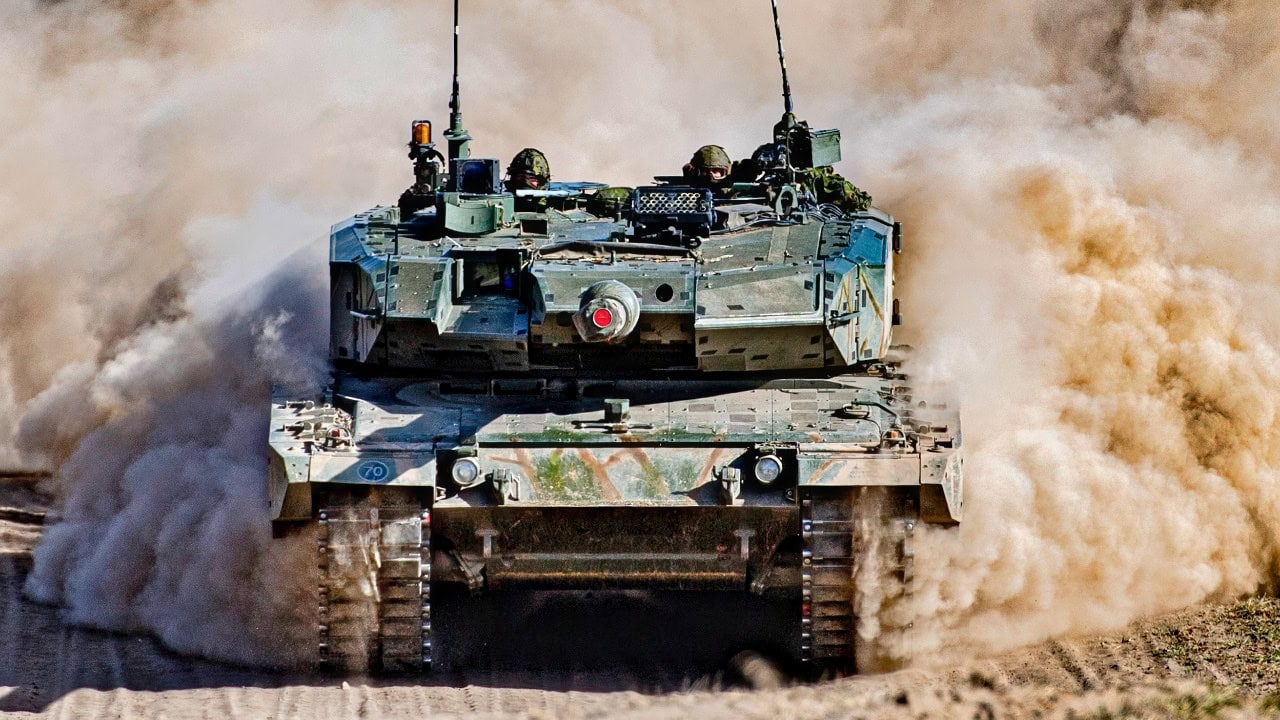
A Leopard 2A4 tank from Lord Strathcona’s Horse (Royal Canadians) drives on the Black Route of the 3rd Canadian Division Support Base Garrison Wainwright Training Area in preparation for Exercise MAPLE RESOLVE 21 on April 28, 2021.
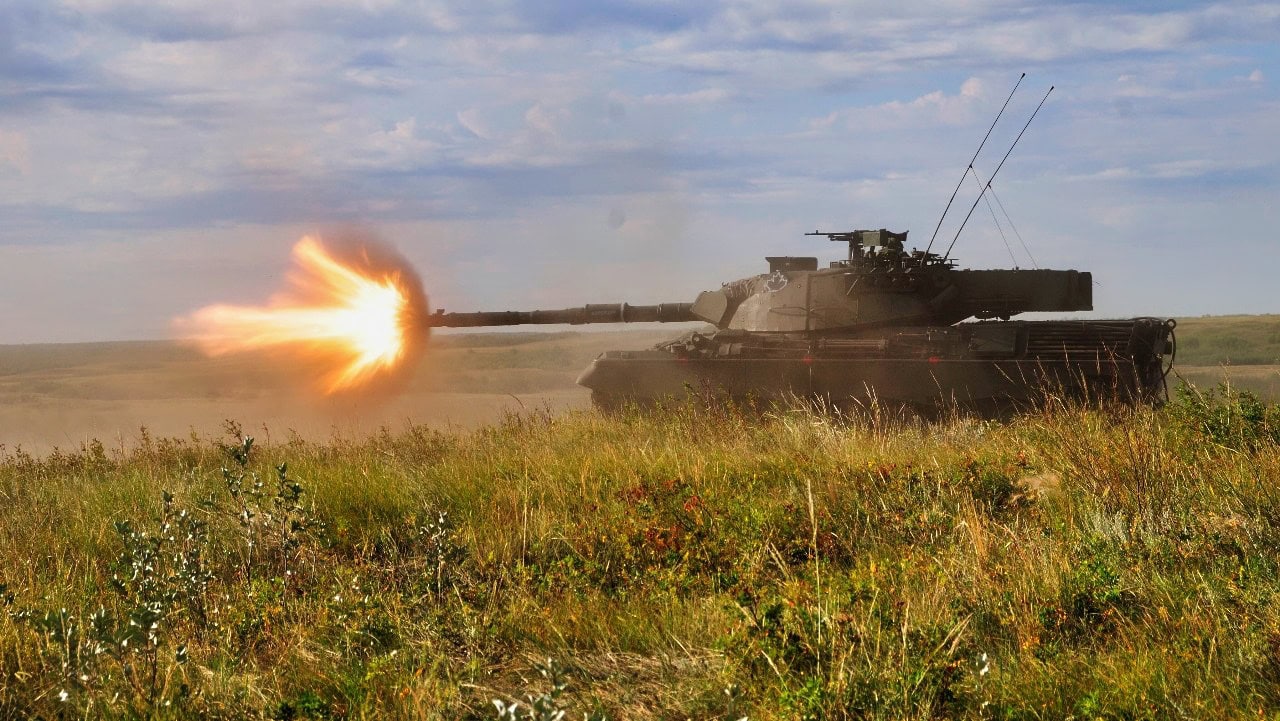
A Lord Strathcona’s Horse (Royal Canadian’s) Leopard tank fires at the top of a hill during a live fire demonstration held in Wainwright, AB.
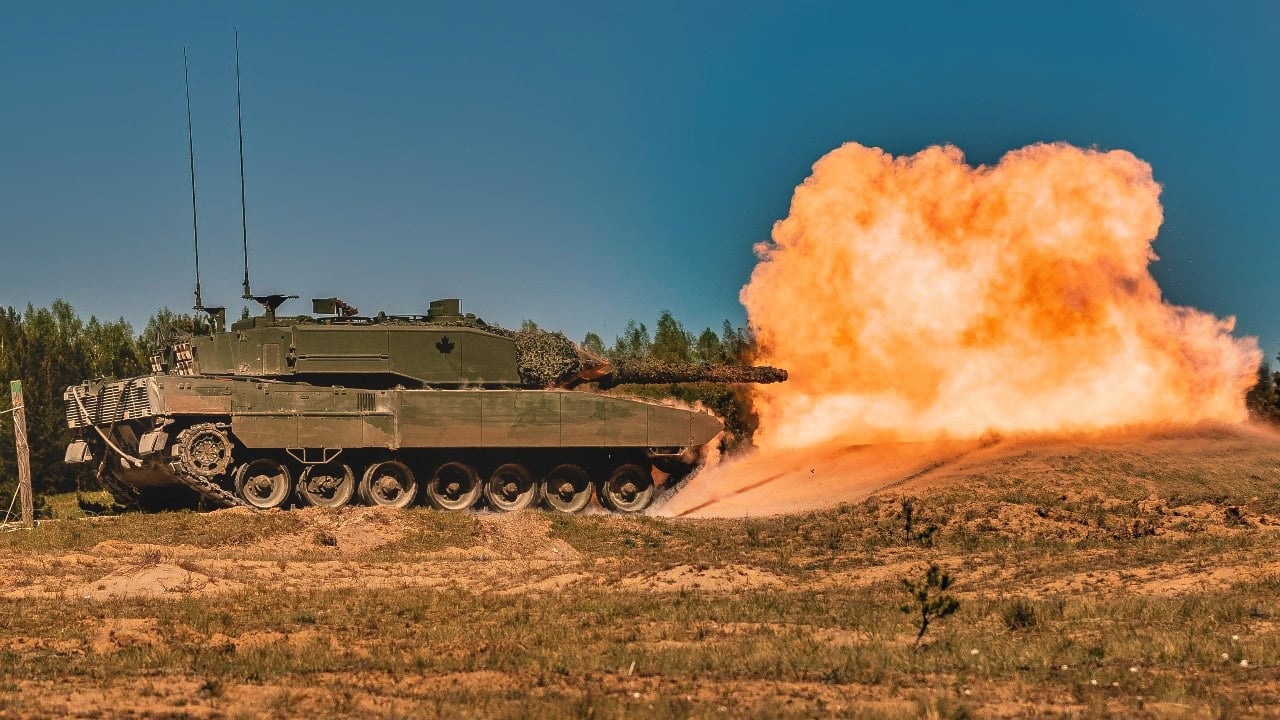
A Canadian Army Leopard 2A4M tank fires a round while taking part in the Canadian Army Trophy tank competition at Ādaži in Latvia. The Canadian Army Trophy tank competition, held in May 2024, allowed participating nations to show off their gunnery skills while building camaraderie.
About the Author: Michael Peck
Michael Peck is a defense writer whose work has appeared in Business Insider, Forbes, Defense News, Foreign Policy magazine, and other publications. He holds an MA in political science from Rutgers Univ. Follow him on Twitter and LinkedIn