
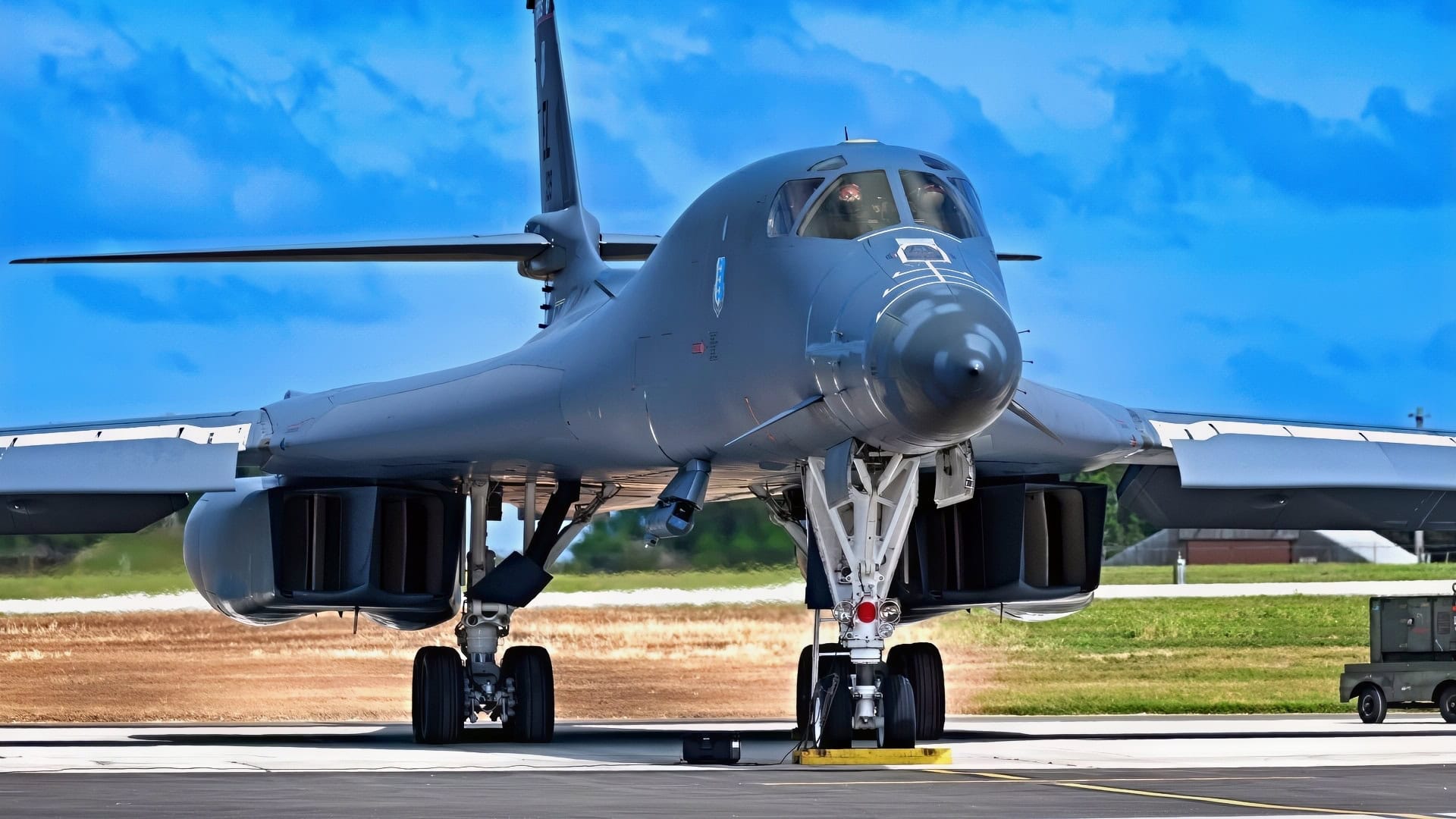
The B-1B Lancer Was Built for the Cold War. Now It Is Being Readied for Hypersonic Weapons: The first operational B-1B Lancer reached Dyess Air Force Base in 1985. Four decades later, the Air Force is rebuilding sections of the swing-wing bomber, returning retired aircraft from storage and preparing six old hardpoints for heavy standoff weapons. The service once regarded the aircraft as a short-term bridge to the B-2. It now plans to keep the Lancer relevant through the late 2030s, according to the Air Force program office.
Boeing completed the preliminary design review for the Load Adaptable Modular pylon in May 2026. It attaches to stations intended for nuclear cruise missiles and opens a route toward larger conventional weapons, future standoff missiles and hypersonic test articles. Detailed design and more testing still stand between the program and operational fielding, according to Boeing’s current program update.
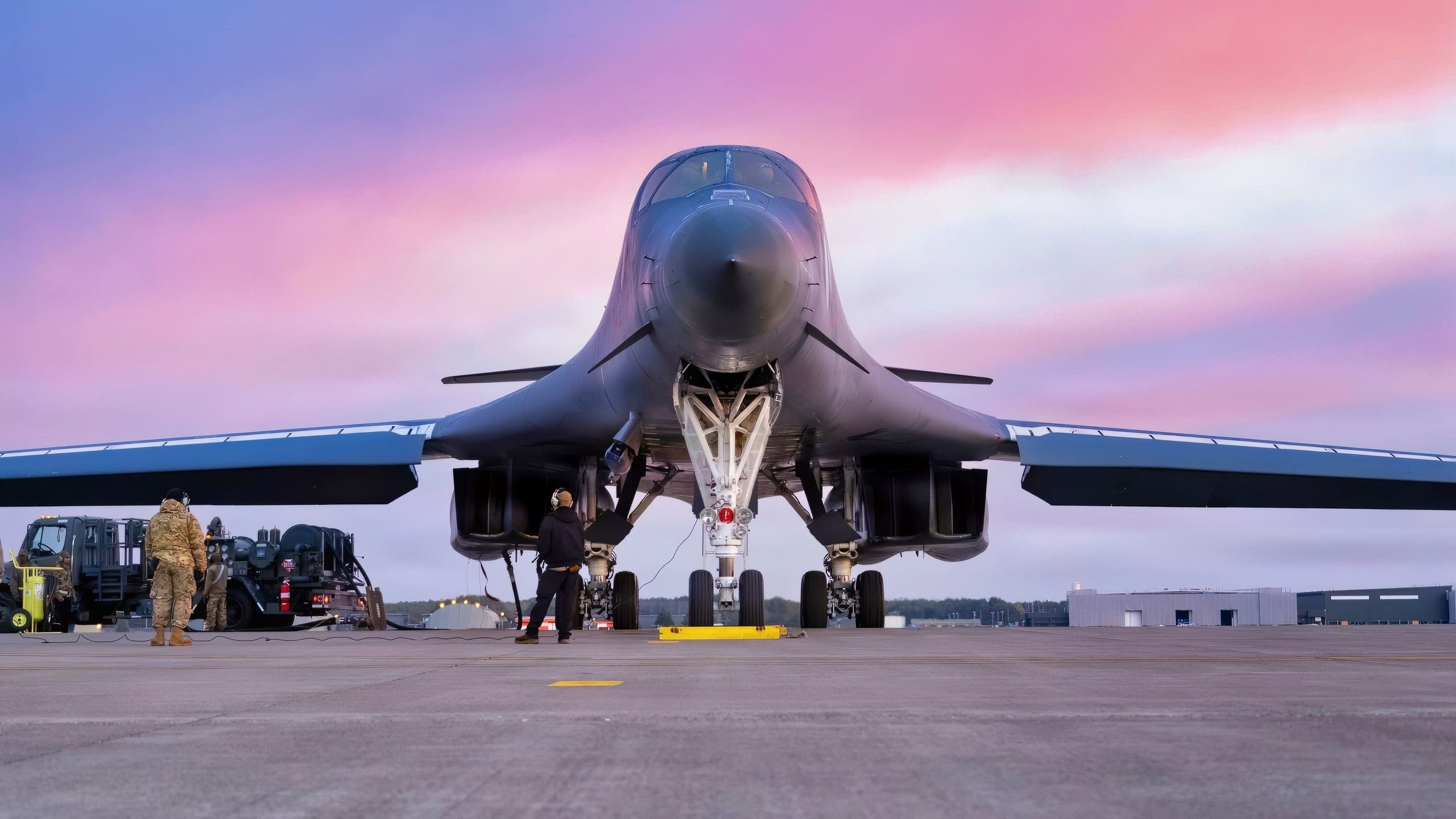
A U.S. Air Force B-1B Lancer gets hot pit refueled before its return to Dyess Air Force Base, Texas, at Misawa Air Base, Japan, Nov. 17, 2025, concluding a bomber task force deployment. BTF operations employ U.S. strategic bombers globally, deter adversaries, assure allies and partners, strengthen interoperability and maintain readiness and global strike capability. (U.S. Air Force photo by Senior Airman Emma Anderson)
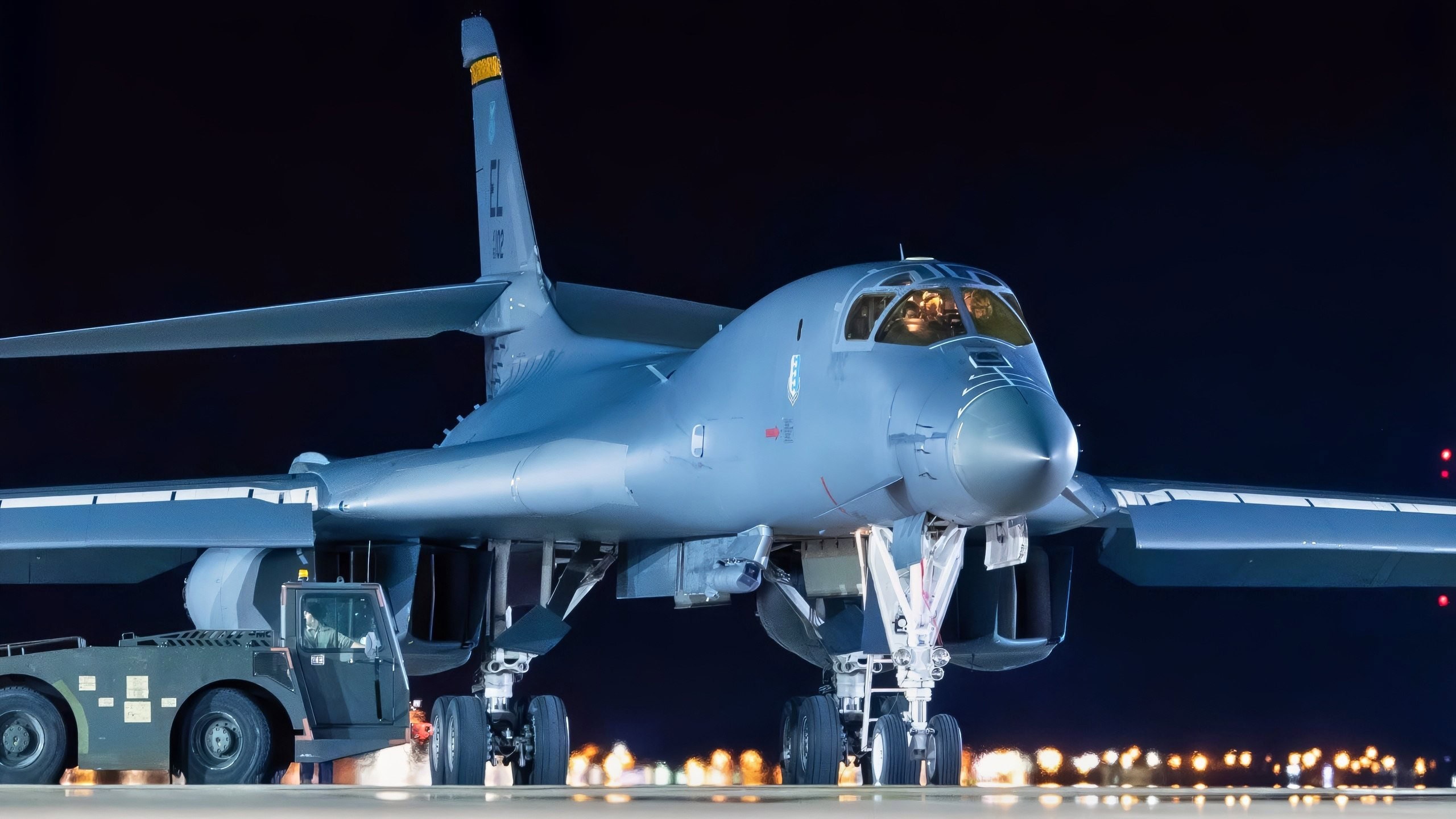
Aircrew piloting a B-1B Lancer prepare to park at Ellsworth Air Force Base, S.D., April 30, 2020. A pair of B-1s flew from the continental United States and conducted operations over the South China Sea as part of a joint U.S. Indo-Pacific Command and U.S. Strategic Command Bomber Task Force mission. (U.S. Air Force photo by Tech. Sgt. Jette Carr)
Four General Electric F101 engines drive the aircraft beyond Mach 1. Its variable-sweep wings move from a 137-foot span for takeoff to 79 feet in the high-speed configuration. Three internal bays hold as much as 75,000 pounds of conventional ordnance, the largest conventional payload in the Air Force inventory, according to the official B-1B fact sheet.
Few nations operate heavy bombers. Russia’s Tu-160 is the nearest broad counterpart, but the B-1’s mix of speed, payload, digital communications and operational anti-ship missiles remains rare.
The B-1B Started as a Nuclear Penetration Bomber
The B-1A began as a Mach 2.2 replacement for the B-52 before President Jimmy Carter canceled production in 1977. Ronald Reagan revived it as the B-1B, trading speed for lower radar visibility, a stronger structure, and a greater payload. The first production aircraft flew in 1984, and the 100th and final example arrived in 1988.
The original mission called for a low-altitude nuclear strike against the Soviet Union. Washington removed that mission in 1994, then completed a treaty-verifiable conversion between 2007 and 2011. Workers removed nuclear-specific wiring and welded sleeves into the external attachment points, preventing cruise-missile pylons from being installed. That history explains why descriptions of the B-1 as a current nuclear bomber are wrong, as outlined in the aircraft’s formal conversion.
The Conventional Mission Upgrade Program Rebuilt Its Arsenal
The Conventional Munitions Upgrade Program began in the early 1990s. Block D brought GPS navigation, secure radios, the ALE-50 towed decoy and Joint Direct Attack Munitions. Block E improved computers and expanded integration of the Wind Corrected Munitions Dispenser, Joint Standoff Weapon and Joint Air-to-Surface Standoff Missile. The first Block D aircraft entered operational use in 1998.
The results appeared in combat. Six B-1s delivered more than 20 percent of the ordnance in Operation Allied Force while flying less than 2 percent of the combat sorties. During the first six months over Afghanistan, eight Lancers dropped nearly 40 percent of coalition bomb tonnage. That magazine remains central to the case for retaining the B-1 while the B-21 force grows.
The Sniper Pod Created a New Bomber Mission
The Sniper Advanced Targeting Pod changed the aircraft’s work in Iraq and Afghanistan. Mounted externally, it supplied infrared and television imagery, precise coordinates and battle-damage assessment. A B-1 employed a weapon through the pod in combat for the first time in August 2008.
The bomber could loiter for hours, receive new coordinates and release individual guided bombs in support of troops below. A platform designed to cross Soviet defenses became a close-air-support asset carrying far more precision weapons than a tactical fighter.
The Integrated Battle Station Rebuilt the Cockpit
The Integrated Battle Station became the largest cockpit modification in B-1 history. Completed across 60 aircraft in 2020, it combined a Fully Integrated Data Link, new vertical situation displays and an updated Central Integrated Test System. Link 16 brought live tactical information into the aircraft, while color displays replaced older aft-cockpit equipment.
The 1.05-million-hour project improved fault diagnosis and allowed the four-person crew to receive targeting information from other aircraft and command centers after takeoff.
JASSM and LRASM Moved the B-1 Back to Standoff War
The AGM-158 JASSM gave the Lancer a way to attack defended land targets without flying directly over them. Its anti-ship relative, the AGM-158C LRASM, added a maritime mission. The B-1 became the first operational LRASM platform in 2018, and Dyess crews were still refining missile procedures in July 2026.
A standard internal load reaches 24 JASSM or LRASM weapons. The B-1 is not a modern stealth aircraft, so its future rests on launching missiles from outside dense air defenses. Its speed, range and magazine depth give commanders a long-range anti-ship option few air forces match.
Super B-1B Lancer: External Pylons Are the Largest Weapons Change Yet
An Edwards test aircraft carried an inert JASSM outside the fuselage in November 2020 and released one the following month. Flight tests of Boeing’s modular pylon followed in 2024. The fiscal 2026 plan then set aside $50.26 million for the External Heavy-Stores Pylon program.
Each station is being designed around a 5,000-pound-class store. Mixed internal and external carriage would raise a 24-missile JASSM or LRASM load to as many as 36, the basis for the emerging “Super B-1B” concept, or at least what some media has dubbed it.
Hypersonic weapons are the more important long-term possibility. The bomber has demonstrated captive carriage of a 5,000-pound-class test store and release from the modular pylon.
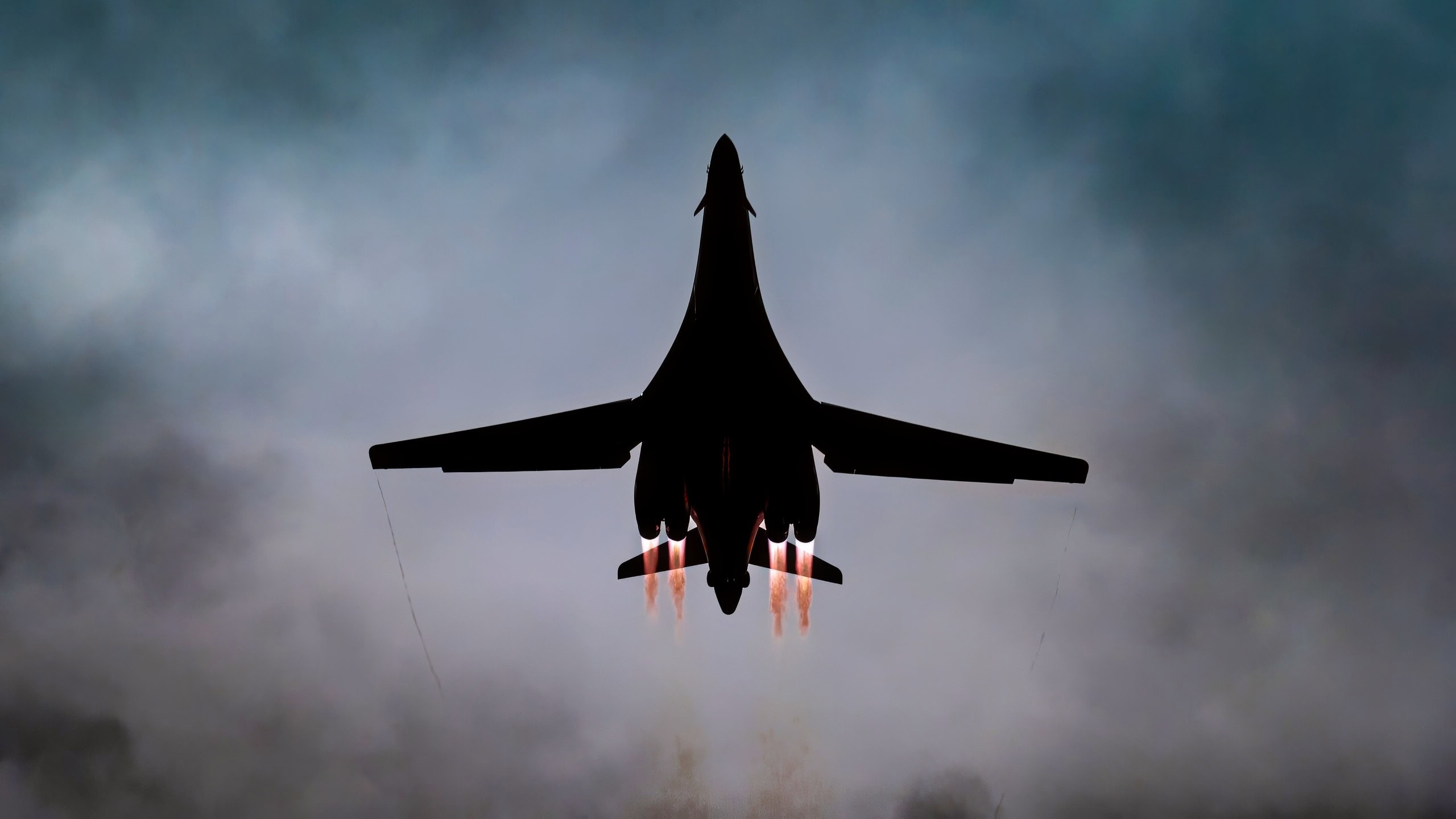
A B-1B Lancer assigned to the 9th Expeditionary Bomb Squadron takes off at RAF Fairford, United Kingdom, to participate in a Bomber Task Force Europe mission, Oct. 27, 2021. “Bombers enhance our ability to address dynamic threats and counter adversary actions in the region as an effective joint force,” said Gen. Jeff Harrigian, U.S. Air Forces in Europe – Air Forces Africa commander. Operations and engagements with NATO allies and global partners demonstrate the shared commitment to global security and stability. (U.S. Air Force photo by Senior Airman Colin Hollowell)
Boeing describes the design as a route toward advanced weapons, including hypersonic missiles. No operational hypersonic loadout has been declared. The B-1 is being prepared for that work, not fielding it today.
The Air Force Is Rebuilding the Airframes Too
Seventeen B-1Bs went into retirement in 2021, leaving a congressionally protected fleet of 45. The Air Force later regenerated tail 86-0115 from Davis-Monthan storage and returned it to service in April 2026, a reversal detailed in the return of stored Lancers.
The BackBONE project replaced a 33-foot fuselage section using a digital twin built from scanned aircraft and old drawings. The bomber returned to Dyess in May 2026, months ahead of schedule.
The fiscal 2027 plan directs $342 million toward B-1 modernization from 2027 through 2031 and describes a force intended to remain lethal through 2037.
At Boeing’s Oklahoma City site, the external pylon has moved beyond preliminary design toward critical design work, aircraft modification, and ground and flight testing. The next major B-1 change is centered on the same six hardpoints the Air Force once welded shut.
About the Author: Harry J. Kazianis
Harry J. Kazianis (@Grecianformula) was the former Senior Director of National Security Affairs at the Center for the National Interest, a foreign policy think tank founded by Richard Nixon in Washington, D.C. Harry has more than a decade of experience in think tanks and national security publishing. His ideas have been published in The New York Times, The Washington Post, The Wall Street Journal, CNN and many other outlets worldwide. He has held positions at CSIS, the Heritage Foundation, the University of Nottingham and several other institutions related to national security research and studies. He is the former Executive Editor of The National Interest and The Diplomat. He holds a master’s degree focusing on international affairs from Harvard University.

