
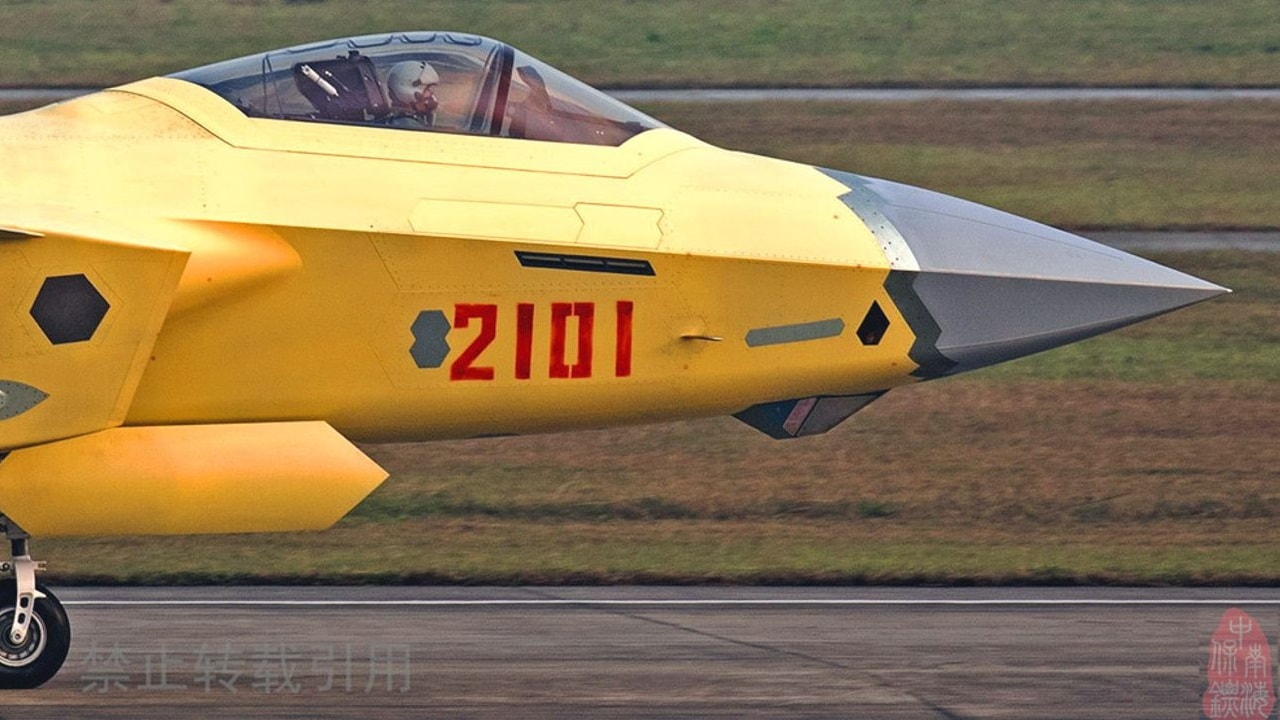
The Chinese built the first stealth fighter aircraft outside of the United States. The J-20 “Mighty Dragon” is an outstanding fifth-generation stealth fighter.
And they’ve continued flying the new J-35, J-35A, J-36, and J-50; China’s outstanding industrial capacity has been producing aircraft, ships, and other armaments at a rate the US cannot match.
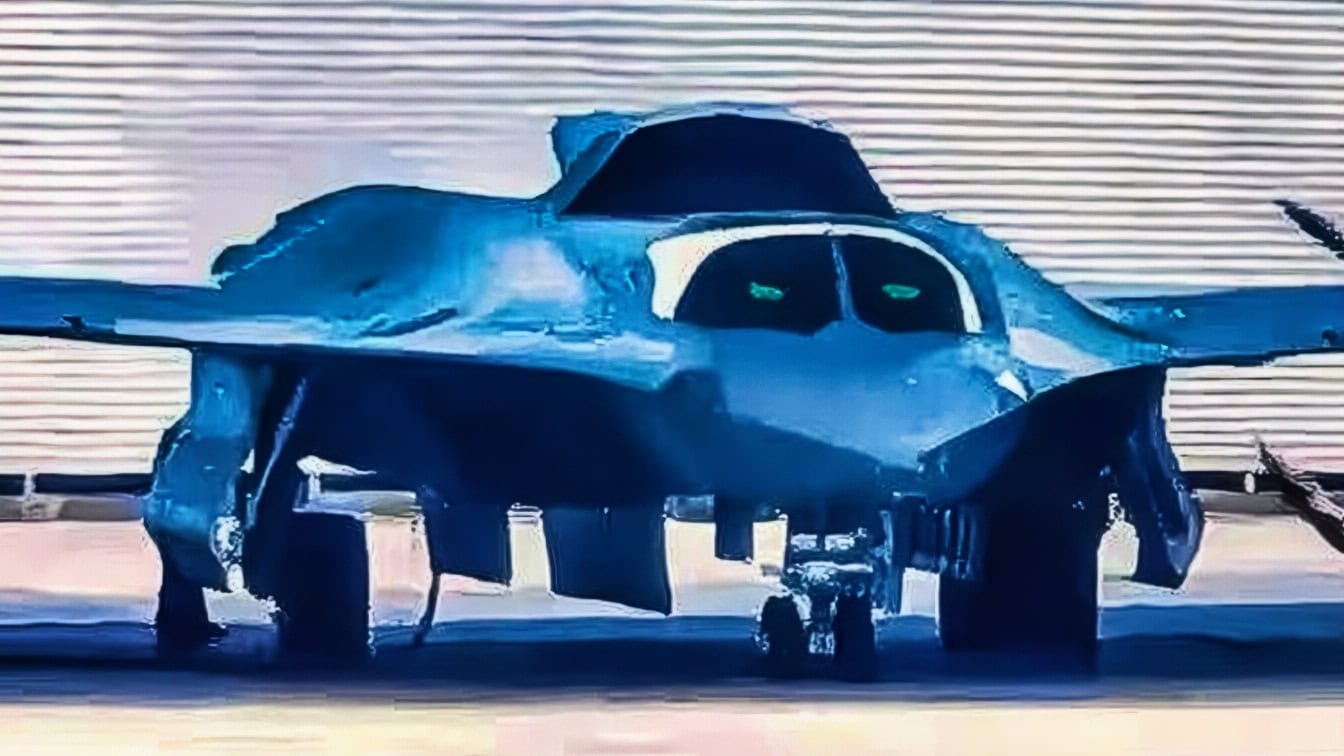
J-36 Fighter X Screenshot
The goal is to challenge the US Navy and Air Force for control of the skies in the Indo-Pacific. But its industrial capacity and hardware are not yet enough to dominate the skies.
Chinese pilots face critical questions regarding their real-world combat experience. Because they lack recent exposure to major conflict, analysts view them as highly capable on paper and in exercises but untested in high-stress, actual combat.
Especially given the experience of US pilots in F-22s and F-35s in combat situations.
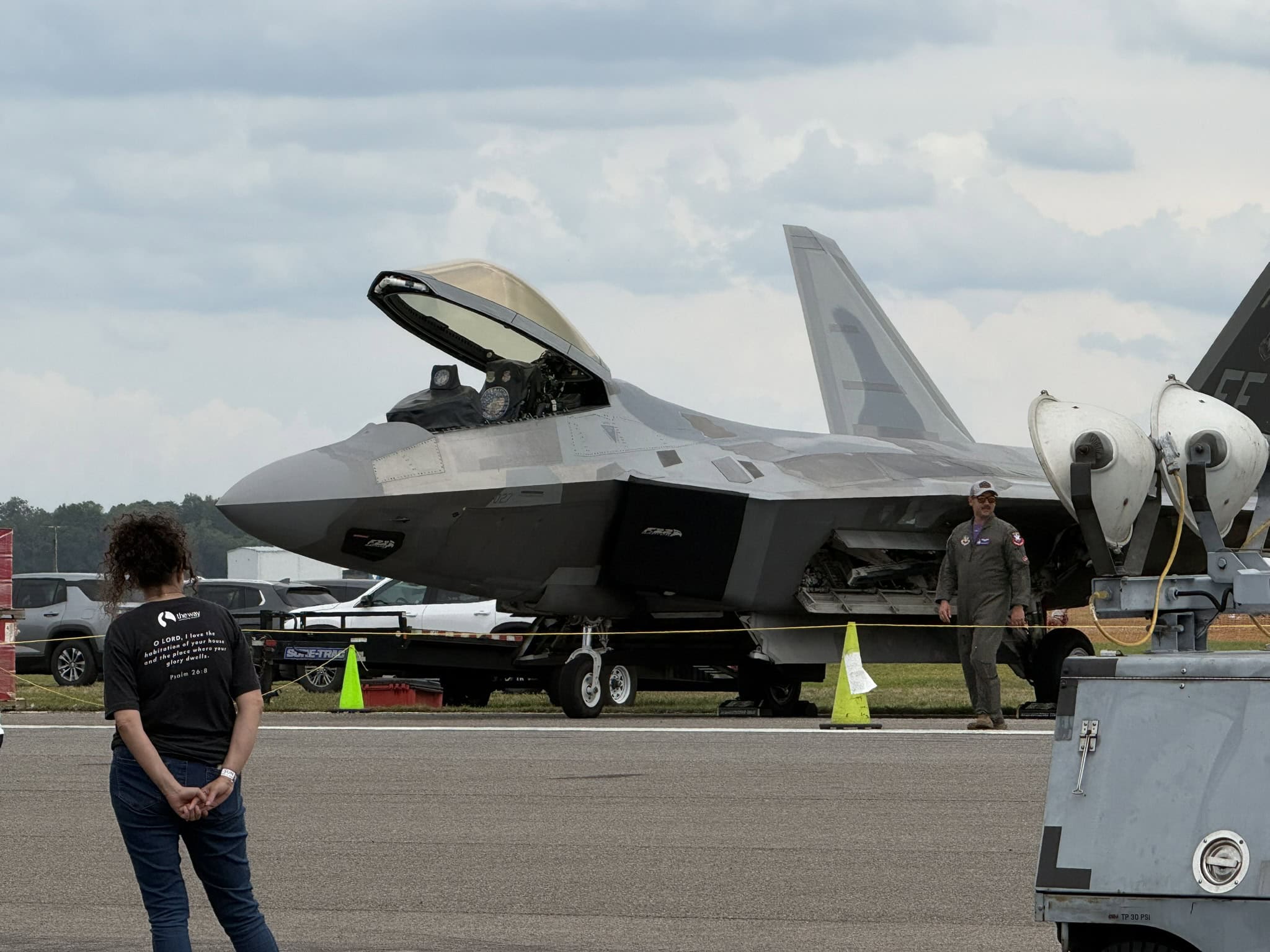
F-22 Raptor Lakeland Florida Airshow. Taken on 4/19/2026.
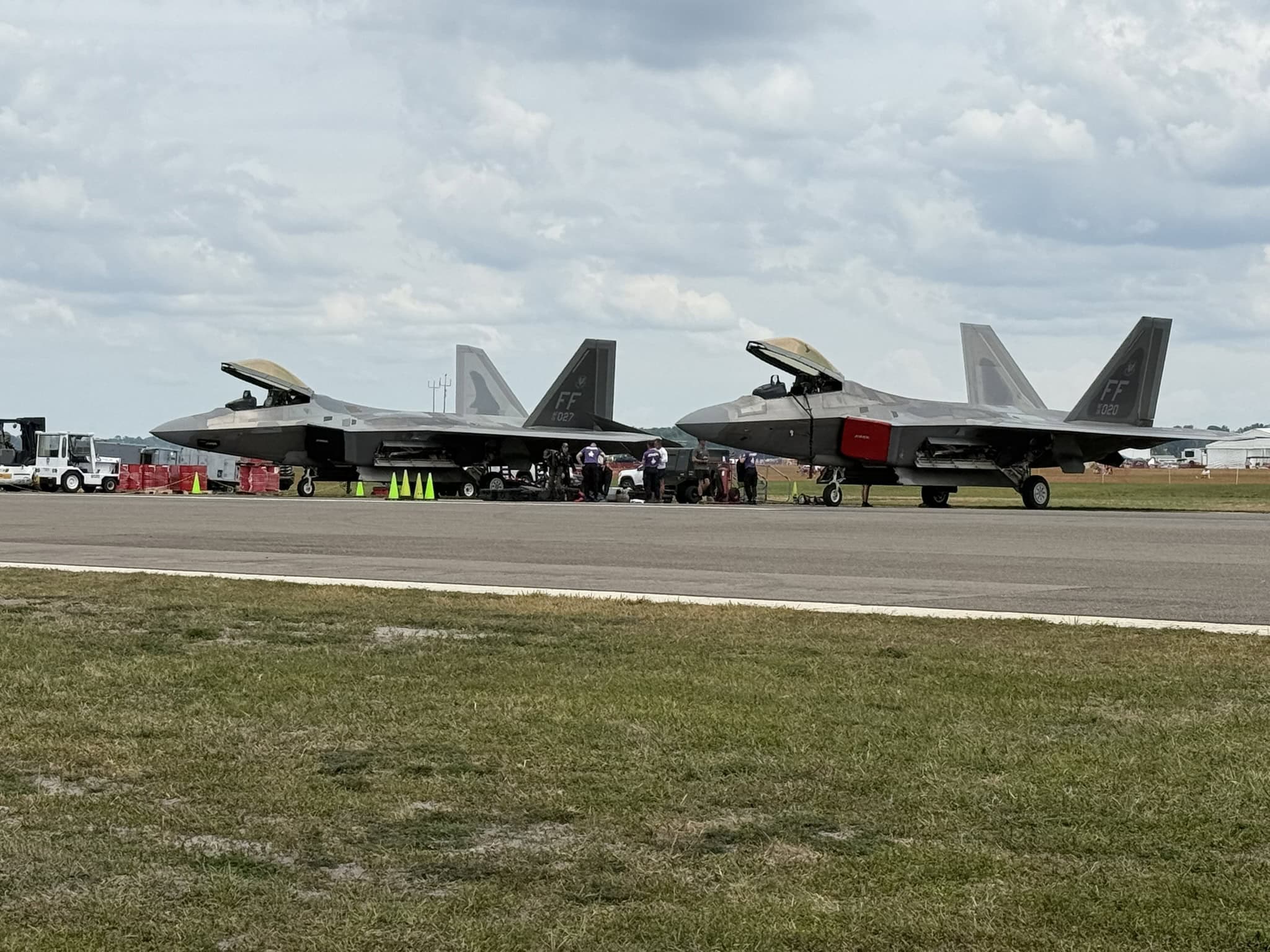
F-22 Raptor Lakeland Florida Airshow
Is the US Concerned Over the J-20?
Gen. Kenneth Wilsbach, then-head of Pacific Air Forces, a few years ago, said, “It’s not anything to lose a lot of sleep over,” while speaking to the media about the J-20. “Certainly, we’re watching them closely and seeing how they feel and how they operate them.”
Wilsbach added that after “some recent close engagements we had with our 5th gen jets and some of their J-20s” in the Pacific region, the Air Force had “learned a lot from that,” but that “it is nothing frankly that I would worry too much about.”
Wilsbach gave some interesting perspectives on the meeting, coupled with respect. “We’re relatively impressed with the command and control associated with the J-20.”
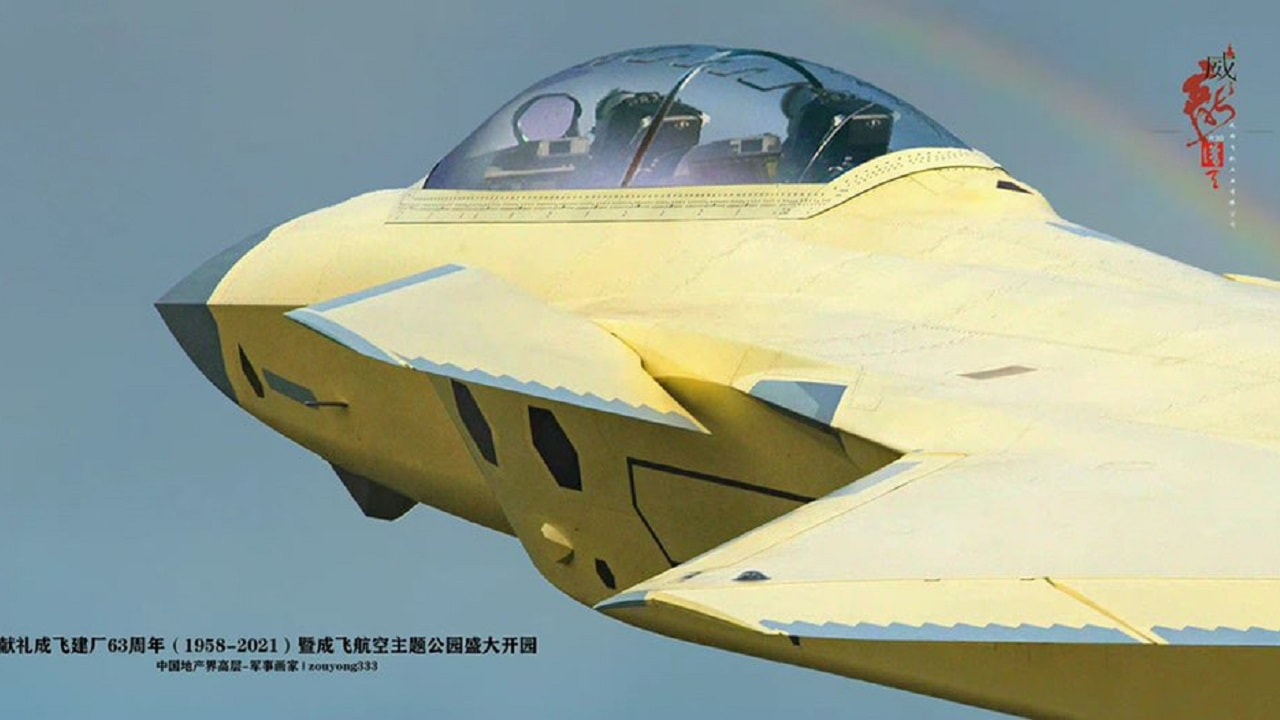
Chinese J-20 stealth fighter. Image Credit: Chinese Internet.
China’s Pilots Suffer From CCP Politics
The PLAAF has moved past outdated, rigid, top-down tactics.
They now emphasize realistic “adversary” training (similar to the U.S. Navy’s TOPGUN program) and complex large-scale exercises. J-20 units are highly trained in leveraging the aircraft’s advanced avionics and long-range missiles.
However, China hasn’t engaged in a war for several decades, and that was a border skirmish with Vietnam in 1979 that lasted only one month. Its knowledge of combat is largely theoretical or comes from training exercises.
Since the CCP won’t allow, or isn’t invited to partake in multinational exercises that stress acquiring new combat and aviation skills, the Chinese have made a concerted effort to entice Western pilots to train Chinese pilots in the finer art of combat missions, carrier operations, and other large-scale, complex air operations.
Lack Of Joint Warfighting Exercises
ORFonline reported, “The PLAAF has historically avoided close collaboration with other military branches at the highest levels, reflecting China’s concerns about military-led coups.
“However, the demonstrated effectiveness of joint operations and interoperability in US forces during conflicts in the Middle East and Afghanistan compelled Chinese leaders to introduce the Joint War Doctrine within the PLA.”
While the PLAAF has begun to do away with the rigid Communist top-down approach to command and control, that is still an issue for its pilots, who “often lack the freedom to independently conduct aerial battles, with their navigation profiles and combat tactics strictly controlled by commanders stationed in control towers or airborne command posts.”
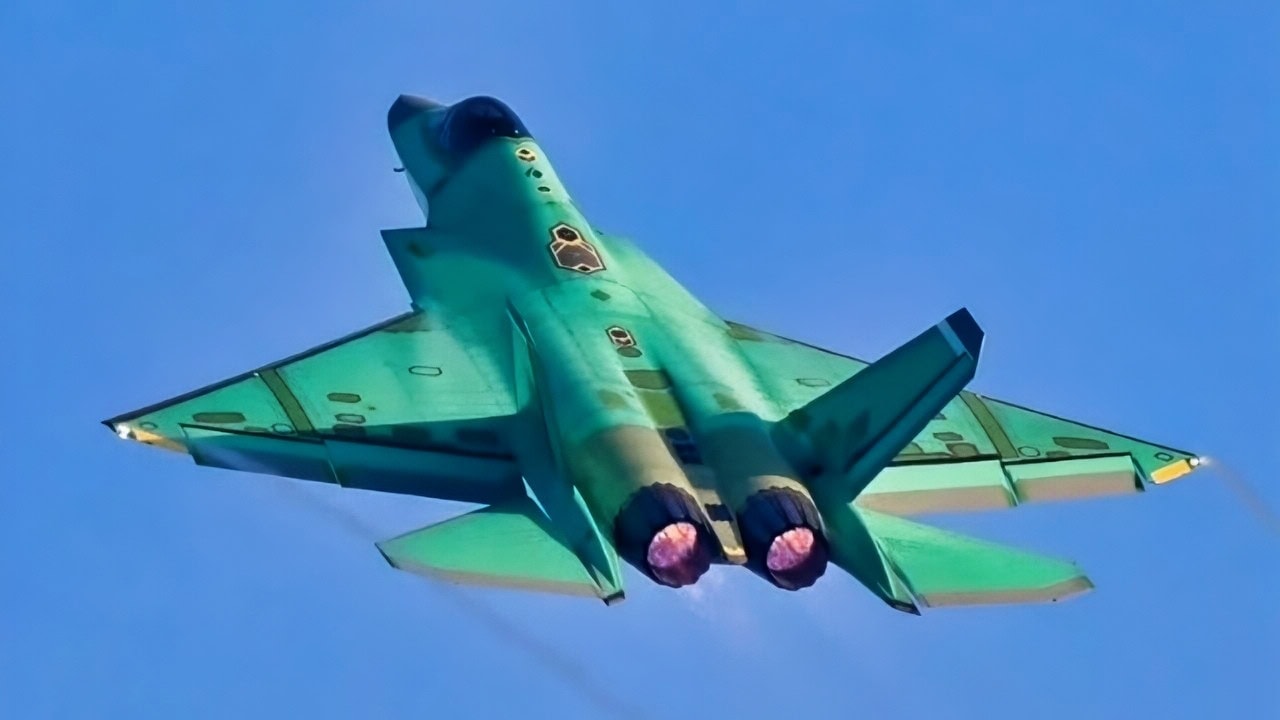
J-35A Stealth Fighter. Image Credit: Social Media Screenshot.
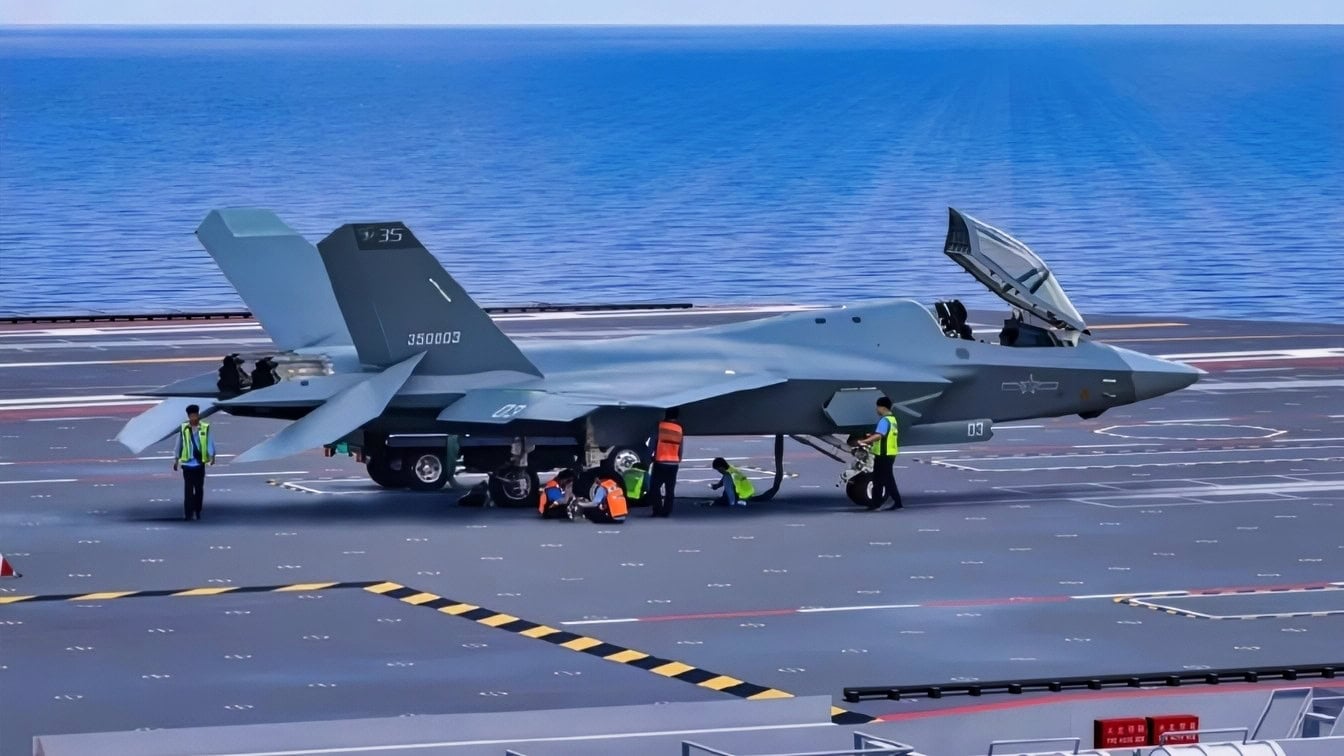
China J-35 Blue Shark Stealth Fighter
China’s Carrier Strike Groups Are Still In The Early Stages Of Training
The Chinese aircraft carriers still have a long way to go to match the U.S. Navy, mainly due to significant gaps in operational experience, crew training, and military doctrine.
While China is rapidly advancing technologically, it faces significant challenges in areas such as sustained 24-hour air operations, anti-submarine warfare, and at-sea logistical support that can only be developed over time and experience.
The PLAN lacks decades of real-world experience in conducting complex, sustained carrier operations and projecting power.
Aircraft and systems integration are behind the US. While China’s new carriers can launch jets with electromagnetic catapults, the U.S. has more advanced landing software and battle-tested systems.
The Chinese Have a 24-Hour-a-Day Experience Gap
Operational experience remains a significant U.S. advantage.
China has a significant experience gap relative to the U.S. Navy and is still learning to operate carriers effectively, especially in complex scenarios and harsh environments.
Landing aircraft at night and in bad weather, for instance, is crucial to regular offshore carrier operations but remains far from routine, several Navy attachés and analysts said to the Times of San Diego.
The United States has been conducting 24-hour-a-day air operations since before World War II, and it has become a daily routine for American carrier pilots.
Night operations and operations in adverse weather conditions are staples of American carrier operations, as are continuous flight operations, which China has yet to master.
“The continuous operation of its carriers sits at the very core of what makes the U.S. military absolutely preeminent,” said Singapore-based defense analyst Alexander Neill.
China’s Carriers Were Designed To Operate Close To Land-based Air Defenses
China’s current aircraft carriers have limited anti-missile defenses because they are designed to operate under the protection of land-based missile networks rather than to possess comprehensive on-board defenses like those on U.S. carriers.
This strategy relies on land-based missile systems to create an A2/AD anti-access bubble, a stark contrast to U.S. carriers, which are built to be self-sufficient and operate as “roaming nerve centers” for a wider network.
This means that China is far from having carrier strike groups that project power beyond its own shores. They are still working on that.
However, China’s newest aircraft carrier is the Fujian (Type 003), commissioned into the People’s Liberation Army Navy (PLAN).
It is China’s first fully domestically designed and built supercarrier, representing a massive leap in Beijing’s naval capabilities.
Type 004, its first nuclear-powered carrier, will change that. Beijing will have a supercarrier with over 100 aircraft, allowing it to project power anywhere at sea, equipped with early-warning aircraft and drones.
Its self-defense relies on a highly integrated “layered point-defense” network, combining advanced shipboard close-in weapon systems (CIWS) and short-range surface-to-air missiles (SAMs).
While China’s J-20 Mighty Dragon, J-35, J-36, and the J-50 are all excellent aircraft and are being produced in increasing numbers, China’s pilots, while improving constantly, still have a lot of ground to cover before they are on par with US F-22 and F-35 pilots.
The training and doctrine of China’s PLAAF and PLAN remain untested, and those things matter. Because they are honed through countless multinational exercises and combat operations that Beijing’s pilots don’t have.
About the Author: Steve Balestrieri
Steve Balestrieri is a National Security Columnist. He served as a US Army Special Forces NCO and Warrant Officer. In addition to writing on defense, he covers the NFL for PatsFans.com and is a member of the Pro Football Writers of America (PFWA). His work was regularly featured in many military publications.