On 9 September 2026 at the Polish Army Museum in Warsaw, US Under Secretary of State for Arms Control and International Security Thomas DiNanno signed a US $4 billion Foreign Military Financing loan guarantee with the Republic of Poland.
This is the 6th such agreement between the two governments, and it increases the running total of American military financing extended to Warsaw to nearly $20 billion.
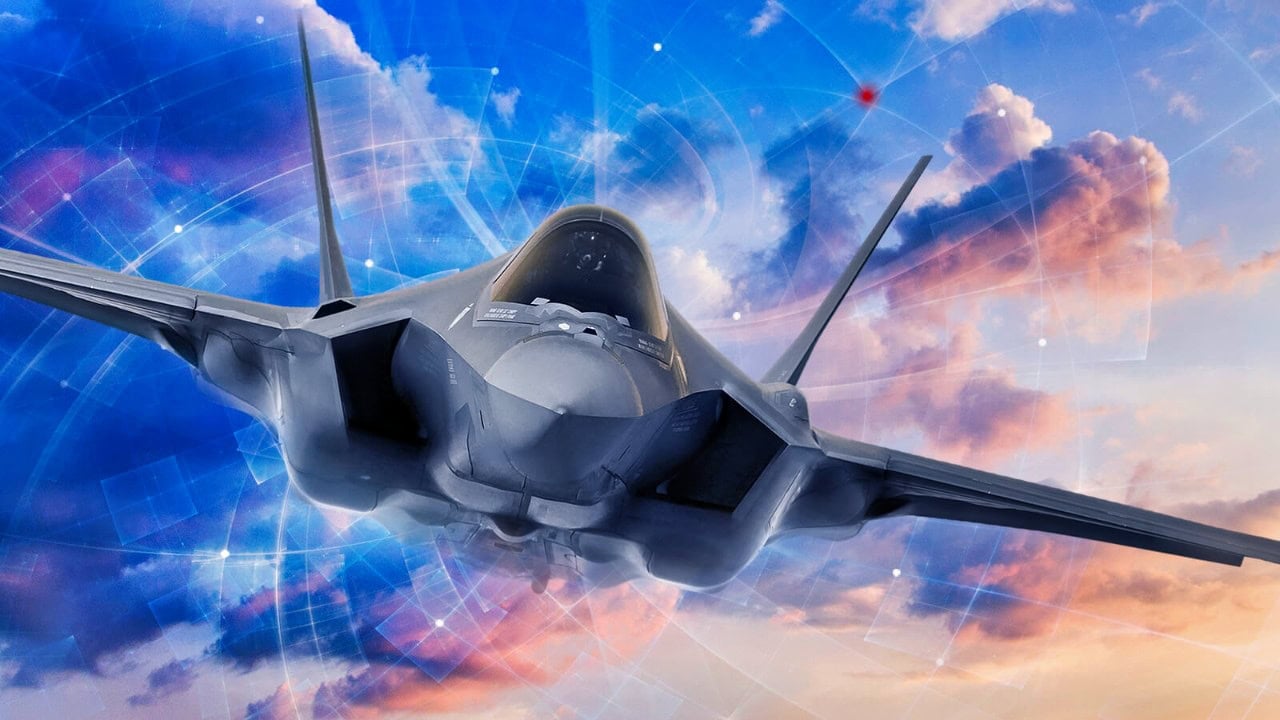
F-35 fighter. Image Credit: BAE systems.
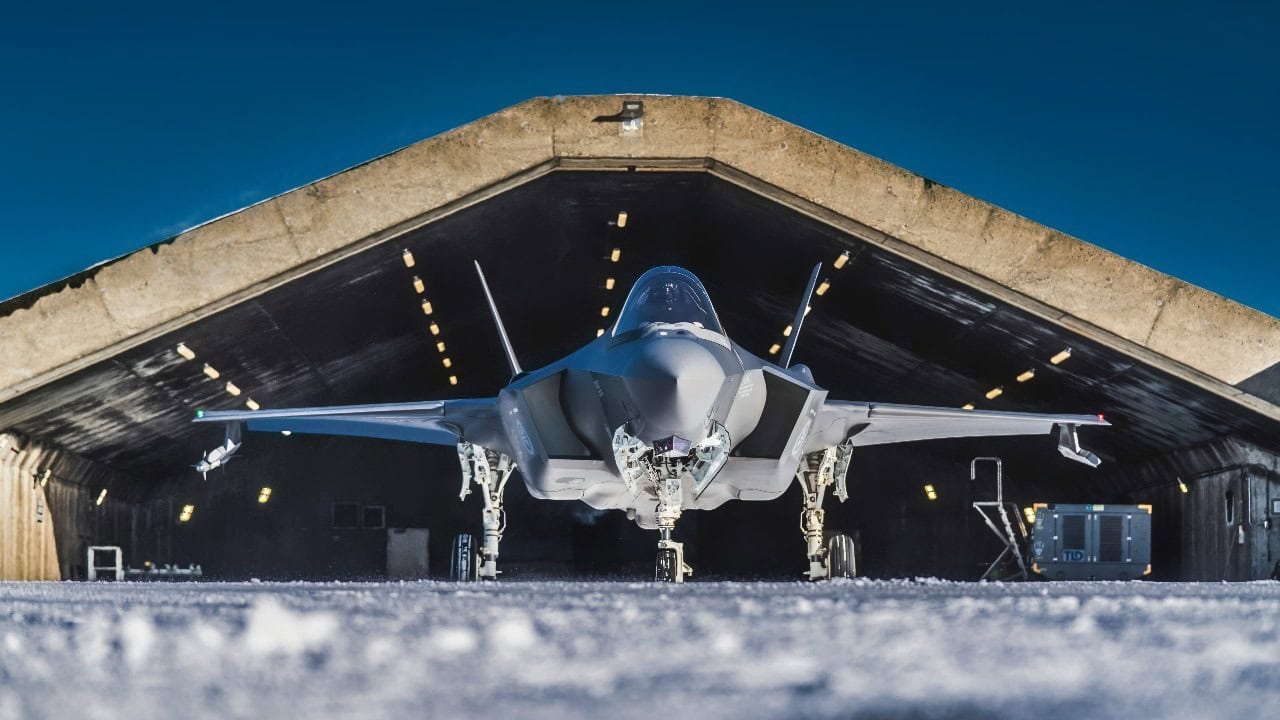
A Royal Norwegian Air Force F-35 Lighting II fighter leaves its shelter at Keflavík Air Base in Iceland. Norway sent the fighters to Iceland, which doesn’t have its own air force, in February 2020.
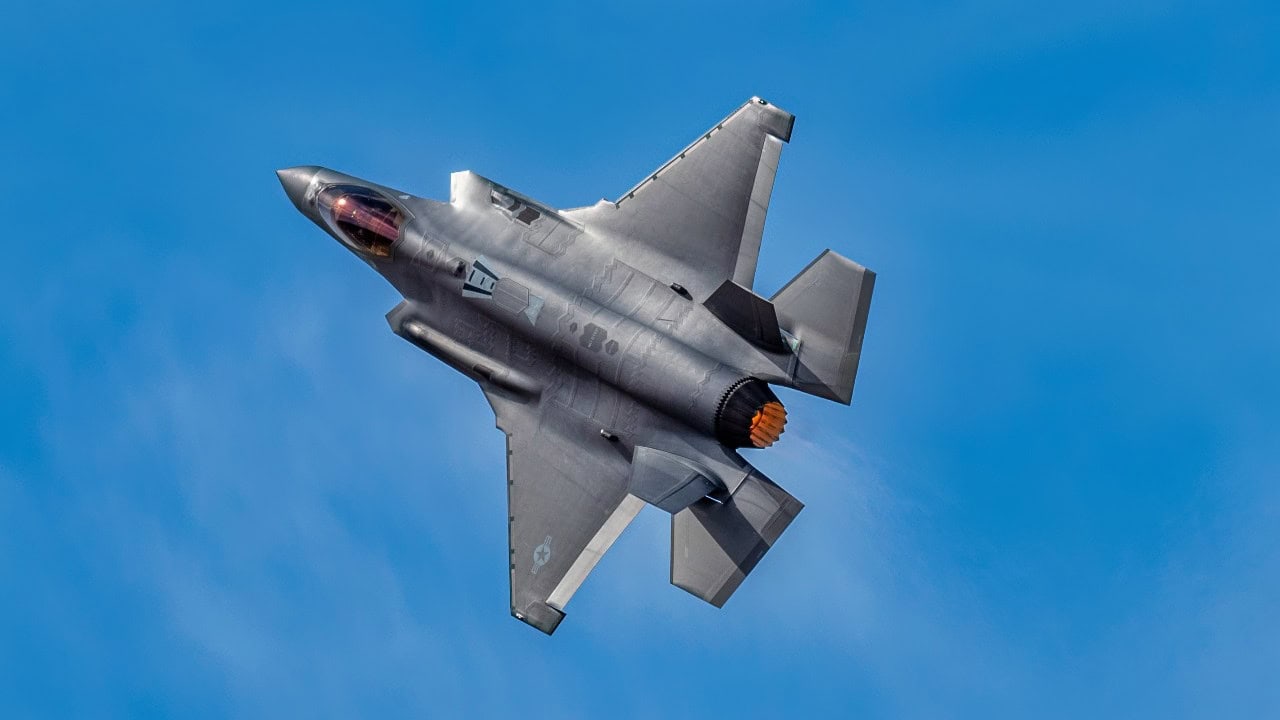
A U.S. Air Force F-35A Lightning II aircraft flies during the Heritage Flight Training Course at Davis-Monthan Air Force Base, Arizona, Feb. 28, 2025. The F-35 is designed to provide the pilot with unsurpassed situational awareness, positive target identification and precision strike in all weather conditions. (U.S. Air Force photo by Senior Airman Jasmyne Bridgers-Matos)
While the dollar amounts are confirmed, the remaining question is which aircraft will be the next near-term purchase by the Central European NATO member.
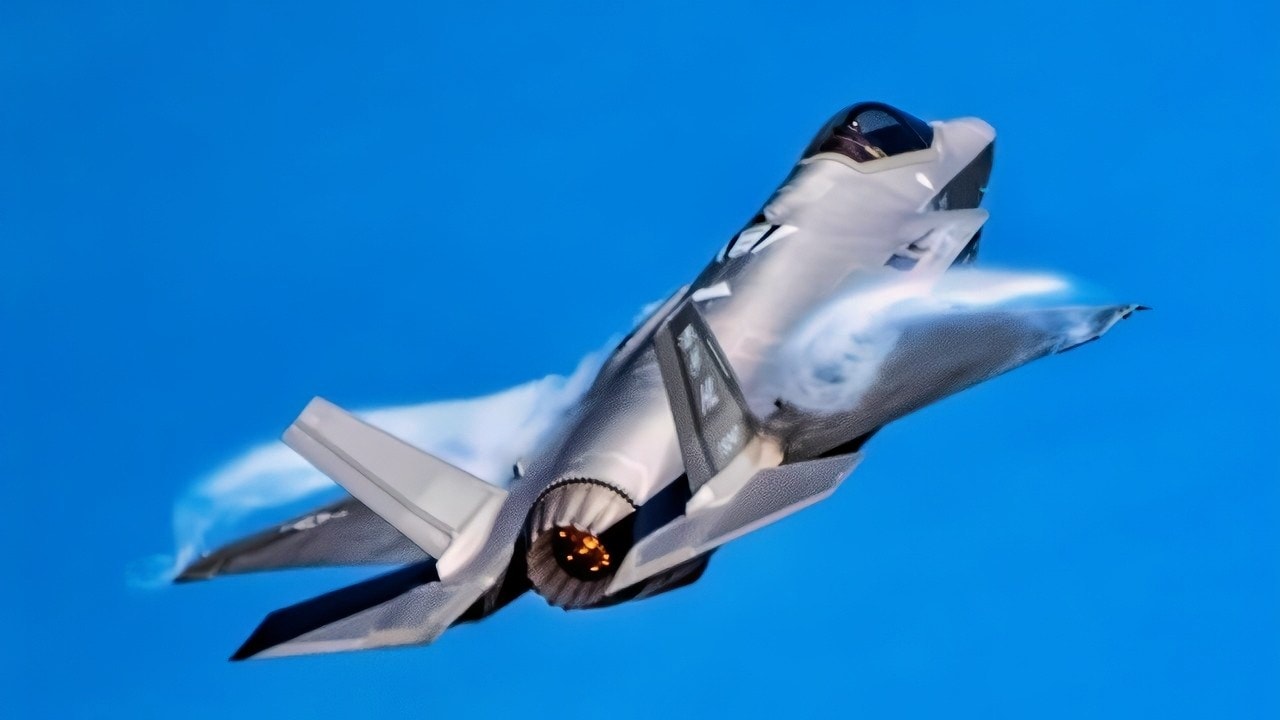
Within hours of the loan being agreed to, European media reported that Poland was making another down payment on 32 additional F-35A Lightning II fighters.
Warsaw has stated it intends to acquire two more squadrons of the US-made fighter jet, but has said nothing about whether the new loan is connected to a follow-on purchase of these aircraft, which Poland calls the “Husarz.”
The F-35A is named in honor of the legendary Polish Winged Hussars, a famous heavy cavalry unit from the 16th and 17th centuries known for their speed and tactical dominance.
However, the Polish government and the defense minister himself admitted no such direct connection. The minister, Władysław Marcin Kosiniak-Kamysz, instead said that the funds from this loan would be used to accelerate the delivery timelines for existing contracts already on the books, “including for attack helicopters”.
Funding for More Stealth Platforms Coming
The first tranche of the F-35As was signed for in a contract agreed on 31 January 2020. The total value of the agreement was $4.6 billion or $87.3 million per aircraft.
So far, 8 aircraft from this first F-35A Husarz contract have been delivered to the Łask airbase.
A second operating base at Świdwin is now being rebuilt to accommodate additional aircraft, and refitting the Łask base alone required more than a dozen construction projects and cost close to $700 million.
The defense minister has said back in June 2026 that Poland would be the “undisputed leader in building a security architecture in the European theatre.
It is the leader of NATO’s eastern flank and the European Union’s eastern border—which, thanks to our actions, is the best-guarded in history.”
The use of Foreign Military Financing (FMF) is also one of the oldest instruments in the American security-assistance process.
In most instances, it has been implemented through grants. Israel, Egypt, and Jordan receive FMF money under these auspices – funds that they never have to repay.
Poland does not enjoy this kind of arrangement.
The loans Warsaw has signed under this program are credit that must be repaid in installments.
This has been the arrangement since Poland acquired 48 US-made F-16 fighter aircraft in 2002 under a $3.8 billion loan agreement.
Securing the funding through a loan guarantee rather than a cheque means Poland is borrowing the money, which is passed through the Polish Bank Gospodarstwa Krajowego (BGK), the state development bank.
The US Government then guarantees repayment, which lowers the loan’s interest rate, but it does not relieve Warsaw of its obligation.
Poland will repay these loans with interest, but neither government has published a repayment schedule.
The only comment on the loan’s terms thus far came from Marta Postuła, vice president of BGK, who said the conditions of this deal were better than those of the previous two loan guarantees. “Better” because the American government has awarded a separate grant to subsidize part of the financing cost.
A Forward Base Against Continued Russian Aggression
On the occasion of the signing of the 9 September loan guarantee agreement, the State Department’s DiNanno described Poland as one of NATO’s “most capable and committed allies.” Repeating a line first used by US Secretary of War Pete Hegseth, he further complimented the nation, calling Poland a “model ally.”
Despite Poland’s status as a top-tier US ally in Europe, retired US intelligence officials tell 19FortyFive that this considerable increase in defense cooperation would not be happening – at least not at this pace – if not for the Russian invasion of Ukraine.
“The history between Poland and Russia is a long, unhappy and violent one – and the Poles have vowed to never again be in an inferior position vis-à-vis Moscow. This is why they are way up there in the percentage of GDP spent on defense – 4.8 percent. This is the highest of all of the NATO nations,” one official pointed out.
The other driving factor is that the US wants to be able to deploy F-35As into Europe if the need arises – a need that looks more likely all the time
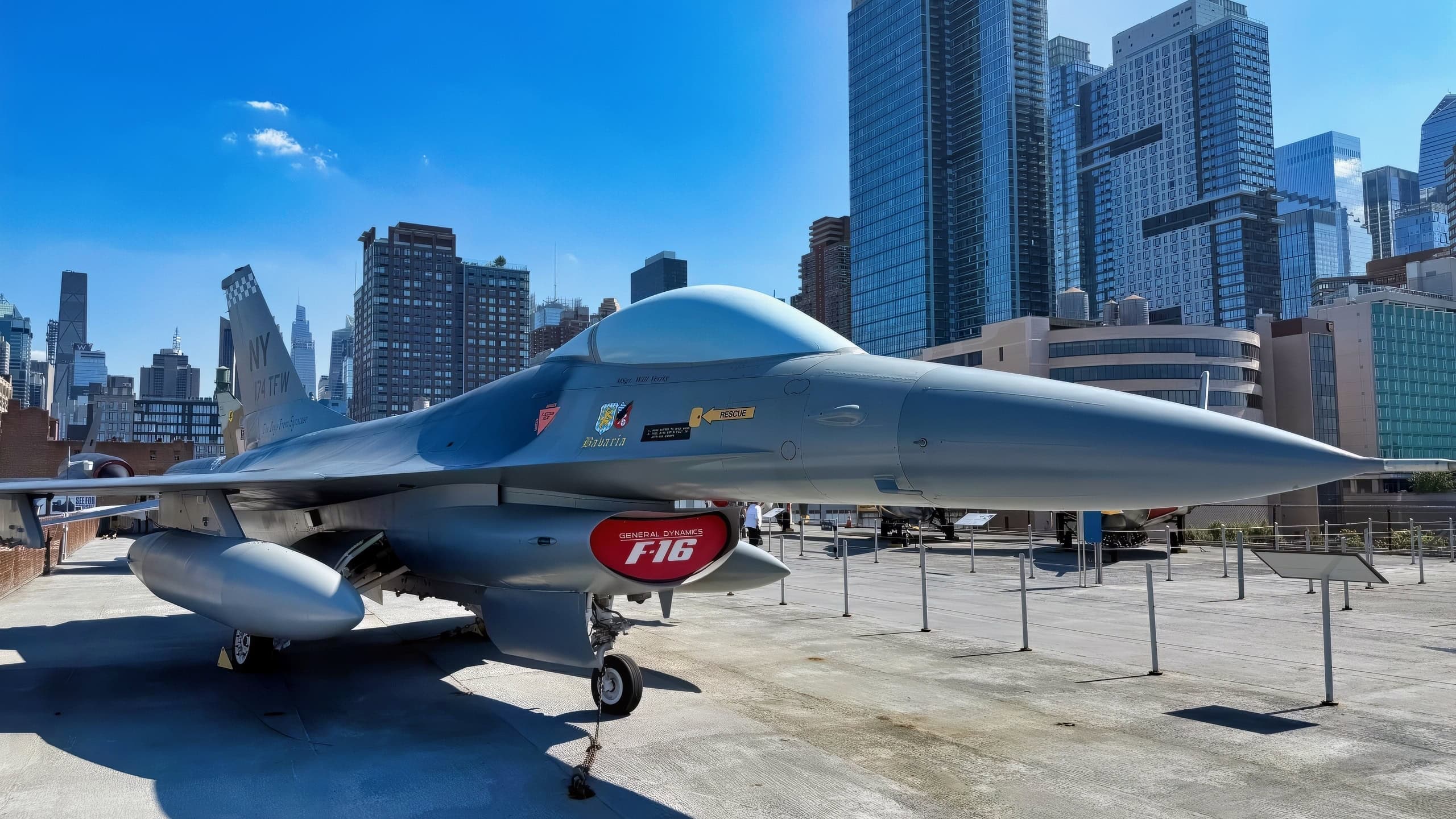
F-16 Fighter On USS Intrepid. 19FortyFive.com Image.
“We originally bought the F-16s because we made the calculation that if there was a war with Russia, these are aircraft that other nations would be flying into Poland to join in the fight. We wanted to be ready to receive them, support them and maintain them as they fought alongside us,” said a former Polish military official. “We are now buying even more F-35s than we did F-16s for very similar reasons.”
Three aircraft landed at Łask on 22 May 2026 and were formally inducted on 12 June.
Five more, serials 3512 to 3516, arrived on 28 August.
That brings eight jets to Poland. Polish officials expect to induct a total of fourteen by the end of this year, another twelve during 2027, and all thirty-two by about 2029.
A second operating base at Świdwin is being rebuilt for them, and getting Łask ready alone consumed more than a dozen construction projects and close to $700 million.
About the Author: Reuben F. Johnson
Reuben F. Johnson has thirty-six years of experience analyzing and reporting on foreign weapons systems, defense technologies, and international arms export policy. Johnson is the Korea Fellow at the Casimir Pulaski Foundation. He is also a survivor of the Russian invasion of Ukraine in February 2022. He worked for years in the American defense industry as a foreign technology analyst and later as a consultant for the U.S. Department of Defense, the Departments of the Navy and Air Force, and the governments of the United Kingdom and Australia. In 2022-2023, he won two awards in a row for his defense reporting. He holds a bachelor’s degree from DePauw University and a master’s degree from Miami University in Ohio, specializing in Soviet and Russian studies. He lives in Warsaw.