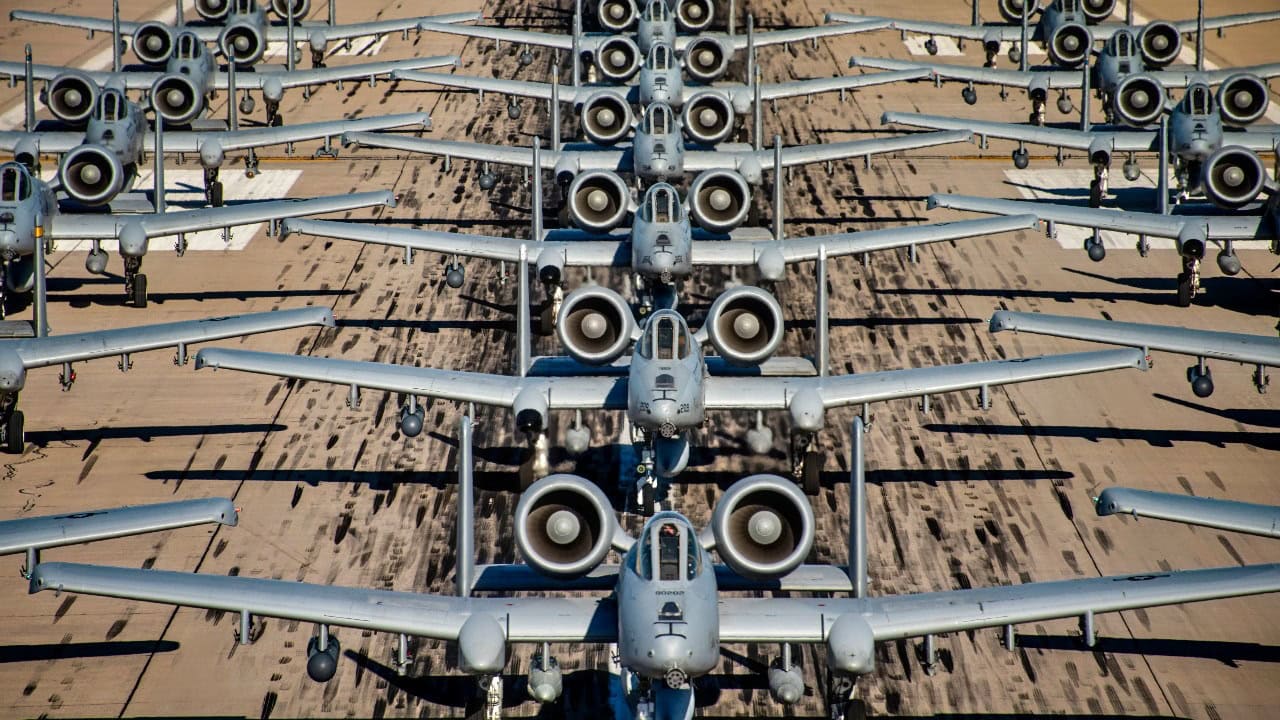
Few will likely forget the passionate deliberations surrounding initial United States Air Force decisions to begin retiring or divesting its fleet of A-10 Warthog “flying tanks” in favor of more modern Close Air Support platforms such as an F-35, F-22 or upgraded F-16.
The debate is ongoing because, despite the Air Force’s formal decision to retire the A-10s, Combatant Commanders request them and deploy them to critical global hotspots. In December 2024, A-10s were deployed to the Philippines in support of collaborative dual-nation combat preparation air exercises.
Now, A-10s are again deployed to the Middle East to support US Central Command’s mission and area of responsibility.
A-10 Warthog: Ground Support in the Middle East
In several key respects, there is little debate that A-10s could prove highly effective in various contingencies in the region, as many potential adversaries simply do not operate the kinds of advanced air defense systems that might otherwise make the A-10 obsolete.
Accordingly, should the US extend or further intensify its attacks upon Houthi targets, such as dismounted groups of fighters, lower-flying attack platforms such as the A-10 could prove effective.
A-10s have a powerful 30mm cannon beneath the fuselage that fires directly from the nose or front end of the aircraft. They are a weapon that could blanket enemy areas with incoming fire that is much more lethal and wide-reaching than standard small arms.
Maneuvering groups of Houthi fighters might be challenging to strike from higher-altitude fighter jets because air-to-ground weapons such as guided missiles and rockets might prove insufficient against dispersed, fast-moving groups of fighters.
However, a 30mm cannon fired from an A-10 might be able to keep pace with, track, and fire down upon pockets of ground troops seeking to maneuver. In this respect, a platform such as an A-10 could prove effective when faster fighter jets encounter challenges.
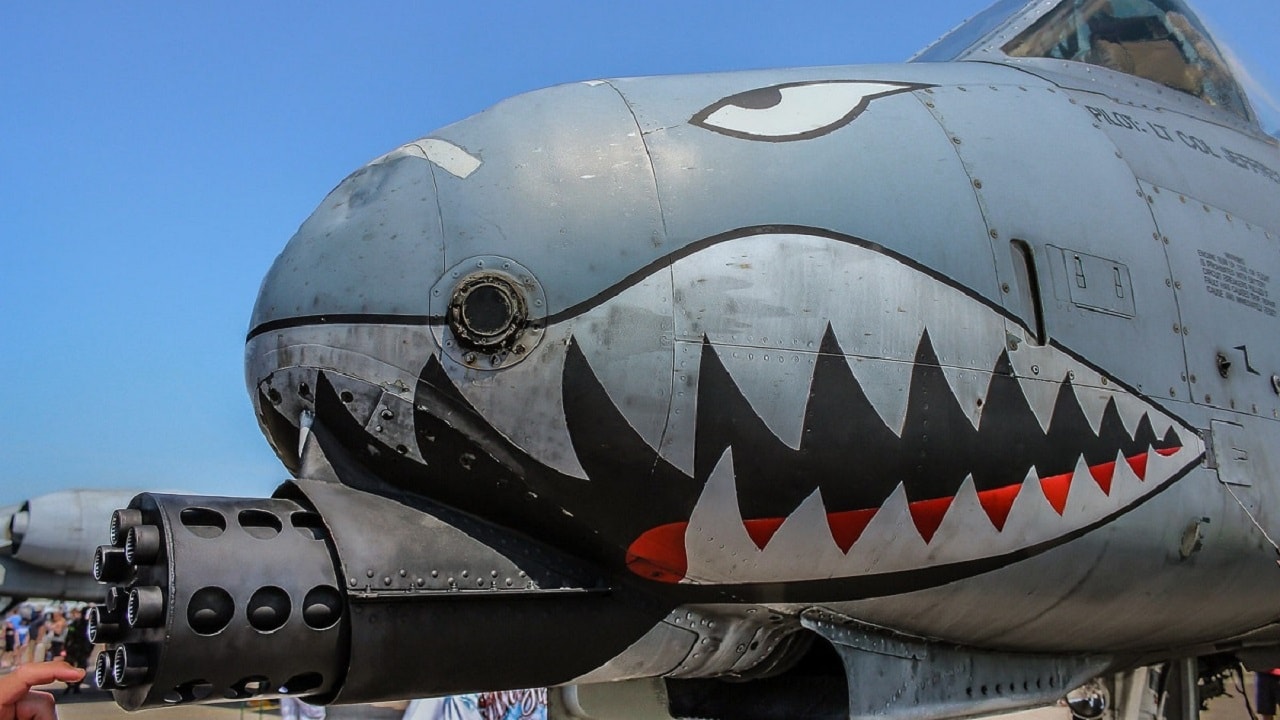
A-10 Warthog. Image Credit: Creative Commons.
Armed with a titanium hull, the A-10 is agile. A-10s fly low and slow over enemy areas, absorbing large amounts of small-arms fire. This ability enables pilots to maneuver the aircraft and reposition to attack groups of enemy fighters on the move in combat. With its built-in redundancy, an
A-10 could continue to attack even in the event that some of its systems or components were destroyed or disabled by enemy fire.
A-10 Pilot
Several years ago, an A-10 pilot told Warrior about the A-10’s redundancy and the advantages it brings.
“So when I lose all the computers and the calculations, the targeting pod, and the heads-up display, you can still point the aircraft using a degraded system at the target and shoot. We are actually trained for that,” former A-10 pilot Lt. Col. Ryan Haden, 23rd Fighter Group Deputy, Moody AFB, told me in a previous interview several years ago.
“The 30mm cannon has 7 barrels. They are centered the way the aircraft fires. The firing barrel goes right down the center line. You can point the aircraft and shoot at the ground. It is designed for air-to-ground attack,” Haden explained.
Armed with 1,150 rounds, the 30mm cannon can fire 70 rounds a second.
A-10 Weapons
The A-10 carries a full complement of weapons, including GPS-guided Joint Direct Attack Munitions. Its arsenal includes GBU 38s, GBU 31s, GBU 54s, Mk 82s, Mk 84s, AGM-65s, AIM-9 Sidewinder missiles, and rockets along with illumination flares, jammer pods, and other protective countermeasures.
The aircraft can carry 16,000 pounds of mixed ordnance—eight can fly under the wings and three under the fuselage. Regarding targeting, navigation, and precision, enhancements in mission computing could prove crucial to upgrading combat performance for the A-10 by enabling new weapons systems for the platform.
This contingency or potential circumstance with the Houthis could easily apply to many areas throughout the Middle East, mainly because there are many places where US forces would operate with air superiority or be able to establish it quickly.
While an A-10 might always be vulnerable to RPGs and shoulder-fired weapons to some extent, it seems the Warthog could add value in many key areas throughout the Middle East, as there are a large number of operations for which a high-speed fixed-wing aircraft might prove less effective against a threat.
About the Author: Kris Osborn
Kris Osborn is Military Technology Editor and the President of Warrior Maven – Center for Military Modernization. Osborn previously served at the Pentagon as a highly qualified expert in the Office of the Assistant Secretary of the Army—Acquisition, Logistics & Technology. Osborn has also worked as an anchor and on-air military specialist at national TV networks. He has appeared as a guest military expert on Fox News, MSNBC, The Military Channel, and The History Channel. He also has a Masters Degree in Comparative Literature from Columbia University.