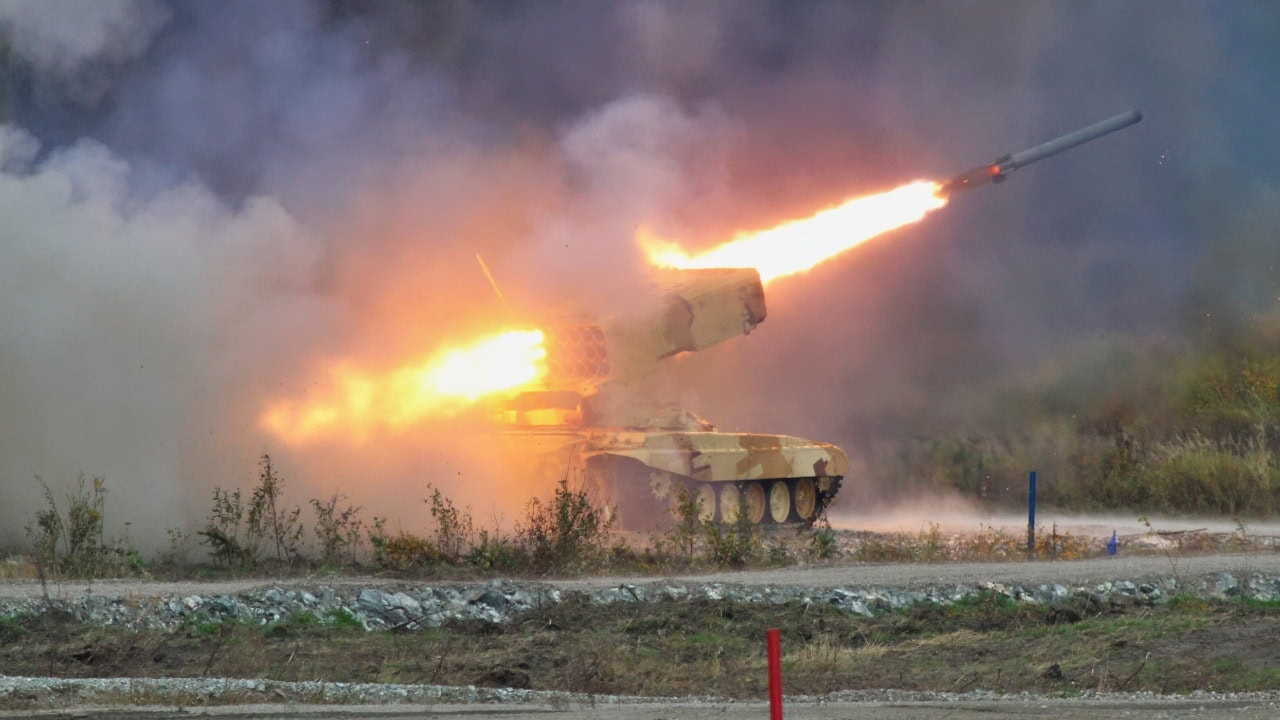
Russia’s full-scale invasion of Ukraine in 2022 was never about pushing back against NATO expansion—nor indeed about any real security concerns for Russia. It was about empire. The Kremlin will do everything it can to drag the world back into the past. Russian President Vladimir Putin has made these ambitions clear in speech after speech.
In 2005, Putin described the breakup of the Soviet Union as the greatest geopolitical catastrophe of the 20th century. At age 72, he is running out of time to realize his vision of restoring Russian dominance. The war in Ukraine is, for him, not just about territory—it is about legacy, as he once compared himself to Peter the Great. Putin appears willing to see the Russian state bleed, and perhaps collapse, if that is what it takes to bring Ukraine to heel.
Longstanding Paranoia
Russia’s ambition to dominate Ukraine predates Vladimir Putin and it won’t end with him, unless Russia is defeated on the battlefield. The idea that Ukraine belongs within Moscow’s sphere of influence has been a persistent feature of Russian political thinking, even under supposedly democratic leadership in the 1990s.
When Ukraine gained independence from the Soviet Union in 1991, Russia’s first elected President, Boris Yeltsin, reportedly contemplated a nuclear strike to prevent Kyiv from breaking away permanently. Though the threat was never carried out, it reveals how deeply rooted the Kremlin’s anxiety over Ukrainian sovereignty truly is. As the Soviet Union was collapsing, Yeltsin, then President of the Russian Federative Republic, stated that Russia reserved the right to review its borders with any neighboring republic that chose to leave the union, with reference specifically to areas of Kazakhstan and Ukraine.
By 1994, Russia had already begun attempts to reassert control over Crimea, encouraging separatist sentiment and political unrest. The tension never fully dissipated. Tensions flared again in 2003 during the Tuzla Island crisis, when Russia began building a dam toward a Ukrainian island in the Kerch Strait, raising alarms in Kyiv about an attempted land grab. It was a clear attempt to challenge Ukrainian sovereignty. Though the crisis was eventually defused, it foreshadowed the future Russian aggression in Crimea.
In 2013, when Ukrainians took to the streets in the Euromaidan protests to demand closer ties with the European Union, Russia’s approach shifted from economic pressure to outright aggression. The annexation of Crimea in 2014 and the war in Eastern Ukraine marked the acceleration of Russia’s attempt to destroy the post-Cold War order itself.
Bad Deal on Ukraine: The Russia Threat Would Grow
If Putin gets what he wants in Ukraine, Russia would not just grow in size—it would also gain immense strategic depth and economic leverage. It would gain more than territory. Moscow would inherit much of Ukraine’s military, industrial base, and strategic infrastructure, boosting its power and reach. A victorious Russia would emerge stronger, more aggressive, and far harder to contain.
And Ukraine is only the beginning. An emboldened Russia would not stop there. The Kremlin would likely target vulnerable parts of Eastern Europe, moving to annex Belarus. Increasingly, it would turn its expansionist gaze on Central Asia. Fading Western attention could make future frontiers tempting. In fact, the majority of the Russian public still support Russia’s war in Ukraine. Garry Kasparov offered a powerful critique of the Russian imperial mindset, asserting, “Only the total defeat of the Russian Federation and the Ukrainian flag in Sevastopol [Crimea] will knock the virus of empire out of the brains of Russians. Russians must see—the empire is dead.”
Nonetheless, Russia would still have to manage its uneasy partnership with China. At present, Moscow is the junior partner, dependent on Chinese trade, technology, and diplomatic cover. But a victorious Russia in Europe, having successfully conquered Ukraine and weakened the West, could shift that balance. Beijing might become more accommodating, viewing Russia as a more useful and capable counterweight to the West rather than a weakened client state.
Kazakhstan’s Pushback
The outcome of the war in Ukraine will shape not only Europe’s future but the entire post-Soviet space. A bad peace deal, one that rewards Russia’s aggression or allows it to keep occupied territory, will not bring stability. It will invite the next war.
Since Russia’s full-scale invasion of Ukraine, Central Asian states, especially Kazakhstan, Uzbekistan, and Kyrgyzstan, have taken cautious but notable steps to distance themselves from Moscow. Kazakhstan has led the way, refusing to recognize Russia’s annexation of Ukrainian territory, abstaining from pro-Russian UN votes, and sending humanitarian aid to Ukraine.
Kazakh President Kassym-Jomart Tokayev has publicly rejected Moscow’s territorial claims in Ukraine, even in Putin’s presence. Astana has also promoted the Kazakh language and culture while fostering deeper ties with Turkey, China, and the West. Uzbekistan, for its part, has maintained neutrality while avoiding membership in Russia-led blocs like the Collective Security Treaty Organization (it previously withdrew). It has instead pursued strategic partnerships with countries such as Turkey and the European Union.
Furthermore, Kazakhstan’s long-standing “multivector” foreign policy, designed to balance relations with Russia, China, and the West, is under growing strain as Russia’s war in Ukraine continues and its imperial ambitions become more explicit—as Charles J. Sullivan, a scholar of Central Asia, has noted. The Kremlin’s aggression, its push to integrate Belarus into a union state, and its pattern of veiled threats expose the risks of assuming Russia will behave as a status quo power.
Central Asia should also be deeply concerned about the U.S. re-engaging with Russia. If U.S. officials engage with Putin and emerge from discussions propagating hardline Kremlin narratives on Ukraine, it’s not difficult to imagine how they might spin similar messaging on Central Asia.
Volodymyr Dubovyk, Director of the Center for International Studies at Odesa I. Mechnikov National University highlighted the long-term ambitions behind such moves in a recent interview. He explained, “I think that we are seeing an attempt by Trump to open a new chapter in the relations with Russia. This seems to be more of a strategic, longer-term drive.”
He further elaborated on Trump’s earlier efforts, saying, “He wanted to have some sort of the ‘grand bargain’ with Putin in his first presidential term. It did not work then. So, here comes another try.”
While Dubovyk acknowledged that this new attempt might fail, he emphasized, “It may still break at some point, but not for the lack of trying on the part of Washington.” Dubovyk also pointed to Trump’s deep connection with Russia, adding, “Trump has this affinity for Russia and Putin, which goes back years, and seems to be ideologically aligned with them.”
However, he cautioned that, “On the other hand, the fate of Ukraine was never seen as a priority, so it can be sacrificed.” Despite the potential for failure, Dubovyk noted, “This does not look like a tactical stint.”
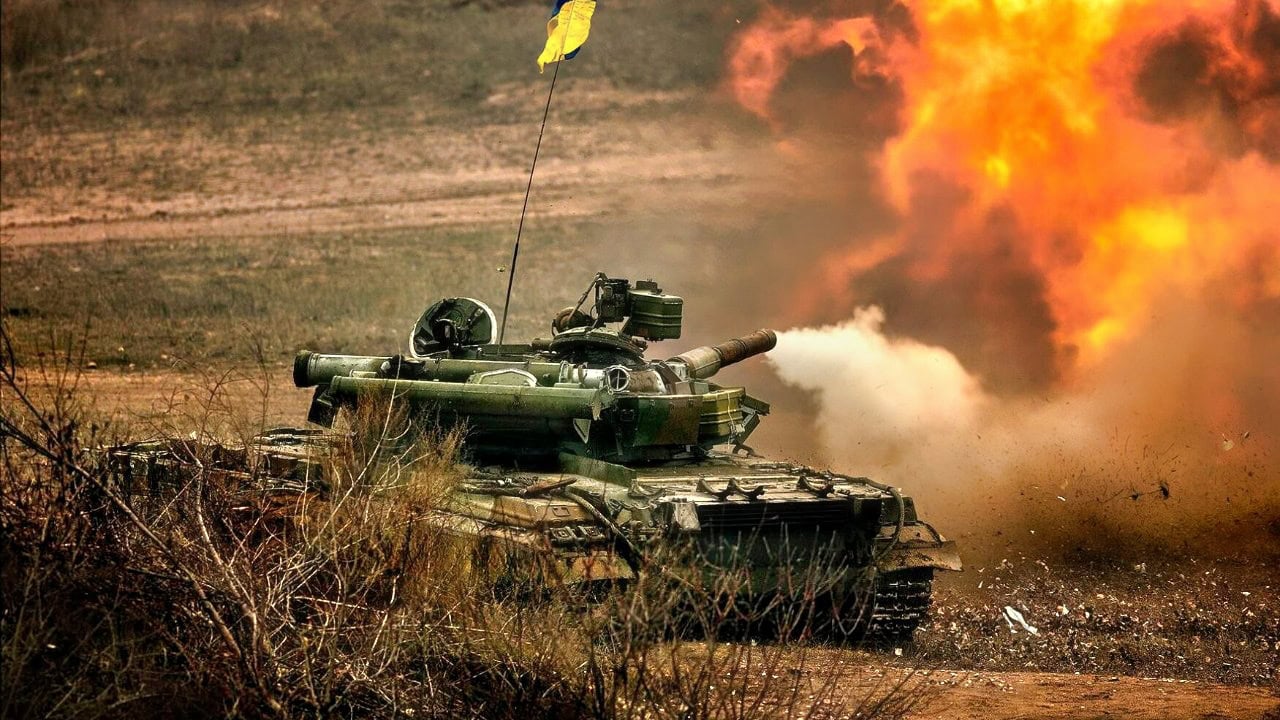
Ukraine tanks fighting. Image Credit: Creative Commons.
A flawed peace deal in Ukraine, or a Russian victory on the battlefield, would embolden Russia and would most likely lead to further aggression, even in Central Asia. With its imperial ambitions growing and Putin’s biological clock running out, Moscow may turn its attention to Central Asia, especially if Trump thinks he can turn Russia against China and join him in an alliance.
About the Author: David Kirichenko
David Kirichenko is a freelance journalist and an Associate Research Fellow at the Henry Jackson Society. He can be found on X/Twitter @DVKirichenko.