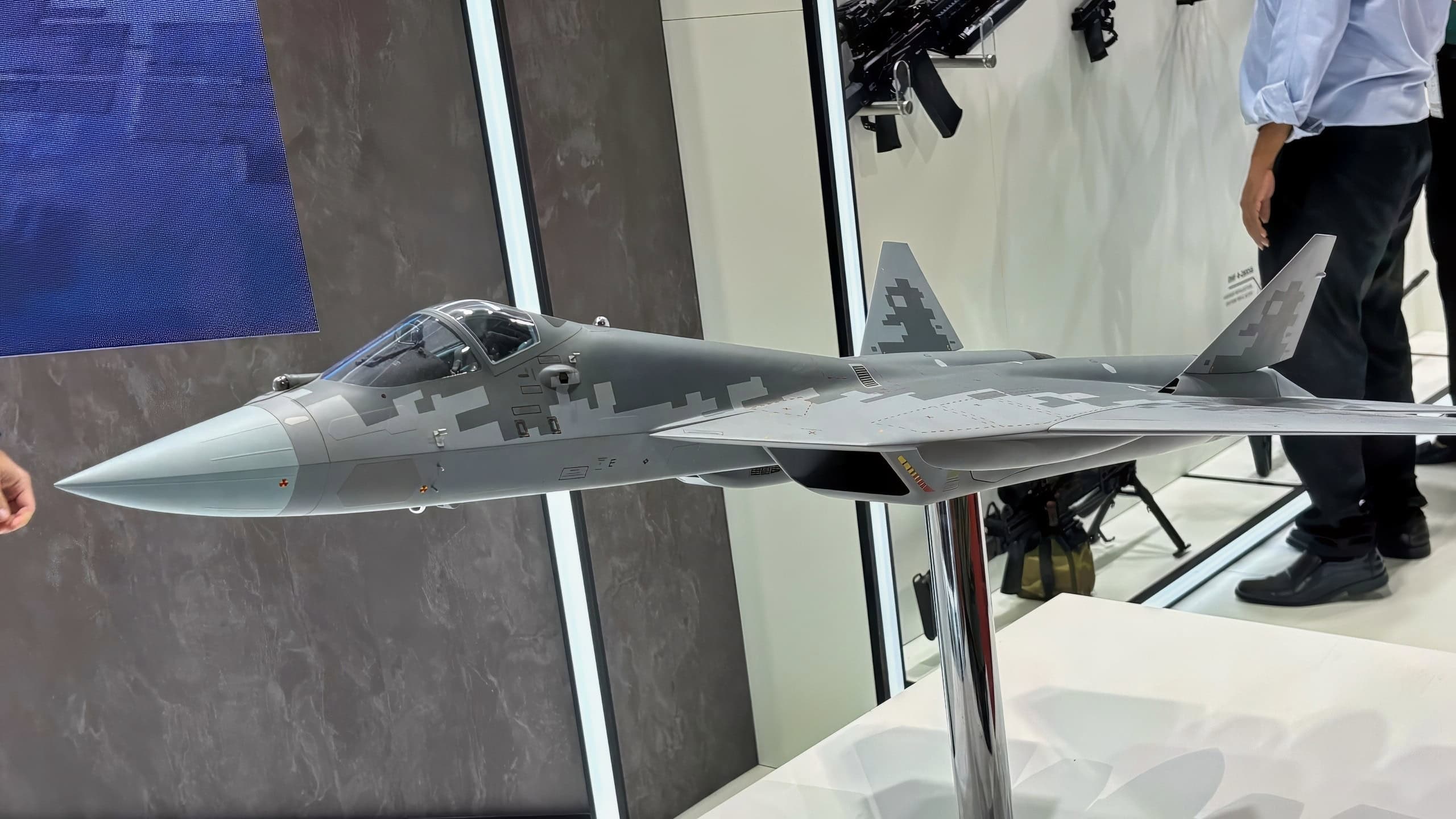
According to statements by officials from Russia’s state-controlled defense-industrial and arms export conglomerate Rosoboronexport (ROE), several nations have reportedly confirmed orders for the Sukhoi Su-57 5th -generation fighter aircraft. “The Su-57E is generating strong interest among Rosoboronexport’s partners, several of whom have already contracted for the Russian fighter jet. The list of customers for this aircraft is steadily expanding,” was the official announcement last month from the arms exporter’s press service.
The official statement was presented just prior to the international Asian armaments and military equipment expo, Defence Services Asia (DSA) Exhibition and Symposium, which was held this year in Kuala Lumpur, the Malaysian capital, on 20-23 April. In fact, the Su-57 Felon model shots we took in this article come from that event, as 19FortyFive was in attendance.
But the official statements do not provide details on the fact that there are, today, supposedly only three potential buyers of the aircraft. Two of them are nations which would be politically unacceptable as buyers of fighter aircraft – or any other piece of military equipment for that matter – to almost any nation other than Russia or the PRC. Those two are the Democratic People’s Republic of Korea (DPRK) and Iran.
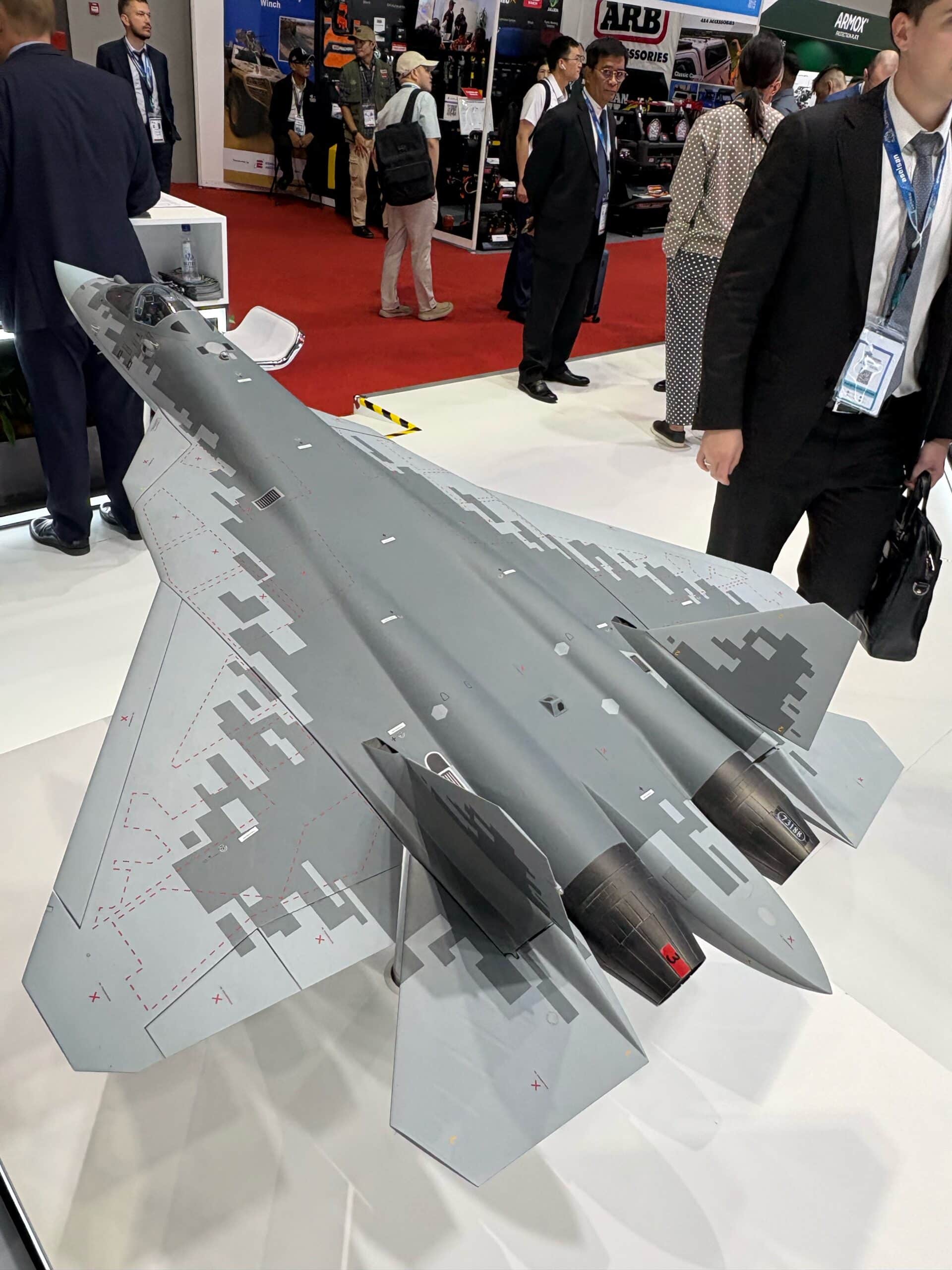
Su-57 Model 19FortyFive Original Photo
The third nation is one for which the Su-57 might be the only affordable and practical choice.
It has invested so long in Russian combat aircraft, has licensed-assembled hundreds of them in its own factories, and would have to make massive investments in its air force if it acquired a US stealth aircraft – and that nation is obviously India.
Russian representatives point out in public statements that the Su-57 puts their country’s industry into a very special “club”, as the aircraft is currently one of only five fighter aircraft in service worldwide designated as 5th-generation fighters.
The others are the Chengdu J-20 and Shenyang J-35A/B, both produced in the People’s Republic of China (PRC), and the two models produced in the US by Lockheed Martin, the F-22 and F-35.
But the potential Su-57 buyers are also in another club: one of nations for which there are no options beyond the Russian aircraft.
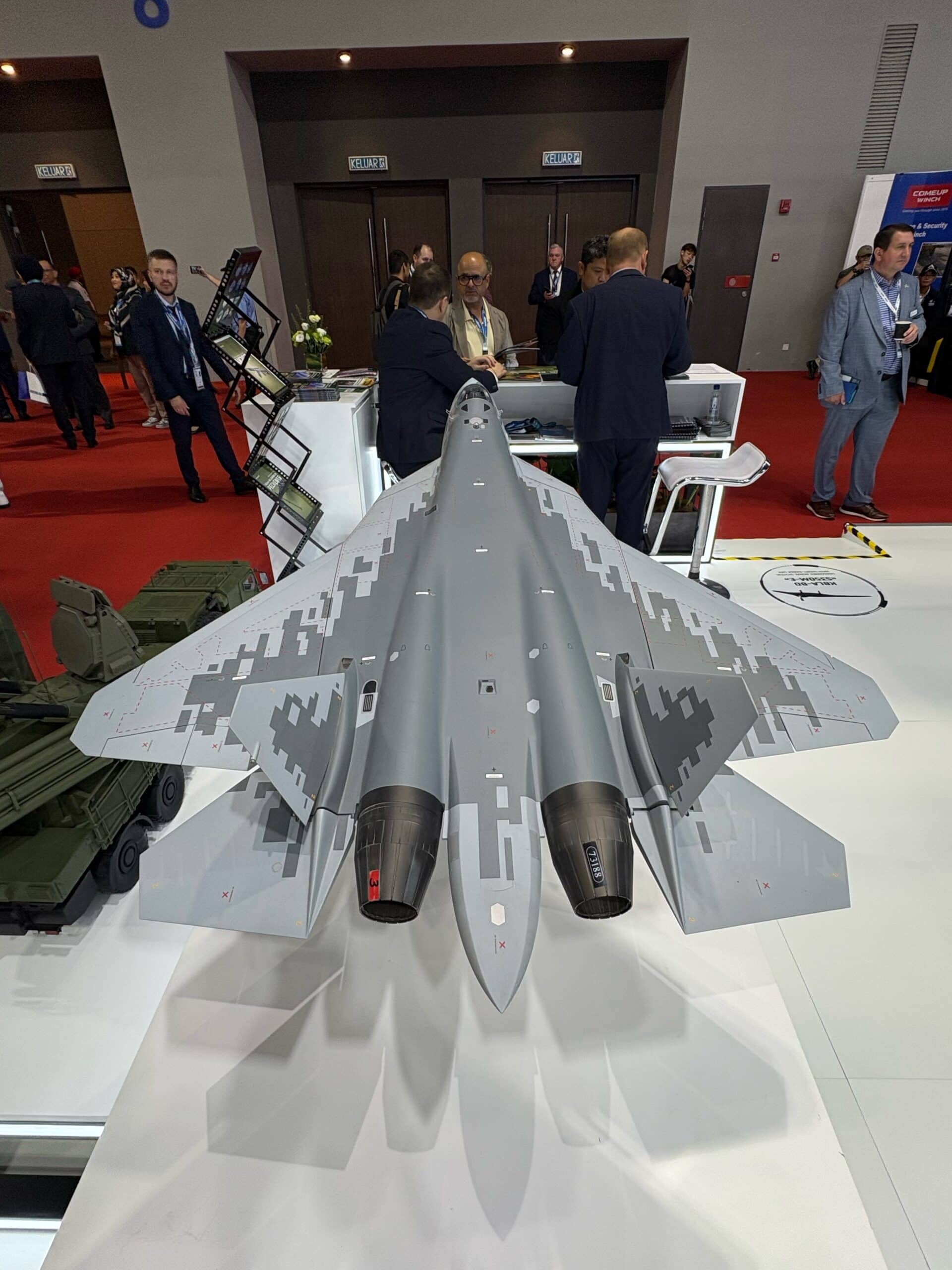
Su-57 Model 19FortyFive Original Photo
Stealth Variations
Of those other four stealth fighters, the oldest design is the F-22, which first flew in the early 1990s. The Su-57 first flew two decades later in January 2010, and the Chengdu design team conducted the first “official” flight of the J-20 in January 2011 – making both aircraft two decades “newer” than the F-22.
But despite being the oldest fighter rated as stealthy, the F-22 is still considered to have the lowest radar cross-section (RCS) of any fighter, even today. According to recent RCS performance assessments, the F-22 Raptor comes first, followed by the F-35 Lightning, then the J-20 and J-35, with the Su-57 in last place, with the largest radar signature.
The best estimates are that the Su-57 has an ~0.5 m² RCS in the frontal hemisphere vs. the F-22’s ~0.0001 m² all-aspect RCS. Previous assessments of the Su-57 found that its overall design demonstrated too many platform misalignments, and its industry lacked the ability to achieve the level of workmanship required for a stealth aircraft on par with an F-22 or F-35.
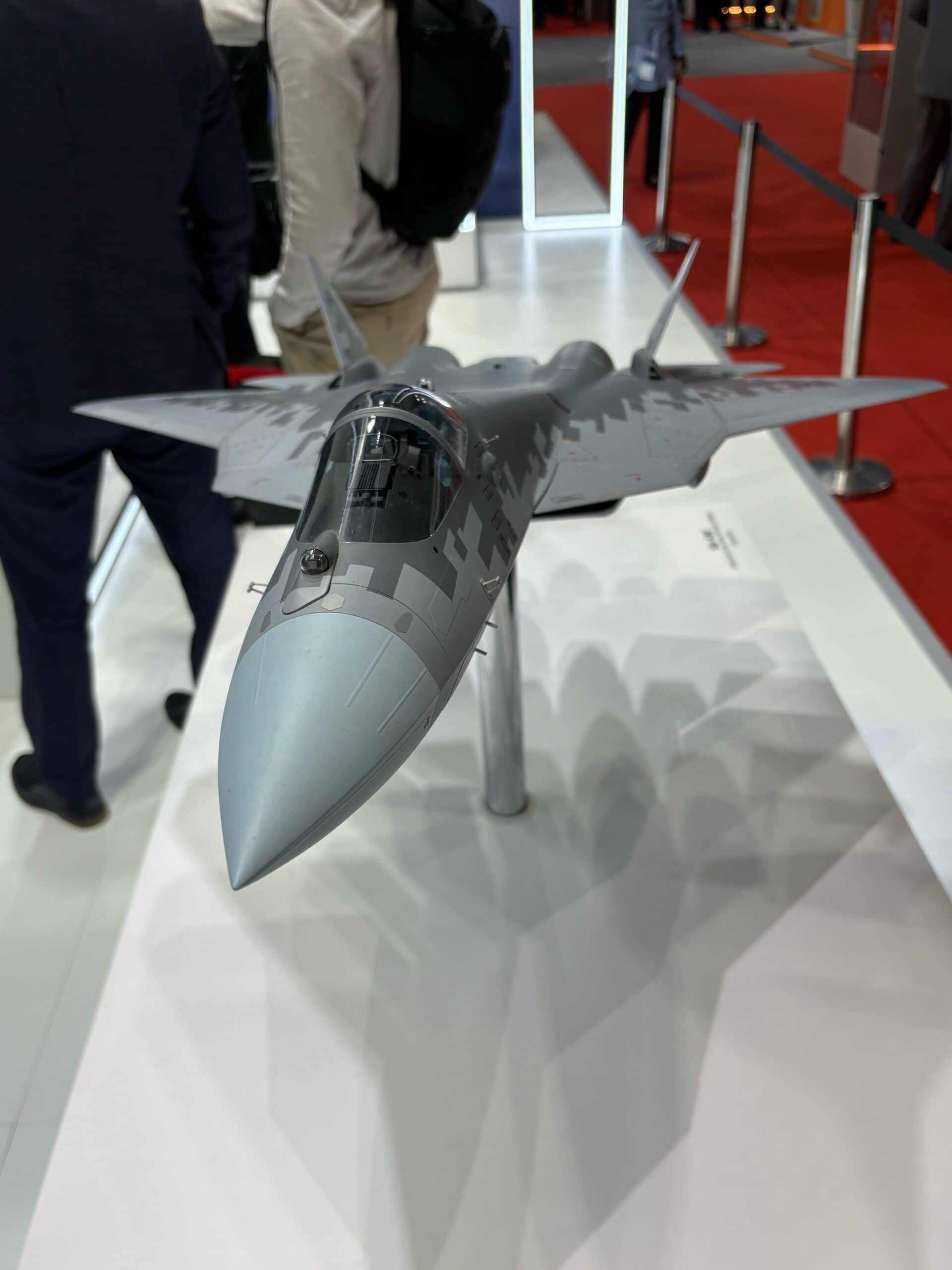
Su-57 Model 19FortyFive Original Photo
According to Russian information on the program, it relies more on post-production applications of radar-absorbing material. All the Su-57’s component subassemblies – to include its wings and engines – have been tested in an anechoic chamber to measure the all-aspect RCS so that the level of these treatments required can be determined.
Several years ago, the “grey cardinal” of Russian aviation RCS technology, Dr. Andrei N. Lagarkov, spoke to Zvezda television – the country’s main military YouTube channel – for a series of segments on the making of the Su-57. Lagarkov is a veteran Russian physicist, and in the 1980s he founded what was, at the time, the USSR’s leading center for the study of stealth technology.
In his interviews on the Su-57 program, he explains that RCS levels are directly proportional to the aircraft’s robustness and maneuverability. The Russian testing, he said, allows designers to determine whether the aircraft’s untreated surface has a low enough signature. If not, it is fitted with additional coatings and “special” paint.
“You can create an airframe out of the radar-absorbing material. This is also an option. This would be the best option, but raises the question of the aircraft’s durability,” Dr. Lagarkov explained.
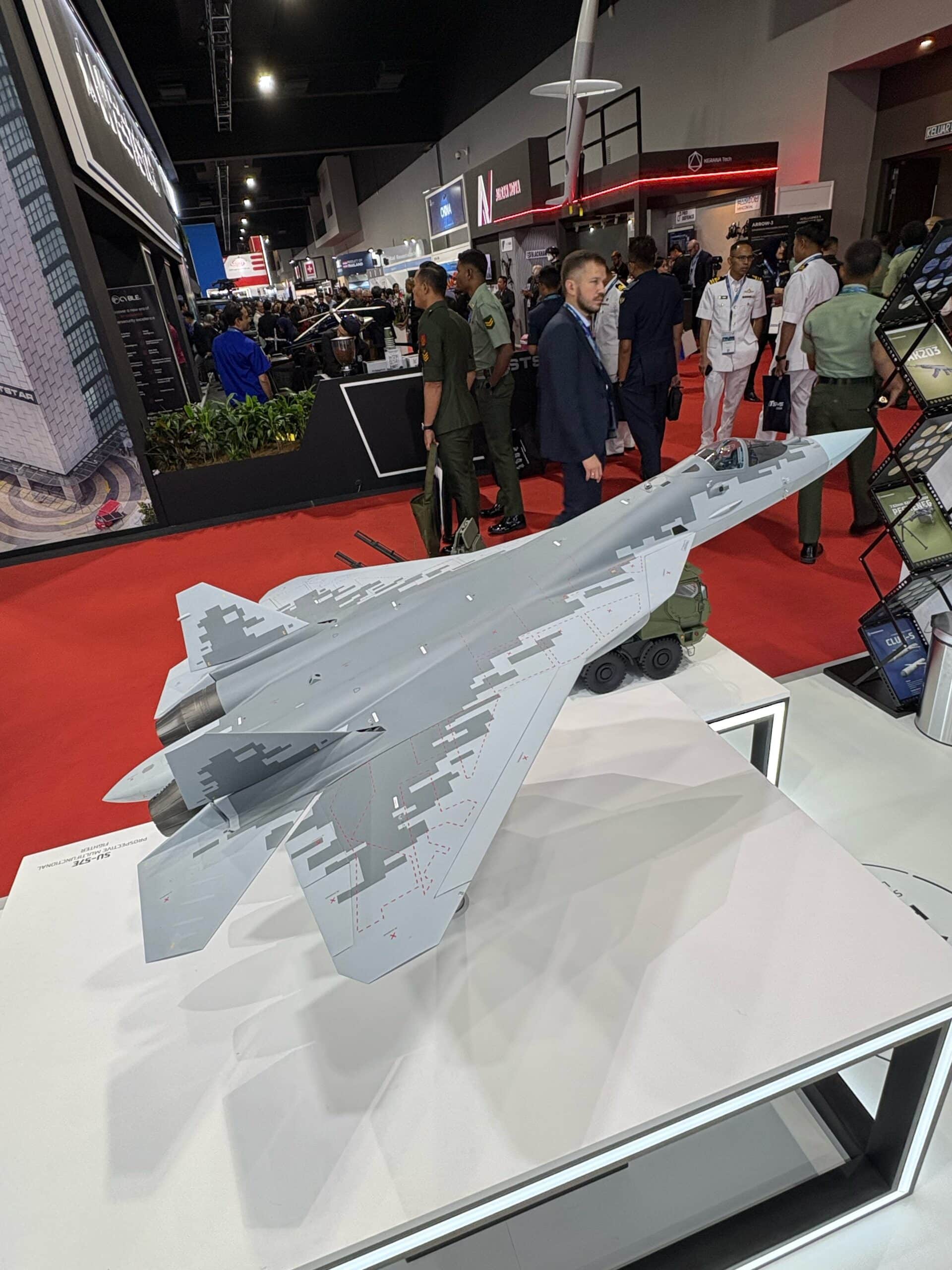
Su-57 Model 19FortyFive Original Photo
Characteristics of the Su-57 Felon
Some Russian officials have intimated that due to its age, the F-22’s avionics are inferior to those of the Su-57. These statements, say US industry representatives, fail to take into account the comprehensive upgrades to the F-22 currently underway, which will create what is being referred to as the “Raptor 2.0.”
The F-22 Raptor is currently in the process of a comprehensive, $7.8 billion dollar “Raptor 2.0” modernization program that will keep the aircraft as the dominant air superiority platform into the 2040s/50s.
These upgrades include a new infrared search and track (IRST) system, advanced stealthy external fuel tanks/pods for increased range, enhanced radar, and a new open-architecture processing power system, which will allow for faster software updates.
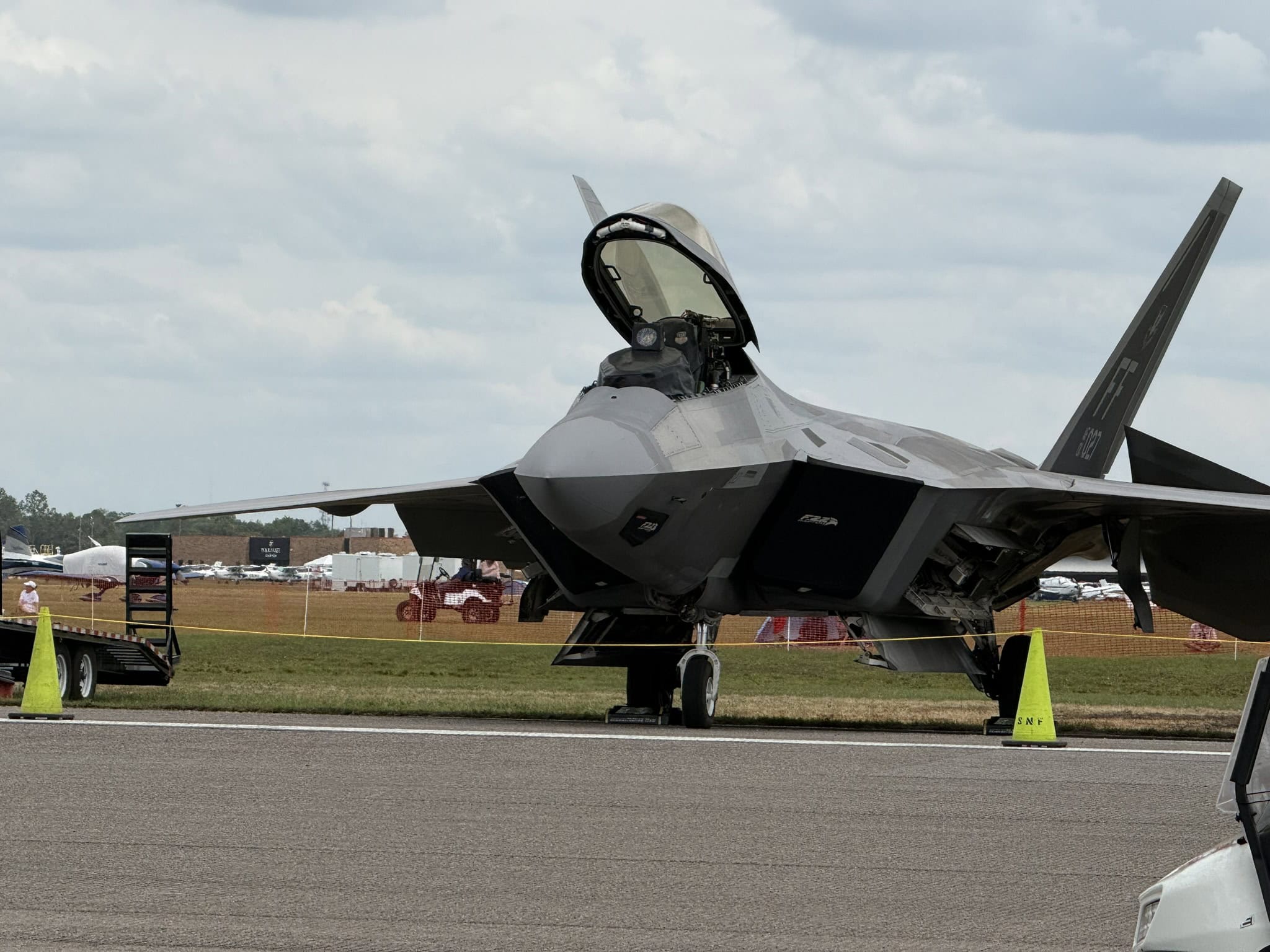
F-22 from Lakeland, Florida Airshow. Taken on 4/19/2026 by 19FortyFive.com
LM officials have also said these F-22 upgrades will include installing technologies developed as part of the company’s bid for the US Air Force’s Next-Generation Air Dominance (NGAD) program.
Of these potential suitors, the DPRK has shown the most interest in procuring Russian fighters, partially due to the age of the nation’s air force. In September 2023, the nation’s supreme leader, Kim Jong-un, inspected production facilities at the Komsomolsl-na-Amure plant and received a personal cockpit tour of the Su-57.
Su-57 Felon In 2 Words: Export Flop?
Russia has come to depend increasingly heavily on North Korean support for its ongoing war effort with Ukraine. Due to the ability of the Russians to assign highly overvalued prices to the Su-57, there is an increasing possibility that Pyongyang will receive the aircraft in a kind of “barter” arrangement in exchange for offsetting what has been billions in military assistance to Moscow.
About the Author: Reuben F. Johnson
Reuben F. Johnson has thirty-six years of experience analyzing and reporting on foreign weapons systems, defense technologies, and international arms export policy. Johnson is the Director of Research at the Casimir Pulaski Foundation. He is also a survivor of the Russian invasion of Ukraine in February 2022. He worked for years in the American defense industry as a foreign technology analyst and later as a consultant for the U.S. Department of Defense, the Departments of the Navy and Air Force, and the governments of the United Kingdom and Australia. In 2022-2023, he won two awards in a row for his defense reporting. He holds a bachelor’s degree from DePauw University and a master’s degree from Miami University in Ohio, specializing in Soviet and Russian studies. He lives in Warsaw.