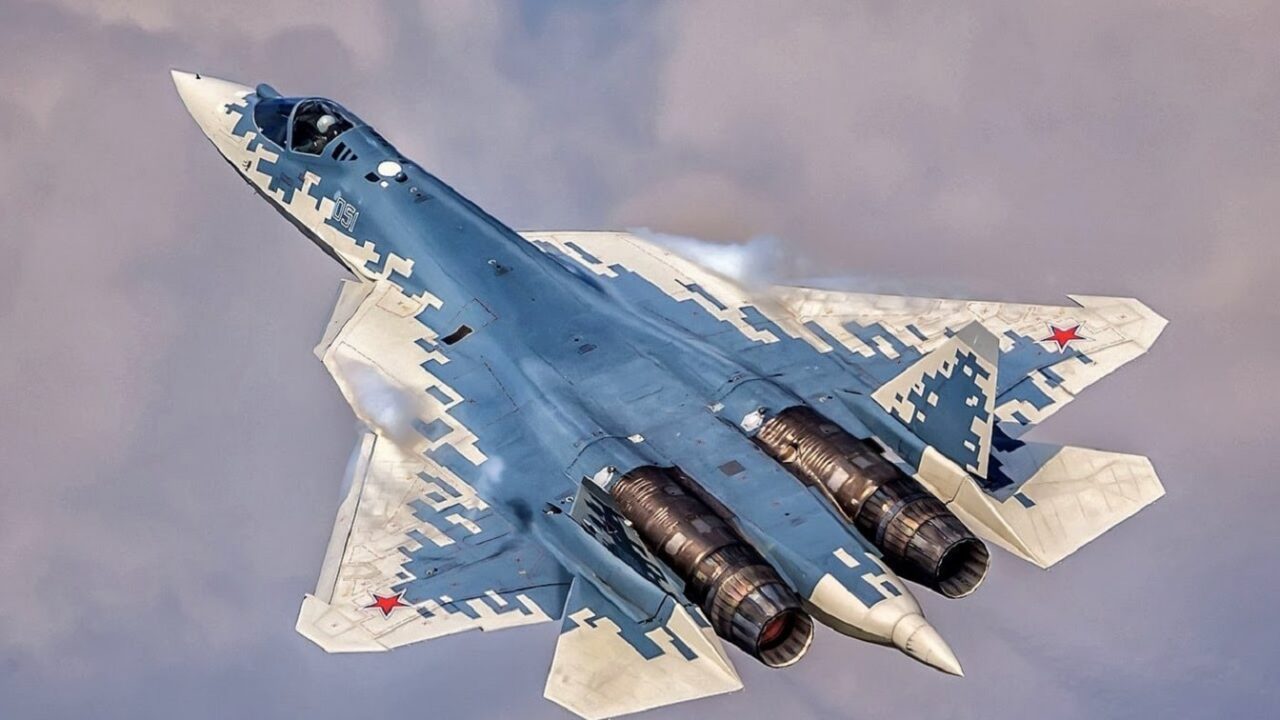
Summary and Key Points: Defense journalist Caleb Larson evaluates the Su-57 Felon, noting its limited combat role as a stand-off platform in Ukraine and its reported absence from direct engagement in 2026.
-Despite production bottlenecks and a global fleet estimated at fewer than 35 airframes, Russia successfully exported its first batch to Algeria, confirmed by a February 2026 video near Oum El Bouaghi Air Base.
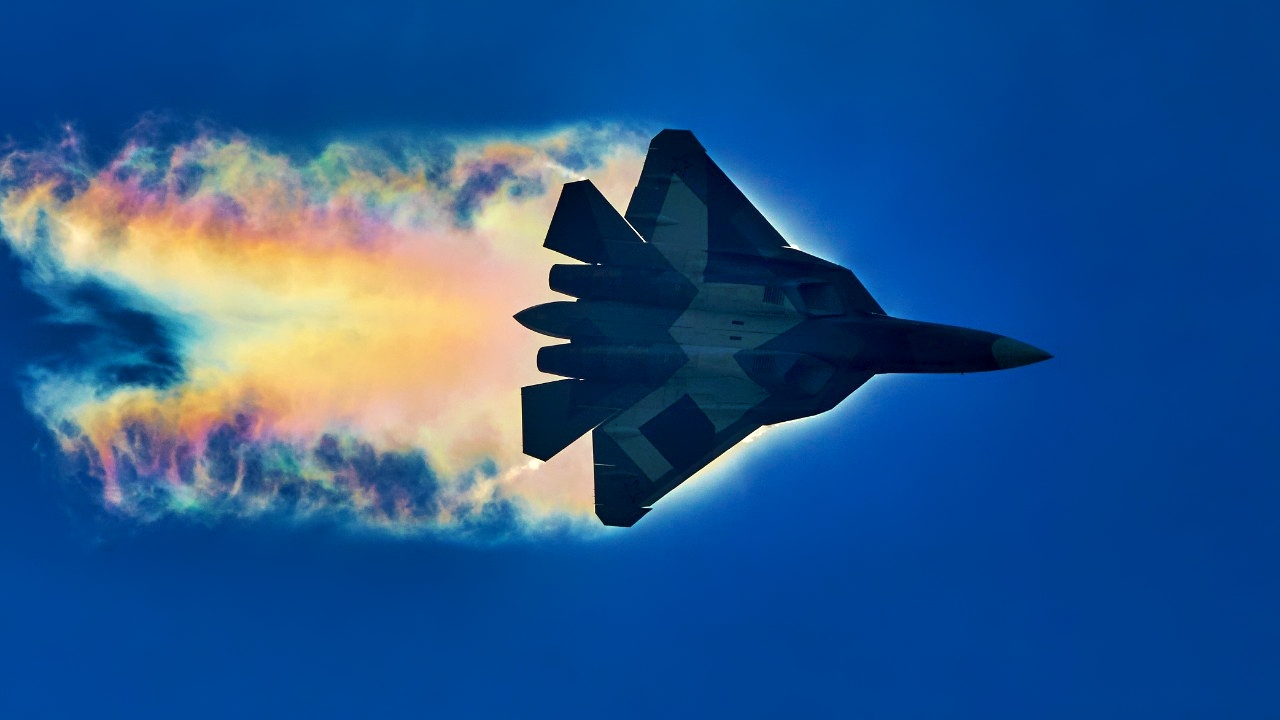
Russia’s Su-57 Felon Fighter

Su-57 Felon Fighter from Russian Air Force.

Su-57 and Su-75 Checkmate Russian Air Force.
-This report analyzes the U.S. State Department’s CAATSA warnings and the United Aircraft Corporation’s struggle to fulfill the 12-aircraft Algerian order while under extreme sanction pressure and engine development delays.
The Felon’s African Debut: Analyzing the Su-57’s First Export Success Amid U.S. Sanction Threats
At home in Russia, the Su-57 jet is feted as one of the world’s most technologically advanced aircraft—a large, dual-engine stealth fighter capable of going head-to-head against other leading stealth aircraft such as the F-35 multirole fighter and the F-22 Raptor.
A robust sensor suite and powerful radar give the jet unparalleled capabilities, according to its Russian proponents. But claims about the jet are at odds with its surprisingly modest combat record, one that counts precious few engagements.
In Russia’s war against Ukraine, the Su-57 has only rarely been taken into combat, with the majority of its operational use largely in line with how Russia employs its long-range strategic bombers: They are used as stand-off platforms that lob air-launched cruise missiles at Ukrainian targets.
The front in Ukraine is one of the most heavily contested airspaces in the world.
Powerful electronic warfare equipment lines both the Russian and Ukrainian sides, as do robust air defenses that offer a measure of protection from quadcopter drones, strategic bombers, and everything in between.
Ukraine’s skies are well protected, and Russia has been unable to exert any sort of dominance over broad swathes of the country—even with the vaunted Su-57 fighter, supposedly a stealthy jet. Its absence is perhaps a tacit admission of shortcomings in the fighter’s stealth capabilities.
Despite significant unanswered questions about the jet, it recently notched its first export success in the international arms market after Russia struck a deal in North Africa.
The Middle East and North Africa
Though the jet has seen only limited utility in Ukraine, the Su-57 seems to have found a buyer in Algeria.
One video that circulated on social media recently showed a Su-57 flying over the field of an Algerian farmer. The video is some of the first definitive evidence of the fighter flying outside Russia or Ukraine.
Evidence leaked online last year confirmed that 12 Su-57s were part of a larger Algerian order that included multiple aircraft types.
That Russia was able to export any Su-57s at all is rather remarkable.
One report compiled by the Royal United Services Institute tallied best estimates of Russian and Chinese combat aircraft production.
While the Chinese seem to be rapidly expanding the production of fifth-generation aircraft and reducing reliance on fourth-generation platforms, Russia seems to be moving more modestly in developing their sole fifth-generation fighter, the Su-57.
According to RUSI, Russia has manufactured only about 21 Su-57s in total, with potentially one loss.
If Russia can meet Algeria’s order and build two dozen new Su-57s, it would be a significant expansion to the global Su-57 fleet.
It remains to be seen whether United Aircraft Corporation, the Russian state-owned conglomerate of which Sukhoi is a member, can fulfill that order on time and within budget, given the significant resources Russia is allocating to its war in Ukraine.
Real Stealth or Real Gimmick?
Though the Su-57 is notionally a fifth-generation fighter, its stealth capabilities are a matter of debate.
The Russian fighter features several features consistent with those of a stealth aircraft. But several other aspects of the design are inconsistent with typical fifth-generation aircraft.
The Center for European Policy Analysis cast doubt on Russia’s claim that the jet is a true fifth-generation aircraft. Its analysis noted that some of the Su-57’s design features seem more consistent with fourth-generation aircraft. In fact, CEPA went so far as to say the Russian jet was a fraud.
But questions about the jet’s characteristics are difficult to parse with a high degree of certainty.
What is clearer is that one of the jet’s more significant obstacles will be production, both for Russia and, perhaps more importantly, for the jet’s newest international customer.
It seems unlikely that United Aircraft Corporation would find strong demand for the jet during the land-centric war in Ukraine. Algeria, however, would prefer to have those jets as soon as possible.
Though the Algerian Su-57 purchase would presumably inject some funds into the Su-57 program, Russian military production is notoriously slow.
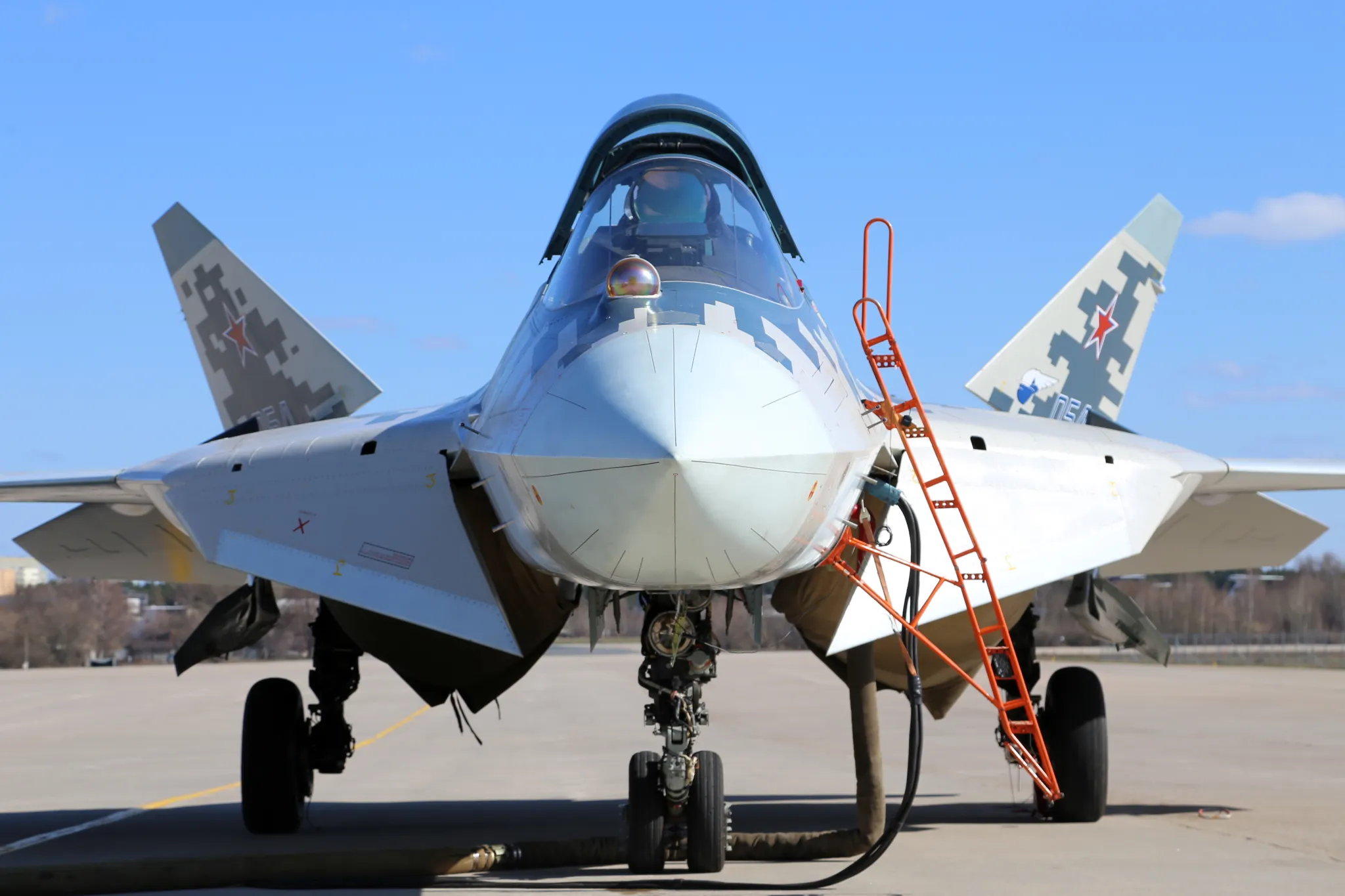
Russia’s Su-57 Stealth Fighter. Image Credit: Creative Commons.
Russia has many fires to fight, not just in Ukraine, but in response to the Israeli-American campaign against Iran, where Russia is reportedly assisting the Iranians with targeting data.
Time will tell how high on the list of priorities the Su-57 is.
About the Author: Caleb Larson
Caleb Larson is an American multiformat journalist based in Berlin, Germany. His work covers the intersection of conflict and society, focusing on American foreign policy and European security. He has reported from Germany, Russia, and the United States. Most recently, he covered the war in Ukraine, reporting extensively on the war’s shifting battle lines from Donbas and writing on the war’s civilian and humanitarian toll. Previously, he worked as a Defense Reporter for POLITICO Europe. You can follow his latest work on X.