Summary and Key Points: The arrival of the Su-57E “Felon” in Algeria marks a watershed moment for North African air power, making Algiers the first foreign operator of Russia’s premier stealth fighter.
-In early February 2026, footage confirmed the fifth-generation aircraft operating alongside Su-35s in Algerian airspace, ending years of speculation.
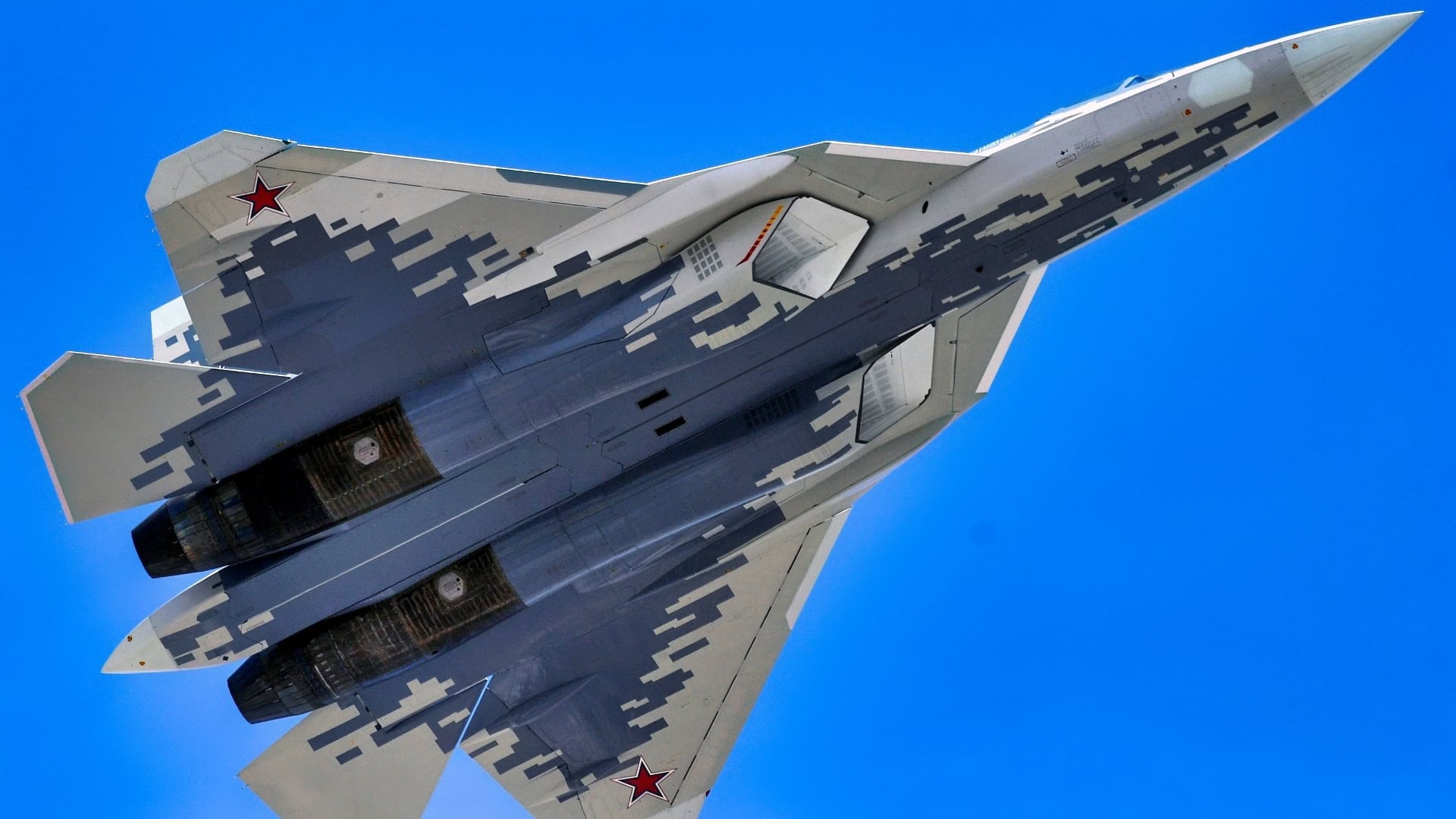
Su-57 Felon from Russia. Image Credit: Creative Commons.
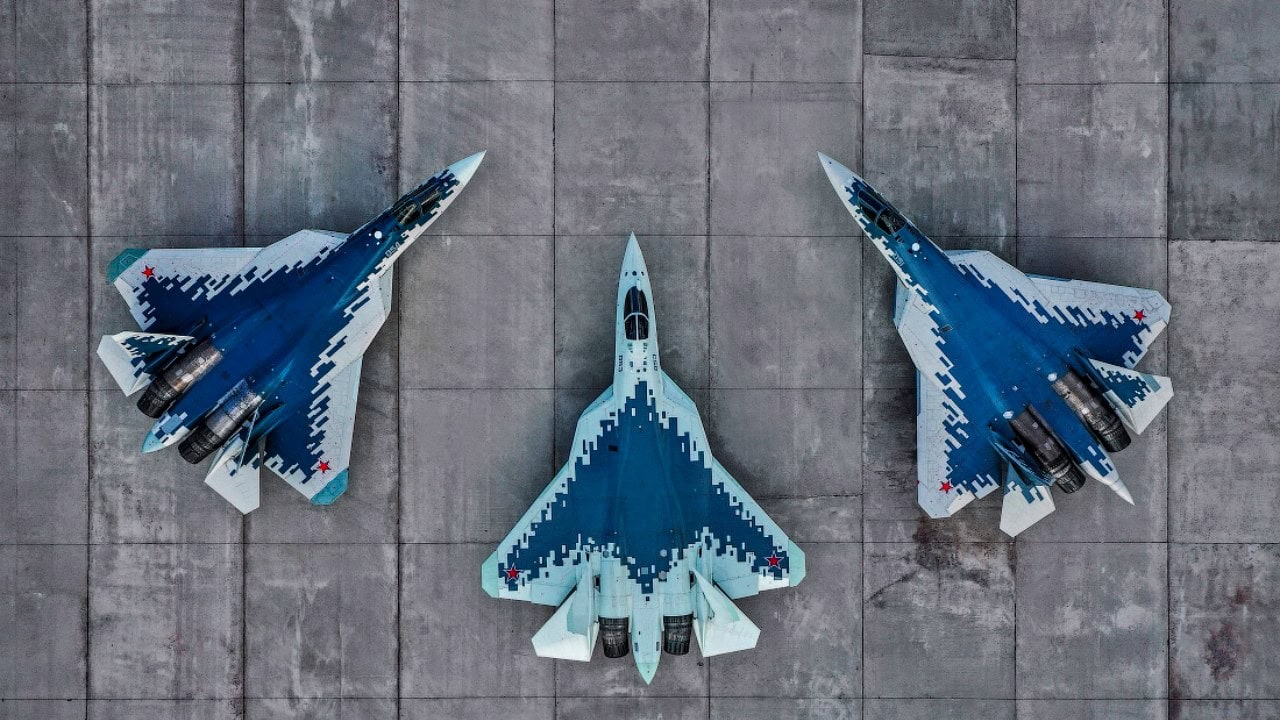
Su-57 Felon. Image Credit: Screengrab from X.
-However, this “Sukhoi Gambit” has immediately triggered a geopolitical backlash, with the U.S. State Department warning of imminent CAATSA sanctions that could cripple Algeria’s defense budget.
-As the Algerian Air Force integrates these 14 stealth jets, the region faces a new, stealth-driven arms race.
Stealth or Sanctions? The High Price of Algeria’s Secret Su-57 Deal with Russia
Algeria reportedly began operating an export variant of the Sukhoi Su-57 fifth-generation stealth fighter—Algiers’ model reportedly carries the designation Su-57E. That would make this nation the first export customer to receive the Russian aircraft.
Initial reports about the export of the aircraft to Algeria first surfaced in 2019 during the Moscow Air and Space Exposition.
The agreement reportedly reached at the time was for 14 Su-57 aircraft at a purchase price of $2 billion. However, the program suffered several delays because of technological bottlenecks that prevented the Komsomolsk-na-Amure plant from tooling up and engaging in full-scale series production.
There were also complications associated with developing a set of avionics for the Su-57E that would meet customer requirements. There are connected reports of a separate contract signed in 2021 for the upgrade of the Algerian Su-30MKA that would involve some of the avionics developed for the Su-57—creating some commonality between the two airframes.
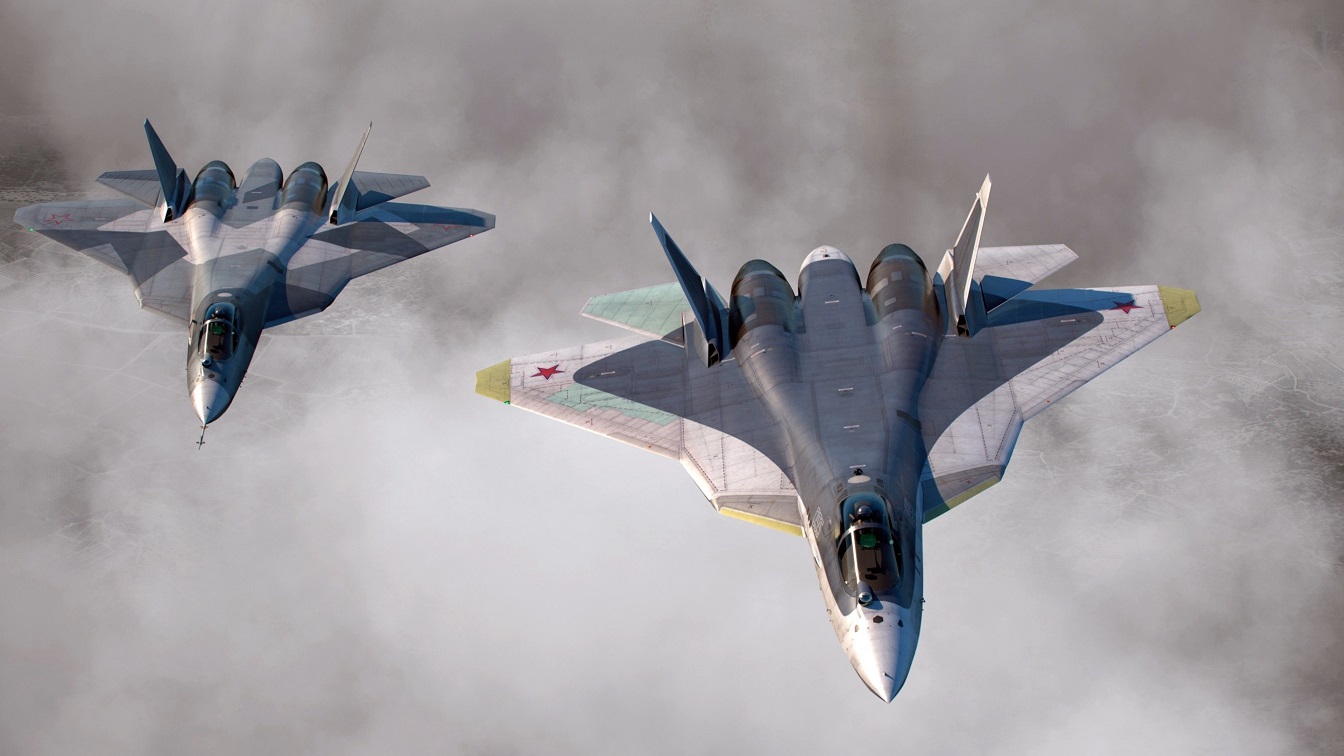
Su-57 stealth fighter. Image Credit: Artist Rendition.
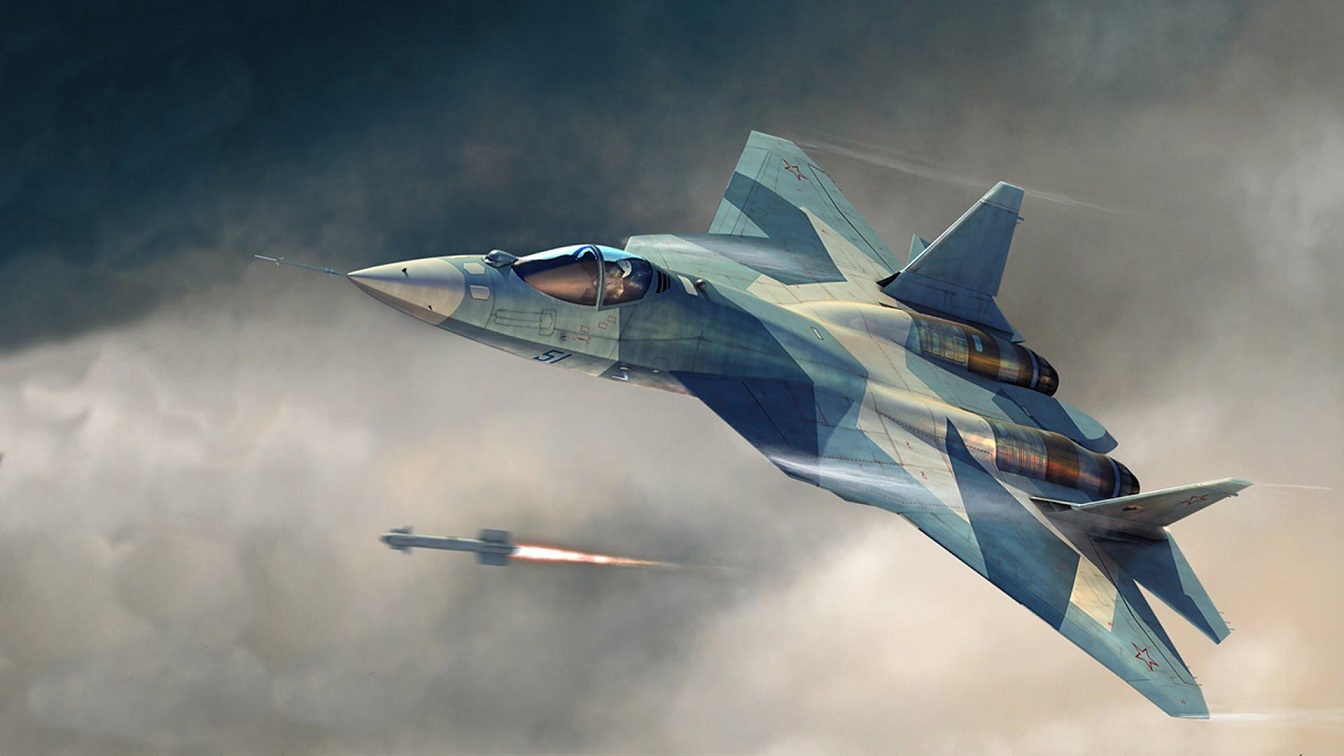
Su-57 artist rendering. Image Credit: Creative Commons.
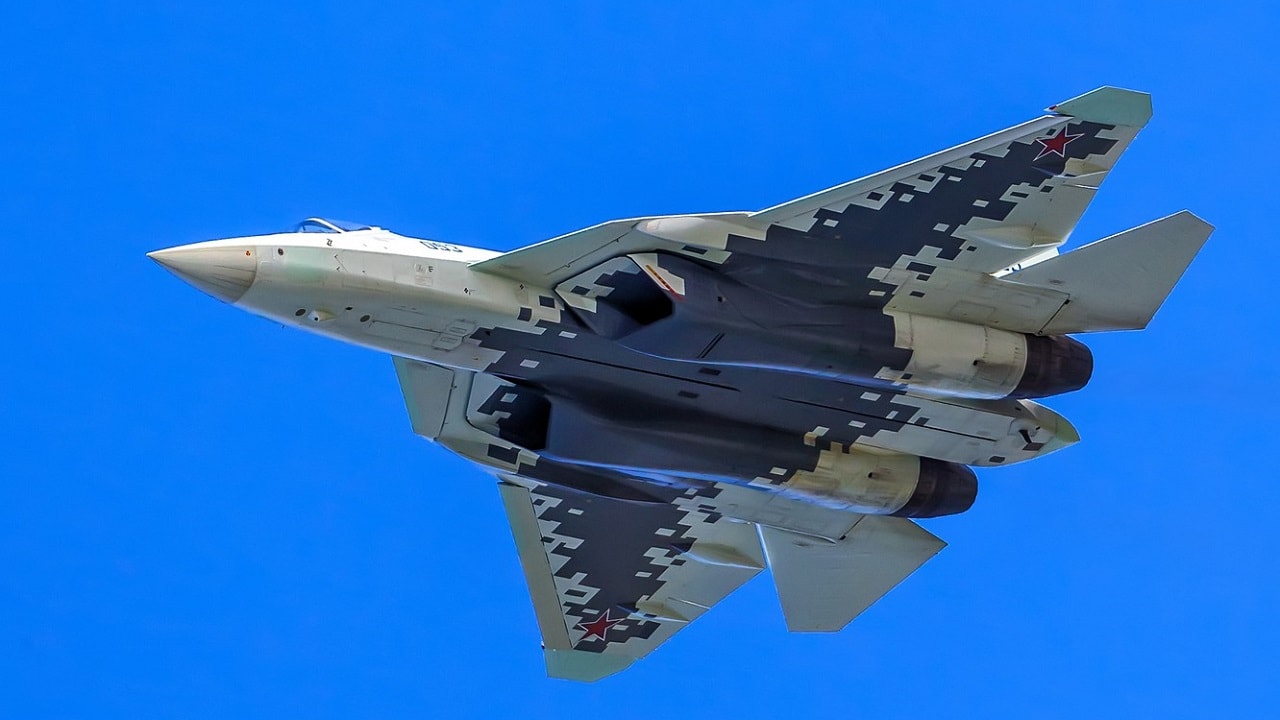
Su-57 stealth fighter. Image Credit: Creative Commons.
Both aircraft are equipped with a passive electronically scanned array radar. The Su-30MKA is built with a version of the Indian Su-30MKI’s NIIP N011M Bars radar on board, and the Su-57 is fitted with the N035 Irbis radar set, a version of the same radar that was originally designed for the Su-35.
On-Board Systems
Later versions of the Su-57 are supposed to be flying with an active electronically scanned array (AESA) radar, the NIIP N036 Belka. The design team for this radar reportedly struggled with the sourcing of transmit/receive modules (TRMs) efficient enough as measured by the ratio of the signal generated over the power consumed.
What is now designated as the N036-1-01 has been analyzed to be less capable than the U.S. F-22’s AN/APG-77 AESA—the Russian radar reportedly has roughly 25 percent less TRMs in its main array.
But those familiar with the Su-57’s radar design point out that the Russian aircraft uses multiple arrays, with a larger number of TRMs distributed across the total.
The Su-57 is fitted with two N036B-1-01 side-looking X-band AESAs with 404 TRMs.
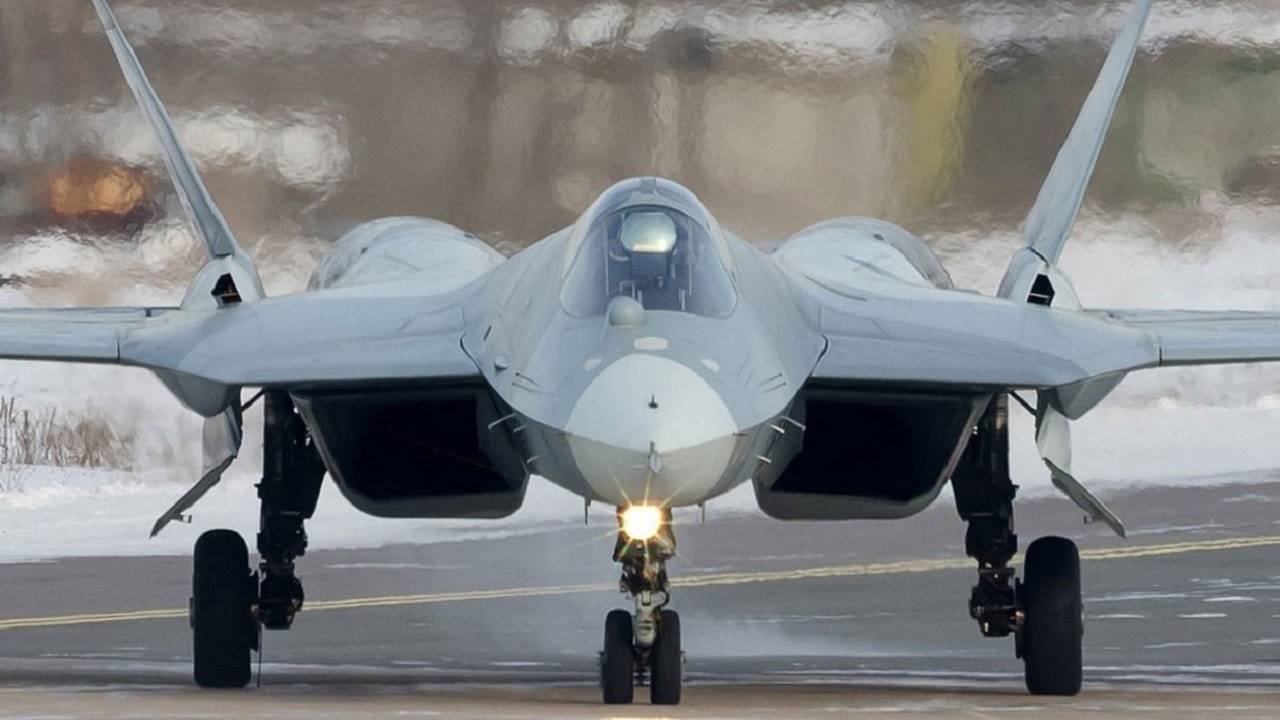
Su-57. Image Credit – Creative Commons.
The aircraft’s on-board mission computer is programmed to combine inputs from the several arrays using a sensor fusion mode to provide an integrated, complete air-data picture.
The radar and other sensors also operate in conjunction with a new-generation L402 Himalayan electronic warfare system. Its multi-mode design can detect, analyze, and neutralize enemy radar and communication signals.
This reduces the Su-57’s likelihood of being detected and targeted.
The L402 has its own transmitting and receiving antennas but also uses several of the different N046 arrays in conjunction with its own.
The self-protection suite also employs additional jamming hardware in the form of a directed infrared countermeasures module separated into two turreted installations.
The Algerian Customer
Algeria has been a steady customer over the years, having previously signed contracts with Russia for the delivery of several different combat aircraft. These include the Su-34ME and Su-35. Algeria officially confirmed its Su-57E procurement in 2024.
Details of the Su-57E contract have been scant. In 2025, United Aircraft Corporation CEO Vadim Badekha stated on Russian television that two aircraft had been handed over to an export client, without disclosing the customer nation.
Sightings of the aircraft over Algeria suggest a delivery may have been made to the Algerian Air Force, rather than Russian Aerospace Forces aircraft making a protocol visit.
Other footage has since shown a Su-57 fighter in flight. The desert surroundings appear to be similar to Algerian geography, but the origin of the video is not revealed.
There is speculation that the reason delivery to Algeria would be kept largely in the dark is because the North African state did not wish to incur Washington’s wrath.
In a hearing last week, Robert Palladino, head of the U.S. State Department’s Bureau of Near Eastern Affairs, told the Senate Foreign Relations Committee that Algeria acquiring military equipment from Russia is a serious concern for the U.S. Washington is now reportedly planning to block the Su-57 sale by imposing the Countering America’s Adversaries Through Sanctions Act on the Algerians.
About the Author: Reuben F. Johnson
Reuben F. Johnson has thirty-six years of experience analyzing and reporting on foreign weapons systems, defense technologies, and international arms export policy. Johnson is the Director of Research at the Casimir Pulaski Foundation. He is also a survivor of the Russian invasion of Ukraine in February 2022. He worked for years in the American defense industry as a foreign technology analyst and later as a consultant for the U.S. Department of Defense, the Departments of the Navy and Air Force, and the governments of the United Kingdom and Australia. In 2022-2023, he won two awards in a row for his defense reporting. He holds a bachelor’s degree from DePauw University and a master’s degree from Miami University in Ohio, specializing in Soviet and Russian studies. He lives in Warsaw.