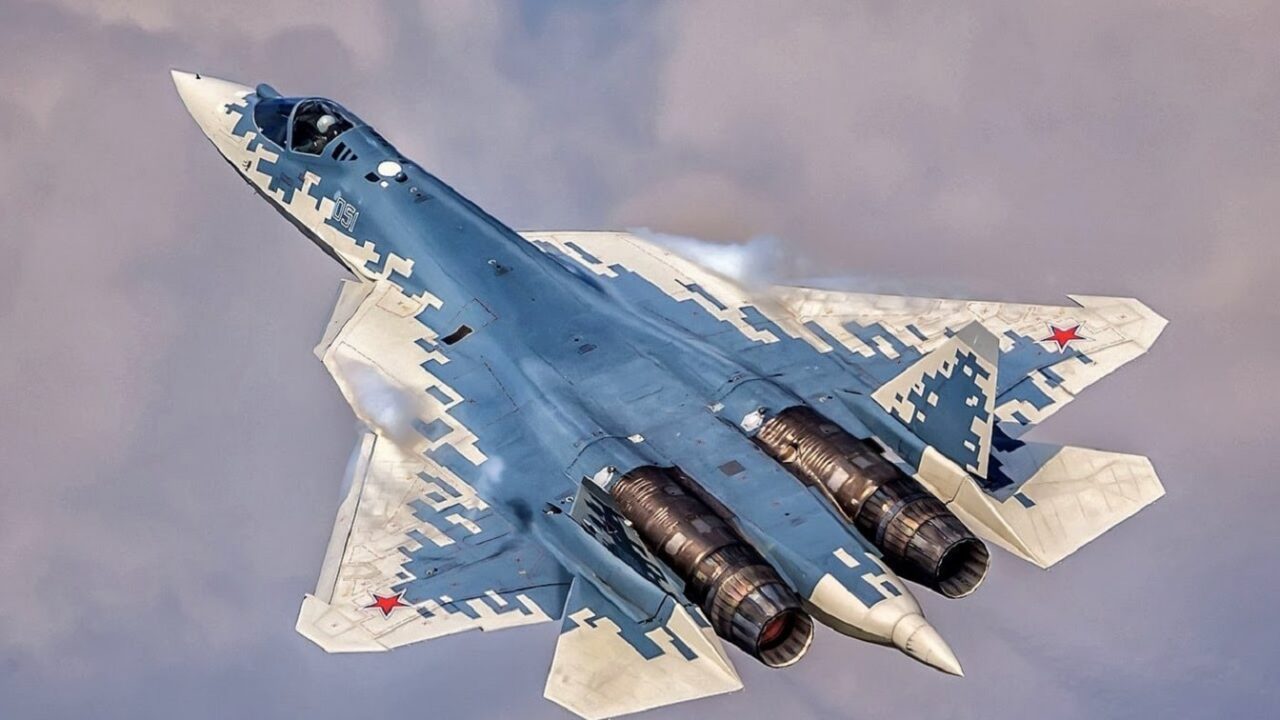
Synopsis: Russia’s Su-57 was marketed as a breakthrough fifth-generation fighter, with stealth, advanced sensing, and even manned-unmanned teaming.
-But the program is increasingly defined by scarcity and uncertainty. Despite years of promises and a widely cited plan to build 76 aircraft, fewer than 25 are reported as produced, leaving Moscow with a severe numerical deficit relative to a Western inventory measured in the hundreds.
-The Su-57’s speed, internal bays, and broad weapons menu suggest a capable design, yet questions persist about signatures, production quality, and whether Russia can field meaningful scale—especially as drone teaming becomes central to modern air combat.
Russia’s Su-57 Is Withering: Fewer Than 25 Jets, and the Future Looks Bleak
Despite years of hype and Russian media accounts detailing ambitious production plans and technological attributes, the 5th-generation Su-57 stealth aircraft is withering, and plans for its future are dissolving into a mist of uncertainty and potential irrelevance.
For many years, the Russian press cited a contract to build as many as 76 new Su-57s, yet production delays, supply chain challenges, and poor manufacturing have yielded fewer than 25 jets.
Breakthrough Disappointment
The aircraft has been described as having breakthrough stealth, F-35-like sensing, and a US Air Force-like ability to operate “loyal wingman” drones through manned-unmanned teaming.
These claims seem subject to debate, scrutiny, and substantial uncertainty at the very least. However, regardless of the jet’s performance parameters, the Russian Air Force suffers acutely from a numbers deficit.
The US Air Force, Navy, and Marines now collectively operate more than 650 F-35s, according to a 2024 Government Accountability Office report.
Consequently, Russia would have little to no opportunity to rival the US 5th-generation stealth air power. The essential equation here is that “mass matters,” and any large-scale Russian-NATO air engagement would overwhelmingly favor the West.
The Su-57 can reportedly reach Mach 2 and, like the F-22, operate with supercruise technology, meaning it can sustain supersonic speeds without afterburners. Information from “Aviation News” years ago reports that the Su-57 is engineered with 12 weapons hardpoints, including six internal and six external.
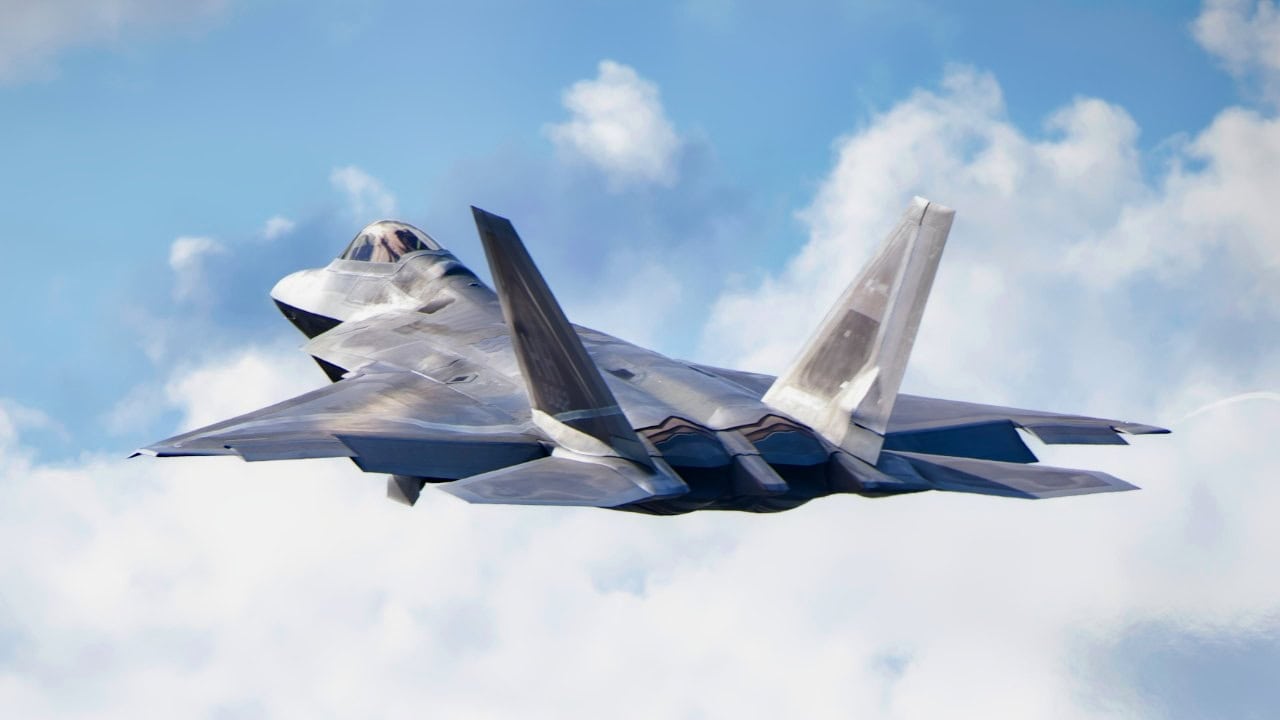
An F-22 Raptor aircraft takes off from Joint Base Pearl Harbor-Hickam, Hawaii, Aug. 8, 2024. The F-22 Raptor is a fifth-generation stealth fighter designed for air dominance, with capabilities in precision attack, advanced avionics, and unparalleled maneuverability. (U.S. Air National Guard photo by Tech. Sgt. Joseph Pagan)
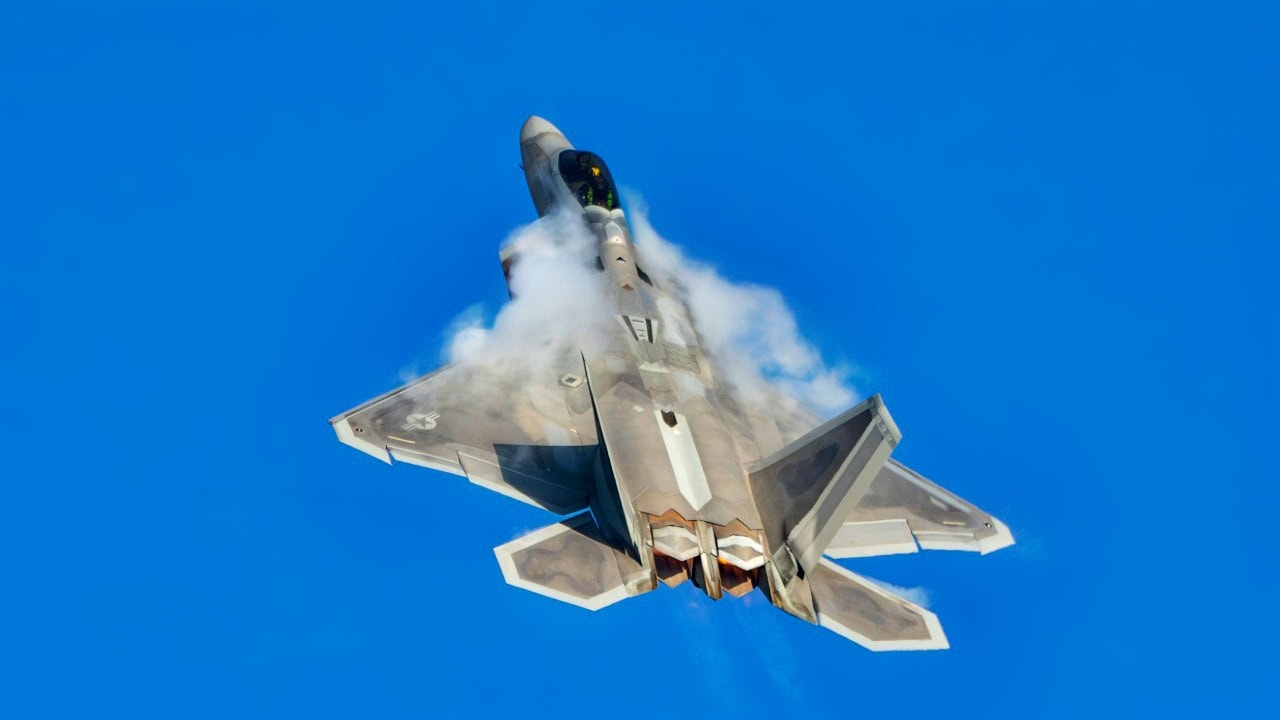
A U.S. Air Force F-22 Raptor, assigned to the F-22 Demonstration Team, executes precision aerial maneuvers during a practice airshow at Hill Air Force Base, Utah, Dec. 5, 2024. The practice session helps ensure the team maintains peak performance and readiness during the off-season. (U.S. Air Force photo by Senior Airman Nicholas Rupiper)
The data also lists a long arsenal of weapons, including anti-ship missiles, air-to-air and air-to-surface missiles, and guided bombs.
Many attributes of stealth are not visible per se, especially when it comes to buried engines, thermal management, or radar-absorbent coatings.
Yet, the Su-57 does not look as stealthy as an F-35. It looks like the Su-57 has an internal weapons bay and an F-22-like dual-engine configuration.
It looks a little less rounded, blended, and smoothed over than the F-35. That being said, the shape of the Su-57 is indeed stealthy, as it appears to blend the wing and body and uses horizontal structures.
The Su-57’s Mach 2 speed is not as fast as that of a US fifth-generation F-22, which is reported to reach Mach 2.25.
The twin-engine stealth fighter, intended to rival the US F-22, does exhibit a blended-wing-body stealth configuration, with radar-detectable hard edges, contours, or protrusions absent.
The aircraft does appear stealthy to the naked eye; however, both of its engine exhaust tubes protrude somewhat, potentially presenting shapes or configurations detectable by advanced radar technologies.
Also, perhaps of greater significance, the apparent size of the heat exhaust might seem to raise questions about its heat signature.
Despite this seemingly apparent limitation or thermal management deficit, Russia’s Sputnik news praised the Su-57’s thermal signature years ago, explaining that the Su-57 does fly with a reduced thermal signature. Sputnik News cited reduced heat signature as one of several Su-57 technical advantages in a 2010 report, earlier in the aircraft’s developmental process.
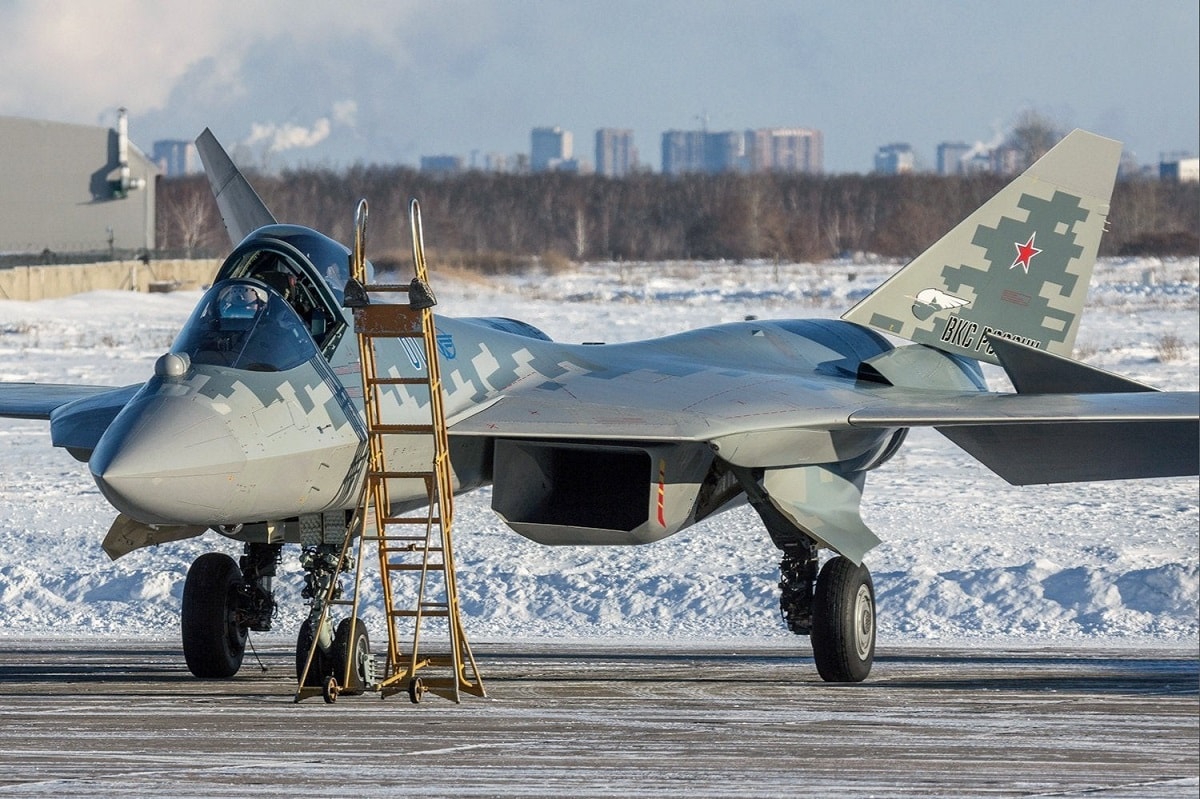
Su-57 Felon. Image Credit: Creative Commons.
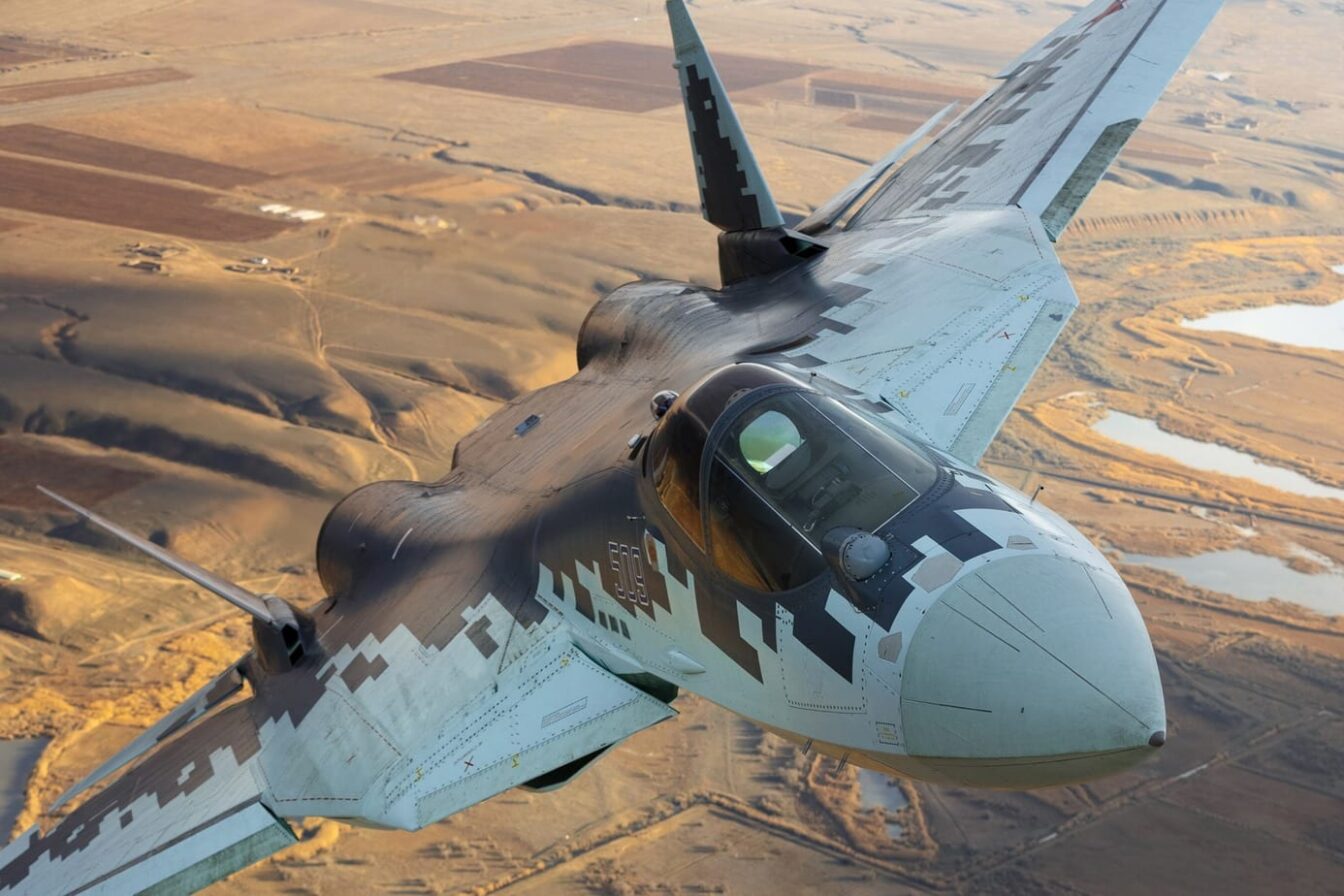
Russia’s Su-57 Felon Stealth Fighter.
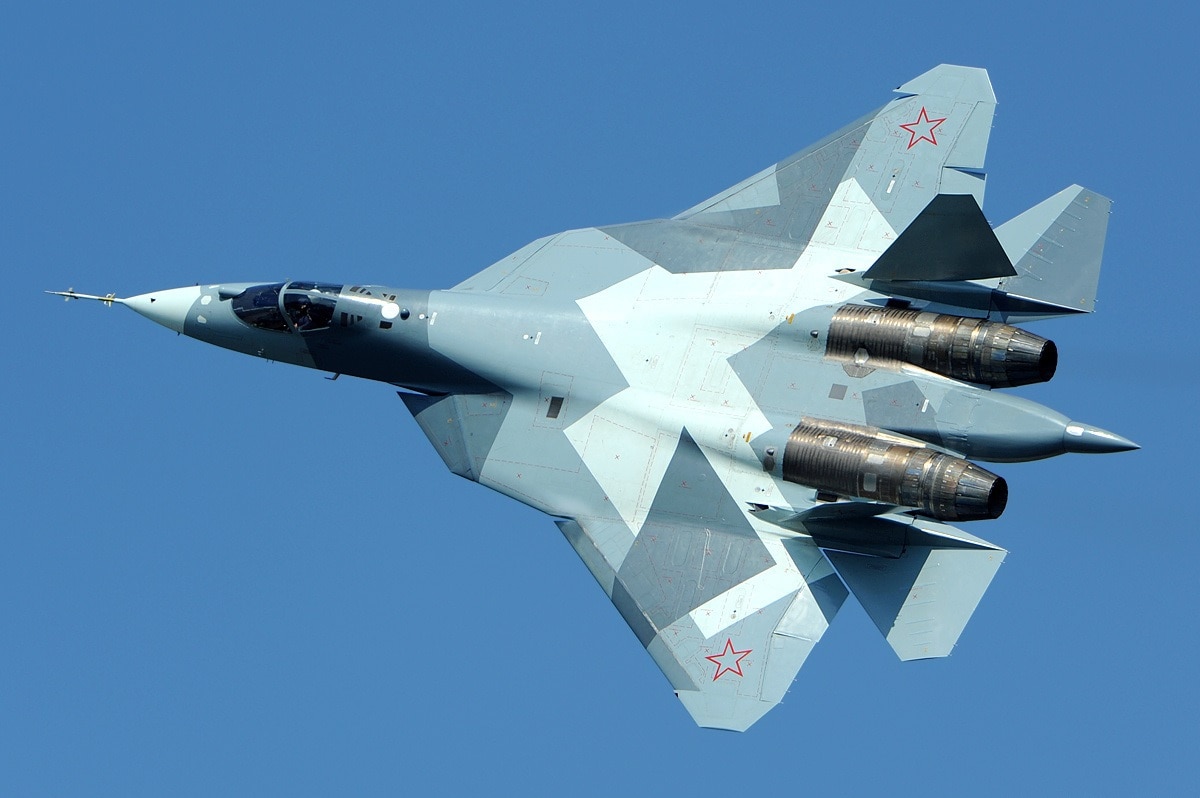
Russia’s Su-57 Stealth Fighter. Image: Creative Commons.
The report cites a Sukhoi developer saying that the use of composite materials, advanced aerodynamics, and a lower heat signature decreases its detectability by optical, infrared, or RF sensors.
Russia has also, in recent years, been working to network its S-70 Okhotnik-B drone with the Su-57 in a potential effort to match or parallel US manned-unmanned teaming initiatives.
While details may not be known, it appears, at a cursory glance, that Russia has been well behind the well-evolved US effort.
The US Air Force successfully demonstrated its ability to connect its Valkyrie drone to an F-22 and an F-35 years ago and is now flying Collaborative Combat Aircraft drones to support the F-35, F-22, and 6th-Gen F-47.
Russia’s Okhotnik-B stealthy drone appears to present a significant threat, yet the extent to which it can effectively network with Russian 5th-generation aircraft remains unclear.
About the Author: Kris Osborn, Defense Expert
Kris Osborn is the President of Warrior Maven – Center for Military Modernization. Osborn previously served at the Pentagon as a highly qualified expert in the Office of the Assistant Secretary of the Army—Acquisition, Logistics & Technology. Osborn has also worked as an anchor and on-air military specialist at national TV networks. He has appeared as a guest military expert on Fox News, MSNBC, The Military Channel, and The HistoryChannel. He also has a Master’s Degree in Comparative Literature from Columbia.