
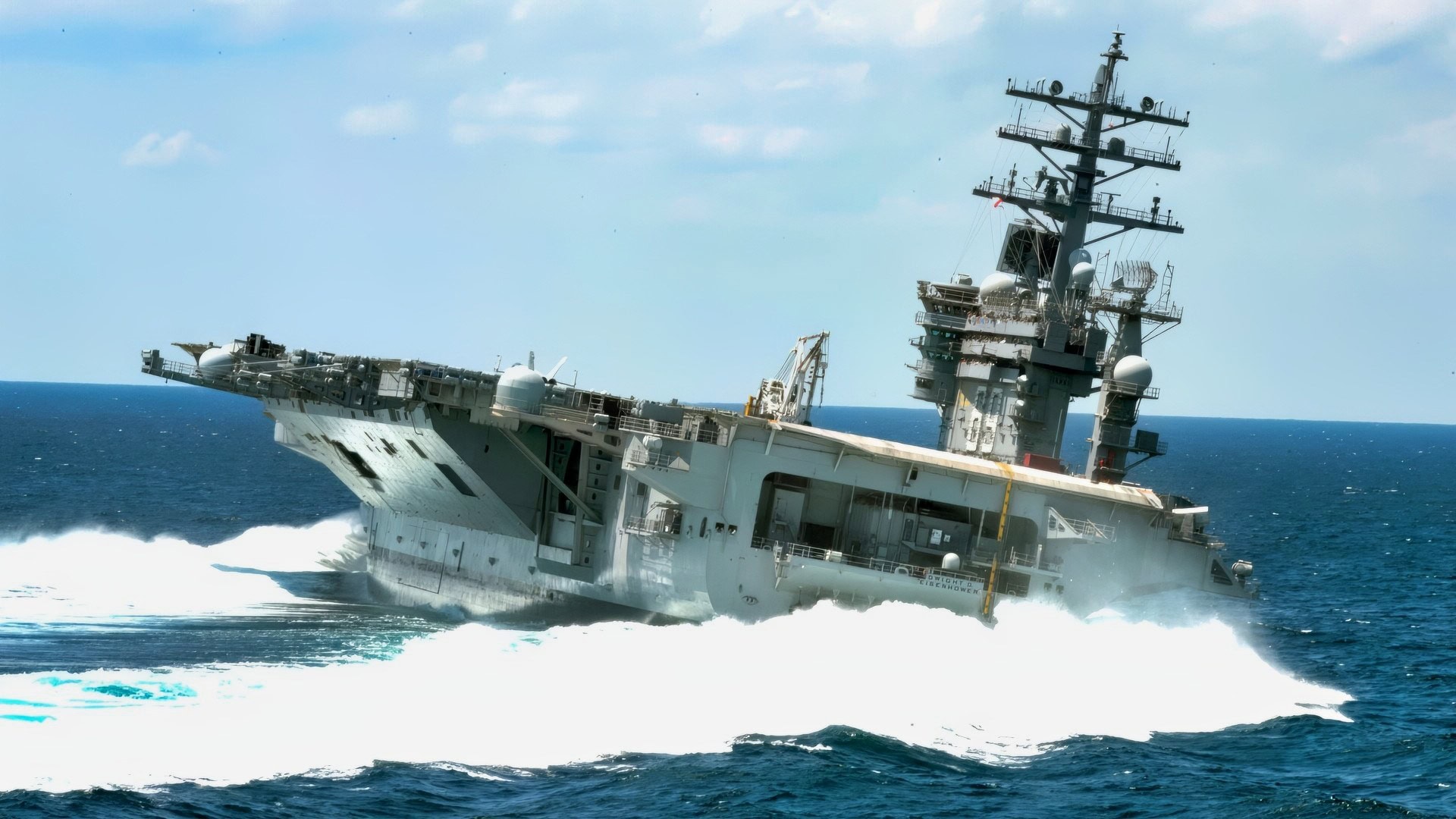
After undergoing an extended period of maintenance, the USS Dwight D. Eisenhower (CVN-69) is officially back in business. The carrier had been undergoing a routine Planned Incremental Availability (PIA) that lasted around 15 months.
Very recently, it was announced that “Ike’s” PIA had been completed ahead of schedule and that the venerable carrier is ready to return to service. This delivery marks the second super carrier to be returned ahead of schedule since the USS George H. W. Bush’s (CVN-77) delivery back in 2024.
Ike’s return to service provides a desperately needed windfall for the U.S. Navy, which is desperately in need of more operational aircraft carriers.
Aircraft Carrier Stories: Ike’s Time at Sea
Eisenhower originally returned to Norfolk Naval Shipyard (NNSY) in Virginia after she had completed one of her longest patrols to date.
From October 2023 to July 2024, she served on a long, physically taxing deployment during which she engaged in combat operations across the Middle East. Most importantly, she participated in Operation Prosperity Garden to counter the Iranian-backed Houthis in Yemen.
During this operation, the carrier and her strike group launched strikes against rebel groups and intercepted Houthi missiles and drones.
Several times during the operation, the Houthis claimed to have hit Eisenhowerv with anti-ship missiles, which was later proven false by satellite imagery.
While the carrier was fine, the long deployment and combat operations had caused significant fatigue in her systems, and repairs were urgently needed.
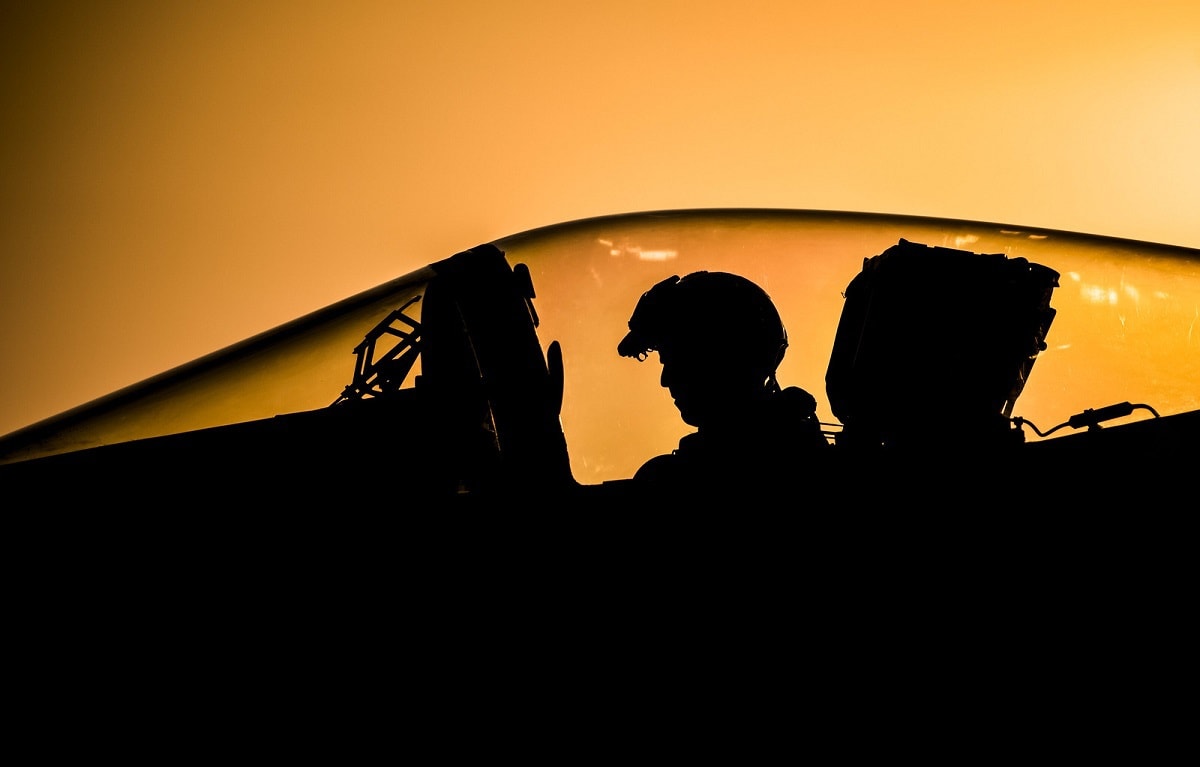
ARABIAN GULF (July 31, 2016) – A pilot performs pre-flight checks on an F/A-18C Hornet assigned to the Wildcats of Strike Fighter Squadron (VFA) 131 on the flight deck of the aircraft carrier USS Dwight D. Eisenhower (CVN 69) (Ike). Ike and its Carrier Strike Group are deployed in support of Operation Inherent Resolve, maritime security operations and theater security cooperation efforts in the U.S. 5th Fleet area of operations. (U.S. Navy photo by Mass Communication Specialist 3rd Class J. Alexander Delgado/Released)160731-N-OR652-256.
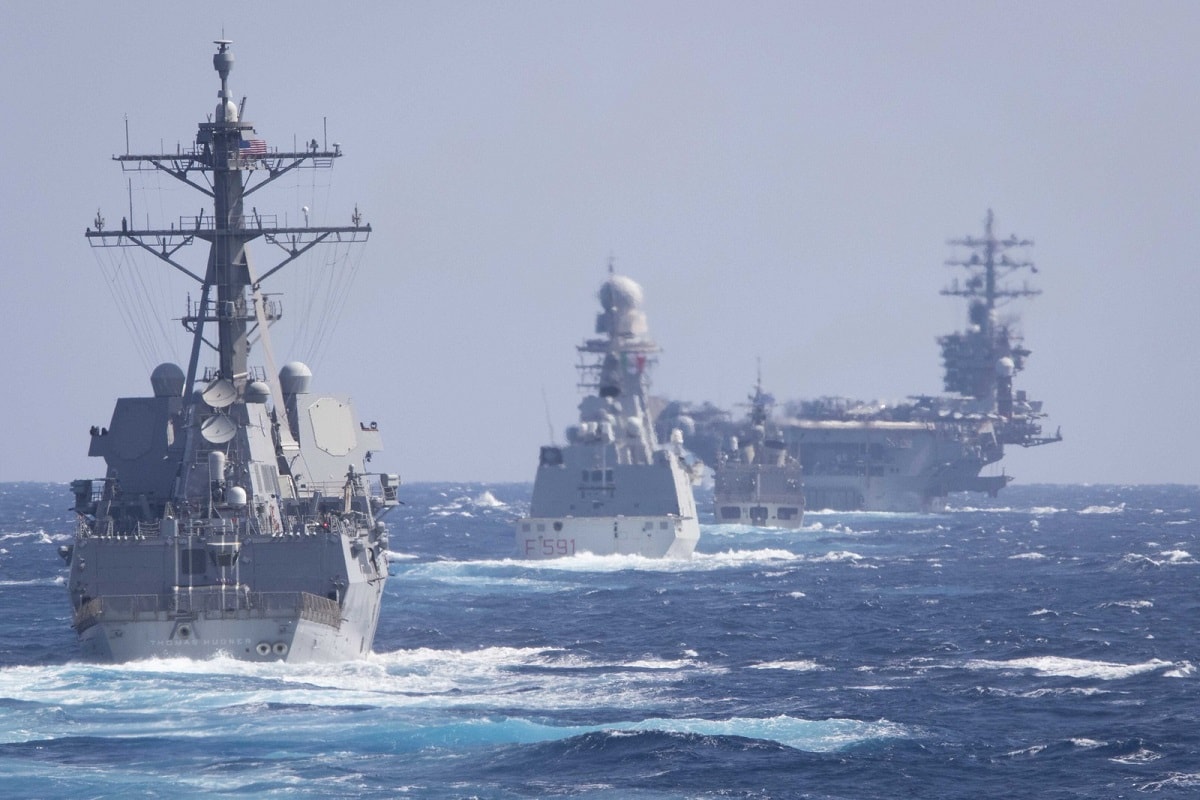
MEDITERRANEAN SEA (March 11, 2021) The Arleigh-Burke class guided-missile destroyer USS Thomas Hudner (DDG 116), left, the Italian navy Carlo Bergamini-class frigate ITS Virginio Fasan (F 591), the Hellenic Navy Hydra-class frigate HS Psara (F 494) and the Nimitz-class aircraft carrier USS Dwight D. Eisenhower (CVN 69), right, are underway in formation, March 11, 2021. The Dwight D. Eisenhower Carrier Strike Group on a routine deployment in the U.S. 6th Fleet area of operations in support of U.S. national interests and security in Europe and Africa. (U.S. Navy photo by Mass Communication Specialist 2nd Class Kaleb J. Sarten) 210311-N-QD512-3060.
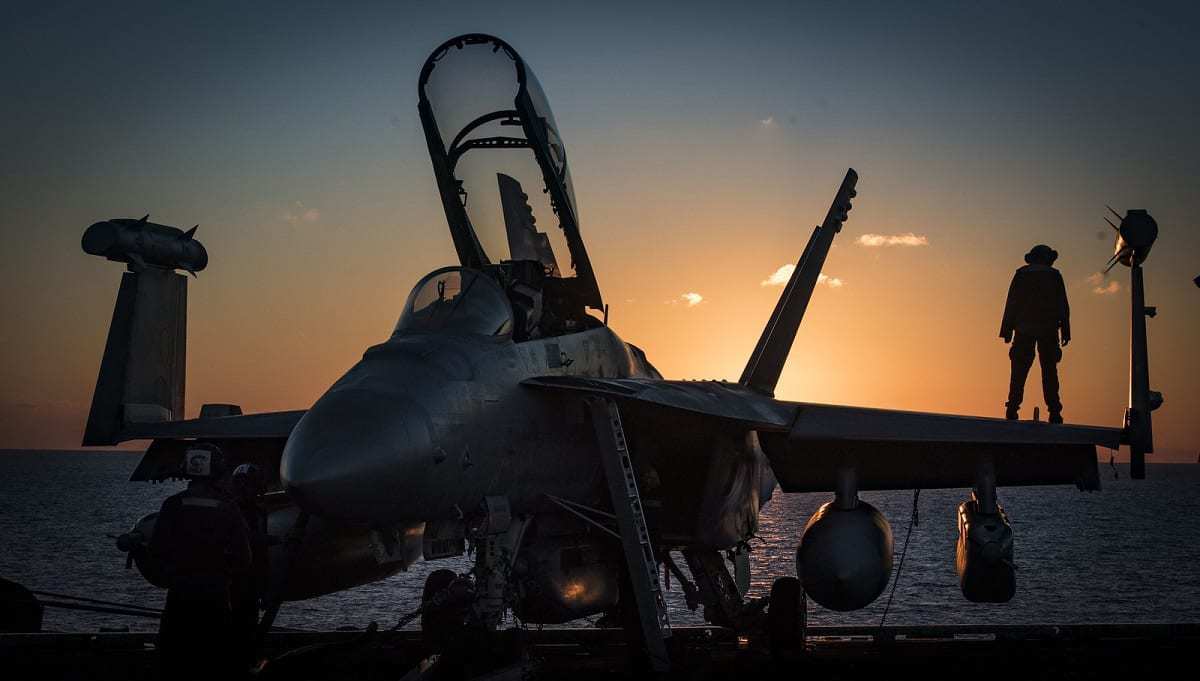
Sailor conducts pre-flight checks on an EA-18G Growler on the flight deck of USS Dwight D. Eisenhower.
After returning from her nine-month-long deployment and launching more than 13,800 combat sorties, Ike’s hull had significantly degraded. It was feared that her excessive wear and tear would delay the maintenance process, but these fears were thankfully unfounded.
Once she returned, she immediately entered her PIA. Unlike a Refueling and Complex Overhaul (RCOH), she did not need her nuclear reactors refueled, but she did undergo an intensive maintenance and modernization program. Her launch and recovery systems were also replaced and repaired to ensure the carrier is fully mission-capable in the future.
15 Months Away From the Fleet
Even though the PIA was smaller in scale than an RCOH, the scale of the work was still immense, thanks to the degraded state of her hull. The work required thousands of personnel working full-time to restore Ike to combat-readiness.
Commending on the scale of the work, Project Superintendent Commander Jason Downs said, “The entirety of the project team mustered more than 4,000 people daily, all with one common vision–deliver IKE, fully mission capable, back to the fleet before our commitment date.” What’s more impressive is that the project was underway while NNSY was undergoing a major renovation as part of the Shipyard Infrastructure Optimization Program.
This meant that many facilities were being renovated during the carrier’s PIA, yet the shipyard still completed its tasks ahead of schedule.
The maintenance on Eisenhower hit a minor hiccup before her delivery in April 2026, when a small onboard fire occurred while renovations were underway. Approximately three sailors received minor injuries before being returned to duty.
Thankfully, the fire was quickly contained and extinguished before causing any major damage. Many were worried that the incident might delay Ike’s completion date, but spokespeople from the Navy and NNSY quickly reassured the public that it would not.
Aside from this relatively small hurdle, Eisenhower’s PIA proceeded smoothly.
A Much-Needed Aircraft Carrier Windfall for the U.S. Navy
On April 24th, 2026, it was officially announced that Eisenhower had officially completed her sea trials, marking an end to her 15-month-long PIA. “The primary drivers behind IKE’s successful availability are the NNSY, Ship’s Force, and contractor teams who ensure the ship is materially ready to fight,” Cmdr Downs said. The project successfully returned Eisenhower to the fleet on time and without going over budget, a spectacular feat for the Navy.
As noted by the Navy, this marks the second consecutive time a PIA was completed on time at NNSY. Previously, the USS George H. W. Bush completed her PIA ahead of schedule and was delivered to the fleet back in November 2024. “Our NNSY project teams are now setting the corporate standard for aircraft carrier maintenance,” Shipyard Commander Rear Admiral Kavon Hakimzadeh commented.
The return of Eisenhower is much-needed good news for the Navy, which has been suffering from repeated delays over the past few years.
After the disasters involving the USS George Washington (CVN-73) and USS John C. Stennis (CVN-74), having a carrier complete its maintenance on time must be a huge relief. Ike’s return also occurs at a period when demand for carriers is at an all-time high.
With a lasting peace in the Middle East still not secured, it is necessary for the U.S. Navy to maintain a large naval presence in the Middle East in case the fighting with Iran suddenly continues.
Additionally, the U.S. needs to maintain its naval presence in other theaters, such as the Indo-Pacific, to deter China. While Ike’s reintroduction to the fleet does not fix all of the Navy’s carrier problems, it demonstrates that U.S. shipbuilding can still complete carrier maintenance in a timely manner.
About the Author: Isaac Seitz
Isaac Seitz, a Defense Columnist, graduated from Patrick Henry College’s Strategic Intelligence and National Security program. He has also studied Russian at Middlebury Language Schools and has worked as an intelligence Analyst in the private sector.