
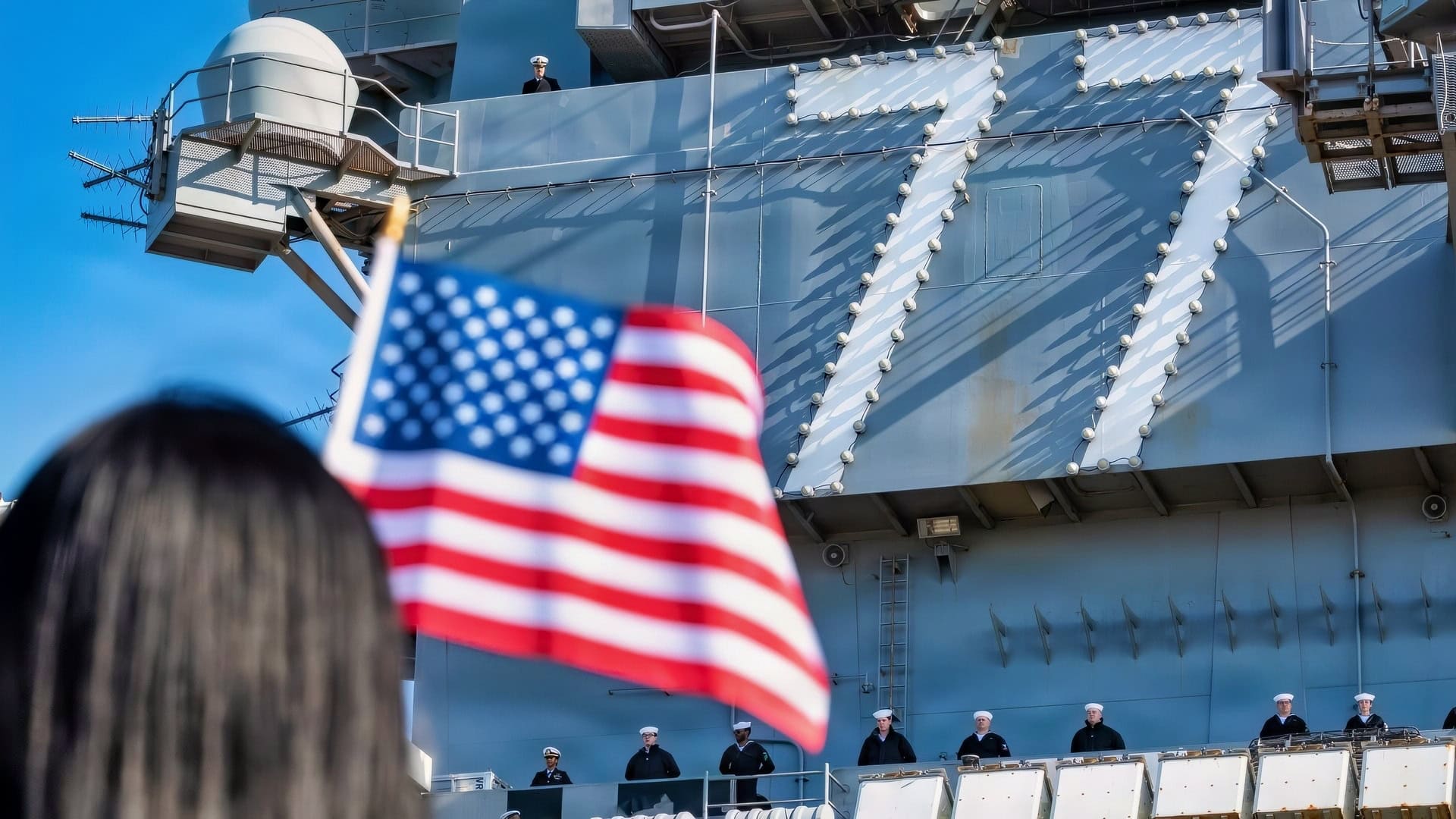
The U.S. Navy Might Soon Be Sending Another Aircraft Carrier to the Middle East: Iran Might Be the Target
The George H. W. Bush Carrier Strike Group (GHWBCSG) departed this week on what was described as “a regularly scheduled deployment,” according to a DVIDS release on Tuesday.
The announcement did not say where the carrier group is going. However, CBS News reported that the carrier is going to CENTCOM, which would presumably place it in the vicinity of the Iranian military operations.
“I am proud of every single member of this Strike Group. Our Sailors are ready and able to do the nation’s bidding,” Rear Adm. Alexis T. Walker, commander, Carrier Strike Group Ten, said in the DVIDS release.
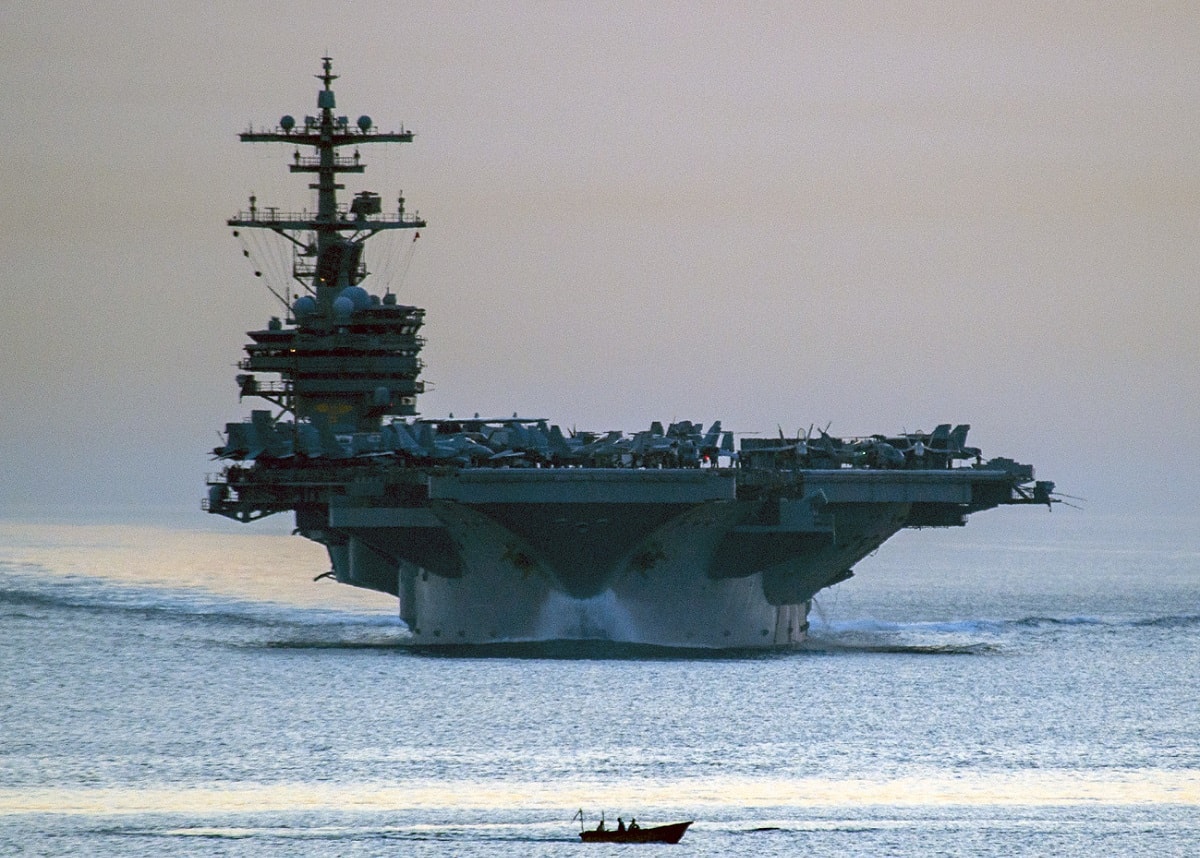
STRAIT OF HORMUZ (April 28, 2014) A small vessel transits in front of the aircraft carrier USS George H.W. Bush (CVN 77) as it transits the Strait of Hormuz as seen from the guided-missile cruiser USS Philippine Sea (CG 58). The George H.W. Bush Carrier Strike Group is supporting maritime security operations and theater security cooperation efforts in the U.S. 5th Fleet area of responsibility. (U.S. Navy photo by Mass Communication Specialist 3rd Class Abe McNatt/Released) 140428-N-PJ969-027
“We do know where we’re going, but as always, we will go where the nation needs us,” Rear Admiral Walker told WAVY this week. “So depending on what pops up in the world, we’ll be responsive and flexible and ready to go wherever we’re needed.”
The group’s last deployment was from August 2022 to April 2023, during which it was in the U.S. Naval Forces Europe–U.S. Naval Forces Africa region.
Per a report by WAVY, the local TV station in Norfolk, about 4,000 are part of the crew. When the carrier group departed, “families and friends lined up along the pier to wave goodbye, wishing their loved ones a safe journey.”
The George H.W. Bush is a Nimitz-class aircraft carrier, the last of its kind that was built.
Another Carrier near Iran?
The Atlantic Council’s daily tracking of U.S. assets in the region of the war states that the USS Abraham Lincoln is in the region and has been since January, while the USS Gerald R. Ford was there before it departed last week for repairs in Crete, following a laundry room fire.
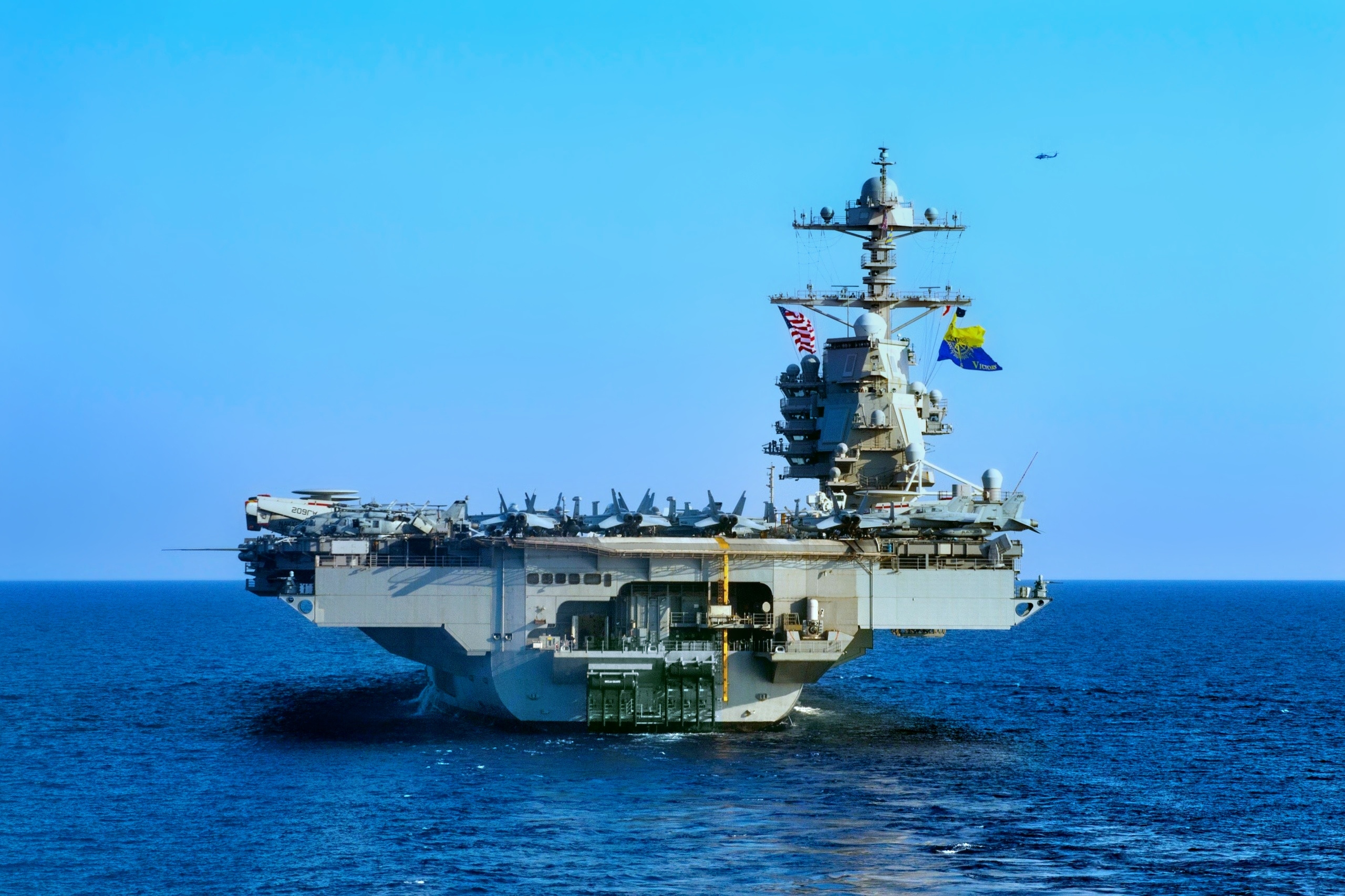
Ford-Class Aircraft Carrier. Image Credit: Creative Commons.
As of March 27, the Atlantic Council said, the USS George H.W. Bush was “certified to deploy and is reportedly being considered to join Operation Epic Fury.”
Indeed, Navy Times had announced on March 9 that the carrier group had completed Composite Training Unit Exercise (COMPTUEX) training. Walker had described that pre-deployment training as “the certification event for the strike group to let us know we are ready for major combat operations around the world.”
That training, the Navy Times reported the same day, the carrier’s air wing “flew 1,586 sorties and logged 693 arrested landings during the day and 682 at night.”
Army Recognition was more straightforward, reporting that “the U.S. Navy replaces the aircraft carrier USS Gerald R. Ford with USS George H.W. Bush after a major onboard fire forced Ford out of operations near Iran.”
Forbes had reported, also in early March, that additional carriers were expected to soon deploy to the Middle East.
According to CBS News reports, the U.S. senator who represents the carrier’s home port is questioning the deployment.
“Although the Bush CSG was scheduled to deploy at this time, I’m worried that deploying a third aircraft carrier to this region continues to escalate this already unnecessary conflict,” Sen. Tim Kaine (D-VA) said in a statement this week. “We need to end President Trump’s war of choice against Iran and stop unnecessarily risking American lives.”
One question raised by the deployment of George H.W. Bush is whether this means the USS Gerald R. Ford will finally come home from its uncommonly long deployment, which is approaching record length.
The Gerald R. Ford’s current deployment, if it lasts through April, will break the post-Vietnam record for the length of a carrier deployment.
Kaine and his fellow Virginia senator, Mark Warner, have both been outspoken about what they see as the need for the Gerald R. Ford to finish its deployment.
Stars and Stripes reported, before the Bush deployment was announced, that the Bush carrier group “presumably will relieve the Ford.”
Ford Coming Home?
In that Navy Times piece, Hunter Stires, a senior fellow at the Center for Maritime Strategy, was quoted as saying that if the George H.W. Bush is deploying, it should be to relieve the Gerald R. Ford.
“It is past time for Ford and her strike group to come home,” Stires told Navy Times. “Having performed superbly in combat operations in two theaters, the sailors of the Ford strike group have had their deployment extended twice and have been away from their families far longer than is healthy for the force to sustain.”
The Ford, on Monday, arrived in Split, Croatia, following the repairs in Crete, the Navy announced in a press release. Stars and Stripes reported Sunday that the repairs had been completed.
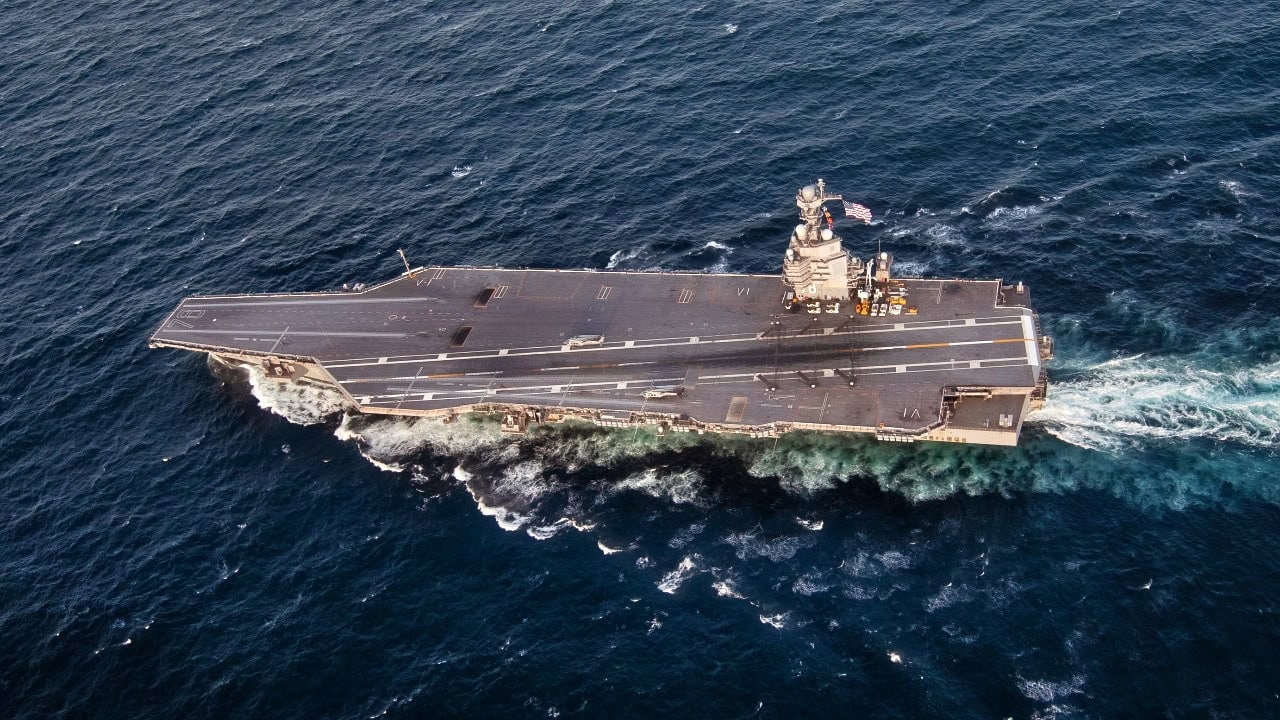
The Ford-class aircraft carrier USS Gerald R. Ford (CVN 78) and the Italian aircraft carrier ITS Cavour (CVH 550) transit the Atlantic Ocean March 20, 2021, marking the first time a Ford-class and Italian carrier have operated together underway. As part of the Italian Navy’s Ready for Operations (RFO) campaign for its flagship, Cavour is conducting sea trials in coordination with the F-35 Lightning II Joint Program Office’s Patuxent River Integrated Test Force to obtain official certification to safely operate the F-35B. Gerald R. Ford is conducting integrated carrier strike group operations during independent steaming event 17 as part of her post-delivery test and trials phase of operations.
“The crew is excited to be back in Split for some well-deserved liberty,” Capt. David Skarosi, commanding officer of Gerald R. Ford, said in the Navy’s statement.
The Ford carrier group has been deployed since it left Norfolk on June 24, 2025. Per the Navy, in that time, it has visited the Arctic Circle, the Mediterranean, the Caribbean, and the Red Sea. The carrier group participated in the operation to capture Venezuelan leader Nicolas Maduro in January, before its deployment was extended the following month, and it headed to the Middle East later in February.
Also this week, three members of Congress, Reps. Wesley Bell, Joe Courtney, and John Garamendi joined eight colleagues in writing a letter to Defense Secretary Pete Hegseth about what they described as “the welfare and operational strain on the USS Gerald R. Ford Carrier Strike Group,” as it approaches a record deployment.
“The strike group has now been deployed for more than nine months, with indications that operations may continue beyond that mark,” the members of Congress wrote, while noting that the length of time at sea is approaching a record.
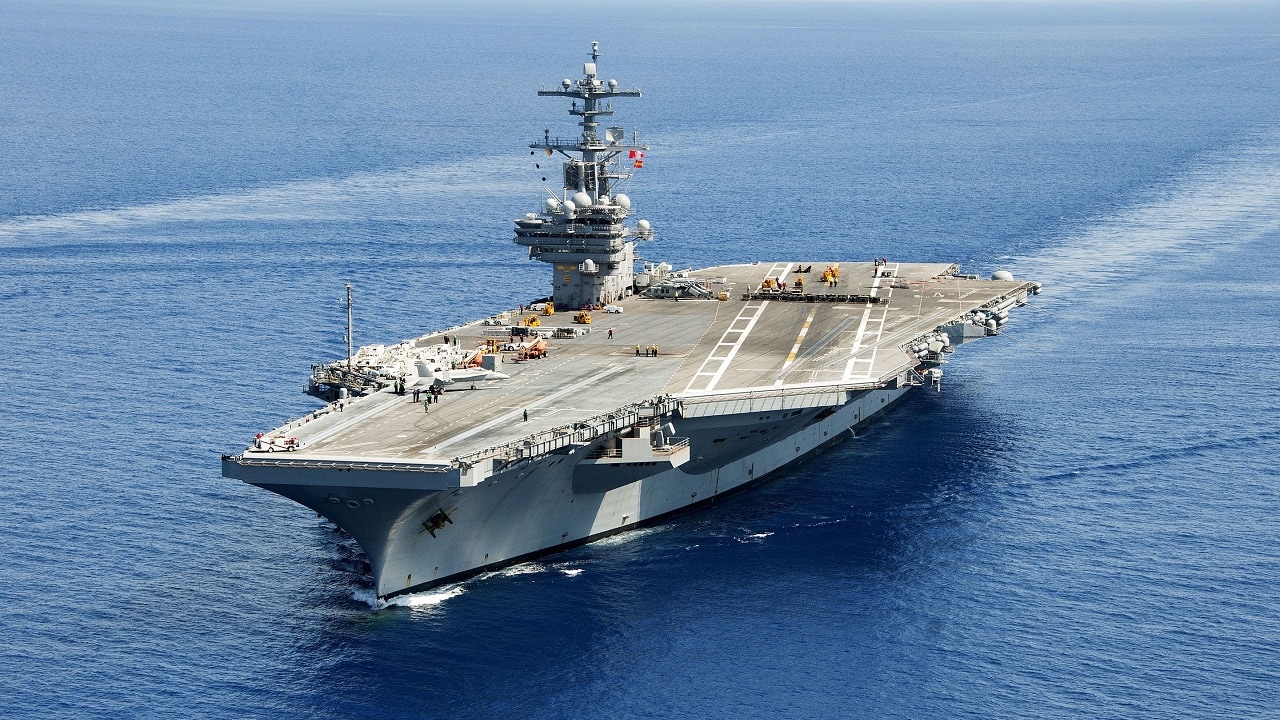
USS George H.W. Bush Aircraft Carrier. Image Credit: Creative Commons.
“These concerns are compounded by reports of degraded living conditions and equipment strain during this extended deployment, including loss of berthing capacity, persistent maintenance challenges, and declining crew morale,” the lawmakers continued. “Taken together, these issues raise broader questions about the cumulative impact of prolonged high-tempo operations on both readiness and the well-being of deployed servicemembers.”
MORE – The U.S. Navy Retired Its Iowa-Class Battleships 3 Times — They Kept Coming Back
About the Author: Stephen Silver
Stephen Silver is an award-winning journalist, essayist, and film critic, and contributor to the Philadelphia Inquirer, the Jewish Telegraphic Agency, Broad Street Review, and Splice Today. The co-founder of the Philadelphia Film Critics Circle, Stephen lives in suburban Philadelphia with his wife and two sons. For over a decade, Stephen has authored thousands of articles that focus on politics, national security, technology, and the economy. Follow him on X (formerly Twitter) at @StephenSilver, and subscribe to his Substack newsletter.