
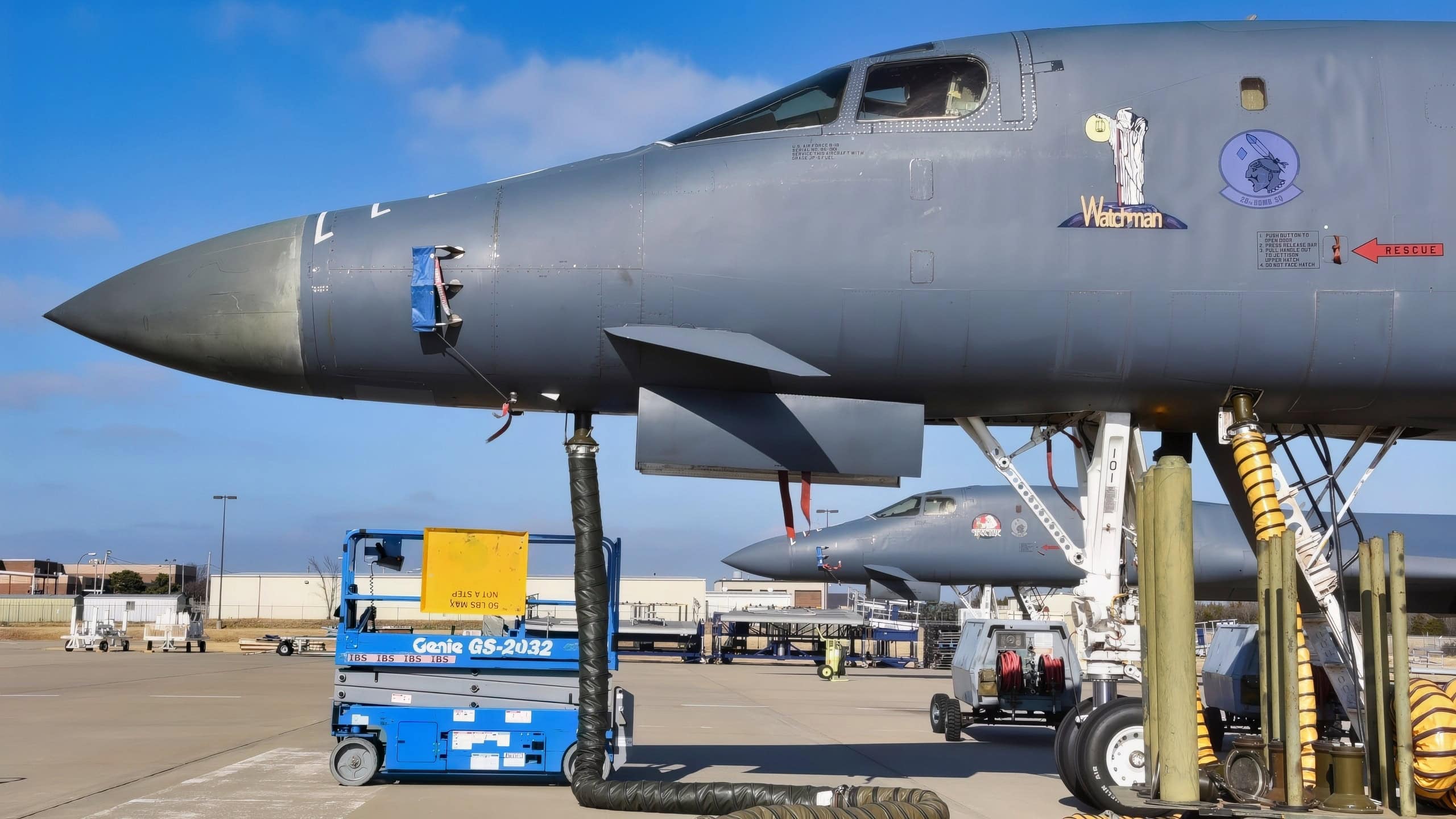
Iran War Warplane You Can See: The B-1B Lancer Bomber Is Sitting In a Museum You Can Visit Right Now
As part of our work at 19FortyFive, we regularly visit military museums and restoration facilities to examine aircraft firsthand and speak with the people responsible for preserving their history.
During a recent visit to the National Museum of the United States Air Force in Ohio back in July of last year, one aircraft that stood out – because of its incredible history – was the B-1B Lancer. And we have some excellent photos from that visit in this essay.
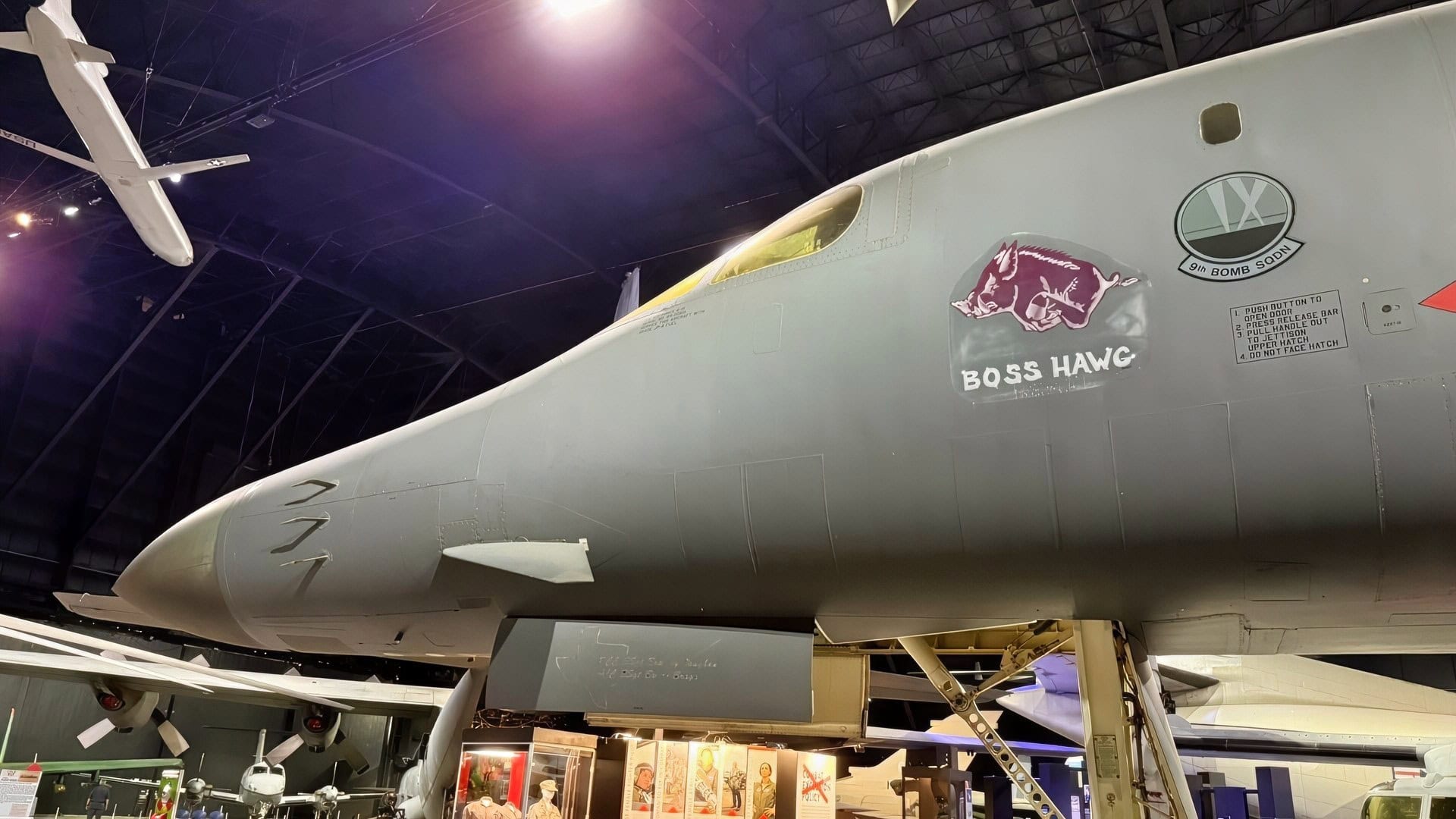
B-1B Lancer Bomber at the National Museum of the Air Force. 19FortyFive.com Photo.
This is a large, variable-sweep-wing bomber originally designed for nuclear missions but now used exclusively for conventional strike operations. Up close, its size and internal payload capacity are immediately apparent, along with the design compromises that come from a platform built in the late Cold War but still in active service today.
And while you can see the B-1B Lancer in museums, it is not just a museum piece.
As of March 26, 2026, at least 15 B-1B bombers are now deployed to RAF Fairford alongside six B-52H bombers, forming a 21-aircraft strike group supporting U.S. operations against Iran under Operation Epic Fury, which began on February 28.
The deployment – confirmed through flight tracking data and air traffic control recordings – represents one of the largest forward bomber concentrations in recent years and places a significant portion of the U.S. Air Force’s available bomber fleet within direct range of Iranian targets.
What Has Been Deployed?
The current deployment consists of approximately 15 B-1B bombers and six B-52H Stratofortress aircraft at RAF Fairford.
Open-source observers tracked multiple arrivals from Ellsworth Air Force Base using “PURSE” callsigns, corroborated by high-frequency radio communications and flight-tracking networks.
A deployment of this size is significant, but it can best be put into context by considering the size of the B-1 fleet.
The U.S. Air Force maintains 44 B-1B aircraft in total, but only a portion of them are mission-capable at any given time. According to Air Force readiness data, the fleet’s mission-capable rate has hovered at around 47 percent in recent years, meaning roughly 20 aircraft are typically available for operational use.
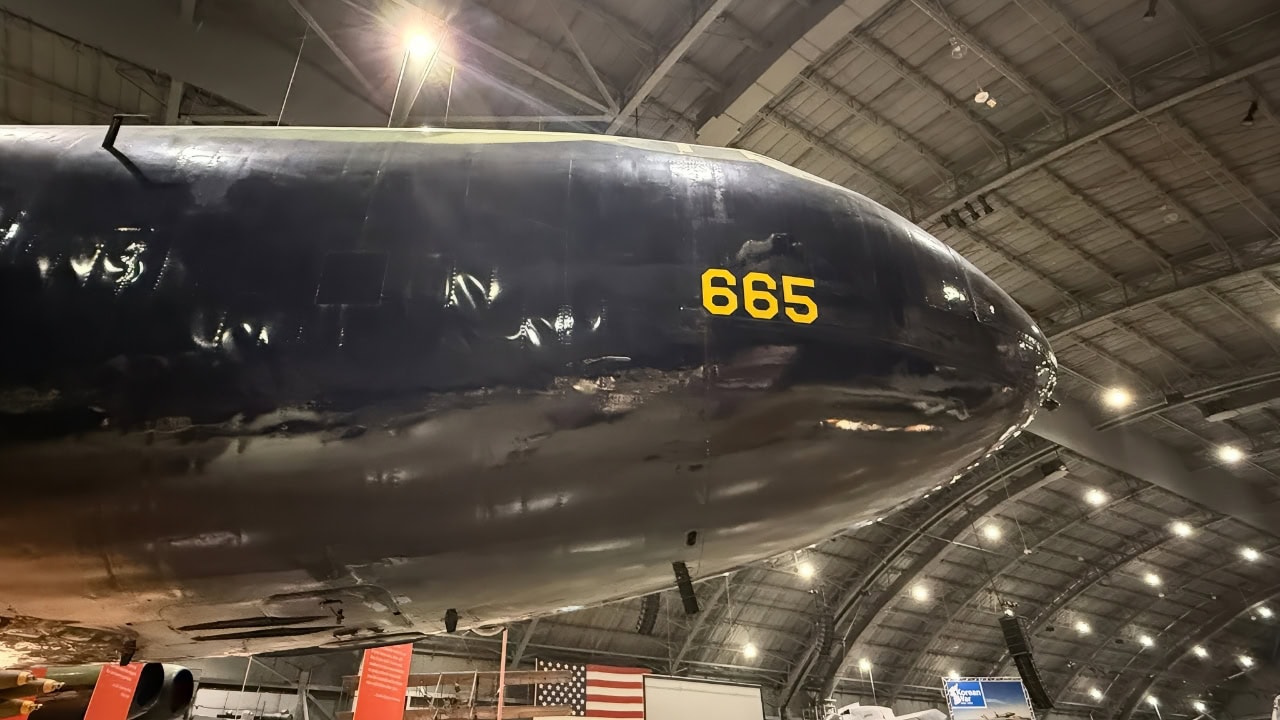
B-52 Bomber. Image Credit: 19FortyFive.com Taken at the National Museum of the Air Force.
Deploying 15 aircraft forward, therefore, represents the majority of the usable fleet, and it is obviously not just a routine rotational deployment. By comparison, a standard Bomber Task Force deployment would usually consist of around four to six aircraft.
RAF Fairford has long served as a forward base for U.S. heavy bombers. The base’s runway length and infrastructure support large aircraft like the B-52, B-1, and B-2, enabling sustained bomber operations without requiring aircraft to fly directly from the continental United States.
The current deployment, then, effectively turns Britain’s Fairford into a strike hub, allowing the U.S. to sustain a higher sortie rate than would be possible solely from U.S.-based bombers.
How the B-1B Is Being Used In Iran
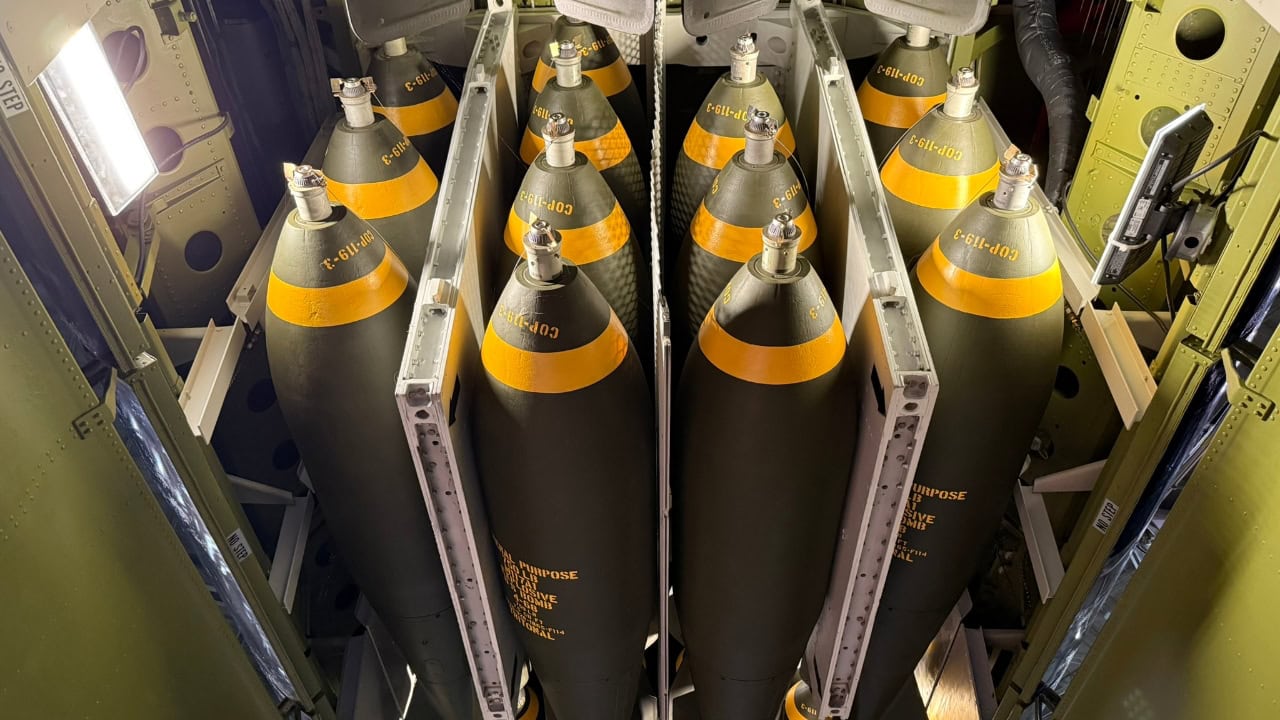
The B-1B’s primary advantage in the current conflict is its payload capacity. The aircraft can carry up to 75,000 pounds of munitions internally, making it the highest-capacity bomber in the U.S. inventory for conventional weapons.
In the Iran campaign, that capability is being used to deliver large volumes of guided bombs against fixed infrastructure targets. U.S. aircraft, including B-1s, have been loaded with GBU-31 JDAM precision-guided munitions, which are commonly used against hardened structures and storage facilities – ideal for targeting missile facilities and military sites in Iran.
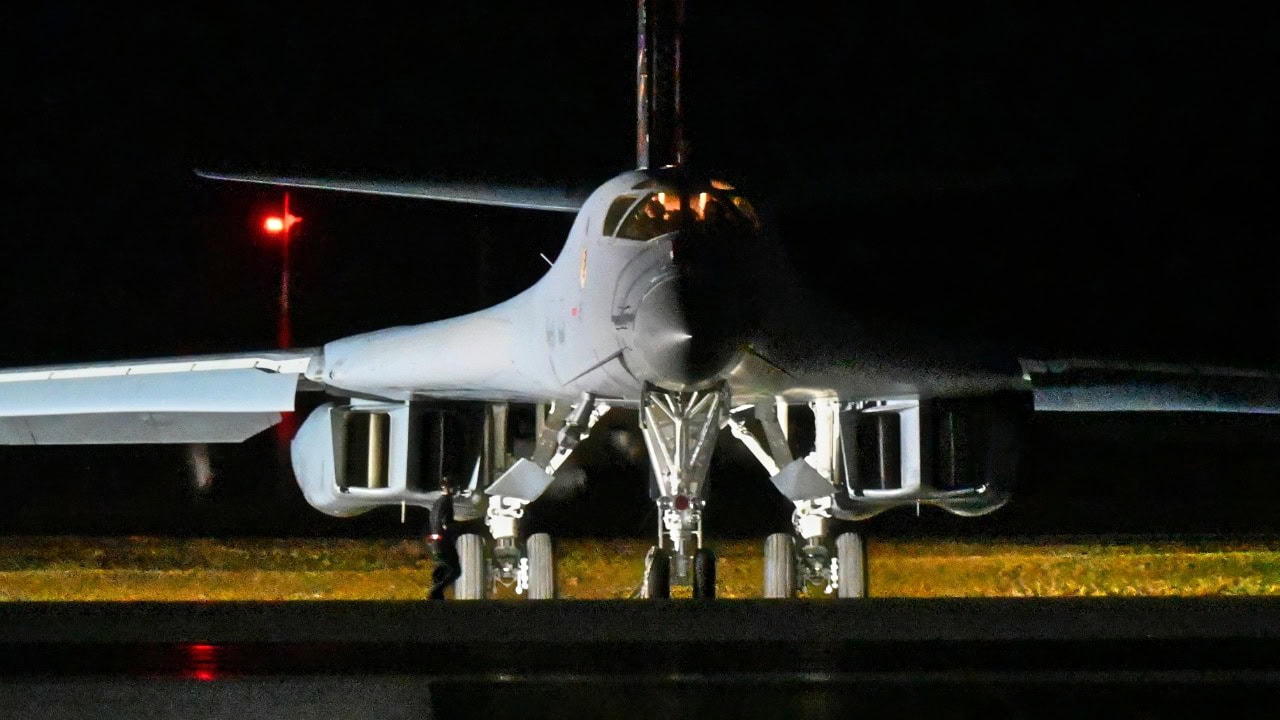
A U.S. Air Force B-1B Lancer assigned to the 34th Expeditionary Bomb Squadron, Ellsworth Air Force Base, S.D., runs final checks before takeoff of a training mission in support of Bomber Task Force 25-1 at Andersen Air Force Base, Guam, Feb. 24, 2025. The BTF missions are designed to showcase the Pacific Air Force’s ability to deter, deny, and dominate any influence or aggression from adversaries or competitors. (U.S. Air Force photo by Tech. Sgt Robert M. Trujillo)
Reporting also suggests that larger bunker-penetrating weapons like the GBU-72 are being used to destroy deeply buried targets, including reinforced missile storage sites.
While B-52 bombers in the same theater have been observed carrying AGM-158 JASSM standoff weapons, the B-1’s role appears to be focused on “stand-in” strike missions – meaning it is flying closer to target areas and releasing gravity bombs rather than launching from long range.
Without using stealth aircraft, stand-in bombing requires either suppressed or ineffective air defenses, as non-stealth aircraft are vulnerable when operating in contested airspace. The fact that these missions are being conducted at scale is a product of Iranian air defense systems, particularly around missile infrastructure, having been degraded to the point where they cannot reliably contest U.S. bomber operations.
And that is exactly what the Pentagon has aimed to achieve from the start: to degrade Iran’s missile capabilities.
Degrading that capability means destroying launch sites and storage depots, and targeting production facilities associated with Iran’s ballistic and cruise missile programs. The result is the use of the B-1 to provide both strike volume and persistence.
With aircraft operating from the UK, bombers can generate more frequent sorties, sustain continuous pressure on fixed targets, and deliver heavier payloads per mission than would be feasible from longer-range launch points.
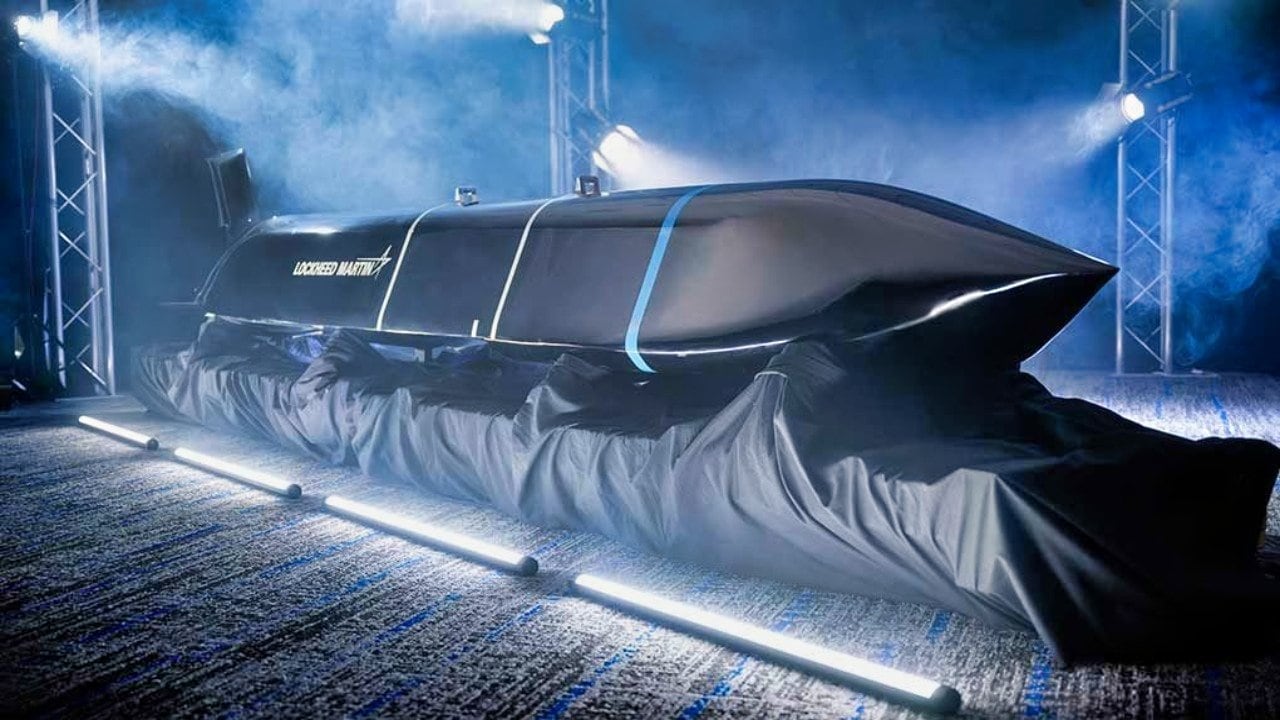
JASSM XR. Image Credit: Lockheed Martin.
Why the UK Matters Geographically and Politically
Basing B-1s in the United Kingdom changes the geometry of operations in Iran, requiring missions flown from the continental United States to require multiple aerial refuelings and very long flight durations. It requires complex coordination and limits sortie rates.
But using RAF Fairford cuts the distance to Iranian targets roughly in half, depending on the route (as some European countries may restrict airspace access, such as Spain). That shorter travel time allows bombers to carry heavier payloads and reduces tanker demand, enabling faster turnaround between missions.
It also provides strategic insulation. Unlike bases in the Persian Gulf, which are within range of Iranian ballistic missiles, Fairford is technically reachable by Iran (based on its recent attempted strikes on Diego Garcia), but outside of its direct strike envelope.
That reduces the vulnerability of high-value bomber assets while still allowing them to project power into the region. Iran may choose to target the base, but it would escalate the conflict, bring the United Kingdom and potentially Europe into the fight, and also risk the missiles being shot down over European airspace.
The United Kingdom’s decision to host the aircraft carries some political weight. It signals explicit support for U.S. operations, even as British Prime Minister Keir Starmer still insists that he “won’t be dragged in” to the fight.
Historically, similar basing arrangements have been used in major operations, including strikes on Libya in 2011 and Iraq in 2003. That setup allows the U.S. to maintain sustained bombing operations without concentrating all assets in forward bases that are more exposed to retaliation. It is a balance between survivability and proximity, and the United Kingdom is the United States’ best bet in this context.
An Aging Bomber Fighting Today’s Wars
The B-1B Lancer entered service in the 1980s as a nuclear-capable bomber designed to penetrate Soviet air defenses at low altitude and high speed. Following the end of the Cold War, it was converted to a conventional-only role and has since been upgraded with modern avionics, targeting systems, and precision weapon integration.
Despite the upgrades, the aircraft is by no means stealthy and would face a significant risk in a contested air defense environment. In a conflict against a peer adversary, B-1 operations would typically require escort fighters and electronic warfare support before entering hostile airspace. But that’s not what’s happening in Iran.
Instead, the B-1B is being used as a high-volume strike platform operating relatively close to target areas and delivering large quantities of gravity bombs – something that is only possible because the United States has achieved a high degree of air superiority over key areas.
Iran’s air force, before the recent U.S.-Israeli campaign, relied heavily on aging platforms like the F-14 Tomcat, MiG-29, and F-4 Phantom – all of which could not be properly maintained or modernized. Its integrated air defense network, while extensive on paper, has also struggled to counter advanced U.S. strike operations, particularly against electronic warfare and precision targeting.

F-14 Tomcat at Aviation Museum of Kentucky. Taken on March 1, 2026. By Christian D. Orr.
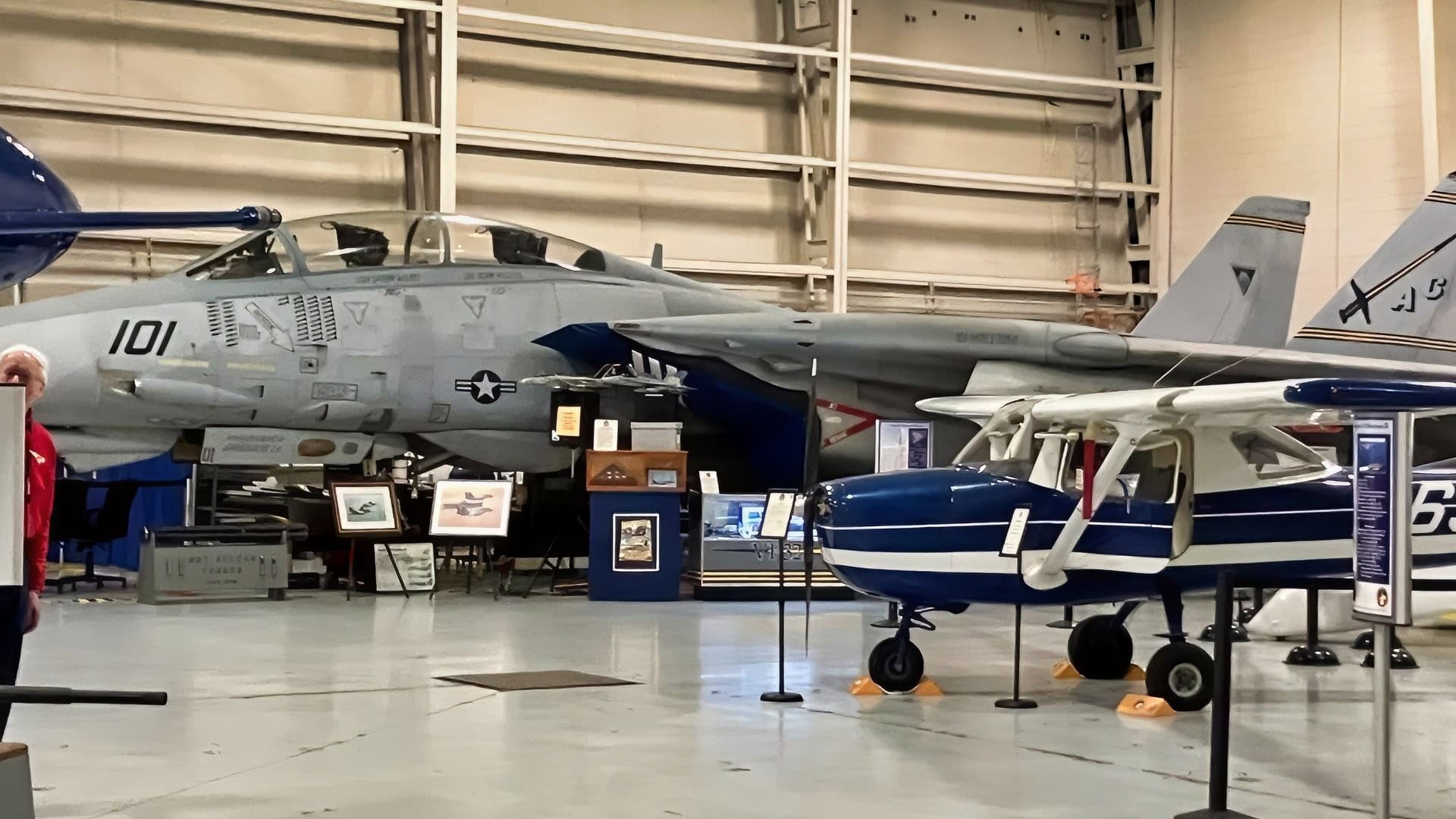
F-14 Tomcat at Aviation Museum of Kentucky. Taken by 19FortyFive.com by Christian D. Orr.
The result is a campaign environment where a large, non-stealthy bomber like the B-1 – more than four decades old – can operate effectively and at scale. That’s not a reflection of the B-1’s superiority by any means, but of the extent to which Iran’s ability to contest U.S. airpower has been degraded.
About the Author: Jack Buckby
Jack Buckby is a British researcher and analyst specializing in defense and national security, based in New York. His work focuses on military capability, procurement, and strategic competition, producing and editing analysis for policy and defense audiences. He brings extensive editorial experience, with a career output spanning over 1,000 articles at 19FortyFive and National Security Journal, and has previously authored books and papers on extremism and deradicalization.