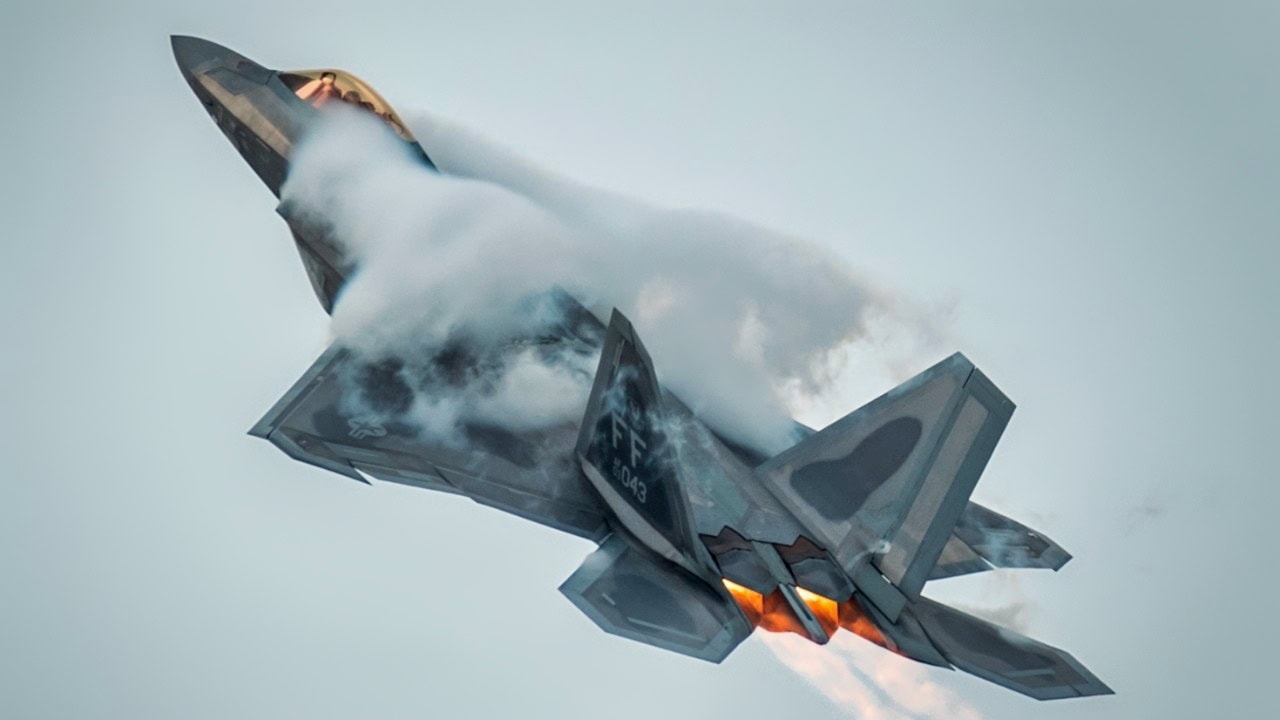
The U.S. Air Force originally planned to build hundreds of F-22 Raptor stealth fighters. The Air Force built only 187 F-22s before shutting down the production line. The truncated 187-aircraft fleet means each F-22 costs $356 million in research, development, and manufacturing. The Air Force invested $66 billion in the F-22 program. The F-22 production line was not restarted at the height of the Iraq and Afghanistan wars. The F-22 entered service at the end of the Cold War. The F-22 was engineered with networking technologies for 5th- to 6th-generation connectivity. The Air Force has continued to upgrade the F-22 fleet’s lethality, sensing, targeting, and computing capabilities. A 6th-generation NGAD fighter is expected to follow on or replace the Raptor.
The F-22 Shortage
Cost was the main factor cited years ago when the Air Force decided “not” to restart the F-22 production line, yet many have come to regret this decision given the Raptor’s combat performance and overall capabilities.
Perhaps the decision to truncate the F-22 program years ago and the subsequent decision not to restart the production line were informed by “short-term” thinking, as there was no “great power” threat focus at either time.
The arrival of the Raptor coincided with the end of the Cold War, and the decision “not” to restart the production line happened at the height of the Iraq and Afghanistan wars; at both of these times, there was not an immediate pressing concern or focus upon great power threats from Russia and China … but perhaps there should have been.
Short-term Threat Assessments
It seems that, on several occasions, the Pentagon suffered from what could be called a “short-term” view of the threat, given that there was, at those times, sufficient evidence to indicate rapidly growing great-power threats from Russia and China.
By contrast, there was not only growing evidence of China’s rapid emergence as a global threat, but also financial reasons why it would have made sense to restart F-22 production, despite budget concerns cited as a reason not to do so.
However, upon reflection, a massive increase in production scale for the Raptor would have massively reduced the per-aircraft price of the jet, something which could both expand the fleet and lower costs for individual fighters.
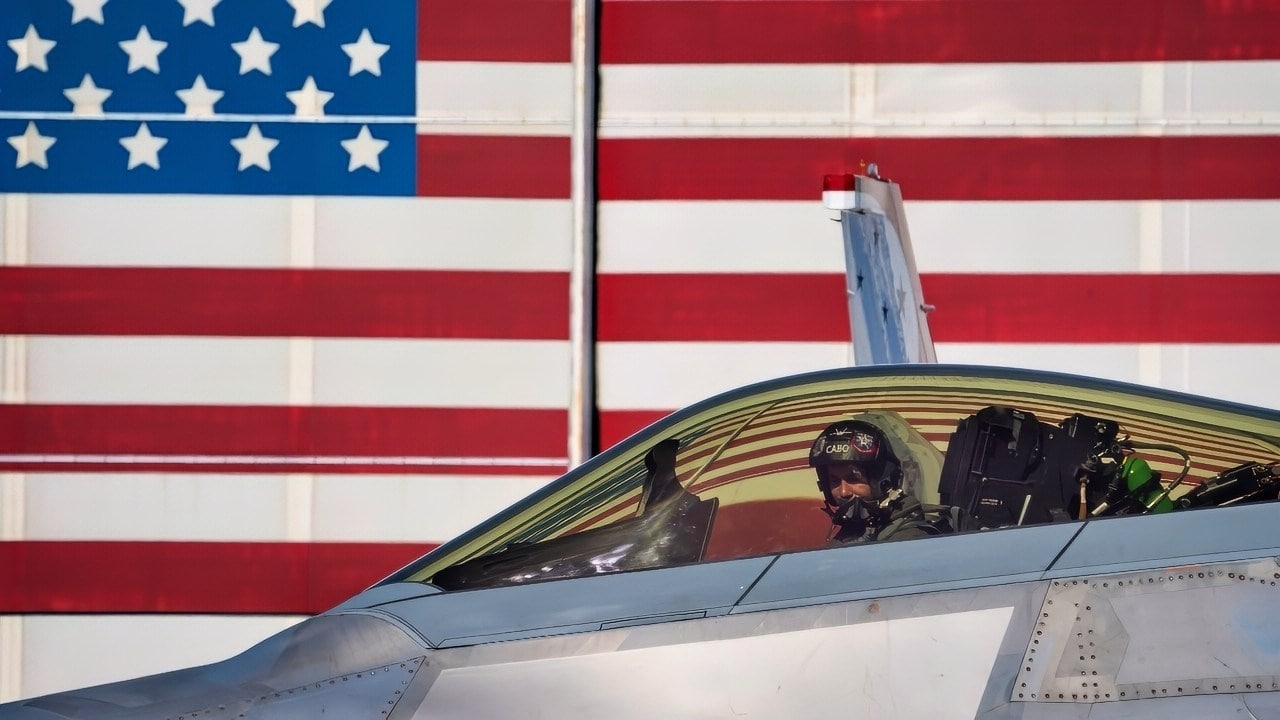
U.S. Air Force Maj. Josh Gunderson, F-22 Demo Team commander, taxis by the Wallops Island Flight Facility NASA hanger June 17, 2021, at Wallops Island, Va. The primary function of the F-22A Raptor is an air dominance and multi-role stealth fighter, and can carry a combination of air-to-air missiles and air-to-ground bombs. (U.S. Air Force photo by Staff Sgt. Don Hudson)
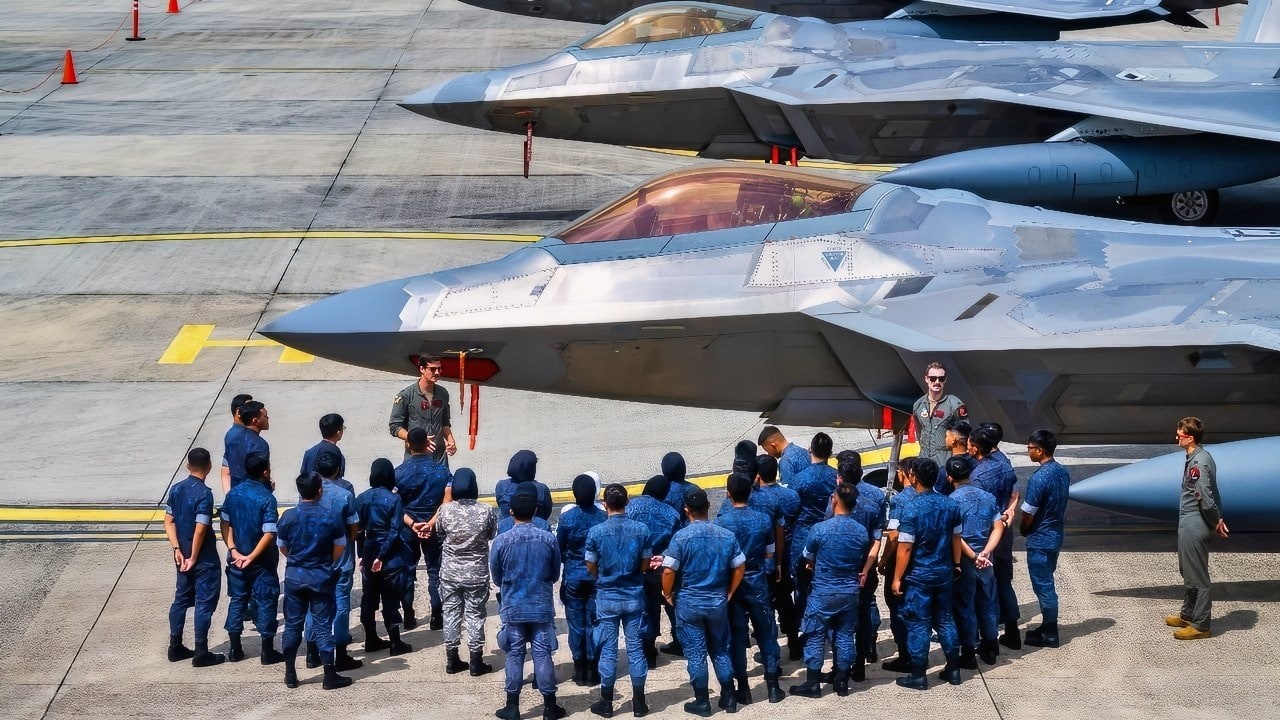
U.S. Air Force F-22 Raptor pilots assigned to 27th Expeditionary Fighter Squadron, Joint Base Langley-Eustis, Virginia, conduct a capabilities brief at Rimba Air Force Base, Brunei Darussalam, on Aug. 7, 2024. This year marks the 40th anniversary of the establishment of diplomatic relations between the United States and Brunei Darussalam. (U.S. Air Force photo by Senior Airman Mitchell Corley)

An F-22 Raptor performs an aerial demonstration at Naval Air Station Oceana, Virginia, Sept. 19, 2025. Rapid changes in angle of attack create visible vapor around the aircraft, providing a clear view of its aerodynamic performance. This demonstration highlights the F-22’s advanced maneuvering capabilities, showcasing its speed, agility, and thrust-vectoring performance. (U.S. Air Force photo by Staff Sgt. Lauren Cobin)
Even if senior weapons developers were aware of early plans for a 6th-generation fighter at the time of the discussions about resurrecting F-22 discussions, there were still strong reasons to expand and increase the Air Force fleet of F-22s. F-22s were being engineered with networking technologies sufficient to enable 5th-to-6th-generation connectivity, something of great tactical and strategic value for a force surging into the future.
A fleet of hundreds of F-22s would have greatly improved the U.S. Air Force’s ability to “mass” and sustain air superiority across a wider combat envelope.
Therefore, even if senior Air Force decision-makers anticipated a large fleet of next-generation 6th-generation high-speed stealth jets to follow on or “replace” the F-22, there would still have been great value in greatly expanding the Raptor fleet itself.
What if the Air Force Had Hundreds of F-22s?
There is little debate that a large-scale expansion of the Raptor fleet would have been extremely helpful to the Air Force and the Pentagon for strategic, tactical, and security reasons, and the financial case is also quite compelling.
The truncated small size of the Raptor fleet of 187 airframes meant that the research, development, and manufacturing costs of a single F-22 are calculated at $356 million per plane.
Overall, the Air Force invested $66 billion in the Raptor program, and the return on investment for the research and development funds would have been exponentially higher had the fleet size remained aligned with the initial plan to acquire hundreds of F-22s.
The F-22’s upgradeability is yet another reason why the service should have stayed with its original plan to build a large fleet of hundreds of Raptors, given that the aircraft has, in recent years, massively improved its lethality, sensing, targeting, and computing.
Surely the threat landscape as it pertains to U.S. military capability, particularly in the realm of air superiority and deterrence, would be entirely different today if the F-22 program had stayed on course with the original Air Force plan for a large fleet of Raptors.
About the Author: Kris Osborn
Kris Osborn is the Military Technology Editor of 19FortyFive. Osborn is also President of Warrior Maven – Center for Military Modernization. Osborn previously served at the Pentagon as a highly qualified expert in the Office of the Assistant Secretary of the Army—Acquisition, Logistics & Technology. Osborn has also worked as an anchor and on-air military specialist at national TV networks. He has appeared as a guest military expert on Fox News, MSNBC, The Military Channel, and The History Channel. He also has a Masters Degree in Comparative Literature from Columbia University.