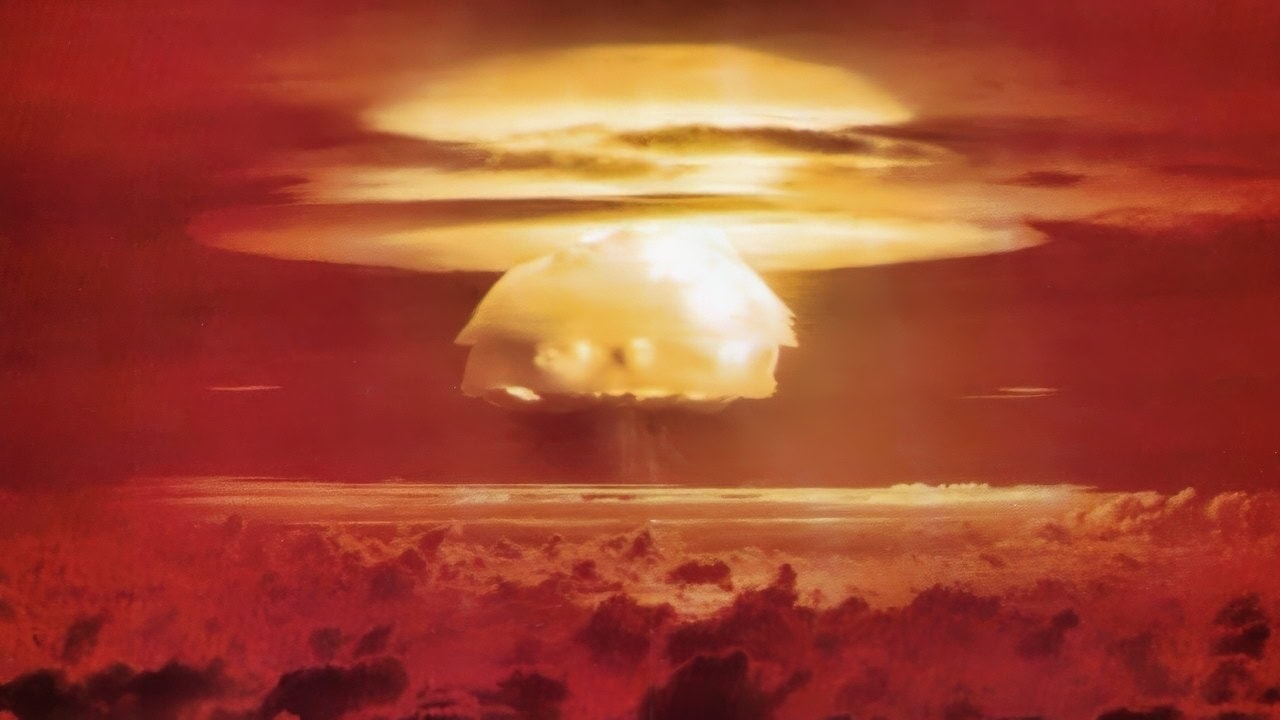
On the night of February 5, 1958, a B-47 Stratojet collided with an F-86 Sabre over Georgia. The damaged B-47 carried a Mark 15 thermonuclear bomb. At 7,200 feet over Wassaw Sound near Tybee Island, the pilot released the bomb. The Mark 15 weighed 7,600 pounds and had a yield of up to 3.8 megatons — over 100 times the bomb dropped on Hiroshima. The U.S. military launched a 10-week search involving Navy divers, minesweepers, helicopters, and underwater demolition teams. They never found it. The Department of Defense officially labeled the bomb “irretrievably lost.” In a 1966 letter, Assistant Secretary of Defense W.J. Howard referred to the Tybee weapon as a “complete, fully assembled nuclear weapon.” Today, 68 years later, the bomb may still rest beneath Georgia coastal mud.
A Missing Hydrogen Bomb?
On the night of February 5, 1958, a Boeing B-47 Stratojet from the Strategic Air Command’s (SAC) 375th Bombardment Squadron was conducting a simulated combat mission near Savannah, Georgia. The bomber had departed Homestead Air Force Base in Florida and was participating in nighttime air-defense exercises.
During the exercise, the B-47 collided with an F-86 Sabre interceptor warplane flown by Lt. Clarence Stewart. The fighter slammed into the bomber at high speed. The F-86 was destroyed. Lt. Stewart, the pilot, ejected to safety. The B-47, however, suffered serious structural damage, including damage to one engine and a wing fuel tank.
In the belly of the bomber sat a Mark 15 Mod Zero thermonuclear bomb.
The Decision to Dump the Bomb
Col. Howard Richardson commanded the B-47. He understood that attempting a landing with a damaged aircraft carrying a thermonuclear bomb onboard was insane. If the plane crashed on landing–or if the bomb’s sensitive high explosives detonated accidentally–the consequences could be catastrophic.
Richardson requested that the weapon be dumped before the situation on the plane worsened.
SAC approved.
At 7,200 feet above Wassaw Sound, near Tybee Island, Col. Richardson released the bomb into the shallow coastal waters below. The bomb plummeted into the darkness below. The B-47 progressed onward to Hunter Air Force Base near Savannah. The US military immediately launched a massive search effort for the missing thermonuclear warhead.
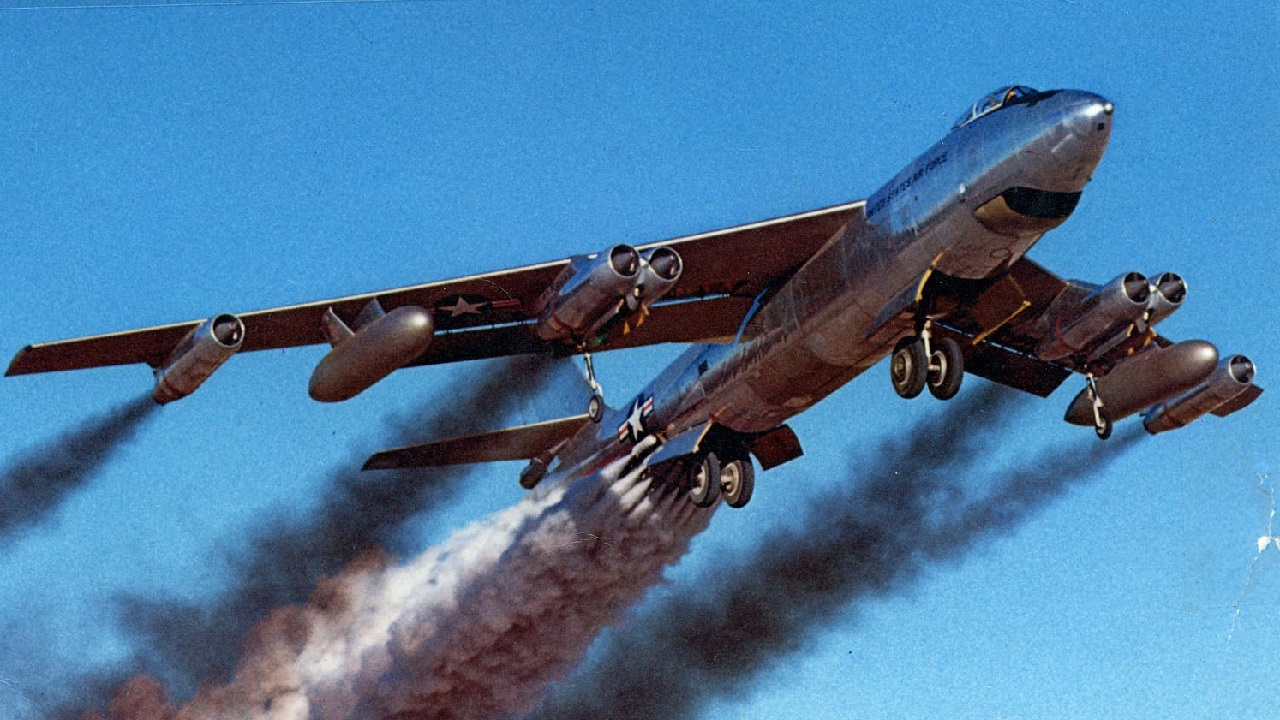
Boeing B-47B rocket-assisted take off on April 15, 1954. (U.S. Air Force photo)
America’s Massive Search Operation
The search operation for the missing thermonuclear warhead became one of the largest nuclear recovery missions in the Cold War. That search involved divers from the United States Navy, minesweepers, helicopters, draglines, and underwater demolition teams. This group feverishly searched the waters around Tybee Island for weeks. Crews employed primitive (by today’s standards) sonar technology and performed painstaking visual searches across miles of marshland, mudflats, and the shallow ocean floor.
Everyone involved understood the stakes.
If the military didn’t recover the thermonuclear bomb, then it either would continue being lodged in the Georgia wilderness, wherever it had landed–risking either detonation and/or recovery by unsanctioned groups.
But the bomb was never retrieved.
Why the Bomb Was Never Found
Wassaw Sound, where the bomb fell, is a nightmare for retrieval operations. Wassaw Sound features shifting tidal currents, heavy sediment buildup, marshland, and murky visibility at best, with unstable underwater geography. A heavy object, like the Mark 15, dropped into that region can vanish quickly beneath layers of mud.
This failure to recover the bomb occurred despite roughly ten weeks of searching. Some analysts believe the bomb may be buried beneath dozens of feet of accumulated sediment. Others suspect it may have drifted farther offshore over time.
The military assured itself that the bomb had likely sunk too deep into layers of soft silt and sediment. Officially, the Department of Defense labeled the bomb as “irretrievably lost.” That bit of bureaucratic legerdemain may have satisfied the politicians in Washington and made the military brass feel good about having lost a thermonuclear weapon in the Georgia wilds. It should not have made anyone else feel good, though.
Meet the Mark 15 Hydrogen Bomb
The Mark 15 hydrogen bomb was one of the earliest lightweight thermonuclear weapons ever fielded by the United States. Of course, “lightweight” is a relative term when speaking about nuclear bombs. The bomb was 11 feet long, 34 inches in diameter, and a whopping 7,600 pounds. The nuclear yield ranged from 1.7 to 3.8 megatons (depending on the weapon’s configuration).
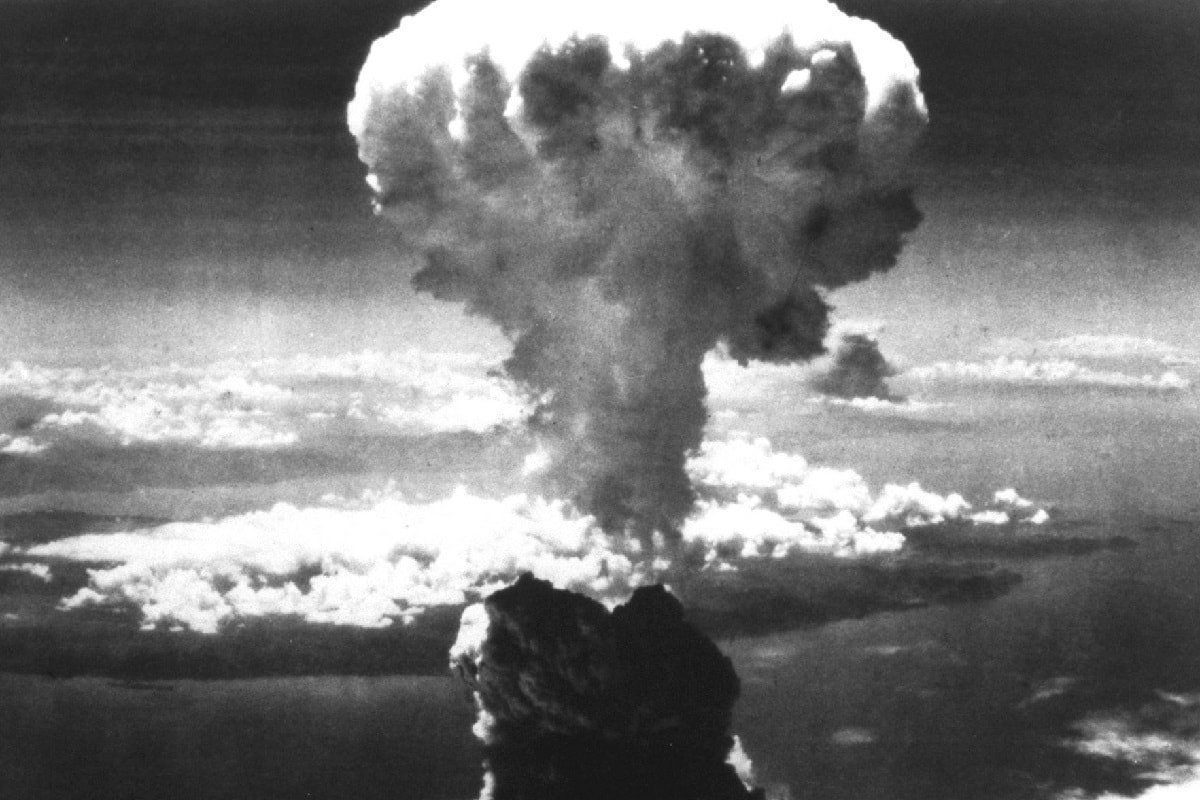
Hiroshima. Image Credit: Creative Commons.
As an aside, the atomic device the Americans dropped over Hiroshima in 1945 was roughly 15 kilotons. So, the Mark 15 was well over 100 times greater in terms of destructive power than the bomb dropped over Hiroshima.
Mark 15 hydrogen bombs utilized a staged thermonuclear design based upon the Teller-Ulam concept–the same foundational architecture behind modern, more destructive hydrogen bombs. The Mark 15 was designed to vaporize cities in the event that the Cold War with the Soviet Union never turned hot…which is why the fact that this weapon was lost in the mud of Georgia scares so many.
The Great Mystery: Was the Bomb Armed?
Official sources have long argued that the Tybee thermonuclear bomb lacked the critical nuclear core required to produce thermonuclear explosions. The official narrative, then, has the device that was dropped over Tybee Island as the equivalent of a dud, a heavily radioactive dummy.
In 1966, however, Assistant Secretary of Defense W.J. Howard reportedly referred to the Tybee weapon in congressional correspondence as being a “complete, fully assembled nuclear weapon.”
From that moment on, fierce debates raged within defense and political circles in Washington. The arguments center around seeking answers about whether the bomb carried a live plutonium pit, if the Tybee Island bomb only contained uranium components, if the device was fully combat-capable when it was jettisoned, or if it was a partially assembled training weapon.
Some SAC procedures from the era suggested that training flights generally did not carry active nuclear capsules. But Cold War recordkeeping was inconsistent, and SAC was notoriously secretive–to the point that its secretiveness negated usefulness.
The truth of the matter is that no one outside classified circles can say with clarity as to whether the Mark 15 deposited near Tybee Island, Georgia, was a fully armed thermonuclear weapon or if it was a radioactive dummy.
The 2004 Radiation Scare
Things took a turn in 2004, when retired Air Force officer Derek Duke claimed he had found radiation in the area where the bomb was dropped in 1958 that matched the Mark 15. The Air Force dutifully investigated. Officials concluded the radiation likely came from naturally occurring monazite deposits common along the southeastern United States coastline.
No recovery operation followed.
Could the Bomb Still Be Dangerous?
Even if the bomb were fully assembled when it splashed into the drink, a spontaneous nuclear explosion is unlikely. Thermonuclear weapons require precise detonation sequences and engineered triggering systems.
There are still legitimate concerns, though.
The bomb contained large quantities of conventional explosives and radioactive materials. Decades of corrosion could potentially release contaminants into the environment. That said, many experts believe the bomb is buried deeply enough that disturbing it might create greater risks than leaving it in the wild. Thus, the Pentagon has embraced a carefully curated policy of indifference, which, like the silt under which the Mark 15 in Wassaw Sound is buried, has built up over the decades since the incident occurred.
Tybee Was Not the Only Cold War Nuclear Weapons Mishap
What’s more troubling is that the Tybee bomb incident was not the only mishap involving nuclear weapons being improperly dropped over friendly territory in the Cold War. In 1961, a similar event occurred over the skies of Goldsboro, North Carolina; in 1966, another incident happened in Palomares, Spain, and in 1968, something similar transpired in Thule, Greenland.
In several of these incidents, like the Goldsboro event, nuclear bombs nearly detonated.
America’s Lost H-Bomb May Still Be Waiting
Today, beachgoers vacation near Tybee Island largely unaware that one of the most powerful weapons of the Cold War may still rest offshore. The US government failed to recover the bomb. It has never conclusively explained whether the weapon was fully armed when it was dropped. Although indifferent to the event, the Air Force never entirely closed the case.
Somewhere beneath the layers of Georgia mud and Atlantic sediment, America’s lost hydrogen bomb may still be waiting exactly where it fell in 1958. If that doesn’t shock you, we don’t know what will.
About the Author: Brandon J. Weichert
Brandon J. Weichert is the Senior National Security Editor at 19FortyFive.com. Recently, Weichert became the editor of the “NatSec Guy” section at Emerald. TV. He was previously the senior national security editor at The National Interest. Weichert hosts The National Security Hour on iHeartRadio, where he discusses national security policy every Wednesday at 8 p.m. Eastern. He hosts a companion show on Rumble entitled “National Security Talk.” Weichert consults regularly with various government institutions and private organizations on geopolitical issues. His writings have appeared in numerous publications, among them Popular Mechanics, National Review, MSN, and The American Spectator. And his books include Winning Space: How America Remains a Superpower, Biohacked: China’s Race to Control Life, and The Shadow War: Iran’s Quest for Supremacy. Weichert’s newest book, A Disaster of Our Own Making: How the West Lost Ukraine, is available for purchase at any bookstore. Follow him via Twitter/X @WeTheBrandon.