
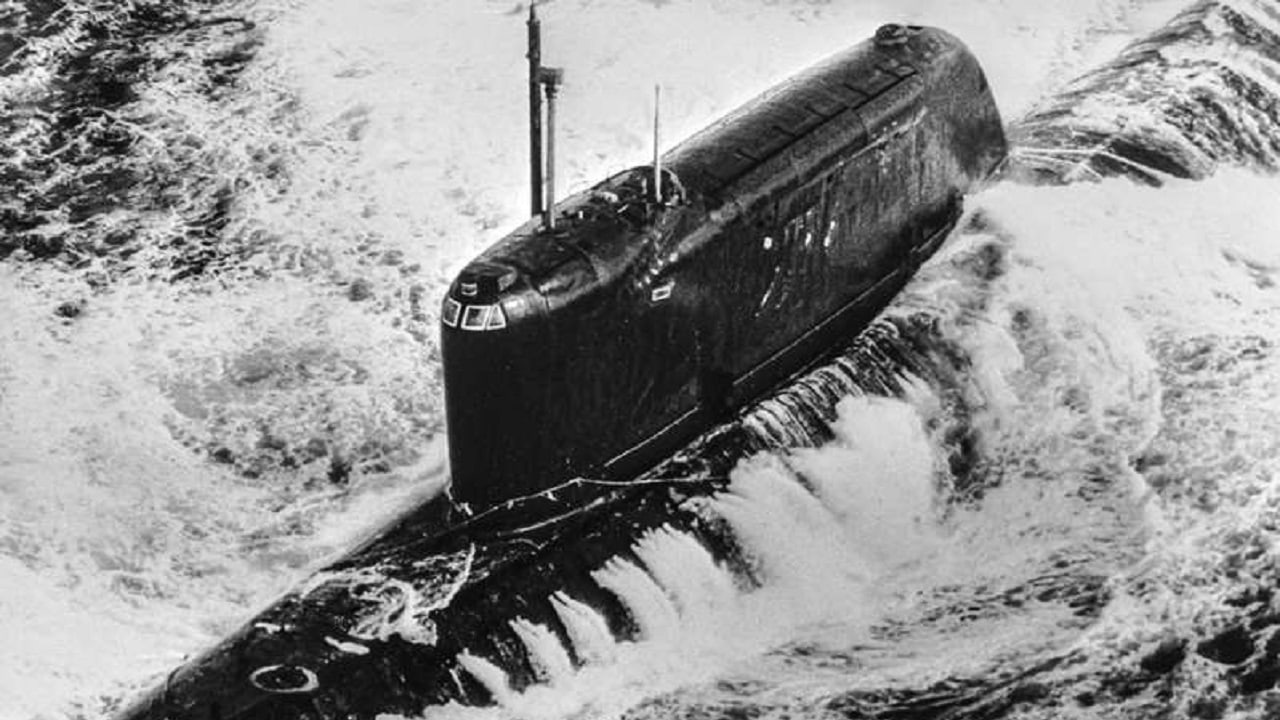
The Soviet Union built the K-19 nuclear submarine to compete with U.S. nuclear submarine programs. Captain Nikolai Zateyev believed the K-19 was unfit for combat. Sea trials were riddled with breakdowns. On July 4, 1961, off the coast of Greenland, a faulty weld in the reactor coolant system failed. Reactor temperature climbed to 800°C (1,470°F). Eight engineers entered the contaminated reactor space wearing only light suits and oxygen masks. They welded a makeshift cooling loop and saved the submarine. All 8 died within days from radiation poisoning. 14 more crew died over the next 2 years — 22 radiation deaths total. The crew nicknamed their boat “The Hiroshima.” A separate 1972 fire later killed 28 more K-19 crew.
A Russian Submarine Crisis Like No Other
The Soviet Union began building its first ballistic-missile-equipped nuclear submarine in 1958, naming it the K-19. The manufacturing was rushed because the Soviets were intent on competing with the United States.
The submarine was completed by 1960; however, her first Captain, Nikolai Zateyev, believed she was not fit for combat. Her sea trials were rife with breakdowns and system malfunctions.
Despite this, it was launched on its first mission in 1961. On July 4, 1961, the K-19 developed a catastrophic radioactive leak from its reactor while in the North Atlantic Ocean off the coast of Greenland.
Engineering crew members worked in high-radiation areas without proper suits, repairing the system by cutting a vent valve and welding a new water pipe to create a makeshift cooling loop. Eight of those men died within days of radiation poisoning.
Of the original crew of 139 personnel, 22 died from radiation poisoning within a few years of the accident.
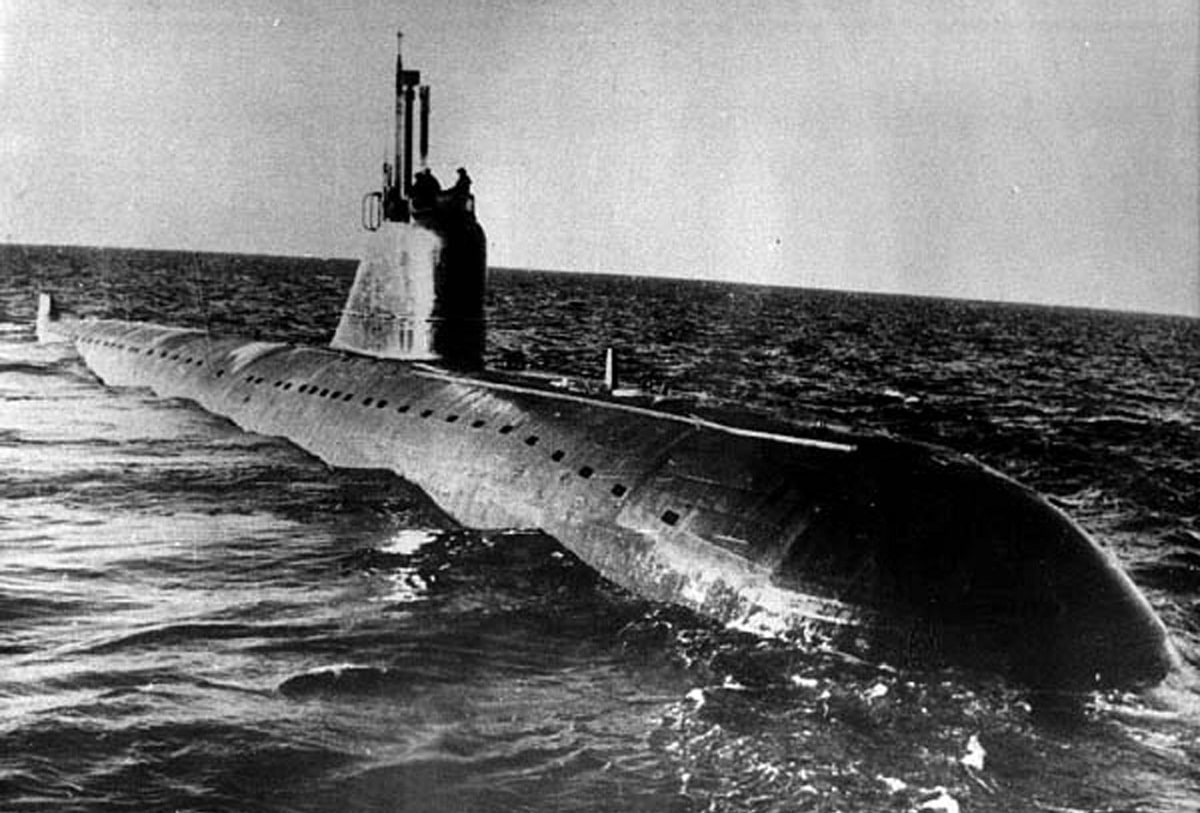
K-19 Submarine. Image: Creative Commons.
Meet The K-19 “Hiroshima” Ballistic Missile Submarine
The K-19 was the first submarine of the Project 658 class (NATO reporting name Hotel-class submarine), the first generation of Soviet nuclear submarines equipped with nuclear ballistic missiles, specifically the R-13 SLBM.
The boat was hastily built by the Soviets in response to the United States’ developments in nuclear submarines as part of the arms race. Before it was launched, 10 civilian workers and a sailor died due to accidents and fires.
After K-19 was commissioned, the submarine experienced multiple breakdowns and accidents, several of which threatened to sink it during her initial sea trials. The crew observed that the hull’s rubber coating had mostly come off during her sea trials and needed to be replaced.
The aforementioned Captain Zateyev was in command, and Vasily Arkhipov, who would later prevent the Cuban Missile Crisis from turning into nuclear war, was appointed as executive officer.
The boat was 374 feet long, with a beam of 30.2 feet, and a draught of 23.4 feet. She was capable of speeds up to 15 knots on the surface and 26 knots submerged. It had an unlimited range but generally needed food resupply every 60 days.
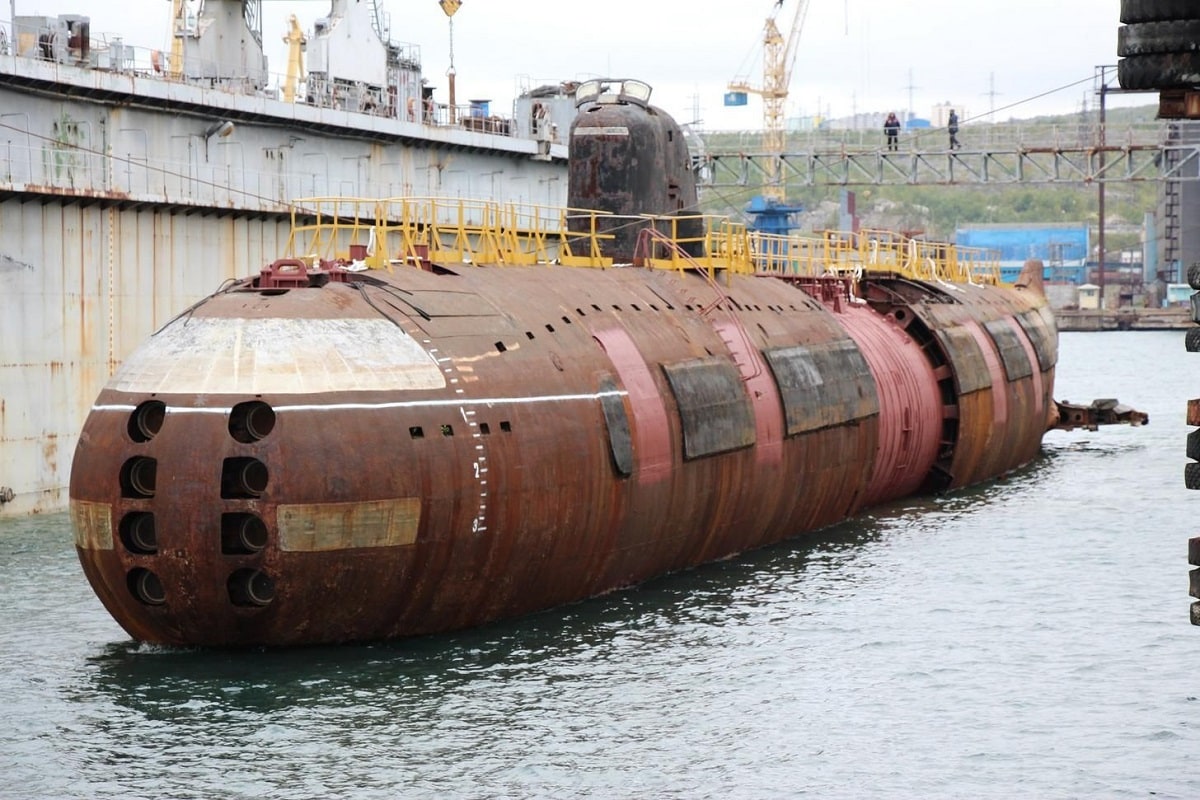
November-class Submarine. Image: Creative Commons.
The boat carried six nuclear missiles and had four torpedo tubes, 2 forward and 2 aft.
Although a Hollywood film starring Harrison Ford and Liam Neeson was made, named “K-19, The Widowmaker,” the crew didn’t call it that. They referred to the boat as “The Hiroshima” because of its accidents.
July 4, 1961, Nuclear Accident
K-19 was conducting exercises in the North Atlantic off the south-east coast of Greenland in early July 1961. At 04:15 hours, the pressure in the starboard nuclear reactor’s cooling system dropped to zero.
The reactor department crew found a major leak in the 70-megawatt reactor coolant system, causing the coolant pumps to fail. It was later determined that a faulty weld created an invisible crack in the coolant pipes, and the resulting pressure caused them to fail.
The boat could not contact Moscow and request assistance because a separate accident had damaged the long-range radio system.
The control rods were automatically inserted by the emergency SCRAM system, but the reactor temperature rose uncontrollably. Heat and decay from fission products produced during normal operation eventually heated the reactor to 800 °C (1,470 °F).
Engineers Save The Ship At The Cost Of Their Own Lives
The engineers installed a new coolant system by removing an air vent valve and welding a water-supply pipe to it. This required men to work in high radiation for extended periods, while wearing only light protection suits and wearing oxygen masks. The engineers, while saving the boat, had sealed their fate by entering highly contaminated reactor spaces without proper gear.
However, the jury-rigged cooling water system successfully reduced the reactor temperature. Despite this, the radiation leak had released radioactive steam containing fission products, which were drawn into the ship’s ventilation system and spread to other compartments.
The Crew Suffered 22 Radiation-Related Deaths In Two Years
The entire crew was irradiated, as was most of the ship and some of the ballistic missiles on board. All seven members of the engineering crew and their divisional officer died of radiation exposure within the next month. Fifteen more sailors died within the next two years.
Rather than continuing the ship’s mission, Captain Zateyev decided to rendezvous with a diesel submarine S-270, which heard the K-19’s distress call, evacuated the ship’s crew, and towed the K-19 back to port.
The Captain Feared A Mutiny
Zateyev was so concerned with a ship’s mutiny that he had all of the ship’s small arms thrown overboard, with the exception of a handful of pistols, which were distributed to the K-19’s most experienced and trusted officers.
American Navy ships in the area also picked up the K-19’s distress call and offered their assistance. But the captain, fearing that Soviet military secrets would fall into US hands, denied assistance and waited for the S-270.
The K-19’s Other Mishaps
In 1969, the K-19 suffered a collision with an American attack submarine, USS Gato. The collision destroyed the bow sonar systems and the covers of the forward torpedo tubes. K-19 returned to port, where it was repaired and returned to the fleet. The Gato was relatively undamaged and continued its patrol.
A catastrophic fire in 1972 killed 28 crewmen on board the submarine. Two other sailors later died from injuries.
The K-19 was decommissioned in 1990 and transferred to the submarine “barn” at Polyarny for scrapping in 1994. In 2006, a section of K-19 was purchased by businessman Vladimir Romanov, who once served on the submarine as a conscript, and incorporated it into his home in Russia.
About the Author: Steve Balestrieri
Steve Balestrieri is a National Security Columnist. He served as a US Army Special Forces NCO and Warrant Officer. In addition to writing on defense, he covers the NFL for PatsFans.com and is a member of the Pro Football Writers of America (PFWA). His work was regularly featured in many military publications.