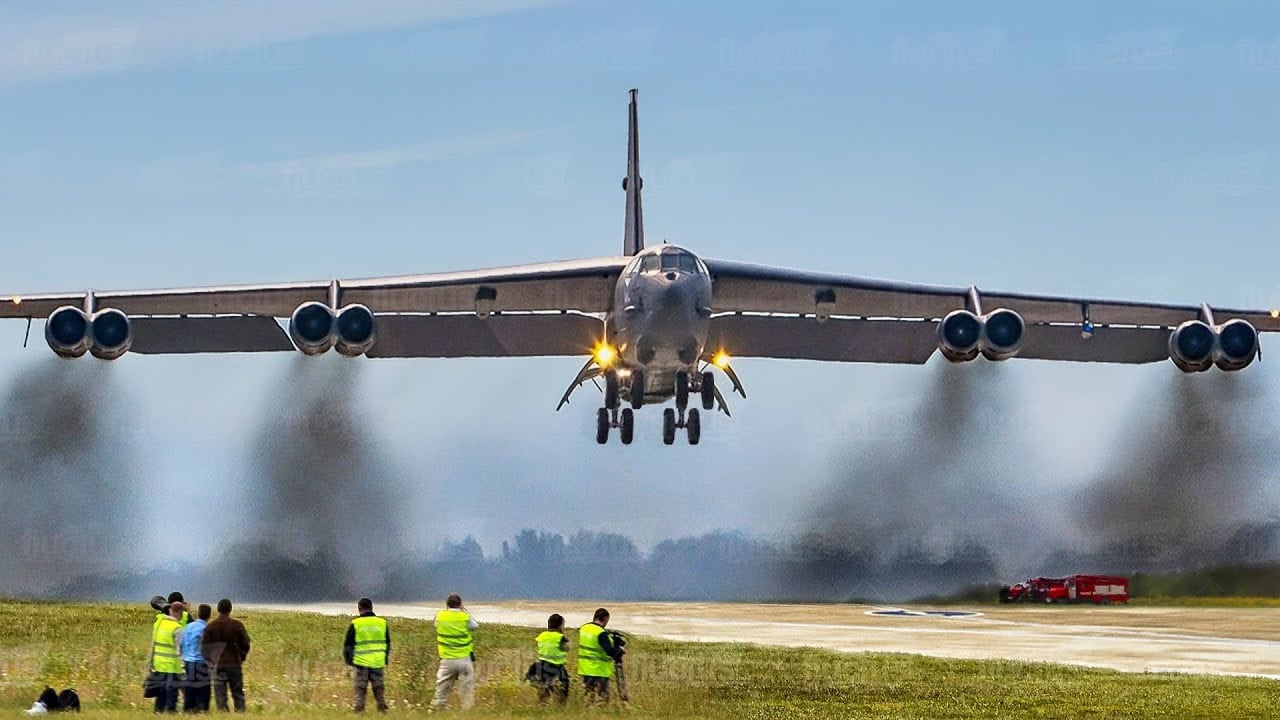
Summary and Key Points: A B-52 Lost in Greenland Carrying Nukes
-Greenland’s renewed political spotlight intersects with an older, darker episode: the January 1968 crash of a B-52 near Thule during Operation Chrome Dome, when nuclear-armed bombers stayed airborne to deter a Soviet first strike.
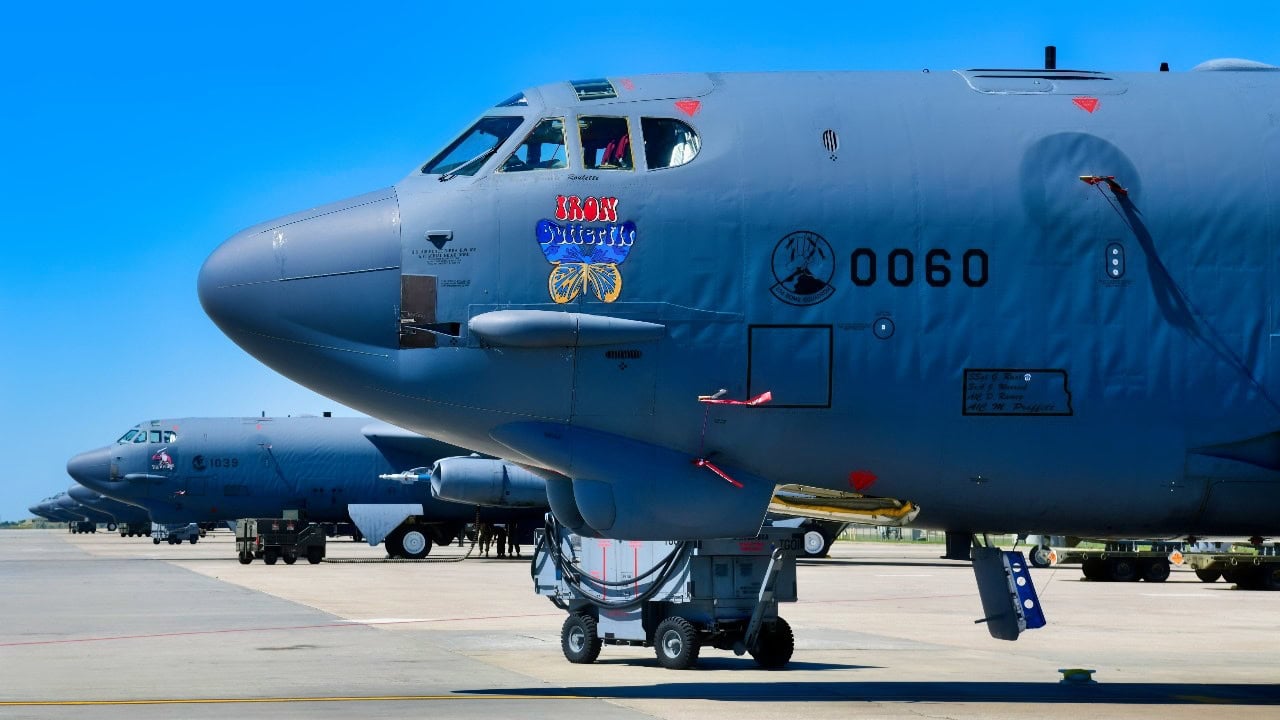
Multiple B-52H Stratofortresses sit parked on the flight line on Minot Air Force Base, North Dakota, Aug. 8, 2022. The B-52 Bomber has been in service since February of 1955. (U.S. Air Force photo by Airman Alysa Knott)
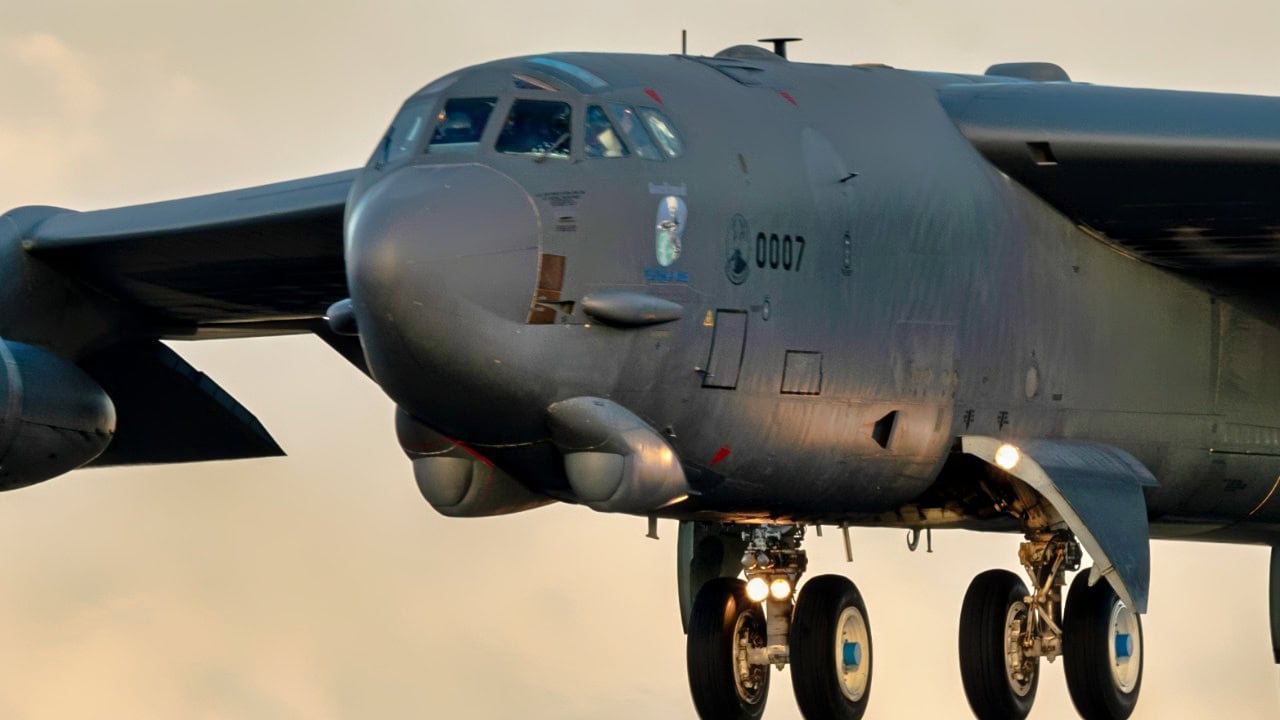
U.S. Air Force B-52H Stratofortress lands at RAF Fairford, England, following a sortie in support of Bomber Task Force 25-2, Feb. 27, 2025. The U.S. maintains a strong, credible strategic bomber force that enhances the security and stability of Allies and partners. (U.S. Air Force photo by Airman 1st Class Luis Gomez)
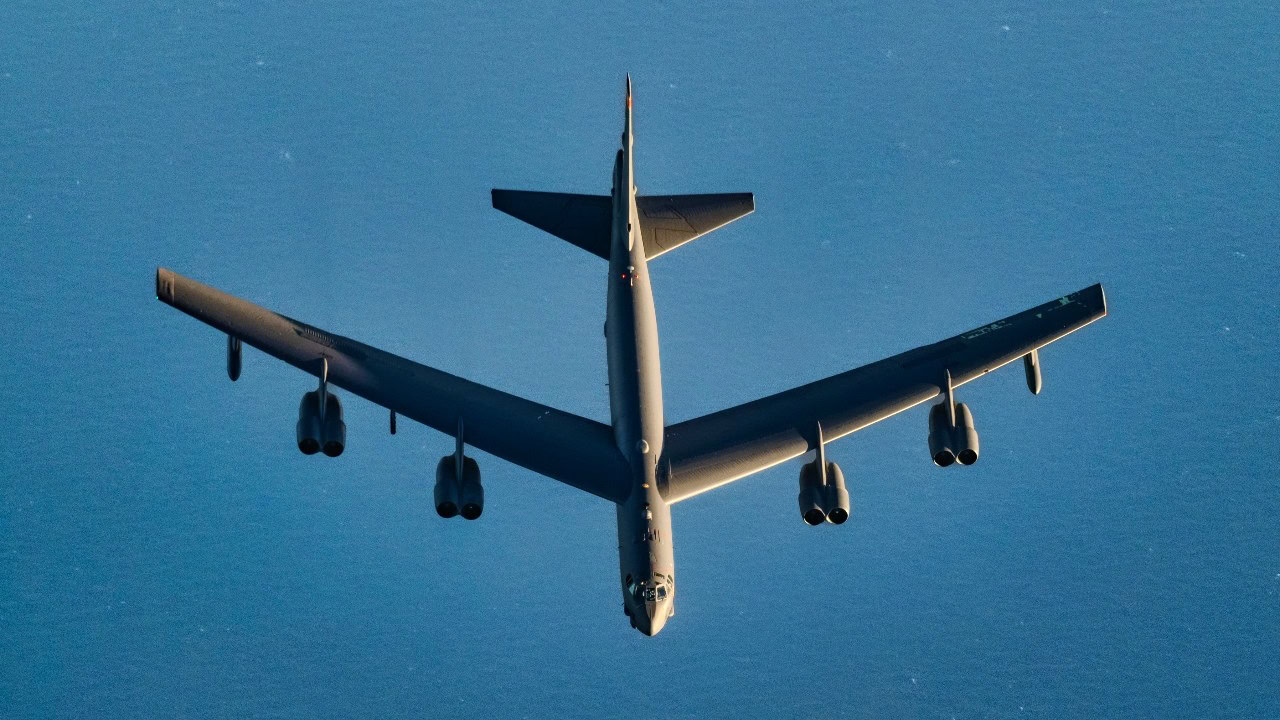
A U.S. Air Force B-52H Stratofortress flies a show of presence mission over the U.S. Central Command area of responsibility, Feb. 20, 2025. Strategic bombers contribute to stability in the CENTCOM theater by demonstrating the credibility, capability, and readiness of the U.S. bomber force, which is critical to deterring attacks against the U.S. and its allies and partners. (U.S. Air Force photo by Staff Sgt. Jackson Manske)
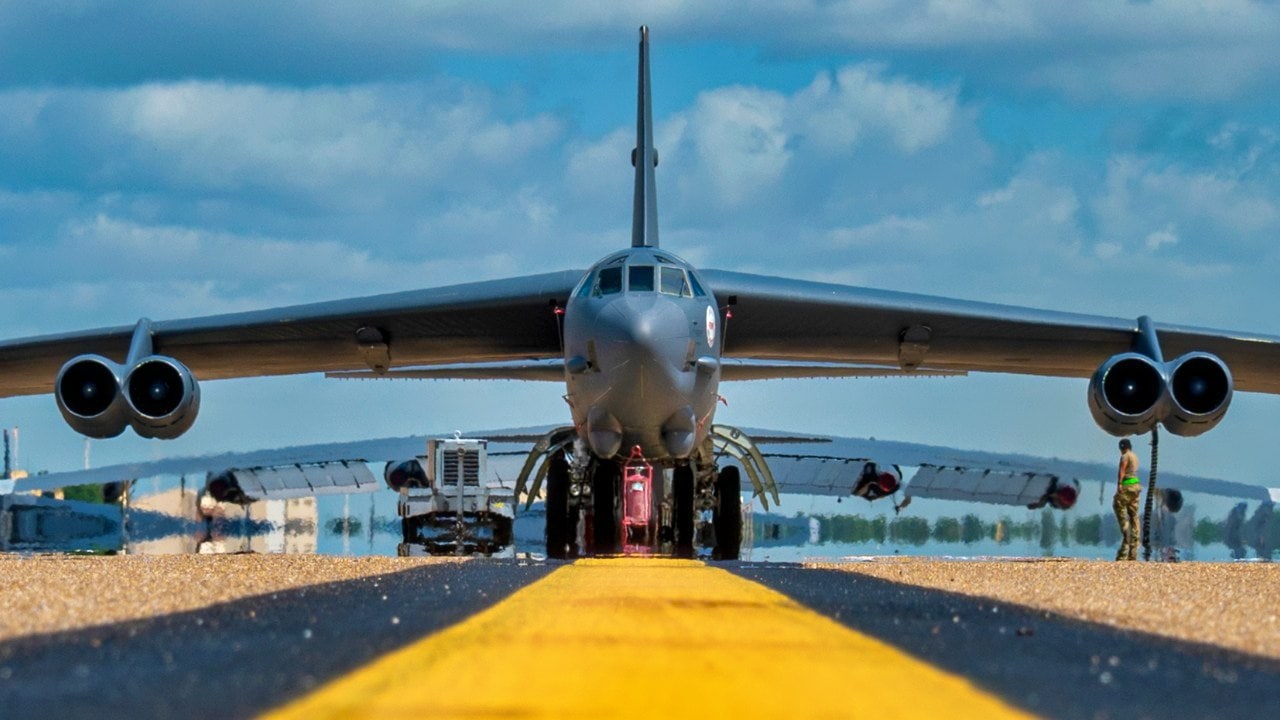
A U.S. Air Force B-52H Stratofortress bomber assigned to the 307th Bomb Wing goes through an engine check June 24, 2021, at Barksdale Air Force Base, Louisiana. Eight Pratt & Whitney TF33 engines power the B-52H to give it the capability of flying at high subsonic speeds. (U.S. Air Force photo by Senior Airman Kate Bragg)
-A fire reportedly triggered system failures, forcing the crew to bail out; one died, six survived.
-The aircraft hit sea ice, and conventional explosives detonated inside four thermonuclear weapons, scattering radioactive material across hunting and fishing areas.
-“Operation Crested Ice” removed vast contaminated debris, but investigators never recovered a key component from one weapon. Thule—now Pituffik—remains central to missile warning.
The Day a B-52 With 4 Hydrogen Bombs Crashed in Greenland—and One Part Was Never Found
Greenland is once again hitting the headlines, after President Donald Trump reiterated his calls for urgent negotiations to acquire Greenland as a U.S. territory during his speech at the World Economic Forum on January 21.
But this is hardly the first time the Danish territory has been the site of military controversy.
Greenland, A B-52 Bomber, and Lost Nuclear Bombs
On this day, January 21, 58 years ago, a B-52 bomber crashed into North Star Bay’s frozen waters, a few miles west of the U.S. Thule air base on Greenland. The aircraft had been carrying four hydrogen bombs.
The flight itself was not unusual by the standards of 1968. The jet was part of Operation Chrome Dome.
This covert initiative involved keeping American nuclear-armed aircraft in flight 24/7, lest a Soviet attack unfold. Years later, it was reported that the accident was prompted by a fire erupting within the aircraft when seat cushions close to a heating vent were set ablaze.
The cockpit was subsequently filled with smoke, and the electrical systems failed. One crew member died while six miraculously survived a perilous jump out of the moving plane.
The unmanned jet remained in flight for a number of minutes before slamming into the frozen sea, detonating the conventional explosives inside all four thermonuclear weapons.
While their in-built safety features luckily prevented an atomic blast, radioactive material was scattered across miles of ice used by Greenlanders for fishing and hunting.
A hugely difficult clean-up process then began, dubbed “Operation Crested Ice.” Danish and American workers were forced to remove contaminated snow, ice, and debris before the spring thaw under extremely cold, dark, and windy conditions, eventually shipping over half a million gallons of radioactive waste to the United States.
Even then, the operation was incomplete. Investigators were only able to account for components from three of the four weapons.
Classified documents later confirmed that a crucial part of one bomb’s fusion stage, a uranium “secondary”, was never recovered, despite underwater searches using a small submersible. Danish authorities later argued that no intact weapon remained, but the missing component remains a sore subject.
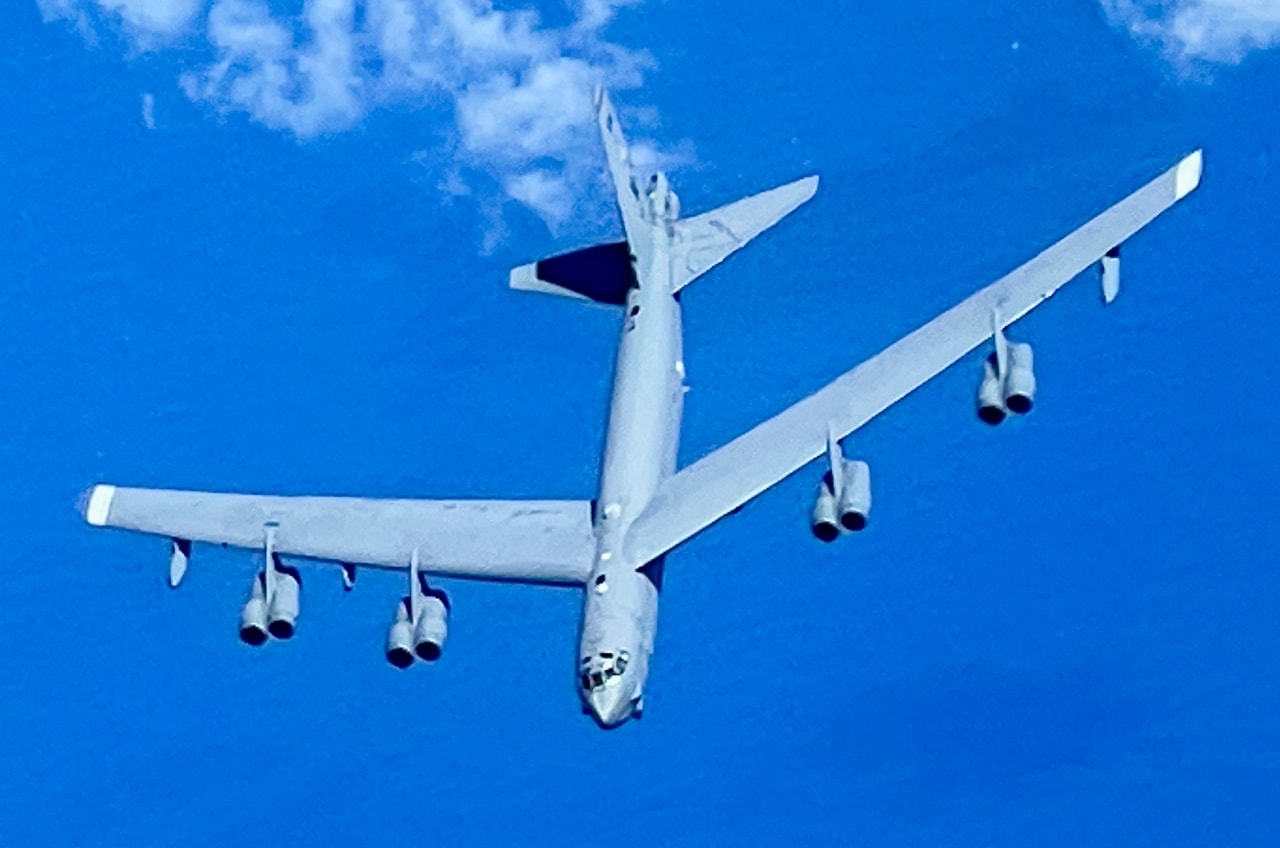
A B-52 Stratofortress assigned to the 2nd Bomb Wing, Barksdale Air Force Base, Louisiana, approaches a KC-135 Stratotanker assigned to the 6th Air Refueling Wing, MacDill AFB, Florida, for fuel over the southeastern United States, Nov. 5, 2024. The B-52 Stratofortress is a long-range, heavy bomber that can perform a variety of missions. As part of the Air Force Global Strike Command, the B-52 enables combat-ready forces to conduct strategic nuclear deterrence and global strike operations in support of combatant commanders. (U.S. Air Force photo by Senior Airman Mia McNeill)
In the 1990s, the Danish government was embroiled in a major scandal, having previously declared itself a nuclear-free country in 1957
Thule is now home to the Pituffik Space Base, which oversees high-tech missile-warning radar key to U.S. and NATO defence strategy.
European leaders have expressed fury over the idea that Greenland ought to be ceded to the U.S. for defense purposes, with Danish Prime Minister Mette Frederiksen vowing not to be “blackmailed” by Washington.
For many on the island, the memory of 1968 still matters, with the B-52 crash just one example of how Greenland’s unique geography has often drawn powerful external interests.
About the Author: Georgia Gilholy
Georgia Gilholy is a journalist based in the United Kingdom who has been published in Newsweek, The Times of Israel, and the Spectator. Gilholy writes about international politics, culture, and education. You can follow her on X:@llggeorgia.