
Greenland Crisis Exposes Europe’s Hypocrisy
Alfred Nobel would be turning over in his grave.
For decades, the ambition of some politicians to win the Nobel Prize has created a moral hazard that has ended in embarrassment for the Norwegian Nobel Committee.
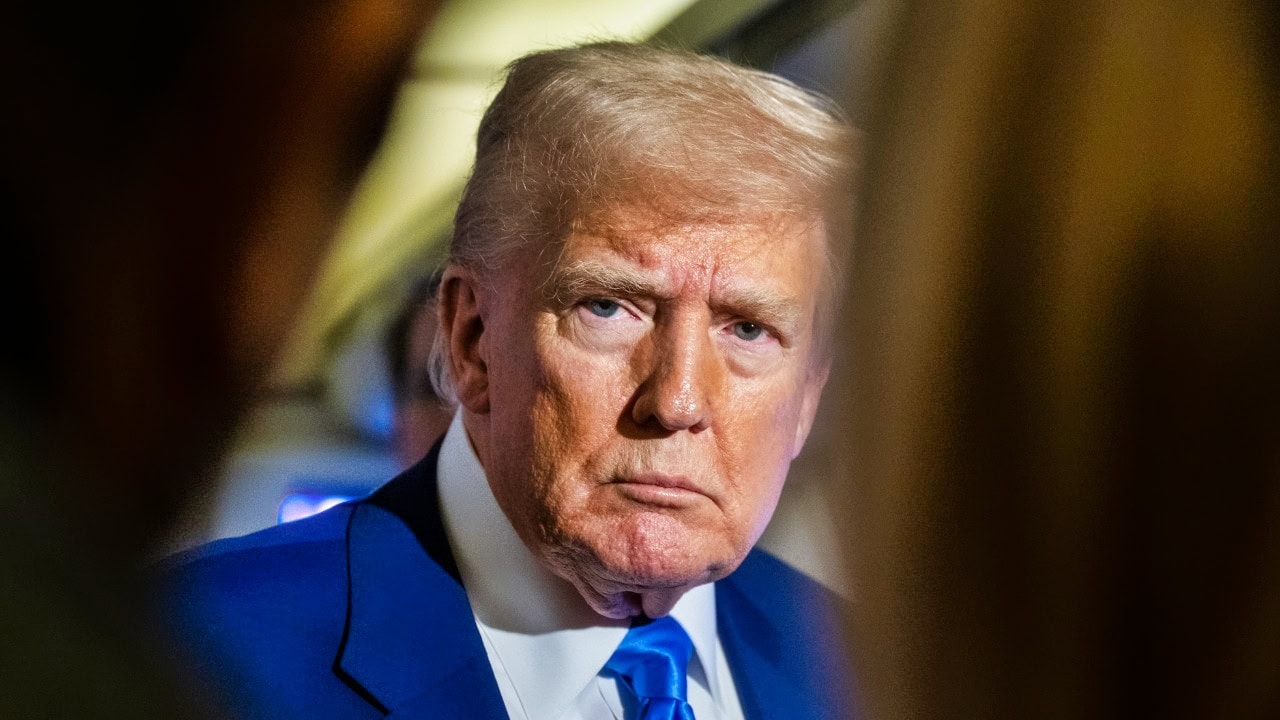
Still, President Donald Trump personifies a new problem for the Committee: a man so desirous of a Nobel Prize and envious of fellow US presidents who have received it that he threatens war if he does not get his way.
Make no mistake, no US president has ever sent a message to a fellow leader like Trump’s text message to Norwegian Prime Minister Jonas Gahr Støre. “Considering your Country decided not to give me the Nobel Peace Prize for having stopped 8 Wars PLUS, I no longer feel an obligation to think purely of Peace, although it will always be predominant,” Trump wrote, “But can now think about what is good and proper for the United States of America. Denmark cannot protect that land from Russia or China, and why do they have a “right of ownership” anyway? There are no written documents, it’s only that a boat landed there hundreds of years ago …”
What Is Trump Doing on Greenland?
It remains unclear if Trump really means to invade and annex Greenland or whether the crisis he hopes to create forces Europe to take Greenland’s defense more seriously.
Indeed, Trump may not have yet decided, though he has created a situation in which he can claim credit either way.
European leaders are correct that a landgrab against Greenland would be as wrong and destabilizing to the world order as Russia’s invasion of Ukraine and annexation of Crimea or China’s encroachment in both Arunachal Pradesh and the South China Sea.
But the prime ministers of Denmark and Norway are also hypocrites. In 1974, Turkey invaded Cyprus and occupied one-third of the island nation. Contrary to what many Turkish diplomats say today, the bulk of the invasion came only after any threat to Turkish Cypriots had passed, and all parties were at the negotiating table in Geneva.
Today, the crisis continues, with Turkey stealing Cypriot resources and transforming the occupied zone into a military base from which to threaten other states in the region. Yet, neither Denmark nor Norway sanctions Turkey. In September 2024, Støre even lifted Norway’s arms embargo on Turkey. From 2023 to 2024, the number of Norwegian tourists visiting the Turkish-occupied zone to drink, gamble, and relax on its beaches increased by more than 500 percent, even though that money directly subsidizes the occupation. Støre might virtue signal about sovereignty in response to Trump, but his approach is selective.
This raises a broader question about both Europe and NATO. The late Secretary of Defense Donald Rumsfeld famously distinguished between “Old Europe” and “New Europe” in terms of attitudes and willingness to sacrifice for freedom and liberty. Rumsfeld was wrong to assume that a complacent attitude toward liberty drives Western European and Scandinavian states. The juxtaposition between their attitudes toward Denmark’s interests in Greenland and Cyprus’ concerns about its ongoing occupation suggests more troubling motivations, including racism and a sense of superiority over their Southeast European kin. If the issue is law and principle, Copenhagen and Oslo should apply them equally to Nicosia as to Nuuk.
Two wrongs do not make a right. Trump is wrong on Greenland; a US invasion would open a Pandora’s Box and unleash a new era of imperialism. But, as European and NATO leaders clutch their pearls and complain about Trump’s moves toward Greenland, they may want to ask whether they themselves set a precedent with their silence and inaction on NATO member Turkey’s 51-year occupation of a European Union member’s territory.
About the Author: Dr. Michael Rubin
Michael Rubin is a senior fellow at the American Enterprise Institute and director of policy analysis at the Middle East Forum. The opinions and views expressed are his own. A former Pentagon official, Dr. Rubin has lived in post-revolution Iran, Yemen, and both pre- and postwar Iraq. He also spent time with the Taliban before 9/11. For more than a decade, he taught classes at sea on the Horn of Africa and the Middle East, covering conflicts, culture, and terrorism to deployed US Navy and Marine units. The views expressed are the author’s own.