
Greenland Won’t Break NATO, But It Could Make Article 5 Feel Conditional
NATO will not fracture over Greenland. Framing this issue as an existential showdown is misguided. The Alliance is too entrenched to unravel over one disagreement—even one connected to Arctic strategy and territorial sovereignty. The real danger lies elsewhere and is easy to miss.
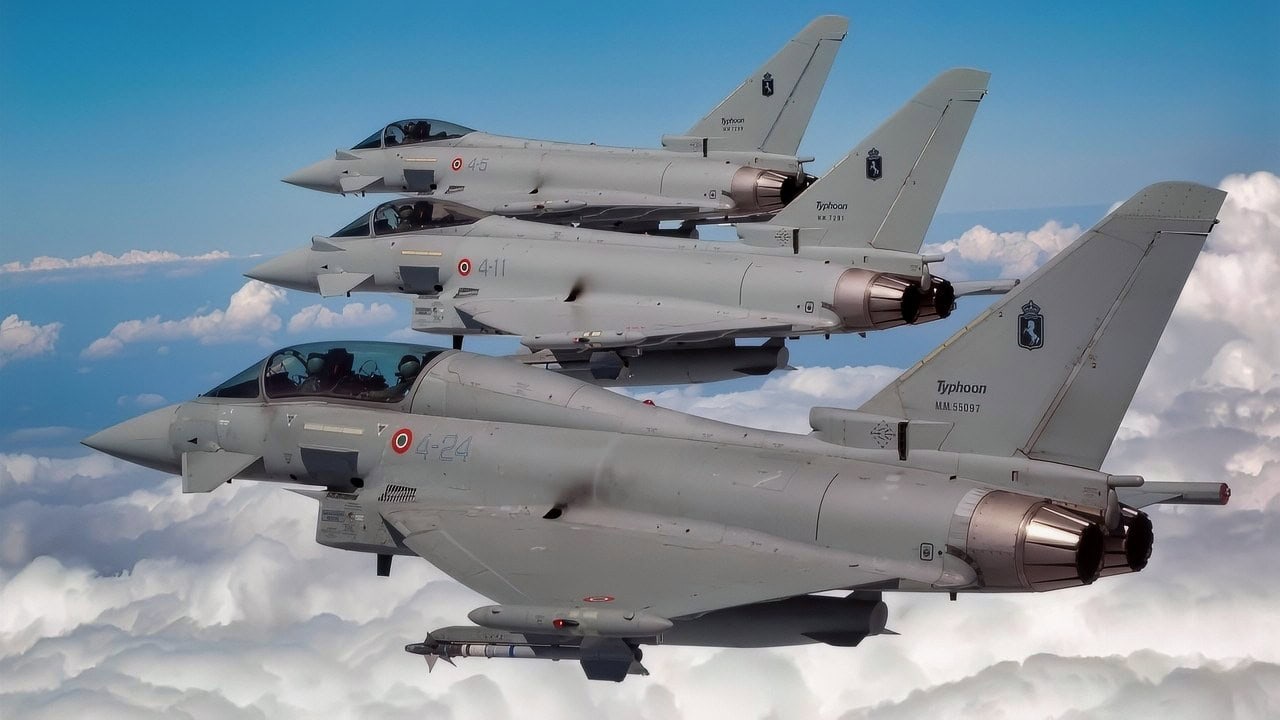
Eurofighter Typhoon Aircraft NATO. Image Credit: Creative Commons.
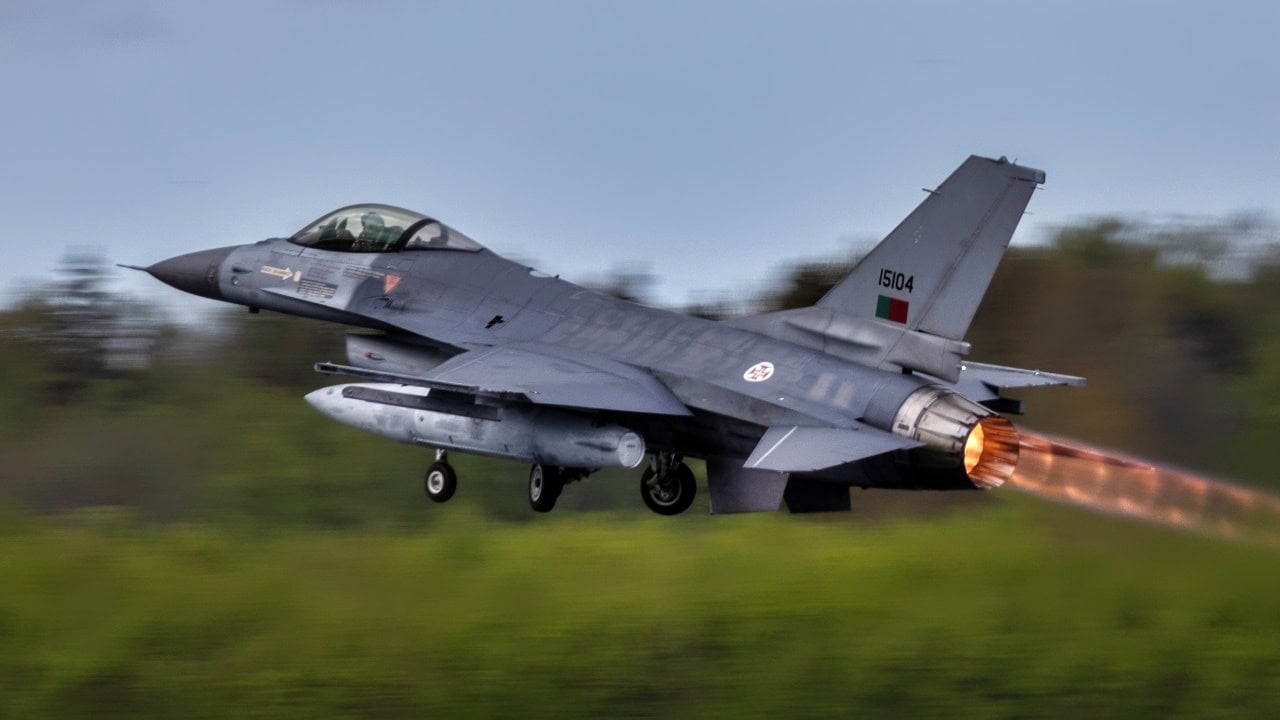
A Portuguese Air Force F-16 Fighting Falcon takes off during a Baltic Air Policing Rotation in Estonia.
Baltic Air Policing is a peacetime mission in which NATO Allies deploy fighter jets to cover the airspace of Estonia, Latvia and Lithuania. Image Credit: NATO.
If a U.S. president pushes hard enough on Greenland, the fallout will not take the form of a treaty crisis or, worse, US withdrawal. Instead, allies will start to question whether collective defense is automatic or if it now hinges on political buy-in with Washington. Deterrence will begin to erode the moment that doubt takes root—whether NATO survives intact or not. Greenland should concern us not because it could break up the alliance, but because it could make Article 5 seem conditional.
This distinction matters because alliances rarely collapse in a single moment. They weaken as confidence erodes, often long before any treaty is questioned. Greenland does not put NATO’s institutional survival on trial. It probes whether Article 5 still operates as a functional commitment, or whether it has begun to feel negotiable under pressure.
NATO’s Strength Is Institutional. Deterrence Is Not.
Because NATO membership is founded on deep habits of cooperation, robust embedded command structures, and underwritten by American military might, it has withstood shock after shock. Rifts over Suez, Vietnam, Iraq, and burden-sharing failed to fracture the Alliance. NATO survived the ugliness of Trump’s first term, too, even as alliance rhetoric became openly transactional. From an institutional perspective, it’s shockproof.
Deterrence, however, works differently. It depends on expectation, not endurance; on credibility, not convention. It requires that adversaries and allies believe commitments will be honored without hesitation or reinterpretation at the moment of crisis. Once hesitation enters that equation, deterrence weakens even if the alliance flag keeps flying.
This is why debates about NATO “breaking” miss the point. The question is not whether member states withdraw under Article 13 of NATO’s founding treaty or if the treaty is torn up altogether. The question is whether decision makers begin to hedge their bets regarding how the United States will respond when the stakes are high and time is short.
Greenland and Intra-Alliance Pressure
Greenland sits at an awkward intersection of geography, sovereignty, and power. It is strategically central to North American defense and Arctic access. It is also formally tied to Denmark, a small ally that depends on the United States for its ultimate security. That imbalance matters.
Were Washington to press Copenhagen on basing arrangements, access, or political authority in Greenland, much of that pressure would unfold within the bounds of existing treaty rights rather than through overt force. The United States already enjoys significant legal access under long-standing defense agreements, which would make any escalation appear administrative rather than aggressive. No tanks would cross borders. No Article 5 debate would be triggered.
Yet the signal would still be unmistakable: American power can be applied coercively inside the alliance, even when formal legal authorities are respected, when interests collide sharply.
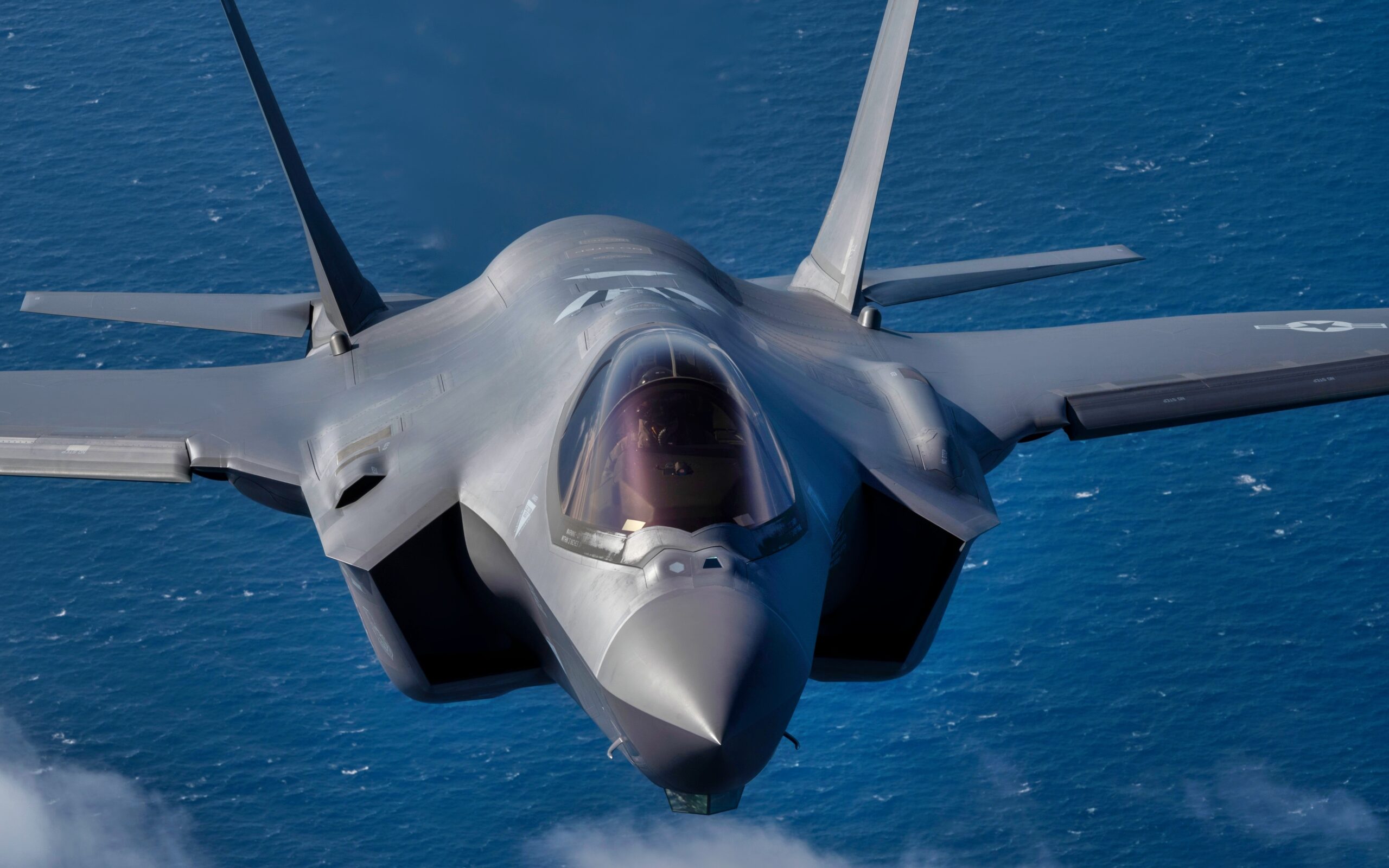
A U.S. Air Force F-35A Lightning II participating in NATO exercise Ramstein Flag 24 flies over the west coast of Greece, Oct. 4, 2024. Over 130 fighter and enabler aircraft from Greece, Canada, France, Hungary, Italy, Poland, Portugal, Romania, Spain, Sweden, United Kingdom and United States are training side by side to improve tactics and foster more robust integration, demonstrating NATO’s resolve, commitment and ability to deter potential adversaries and defend the Alliance. (U.S. Air Force photo by Tech. Sgt. Emili Koonce)
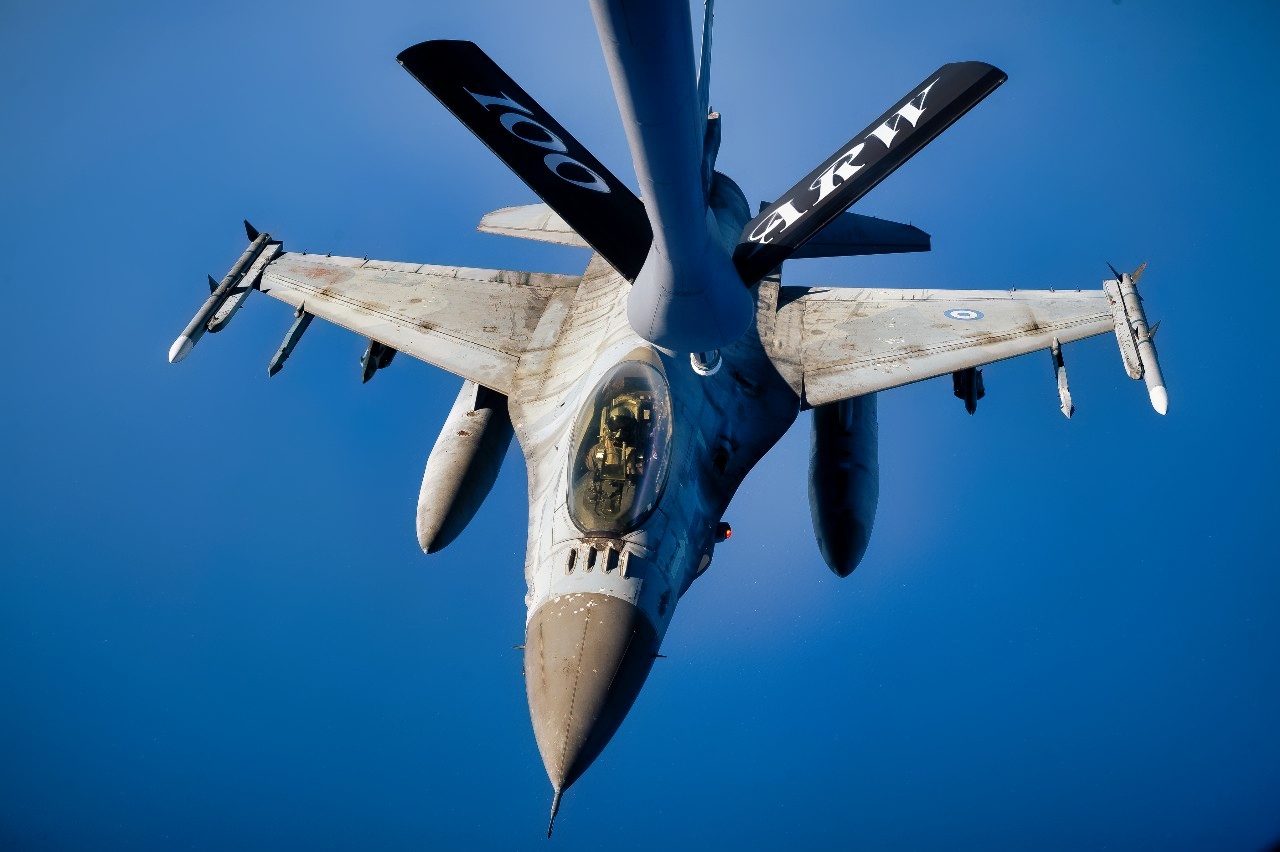
A U.S. Air Force KC-135 Stratotanker aircraft, assigned to the 100th Air Refueling Wing, refuels a Hellenic Air Force F-16 Fighting Falcon aircraft during exercise RAMSTEIN FLAG 2024 while flying over the coast of Greece, Oct. 4, 2024. RAFL24 demonstrates NATO unity and strength, as Allies across the Euro-Atlantic area train side by side in defensive and offensive air operations scenarios in support of the enduring commitment to shared values and ability to adapt to the emerging environment. (U.S. Air Force photo by Senior Airman Edgar Grimaldo)
NATO was never designed to manage that problem. It has no internal mechanism to restrain its hegemon. Its rules assume benign leadership rather than contested authority. Greenland would expose that structural gap in a way few other issues could.
How Article 5 Becomes Conditional Without Changing a Word
Article 5 does not require formal revision or deletion to render collective defense meaningless. It simply needs to be seen as conditional. Once allies believe that American commitments are conditioned on political will, obedience or acquiescence in unrelated conflicts, collective defense becomes a gamble.
That recalibration shows up first in process rather than policy. Defense planners hedge timelines. Political leaders seek reassurance that once seemed unnecessary. Military signaling becomes more cautious, not because threats have changed, but because expectations have. None of this is dramatic or declaratory. It is administrative, procedural, and quiet. Yet it alters how allies prepare for crisis and how adversaries judge alliance resolve.
That shift has practical consequences. Contingency planning grows cautious. Consultations become slower. Forward deployments invite more debate. None of this requires public dissent or formal objections. It emerges through quiet adjustments made by officials who no longer treat American response as a given.
For deterrence, this is corrosive. Adversaries do not need proof that Article 5 will fail. They only need reason to suspect delay, disagreement, or hesitation. Once that suspicion takes hold, the alliance’s most valuable asset—credibility—starts to thin. That is how a legal guarantee of collective defense continues to exist on paper even as the collective deterrence it underwrites begins to fray.
Why the Effects Would Travel Beyond the Arctic
What happens in Greenland won’t stay in Greenland. Allies already on NATO’s eastern flank concerned about escalation management and U.S. staying power will be watching closely how Washington treats smaller allies when interests conflict. An overt episode of intra-alliance coercion would be viewed as precedent, not aberration.
This is how localized disputes reshape broader expectations. The issue is not Denmark’s fate. It is whether other allies conclude that security guarantees are less automatic than they once believed. Deterrence does not require panic to fail. It fails through recalibration.
A Restraint Case for Cooling the Issue
From a restraint perspective, this is precisely the kind of confrontation to avoid. The United States gains little by turning Greenland into a public loyalty test. Strategic access can be negotiated quietly. Sovereignty disputes can be managed without spectacle. Pressure applied behind closed doors preserves leverage without broadcasting conditionality.
Escalating publicly does the opposite. It raises stakes, hardens lines and encourages allies to characterize it as a matter of principle rather than interest. Where the resulting outcome is positive, there is still a strategic cost because doubt remains about how the alliance functions when force is applied clumsily.
Restraint here is not passivity. It is discipline. The goal is preserving deterrence rather than asserting dominance for its own sake.
NATO’s Real Vulnerability
NATO will not shatter over Greenland. Its buildings will stand. Its forces will continue to work together. Its communiqués will be issued on schedule. That is precisely why the deeper risk is easy to miss.
Alliances decay before they collapse. They lose effectiveness long before they lose form. If Greenland becomes a case where American pressure appears to bend alliance relationships to unilateral ends, the damage will not announce itself. It will surface later, in hesitation, in miscalculation, and in adversaries willing to test what no longer feels automatic.
NATO’s future does not hinge on a single Arctic dispute. It hinges on whether collective defense remains a rule that operates without bargaining. Greenland matters only because it could blur that line. And once blurred, it will be difficult to restore.
About the Author: Dr. Andrew Latham
Andrew Latham is a non-resident fellow at Defense Priorities and a professor of international relations and political theory at Macalester College in Saint Paul, MN. You can follow him on X: @aakatham.