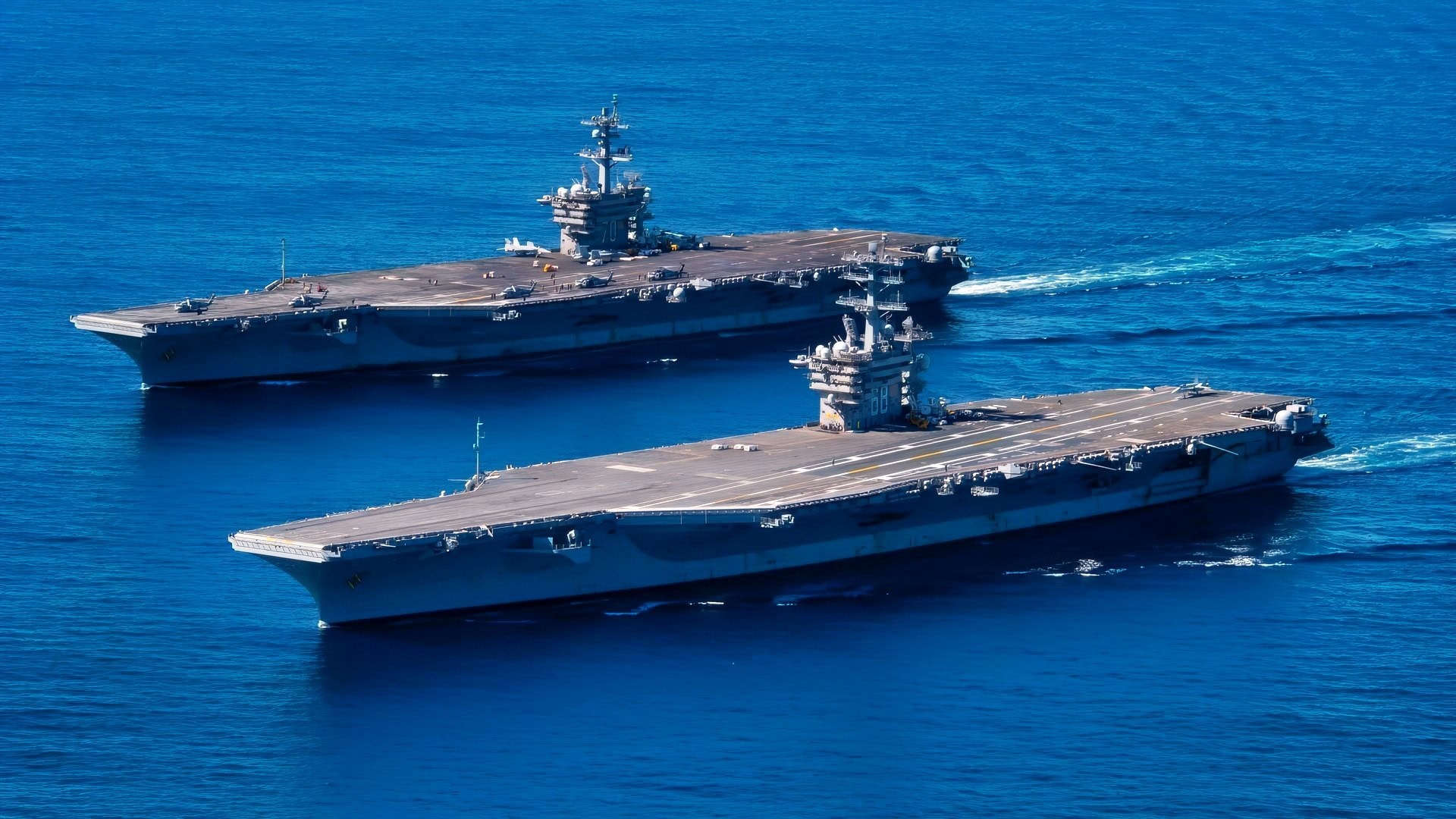
Summary and Key Points: The USS Nimitz — laid down in 1968 and originally scheduled to begin decommissioning at Norfolk this month — has instead arrived in the Caribbean as part of the Trump administration’s pressure campaign against Cuba.
The Navy extended the Nimitz’s service life by roughly ten months because the new Ford-class carriers are delayed; the USS John F. Kennedy is two years behind schedule due to problems with the Advanced Arresting Gear and Advanced Weapons Elevators.
The carrier’s arrival coincided with a Justice Department indictment of 94-year-old former Cuban president Raúl Castro. Ordinary Cubans are now burning wood and charcoal for cooking fuel.
The USS Nimitz Aircraft Carrier Just Keeps Going
The USS Nimitz, a United States Navy aircraft carrier, arrived in the Caribbean last week, the latest component of the Trump administration’s push to pressure Cuba. It may be the oldest aircraft carrier within the United States Navy, but that hasn’t prevented the carrier from bolstering the American military presence around the island.
“Welcome to the Caribbean, Nimitz Carrier Strike Group!” United States Southern Command wrote on X, formerly Twitter.
“The aircraft carrier USS Nimitz (CVN 68), the embarked Carrier Air Wing 17 (CVW-17), USS Gridley (DDG 101) and USNS Patuxent (T-AO 201) are the epitome of readiness and presence, unmatched reach and lethality, and strategic advantage,” SOCOM wrote, adding that the “USS Nimitz has proven its combat prowess across the globe, ensuring stability and defending democracy from the Taiwan Strait to the Arabian Gulf.”
Though the current administration’s rhetoric toward Havana has been bellicose — Secretary of State Marco Rubio, the child of Cuban immigrants, recently took to social media to speak directly to the Cuban people — the presence of American warships in the region has thus far been a show of force. But the very real possibility of a prelude to the kind of action seen recently in Venezuela and Iran remains.
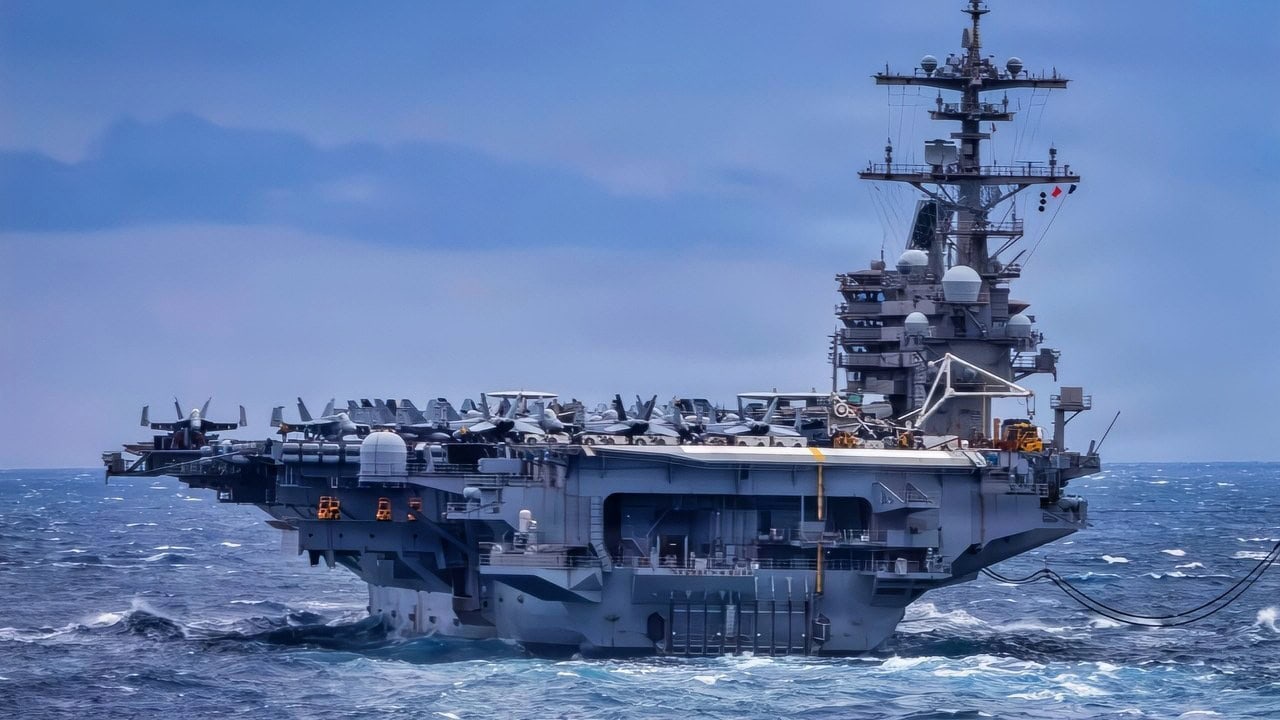
The Nimitz-class aircraft carrier USS George H.W. Bush (CVN 77) and the Henry J. Kaiser-class fleet replenishment oiler USNS John Lenthall (TAO 189) transfer cargo and JP-5 during a replenishment at sea in the Atlantic Ocean, Feb. 15, 2026. The George H.W. Bush Carrier Strike Group is at sea training as an integrated warfighting team. Composite Training Unit Exercise (COMPTUEX) is the Joint Force’s most complex integrated training event and prepares naval task forces for sustained high-end Joint and combined combat. Integrated naval training provides combatant commanders and America’s civilian leaders highly capable forces that deter adversaries, underpin American security and economic prosperity, and reassure Allies and partners. (U.S. Navy photo by Mass Communication Specialist 2nd Class Mitchell Mason)
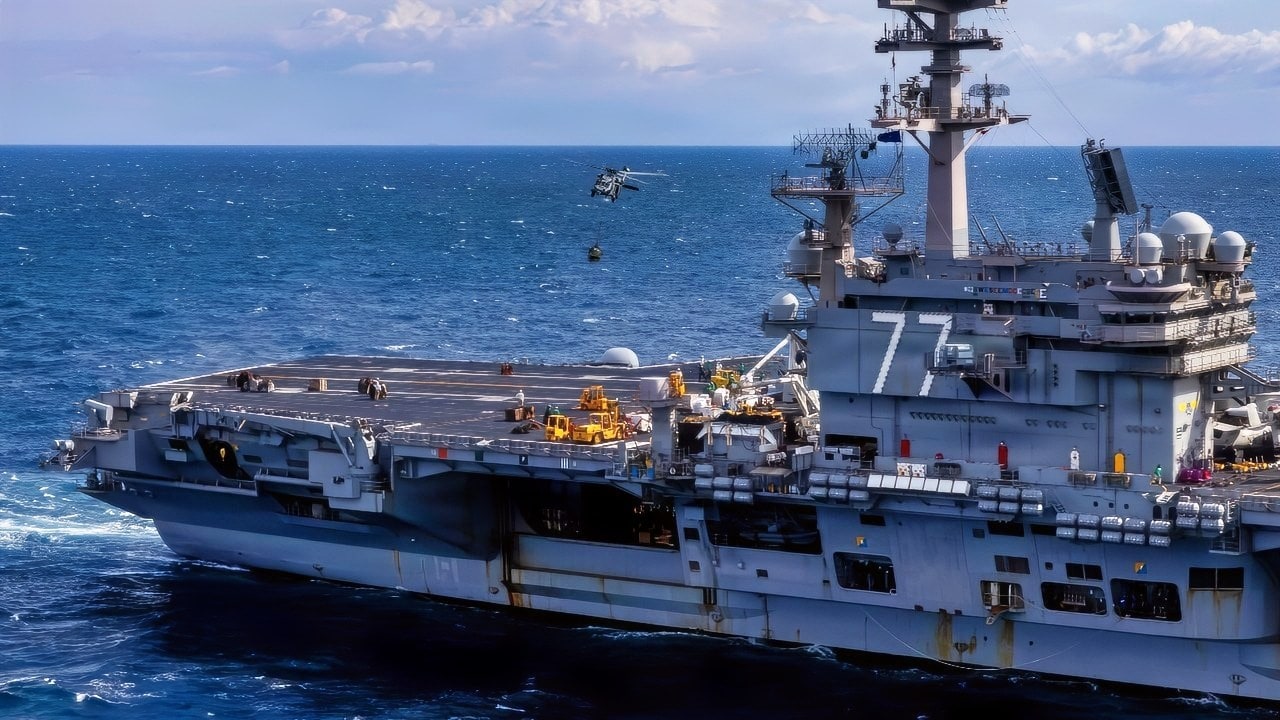
A MH-60S Seahawk helicopter assigned to the “Nightdippers” of Helicopter Sea Combat Squadron (HSC) 5 delivers cargo to the Nimitz-class aircraft carrier USS George H.W. Bush (CVN-77) during a vertical replenishment in the Atlantic Ocean, Feb. 15, 2026. The George H.W. Bush Carrier Strike Group is at sea training as an integrated warfighting team. Composite Training Unit Exercise (COMPTUEX) is the Joint Force’s most complex integrated training event and prepares naval task forces for sustained high-end Joint and combined combat. Integrated naval training provides combatant commanders and America’s civilian leaders highly capable forces that deter adversaries, underpin American security and economic prosperity, and reassure Allies and partners. (U.S. Navy photo by Mass Communication Specialist 2nd Class Mitchell Mason)
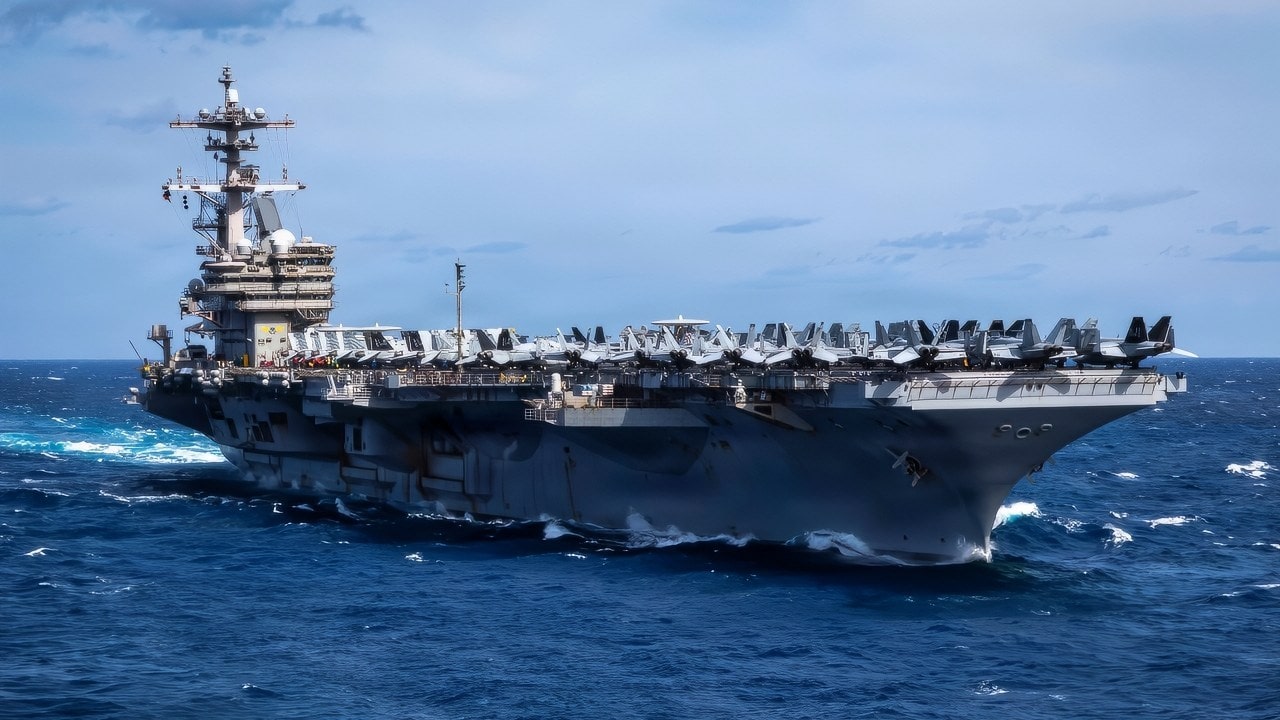
The Nimitz-class aircraft carrier USS George H.W. Bush (CVN 77) transits the Atlantic Ocean, Feb. 15, 2026. The George H.W. Bush Carrier Strike Group is at sea training as an integrated warfighting team. Composite Training Unit Exercise (COMPTUEX) is the Joint Force’s most complex integrated training event and prepares naval task forces for sustained high-end Joint and combined combat. Integrated naval training provides combatant commanders and America’s civilian leaders highly capable forces that deter adversaries, underpin American security and economic prosperity, and reassure Allies and partners. (U.S. Navy photo by Mass Communication Specialist 2nd Class Mitchell Mason)
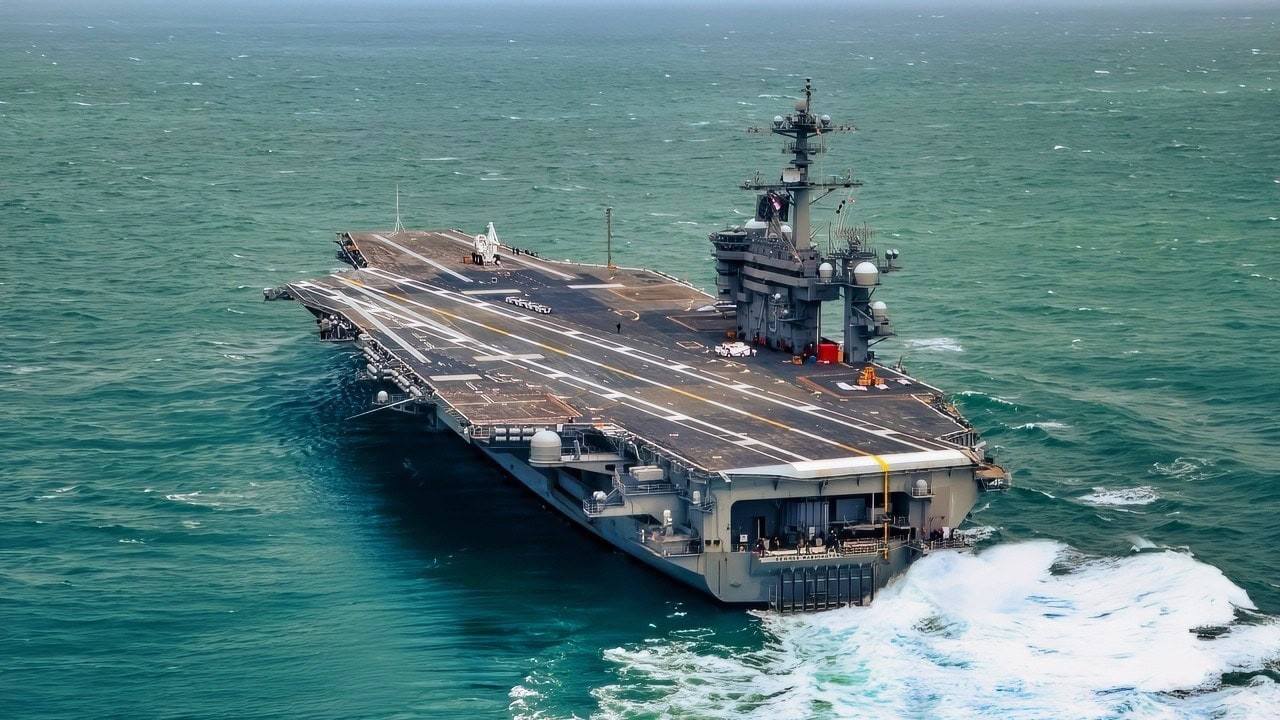
The Nimitz-class aircraft carrier USS George Washington (CVN 73) transits through the Atlantic Ocean May 25, 2023. George Washington was underway after completing its mid-life refueling and complex overhaul and sea trials, a comprehensive test of the ship’s system and technologies. (U.S. Navy photo by Mass Communication Specialist 3rd Class Nicholas A. Russell)
A Long Lifespan Extended
As with all Nimitz-class aircraft carriers, the USS Nimitz was designed with a roughly fifty-year service life in mind. Pressured by multiple international crises and increasingly extended aircraft carrier deployments — as well as delays in getting the upcoming Gerald R. Ford-class aircraft into service — the U.S. Navy has extended the service life of the USS Nimitz.
The aircraft carrier was slated to arrive in port at Norfolk, Virginia, sometime in the middle of May to begin decommissioning. Rather than a full-scale service life extension, however, the move was an effort to bridge a gap in the Navy’s aircraft carrier force structure.
Practically speaking, the USS Nimitz service life extension is relatively modest, and should the Navy’s intentions go according to plan, the aircraft carrier would serve for around ten more months.
Though aircraft carriers and their critical subsystems are designed with significant structural margins, the USS Nimitz was originally laid down in 1968. But constrained by Congress to maintain a fleet of eleven aircraft carriers, the Navy has its hands tied.
It is not the first time the Navy has considered the Nimitz-class’s service-life needs. Previously, there was debate over whether some of the later Nimitz-class ships, in particular the USS Harry S. Truman, could skip their Refueling and Complex Overhaul program, which facilitates reactor refueling and modernization.
Simmering Geopolitical Tensions
The USS Nimitz is in the midst of a journey around South America and Central America en route to Norfolk.
But the timing of the USS Nimitz and her strike group’s arrival in the Caribbean comes at a perilous time for Havana’s embattled government. It also coincided with an announcement from the Justice Department concerning charges against Raúl Castro, Cuba’s 94-year-old former president.
Though some of the naval forces assembled in the Caribbean prior to the raid in Caracas that captured Venezuelan strongman Nicolás Maduro have departed the region, the United States Naval Institute’s Fleet Tracker reports that the ships with the Iwo Jima Amphibious Ready Group, which includes the USS Iwo Jima, USS Fort Lauderdale, as well as the 22nd Marine Expeditionary Unit. The USS Lake Erie, a guided-missile cruiser, and the USS Billings, a Littoral Combat Ship, were also reportedly in the Caribbean as well.
An Acute Energy Crisis for Cubans
During President Trump’s first term in office, the United States sanctioned companies involved in energy transfers to Cuba from Venezuela, part of a wider campaign to squeeze the island’s Havana-based regime.
Stung by sanctions that have deeply curtailed access to oil, ordinary Cubans have increasingly turned to alternative fuels, including wood and charcoal — though Cuba’s military and police reportedly have access to fuel for their needs.
The Future of the Carrier Fleet
The construction of the USS John F. Kennedy, the second ship of the new Gerald R. Ford-class, has been delayed by two years due to teething issues with the Advanced Arresting Gear and Advanced Weapons Elevator.
Though both systems were supposed to significantly increase the carrier’s sortie efficiency, work on the USS Kennedy did not initially incorporate lessons learned from the USS Ford build. The USS Kennedy’s anticipated service entry date has been repeatedly pushed back.
About the Author: Caleb Larson
Caleb Larson is an American multiformat journalist based in Berlin, Germany. His work covers the intersection of conflict and society, focusing on American foreign policy and European security. He has reported from Germany, Russia, and the United States. Most recently, he covered the war in Ukraine, reporting extensively on the war’s shifting battle lines in the Donbas and writing about its civilian and humanitarian toll. Previously, he worked as a Defense Reporter for POLITICO Europe. You can follow his latest work on X.