
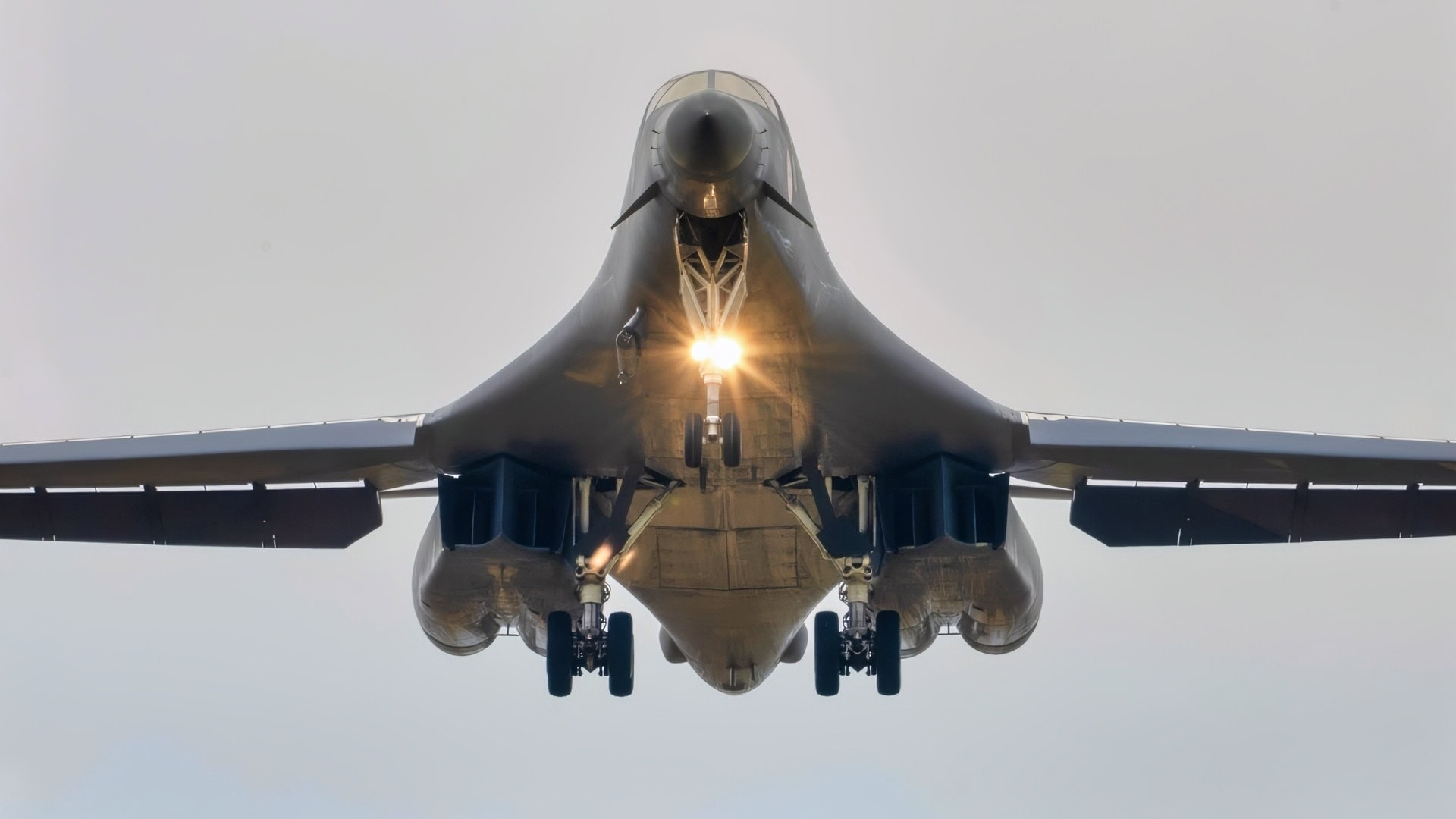
The United States can hit almost anything Iran places near the Strait of Hormuz. It cannot hit the strait itself.
That distinction is the whole story of this war right now, and it keeps getting lost in the daily count of strikes and retaliations. Over the weekend, American forces hit Iranian air defenses, coastal radars, missile and drone sites, and small naval craft. Iran struck back at American facilities and other targets in the regional states hosting U.S. forces. Both governments now claim, in effect, that they control passage through Hormuz. Washington says commercial traffic is moving under American protection. Available ship-tracking data says otherwise: transit fell roughly 52 percent between July 10 and July 12, with only six vessels reportedly passing through on Sunday. More ships are running dark, so the picture is imperfect, but nothing in the numbers looks like an open strait.
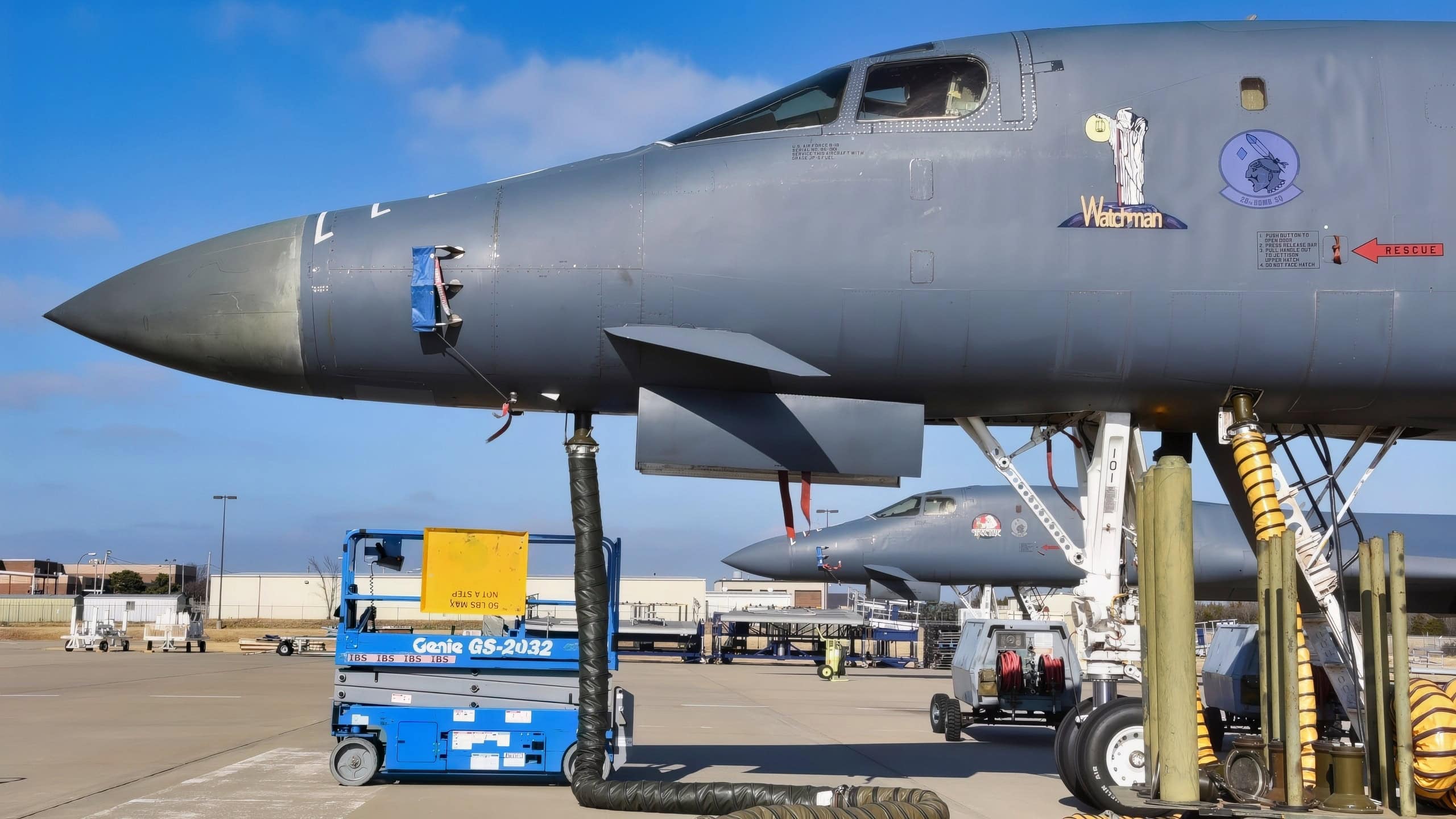
Boeing B-1B Lancer, serial # 86-0101, wearing ‘Watchman’ nose-art shown at the Maintenance, Repair and Overhaul Training Center Jan. 17, 2019, Tinker Air Force Base, Oklahoma. MROTC is a facility used for heavy aircraft maintenance in a public/private partnership between the Air Force and Boeing. (U.S. Air Force photo/Greg L. Davis)
Those two facts do not fit together, and the gap between them is the argument. The war is not heading toward an American or an Iranian victory. It is settling into an armed stalemate, with the Strait of Hormuz as its fixed point.
The changing Iran war
Iran’s nuclear program was central to Washington’s case for starting this war. It is no longer the issue driving the fighting. The center of gravity has shifted to a narrower question: who gets to decide the terms on which ships move through Hormuz. Tehran wants a recognized role in managing that traffic, permits, fees, something with its name on it. Washington and its Gulf partners want unimpeded passage and reject anything that turns an international waterway into an Iranian toll gate.
You can see how far the war has drifted in what the two sides discussed on July 1 in Doha. The agenda was maritime traffic and frozen Iranian funds; the nuclear issue reportedly never came up. The truce that followed postponed the argument that mattered. What Hormuz gives Tehran, and what its battered conventional forces cannot, is leverage that survives being bombed.
Punishment is not the same thing as control
None of what follows is a claim that Iran and the United States are military equals. They are not even close. American forces have escalation dominance in every conventional sense that matters. They can find and destroy fixed sites, sink small boats, suppress coastal defenses, and escort selected vessels. That keeps Iran from ever exercising uncontested military control of the strait.
But freedom of navigation, in the end, is a commercial fact before it is a naval one. Washington can declare the passage open. Shipowners, charterers, and the insurers who price the risk decide whether it is safe enough to use. Iran has figured out how to live in that gap. It does not need to seal Hormuz. A damaged tanker, a missing crew member, a warning shot across an “unauthorized” vessel- any of these can keep traffic depressed for days, and destroying the launcher used yesterday guarantees nothing about the drone or attack boat that appears tomorrow. The target of Iranian coercion was never really the Fifth Fleet. It is the risk calculation sitting on an insurer’s desk in London.
Iran has leverage. It does not have a path to victory.
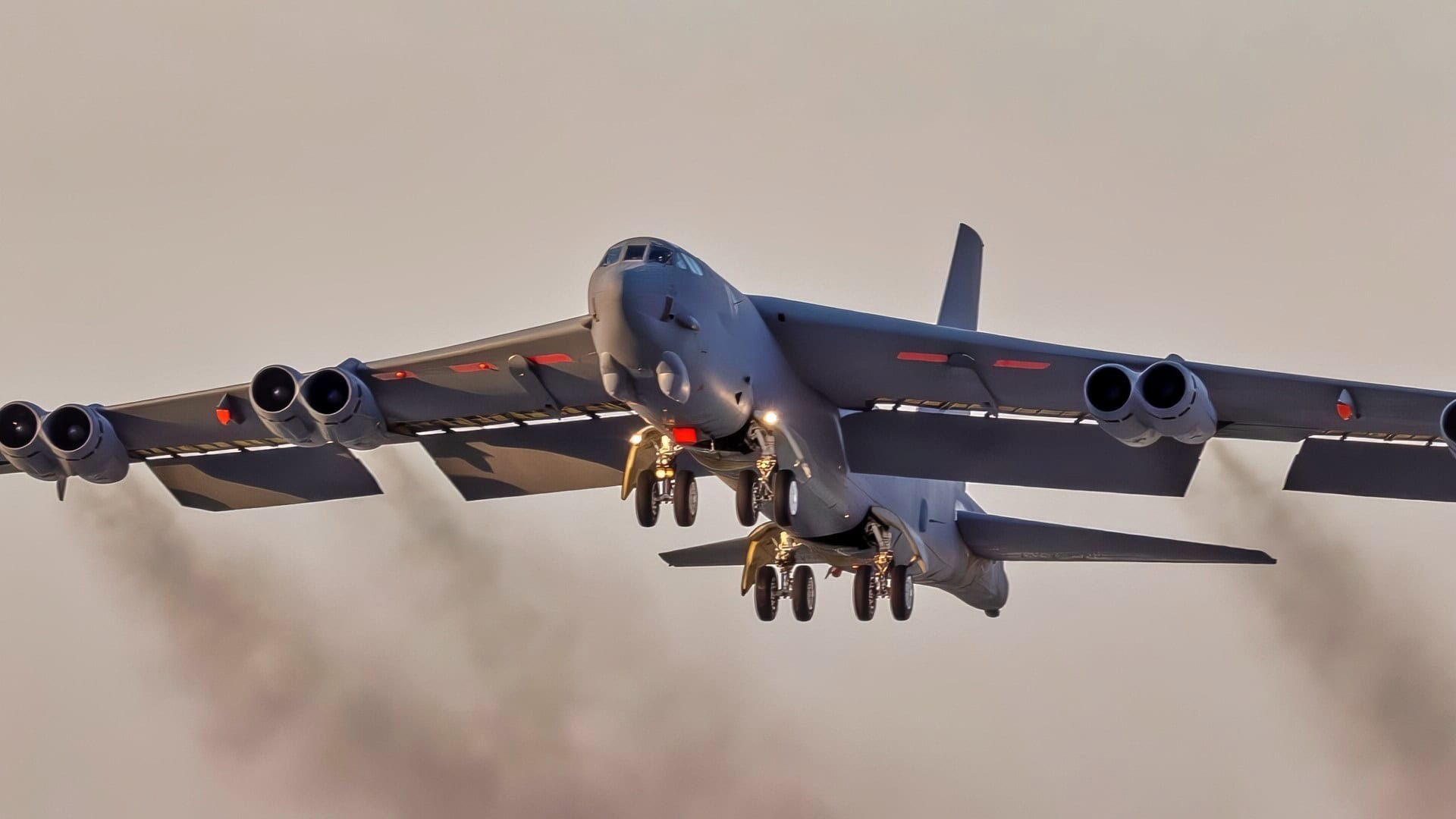
A modified B-52H Stratofortress departs Edwards Air Force Base for an evening training mission on June 25, 2025. The aircraft is assigned to the 419th Flight Test Squadron, Global Power Bombers Combined Test Force, tasked with supporting developmental testing across the B-52, B-1, and B-2 bomber portfolio. Along with most 412th Test Wing aircraft, B-52H bombers at Edwards include special instrumentation to conduct a variety of testing activities. (Air Force photo by Chase Kohler)
It is worth turning this around because Iran’s capacity to disrupt Hormuz is mistaken in some commentary for a capacity to win. It cannot. Tehran has no way to establish durable sovereignty over the strait. Every attempt to impose a fee or a permit system hands Washington a reason to strike again and pushes Gulf governments toward measures that constrain Iran further. It also depends on its own maritime exports and cannot indefinitely strangle the system that funds it.
The larger problem is that the damage does not stop at the United States. Roughly a fifth of global petroleum and a fifth of global LNG trade have historically moved through Hormuz, most of it bound for Asia. The longer Iran interferes with that flow, the more China, India, Japan, and the Gulf producers treat it as the main threat to their energy security rather than a state pursuing legitimate interests. Costs, Iran can impose. Converting them into a stable order is a different project.
Managed instability, not war and not peace.
What this produces is neither a frozen conflict nor a negotiated ceasefire. It is a cycle: Iran harasses shipping, the United States strikes for a few days, Iran hits American assets in the Gulf, and mediators reopen talks before either side crosses into something larger. Both governments have reasons to avoid that larger war, and both have reasons to resist the compromise that would end the cycle. Iran will not surrender its strongest remaining source of leverage, and Washington cannot concede to it a veto over who moves through the Strait of Hormuz. The danger beneath a managed cycle is that a single exchange causes damage too large to manage.
What Washington should actually want
The way out is not more bombing, and not a deal that hands Iran a toll gate. Washington should define success narrowly: keep Iran from closing the strait or imposing a unilateral permit-and-fee regime, and treat that as the win. Reaching it will probably mean an untidy arrangement, some deconfliction mechanism, likely with Omani involvement, that gives Iran a voice without a veto. What it should not do is treat freedom of navigation as the permanent elimination of Iran’s ability to threaten shipping. That would require an open-ended campaign against regenerating capabilities along a coastline Iran is not leaving.
The test comes after the strikes stop
Washington will keep leaving these exchanges having destroyed more than it lost, and Iran will keep declaring victory whenever traffic slows or oil prices tick up. Both can be true at once, and both are incomplete.
The actual test is whether ordinary commercial shipping can resume without continuous American bombardment and without ships first asking Iran’s permission. If the answer stays no, the United States has not secured freedom of navigation, and Iran has not secured recognized control over anything. What the two countries will have built instead is the opening position for their next round of fighting, and nothing on the current trajectory suggests it will be the last one.
About the Author: Dr. Andrew Latham
Andrew Latham is a professor of international relations and political theory at Macalester College in Saint Paul, MN. You can follow him on X: @aakatham.