
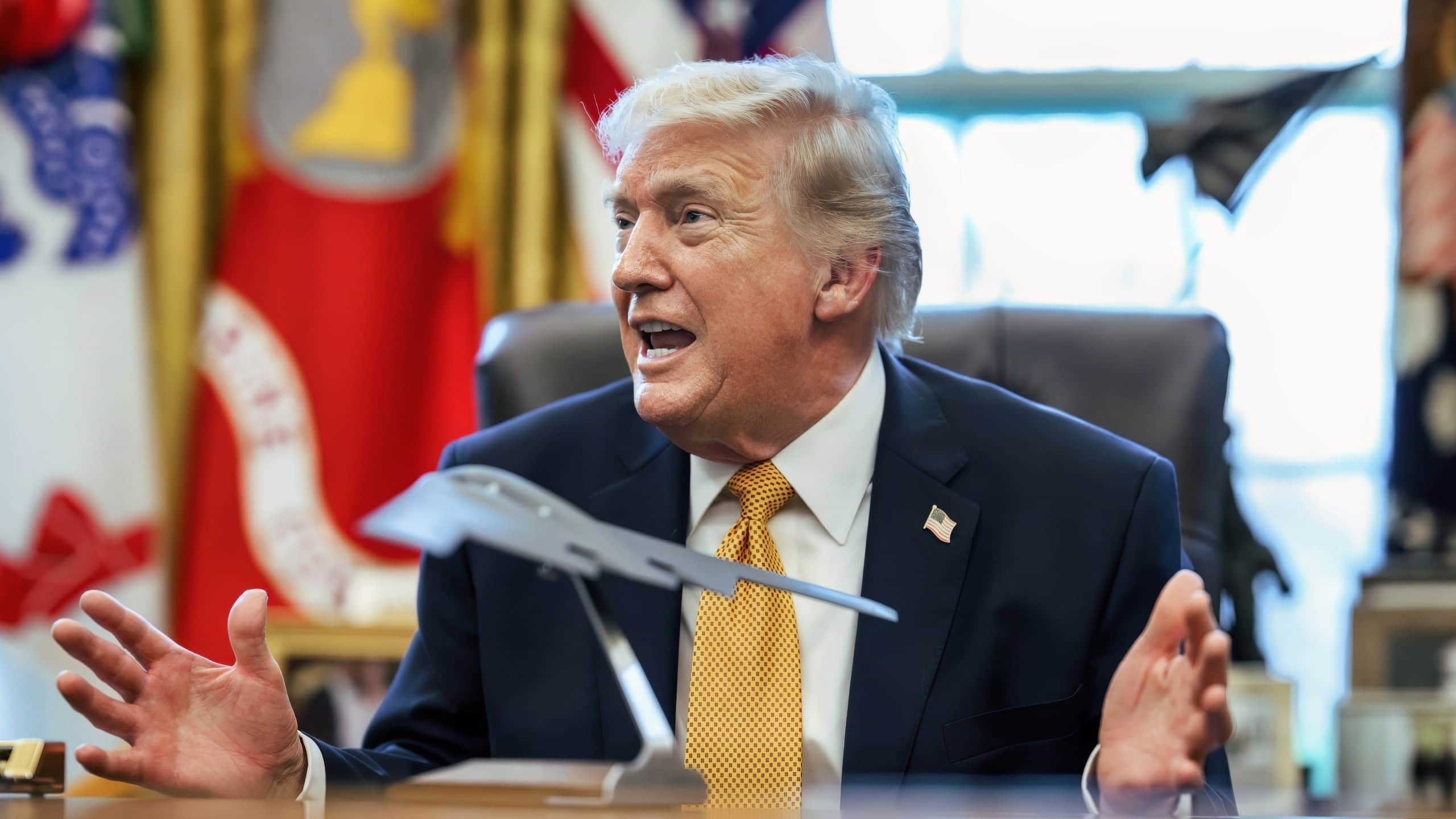
The war between the U.S. and Iran has “ended” several times in recent months, most notably with the “memorandum of understanding” that was agreed to in mid-June, which created a 60-day window to negotiate a more permanent agreement. However, that agreement and different temporary ceasefires have proved tenuous, and now, the sides are once again shooting at each other.
Following an attack by Iran on a container ship in the Strait of Hormuz over the weekend, the U.S. began launching strikes on Iran, which in turn has been striking at U.S. allies throughout the region.
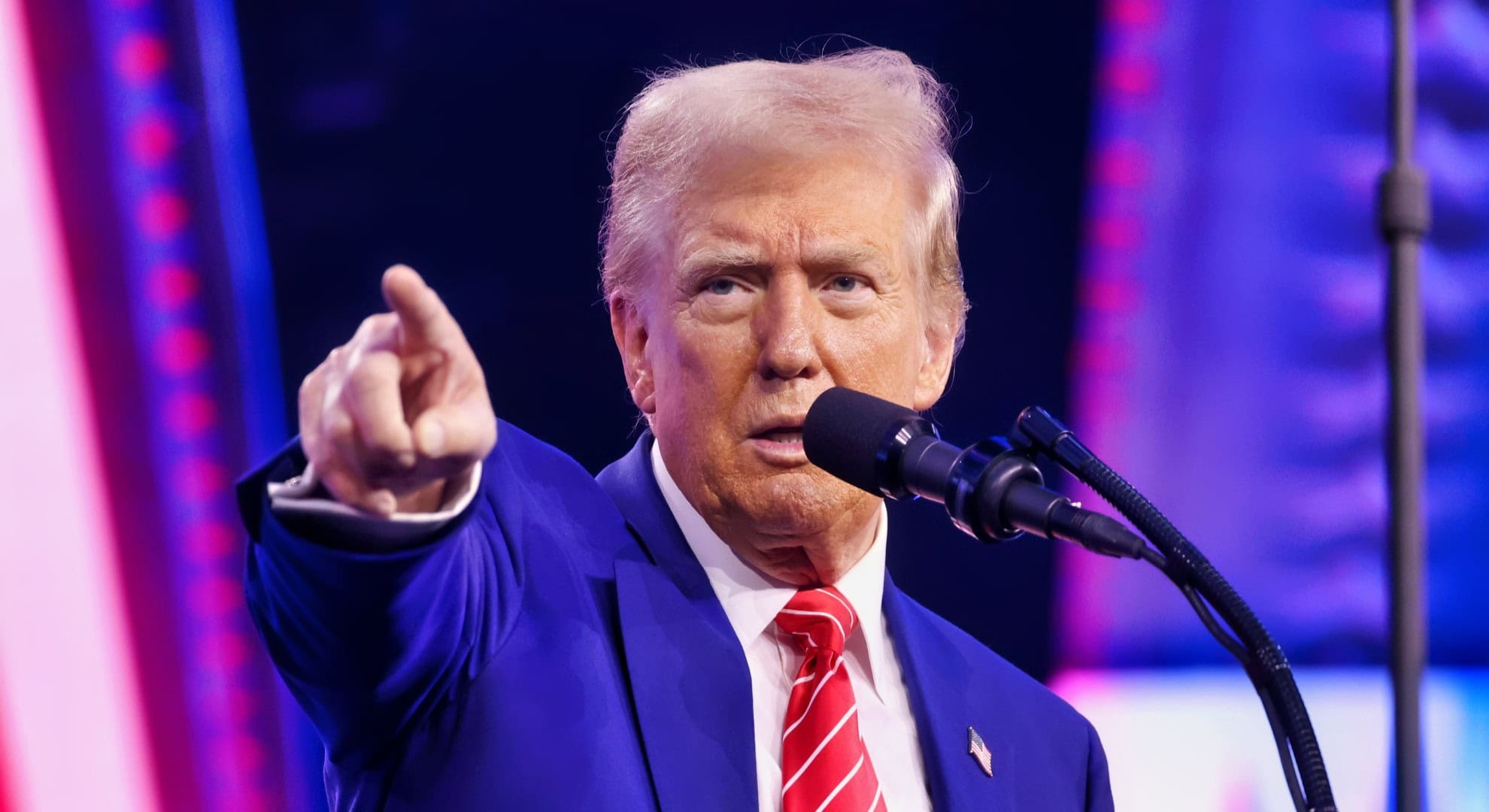
President-elect of the United States Donald Trump speaking with attendees at the 2024 AmericaFest at the Phoenix Convention Center in Phoenix, Arizona.

President-elect of the United States Donald Trump speaking with attendees at the 2024 AmericaFest at the Phoenix Convention Center in Phoenix, Arizona.
Per the New York Times, Iran’s military has said that it fired on U.S. military targets in the Middle East, including in Bahrain, Jordan and Kuwait. Per Fox News, Iran’s Fars News Agency has parroted IRGC claims that American service members were killed in an attack on the U.S. High Mobility Artillery Rocket System (HIMARS) launchers in Kuwait.
However, CENTCOM has denied this, stating that “there are zero reports of U.S. service member deaths or injuries in the region.” The IRGS has also claimed that the attack destroyed those launchers.
“Dozens of Targets”
In a statement early Monday, CENTCOM said that it had “completed a new wave of offensive strikes against Iran” on Sunday, “hitting dozens of targets at multiple locations with precision munitions to degrade Iran’s ability to continue attacking international shipping flowing through the Strait of Hormuz.”
Ship traffic in the Strait of Hormuz has also slowed, with maritime data company Kpler, as cited by the Times, showing that just 14 ships crossed the Strait on Sunday, compared with the average of 130 per day before the start of the war. The two sides even disagree over whether or not the Strait of Hormuz is closed, with Iran declaring it closed and Trump stating in an interview Sunday that it is open.
The attacks, per CENTCOM, were aimed at striking “Iranian military air-defense systems, coastal radar sites, missile and drone capabilities, and small boats using U.S. fighter aircraft, naval vessels, one-way attack aerial drones, and one-way attack sea drones for the first time.”
Two days earlier, CENTCOM had announced separately that it had completed another round of strikes against Iran, which it said was aimed at “holding Iranian forces accountable for attacking another commercial ship in the Strait of Hormuz.” Those strikes had hit more than 300 targets in Iran.
“We bombed the hell out of them last night”
President Donald Trump touted the strikes during an appearance on NBC’s Meet the Press on Sunday morning, shortly after paying tribute to his friend Sen. Lindsey Graham, who had passed away the day before. Kristen Welker asked Trump the question of whether or not the Strait of Hormuz is open, and he declared, “It’s open.”
After first stating that he didn’t want to talk about the Iran situation, in deference to Graham, Trump declared that “We bombed the hell out of them last night. They’re very, very evil and sick people. We had meetings with them. They agreed to a deal yesterday, a perfect deal for us. No nuclear, no this, no that, no nothing. They gave up everything. And then after that, they left the room. And then within an hour, they launched a drone at a ship. I said, ‘You people are sick. You’re sick people.’”
“Ceasefire Disintegrates”
According to a CNN analysis published on Monday, the U.S. attacks on Iran have gone further inland than merely the coastal areas near the Strait of Hormuz. This also, CNN said, represents a disintegration of the ceasefire agreed to in June.
The war began in late February, when the U.S. and Israel launched an airstrike that killed Supreme Leader Ali Khameini and several other members of the Iranian leadership. Since then, there have been various ceasefires and other pauses, most notably the memorandum in June. But a permanent end to the conflict has proved elusive.
In a statement on social media Sunday, the United Nations Secretary-General, Antonio Guterres, declared that he was “deeply concerned by the serious escalation & renewed military confrontations in the Gulf, including the Iranian attacks on ships in the Strait of Hormuz, the attacks by the US on Iran, and the attacks by Iran on targets in the neighboring countries. These attacks must all stop.”
MORE – The Navy’s Most Powerful Warships Will Soon Be Retired
About the Author: Stephen Silver
Stephen Silver is an award-winning journalist, essayist, and film critic, and contributor to the Philadelphia Inquirer, the Jewish Telegraphic Agency, Broad Street Review, and Splice Today. The co-founder of the Philadelphia Film Critics Circle, Stephen lives in suburban Philadelphia with his wife and two sons. For over a decade, Stephen has authored thousands of articles that focus on politics, national security, technology, and the economy. Follow him on X (formerly Twitter) at @StephenSilver, and subscribe to his Substack newsletter.