The diplomatic center of gravity in the Middle East has decisively shifted to Riyadh. On June 23, 2026, talks between Iranian Majlis Speaker Mohammed Bagher Ghalibaf, Foreign Minister Abbas Araghchi, and Omani officials took place in Muscat.
This was the operationalization of the Memorandum of Understanding (MOU), which mandated Iran to hold talks with the Gulf states and Iraq over the Strait of Hormuz.
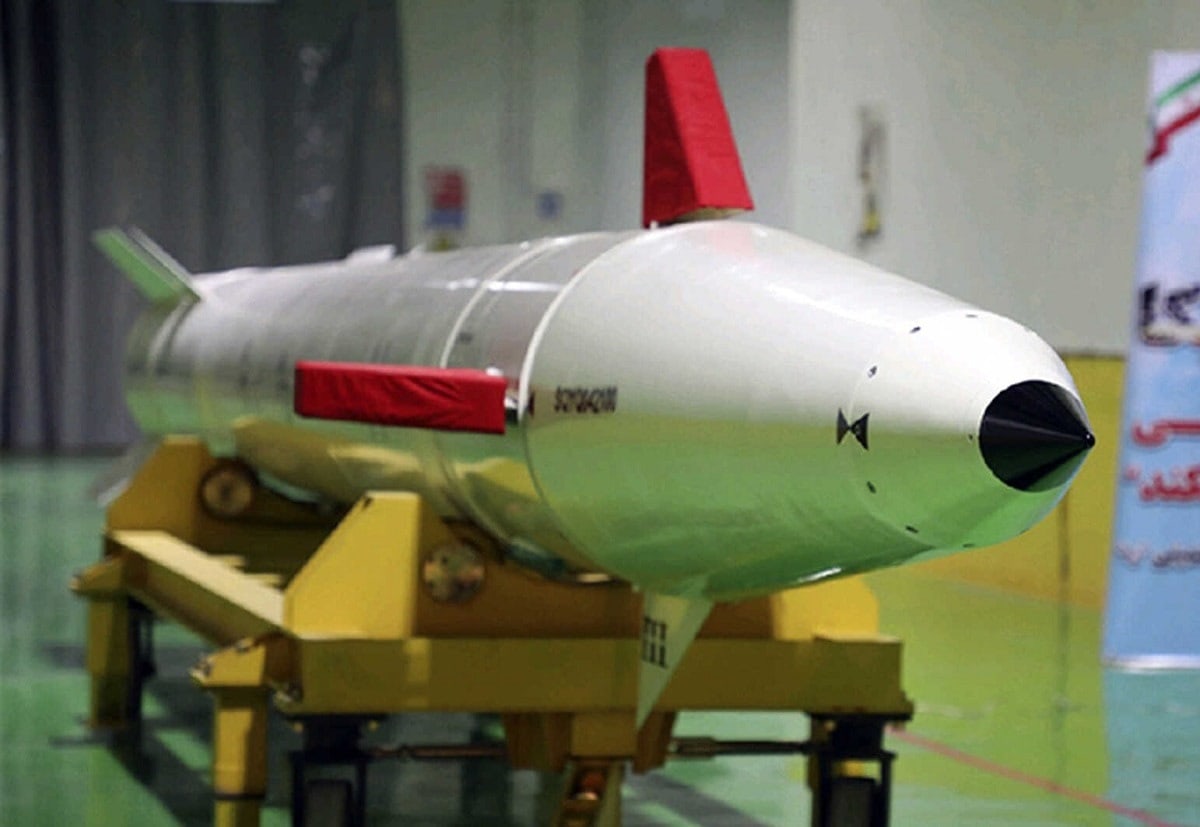
Iranian ballistic missiles. Image: Creative Commons.
Although reports of an imminent Gulf-Iran reconciliation summit in Riyadh have since been described by Gulf diplomats as premature, the broader diplomatic trajectory is unmistakable.
Gulf states have consistently emphasized dialogue as the preferred mechanism for reducing regional risk while making clear that trust in Tehran must be rebuilt through sustained restraint and respect for sovereignty.
Saudi Arabia, meanwhile, is positioning itself as the principal convening power for future regional diplomacy.
These developments point to a fundamental shift in the regional diplomatic hierarchy: rather than relying exclusively on Washington to manage Gulf security, regional actors are increasingly seeking to shape their own security environment through direct engagement with one another.
The “Deterrence Gap” is now the defining feature of Gulf security. The conflict that began on February 28, 2026, saw Iran and its proxies deploy thousands of aerial systems against regional infrastructure. These attacks shattered the illusion of a U.S. security umbrella.
Saudi Arabia’s positioning itself as the leader in reaching an understanding with Iran may exacerbate its status dilemma with Abu Dhabi.
Despite their shared Gulf identity, the two powers are locked in a struggle for regional influence that extends beyond the Strait. In December 2025, Saudi Arabia effectively ejected Emirati forces from Yemen following a deep rift over local proxy alignment.
The competition continues to simmer across the Red Sea littoral, Libya, and Sudan. Saudi Arabia’s move to host the reconciliation summit is a strategic play to solidify its role as the hub of a stable new order, distancing itself from the UAE’s attempts to project influence.
This pivot to reach an accommodation with Iran also defies conventional International Relations (IR) theory.
Most scholars would expect states to balance against an adversary that has just attacked them. Instead, the Gulf states are choosing to accommodate Tehran rather than move closer to the U.S. or Israel. The reason poses an added challenge to the conventional wisdom.
The U.S. has proven itself profoundly unreliable. A generation of International Relations (IR) theorists, led by Jonathan Mercer, Daryl Press, and Ted Hopf, dismissed the prevailing wisdom that reputations were worth fighting. Mercer and Press found that state judges prioritize interests over historical reputations.
Ironically, it is precisely Washington’s recent behavior that has altered Gulf expectations, lending renewed relevance to Thomas Schelling’s emphasis on past actions and demonstrations of resolve.
Schelling’s classic insights in Arms and Influence appear vindicated. He argued that a reputation for resolve is a country’s most vital currency, one worth “thirty thousand dead in Korea” to preserve.
The U.S. failure to maintain this reputation has left the Gulf convinced that Washington’s “face” is no longer a bankable asset.
Consequently, they are engaging in hedging, betting that a regulated, engaged adversary is safer than an unpredictable – and possibly incapable – patron that risks conflict that challenges their economic survival.
Furthermore, since the October 7 attacks, many Gulf policymakers increasingly perceive Israel as a risk-acceptant regional actor whose military strategy increases the probability of wider regional escalation.
Direct engagement with Tehran now serves as a strategic “firewall” to insulate their economies from the fallout of U.S.-Israeli military posturing.
A separate set of understandings with Iran may be easier to sell to their publics than chaining themselves to American volatility and Israeli belligerence.
This is not merely a failure of U.S. commitment; it is the “repricing” of regional security.
The United States is not being pushed out of the Gulf by force, but it is being bypassed by a region that has concluded its security is now a bilateral commodity to be negotiated, not a unilateral gift to be protected.
Even if political reconciliation with Iran remains distant, Gulf states increasingly see sustained engagement with Tehran as an essential component of managing regional risk.
By doubling down on public reassurances while regional actors construct a more autonomous security architecture, Washington risks strategic marginalization.
American military power will remain central to Gulf security for years to come, but its diplomatic primacy can no longer be taken for granted.
The emerging regional order is one in which U.S. policy is increasingly treated as one strategic variable among many, rather than the unquestioned organizing principle of Gulf security.
About the Author: Albert B Wolf, PhD
Dr. Albert B. Wolf is a Global Fellow (Post-Doctoral Fellow) at Habib University. He has written extensively on the international relations of the Middle East and advised three U.S. Presidential campaigns.