
Closure of Strait of Hormuz? Solve the Problem with New Pipelines: Saudi Arabia Is Already Doing It
The ease with which Iran has closed the Strait of Hormuz to most shipping is shocking to the oil market and global commerce. Around 20 percent of the world’s oil transits through this vital waterway, and Iran can prevent many tankers from passing through it.
President Donald Trump is trying to craft a diplomatic deal to keep the Strait open, but so far, Tehran has objected.
The United States has considered deploying ground troops and has bombed the military infrastructure on Kharg Island in the Persian Gulf, where Iran processes much of its crude.
The strikes continued on April 6. The terminal neutralization and threats of more military action, including an attack by ground troops, are ways the United States might pressure Iran to fully open the Strait of Hormuz.
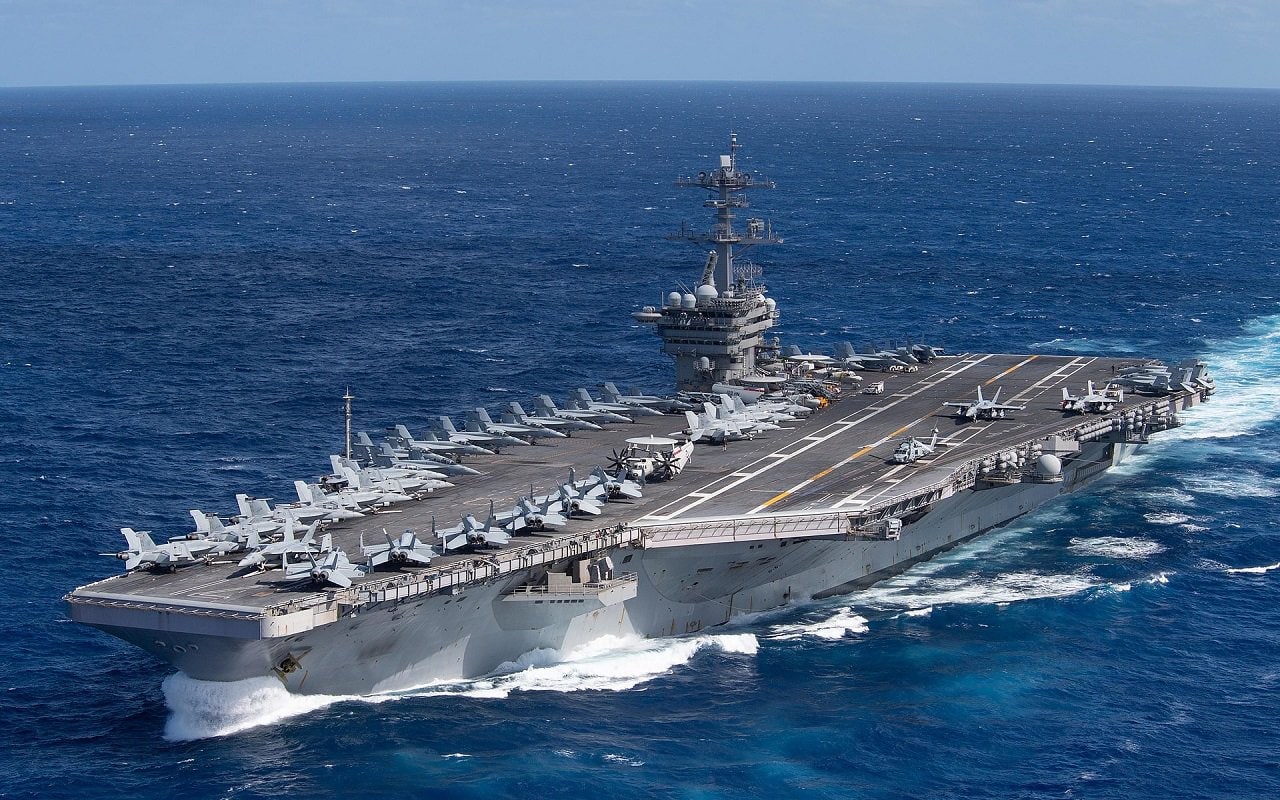
(Jan. 25, 2020) The aircraft carrier USS Theodore Roosevelt (CVN 71) transits the Pacific Ocean Jan. 25, 2020. The Theodore Roosevelt Carrier Strike Group is on a scheduled deployment to the Indo-Pacific. (U.S. Navy photo by Mass Communication Specialist Seaman Kaylianna Genier)
This Will Take Teamwork in the Middle East and Strait of Hormuz
But what about the long-term? What could prevent Iran from closing the Strait again? Gulf nations have an idea, which isn’t far-fetched, but it will require significant funding.
The proposal is to build energy pipelines that bypass the Strait, removing the threat of stopping crude from transit. One challenge with building pipelines is the time needed to complete them.
Additionally, a coordinated political effort is necessary to turn the proposal into reality.
Saudi Arabia Had the Strategic Foresight to Build an Alternative Pipeline Decades Ago
Saudi Arabia has one major throughway, the East-West pipeline, that bypasses the Strait, delivering 7 million barrels of oil daily to the Red Sea port of Yanbu, according to the Financial Times.
It was built in the 1980s during the Persian Gulf energy crisis, amid the Iran-Iraq tanker war.
Maximize the Amount of Crude Flowing Through
Saudi Arabia’s state-run energy corporation, Aramco, plans to send up to 1.2 million barrels through the East-West pipeline to help address current issues in Hormuz.
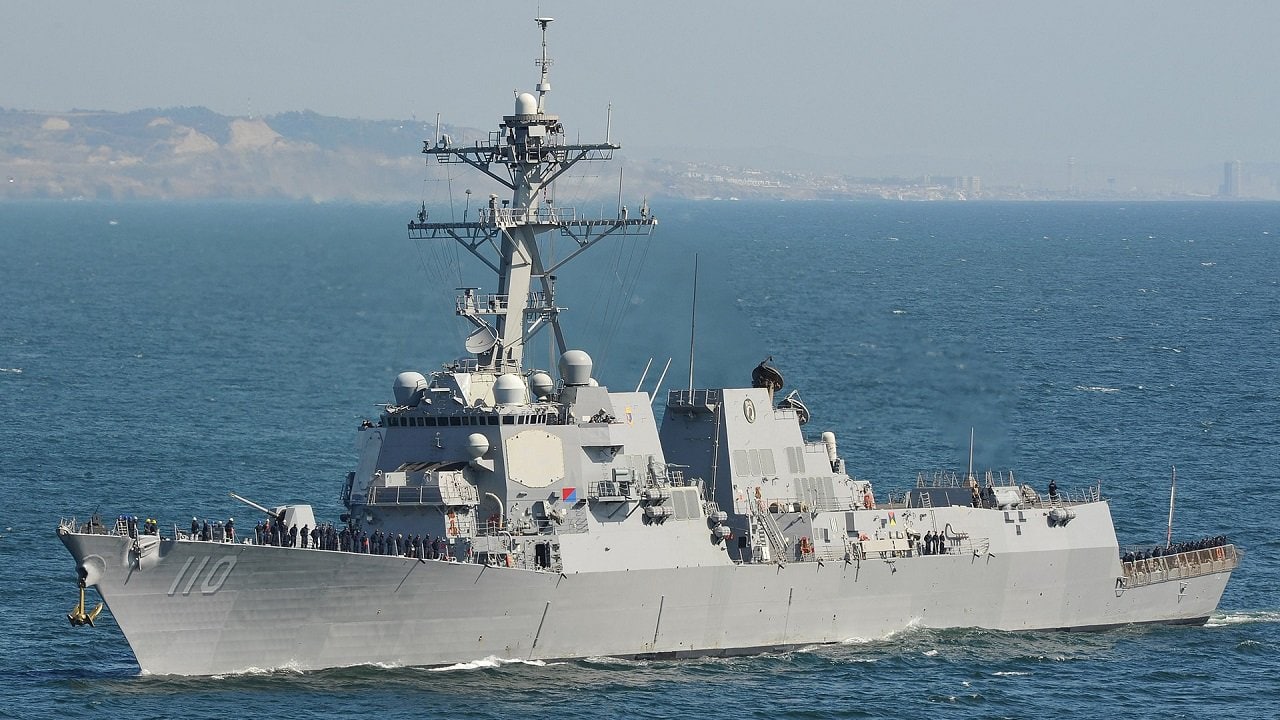
PACIFIC OCEAN (May 4, 2015) – The guided-missile destroyer USS William P. Lawrence (DDG 110) steams toward San Diego Harbor. (U.S. Navy photo by Mass Communication Specialist 3rd Class Nathan Burke/Released)
The Saudis might also build new pipelines to further reduce the impact of the Strait’s closure.
The Financial Times interviewed Maisoon Kafafy, a senior adviser to the Atlantic Council’s Middle East program. “I’m sensing a shift from hypotheticals into operational reality,” she said. “Everyone is looking at the same map, and they are drawing the same conclusions. Rather than individual projects, the most resilient option is not a single alternative pipeline but rather a network, a web of corridors,” Kafafy added, “although that would be hard to achieve,” the Financial Times reported.
One idea is to build a pipeline from the Port of Haifa in Israel that would connect the Arabian Peninsula with the Mediterranean, the Jerusalem Post noted.
Meanwhile, many Gulf States are dealing with Iranian missile strikes and lack other options to export crude. Saudi Arabia is the only country that had the strategic foresight to build an alternative pipeline decades ago.
Private Sector Plans
The new project requires a comprehensive system of “pipelines, trains, and roads.” A construction company from Lebanon, called the Cat Group, might be interested in building a pipeline to bypass the Strait.
Multi-country Partnership Could Build a Pipeline
Additionally, the India-Middle East-Europe Corridor (IMEC) is a consortium for future economic growth that could also collaborate with Gulf States to build a pipeline or at least the necessary infrastructure. This could transport hydrocarbons to Europe and India.
Yossi Abu, the CEO of Israeli firm NewMed Energy, revealed he was sure that pipelines to the Mediterranean Sea would eventually be built, and they could terminate at Israeli or Egyptian ports. “People need to control their own destinies, with their friends,” he said to the Financial Times. “You need oil pipelines, railway connectivity, throughout the region, onshore, without giving others bottlenecks to choke us.”
This Won’t Be Easy
These are all interesting proposals with noteworthy goals and objectives. They demonstrate that commercial efforts in the region are innovative and creative. However, the pipeline projects will take years, and energy transportation through the Strait needs to be maintained without interruption now.
Can the Americans Get On Board?
The Trump administration has not called for new pipelines so far and instead aims to pressure Iran to open the Strait. However, there needs to be a long-term solution for the waterway to relieve all chokepoints. Pipeline proposals could be the only way to resolve the issue in the future.
The More Countries Involved, the Better
It seems that a public-private partnership like the IMEC consortium would have the most support and resources to make new pipelines happen. Just one or two companies alone probably couldn’t build new infrastructure because of limited funding and political backing.
Who Is Going to Ante Up the Money and Decide on the Way Forward?
A new pipeline would cost billions of dollars, and it’s unclear which country is willing to bear the financial burden. The construction would need to pass through the Hejaz Mountains on Saudi Arabia’s Red Sea coast. Alternative routes through Jordan, Syria, or Turkey would be even more expensive and challenging, making their construction difficult and time-consuming.
The ideas are there, but not the willpower to build something new. It will take a long period of economic diplomacy to add a pipeline and overcome the energy crisis in the Persian Gulf.
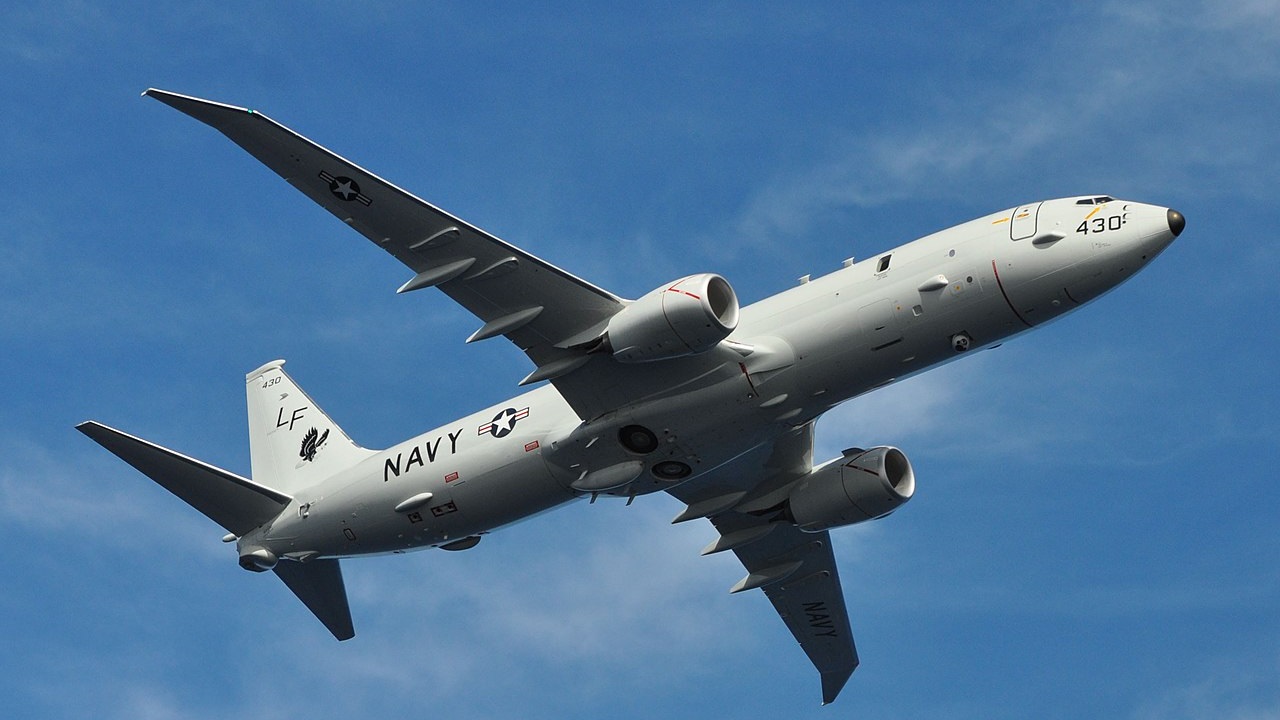
A P-8A Poseidon assigned to Patrol Squadron (VP) 16 is seen in flight over Jacksonville, Fla. (U.S Navy photo by Personnel Specialist 1st Class Anthony Petry)
The best way to open the Strait of Hormuz is a ceasefire and direct negotiations between the United States and Iran. Talks will require a gentle approach to convince the Iranians that it is in their best interests to keep the Strait fully open for the foreseeable future.
Meanwhile, work on pipelines could start now, but the projects would take years and require significant monetary investment. This resource allocation is necessary to solve the problem in the long term, and it may be the best way to proceed.
About the Author: Dr. Brent M. Eastwood
Author of now over 3,500 articles on defense issues, Brent M. Eastwood, PhD, is the author of Don’t Turn Your Back On the World: A Conservative Foreign Policy and Humans, Machines, and Data: Future Trends in Warfare, plus two other books. Brent was the founder and CEO of a tech firm that predicted world events using artificial intelligence. He served as a legislative fellow for US Senator Tim Scott and advised the senator on defense and foreign policy issues. He has taught at American University, George Washington University, and George Mason University. Brent is a former US Army Infantry officer. He can be followed on X @BMEastwood.