The U.S. Army’s G2 Training and Doctrine Command 2024 report “The Operational Environment 2024-2034 Large-Scale Combat Operations” said Russia has lost 3,197 main battle tanks in the Russia-Ukraine War. The U.S. Army G2 said Russia has lost more main battle tanks than its entire active-duty inventory at the outset of the conflict. The U.S. Army G2 said Russia has lost 6,160 armored fighting vehicles. All of that means one thing: a disaster for Russia’s army.
Russia’s Tank War in Ukraine Has Been a Failure
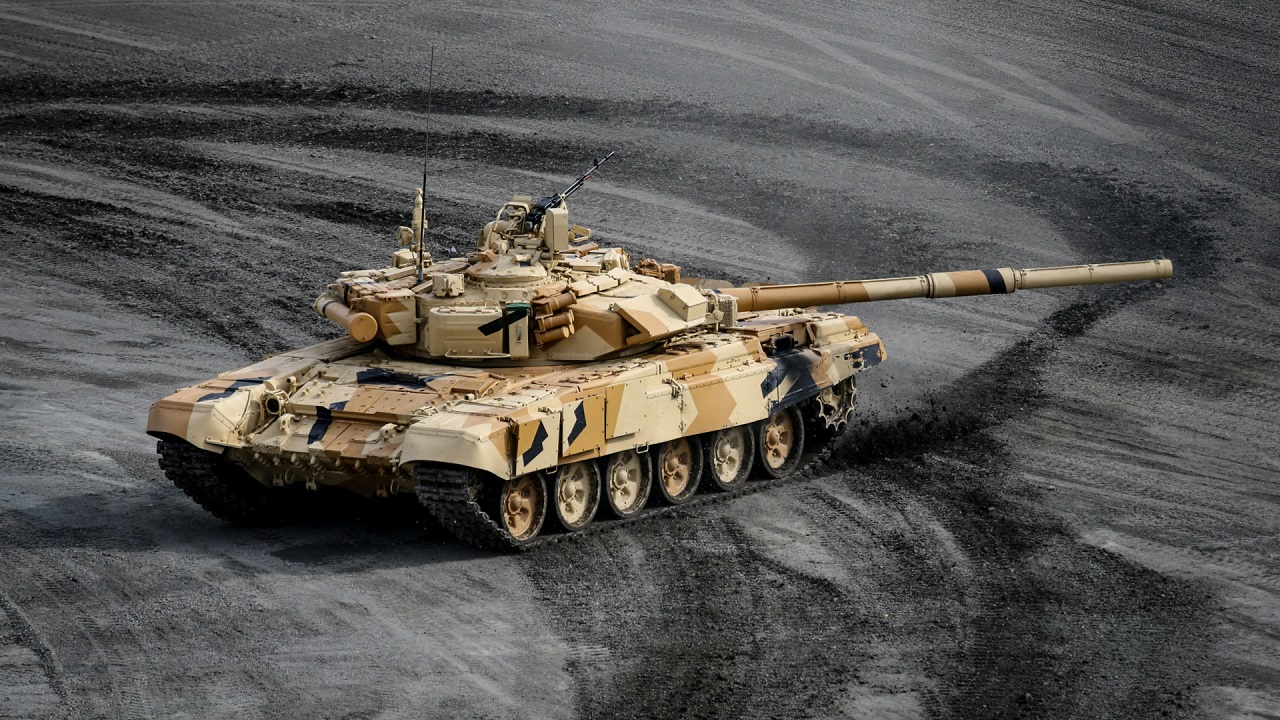
Russian T-90 Tank. Image Credit: Creative Commons.
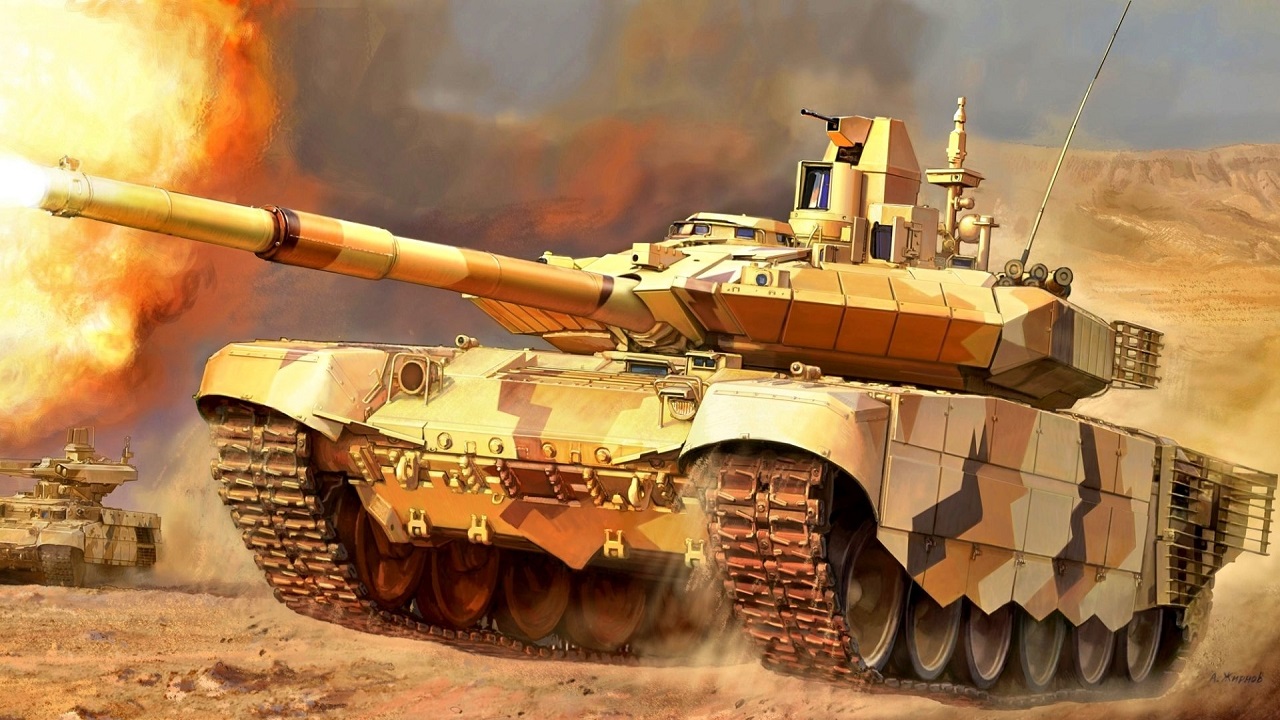
Russian T-90 Tank. Image Credit: Creative Commons.
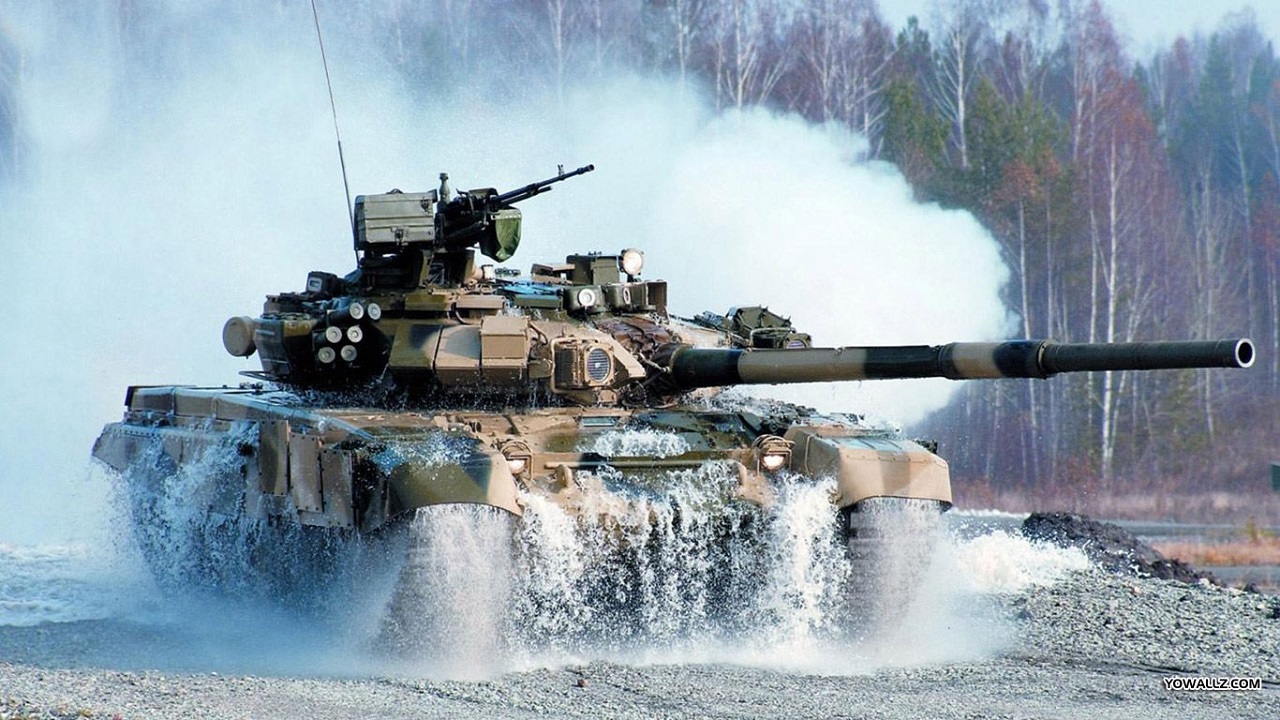
T-90 Tank. Image Credit: Creative Commons.
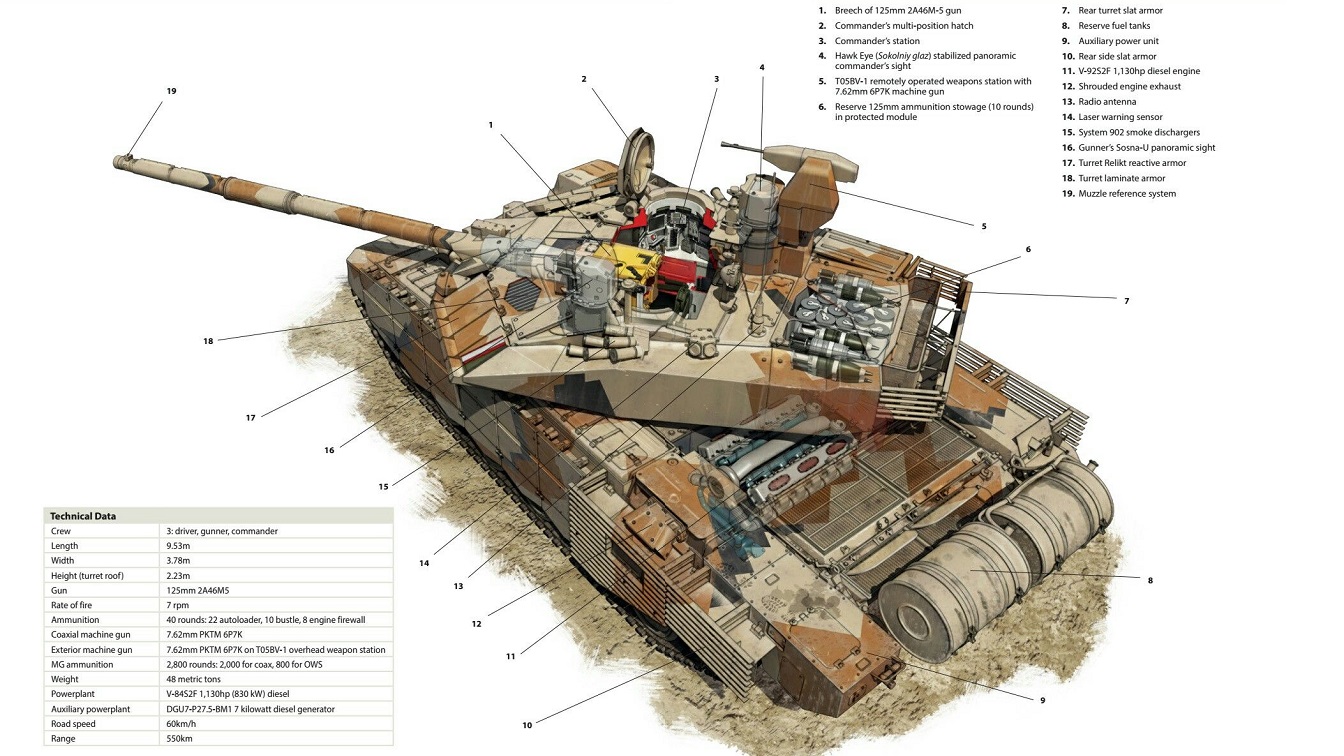
Reactive armor, various combinations of composite armor materials, advanced gunners’ thermal sights, smoke grenades, and the ability to jam incoming anti-tank missiles are all reported attributes built into the Russian T-90M tank.
However, despite its many stated attributes, the T-90M tanks have been getting obliterated in Ukraine to a massive degree.
The overall destruction of tanks and armored vehicles in Ukraine has captured global attention, in large measure due to the use of drone explosives and the success of anti-armor weapons and effective Ukrainian tactics.
Russia’s entire tank force has been decimated to the point where many might be inclined to wonder if Russia’s tank fleet has simply been erased.
As part of this equation, the failure of the T-90, in particular, seems especially significant given the number of upgrades built into the platform in recent years.
Entire Active Duty Tank Force – GONE
U.S. Army intelligence has been studying the destruction of Russian tanks for many years, and the rate of loss could be described as somewhat staggering.
Ultimately, not surprisingly, given modern tactics and innovations, as far back as 2024, the U.S. Army Training and Doctrine Command published an academic report that found Russia’s entire active-duty tank force of more than 3,000 tanks … had been destroyed.
The Army G2 intel analysis from 2024, called “The Operational Environment 2024-2034 Large-Scale Combat Operations,” states.
“Ukrainian Armed Forces have used vast quantities of man-portable air-defense systems (MANPADS), anti-tank guided missiles, and FPV UAS—combined with fires—to great effect.
As of July 2024, Russia has lost 3,197 main battle tanks—more than its entire active-duty inventory at the outset of conflict—and 6,160 armored fighting vehicles, forcing them to pull increasingly obsolescent systems from storage.”
There are many reasons for the devastating loss of Russian tanks, including simple Ukrainian tenacity, tactical proficiency, anti-tank weapons, and, of course, rockets, artillery, and armored vehicles.
Ukrainian success has raised new questions about modern warfare and the combat utility of the main battle tank.
While tanks themselves are likely not going anywhere, the war in Ukraine has highlighted the effectiveness of anti-armor weapons, drone attacks, and dismounted maneuver formations.
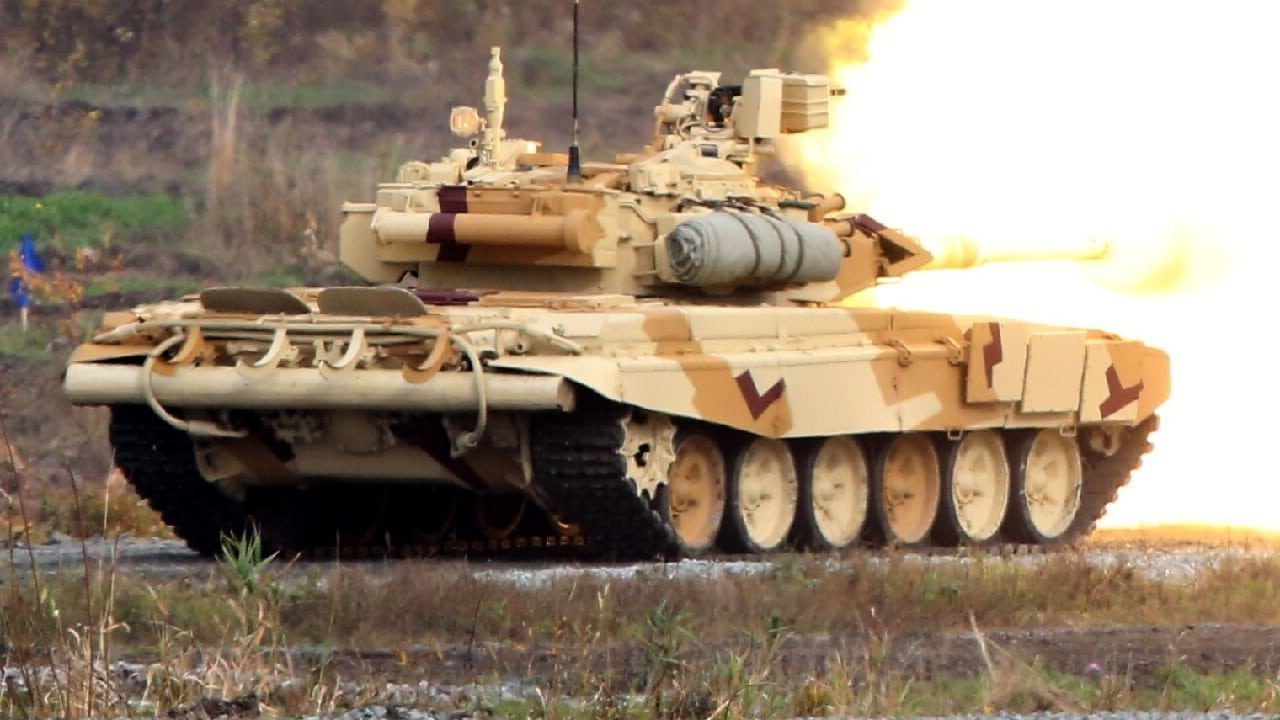
Russian T-90 Tank. Image Credit: Creative Commons.
Future Combined Arms Maneuver
Heavy armored formations and mechanized units engineered for dispersed, yet “linear” attacks to penetrate and hold enemy territory are not likely to disappear anytime soon as a critical element of modern Combined Arms Maneuver.
And yet there is little question that the warfare in Ukraine is redefining certain key ground-war tactics in favor of lightweight, decentralized ground-fired anti-tank weapons and attack drones.
These tactics and weapons are particularly effective when used by dispersed, dismounted forces and fast, light tactical vehicles.
When combined with precise overhead surveillance, unmanned systems, and some measure of effective networking, Ukrainians armed with shoulder-fired anti-armor weapons and hand-launched suicide drones such as the Switchblade continue to exact a devastating toll upon Russian tanks.
Russia’s use of tanks, which includes T-72s and even old T-55s, does not appear to leverage adjusted tactics or upgraded tanks, a circumstance likely responsible for the widespread destruction of its fleet. Certainly, Russia is making use of known available protections, such as cage armor or reinforced armor, against top-down attacks, yet even its most advanced battle tanks are unlikely to have been adequately upgraded or maintained.
Without sufficient networking, ISR technology, and integrated, joint maneuver, Russia’s tanks have proven extremely vulnerable.
This is in part due to Ukraine’s effective tactical use of anti-armor weapons to stage hit-and-run ambushes by dispersed, decentralized, dismounted mobile groups of fighters.
The tanks Russia is using, therefore, are not likely to have many upgrades and remain quite vulnerable. Also, while Russia employs many attack drones, it is not clear if the Russian Army is executing any kind of adapted or modern Combined Arms Maneuver in any substantial way.
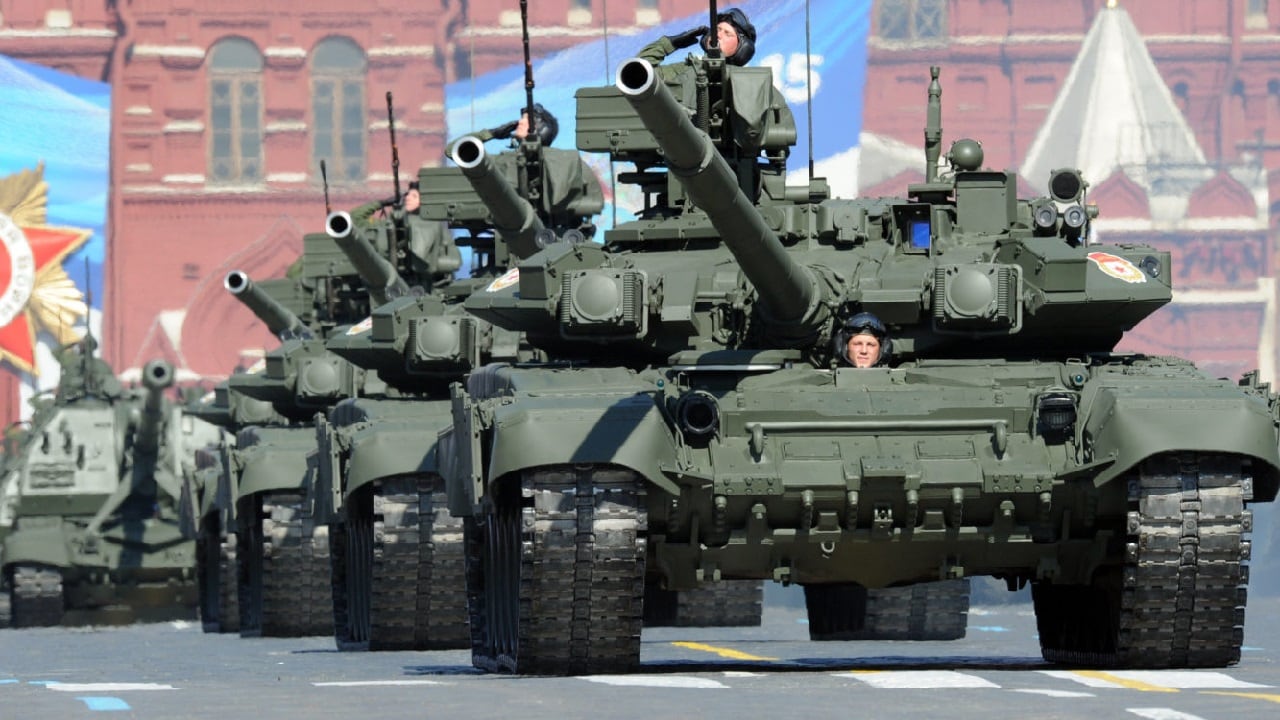
Russia’s T-90 tanks. Image Credit: Creative Commons.
Certainly, the world has observed and noted the sheer tenacity, resolve, and tactical proficiency with which Ukrainians have defended their country; some of Ukraine’s success is also likely due to the technological maturation of the weapons themselves in terms of longer-range, more precise sensing, high-fidelity targeting, and enhanced munitions and warheads.
This is the case for the Javelin and Carl Gustaf, as well as other anti-armor weapons. There is also a significant tactical element to this, as Ukrainians have employed ambush-style, surprise hit-and-run tactics using terrain, urban areas, and crosspoints to destroy approaching Russian armor.
Tanks Obsolete?
This is also quite likely why the Marine Corps Force Design 2030 favors manned-unmanned teaming and the employment of highly lethal yet expeditionary, mobile, and deployable anti-armor weapons and platforms.
Of course, the Corps will keep a significant number of tanks in its arsenal due to technological advances in networking, unmanned systems, and the ability of mechanized forces to increase lethality against armored formations through advanced sensing, explosives, and ground-fired targeting.
The Corps document favors a greater use of easy-to-deploy high-speed tactical vehicles armed with extremely precise, lethal, and explosive anti-armor weapons. A faster-moving, more dispersed force is not only harder for an enemy armored vehicle to target, but also able to expand the target envelope for attacking forces in terms of angle, speed, and maneuver.
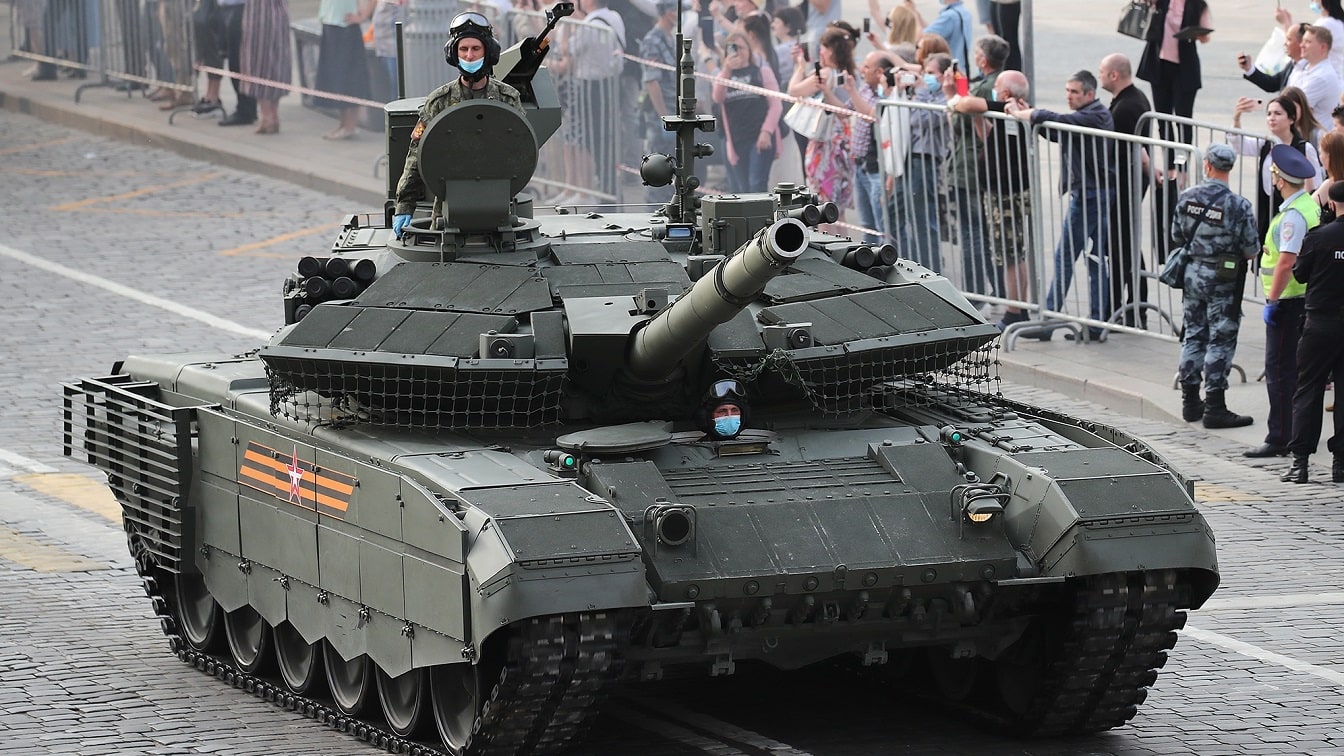
T-90M Tank from Russia. Image Credit: Creative Commons.
However, if sufficiently upgraded with advanced networking, unmanned systems, improved active protection, drone launch capability, and high-fidelity sensing, main battle tanks are clearly here to stay.
There is little to no replacement for the main battle tank when it comes to moving to contact, closing with an enemy, penetrating defenses, and “holding” territory in warfare.
About the Author: Kris Osborn
Kris Osborn is the Military Technology Editor of 19FortyFive. Osborn is also President of Warrior Maven – Center for Military Modernization. Osborn previously served at the Pentagon as a highly qualified expert in the Office of the Assistant Secretary of the Army—Acquisition, Logistics & Technology. Osborn has also worked as an anchor and on-air military specialist at national TV networks. He has appeared as a guest military expert on Fox News, MSNBC, The Military Channel, and The History Channel. He also has a Master’s Degree in Comparative Literature from Columbia University