
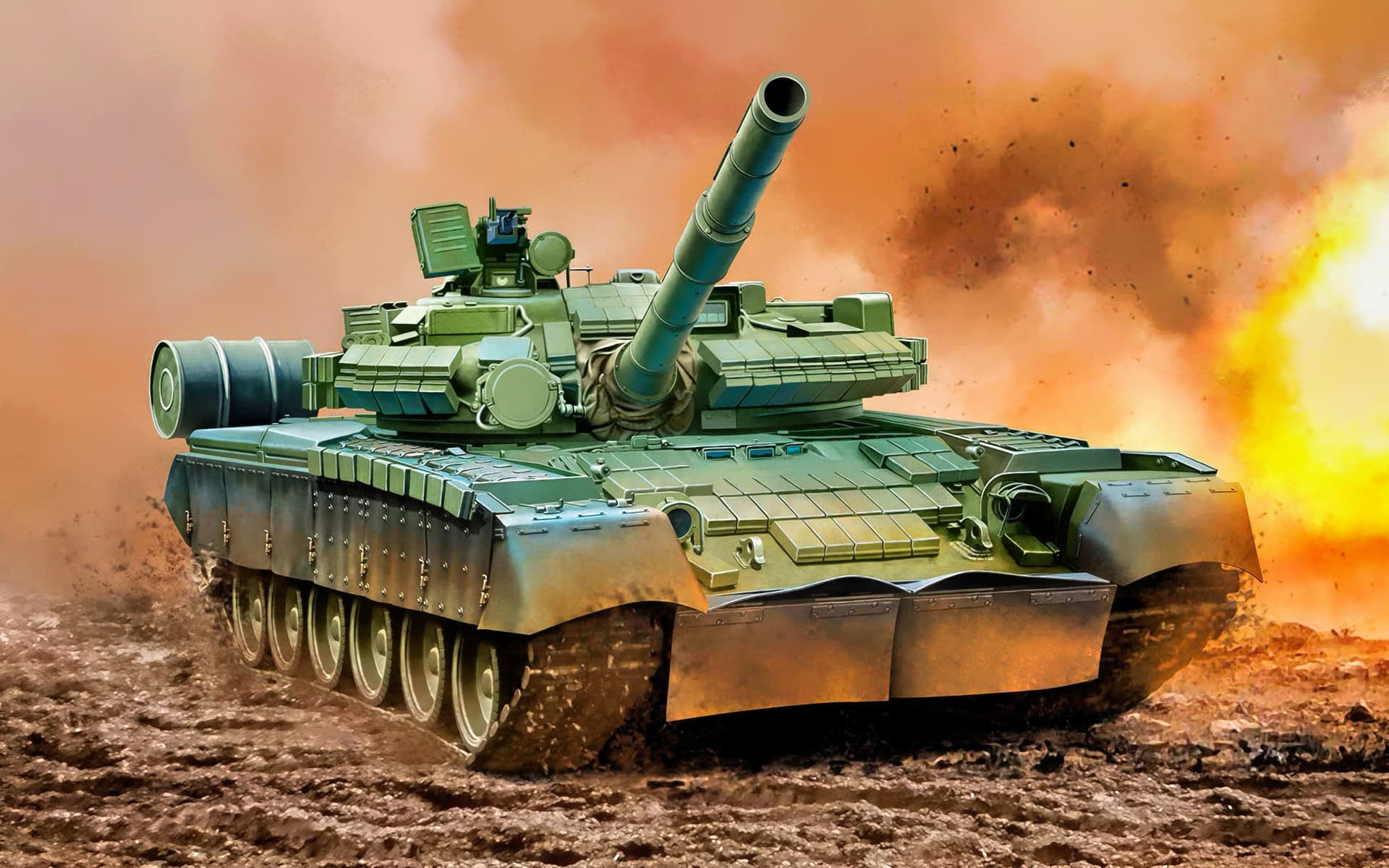
Key Points and Summary – Russia’s T-80 tank fleet has been decimated in Ukraine, with documented losses exceeding 1,200 units.
-The tank’s compact design and autoloader system, while providing a low profile, have proven lethal for crews due to the “jack-in-the-box” effect.
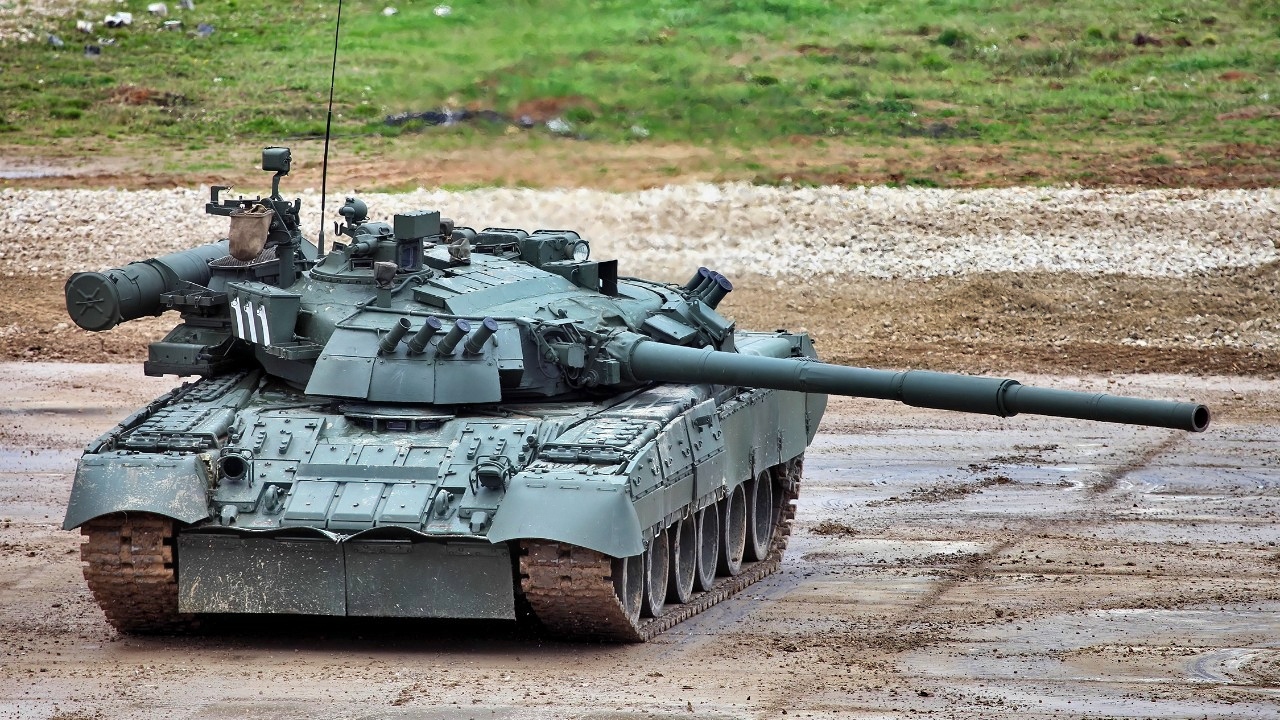
T-80 Tank. Image Credit: Creative Commons.
-These armored failures, combined with a collapse of the “Gerasimov Doctrine” and modern tactical initiative, have forced Moscow to resurrect obsolete T-62s from storage.
-As the war of attrition continues, the T-80—once feared as an expensive, high-speed marvel—is being sidelined in favor of older, more sustainable reserve armor.
“Steel Coffins”: The Fatal Design Flaw Decimating the T-80 Tank Fleet
The war in Ukraine has not gone well for Russia or its armored forces. They have lost about 4,331 tanks, destroyed or abandoned during what Putin calls the “special military operation.”
Most of the tanks lost, especially early in the conflict, were the T-72s and T-90s, but the T-80 has arguably fared worse. The Oryx war monitor website has posted that the Russians have lost 1,272 T-80 tanks of all types thus far in the fighting. The few remaining T-80s are being withdrawn from production and transferred to reserve units.
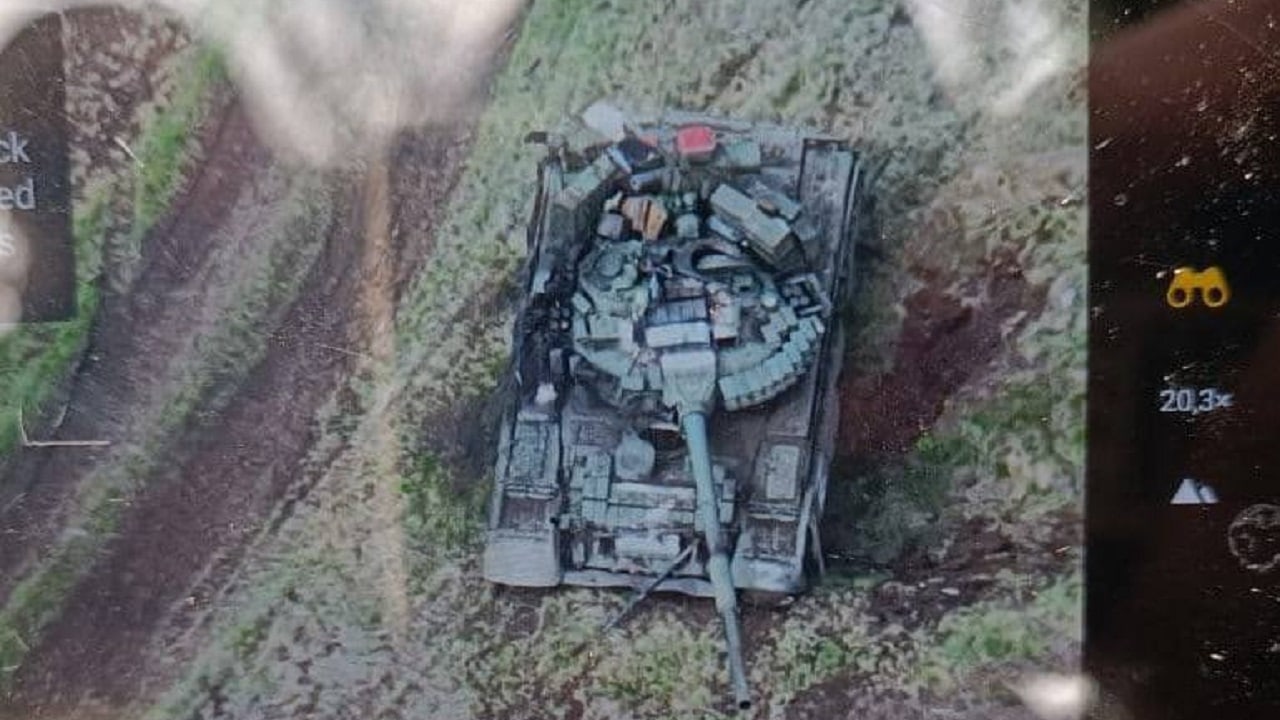
The T-80 has developed a reputation as a “steel coffin” due to its propensity to explode when hit, often losing its turret, also known as the “Jack-in-the-box effect.”
Meanwhile, the losses of nearly all of Russia’s modern main battle tanks have led to the deployment of ancient, obsolete T-62 tanks from storage to the front line, where they’ve been decimated.
Gerasimov Doctrine, And Modernization Was a Myth
Russian tactics were poor, bordering on criminally negligent, as they were overconfident, ill-trained, and ill-prepared for the hard defense that Ukrainian forces have continued to deploy.
The much-ballyhooed Russian “modernization” of its military was nowhere to be found. We were told that Russia had totally revamped its armed forces and that Junior leaders and NCOs would now resemble US and NATO forces. It was a total fabrication. Russia itself contradicted the “Gerasimov Doctrine.”
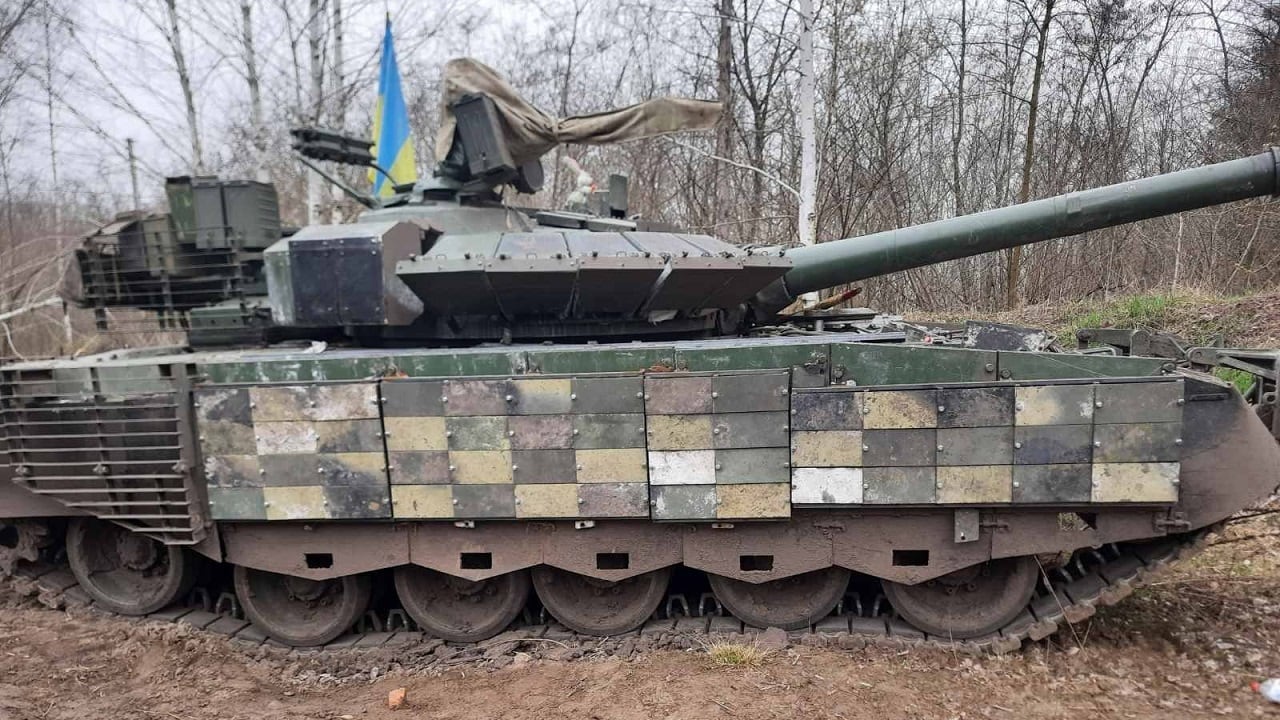
T-80BVM ‘Bunny’ Tank
Battalion Tactical Groups (BTGs) (an idea from the 1990s) were introduced in 2012 to generate effective combat power from brigades by concentrating contract personnel into a battalion-sized grouping.
The factor that is supposed to make this work is that Battalion commanders, company commanders, and lower-level officers show initiative and react dynamically to the evolving battlefield situation.
Instead, very little initiative has been demonstrated, and command has reverted to a traditional top-down structure. There also appears to have been a reversion to the more negative characteristics of the Soviet military system with rigid adherence to an operational plan, even when the reality of circumstances on the ground has made the plan invalid.
BTGs generally comprise a tank or infantry battalion reinforced with armor or infantry and with artillery, air defence, electronic warfare, and other combat support assets. They failed, and as losses mounted, the Russians began to look more and more like their Soviet predecessors, with near suicidal frontal assaults.
The T-80 Tank Program Was Differed From The Soviet/Russian Model
The Russian T-80 tank program sprang from the 1964, 38-ton T-64, which featured a compact engine arrangement; an auto-loader for its 125 mm smoothbore cannon, which could fire shells or anti-tank missiles; smaller all-steel rollers in place of the big-wheeled Christie suspension that had reached its practical limit in the T-62; and composite armor made of layers of steel and ceramic compound.
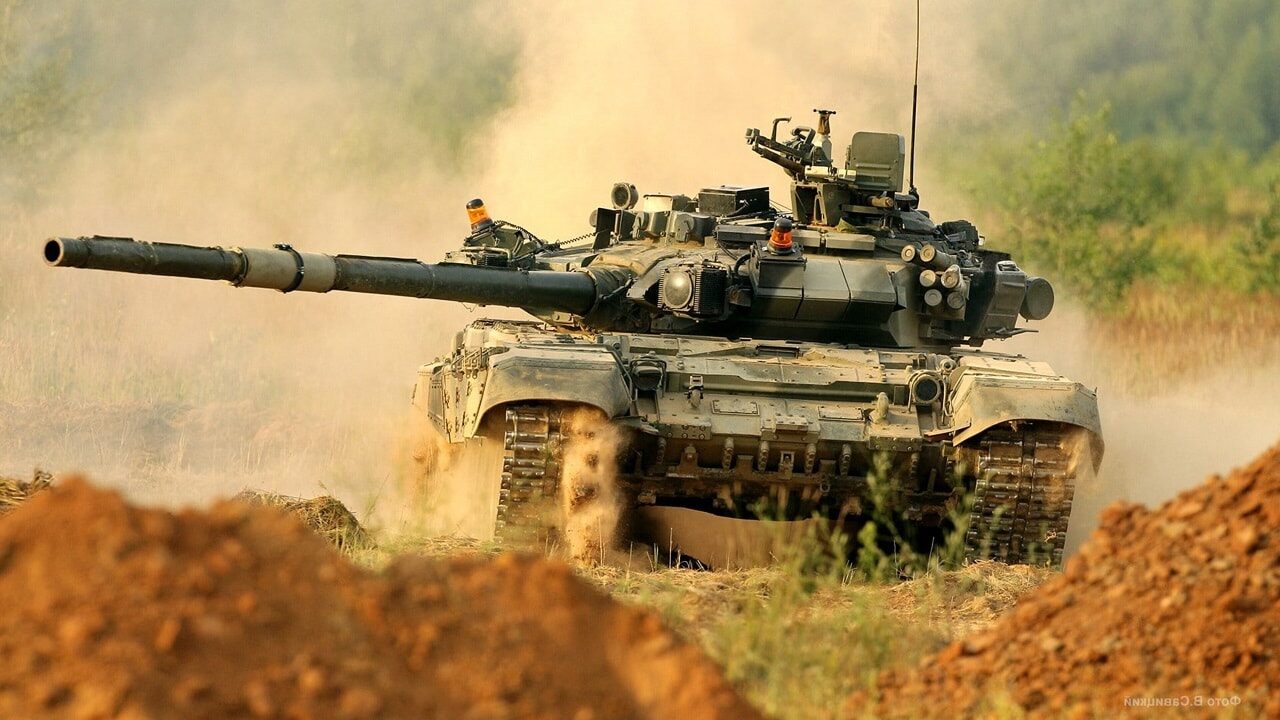
Russian T-80 tank. Image Credit: Creative Commons.
The T-64’s prototype and production models differed, and the tank had several issues. The T-64’s auto-loader had a dangerous tendency to “eat” the left arms of inattentive gunners inside the cramped turrets.
Another flaw was the requirement that rounds be stored outside the turret mounting ring, within the crew compartment. This would be deadly for all hands in the event of a hit, which is why so many destroyed Russian tanks have had their turrets blown off.
Western tanks store their ammunition in a sealed compartment with additional ballistic protection, and the loader opens and closes a door through which the ammunition is loaded. He then transfers the tank round into the main gun for firing. That loader is the fourth member of the crew, and if the turret were hit, there would be only one round inside the turret, within the gun.
Russian tanks, however, have an autoloader, cutting the crew down to three. However, the ammunition in Russian tank design is stored in a carousel located at the base of the turret. While the design gives the tank a lower profile, making it harder to hit, it also means that up to 40 rounds of main-gun ammunition are stored within the turret. Any hit, even an indirect one, will cause the ammunition to explode.
Ukraine’s 93rd Mechanized Brigade reportedly targeted a column from Russia’s 64th Motorized Rifle Brigade, including multiple T-80BV tanks, a BTR-82A, and trucks, with artillery fire in Kharkiv Oblast. Image: Screengrab VIA Twitter.
The T-80 tanks resulted in two things the Russians have always eschewed in their tank designs: they were expensive and complex. The tank was fast, exceeding 70 kilometers per hour, but its SG1000 gas turbine engine was fuel-intensive, limiting its range. It was later replaced by the more powerful GTD-1000TF and GTD-1250 engines.
Like all Soviet tank designs, the 125 mm 2A46H1 Rapira smoothbore cannon couldn’t depress or elevate very much, which was a significant factor in urban warfare.
The T-80 costs three and a half times as much as the T-64.
The T-80s Combat History Has Not Been Stellar
When the T-80 was first used in Chechnya, it experienced a poor start, exacerbated by inadequate crew training. The T-80 was not used in the Second Chechen War, the 2008 Russo-Georgian War, or the 2014 Russo-Ukrainian War.
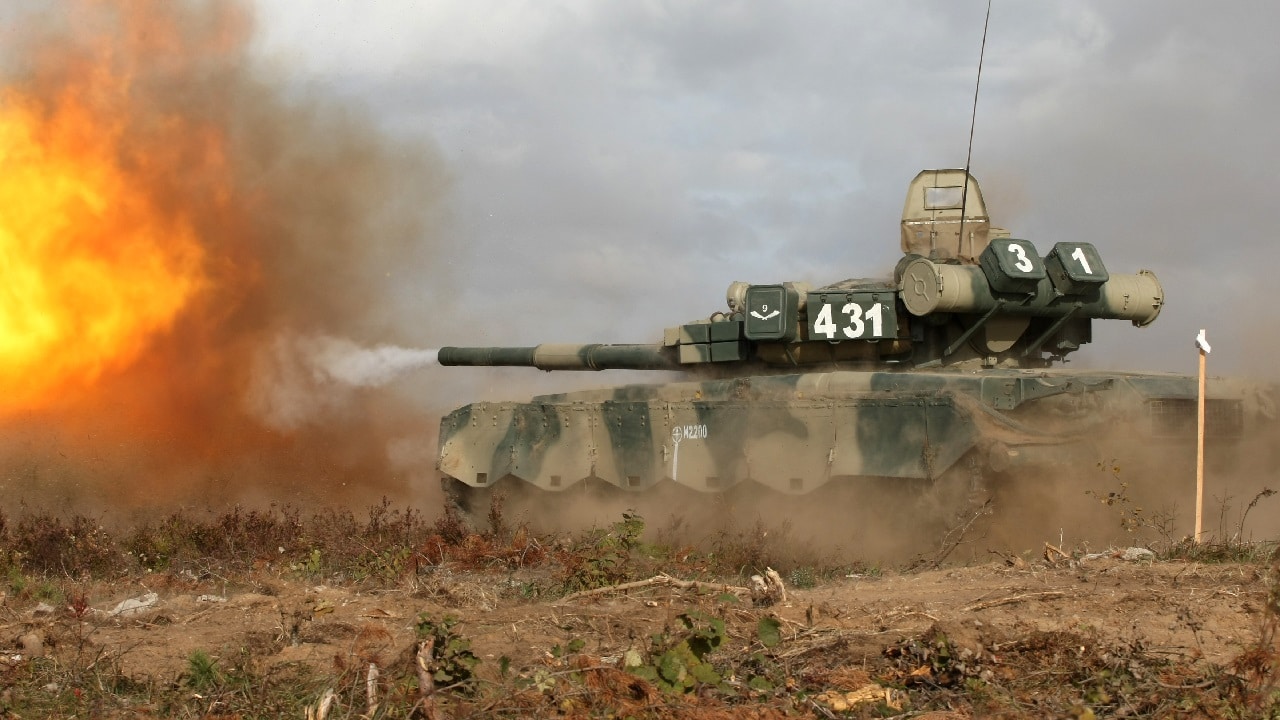
Russian T-80 tank. Image Credit: Creative Commons.
In 2022, however, after heavy attrition among the T-72s and T-90s during the early invasion, the Russians were forced to deploy their T-80s. They also suffered heavy losses for the same reasons as their fellow tank models.
Since the war began, the Russians have already lost hundreds of T-80 tanks. The T-80’s survivability problems are a common theme. Some reports indicate they lost as many as 1,272 T-80s. The main plant for building T-80s was in the Russian city of Kharkov, now the Ukrainian city of Kharkiv.
The Ukrainians use the T-80, but it has taken a toll on the Russians because they know its weaknesses. The T-80s have been withdrawn from production and placed in reserve units, while Russian front-line units have been using old, obsolete T-62s in their place.
About the Author: Steve Balestrieri
Steve Balestrieri is a National Security Columnist. He served as a US Army Special Forces NCO and Warrant Officer. In addition to writing on defense, he covers the NFL for PatsFans.com and is a member of the Pro Football Writers of America (PFWA). His work was regularly featured in many military publications.