
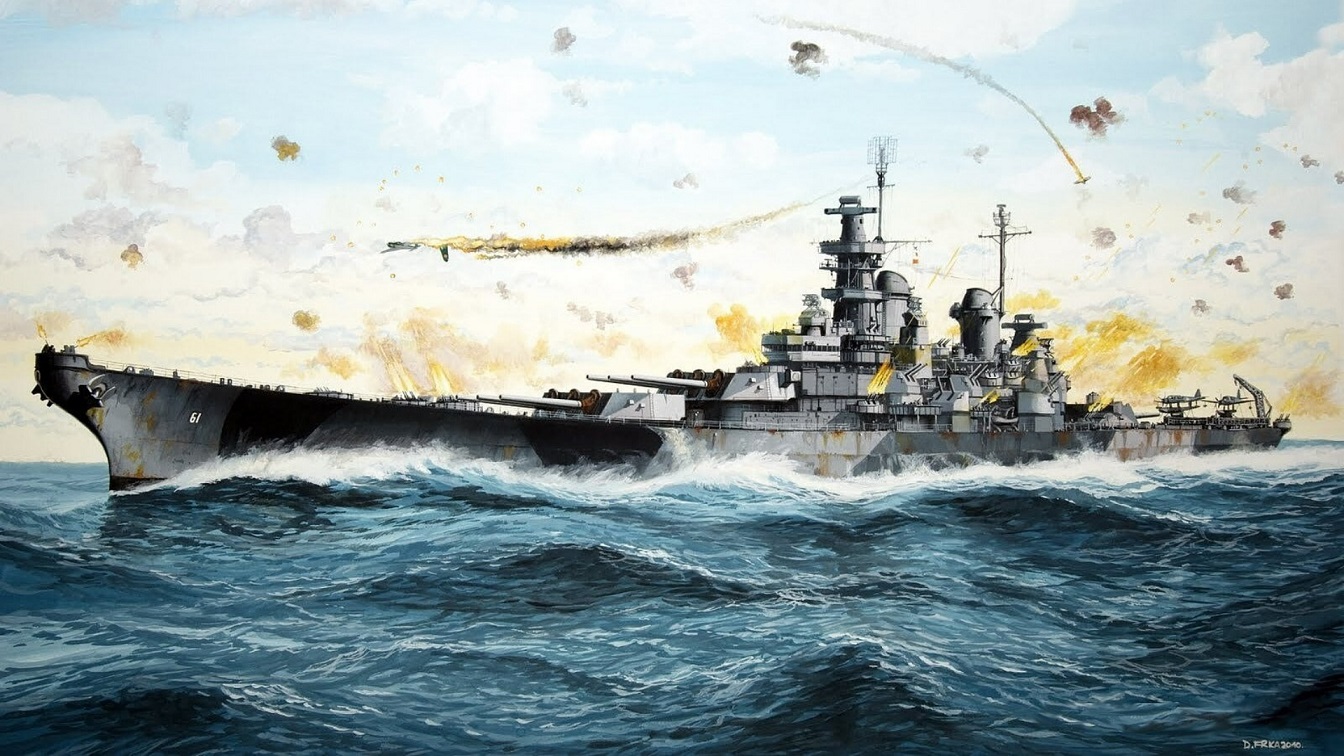
The U.S. Navy designed the most powerful battleship ever conceived — and canceled it before a single hull was finished, as it was already obsolete. The Montana-class would have displaced 71,000 tons, carried 12 sixteen-inch Mark 7 guns, and been too wide to fit through the Panama Canal. The Iowa-class still sits in American museums, Japan’s Yamato lies at the bottom of the Pacific, and the Montana exists only on paper.
Battleship Showdown: Iowa-class, Montana-class, and Yamato-class
Before aircraft carriers became overly dominant in World War Two, there was an emphasis on battleships for global sea domination. The mammoth dreadnoughts were envisioned to take the fight to the enemy with 16-inch guns that could teach adversaries a lesson about high-intensity naval gunfire. In 1940, the need was acute for more battleships capable of making naval combat decisive in the Americans’ favor.
U.S.. Lawmakers Wanted the Battleship to Reign Supreme
Congress had just passed the Two-Ocean Navy Act, and battleships were a big part of the strategy to face down Germany and Japan at once. U.S. Naval battle planners were looking for a panacea. They envisioned the new Montana-class battlewagons as the most powerful, heavily protected, and well-armed vessels in history.
The Montana-class: A Big What If
The Navy wanted five new Montana-class dreadnoughts, but hardly any work was executed on the hulls. They never entered active duty. The Montana-class had failed in what we now call in defense acquisition, the “Valley of Death.”
They were conceived and then overtaken by new technology, changing strategic foresight, and the advent of the aircraft carrier as the most depended upon naval asset.
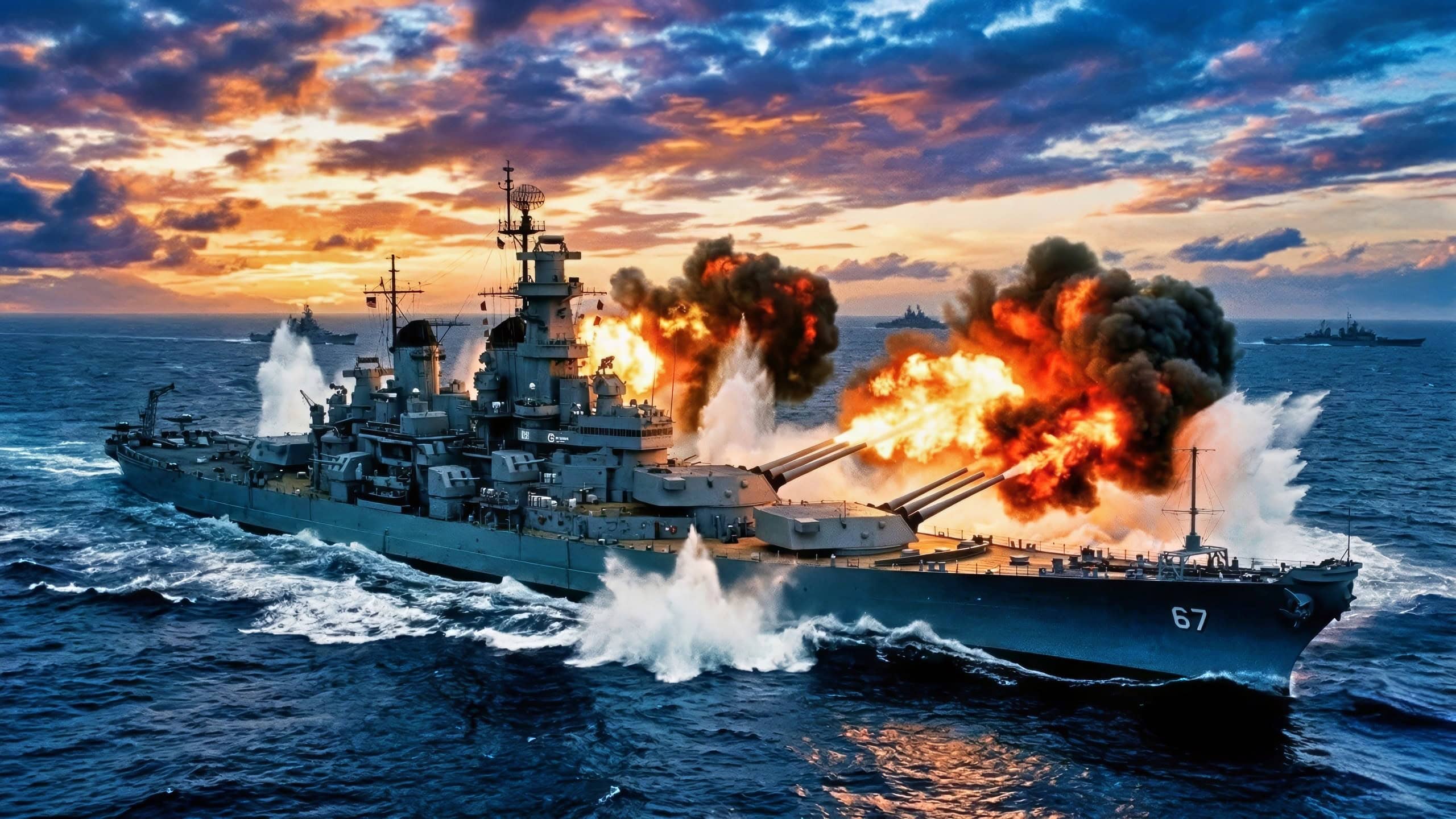
Montana-Class Battleship Firing Guns. Image Created Using Nano Banana.
How About a Comparison? Montana-class Versus the Iowa-class Versus the Yamato-class
Eric Jay from “Battleships and Battlecruisers of World War Two” has a handy breakdown of all three battleships I’d like to examine: the Montana-class, the Iowa-class, and the Yamato-class.
Size Comparison
The Navy planned for the Montana-class to displace 71,000 tons with a combat load. This was heavier than the Iowa-class at 45,000 tons, and larger than the Japanese Yamato at 65,000 tons.
How Did Gun Power Stack Up?
The Montana-class would deploy 12 Mark 7 16-inch guns in four triple turrets – that was more than the nine Mark 7s on an Iowa-class ship. Yamato’s nine 18-inchers could send a 3,200-pound shell out to 26 miles. The Iowas’ nine 16-inch guns could belch out a 2,700-pound shell 24 miles. All three ships could fire two rounds per minute.
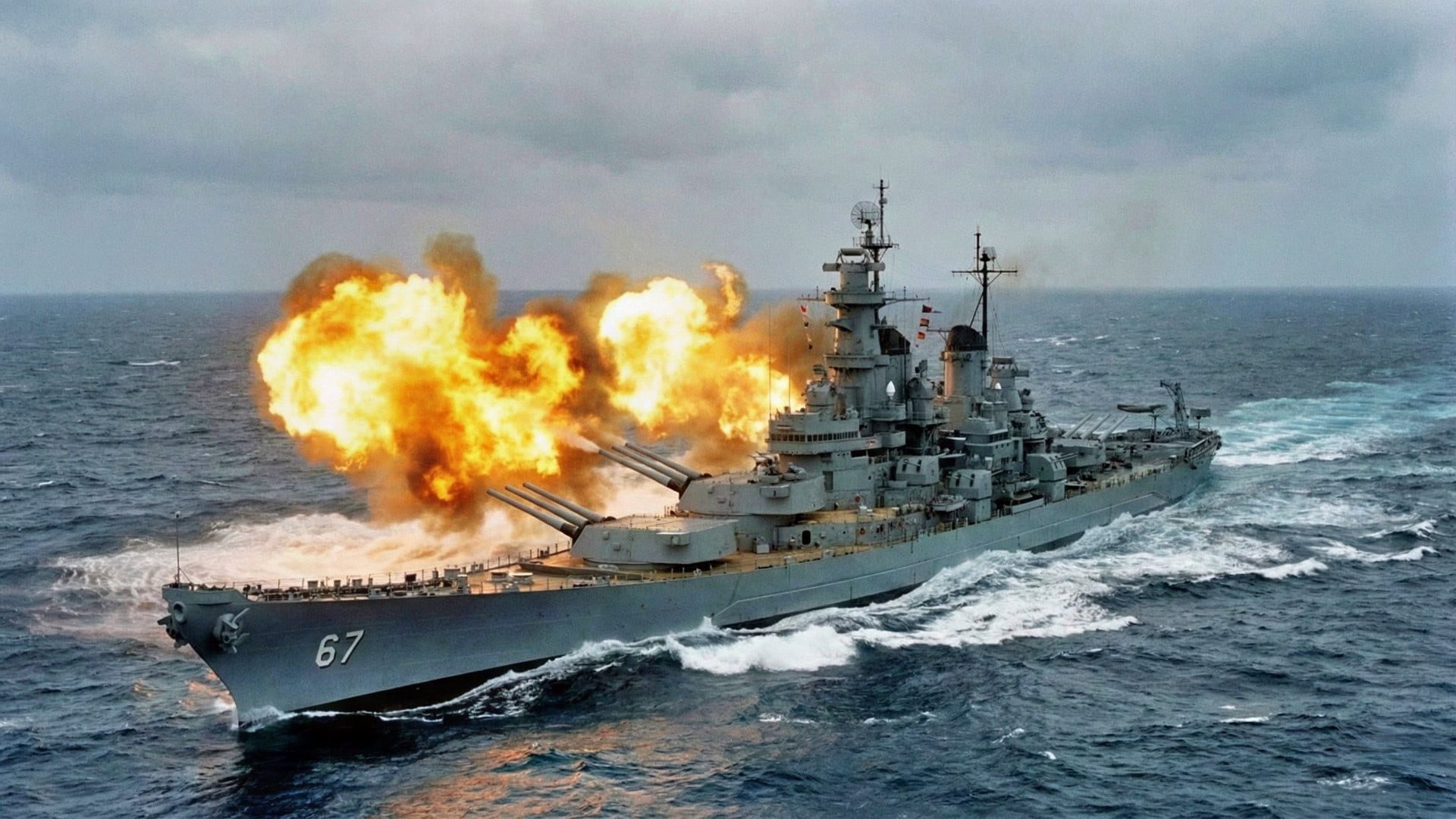
Montana-Class Battleship Imagined. Image created by Nano Banana Pro.
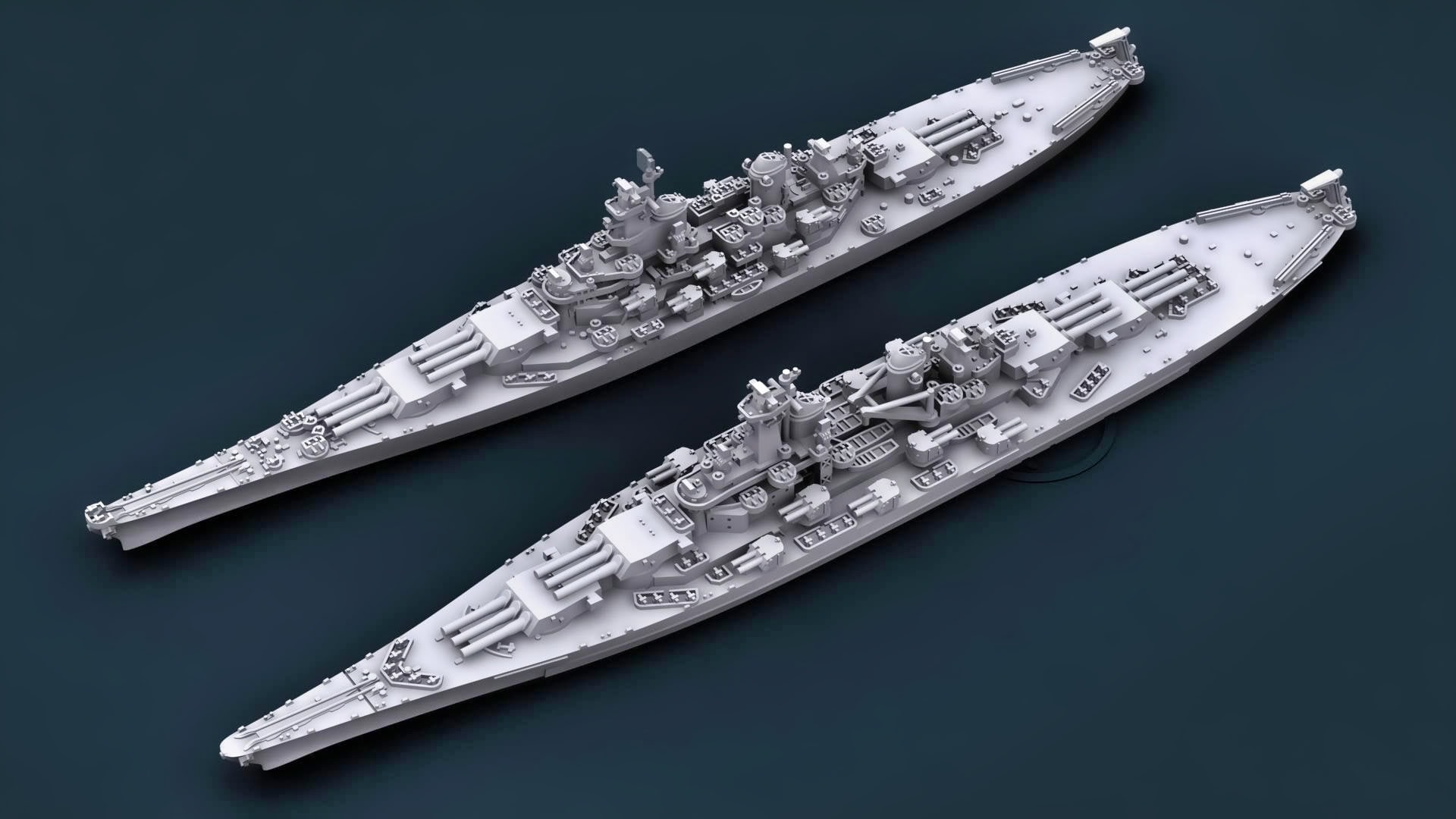
Montana-Class Battleship vs. Iowa-Class. Image Credit: Creative Commons.
The secondary guns were similar. The Iowa-class and the proposed Montana-class had 20 five-inch guns. The Yamato sported six 6-inch guns. All three had more than 150 anti-aircraft guns.
Speed Comparison
However, the Montana-class at a top speed of 28 knots would have been slower than the Iowa-class 33 knots, and a shade quicker than the Yamato’s 27 knots. This would hurt the Montanas’ ability to keep up with the aircraft carrier strike groups. The Yamato may have been able to outmaneuver the Montana-class with greater agility and the ability to knife through the waves with more force than the Montana-class.
Length and Beam Size
The Montana-class would have been 921 feet long, 61 feet longer than the Iowa-class and 59 feet longer than the Yamato. The new Montanas were also wider, with a beam of 121 feet compared to 108 feet for the Iowas. The Yamato was a touch broader with a beam of 128 feet. Nevertheless, the Montanas would be too wide for the Panama Canal.
Engine Power
Steam turbines on the Montanas would push out 172,000 horsepower. But the Iowa-class had 212,000 horsepower, and the Yamato had 150,000.
The Iowa-class and Montana-class had eight boilers. The Yamato had 12. Each had four steam turbines. The Montana-class would have enjoyed better range than the Iowa-class and a much larger combat radius than the Yamato.
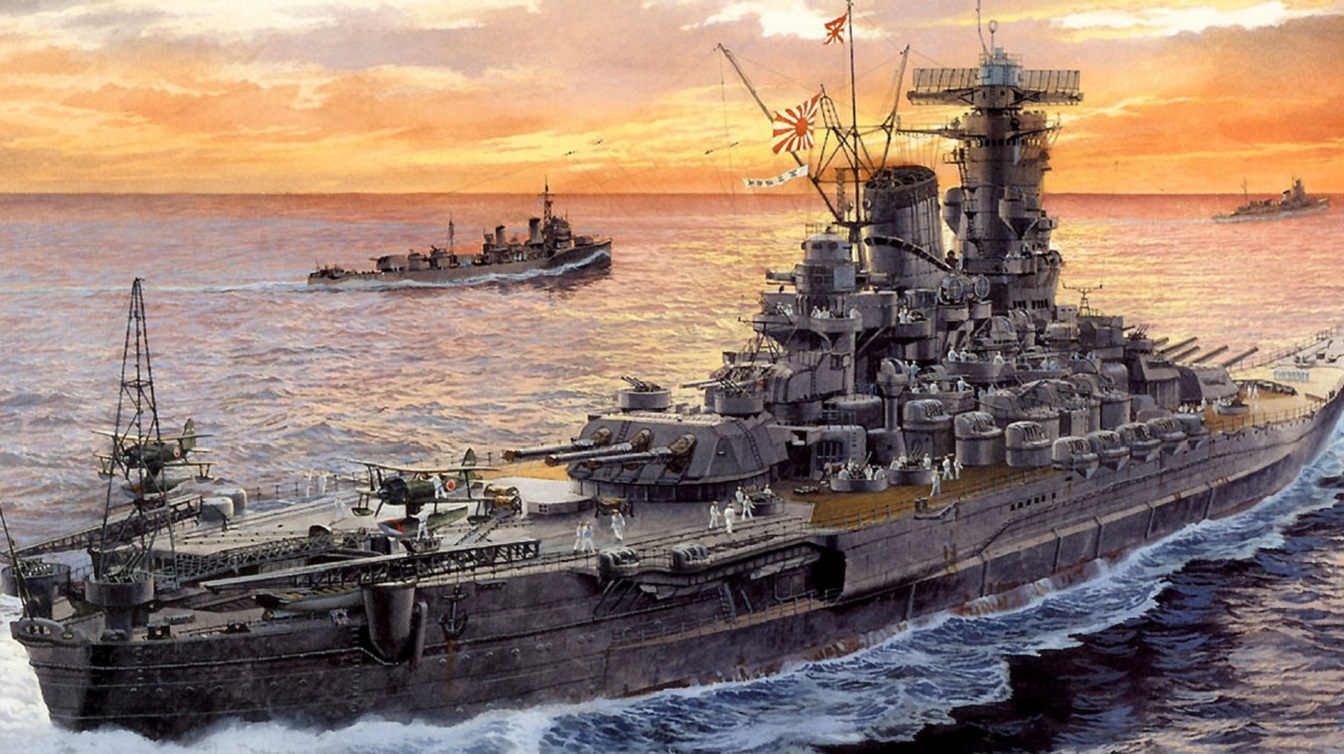
Battleship Yamato. Image Credit: Creative Commons.
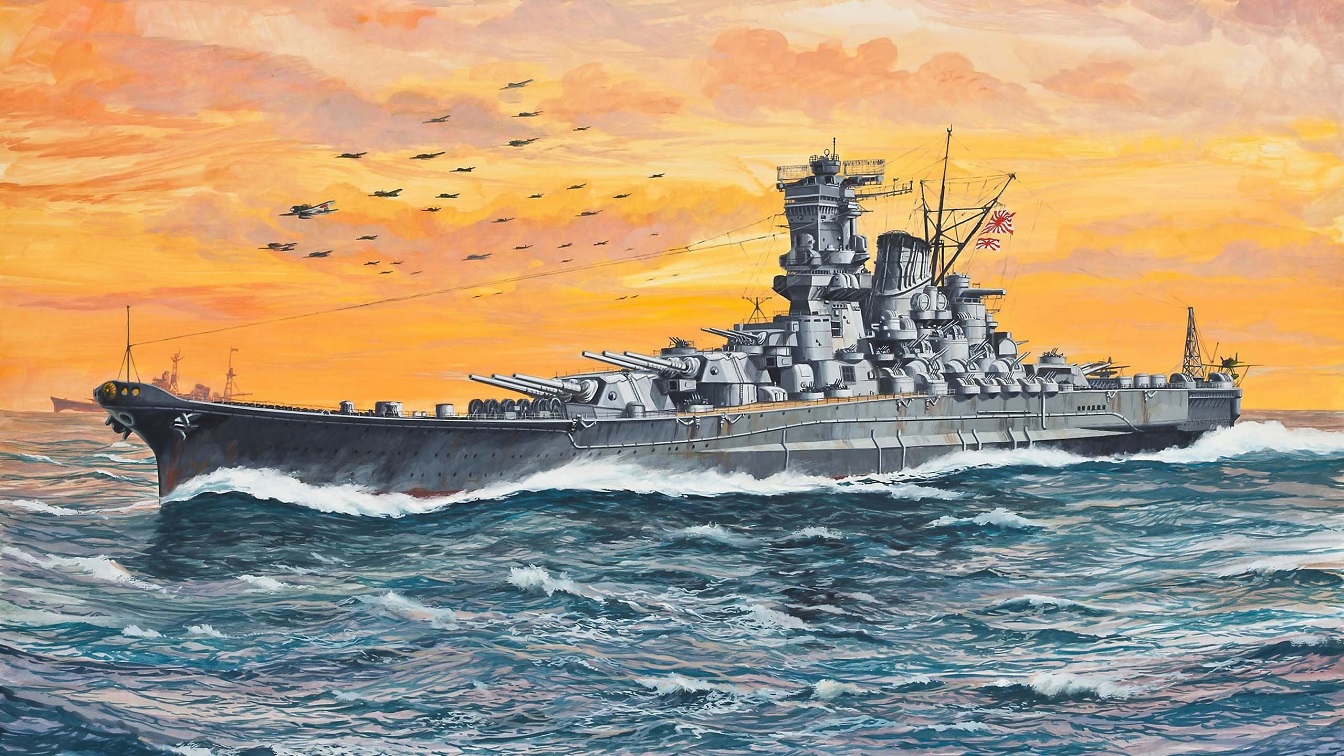
Yamato-Class Battleship/Artist Rendition. Image Credit: Creative Commons.
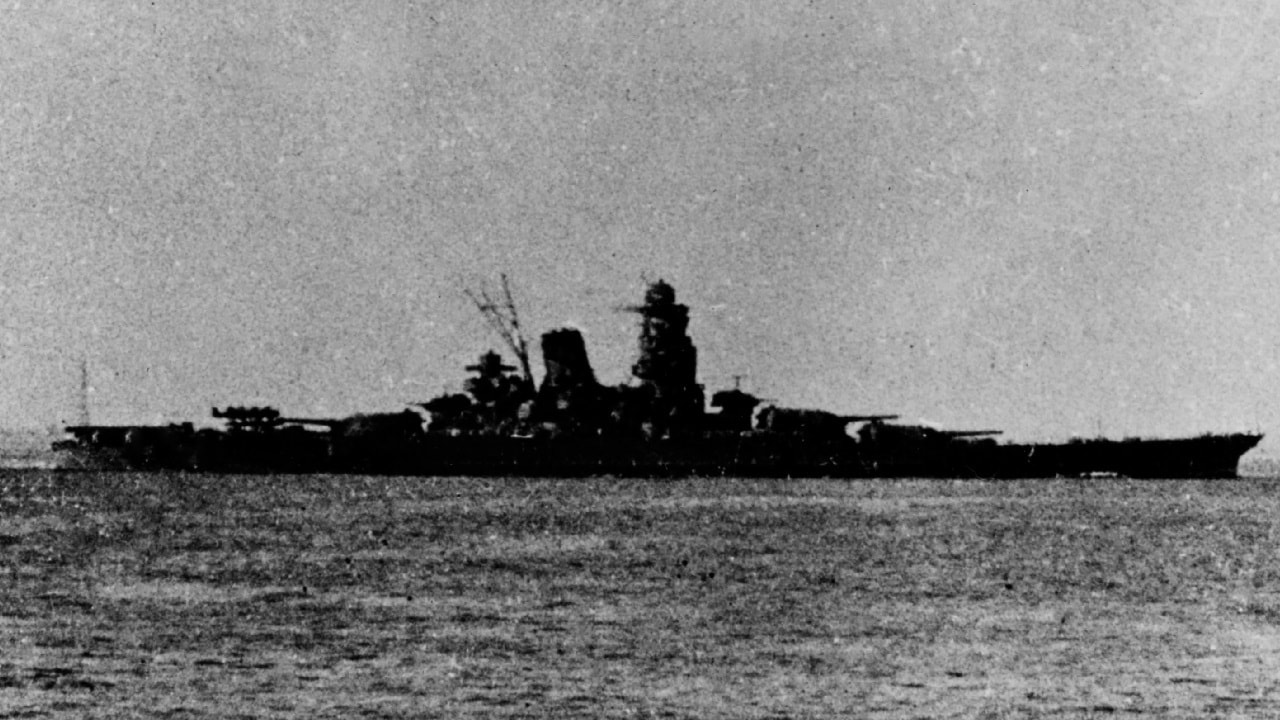
Yamato-class battleship Yamato. Image Credit: Creative Commons
Which Battleship Had the Thickest Armor?
Yamato had the best armor – more than 25 inches on turrets with a 16-inch belt. Montanas would have been made with a 16.1-inch belt for protection against 18-inch shells. This was thicker than the Iowas’ 12.1-inch belt.
Other Comparisons
The Iowa-class had better radar than the Yamato, but the Montana-class would have improved on these systems. Each ship had around 2,800 sailors, and all three carried aircraft.
The Montana-class, Iowa-class, and the Yamato were similar in their specs. I would give the edge to the Iowa-class for their speed and situational awareness. The Montana-class would have been much heavier and slightly longer. The Iowa-class had the more powerful engines. The Yamato had more boilers. Yamato’s armor was top-notch and thicker than the other two classes.
Could the Montana-class have bested the Yamato in combat? The Montana-class would have benefited from improved radar-controlled fire-control systems. The Montanas could have fired better-aimed shells at the Yamato. But the Yamato had superior armor. It would have been an even fight.
We’ll never know what kind of ships the Montana-class would have been. They were eclipsed by the need for more carriers and never built. It is an interesting exercise to compare them to the Iowa-class and Yamato. My money would still be on the Iowa-class because they have stood the test of time and are still on display at many museums across the country. They were also used in several conflicts beyond World War Two and are a testament to the massive power of shipbuilding in a bygone age.
About the Author: Dr. Brent M. Eastwood
Author of now over 3,500 articles on defense issues, Brent M. Eastwood, PhD, is the author of Don’t Turn Your Back On the World: A Conservative Foreign Policy and Humans, Machines, and Data: Future Trends in Warfare, plus two other books. Brent was the founder and CEO of a tech firm that predicted world events using artificial intelligence. He served as a legislative fellow for US Senator Tim Scott and advised the senator on defense and foreign policy issues. He has taught at American University, George Washington University, and George Mason University. Brent is a former US Army Infantry officer. He can be followed on X @BMEastwood.