
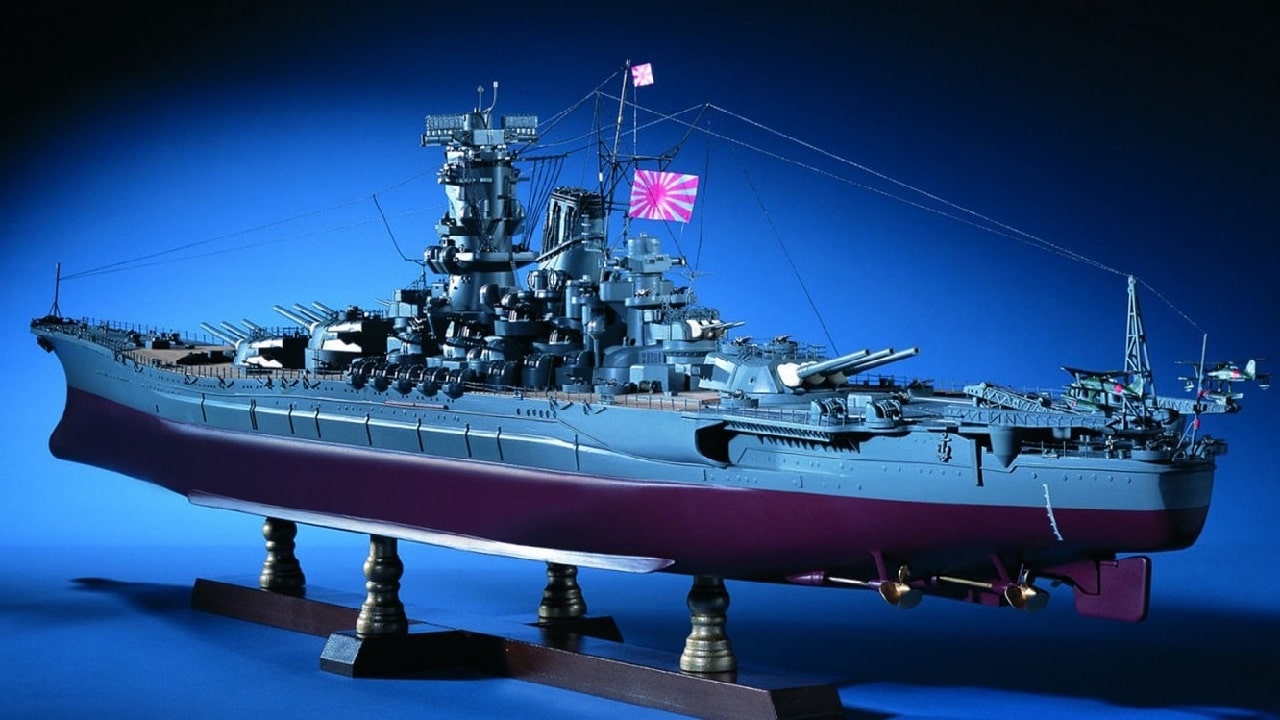
The U.S. Navy sank five of its own ships in a single battle — by accident.
This is one of those stories from World War Two that the U.S. Navy would like to forget.
It happened during the Battle of Leyte Gulf in 1944. Admiral William “Bull” Halsey fell for a trick by the enemy.
He was chasing a Japanese decoy instead of the main effort of the enemy naval force.
While his battle group left the area of operations to go after what he thought were sitting ducks, the Americans inadvertently left the San Bernardino Strait unprotected.
The Japanese Center Force under Admiral Takeo Kurita could not believe their luck. Not only was there an unguarded sector, but the commander caught the Americans in a trap.
There were some unprotected escort carriers of Squadron Taffy 3 sailing without ample air cover and with only light armor.
To escort the group of small carriers, there were also some tiny American destroyers without heavy firepower — no match for the Japanese ships. This was the Battle of Samar.
Setting the Scene
Admiral Kurita commanded two of his country’s largest battleships — the 65,000-ton Yamato and Musashi. U.S. submarines caught this strike group unaware.
On October 23, 1944, the American torpedoes sank two escort carriers, including Kurita’s command ship.
The next day, air strikes destroyed the Musashi. Kurita was frightened that this was a master stroke by the Americans. Sensing the danger of an overwhelming U.S. victory, he took his remaining ships and sailed out of range of the American flotilla.
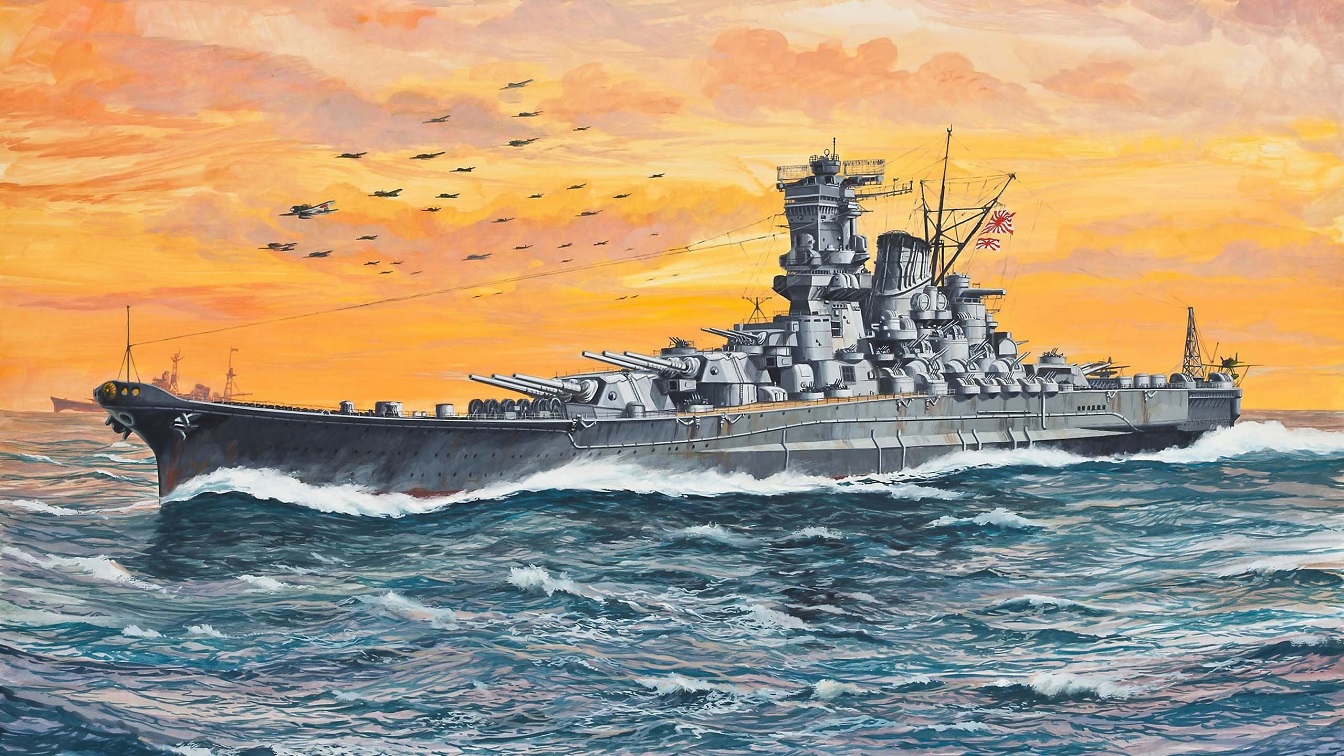
Yamato-Class Battleship/Artist Rendition. Image Credit: Creative Commons.
Halsey Never Lacked Confidence
Bull Halsey was immediately full of himself and perhaps overconfident because he had more fight left in him. He ordered Task Force 34 and its fast battleships to go after the Southern Force of Japanese ships during the next two days. This maneuver became the Battle of Surigao Straits.
The Japanese Doubled-Back and Went Hunting
When Halsey took the bait, Admiral Kurita pounced. Halsey had left an unbelievably key sector of the ocean uncovered. Kurita took what was left of his Central Force and re-grouped. The Japanese warships were ordered to transit back through the San Bernardino Strait into Leyte Gulf. They hoped to catch the remaining ships of Halsey’s task force unaware. The Japanese were hungry for payback.
Three Squadrons of American Vessels Were Left to Guard Leyte Gulf
What American ships were still patrolling that area of Leyte Gulf while Halsey was chasing glory? There was Task Force 77.4. This patrol entailed three squadrons — Taffy One, Two, and Three. Taffy Three had drawn the unlucky straw and was sailing closest to Kurita’s strike group. Rear Admiral Clifton Sprague commanded Taffy Three.
The Casablanca-class Carriers Would Have to Pick Up the Slack
He had six 7,800-ton Casablanca-class escort carriers. These lighter flat-tops were designed to provide air cover and flank protection from enemy battleships and submarines.
This allowed the bigger main U.S. Navy fleet aircraft carriers to focus on attacking Japanese shipping. These smaller carriers were known as “Jeeps.”
They were lightly armored compared to their bigger sisters. The Jeeps had only about 900 sailors and deployed just 28 aircraft. They were also slower than the fleet carriers, managing just 20 knots compared to the 30 to 33 knots top speed of the bigger flat-tops.
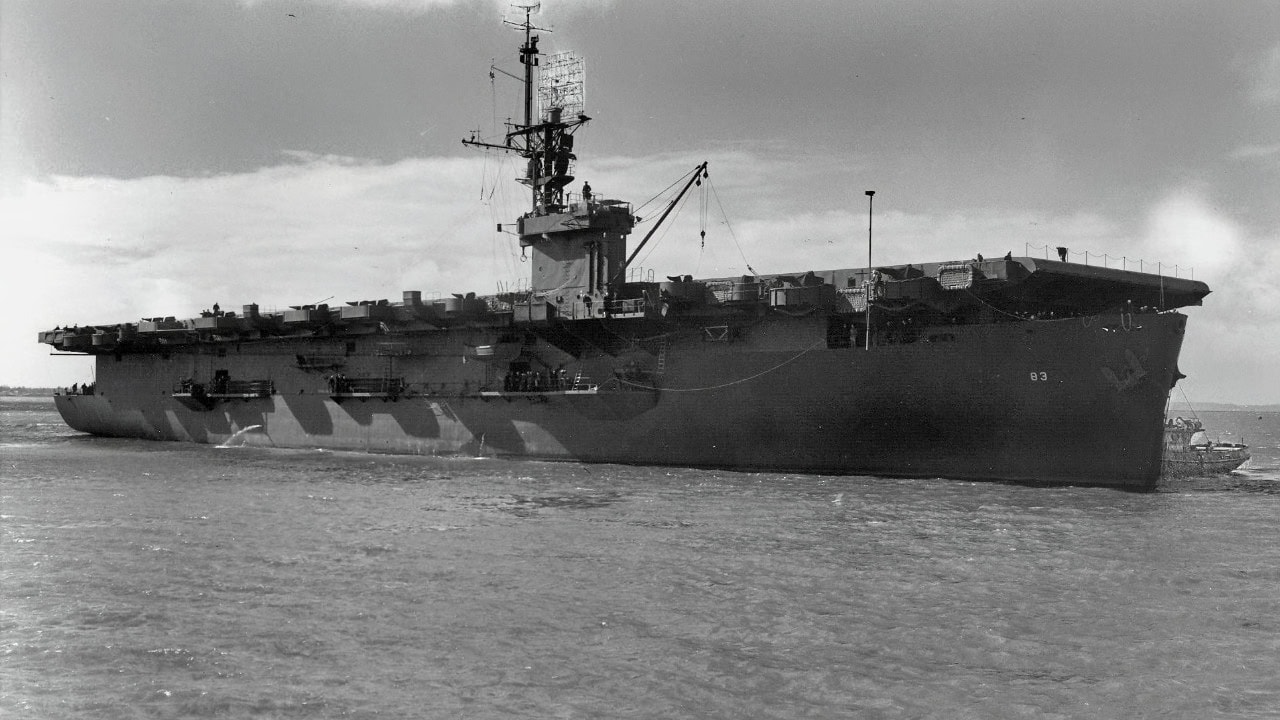
Casablanca-Class Aircraft Carrier
Tin Can Sailors Would Have to Answer the Call
For protection, the Casablanca-class Jeeps had small destroyers, the Fletcher-class, and even tinier “Destroyer Escorts.” There were a total of seven of these ships.
The escorts specialized in anti-submarine warfare, while the Fletcher-class had quick-firing five-inch guns that were usually accurate but were no match for the armor of Japanese cruisers and battleships.
Taffy Three may have already been outmanned and outgunned and was sailing into a trap.
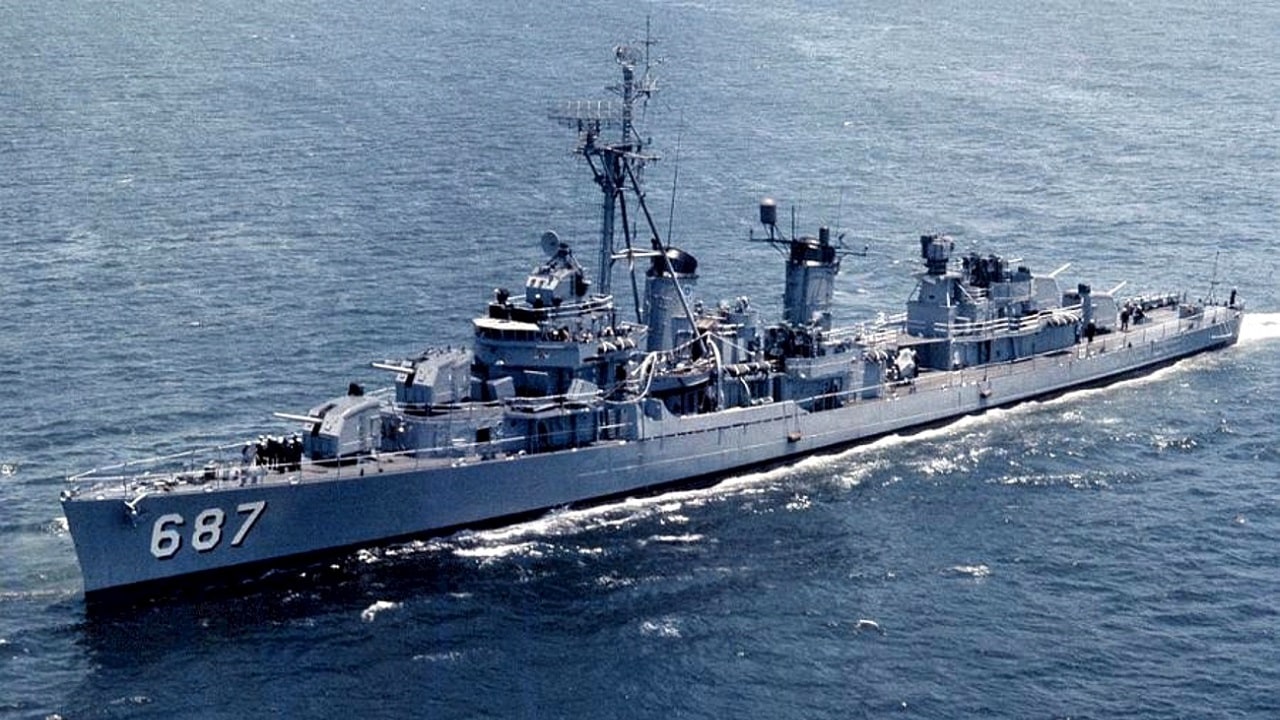
Fletcher-class Destroyers
Was It Time to Call for Help?
Sprague was worried. His small task force lacked the speed to outrun Kurita’s force. The admiral was lurking out there somewhere and could swoop in for the kill at any time. Sprague could also not leave the beachhead undefended.
He asked his superior, Admiral Thomas Kinkaid, for help from Admiral Halsey. But reinforcements never came despite Kinkaid’s multiple calls for assistance. This would be a fatal mistake. Halsey was not completely at fault. The messages to him were garbled with a cryptic sentence that made no sense. He never released Task Force 34 to go help Taffy Three.
Evasive Maneuvers
Sprague knew he had to make some magic happen to protect his squadron. He had his destroyers lay down a thick smoke screen. The ships then turned sharply to head into a sea squall for more cover.
Aircraft Take to the Skies
My colleague Sebastien Roblin described how Sprague wanted to fight the coming battle. “Meanwhile, every available plane was scrambled to harry the Japanese battle force. Combined, Task Force 74.4’s carriers mustered roughly 250 FM-2 Wildcat fighters and 190 Avenger TBM torpedo bombers. However, these were loaded with high-explosive bombs, depth charges, and rockets for attacking ground targets and submarines, not anti-ship torpedoes and armor-piercing bombs.”
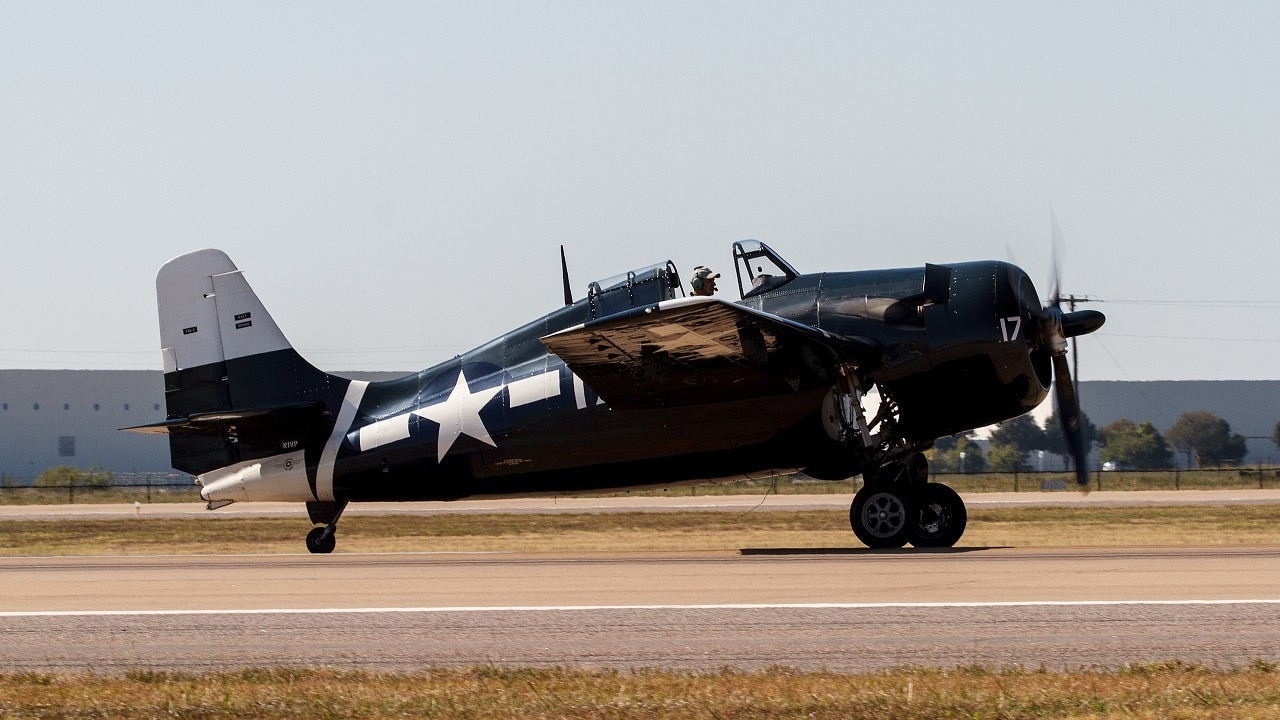
Grumman F4F Wildcat. Image Credit: Creative Commons.
Tin Can Alley
This was some more bad luck and lack of tactical foresight. Kurita struck hard and fast, releasing his ships to take out the Jeep carriers and their escorts. Sprague was not going to give up without a fight. He ordered “tin cans,” Hoel, Hermann, and Johnston to take on the Japanese battle group.
Japan Goes Hard
Japanese cruisers attacked and sank the Gambier Bay Jeep carrier. This was the only carrier destroyed by surface ship gunfire during the war. The Kalinin Bay was hit by at least fifteen 8″ and 14″ shells.
The Avengers were re-supplied with torpedoes and bombs and headed back into the fight. They scored kills against three Japanese cruisers. Then the Japanese decided to use Kamikaze bombers. One hit the St. Lo. The explosion struck bombs and fuel. Two other kamikazes hit the Kalinin Bay. St. Lo sank.
The Aftermath Looked Bad for the U.S. Navy
Roblin described the outcome of the battle. “Two escort carriers, two destroyers, and a destroyer escort consigned to the deep waters of the Philippine Trench. 1,583 Americans perished, mostly on the destroyers, five times more casualties than incurred in the Battle of Midway. Around 2,000 survivors waited two days for rescue, many succumbing to shark attacks and exposure.”
This was a victory for the Japanese, but they sustained losses that would wound them for the rest of the war.
Halsey probably took his disappointment to his grave, wondering whether he had made the right decision and regretting that he had misunderstood the communication efforts.
This was likely a battle studied carefully at the Naval Academy and various naval staff colleges. The Japanese learned that the Kamikaze tactic would be the only saving grace of what was once a strong fleet that could have been more successful against the Americans.
About the Author: Brent M. Eastwood
Author of now over 3,000 articles on defense issues, Brent M. Eastwood, PhD, is the author of Don’t Turn Your Back On the World: A Conservative Foreign Policy and Humans, Machines, and Data: Future Trends in Warfare, plus two other books. Brent was the founder and CEO of a tech firm that predicted world events using artificial intelligence. He served as a legislative fellow for U.S. Senator Tim Scott and advised the senator on defense and foreign policy issues. He has taught at American University, George Washington University, and George Mason University. Brent is a former U.S. Army Infantry officer. He can be followed on X @BMEastwood.