
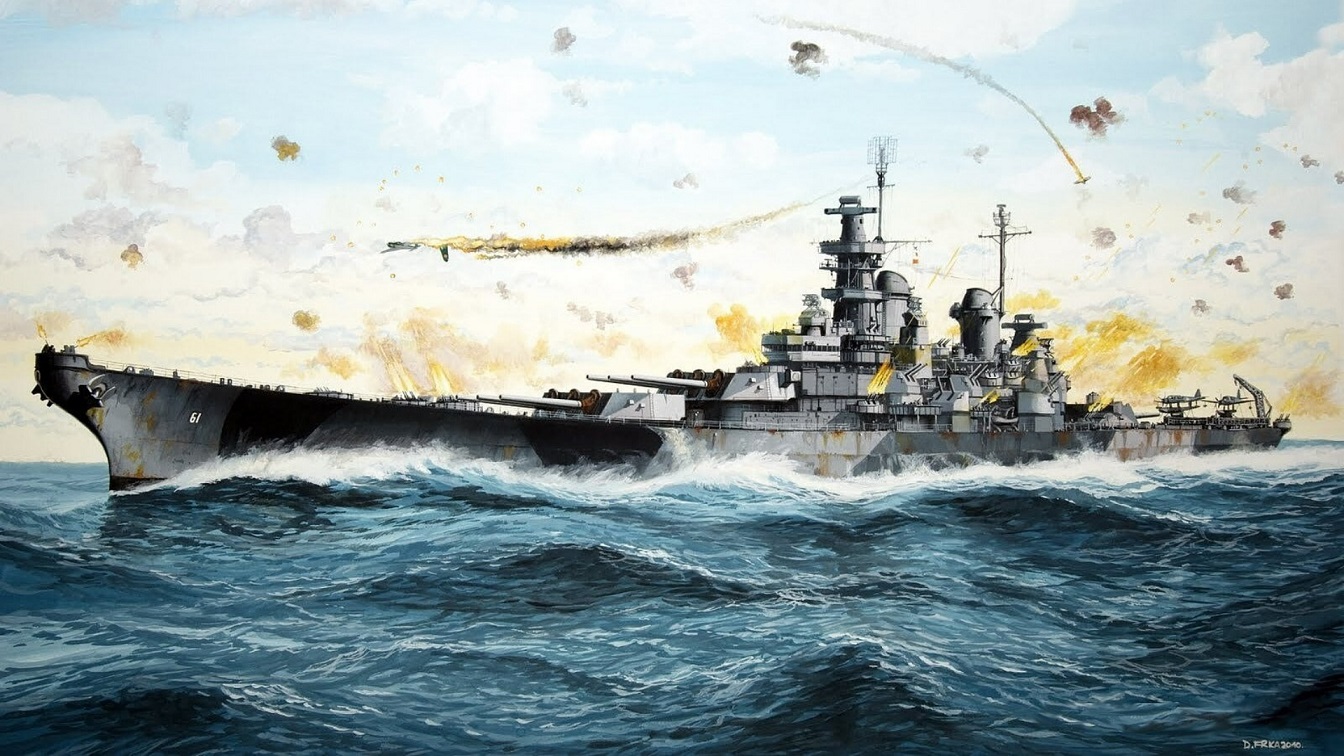
Summary and Key Points: Dr. Brent M. Eastwood, a national security expert, evaluates the speculative role of the Montana-class super battleship in Operation Epic Fury.
-As of March 2026, the U.S. Navy faces a “Tomahawk depletion” crisis. Eastwood argues that if the Montana-class—planned in the 1940s with twelve 16-inch guns—had been converted into a cruise missile platform, its massive deck space could have housed hundreds of VLS cells.
-This report analyzes Montana’s superior armor compared to the Iowa-class, concluding that while carriers won the 20th century, a “Super-Montana” missile barge would have been a decisive asset against Iran’s coastal defenses.
The Montana-Class Dream: Why a 70,000-Ton Super Battleship Would Have Been a 2026 “Tomahawk King”
There is no substitute for Tomahawk cruise missiles. They have been ubiquitous during Operation Epic Fury against Iran. U.S. Navy submarines and warships launch them to devastating effect. They are fast, lethal, and difficult to intercept. Iran has been forced to endure extensive damage and casualties from Tomahawks, although they may be depleted, and the United States made a difficult choice to switch to lower-end precision-guided bombs instead of relying on top-end systems like the Tomahawk.
The Deadly Tomahawk Is a Friend to American Presidents
These missiles are also presidential-level assets in both war and peacetime. That means the White House can order Tomahawk strikes instead of using boots on the ground. Destruction of enemy targets with these projectiles sends a message to adversaries about U.S. deterrence and resolve.
Reagan Loved the Cruise Missile
One older deployment of Tomahawks occurred in the 1980s, during President Ronald Reagan’s intense buildup to produce 600 ships.
He ordered all four Iowa-class battleships to be outfitted with Tomahawks fired by eight Armored Box Launchers. The battleships could engage targets from more than 1,000 miles away. There were land-attack and Tomahawk anti-ship variants.
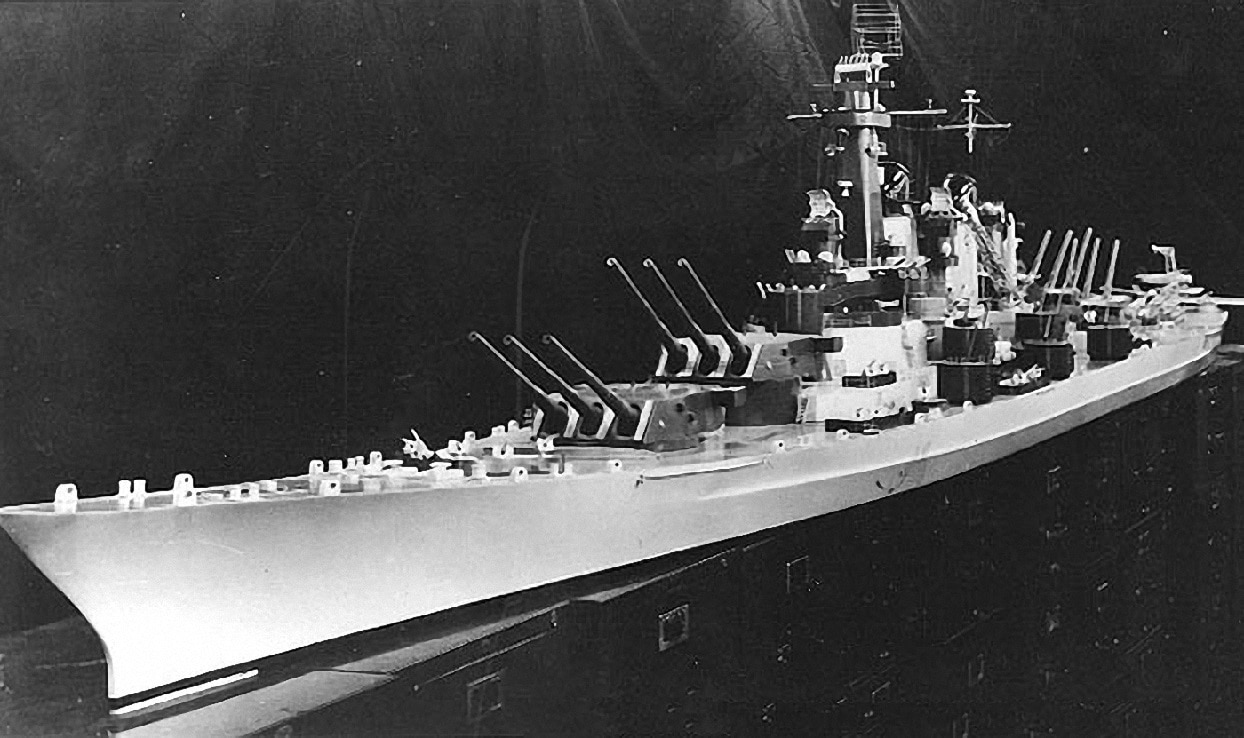
Montana-class Battleships. Image: Creative Commons.
Making Saddam Hussein’s Hordes Pay the Price
To deploy the Tomahawks, the Iowa-class ships removed their five-inch guns and inserted the box launchers. They then later used them in Operation Desert Storm to shape the battlefield and eliminate targets in Baghdad to pave the way for ground troops.
The USS New Jersey was the first to fire the missiles in 1983.
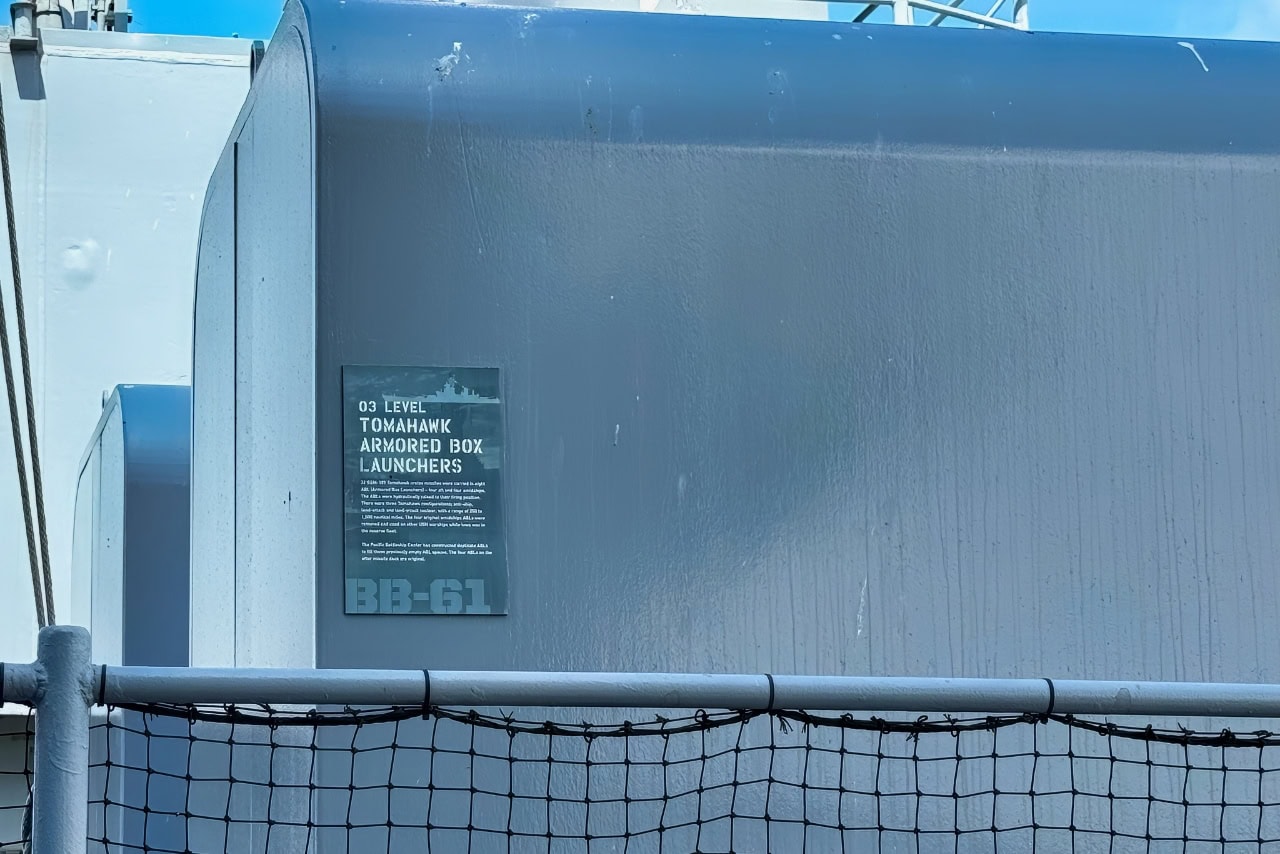
USS Iowa 19FortyFive image of Tomahawk Missiles on USS Iowa.
The Montana-class: A Forgotten Relic That May Have Been Decisive Even Today
Let’s take a look at history to see if other battleships could have been a Tomahawk platform.
Look no further than the Montana-class “super battleships” that may been outfitted to launch the devastating projectiles to make enemies pay in the modern era. What if the Montana-class were built and would later become a Tomahawk delivery system like no other?
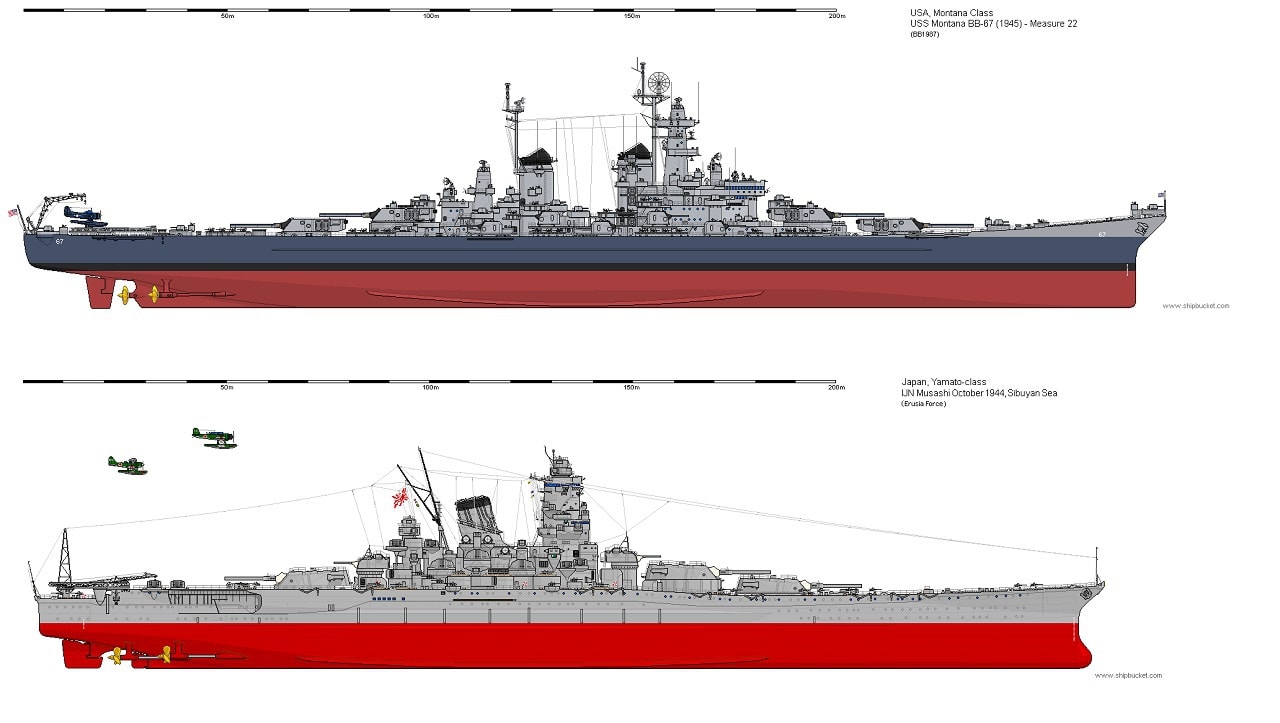
Montana-class compared to a Yamato-class battleship.
What Did the Navy Need in the 1930s?
The Montana-class battlewagons were the biggest U.S. dreadnoughts ever planned. They would have been more heavily armored than the Iowa-class.
Turn the clock back to the 1930s and examine the rise of the German and Japanese empires. The Americans needed capital ships to make sure their navy was dominant. Carrier aviation had not been fully developed, and the battleship was seen as the king of the waves.
Ships were expected to duke it out from long-range with huge guns that could deliver a tremendous load of steel that could sink enemy warships. These battles would be decisive and could render an entire fleet combat ineffective.
The Montana-class could tip the seas in the direction of the United States. These capital ships would be the most powerful of all time and could dominate the Nazis and Japanese and deter enemy navies from attacking the continental United States.
Heavy Displacement, Booming Guns, and Thick Armor
Instead of nine 16-inch guns, there were 12 planned for the Montana-class.
They displaced over 60,000 tons and up to 70,000 tons with a combat load. The Montanas would have been 921 feet long. Deck armor and belt armor would be thicker and heavier than those of the Iowa-class.
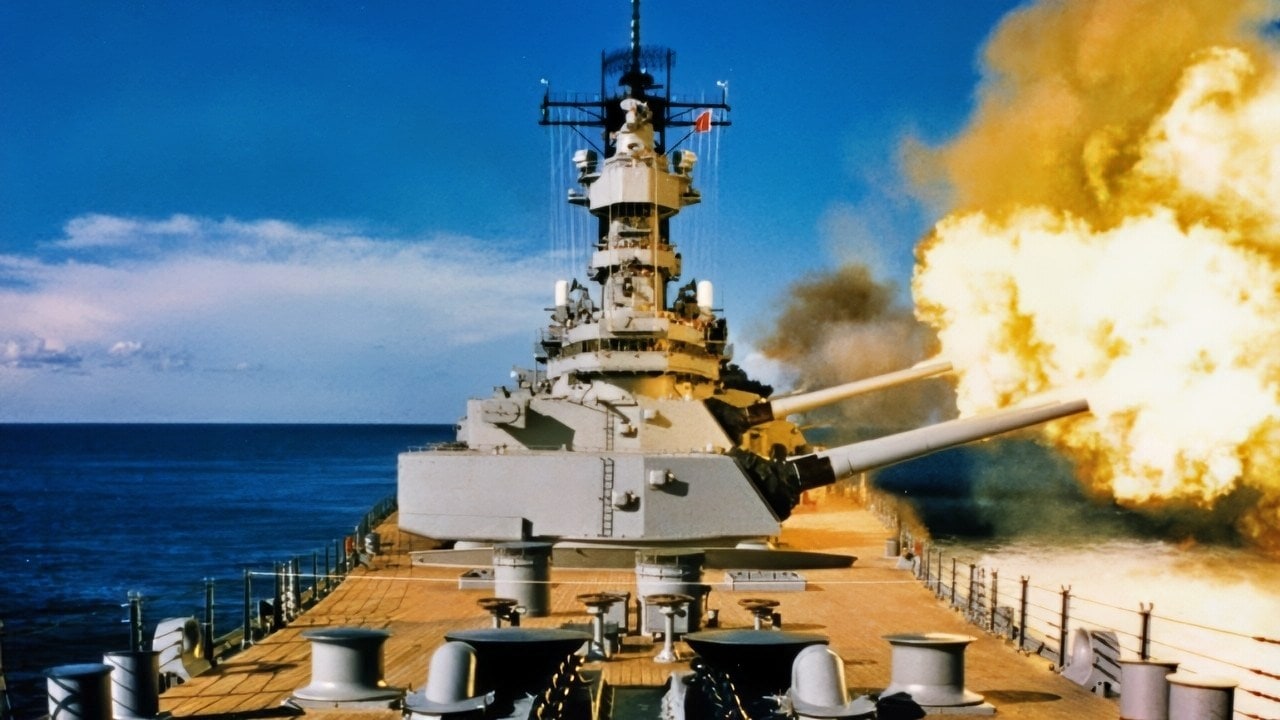
Iowa-Class Battleship Firing 16-inch Guns. Image Credit: Creative Commons.
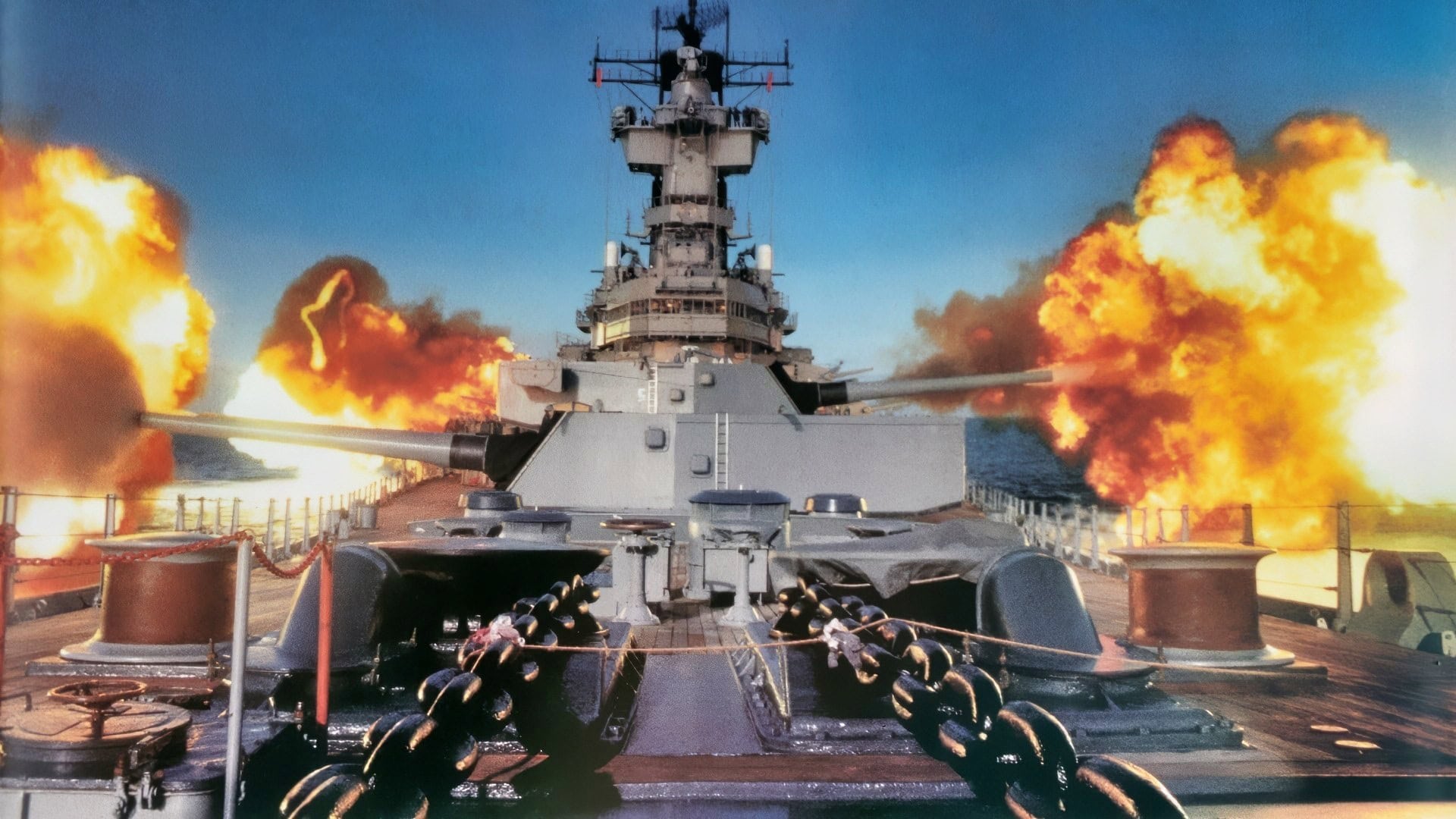
Copy negative of the US Navy (USN) Iowa Class (as built) Battleship USS NEW JERSEY (BB 62) firing a 21-gun broadside. Exact date shot unknown. Image Credit: Creative Commons.
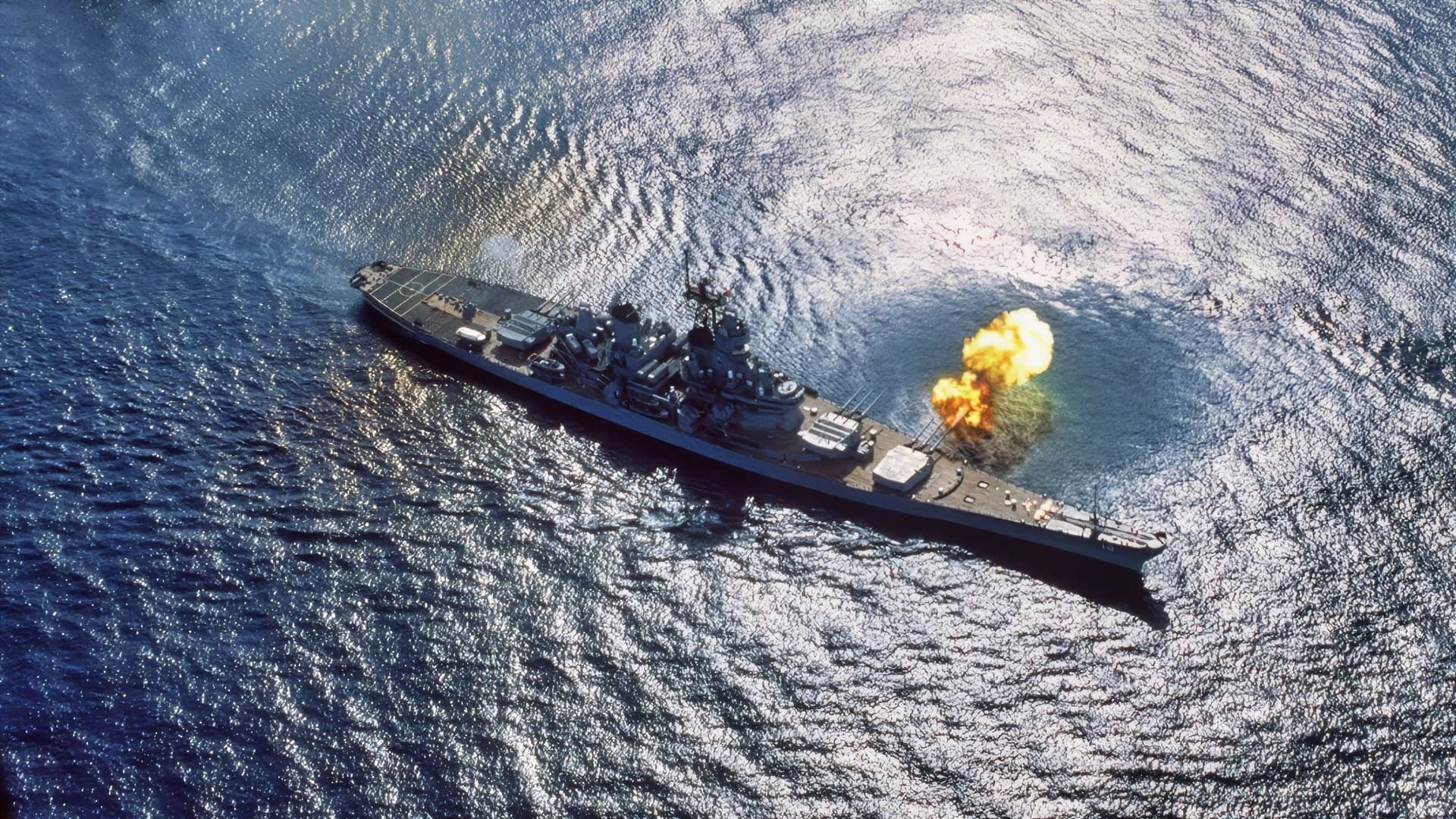
Iowa-Class Battleship USS Iowa. Image Credit: Creative Commons.

USS Missouri Iowa-Class Battleship Broadside. Image Credit: Creative Commons.
This would make the vessel more survivable to sustain many hits from enemy shells and keep on ticking while the big guns dished out their own punishment.
Land attack would also be possible to better deliver heavy fire support, allowing Marines to take enemy beaches and island-hop all the way to Japan.
The Aircraft Carrier Was Becoming an Essential Part of Navy Doctrine
However, aircraft carriers were coming into their own. Carrier aviation wings could reach out and touch enemy ships without having to be in close proximity. American TBM Avenger torpedo bombers made the trek to Japanese flotillas and conducted numerous sinkings. Battleships were great for shore bombardment and could be sustained for missions that would sometimes last more than 12 months, but they were seen more as escort ships for carriers, especially after the Battle of Midway. The aircraft carriers just had too many advantages and were more decisive than battleships.
Shipbuilding Efforts Did Not Have Infinite Capacity
Meanwhile, the Navy’s shipbuilding requirements were immense. Shipbuilders had to pump out fleet carriers, escort carriers, cruisers, and destroyers regularly. The idea was to overawe the Japanese with massive fleets with a diverse range of warships. The emphasis was no longer on battleships. That left the Montana-class program languishing due to time and money constraints, shipbuilder priorities, and other scarce resources.
Plus, the Iowa-class was seen as faster than the more heavily built Montana-class. The Iowa-class steaming at plus-30 knots could keep up with a carrier strike group and maintain flank speed.
Say Goodbye to the Montana-class
This led to the Navy cancelling the Montana-class in 1943. The Americans would not conjure up another battleship proposal until President Donald Trump’s Golden Fleet and his Trump-class battleship. This program is even facing headwinds due to the number of integrated systems, its alleged lack of survivability, and high cost.
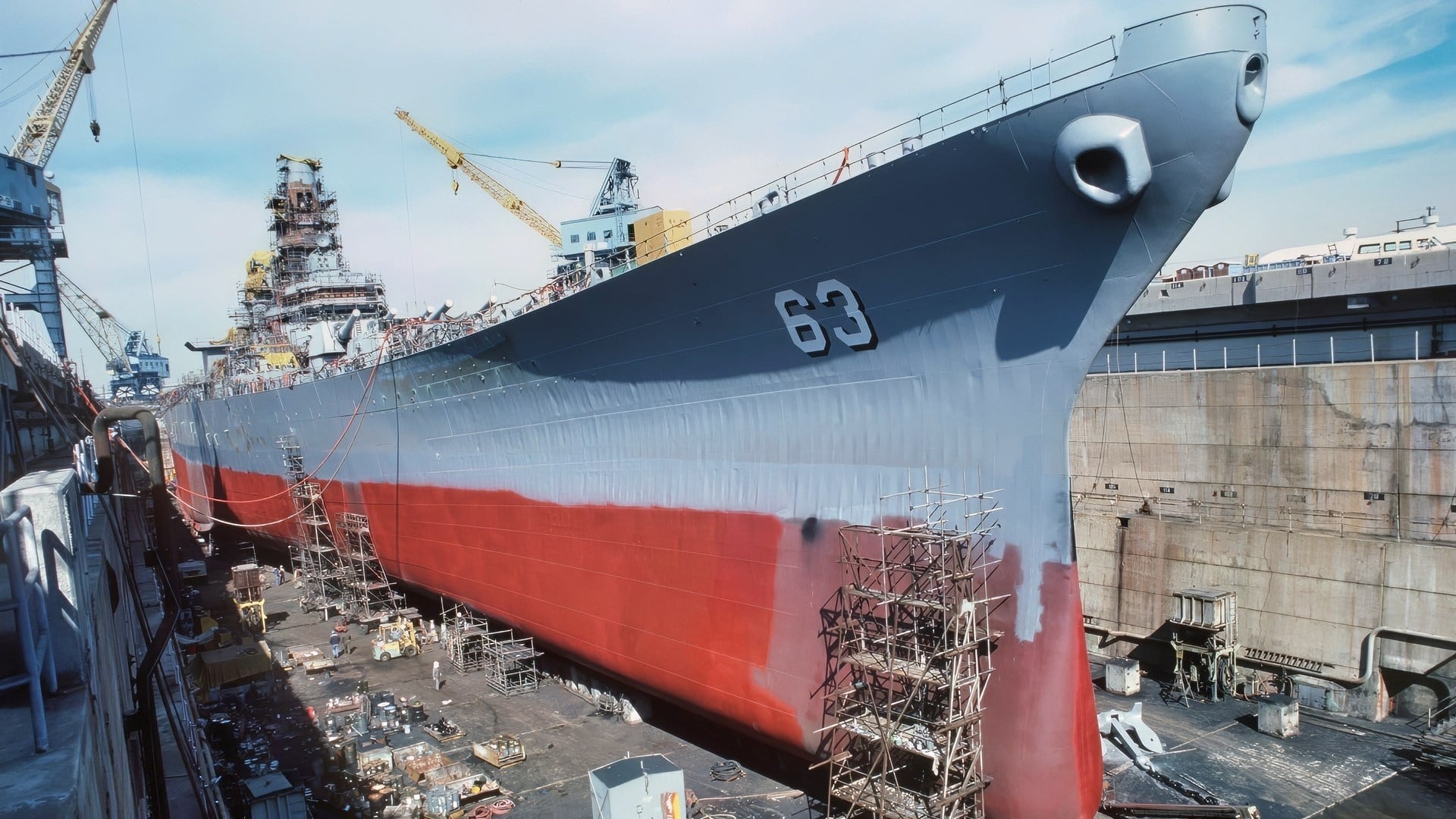
A starboard bow view of the battleship USS MISSOURI (BB 63) in dry dock for reactivation/modernization work prior to recommissioning. Image Credit: Creative Commons.
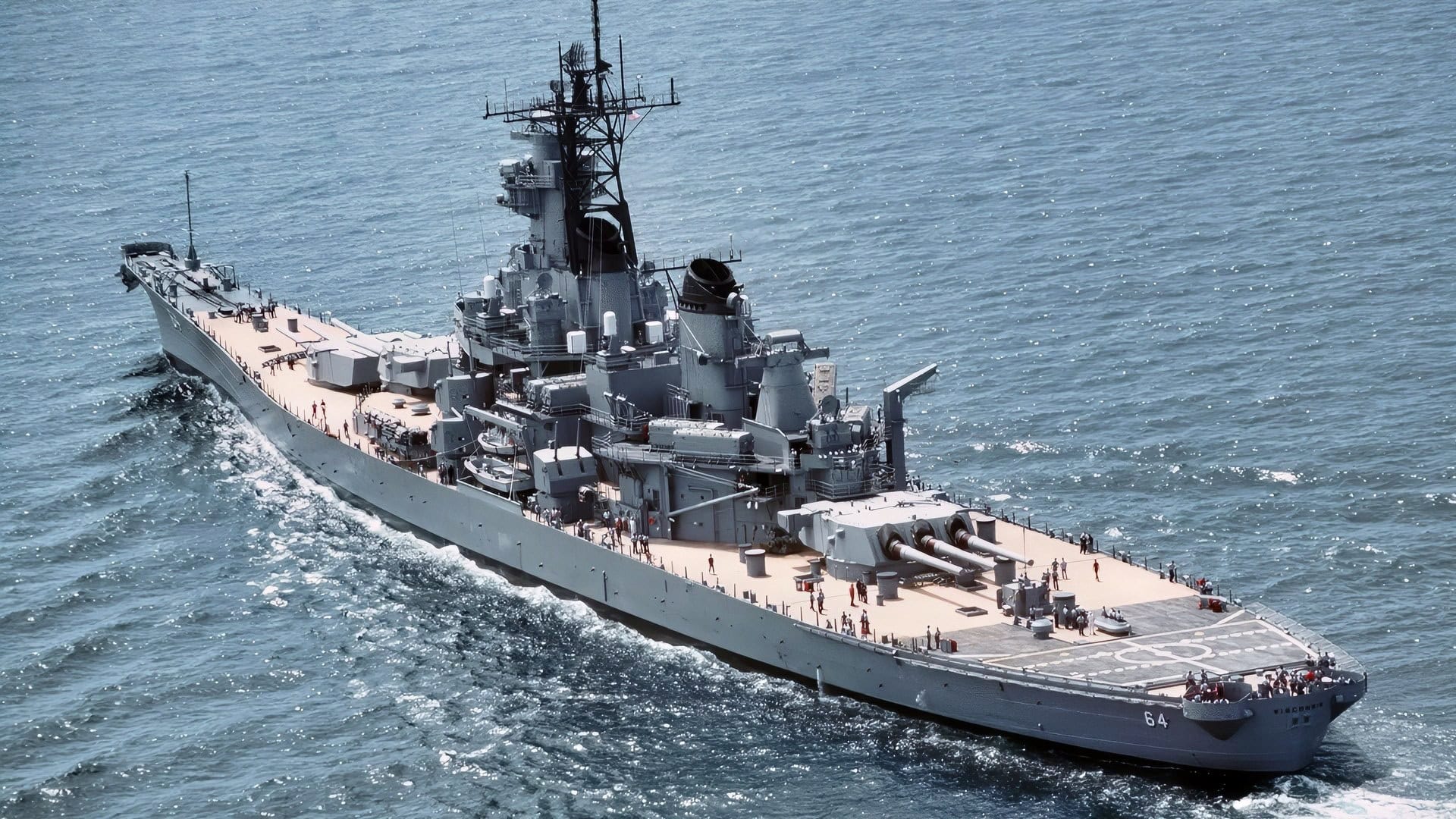
U.S. Navy Iowa-Class Battleship. Image Credit: Creative Commons.
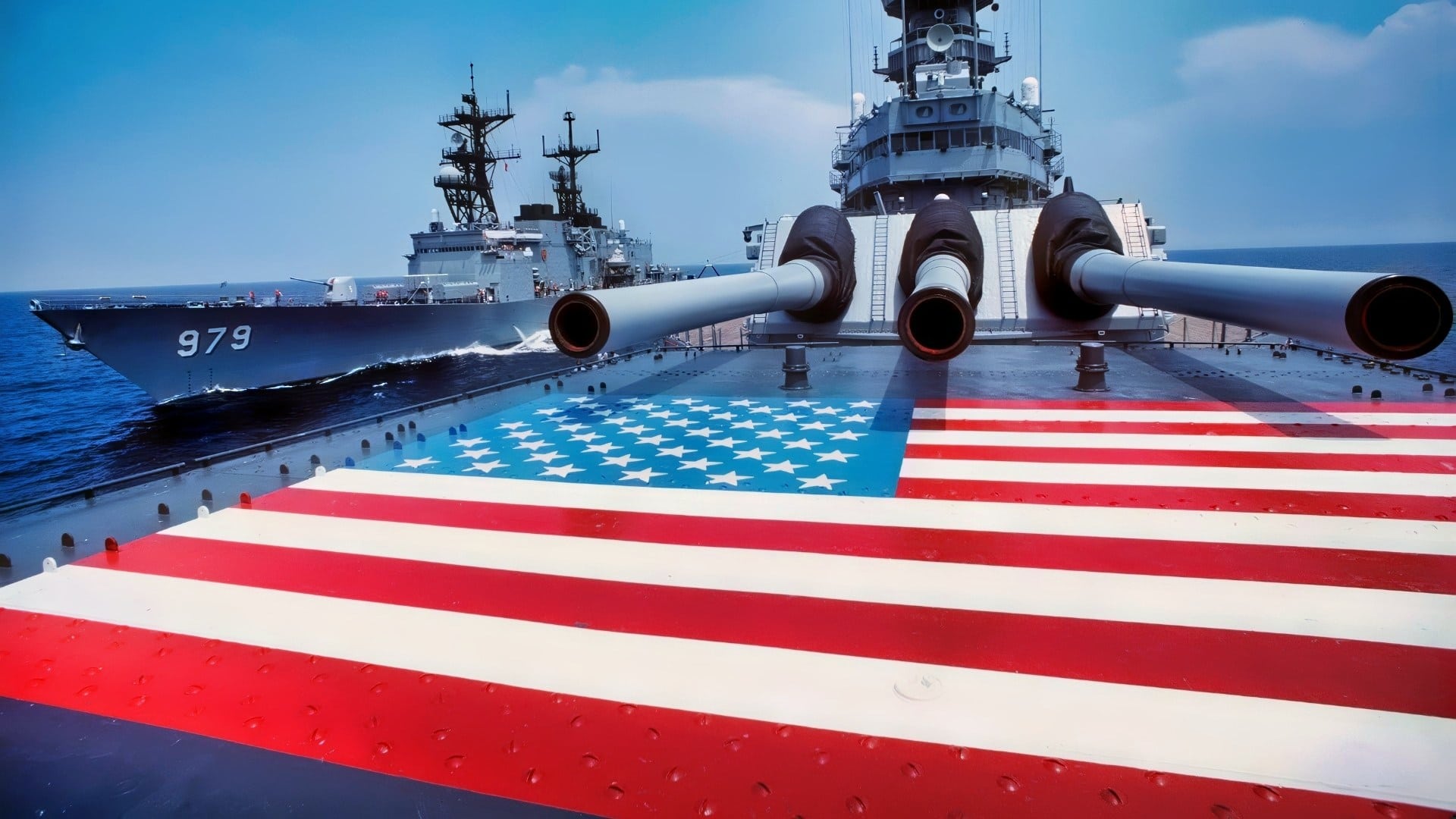
Iowa-Class U.S. Navy Battleships Flag. Image Credit: Creative Commons.
The Montana-class Could Have Been a crowd-pleaser
But what if the Montana-class had been built and survived until the modern era like the Iowa-class? There would have been plenty of room for Tomahawks, and this could have come in handy during the current war with Iran.
Battleships still fascinate people, and having an even bigger and heavily-armed dreadnought with more guns than the Iowa-class could have brought the noise against Iran.
We’ll never see it happen, and now the Iowa-class battleships are museum ships that thrill tourists.
Let’s just imagine, though, what could have happened with a Montana-class being a missile platform. It would have made the enemy see the wrath of God.
About the Author: Brent M. Eastwood
Author of now over 3,000 articles on defense issues, Brent M. Eastwood, PhD is the author of Don’t Turn Your Back On the World: a Conservative Foreign Policy and Humans, Machines, and Data: Future Trends in Warfare plus two other books. Brent was the founder and CEO of a tech firm that predicted world events using artificial intelligence. He served as a legislative fellow for US Senator Tim Scott and advised the senator on defense and foreign policy issues. He has taught at American University, George Washington University, and George Mason University. Brent is a former US Army Infantry officer. He can be followed on X @BMEastwood.