
Summary and Key Points: Sebastien Roblin, a national security contributor with a Master’s from Georgetown University, evaluates the sinking of the Iranian frigate Dena by a U.S. nuclear-powered attack submarine (SSN).
-Using a Mark 48 ADCAP torpedo, the U.S. Navy achieved the first such kill since World War II.
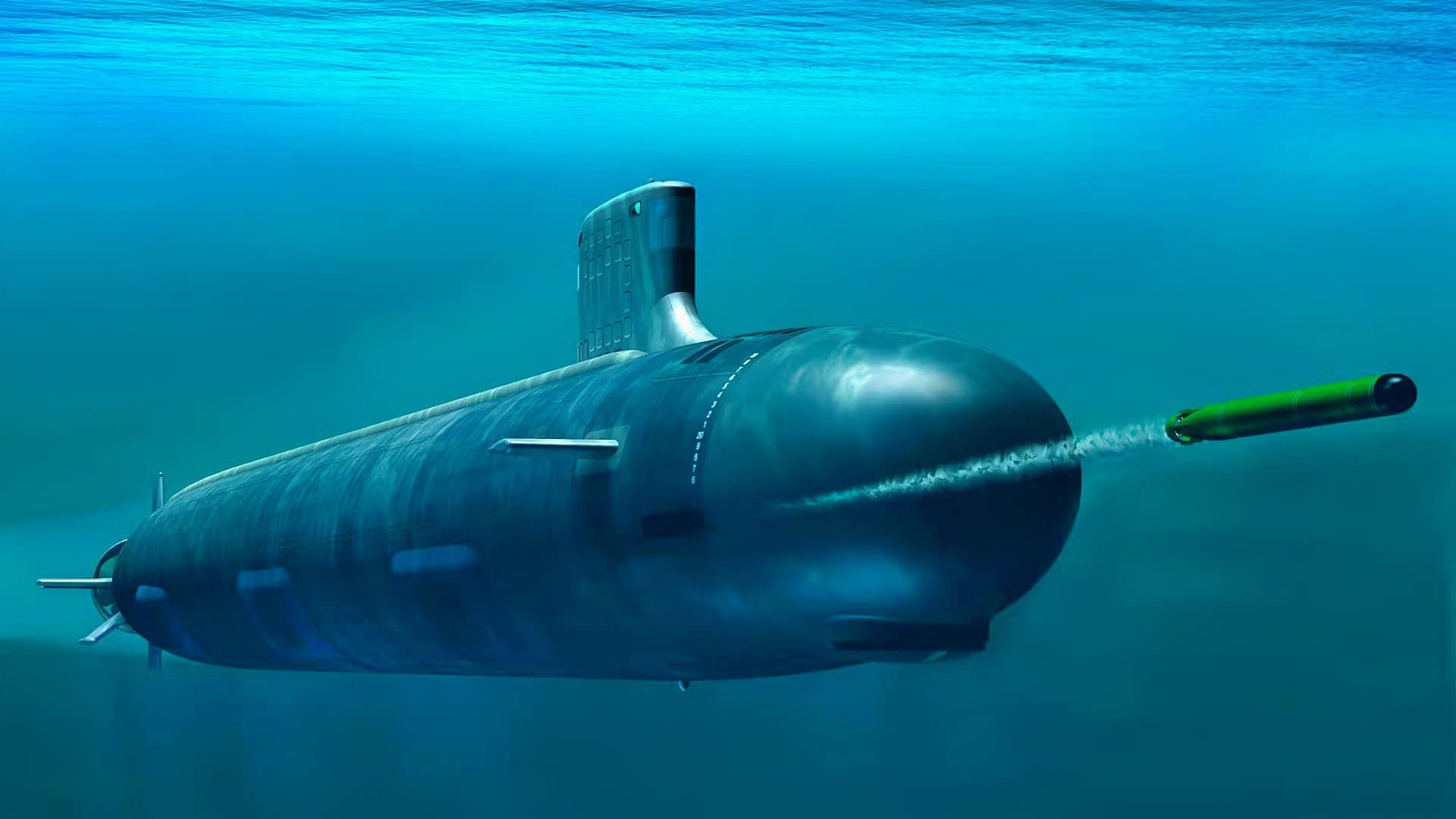
Mark 48 Torpedo.
-This 19FortyFive report analyzes the Moudge-class vessel’s lack of integral sonar and the strategic implications of escalating Operation Epic Fury into the Indian Ocean.
-Roblin contextualizes the event against historical submarine kills like the ARA General Belgrano, concluding that the Dena’s loss signals the total collapse of Iranian maritime reach.
Iranian Frigate First Vessel Sunk By U.S. NavySubmarine Since World War II
A U.S. nuclear-powered submarine sank the Iranian frigate Dena this morning with a single Mark 48 ADCAP torpedo in international waters 40 nautical miles off the coast of Galle, Sri Lanka this morning. The blast from the heavyweight torpedo’s 647-pound warhead can be seen lifting the vessel’s stern up from the water, breaking it off.
CENTCOM posted footage of the torpedoing recorded by the attacking submarine. This marks the first enemy vessel torpedoed by a U.S. submarine since World War II, and the first ever by an American nuclear-powered submarine.
Furthermore, it’s one of the few vessels sunk by any country’s submarine since the unrestricted submarine warfare of that conflict.
The stricken Dena issued a distress call at 5:08 local time but sank before rescuers from the Sri Lankan navy could arrive. Rescuers recovered the bodies of 87 sailors and transported 32 survivors for hospitalization. At the time of writing, it is unclear how many more survivors remain of the roughly 180 on board Dena when she was torpedoed.
Dena had seemingly been afforded a reprieve from certain destruction by a twist of fate: she was still attending the MILAN international fleet exercise at Visakhapatnam, India, when the U.S. and Israel began bombarding Iran on February 28—including strikes that sank much of the Iranian Navy’s larger warships.

The Virginia-class submarine USS Vermont (SSN 792) makes her way up the Thames River and past Fort Trumble and the Coast Guard Cutter Borque Eagle as she returns home to Submarine Base New London on Thursday, December 24, 2020. The nineteenth and newest Virginia-class submarine she is the third U.S. Navy ship to be named for the Green Mountain State. (U.S. Navy Photo by John Narewski/Released)
The Iranian captain may have estimated the United States would refrain from attacking Dena while she remained outside the warzone in the Indian Ocean and relatively close to the coast of a third nation, circumstances in which an attack risked upsetting other governments.
However, that risk assessment was wrongly estimated, given the current administration’s known unconcern over actions that may anger allies and neutral parties, and predilection for lethal attacks at sea that transgress previously observed norms.
As a result, Dena was exposed to attack at high seas, with a larger-than-standard complement on board. And Dena, displacing 1,500 tons, was unlikely to survive a direct hit by a heavy torpedo.
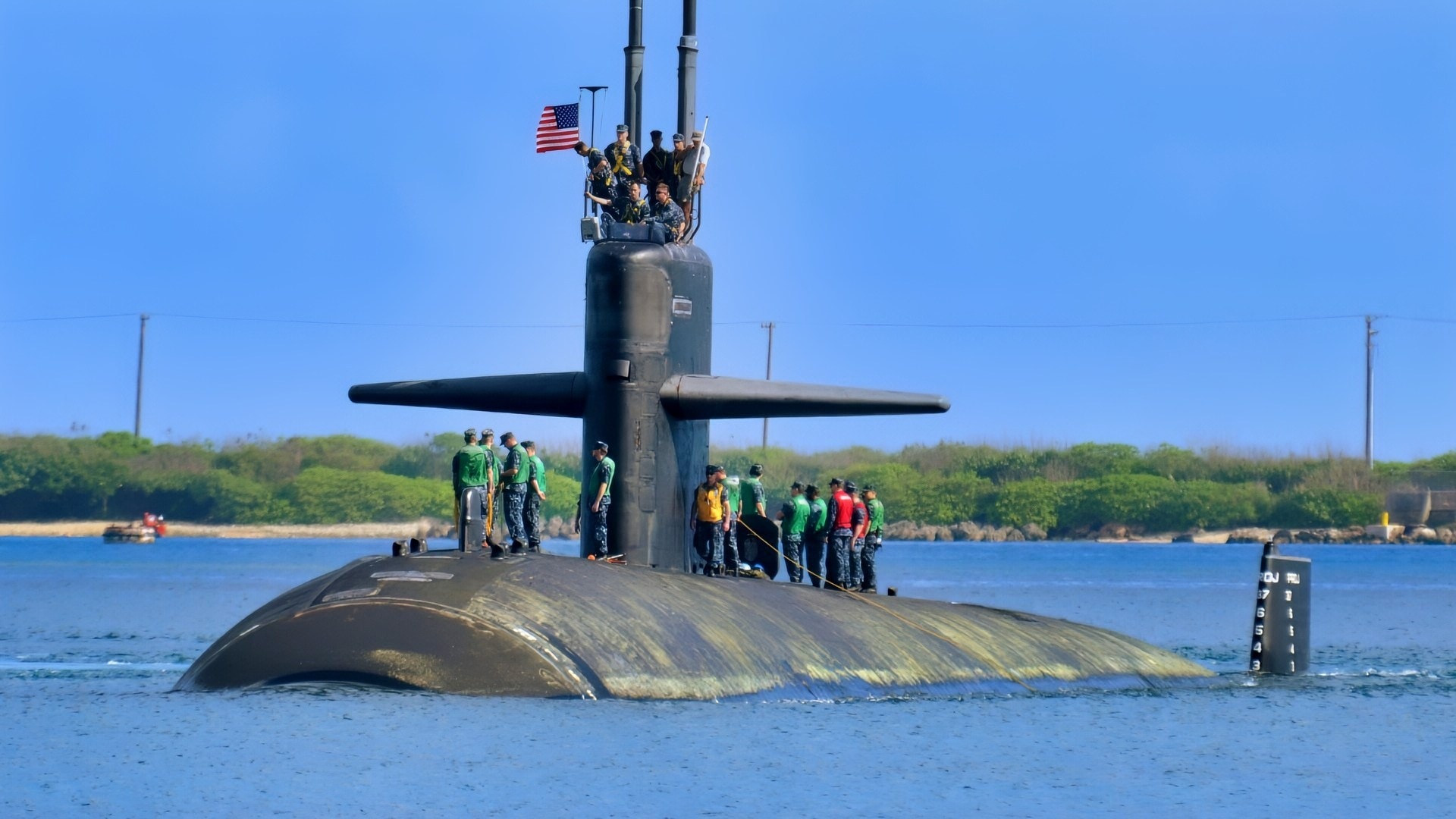
It is unknown which U.S. submarine executed the attack. The U.S. Navy currently operates three kinds of nuclear-powered attack submarines or SSNs: the older Los Angeles-class, the newer Virginia-class, and just three high-performance Seawolf-class submarines.
While the U.S. operates Ohio-class submarines armed with retaining torpedoes to complement their primary armament of ballistic and cruise missiles, these are very unlikely to have been dispatched on an anti-ship mission of this nature.
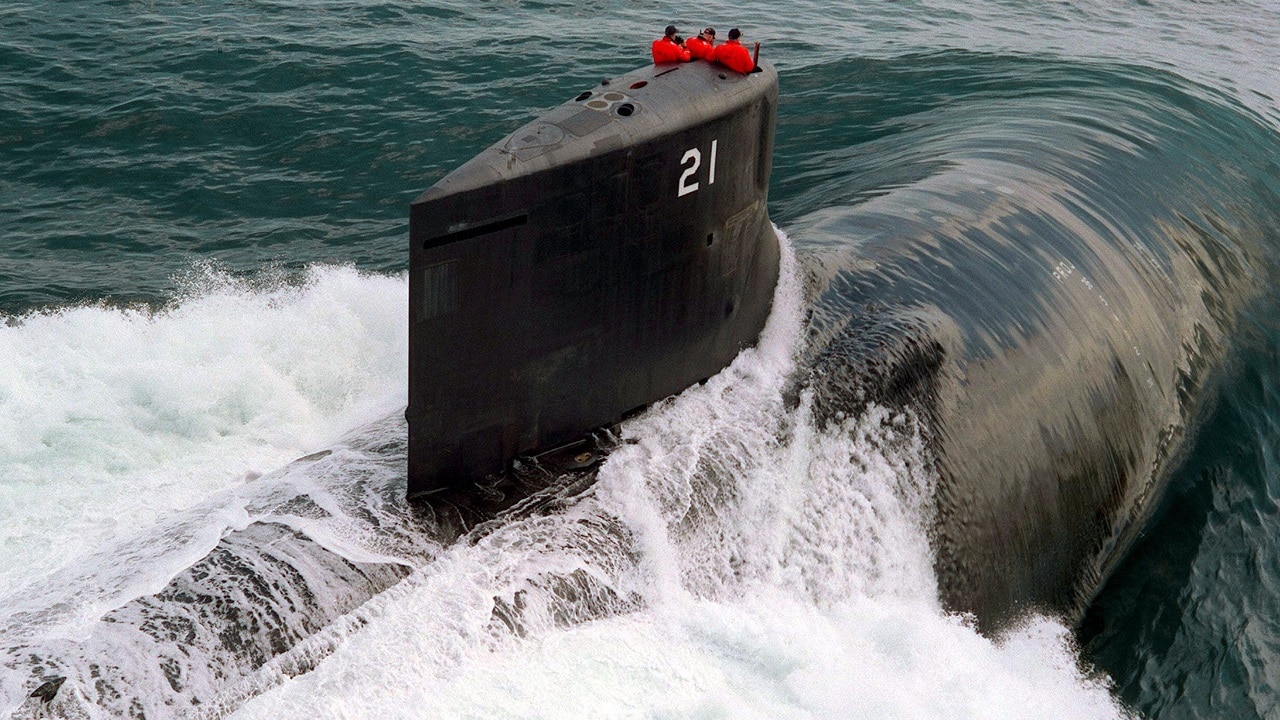
The U.S. Navy’s newest attack submarine, USS Seawolf (SSN 21), conducts Bravo sea trials off the coast of Connecticut in preparation for its scheduled commissioning in July 1997.
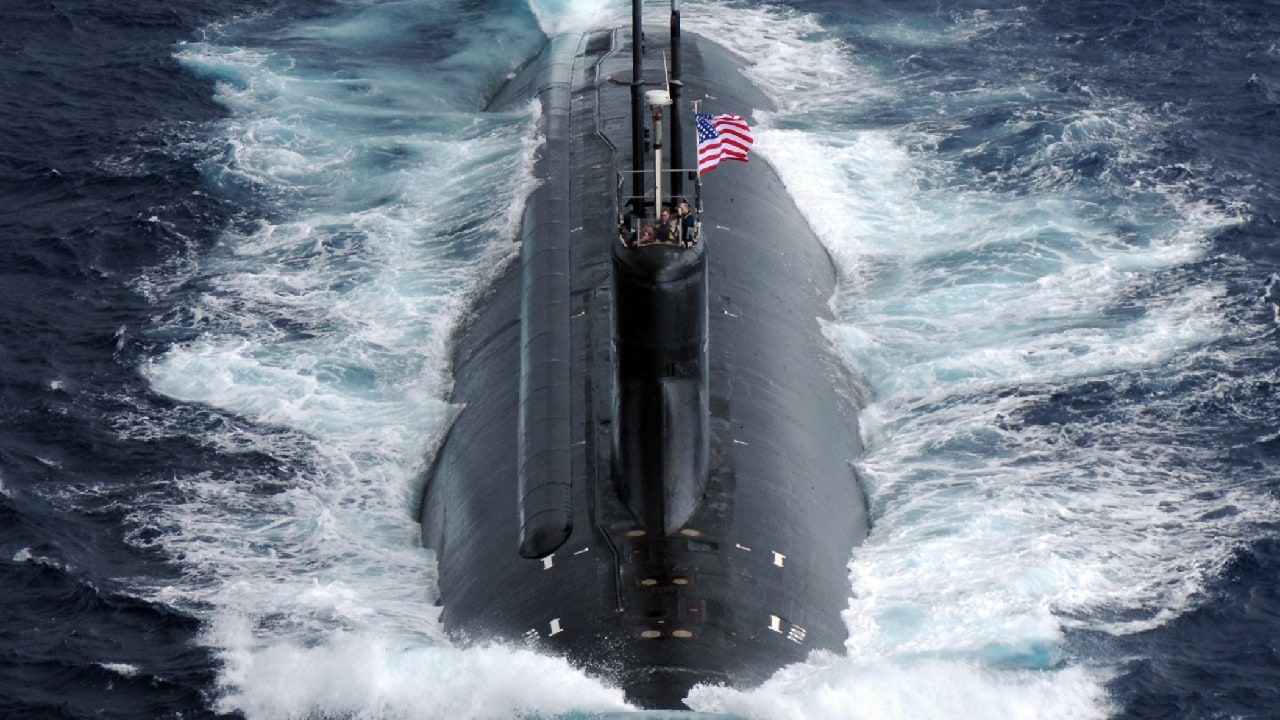
The Seawolf-class fast-attack submarine USS Connecticut transits the Pacific Ocean during Annual Exercise. ANNUALEX is a yearly bilateral exercise with the U.S. Navy and the Japan Maritime Self-Defense Force.
Iran’s Ill-fated Moudge-class Frigates
The Moudge-class Dena was one of Iran’s newer warships, commissioned in 2021 (though launched six years earlier), featuring new indigenously built Bonyna 4 diesel engines, Asr long-range radar backed up by newer fire control and electronic warfare systems. Besides multiple deck guns (76-, 40-, and 20-millimeter) and anti-ship and anti-air missiles, the class is also capable of anti-submarine warfare armed with two triple torpedo launchers and a submarine-hunting helicopter (typically a Bell 212 or Sea King) to operate from a helipad on its stern.
However, the Moudge-class (or “Mowj”) reportedly may not have any integral sonar capability of its own, meaning it would be almost entirely reliant on its helicopters to detect such threats. No helicopter is visible on the vessel’s bow at the time of the torpedoing.
Dena, in particular, garnered attention for embarking on a mission in 2023 to circumnavigate the globe over 8 months.
It’s worth noting that Iranian sources characterize the Moudge-class ‘upwards’ as “destroyers”, while some foreign naval analyses conversely classify the vessel as a corvette. Compared to modern Corvette designs, however, the class has an unusually large crew and lacks radar-signature-reduction contours.
Perhaps unsurprisingly, given Iran’s military adversaries, the Moudge-class as a whole has been ill-fated. Two additional Moudges were destroyed by U.S./Israeli airstrikes, including the lead vessel Jamaran as well as the Sahand, which had two years earlier already sunk once in port, likely due to Israeli sabotage. A third vessel, Damavand, ran aground and was damaged beyond repair during a 2018 Caspian Sea storm.
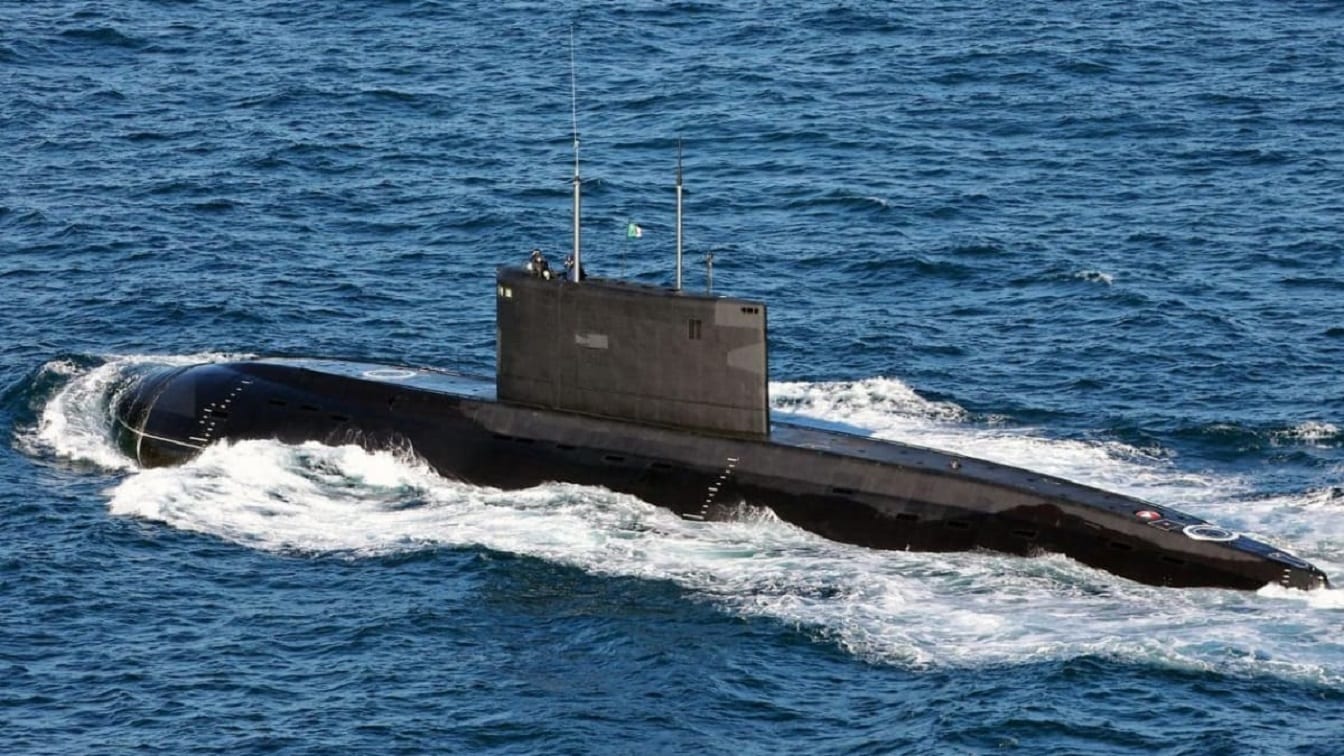
Iran’s Navy Has Kilo-Class Submarines. Image Credit: Creative Commons.
Dena’s loss leaves only two survivors unaccounted for at present: the Bandar Abbas-based Zagros, specially modified for signals intelligence missions, and the Deylaman-based in the Caspian Sea, a location that may insulate it from hostilities. A seventh vessel was under construction at the outbreak of hostilities.
Confirmed submarine kills of enemy warships have been exceptionally rare since World War II
During the Second World War, submarine warfare reaped exceptional maritime carnage, sinking thousands of ships and causing the deaths of tens of thousands of sailors. But since World War II, circumstances have rarely conspired to enable open combat between submarines, and enemy warships have been few.
The first was the torpedoing of the Indian frigate INS Khukri by the Pakistani submarine PNS Hangor in 1971, a French-built Daphné class diesel-electric submarine, during the 1971 Indo-Pakistani war. Hangor had ambushed Khukri and sister frigate Kirpan off the coast of Bengal on December 9 but missed with her first homing torpedo, causing both frigates to turn around and charge forward, unleashing Hedghehog mortars and depth charges. A second torpedo, however, struck Khukri, causing her to sink with the loss of 194 crew.
The second incident is the sinking of the Argentinian cruiser ARA General Belgrano by the British Royal Navy’s HMS Conqueror, a nuclear-powered Churchill-class attack submarine, leading to 323 deaths during the initial confrontation of British and Argentinian fleets in the Falkland War following an Argentinian invasion of the disputed islands.
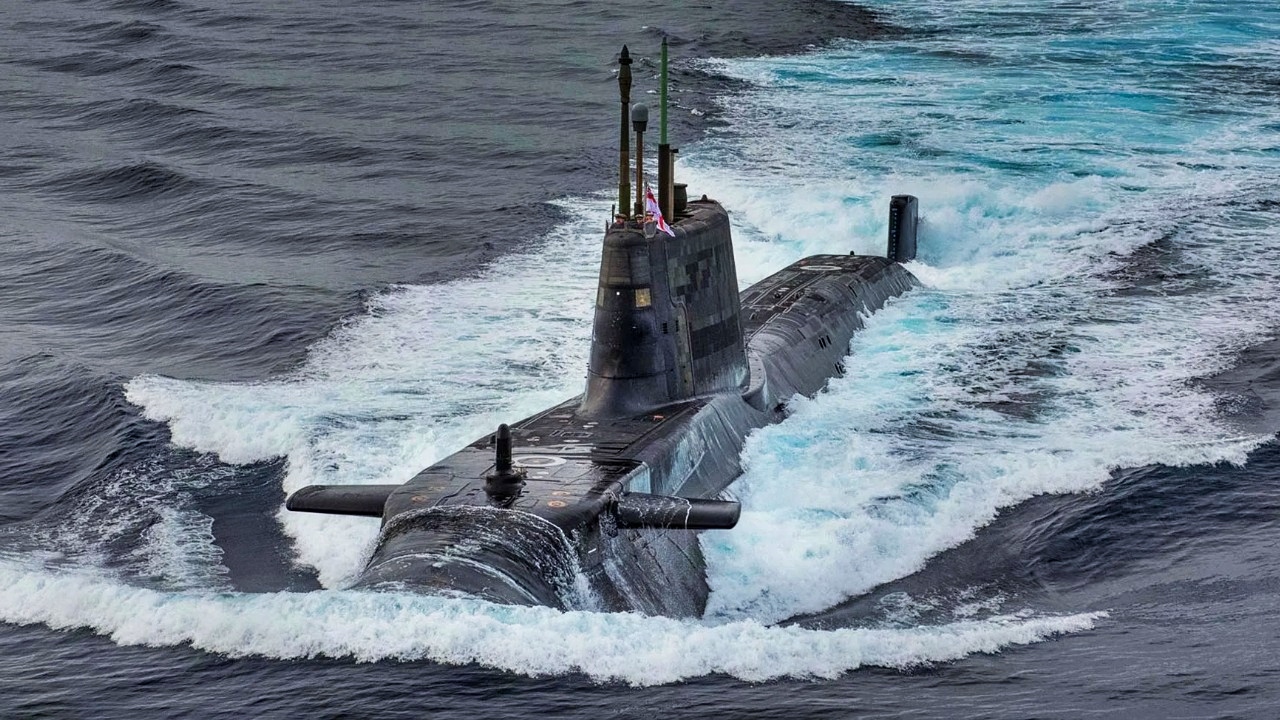
Astute-Class Royal Navy Submarine. Image Credit: Royal Navy.
The sinking compelled Argentina’s surface warships and only aircraft carrier to frantically withdraw from the Atlantic Ocean, ending the threat they posed to British forces preparing to recapture the Falklands. Meanwhile, the Argentinian submarine San Luis by herself came close on two occasions to torpedoing British warships, only for the attacks to fail due to defective torpedoes.
Finally—and somewhat more controversially—a North Korean midget submarine is most likely responsible for the unprovoked peacetime torpedoing of the South Korean Pohang-class corvette Cheonan on March 26, 2010, which split the vessel in two, killing 46 South Korean sailors. While officially denied by North Korea, reports from North Korean defector supports the findings of an international investigation alleging a deliberate submarine attack.
Naval History Made
Naval historians might suggest additional borderline cases, collisions, mysterious submarine losses, and rumored incidents, but the sinking of the Dena marks the fourth unambiguous case of a ship sunk in combat by a submarine since World War II.
In a state of war—a condition which the administration insists does not characterize its massive aerial bombardment seeking to destroy Iran’s government and armed forces—a warship in international waters is a fair game, even if not apparently participating in hostilities.
However, that does not make the circumstances of its sinking entirely uncontroversial. It notably sees the U.S. ‘horizontally’ escalating the conflict into the Indian Ocean rather than containing its scope, even though Iran itself seems keen on horizontal escalation as a strategy to increase the political costs of sustaining the air campaign against it.
About the Author:
Sebastien Roblin writes on the technical, historical, and political aspects of international security and conflict for publications including 19FortyFive, The National Interest, NBC News, Forbes.com, and War is Boring. He holds a Master’s degree from Georgetown University and served with the Peace Corps in China. Roblin is a Contributing Editor for 19FortyFive.