
Summary and Key Points: Harrison Kass, a national security journalist and legal expert, evaluates the “strategic uncertainty” following the reported death of Iran’s Supreme Leader.
-While Operation Epic Fury successfully neutralized 200+ air-defense systems and degraded nuclear infrastructure, Kass warns of a 2003 Iraq-style power vacuum.
-This report analyzes the potential for IRGC consolidation, which could lead to a hyper-militarized state and accelerated clandestine nuclear ambitions.
-Kass concludes that without an articulated political off-ramp, the U.S. risks a “rally around the flag” effect that could empower the most militant factions of the Iranian security apparatus.
The Epic Fury Vacuum: Who Will Rule Iran After the Death of Ayatollah Khamenei?
Operation Epic Fury has raised questions for which the Trump administration has not offered any answers.
While the operation intends to degrade Iran’s nuclear infrastructure and catalyze regime change, it’s unclear who will consolidate power following the death of Ayatollah Khamenei. The opening salvos of Epic Fury were a tactical success, but the strategic outcome is unclear.
Where Things Stand
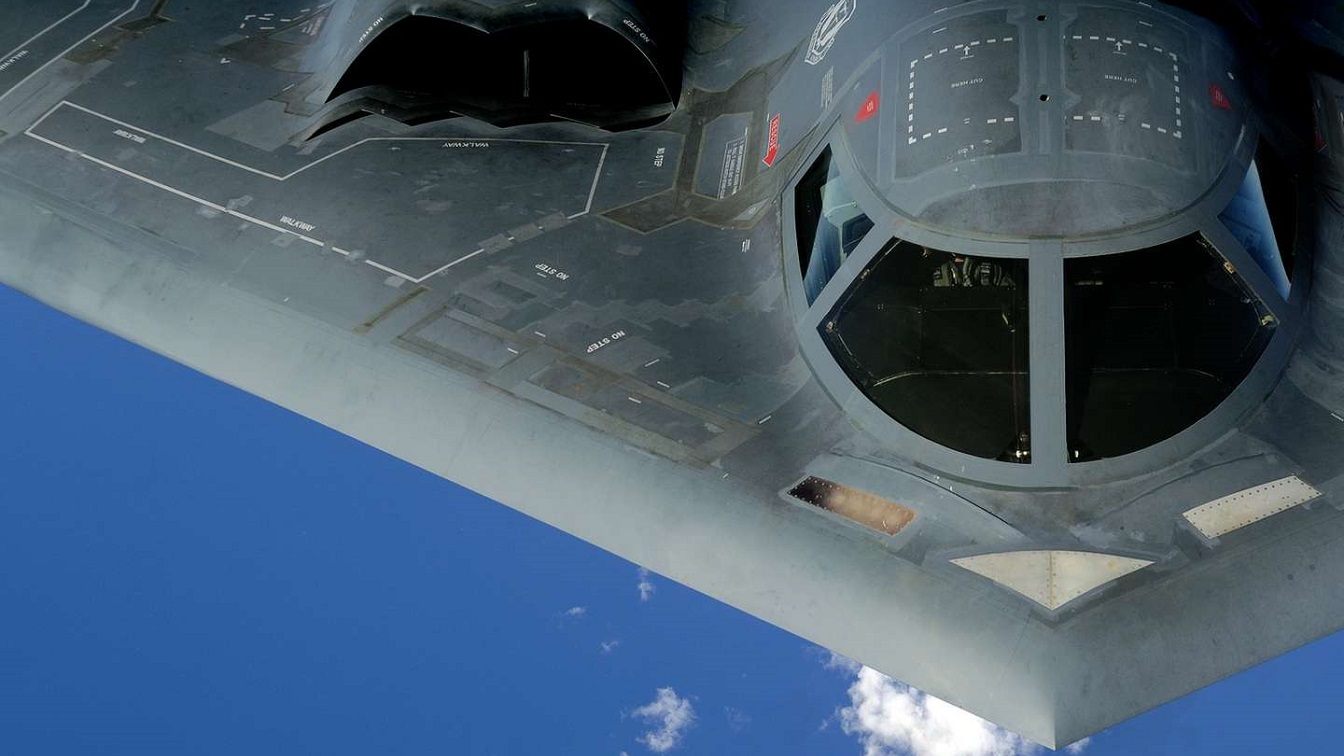
Image of B-2 Spirit stealth bomber. Image Credit: Creative Commons.
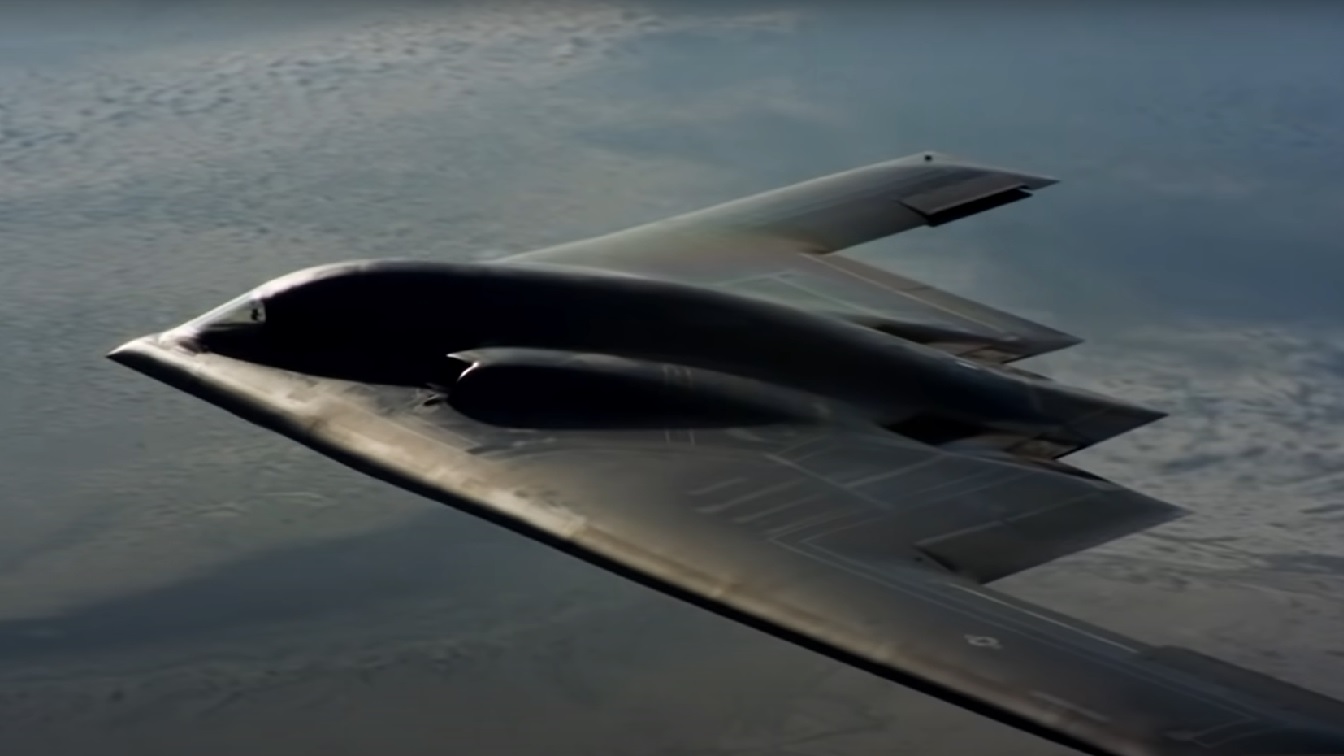
B-2 Spirit. Image Credit: Northrop Grumman.
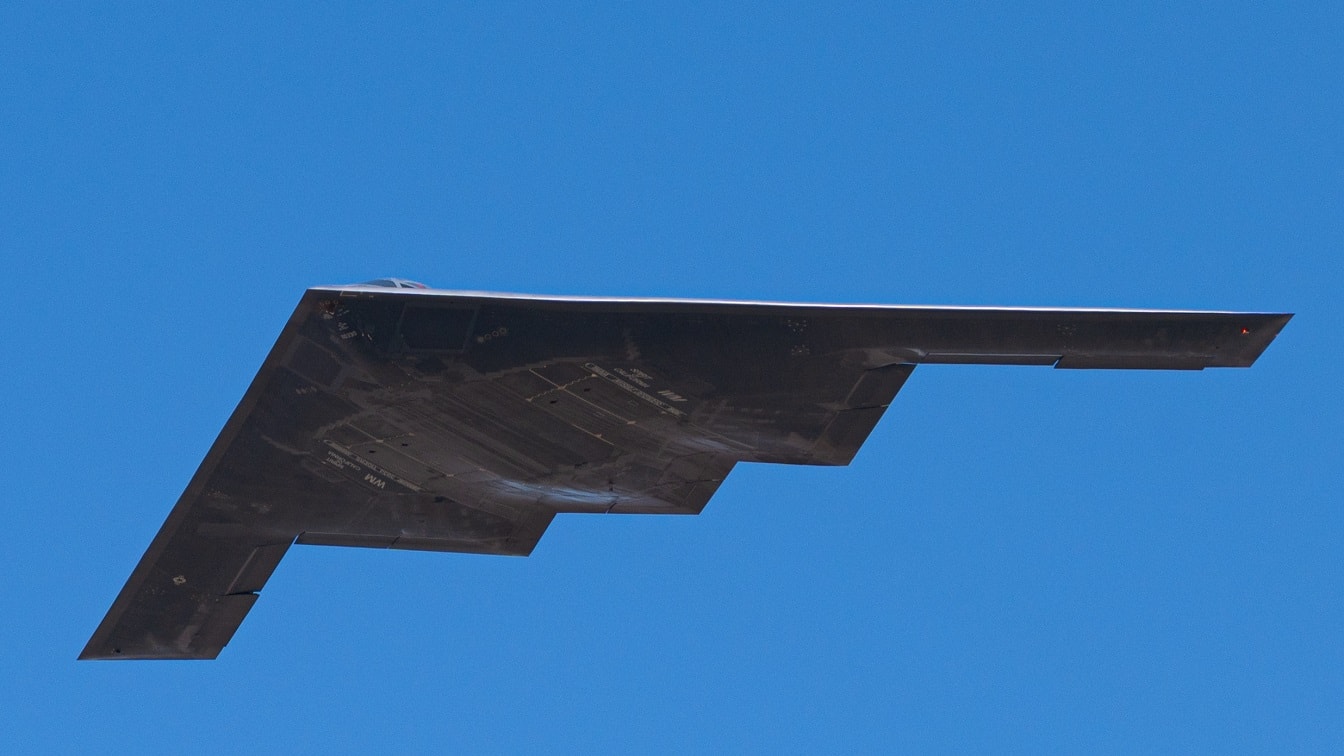
A B-2 Spirit stealth bomber from Whiteman Air Force Base completes a fly-over during the Sound of Speed Airshow at Rosecrans Air National Guard Base, in St. Joseph, Missouri, May 1, 2021. The air show was hosted by the city of St. Joseph and 139th Airlift Wing, Missouri Air National Guard to thank the community for their support. (U.S. Air National Guard photo by Airman Janae Masoner)
Iran’s Supreme Leader was reportedly killed in initial strikes. Senior Islamic Republic Guard Corps (IRGC) leaders also were killed.
Iran’s Joint headquarters and Aerospace headquarters were destroyed. More than 200 air-defense systems were hit, while 50 percent of the nation’s missile launchers were destroyed in the first 48 hours of the operation. Naval losses are mounting, including the loss of Iran’s drone carrier. Iran’s nuclear infrastructure, a primary impetus for launching the strike, has been further degraded.
The location of Iran’s uranium stockpile is uncertain.
Yet, despite the damage, the IRGC managed to launch 270-plus ballistic missiles and drones in retaliation. So, while the IRGC has been damaged, they are not defeated. They have maintained enough of a retaliation capacity to sustain conflict. And while the regime is under stress, it has not dissolved.
Tactical Success vs. Strategic Success
So far, Operation Epic Fury has been a tactical success. US-Israeli forces have degraded Iran’s enrichment capacity, disrupted Iran’s missile cycle, and neutralized Iran’s air defenses. The strategic objectives of the operation are, presumably, to prevent an Iranian nuclear breakout, end the regime, and reduce the regional threat.
But destroying facilities doesn’t automatically produce political moderation—and sometimes serves to produce a “rally around the flag” effect that can empower the most militant faction.
Historic Parallels
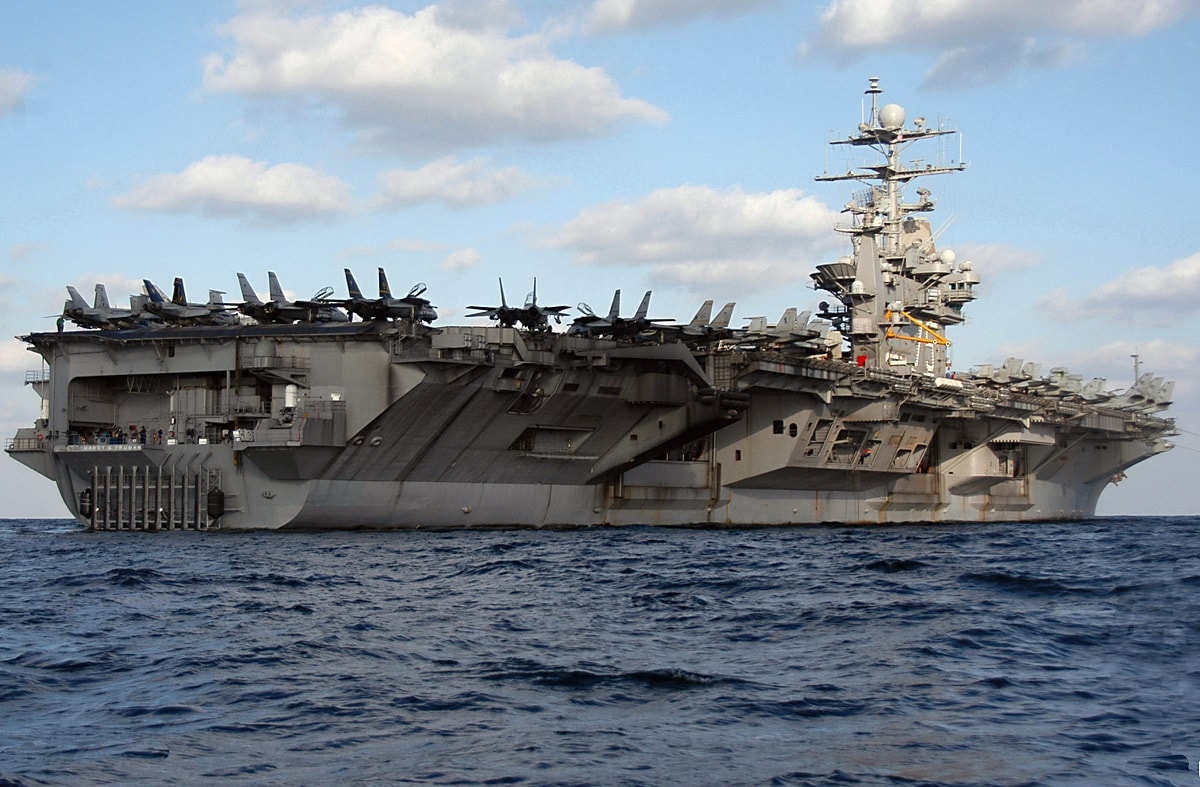
050208-N-4584T-005
Persian Gulf (Feb. 8, 2005) The Nimitz-class aircraft carrier USS Harry S. Truman underway while on station in the Persian Gulf. Carrier Air Wing Three (CVW-3) is embarked aboard Truman and is providing close air support and conducting intelligence surveillance and reconnaissance over Iraq. The Truman Carrier Strike Group is on a regularly scheduled deployment in support of the global war on terrorism. U.S. Navy photo by Photographer’s Mate Rome J Toledo (RELEASED)
Bush’s 2003 Iraq invasion caused a rapid regime collapse. But the lack of post-war planning left a power vacuum filled by insurgents and sectarian actors. The United States learned the hard way that while destruction is easy, reconstruction is difficult.
Iran is not Iraq, however; Iran is much larger, with a far more cohesive national identity. Nevertheless, the power-vacuum risk is real if the state fragments, leaving a handful of viable successor factions.
IRGC Positioning
The death of the Supreme Leader raises questions about succession. Could the IRGC be posed to inherit control of the country? The IRGC is already deeply embedded in the state, with control of economic networks, internal security, and the Quds Force.
The Basij and Law Enforcement Command are used for repression. And decapitation of the IRGC may have the unintended result of strengthening hardliners rather than weakening them. Also, crisis conditions tend to favor the consolidation of the security apparatus, potentially benefiting the IRGC.
IRGC Consolidation?
If the IRGC consolidates power, a few outcomes are possible. One is a hyper-militarized state with intensive security state repression, narrow political discourse, and potentially a purge of civilian technocrats.
Another potential outcome is the acceleration of clandestine nuclear ambitions, with more secrecy and less access granted to the International Atomic Energy Agency, perhaps accelerating the outcome that Epic Fury was designed to prevent.
IRGC consolidation also could lead to escalations in asymmetric retaliations, including proxy warfare and terrorism abroad. So, the question—which should have been asked before the operation launched—is whether the strikes remove the threat or radicalize it.
Regime Fractures
If the regime fractures, Iran will be disputed by competing power centers, including IRGC factions, clerical establishment, and civilian bureaucrats.
Internal unrest will spike. Ethnic fault lines will form. The risk of state failure is real—at which point unsecured missiles sites and nuclear materials become vulnerable to non-state distribution.
Nuclear Dimension
Iran’s nuclear program is a wildcard in the Epic Fury outcome. The program infrastructure has clearly been damaged. But the destruction of the facilities does not mean the destruction of the knowledge needed to achieve nuclear breakout; that knowledge likely persists, meaning enrichment capability can regenerate over time.
Notably, the location of the uranium stockpile is currently unknown. So if the regime becomes more radical—a plausible outcome after an attack as comprehensive as Epic Fury—then the nuclear development timeline could compress in secrecy.
Long Term Planning
If Operation Epic Fury was launched with an off-ramp, that plan has not been articulated to the public. The United States has a tendency to execute regime change operations without a vacuum-management plan in place.
And with the death of the Supreme Leader, the vacuum is glaring—in a nation that the United States does not have the political will to occupy. What happens next, after the shooting stops, is an outstanding question. It should have been answered before the shooting began.
About the Author: Harrison Kass
Harrison Kass is an attorney and journalist covering national security, technology, and politics. Previously, he was a political staffer and candidate, and a US Air Force pilot selectee. He holds a JD from the University of Oregon and a master’s in global journalism and international relations from NYU.