
Summary and Key Points: Dr. Michael Rubin, a former Pentagon official, evaluates the power vacuum following the reported death of Iran‘s Supreme Leader Ali Khamenei during Operation Lion’s Roar.
-With the IRGC command and the Assembly of Experts in disarray, the potential for a military junta led by the Guards’ economic wing—controlling a $100 billion fortune—is a mounting risk.
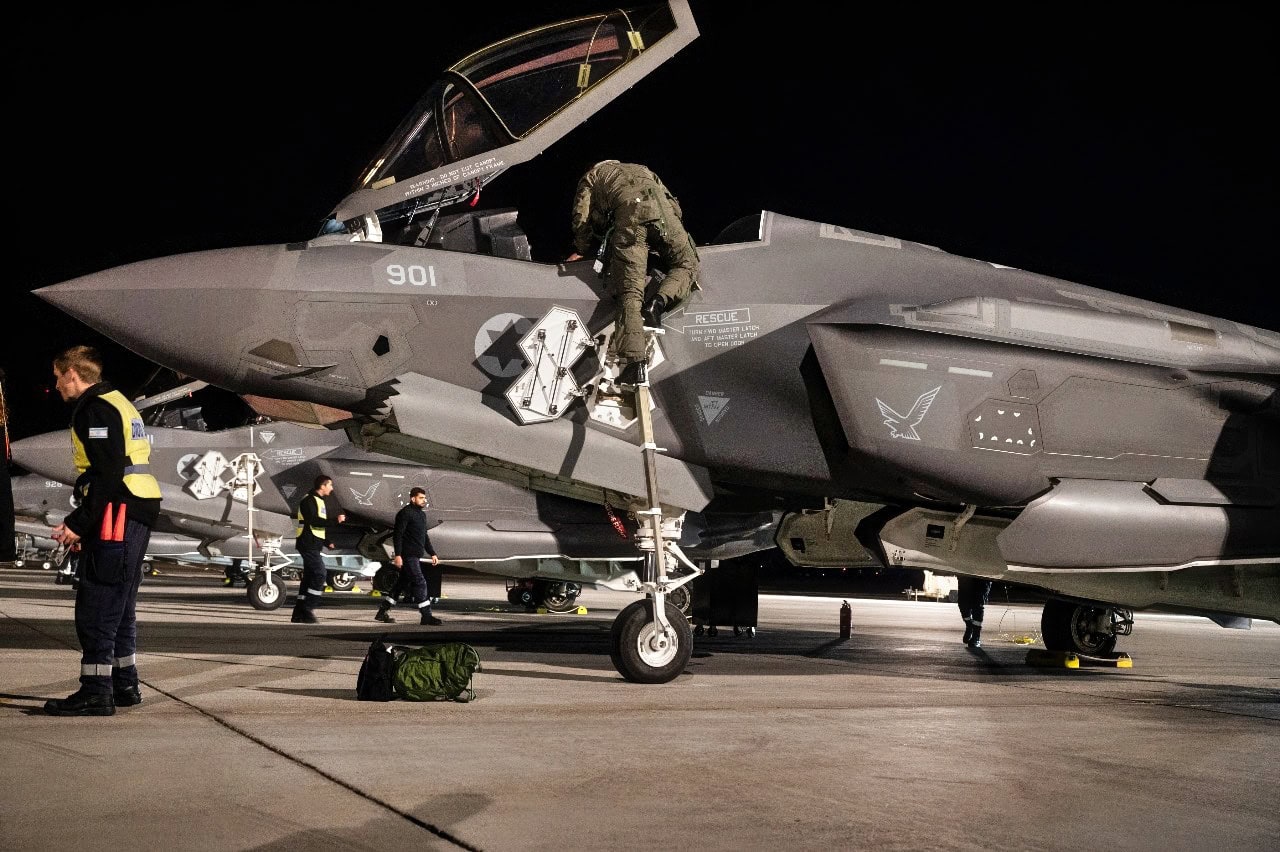
An Israeli Air Force pilot climbs into an F-35I Adir prior to a Red Flag-Nellis 23-2 mission at Nellis Air Force Base, Nevada, March 16, 2023. Red Flag is an opportunity to build on the success of JUNIPER OAK 23-2, JUNIPER FALCON, and additional combined exercises to enhance interoperability with Israel, strengthen bilateral cooperation, and improve capabilities in ways that enhance and promote regional stability and reinforce the United States’ enduring commitment to Israel’s security. (U.S. Air Force photo by Airman 1st Class Trevor Bell)
-This 19FortyFive report analyzes the viability of Crown Prince Reza Pahlavi versus the Iran Freedom Congress, while warning that President Trump’s “no boots on the ground” policy may be tested by a looming IRGC insurgency.
Khamenei Is Dead. Who Runs Iran Next—and Who Can Survive It?
During the June 2025 war, President Donald Trump reportedly told both Israeli Prime Minister Benjamin Netanyahu and his Joint Chiefs of Staff that they should refrain from killing Supreme Leader Ali Khamenei. Trump sought a deal and wanted someone with the authority to sign it.
Trump has never been an ideologue, and he projected his own transnationalism onto the Iranian regime. He did not understand that Khamenei arose in a bubble. Religion, antisemitism, and a belief in the Hidden Imam motivated him; the ability to embezzle billions of dollars was just a fringe benefit.
Trump eventually learned what many of his aides and the Israelis long knew: Khamenei was never going to sign a deal.
The reason was simple: Iran had lost up to $1 trillion in lost revenue due to sanctions and missed development opportunities. Khamenei cared little for ordinary Iranians, but he was conscious of his base. To forfeit the nuclear program would be to admit that they had sacrificed for 40 years for nothing. Iranian officials reverted to their usual playbook to run down the clock. Even if they struck an agreement, they likely would not stick to it. Here, they might falsely claim moral equivalence. If Trump could walk away from the 2015 Joint Comprehensive Plan of Action, why should they not walk away from any nuclear deal with Trump?
The Coming Iran Leadership Struggle?
With the decision made, either the U.S. or Israeli military appears to have killed Khamenei. Reports circulate that his son and de facto office director Mojtaba is also dead. So is the minister of defense and the commander of the Islamic Revolutionary Guard Corps.
The Yorktown Institute’s Shay Khatiri speculated about what might come next in Iran should anyone kill Khamenei. According to the Iranian constitution, he writes, “the president, the chief justice, and one of the six clerics of the Guardian Council,” will jointly rule until the 88-member Assembly of Experts selects a new supreme leader. That Assembly, however, cannot meet when bombs are dropping; octogenarians do not make good sprinters and would make too tempting a target. Nor is there a timeframe attached to their choice.
Here, corruption matters. When the Assembly of Experts rubber-stamped Khamenei’s selection in 1989, it was because he was a compromise candidate, widely seen as a weak nobody. Sure, he was president, but at the time, the presidency was even less powerful than it is now. Put another way, to understand the importance of the Islamic Republic’s president in the system, think about the relative power of the Secretary of Agriculture in an American administration.
Khamenei defied expectations and consolidated power. His office controls a fortune worth upwards of $100 billion.
When Ayatollah Ruhollah Khomeini died on June 3, 1989, the Islamic Revolutionary Guard Corps was important, but it had not yet consolidated a truly autonomous position within the Islamic Republic. Thirty-six years on, the Guards’ economic wing controls a fortune worth as much as, if not more than, the supreme leader’s fortune.
The IRGC and the Money
In practice, this means no Revolutionary Guardsmen will accept a new supreme leader who does not subordinate his own interests to theirs and who does not enable the Islamic Revolutionary Guard Corps to keep its fortune.
In practice, this could mean no succession but rather a military junta. The question then becomes whether it will be an ordinary military dictatorship that only terrorizes its own people, or whether it maintains the ideology that Khomeini and Khamenei embraced and promotes the “export of revolution,” as the founding documents of the Islamic Revolutionary Guard Corps demand.
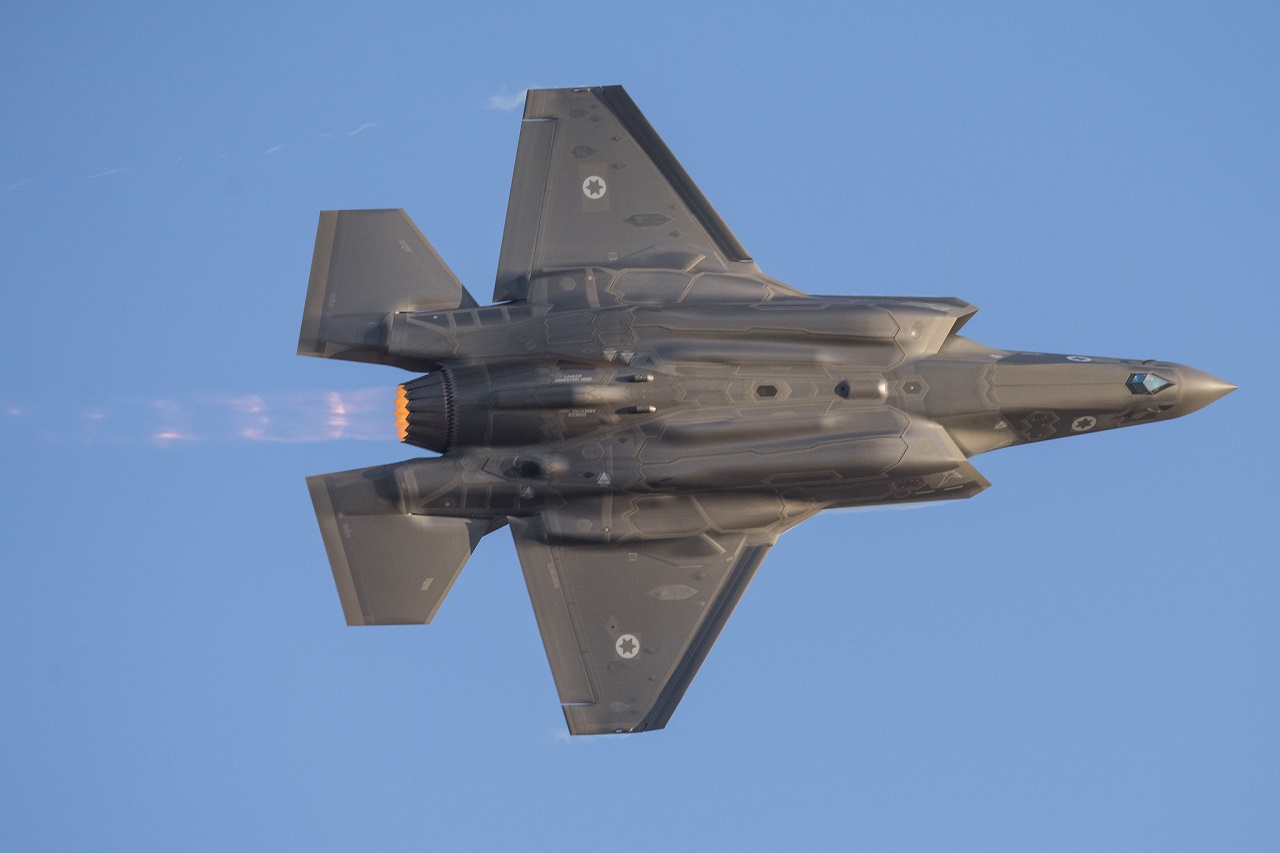
F-35I Adir. Image Credit: IDF Flickr Page.
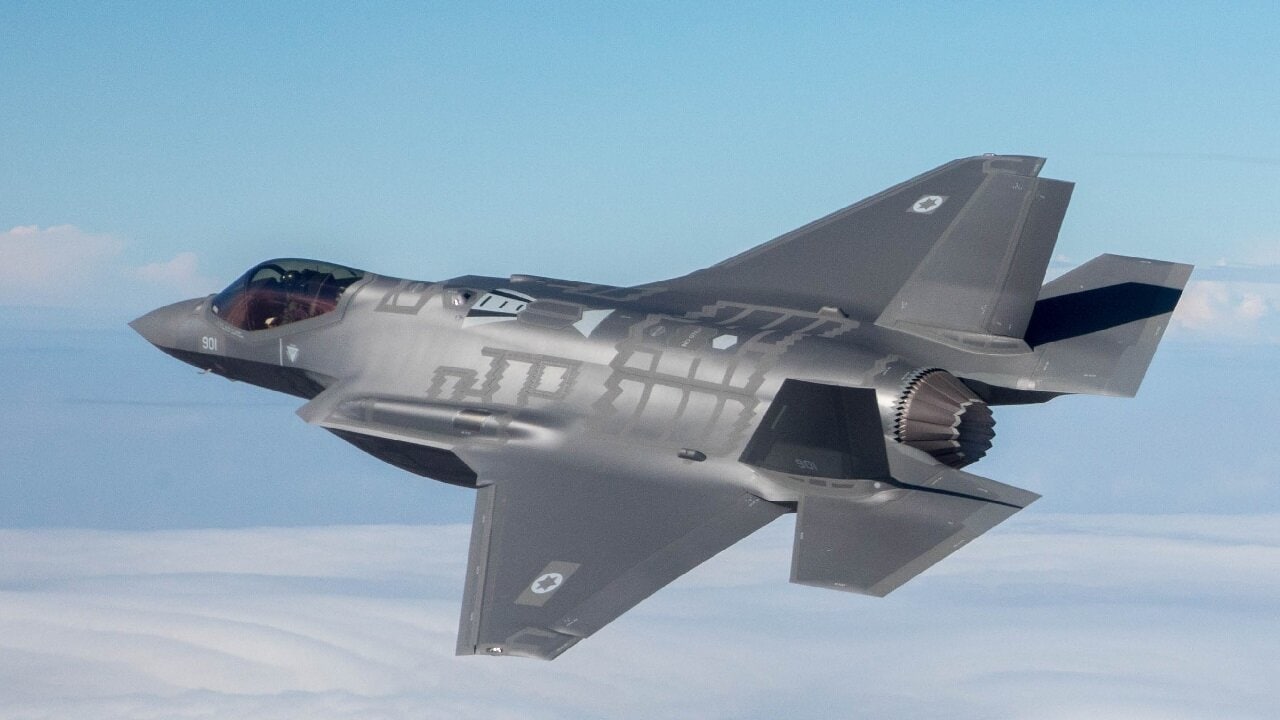
Israeli Air Force F-35I Adir stealth multi-role fighter.
If Trump is serious about his calls for the Iranian people to rise, he should hesitate to then support the very body that slaughtered 40,000 Iranians and also sent explosively formed projectiles to maim and kill Americans in Iraq.
Perhaps another candidate would be Ali Larijani, the current secretary of the National Security Council. Larijani is a loyalist and an ideologue, but he is also a very intelligent and even-tempered man. He might appeal to Trump in the same way Vice President Delcy Rodriguez did in Venezuela. Larijani, however, does not have clerical credentials and may simply backslide into an Islamic Revolutionary Guard Corps dictatorship.
Possible Paths for Iran and New Leadership
While the former Crown Prince Reza Pahlavi has the broadest name recognition inside Iran, he has recently acted almost as the White Russians did: He speaks a good game, but appears too comfortable in his Western exile. While Pahlavi has positioned himself for decades as a uniter, his office has sullied this in recent months with cyber trolling and slander campaigns against other opposition figures, many of whom have suffered under the regime far more than he has.
Another alternative would be the new Iran Freedom Congress. Comprising various political movements and several well-established opposition figures, they have done what Pahlavi refuses to do:
They have signed on to common principles, where they can litigate their differences politically and through elections, but agree on the importance of democracy and the rule of law. In essence, they inherit the mantle of the 1905-1909 Persian Constitutional Revolution, which ushered in the most successful democratic period in Iranian history.
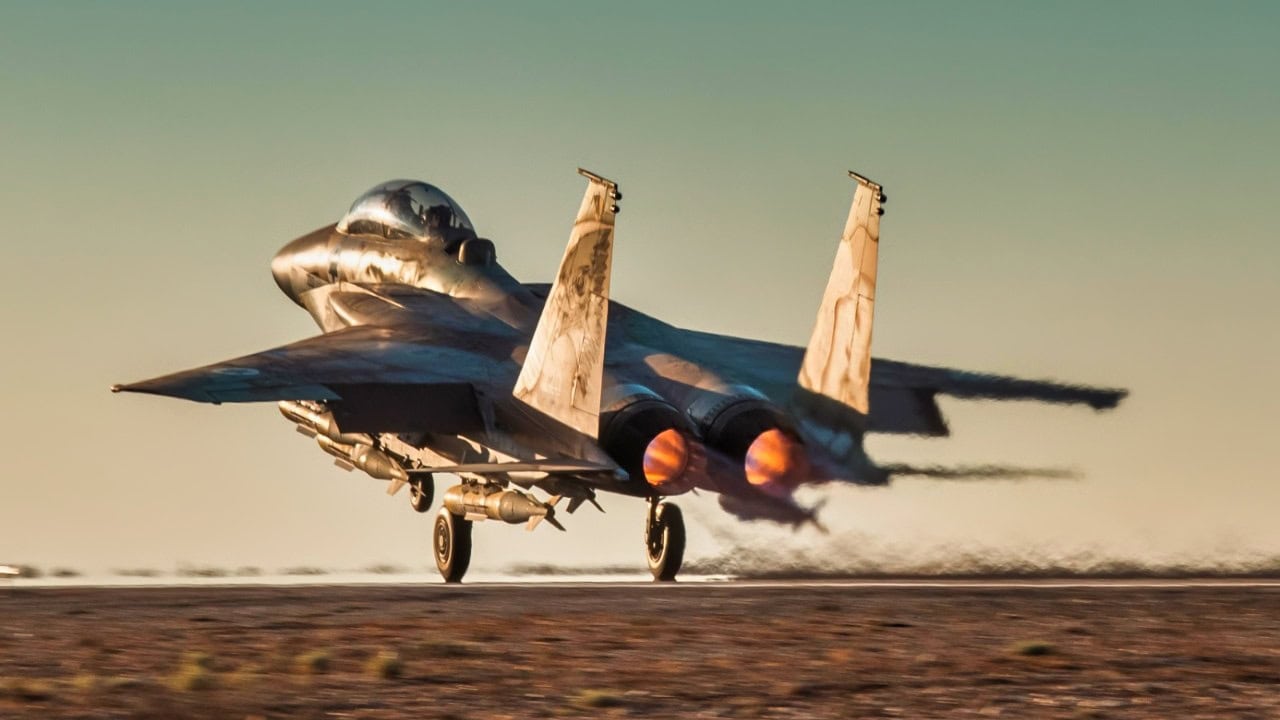
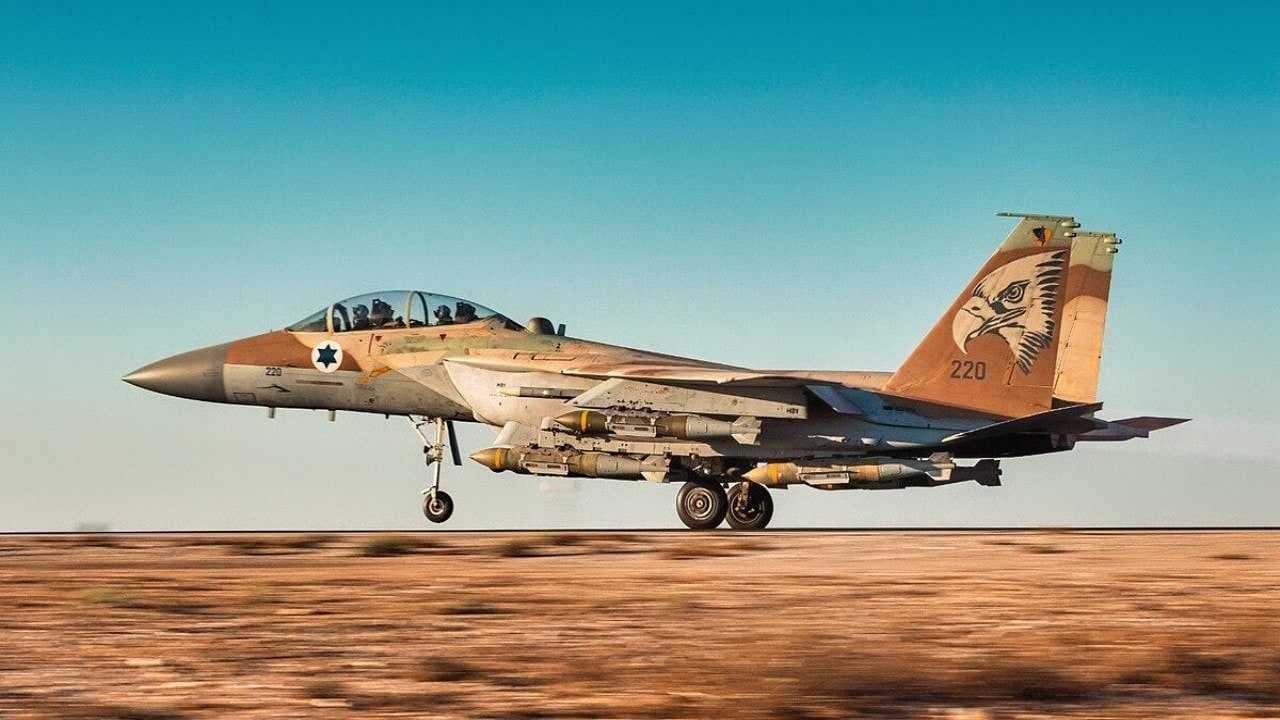
F-15I Ra’am. Image Credit: IDF.
Either way, though, Trump now faces a problem: He foreswears boots on the ground, but Iran likely faces an insurgency. First, there are Guard units across the country, each with its own weapons depots.
And, second, there are enough ideologues and true believers that it may take U.S.-trained security to keep Reza Pahlavi or the members of the Iran Freedom Congress alive.
Trump achieved step one in his goal of regime change. Now the hard part begins: How to fill the vacuum.
About the Author: Dr. Michael Rubin, AEI and Middle East Forum
Michael Rubin is a senior fellow at the American Enterprise Institute and director of policy analysis at the Middle East Forum. The opinions and views expressed are his own. A former Pentagon official, Dr. Rubin has lived in post-revolution Iran, Yemen, and both pre- and postwar Iraq. He also spent time with the Taliban before 9/11. For more than a decade, he taught classes at sea on the Horn of Africa and the Middle East, covering conflicts, culture, and terrorism to deployed US Navy and Marine units. The views expressed are the author’s own.