
Summary and Key Points: Dr. Andrew Latham, a professor of international relations and fellow at Defense Priorities, evaluates the strategic limitations of Operation Epic Fury.
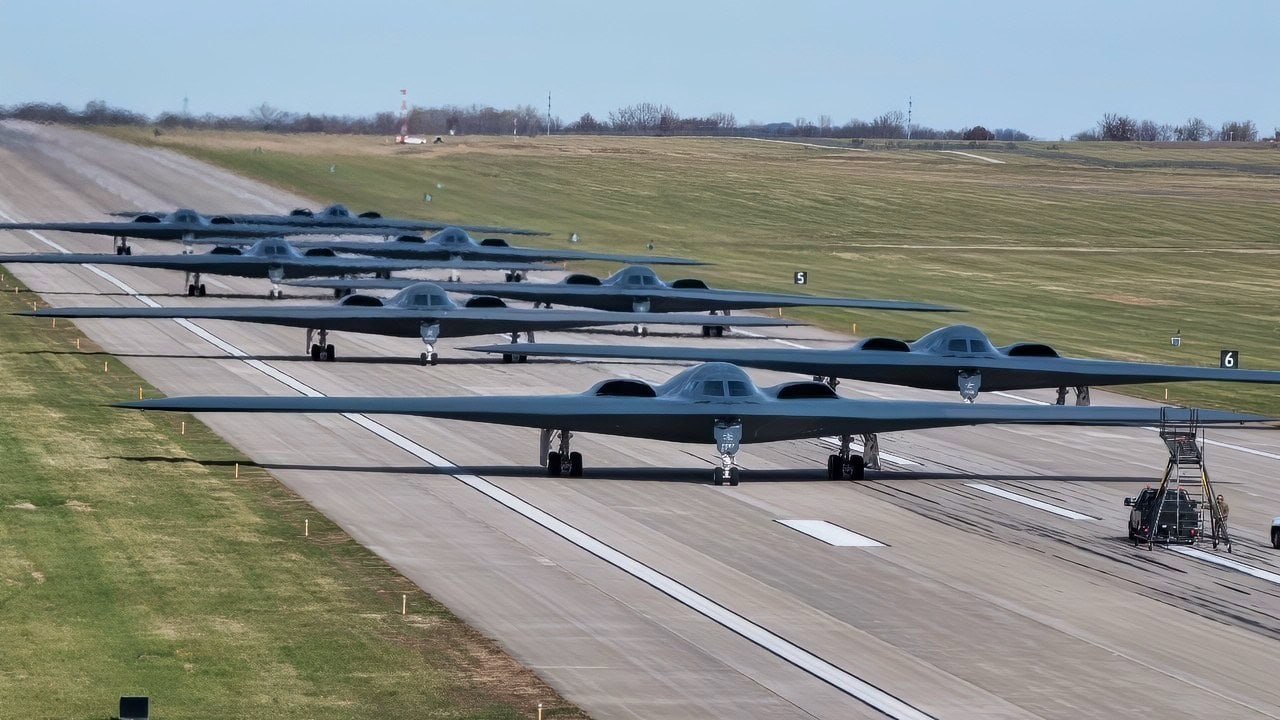
-As USAF B-2 Spirit stealth bombers and Carrier Air Wing 11 target IRGC command nodes and nuclear facilities, Latham argues that airpower serves limited military objectives but struggles to dismantle the patronage networks holding the Islamic Republic together.
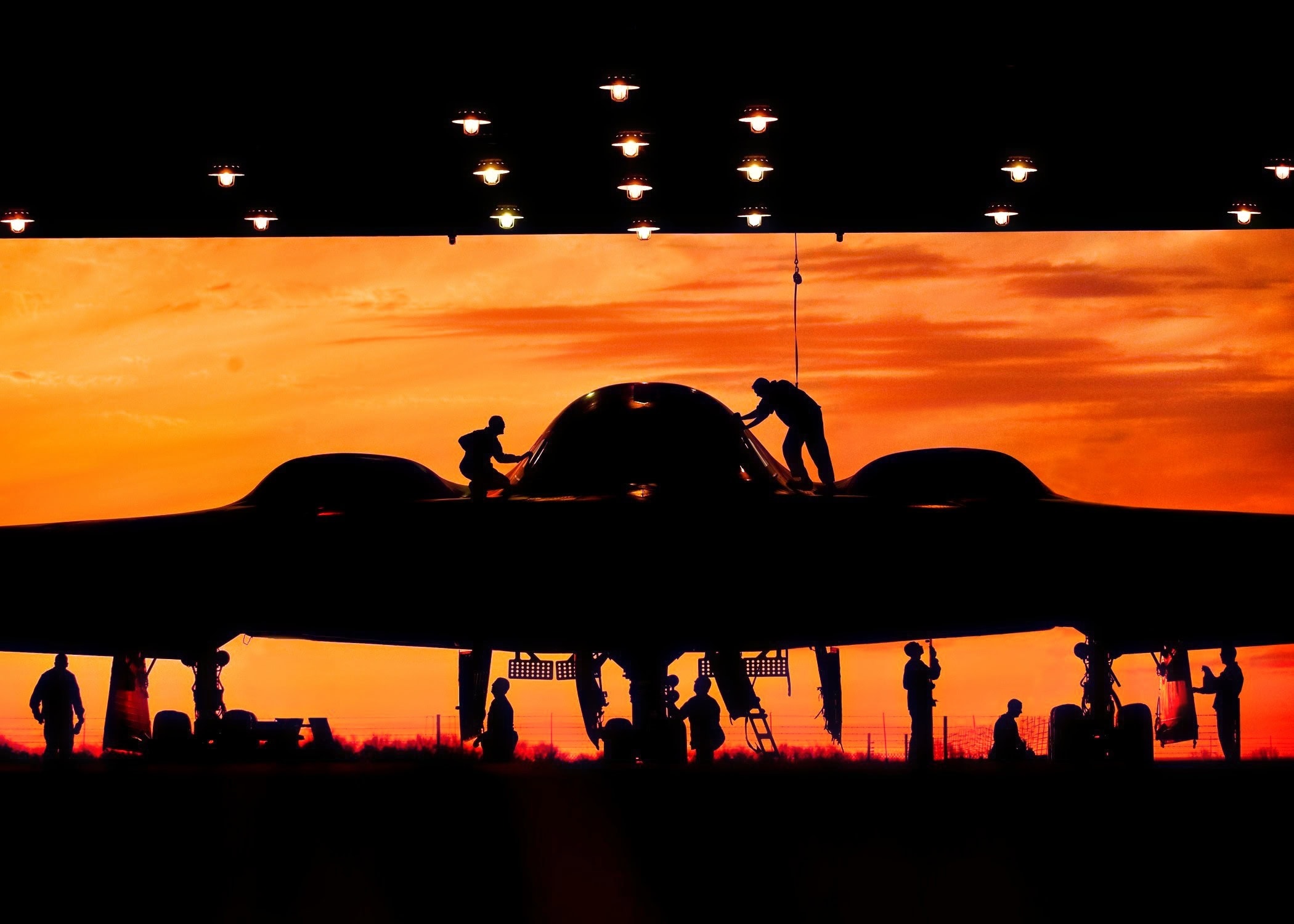
B-2 Spirit Bomber. Image Credit: Creative Commons.
-This 19FortyFive report analyzes the “Catalyst Theory”—the hope that strikes will embolden domestic dissidents—while warning that external attacks often trigger a “Rally ‘Round the Flag” effect, reinforcing the cohesion of security organs like the Revolutionary Guard.
Can Bombing Topple Iran’s Regime? Here’s the Hard Truth
American strike aircraft are now operating over Iran. Stealth bombers and carrier-based fighters are targeting air defense networks, ballistic missile facilities, naval assets, and elements of Tehran’s nuclear program. If prior U.S. air campaigns are any guide, the material damage inflicted in the opening phase will be extensive.
That much is a military near-certainty.
The ability of these same air assets to bring about regime change, however, is far less certain. The Iranian state rests on security services, revenue streams, clerical authority, and patronage networks that have endured years of pressure. Those structures do not dissolve when concrete is shattered. They adapt under strain and defend themselves.
Airpower can damage military infrastructure to the point of collapse. That much is beyond question. Can it damage political infrastructure to the same point? That’s a much more questionable proposition indeed.
What Airpower Can Actually Do
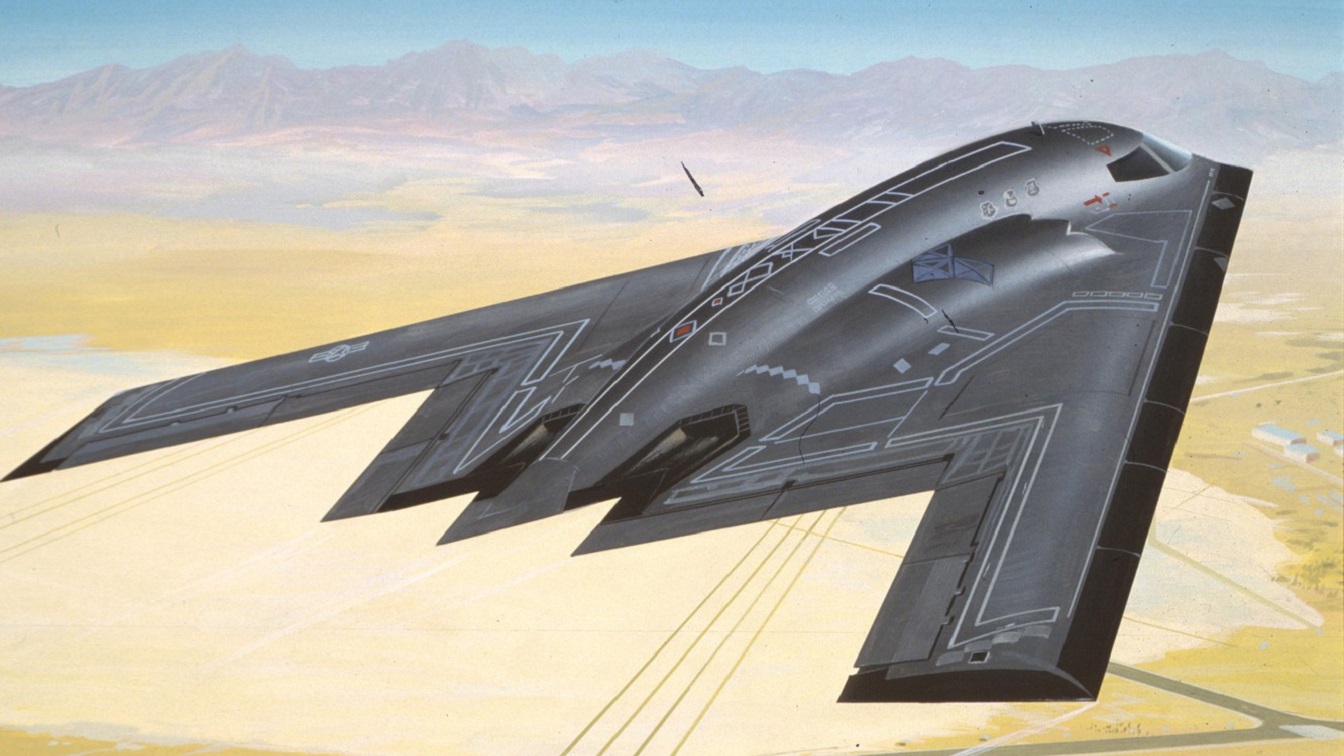
B-2 Bomber. Image Credit: Artist Rendition.
A limited strike campaign would focus on defined military targets. Iran’s nuclear facilities are hardened but not immune. Its missile forces rely on storage sites, production nodes, transport networks, and launch infrastructure that can be located and hit. Air defenses can be degraded. Command links can be interrupted long enough to widen operational freedom.
Stealth bombers, advanced fighter aircraft and long-range munitions give Washington options that do not require ground forces. They allow pressure without occupation. They impose cost without committing divisions to hostile terrain. In a narrow sense, that is the attraction.
A concentrated round of strikes could set back enrichment timelines and thin out ballistic inventories. It could complicate Iran’s ability to threaten regional bases and maritime traffic in the near term. That kind of degradation is measurable. It alters capability.
What it does not automatically alter is political cohesion. Destroyed launchers do not dissolve security services. Damaged facilities do not sever the relationships that hold power in place. A regime can absorb military loss and still retain control of its streets, its prisons, and its patronage networks.
Limited means can serve limited objectives. The difficulty begins when objectives expand beyond what those means can plausibly deliver.
The Catalyst Theory
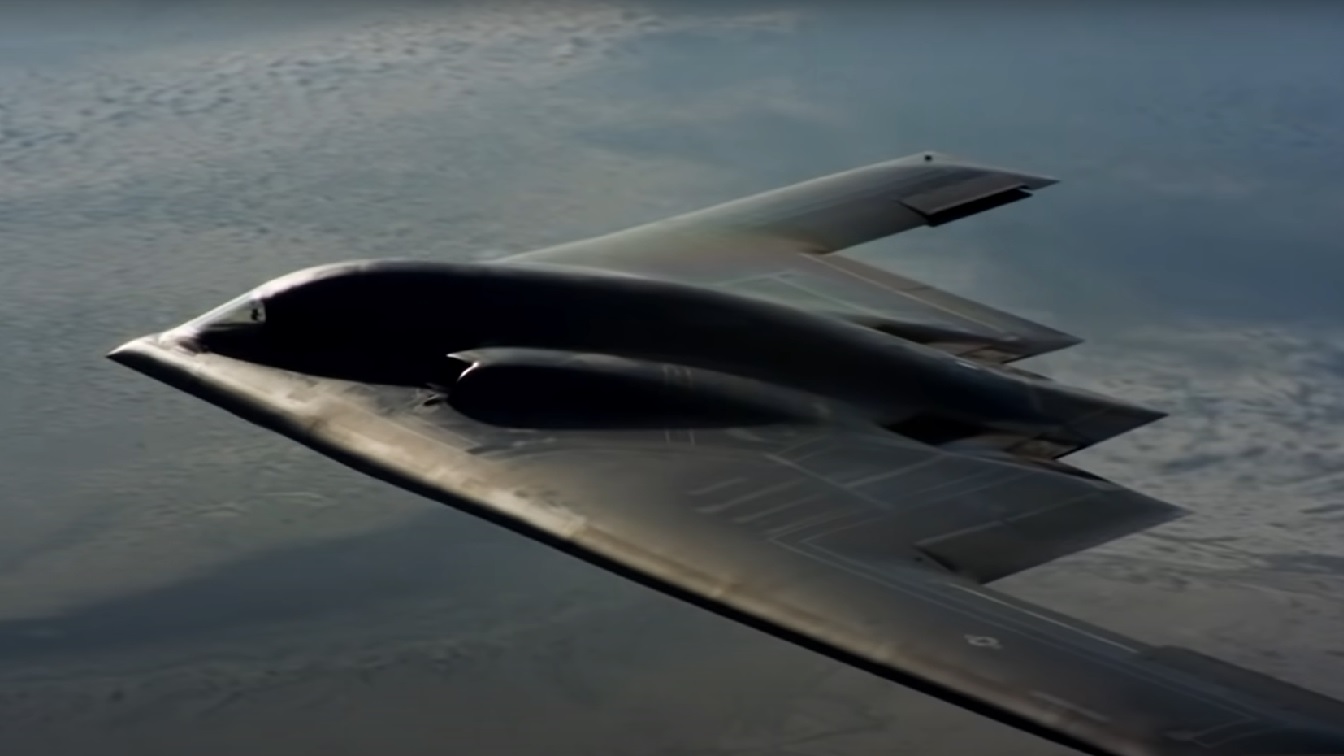
B-2 Spirit. Image Credit: Northrop Grumman.
Some in Washington may believe the bombing itself is only the opening move. The strikes weaken the regime’s aura of control. Economic disruption deepens frustration that has simmered for years. Visible damage signals vulnerability. Pressure from the air is paired with cyber operations, financial enforcement, and information campaigns meant to widen cracks inside the system.
On this view, airpower does not overthrow the government on its own. It accelerates forces already at work. The hope is that elite factions begin to doubt the leadership’s competence. Mid-level commanders hedge. Protest networks judge the moment ripe. A regime that looks durable one week can appear brittle the next.
That pathway requires specific conditions. Security services would need to hesitate when ordered to suppress unrest. Rival power centers would have to calculate that survival lies in defection rather than loyalty. An opposition capable of seizing ministries and media outlets would need to exist beyond name.
Airstrikes can amplify instability when those dynamics are already in motion. They do not create them by decree. Without prior fracture or organized resistance, the expectation that external force will produce internal collapse rests on hope rather than evidence.
Pressure and Consolidation
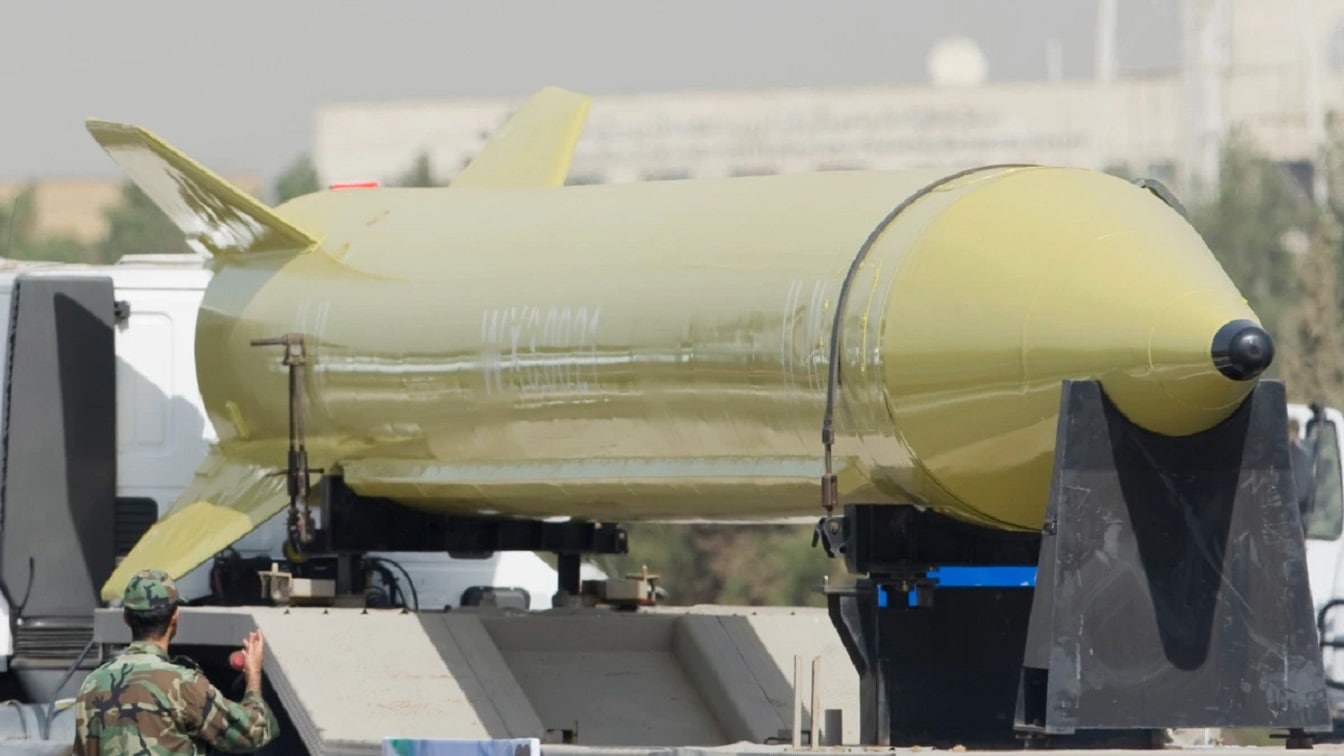
Iranian Ballistic Missile. Image Credit: Creative Commons.
External attack changes the political atmosphere inside a targeted state. Grievances that were once directed upward can shift outward. Leaders who face criticism at home gain a ready narrative of resistance. Security organs find justification for tighter control.
Iran’s ruling structure is built with this scenario in mind. The Revolutionary Guard is not only a military force. It manages companies, media outlets, and patronage networks. Its officers have careers and fortunes tied to regime survival. Under bombardment, those interests align even more tightly.
Public anger over corruption or economic hardship does not disappear when bombs fall. It can, however, be reframed. Foreign strikes allow authorities to portray dissent as collaboration. Protest becomes easier to suppress when it is cast as aiding an external enemy.
A short campaign intended to expose weakness may instead reinforce cohesion. The leadership can absorb material damage while strengthening its claim to defend national sovereignty. That dynamic complicates any expectation that outside force will loosen the regime’s grip.
If Collapse Does Not Come in Iran
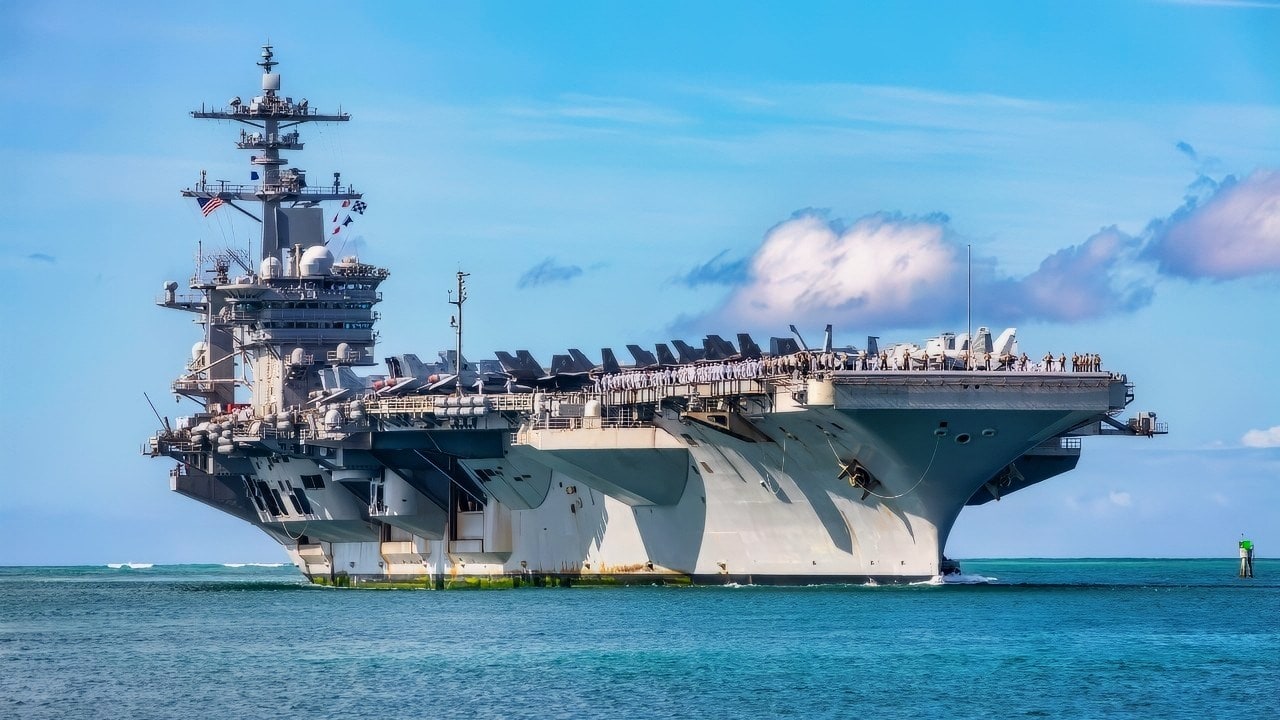
Supercarrier Nimitz-Class U.S. Navy. Image Credit: Creative Commons.
A campaign framed as limited can take on a different character once regime change enters the conversation. Tehran will not parse speeches in Washington with care. If survival appears threatened, retaliation broadens.
Missile strikes against regional bases become more likely. Sustained attacks on Gulf energy infrastructure would follow, with immediate effects on global markets. Proxy networks activate across multiple theaters. The conflict spills outward even if the initial objective was confined to nuclear and missile infrastructure.
At that point the United States confronts an uncomfortable choice. Accept partial degradation and step back, or escalate further in search of decisive effect. The first course risks looking unfinished. The second demands commitments far beyond a short air campaign.
When objectives stretch but force posture remains restrained, coherence erodes. Adversaries test boundaries. Allies watch for signs of resolve. Decisions made under pressure harden into long-term commitments. A strategy built on catalytic collapse must then either expand or concede that the collapse will not arrive.
What the Bomber Cannot Carry
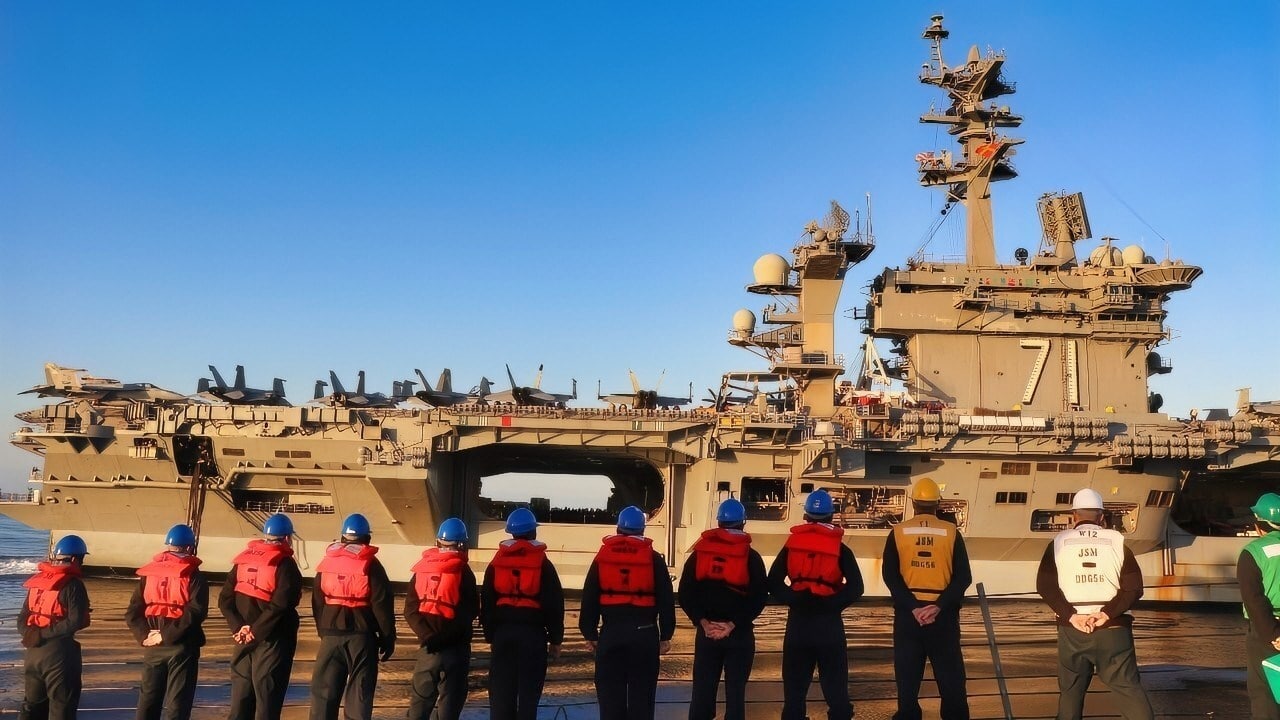
PACIFIC OCEAN (Nov. 28, 2023) Line handling crew assigned to the Arleigh Burke-class guided-missile destroyer USS John S. McCain (DDG 56) prepares to come alongside USS Theodore Roosevelt (CVN 71) for a replenishment at sea. John S. McCain is currently conducting routine training and certifications in the U.S. 3rd Fleet area of operations. (U.S. Navy photo by Ensign Garrett Fox).
American strike aircraft like the B-2 were designed to slip through defended airspace and reach targets once thought secure. That capability matters in any confrontation with Iran. Hardened sites can be hit without assembling an invasion force.
Yet the aircraft carries only what fits in its bays. Police units do not accompany the strike. Civil administrators do not follow in its wake. No alternative leadership arrives with the payload.
Sustained strike capacity can degrade military assets over time. It cannot compel elite defection on schedule. It cannot guarantee that factions within the regime will choose survival through accommodation rather than resistance. Even a series of successful raids leaves the core question unresolved.
Airpower shapes the battlefield. Political outcomes turn on actors and incentives that do not answer to a flight plan.
Discipline or Drift
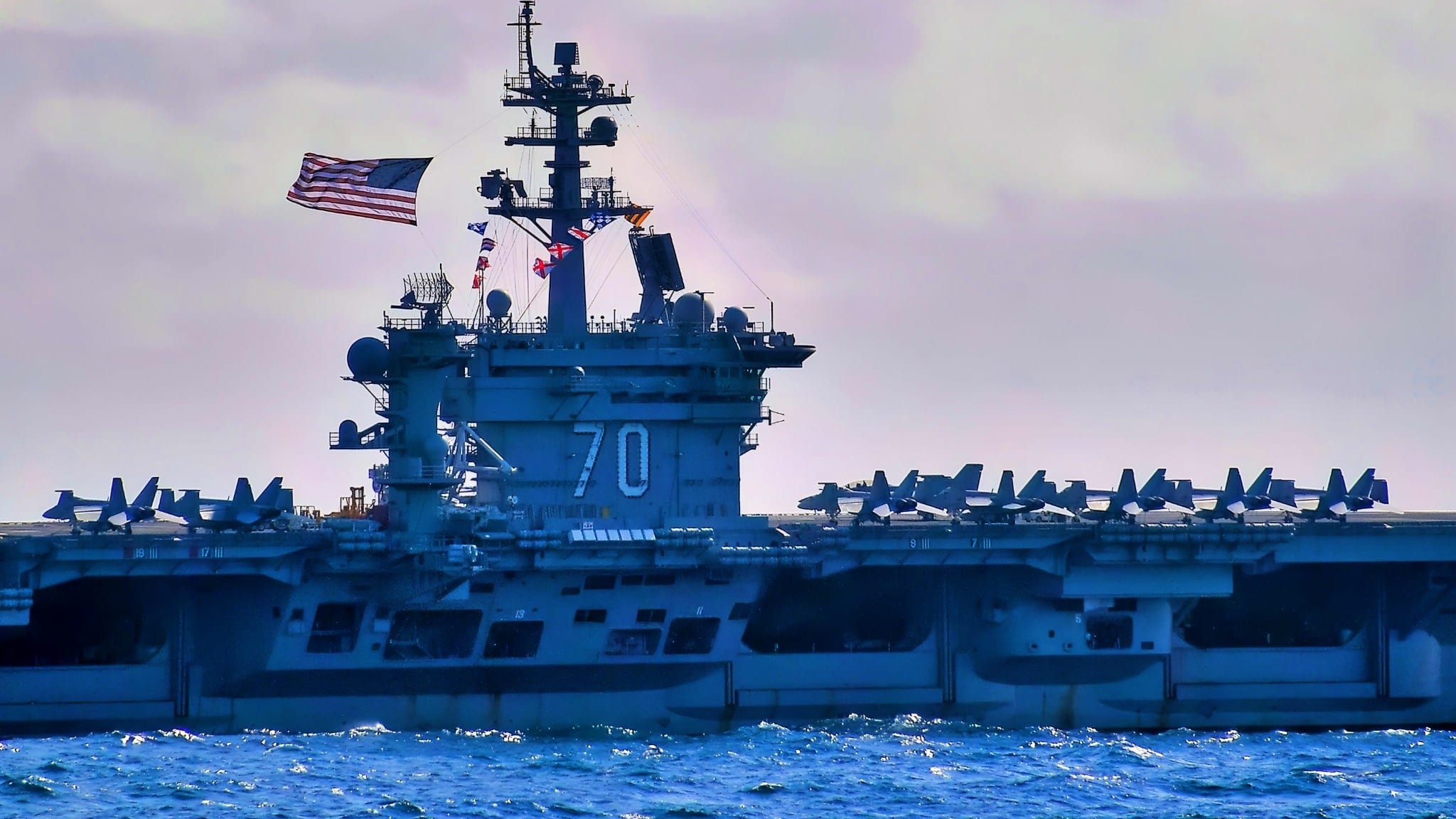
The Battle Ensign is flown aboard the Nimitz-class aircraft carrier USS Carl Vinson during an exercise with the Peru navy. Carl Vinson is supporting Southern Seas 2010, a U.S. Southern Command-directed operation that provides U.S. and international forces the opportunity to operate in a multi-national environment.
If the objective remains confined to degrading nuclear and missile capabilities, the logic of limited strikes holds. The tools match the task. Timelines can be defined. Costs can be estimated. The campaign ends when specific capacities are reduced.
Regime change is a different undertaking. It assumes fracture at the top or revolt from below. It assumes security forces will hesitate. It assumes someone else is ready to govern the morning after. Those assumptions cannot be willed into existence by sortie rates.
A short bombing campaign may weaken Iran’s military posture. It may also harden its political core. If collapse follows, it will do so because internal conditions were already near a breaking point. If those conditions are absent, outside force alone is unlikely to create them.
Washington can degrade capabilities from the air. Whether it can shape what comes next is another matter. The decision about scope now rests less with the aircraft and more with the political aims attached to their use.
About the Author: Dr. Andrew Latham
Andrew Latham is a non-resident fellow at Defense Priorities and a professor of international relations and political theory at Macalester College in Saint Paul, MN. You can follow him on X: @aakatham. Dr. Latham writes a daily column for 19FortyFive.