
Summary and Key Points: Dr. Robert Farley, a professor at the Patterson School and author of Waging War with Gold, evaluates the structural causes of the 2026 Iran War.
-Following the collapse of the Joint Comprehensive Plan of Action (JCPOA) and the direct kinetic exchanges of the Twelve-Day War, the Trump administration has launched Operation Epic Fury.
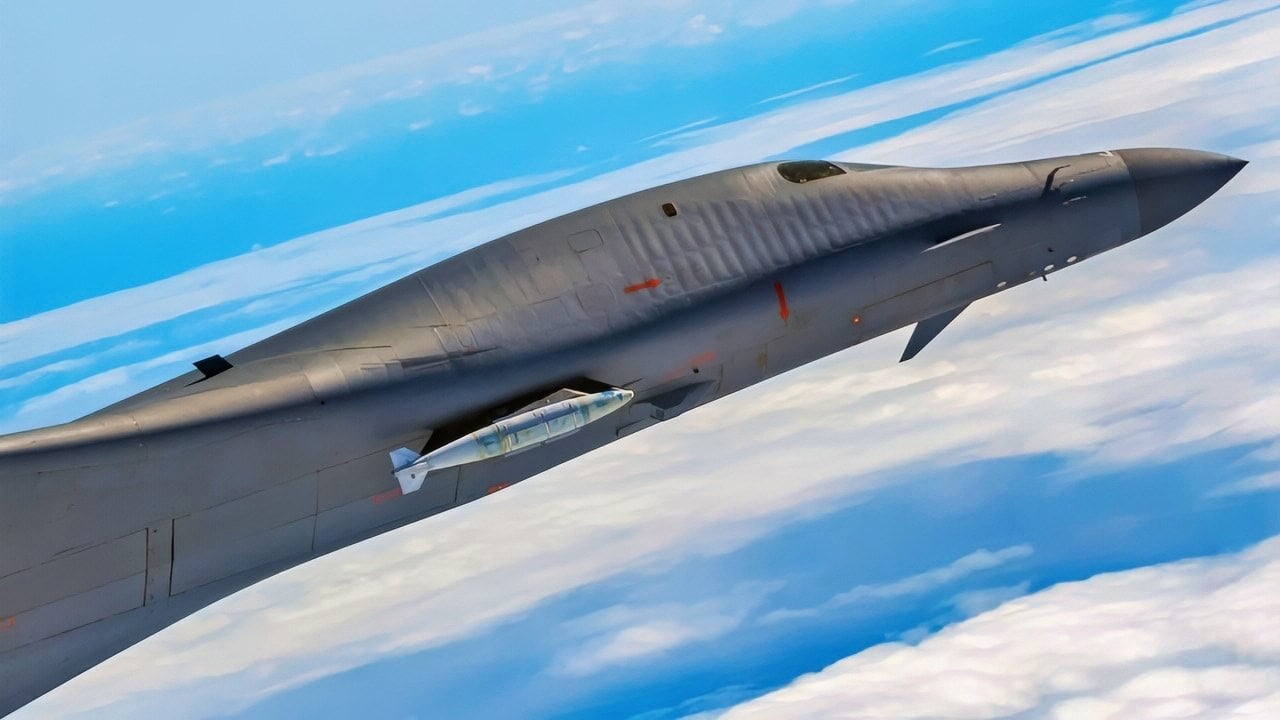
B-1B Lancer Bomber with External Weapons. Image Credit: U.S. Air Force.
-This 19FortyFive report analyzes how the failure of Biden-era diplomacy and the subsequent 2023 October 7th Crisis forced a “now-or-never” military intervention, utilizing heavy bombers to transition from a policy of containment to an explicit mandate for regime change.
The Road to Epic Fury: How the Collapse of the JCPOA Led to the 2026 Iran War
President Donald J. Trump now has his war with Iran. Every war has deep foundations, and of course, the United States has had a confrontational relationship with the Islamic Republic since 1979. Nevertheless, previous Presidents managed to keep a lid on conflict with Iran even while using force for specific, measured purposes. In abandoning that restraint, President Trump placed the United States firmly on the path to war against Iran, a war that he inaugurated early this morning.
President Trump’s decision to withdraw from the Joint Comprehensive Plan of Action (JCPOA) set the United States on a direct path to war with Iran.
The JCPOA, negotiated in painstaking detail during the Obama administration, sought to freeze Iran’s nuclear program without leaving Tehran wholly vulnerable to attack from regional rivals.
Iran agreed to the restrictions because the agreement left the other elements of Tehran’s national security toolkit in place, namely its ballistic missile program and its network of alliances with militia organizations across the Middle East.
The JCPOA’s vulnerability was inherent to its nature; as an agreement designed to avoid war, it left both the United States and the Islamic Republic with some things that they wanted and others that they did not.
American critics decried the fact that Iran’s missile and militia programs remained untouched, and made a series of deeply deceptive claims regarding the agreement’s “sunset” clauses.
President Trump’s decision to unilaterally abrogate the agreement left nothing in place but an abiding sense of distrust among the Iranians.
Had Trump remained in office after January 2021, war might have come earlier, but in any case, the powder keg had been positioned, and the fuse was ready to be lit.
Efforts to re-establish the agreement during the Biden administration failed because of Iranian distrust and a sense that strenuous diplomatic efforts would not pay off at home.
The October 7th Crisis: Iran and Israel Trade Blows
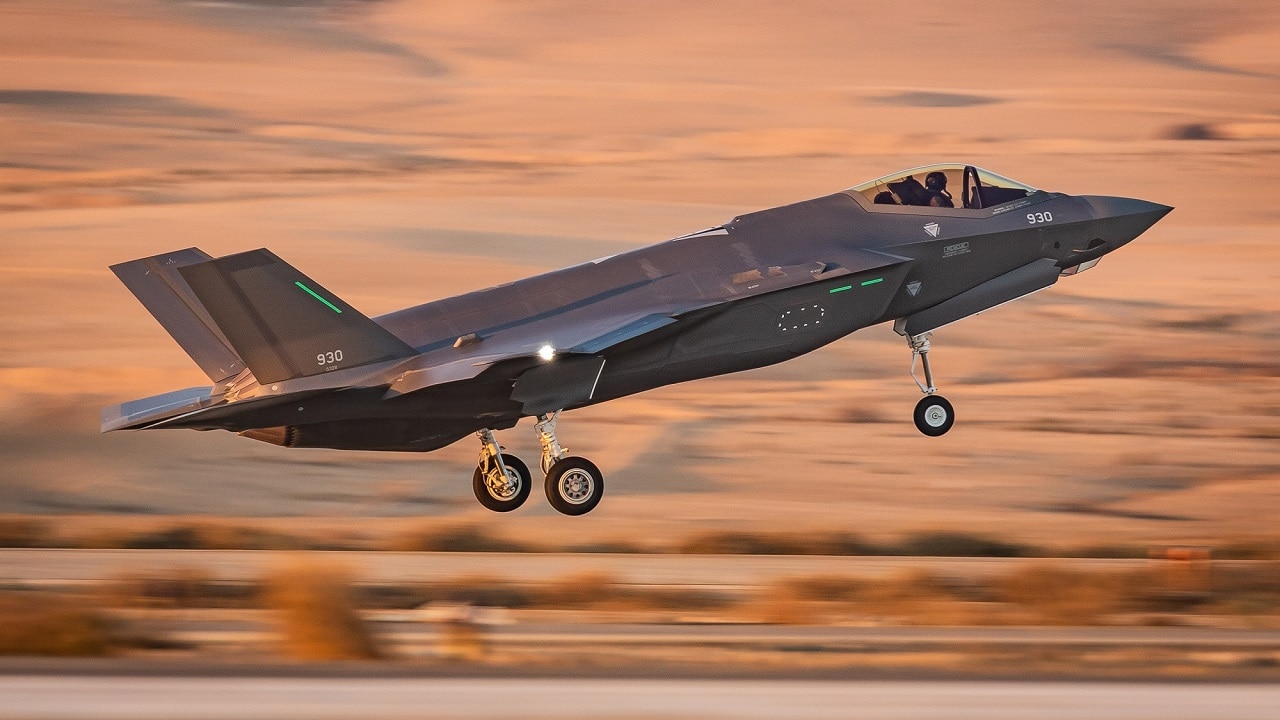
F-35I Adir. Image Credit: Israeli Air Force.
The attacks of October 7, 2023, provided the spark for the long-burning fuse.
The wars in the wake of October 7 eventually produced direct conflict between Israel and Iran, as the former sought to fully disassemble the network of aligned militias that the latter had built. US intervention in the Twelve-Day War between Iran and Israel made Operation Epic Fury a virtual inevitability.
US airstrikes against Iranian nuclear facilities punctuated an Israeli effort that was winding down because of exhaustion, giving both Iran and Israel an easy way to save face and pause the conflict. The strikes did not, however, obliterate Iran’s nuclear program or resolve the fundamental causes of the conflict.
Instead, Trump’s decision to intervene effectively made the United States the guarantor of a certain military order in the Middle East.
That order, unfortunately, was unsustainable. The Islamic Republic did not collapse and evinced no interest in giving up the rest of its military capabilities in the face of a de facto US-Israeli-Saudi alliance.
After the violent repression of Iranian dissidents ensured that the regime would survive, it became clear that Tehran would be able to rebuild its military capabilities and once again threaten the order that Trump had hoped to establish.
The President determined that the only solution was to change the Iranian regime.
An international order established by heavy bombers can only be maintained by heavy bombers.
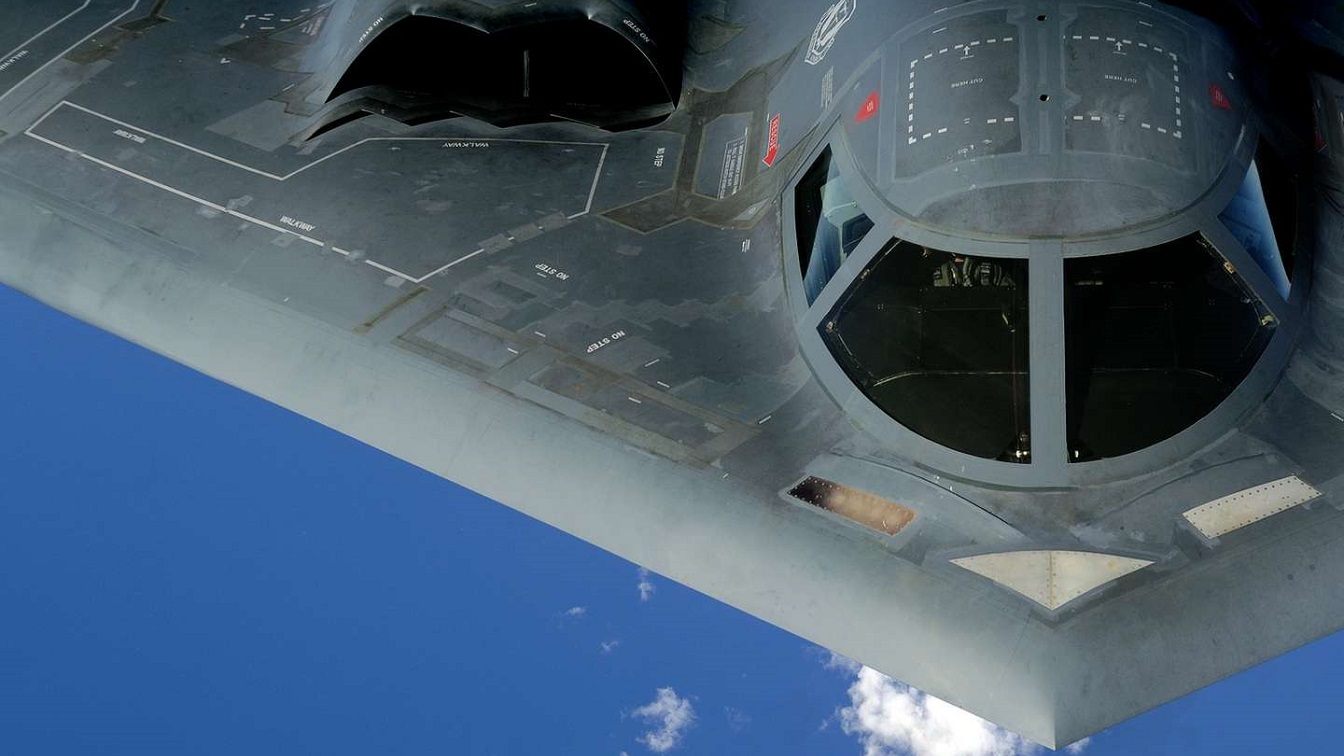
Image of B-2 Spirit stealth bomber. Image Credit: Creative Commons.
The United States was, of course, not the only actor responsible for this war; Israel, Iran, and to some extent Russia have all helped to lay the groundwork.
But the United States certainly could have avoided the conflict if it had wanted to. Unfortunately, a complete lack of seriousness and strategic vision on the part of the President and the President’s Men has led us to this point.
We can only hope that the ensuing conflict will be brief, limited in its destructive effect, and will facilitate the construction of a better peace.
About the Author: Dr. Robert Farley, University of Kentucky, Patterson School
Dr. Robert Farley has taught security and diplomacy courses at the Patterson School since 2005. He received his BS from the University of Oregon in 1997, and his Ph. D. from the University of Washington in 2004. Dr. Farley is the author of Grounded: The Case for Abolishing the United States Air Force (University Press of Kentucky, 2014), the Battleship Book (Wildside, 2016), Patents for Power: Intellectual Property Law and the Diffusion of Military Technology (University of Chicago, 2020), and most recently Waging War with Gold: National Security and the Finance Domain Across the Ages (Lynne Rienner, 2023). He has contributed extensively to a number of journals and magazines, including the National Interest, the Diplomat: APAC, World Politics Review, and the American Prospect. Dr. Farley is also a founder and senior editor of Lawyers, Guns and Money.