
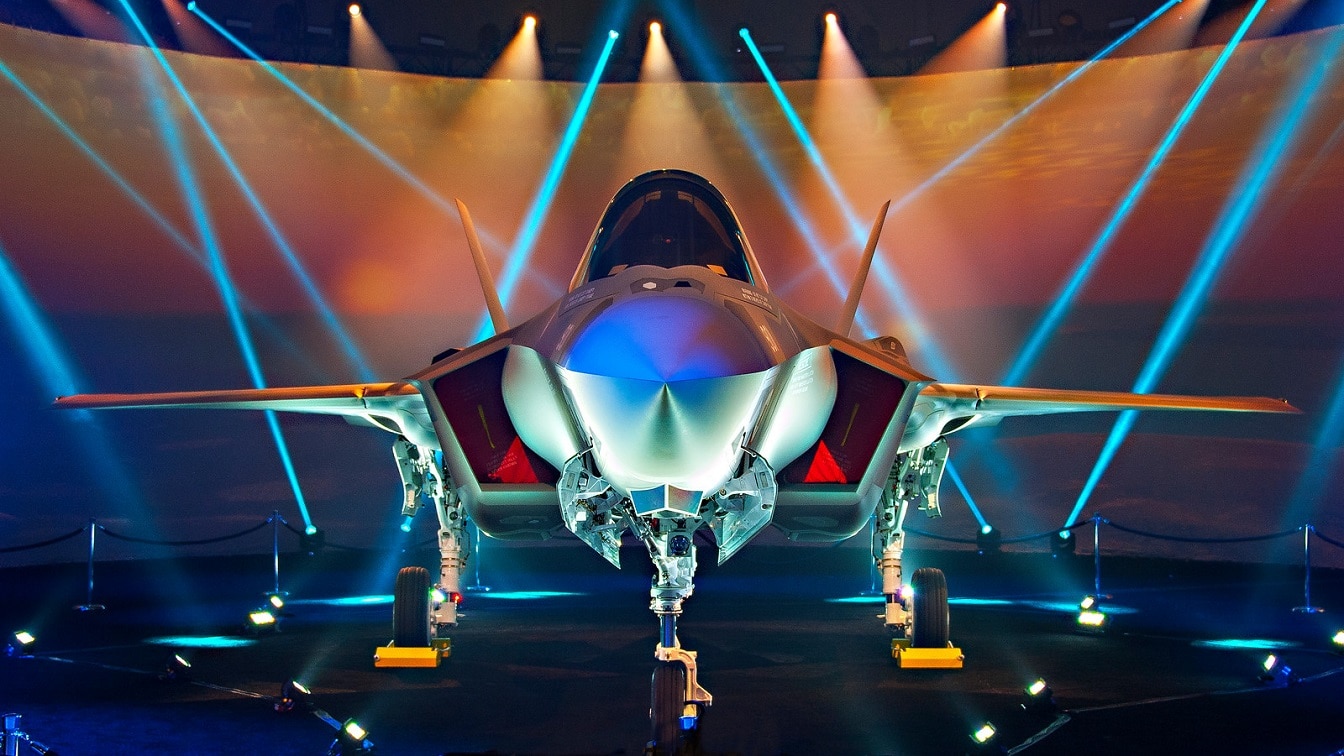
Summary and Key Points: Israel says it has modified its F-35I Adir with new fuel tanks that extend range without sacrificing stealth, and it can also carry additional weapons on the wings when maximum payload matters.
-The upgrades aim at a hard problem: reaching Iranian targets more than 1,000 miles away while minimizing reliance on vulnerable aerial refueling and complicated routing.
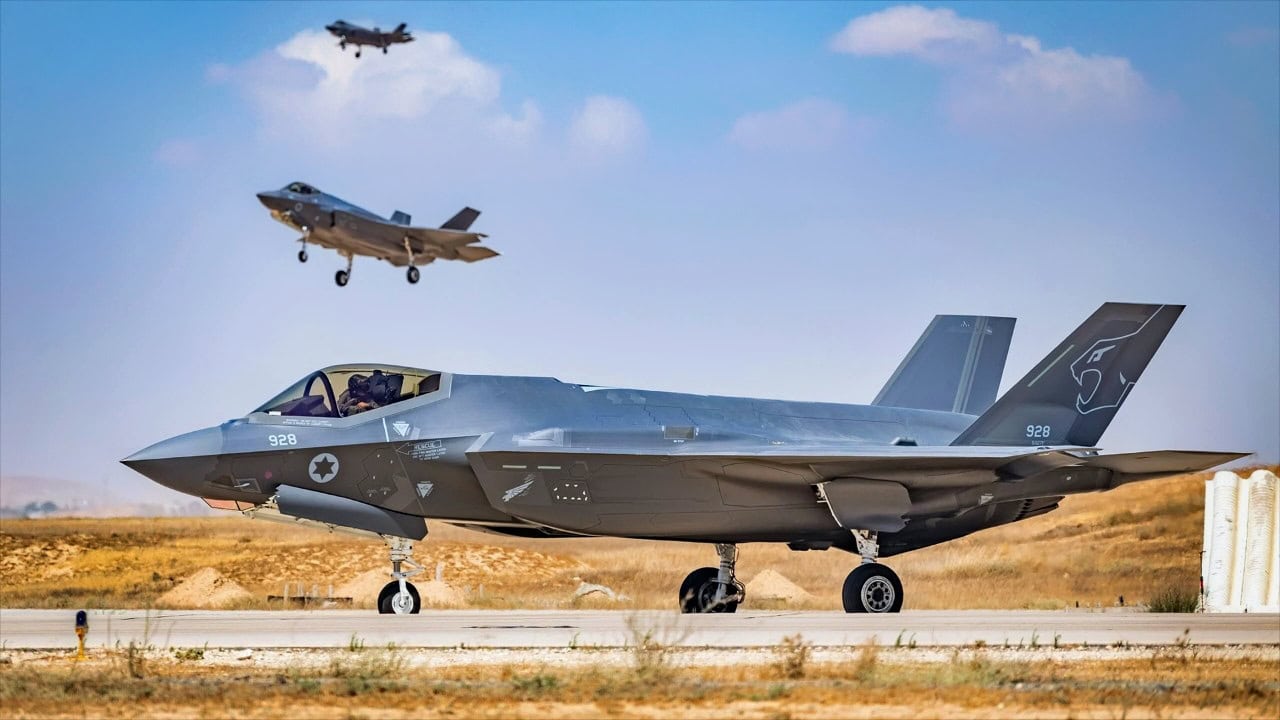
F-35I Adir. Image Credit: Creative Commons.
-Longer-legged Adirs would give planners more flexibility in timing, basing, and strike profiles, while reinforcing Israel’s preference for independent, survivable options in a fast-moving regional crisis.
-The changes also underscore Israel’s unique ability to tailor the F-35 to its own requirements.
Israel’s F-35I Adir Has a Message for Iran: More Range, Same Stealth
During a recent interview with Israel Hayom daily, the Israeli ambassador to the United States claimed that Israel has modified its F-35I “Adir” fighter jets, giving them extended range and new capabilities. Yechiel Leiter’s comments reveal that Israel is adapting the Lockheed Martin F-35 platform in ways other global F-35 customers cannot.
What Yechiel Claimed on F-35I Adir
According to reports, Yechiel Leiter stated that Israel’s F-35I, its custom variant of the fifth-generation fighter, has been upgraded with new fuel tanks that do not compromise stealth.
“We developed fuel tanks that extend the aircraft’s range without compromising stealth, and we added four missiles on the wings,” Leiter said.
The news follows years of reporting on Israel’s ambition to develop the new fuel tanks, giving its advanced fighters the ability to strike at greater distances.
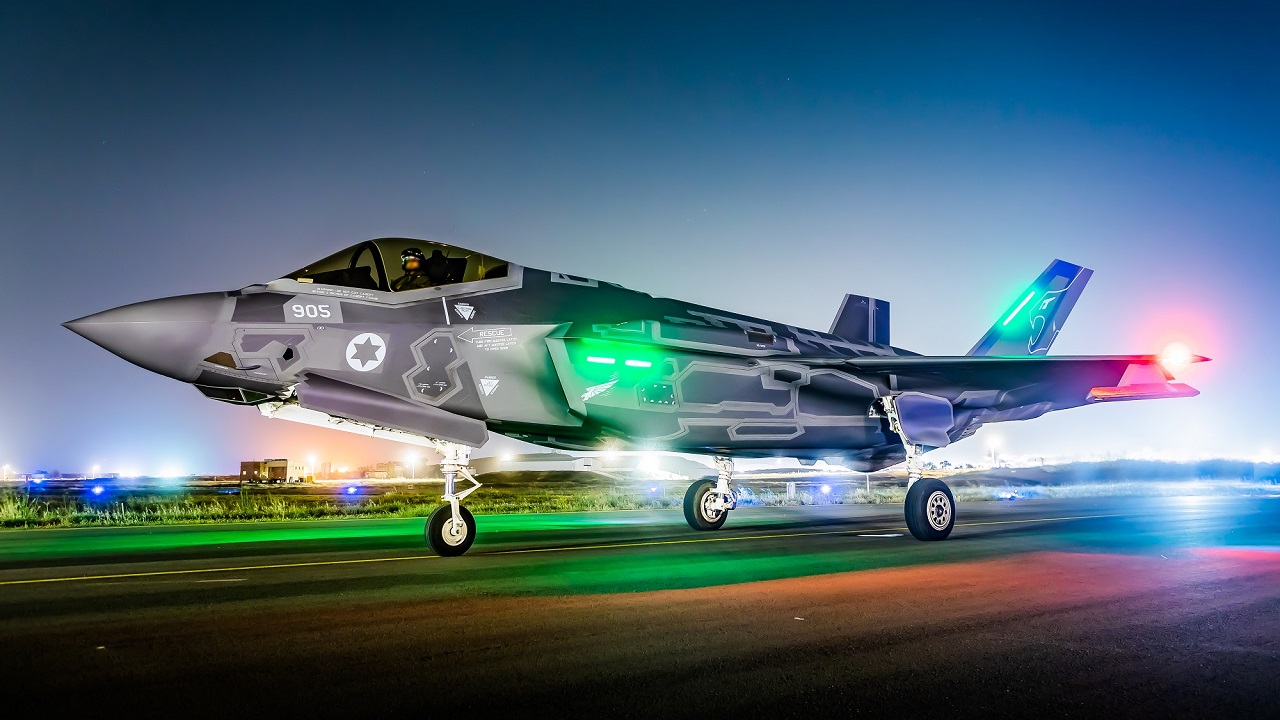
F-35I Adir serving in Israel’s Air Force. Image Credit: Creative Commons.
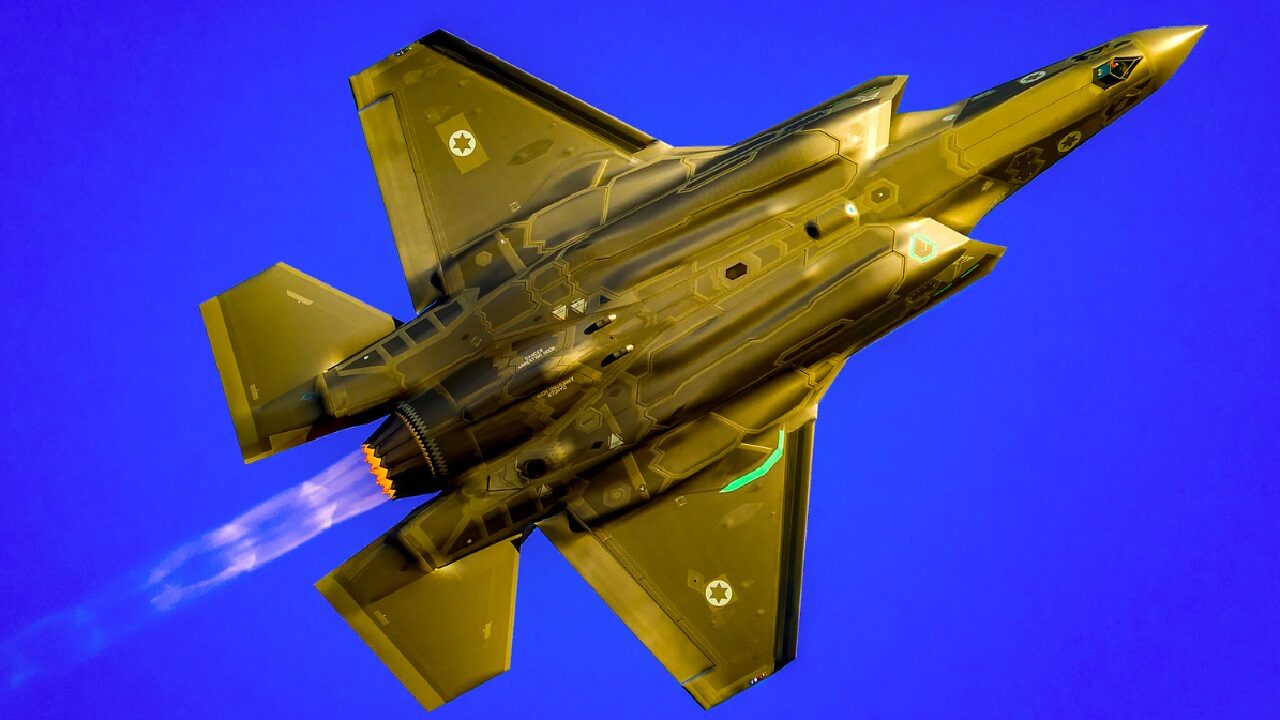
F-35I Adir. Image Credit: IDF Air Force.
Of the two claims made by Yechiel, however, only one is a truly new development: confirmation that the new fuel tanks have been completed. The missiles are already part of the aircraft’s existing toolset, known as a sort of “beast mode” configuration, in which some stealth is sacrificed to some extent in favor of increased lethality.
A new configuration featuring additional munitions mounted on the aircraft’s wings was announced in March 2025, when the Israeli Air Force confirmed the changes were made in collaboration with the Pentagon.
“The ‘Adir’ was originally designed to carry munitions internally,” a March 16, 2025 statement reads. “Flight Test Center, in collaboration with @LockheedMartin and the Pentagon’s F-35 program, developed a capability for external JDAM carriage. Israel’s ‘Adir’ is the only F-35 to conduct strikes with this design.”
Why It Matters Now
Israel’s extended-range fuel tanks for the Adir are significant because they directly address one of the central challenges facing the Israeli Air Force: the ability to strike Iranian nuclear facilities located more than 1,000 miles away.
Iran’s key nuclear sites – including Natanz, Fordow, and Isfahan – are deep inside Iranian territory and protected by hardened underground structures and advanced air defense systems. While Israel has long proposed aircraft capable of reaching Iran, missions like that have always required careful planning and aerial refueling. Alternatively, the missions would have required staging through indirect routes.
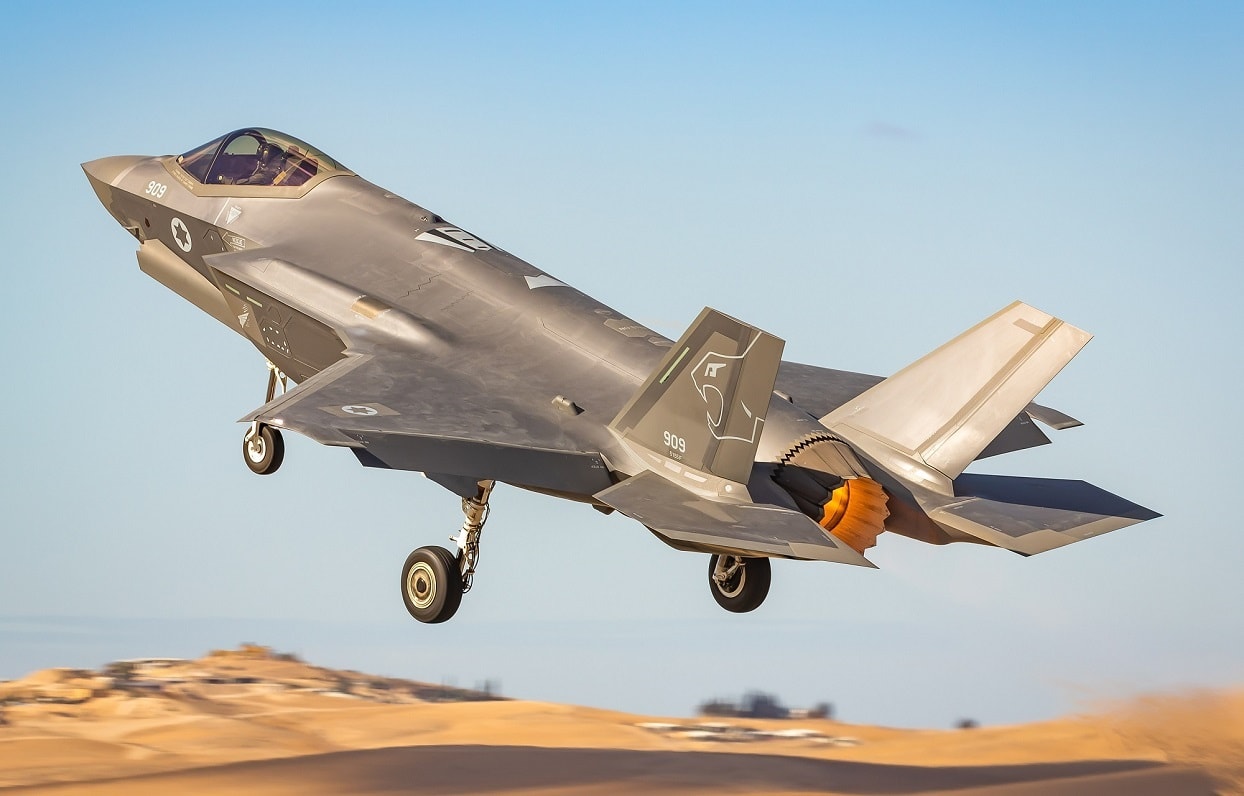
F-35I Adir. Image: Creative Commons.
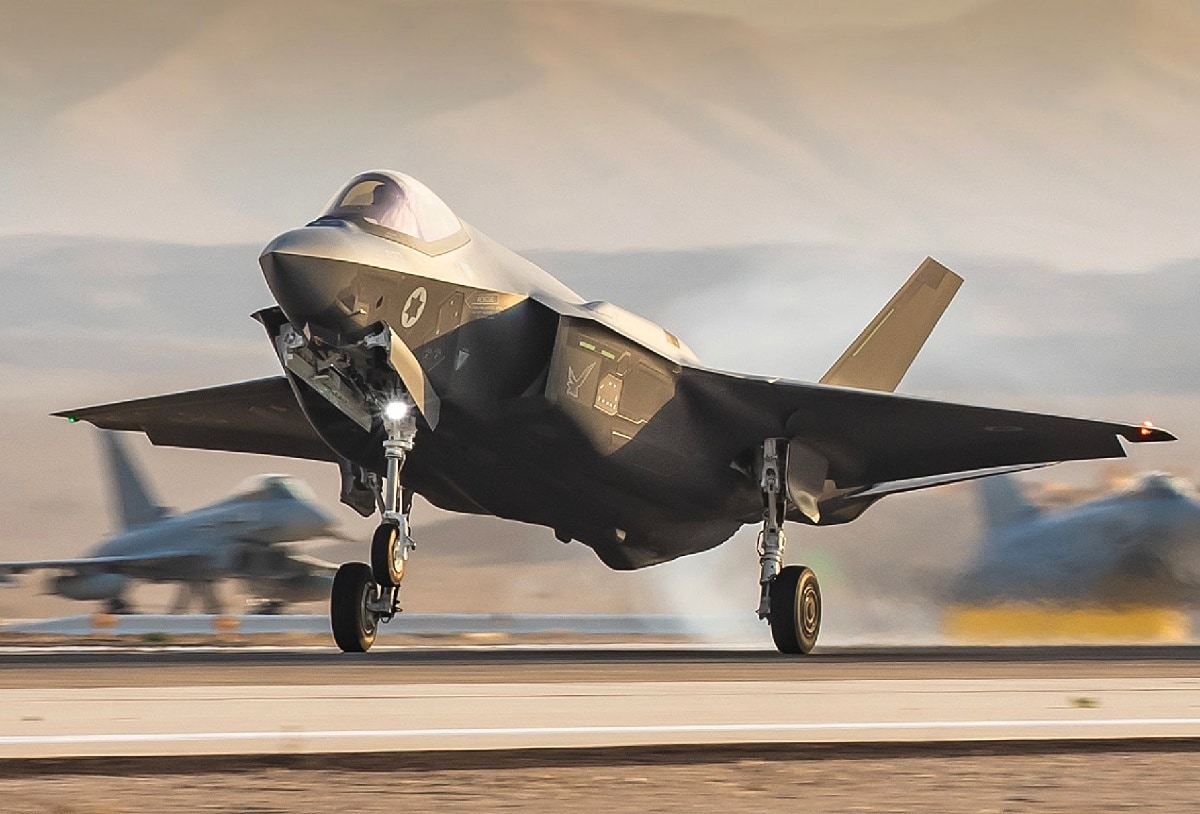
F-35I Adir. Image Credit: Creative Commons.
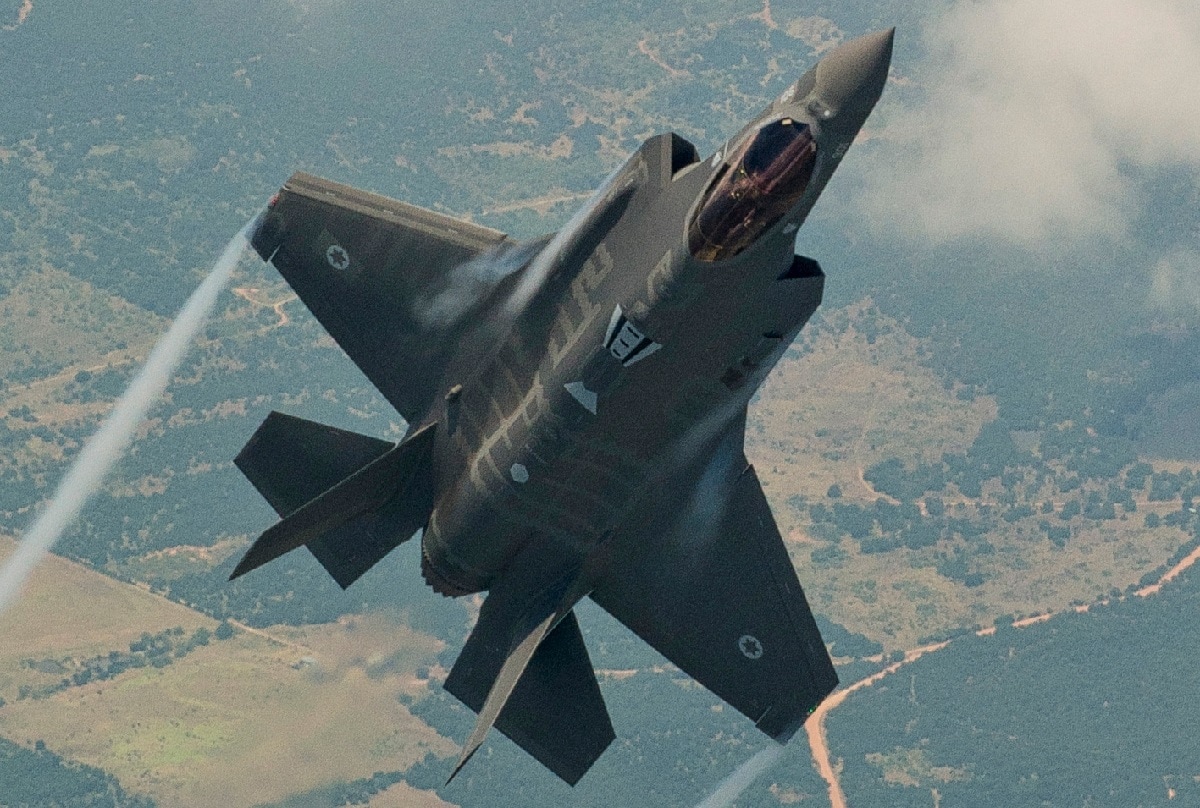
Israeli Air Force F-35I. Image Credit: Creative Commons.
By extending the F-35I’s range and preserving stealth, Israel is improving its ability to conduct strikes like these with more independence and survivability.
The F-35’s stealth design enables it to penetrate modern air defense networks, including systems operated by Iran, such as the Russian-supplied S-300 surface-to-air missile systems.
However, stealth alone is not sufficient if the aircraft cannot reach its target and return safely. Range has always been a limiting factor for Israel, given the geographic distance involved and the lack of forward bases near Iran.
Currently, Israel relies on a small fleet of aging Boeing 707 tanker aircraft for aerial refueling, with new KC-46A Pegasus tankers on order but not yet fully operational. Extending the F-3I’s range reduces its reliance on vulnerable tanker aircraft, making the new tankers somewhat less urgent.
Those tankers themselves would also be high-value targets in a conflict scenario. Tankers, after all, are not stealthy and must remain outside defended airspace, creating logistical constraints. Increasing the Adir’s range gives Israeli planners greater operational flexibility.
The new capabilities come at just the right time for Israel, as tensions with Iran continue to worsen.
Iran continues its nuclear enrichment efforts, and Iranian-backed militia operations continue across the Middle East – and while the United States is preparing an armada of naval assets to either initiate or respond to a new conflict, Israel is ensuring it has its own capabilities in order, too.
What This Means
Israeli officials have repeatedly warned over the years that they retain the option of conducting unilateral military strikes against Iran if diplomatic efforts ultimately fail to prevent Iran from acquiring nuclear weapons capabilities.
So in this context, enhancing the F-35I’s range and lethality strengthens Israel’s deterrence posture.
Deterrence depends not only on possessing advanced weapons, but also on demonstrating a credible ability to use them. A stealth fighter capable of reaching Iran without extensive refueling support represents a more credible and survivable strike platform than older fourth-generation aircraft such as the F-15I or F-16I.
It also reinforces Israel’s longstanding doctrine of maintaining independent military capabilities. Historically, Israel has long maintained its ability to conduct long-range precision strikes without relying on allied basing or operational support. The F-35I’s most recent modifications reflect that priority.
F-35 Fighter Dominance
Finally, the developers note that Israel is leveraging its unique relationship with the United States to customize the F-35 platform beyond the standard configuration and even beyond its own initial 2016 delivery configuration.
While most F-35 operators are restricted to tightly controlled software and hardware configurations, Israel has been permitted to integrate its own systems and develop indigenous upgrades tailored to its specific (and unique) operational requirements.
About the Author:
Jack Buckby is a British researcher and analyst specialising in defence and national security, based in New York. His work focuses on military capability, procurement, and strategic competition, producing and editing analysis for policy and defence audiences. He brings extensive editorial experience, with a career output spanning over 1,000 articles at 19FortyFive and National Security Journal, and has previously authored books and papers on extremism and deradicalisation.