
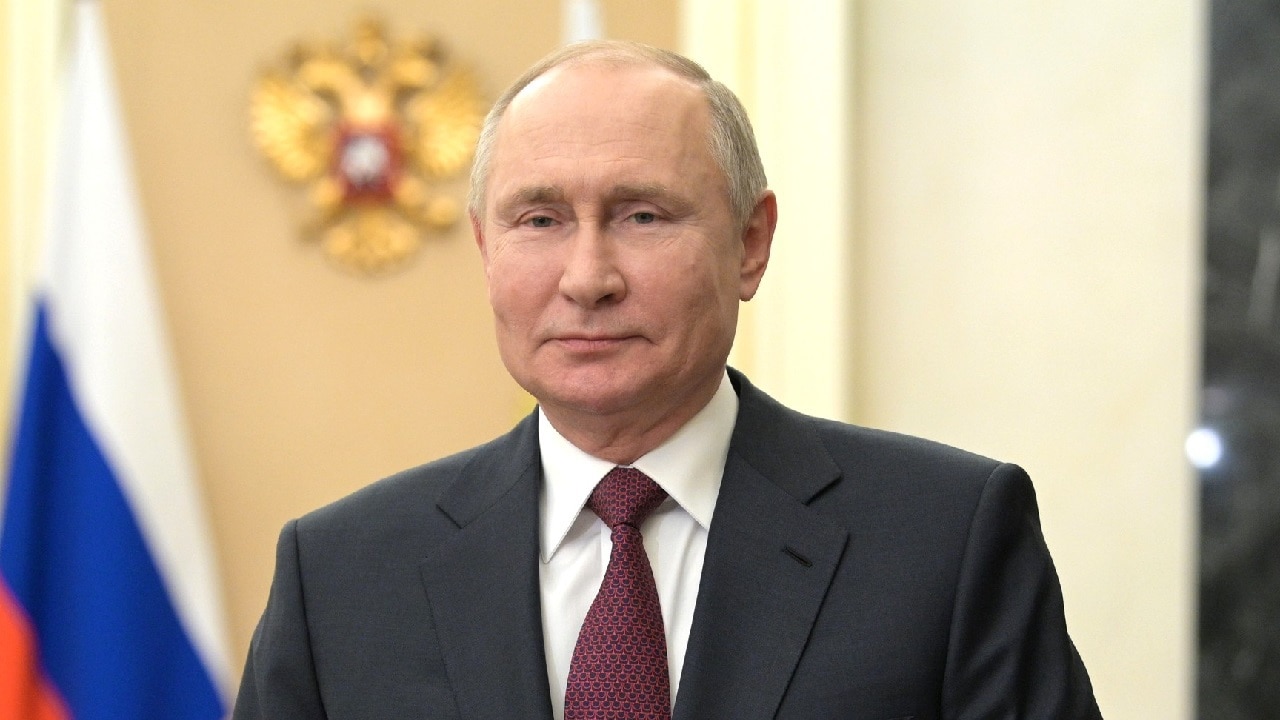
Putin’s War in Ukraine. How Will it End? Badly for Putin. From a strategic perspective, he can never achieve his objectives. While the fighting may not have stopped, the war is over. Putin passed the Russian military’s culminating point, where an attacking force’s advance peaks, the advantage shifts, and fear of vulnerabilities outweighs the prospects for victory. The carnage may continue for months or more, but like when Lee retreated from Gettysburg, the Allies crossed the Rhine, and the Japanese fleet was turned back at Midway, forget about a reversal of fortunes—Putin’s best days in this war are already past.
To the Bitter End in Ukraine
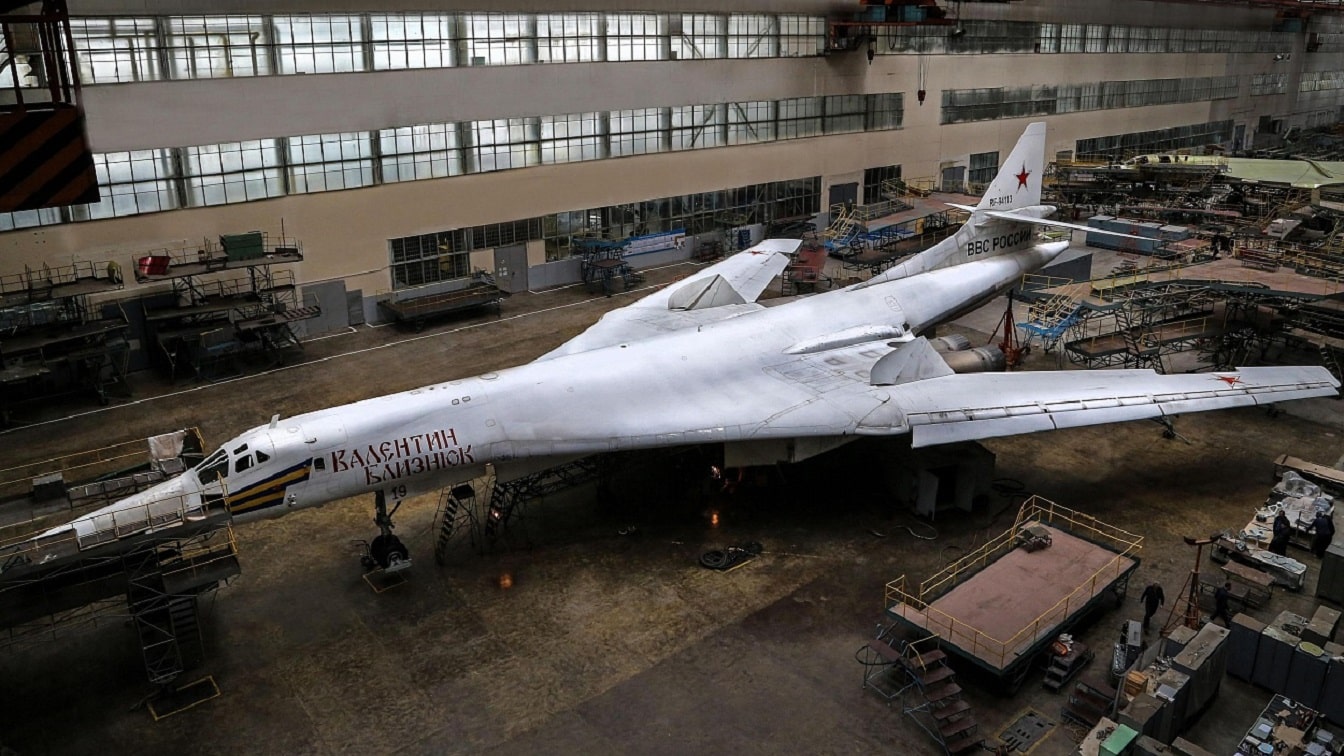
Tu-160 Bomber. Image Credit: Russian Government.
Nevertheless, the enemy, to the bitter end, “gets a vote.” The war will formally stop when Putin casts his ballot to quit. Prognosticators can prognosticate all they want, but only the man in Moscow knows when enough is enough. That said, there are realities on the ground that the Russians will have to learn to live with. These are not predictions. These are facts already in hand, as unappealing to Putin as they are, and they correspondingly represent opportunity and promise to the transatlantic community for a more secure, prosperous, and peaceful future.
#1. A Free and Independent Ukraine That Can Defend Itself is Inevitable.
There is no scenario in which Ukraine does not emerge as one of the most important European countries for both economic and national security. There is no scenario in which anyone hands Putin a victory at the negotiating table that he could not achieve on the battlefield.
Russia’s nearest neighbor sports one of the largest, battle-tested and most capable armed forces in Europe. Behind Poland, Ukraine is already the second most important country on NATO’s front lines, whether or not it is a member. Russia can’t attack any frontline NATO country and just expect the Ukrainians to sit on their hands and watch. Let’s look at the facts.
Ukraine also has one of Europe’s most productive and innovative defense industrial bases. Every day Kyiv cuts new deals with global partners for co-production, investment, and exports, and makes more of its military hardware at home. As NATO struggles to meet its five percent of GDP defense spending commitments, demand for Ukrainian defense production will grow. In a brave new world where the defense industrial base is part of conventional deterrence—because nations that demonstrate they can fight the long war, sustain critical infrastructure, and crank out weapons and munitions make less tasty enemies —Ukraine will be a formidable chew for any would-be aggressor.
Let’s also not forget that Russia has always wanted to control Ukraine because of the country’s resources. Resources Russia will never control. Kyiv is leading Ukraine from a sad war-orphan status to an indispensable partner in economic security. Ukraine immeasurably adds to food security for Europe—one of the world’s most important breadbaskets. The U.S. also anticipates that Ukraine will become one of Europe’s key mining and processing centers. Kyiv already has a bilateral critical resources agreement with Washington. Assuredly, at some point, it will join Pax Silica, the U.S. initiative for multinational cooperation on semiconductor supply chains, critical minerals, and Artificial Intelligence.
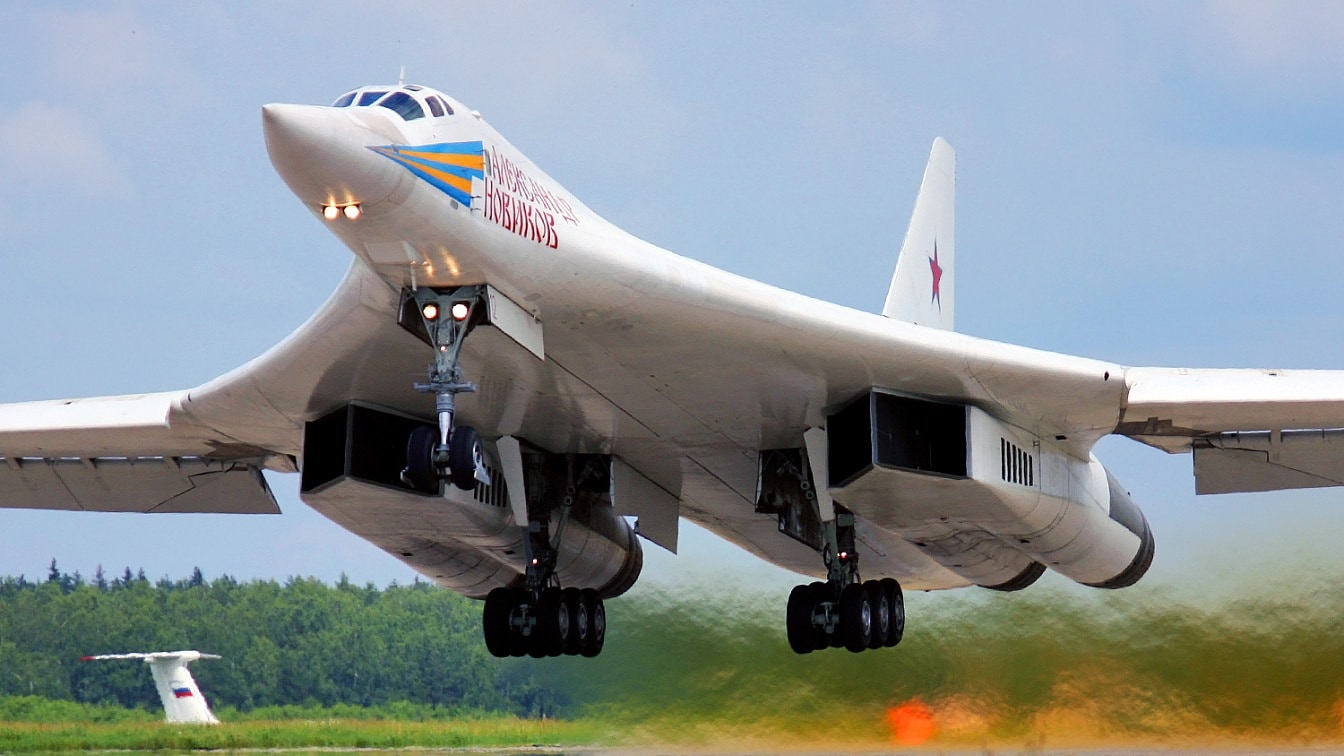
Russian Tu-160 Bomber. Image Credit: Creative Commons.
Further, having swept the Russian navy from the Black Sea, Ukraine will no doubt integrate into the regional maritime transport network, including everything from energy to intermodal transport and digital infrastructure. Europeans have already committed to this course, with or without Ukraine’s near-term membership in the European Union (EU); the EU has made it clear that it plans to move forward on the path of economic integration and reconstruction without waiting for consensus to invite Ukrainians to join the team in Brussels. Ukraine is making the transatlantic community more resilient.
That also means the community will make Ukraine more resilient. That’s economic security and potential for growth that must have the flailing Russian economy weeping with envy.
#2. Abolishing NATO is Off-the-Table
If U.S. President Donald Trump wanted to abandon Europe and Ukraine, he would have walked away a long time ago.
If he wanted to blow up the NATO summit in Ankara, all he had to do was not show up. Truth is, since Trump has been in office, Ukraine has seen its most dramatic successes and Russia its worst reversals.
Further, even before NATO defense investments kick into high gear, the correlation of forces in NATO today is infinitely worse for Russia than at the height of the Cold War, when most of the American Army was either in Europe or planned to be sent there. Today, Putin has about as much chance of picking off a NATO state as a bobcat culling a charging bull Buffalo out of the herd.
#3. Russia will be Forever Vulnerable.
One of the lessons of the war against Ukraine is that if you can’t win a conventional war, you don’t start a nuclear one. Russian nukes are not the force field on the Starship Enterprise. If Moscow attacks a country, it should expect to get hit in return. The last year has shown how incredibly vulnerable Russia is to a deep attack. Even before Putin starts musing about attacking another country, not only does Russia have to rebuild the Russian military, but Moscow will need to make unprecedented investments in defending cities and infrastructure from deep attack.
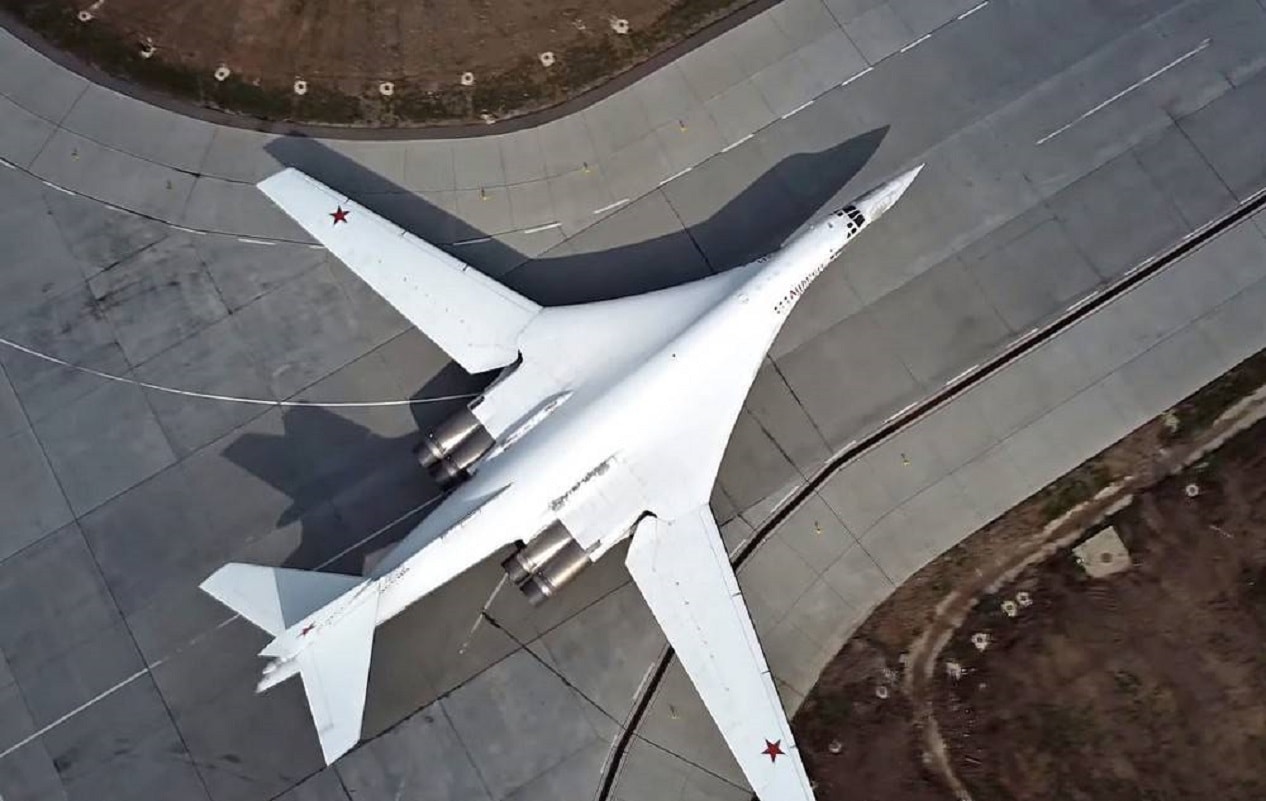
Modernized Tu-160. Image Credit: Russian Government.
In the meantime, NATO countries will build out a robust offense-defense mix. Not only are the military capabilities they are going to buy weapons resulting in virtually every European country having the capacity to strike Russian territory, but the European air and missile defense and drone shields will be emplaced faster and be far more comprehensive than Russian defenses.
Predicting Putin After Putin
Assuming Putin won’t want to be a weak, sniveling loser forever, how will he deal with the losing hand he dealt himself? The man from Moscow surely won’t just go into a corner of the Kremlin and sulk.
The transatlantic community should anticipate at least a few initiatives.
#1. Expect More Dennis the Menace
Putin has to appear threatening. He also has to do what he can to unbalance, confuse, and dispirit his adversaries. Expect more operations other than war—more political, economic, and hybrid warfare, as well as lots of transnational crime and attempts at weapons of mass destruction. These will wax and wane as Putin, the master of disaster, sees fit, but they will always be part of the master’s arsenal.
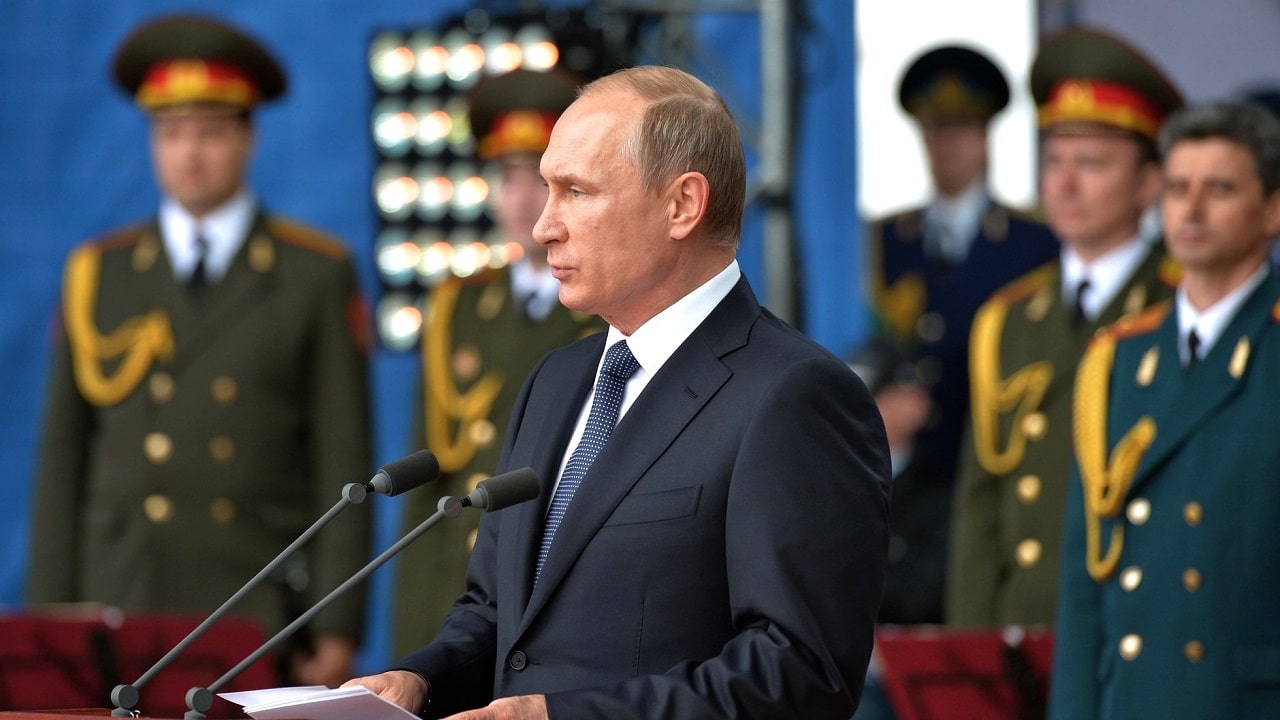
Vladimir Putin at the opening ceremony of international military-technical forum.
#2. Putin Tries on his Gorbachev
Russia’s massive arsenal of nuclear weapons remains a key, maybe his only real strategic asset, except for the reality that you can’t use them unless you are Dr. Strangelove. On the other hand, Putin could be a big man on campus, leveraging Washington and Beijing in a new round of global arms control. It is not the get-out-of-jail-free card, but it could restore some degree of credibility and legitimacy for the regime. That’s if he can bring Beijing to the table.
#3. Join the Quest for Foreign Direct Investment
Putin will need not only capital but Western expertise and technology to rebuild critical sectors, particularly digital and energy, and resuscitate once hallmarks of Russian power-space and defense. He can just hand the whole country over to Beijing (didn’t work so well when the Golden Horde showed up) or he can figure out how to make deals with the West. These will be hard. He doesn’t have the leverage to demand anything. No one will give him anything for nothing. He will have to make difficult, incremental deals with lots of strings attached.
Looking at the top list of what Putin faces and what he has to do, his job might well be more secure than people think. Who would want his troubles? Still, the point is that though we know the war ends badly for Russia, the world goes on, and so will Russia. It is time to think more about what to do next than what to do now.
About the Author: Dr. James Jay Carafano
James Jay Carafano is a national security expert and a 25-year Army veteran. His most recent books are Cold Combat: Mountain Warfare in Italy and the Battle of San Pietro, 1943, and Digital Dominance: Winning in a Socially Networked World.