
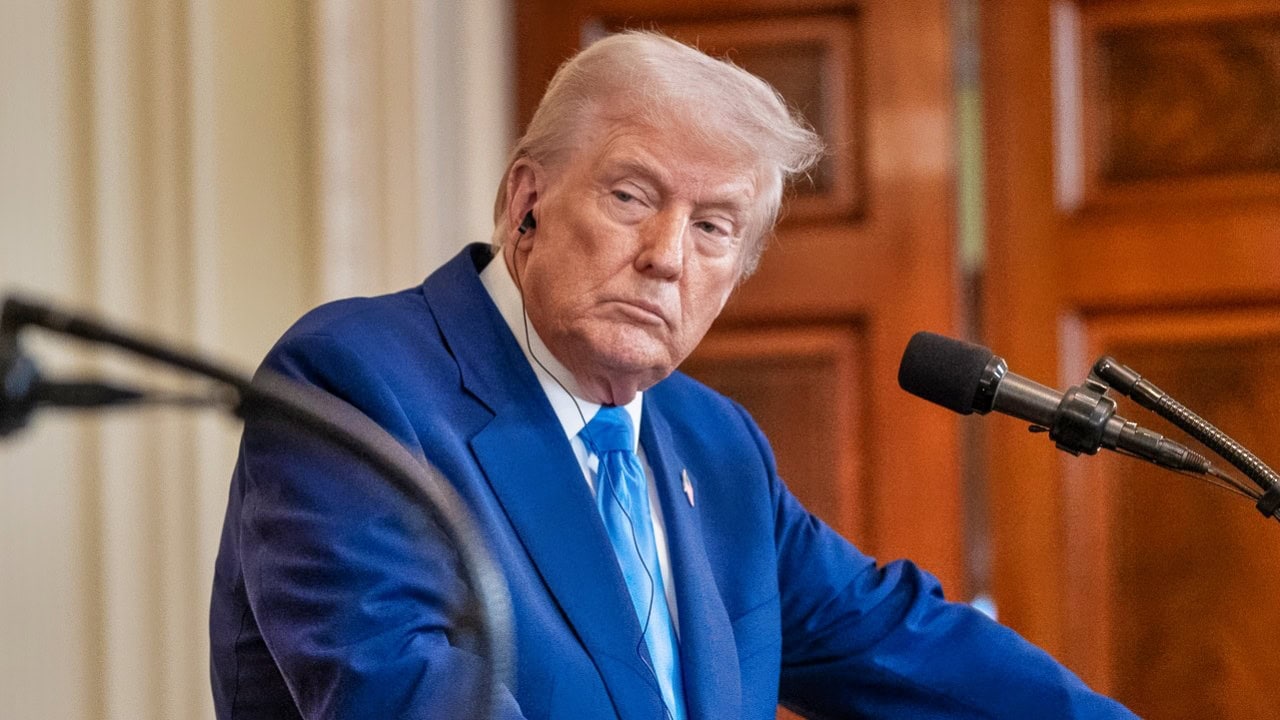
Are we back to Greenland now? On Tuesday, President Trump arrived at the NATO summit in Ankara and immediately dropped a bombshell. Unless Denmark becomes more flexible about its control of Greenland, the United States will consider withdrawing substantial forces from Europe. The summit comes on the heels of a blockbuster report in the Wall Street Journal regarding Europe’s reaction to last year’s Greenland crisis, indicating the seriousness with which Europeans and Canadians took Trump’s threats to seize the island.
The Context: Trump and Greenland
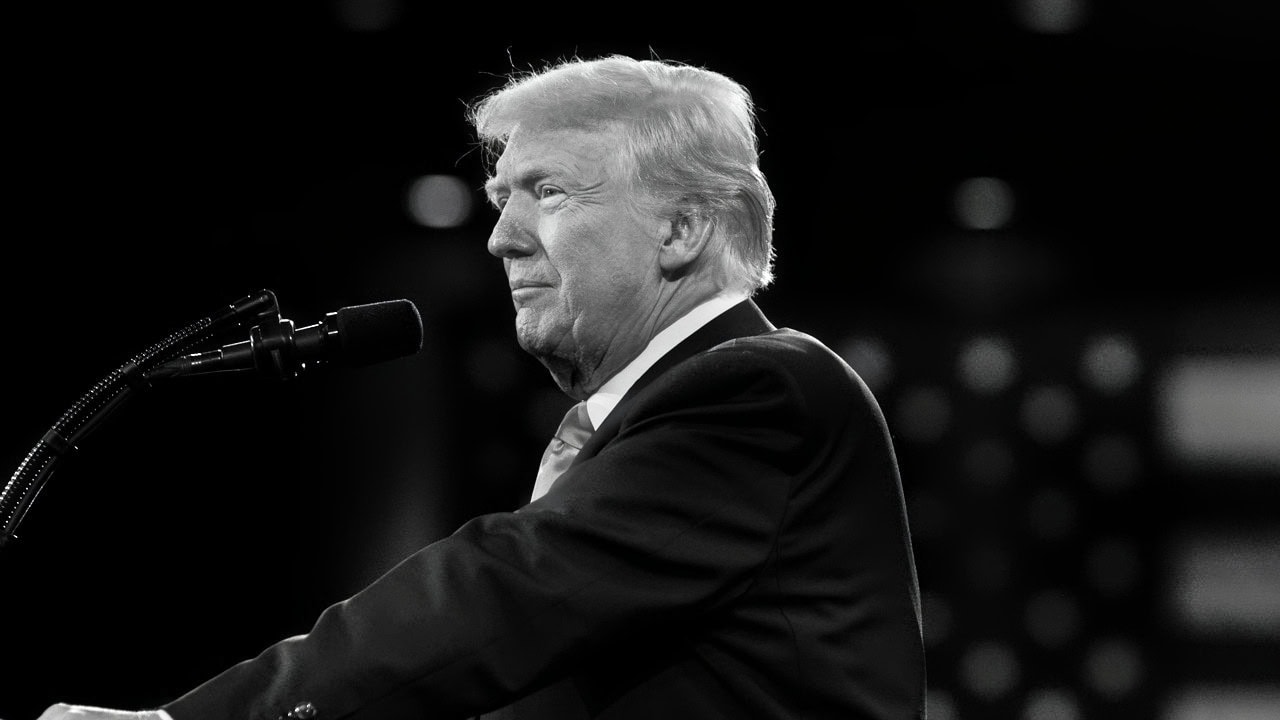
President Donald Trump speaks at the Conservative Political Action Conference at the Gaylord National Resort & Convention Center in Oxon Hill, Maryland, on Saturday, February 22, 2025. (Official White House Photo by Molly Riley
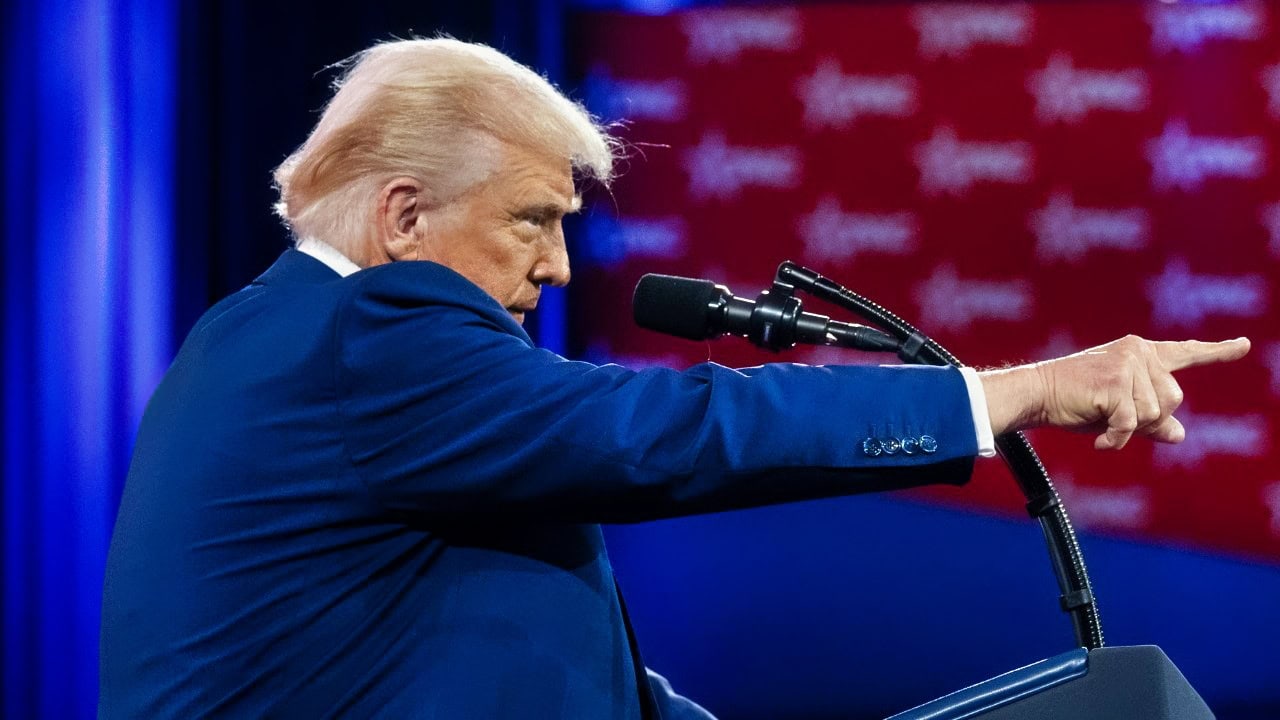
President Donald Trump speaks at the Conservative Political Action Conference at the Gaylord National Resort & Convention Center in Oxon Hill, Maryland, on Saturday, February 22, 2025. (Official White House Photo by Molly Riley.
The President’s outburst comes as his administration faces a series of foreign policy disasters. Trump made his comments about Greenland nearly simultaneous with the latest breakdown of the US-Iran cease-fire.
The amateurishly negotiated Memorandum of Understanding (MOU) between the United States and Iran left a number of issues unclear, straining the agreement to its breaking point. At the same time, earthquakes in Venezuela have exposed the weakness of the ruling clique that received Trump’s blessing after his seizure of President Nicolás Maduro.
Trump’s much-vaunted summit with President Xi Jinping failed to secure any significant trade concessions, even as the Supreme Court gutted Trump’s ability to levy tariffs around the world. The truce that Trump helped negotiate in Gaza has stalled, with few partners displaying any interest in making good on their commitments. Finally, the Russia-Ukraine War continues to rage unabated, with the United States playing an increasingly trivial role in its termination.
It is thus likely that some of Trump’s statements stem from a sense of weakness and frustration.
Traditionally, second-term presidents have focused on foreign policy, and while Trump has left a mark, few of his interventions have played out as he expected. A possible Democratic victory in the fall midterms would further constrain Trump on both the international and domestic fronts.
A return to the question of Greenland and a renewed confrontation with Greenland at least restores to the President some sense of efficacy, even if it does not constitute coherent policymaking.
The Impact
But this hardly means that Trump’s threats are idle. Trump has long maintained a hostility against NATO that runs counter to the mainstream GOP and even to his inner circle.
Reports from earlier this week indicated that Secretary of War Pete Hegseth was planning to announce substantial US troop withdrawals from Europe before being stymied by Secretary of State Marco Rubio. Moreover, the President has expressed bitterness towards European members of NATO for failing to intervene on the US’s behalf in the Strait of Hormuz, going so far as to promise an embargo against Spain.
Thus, a withdrawal would be in line with how parts of the administration think about the trans-Atlantic relationship.
Perhaps more importantly, the Wall Street Journal’s reporting indicates little, if any, reason to think that Europe will be flexible on the Greenland question. If Trump wants a confrontation, he’s likely to get one.
A de facto US abandonment of NATO would, without question, be bad for Europe, especially given the ongoing conflict in Ukraine, but it is something that Europeans have been forced to prepare for. Jump-starting the European defense industrial base after years of neglect is a monumental task, but NATO’s European members (along with Canada) are at least beginning to make the difficult decisions necessary to proceed. It certainly helps that Ukraine’s relative success over the last six months has allayed the most immediate concerns over Moscow’s threat to the continent.
Greenland: Destined to Join the United States? Hardly
The failure of the US campaign against Iran has left the Trump administration with precious few achievements on the foreign policy front, as Trump has failed even in his efforts to escape the consequences of his strategic errors.
And this is perhaps the lesson Europeans should take: Trump is acting aggressively out of weakness and frustration. His position is deteriorating both domestically and internationally, and he is focusing on what he can do, not because it makes good sense, but because it offers an opportunity to act.
But as any parent knows, recognizing that the toddler doesn’t have good reasons for launching a tantrum does not, in any way, pave the way to ending the tantrum. Europe needs to continue to prepare for a defense future with increasingly anemic US participation.
US strategic planners need to think about how the US can meet its alliance obligations with only scarce forces on the ground. And the people around the President need to think very hard about how to cushion the impact of his worst impulses on the most important institutions of international society.
About the Author: Dr. Robert Farley, University of Kentucky
Dr. Robert Farley has taught security and diplomacy courses at the Patterson School since 2005. He received his BS from the University of Oregon in 1997, and his Ph. D. from the University of Washington in 2004. Dr. Farley is the author of Grounded: The Case for Abolishing the United States Air Force (University Press of Kentucky, 2014), the Battleship Book (Wildside, 2016), Patents for Power: Intellectual Property Law and the Diffusion of Military Technology (University of Chicago, 2020), and most recently Waging War with Gold: National Security and the Finance Domain Across the Ages (Lynne Rienner, 2023). He has contributed extensively to a number of journals and magazines, including the National Interest, the Diplomat: APAC, World Politics Review, and the American Prospect. Dr. Farley is also a founder and senior editor of Lawyers, Guns and Money.