
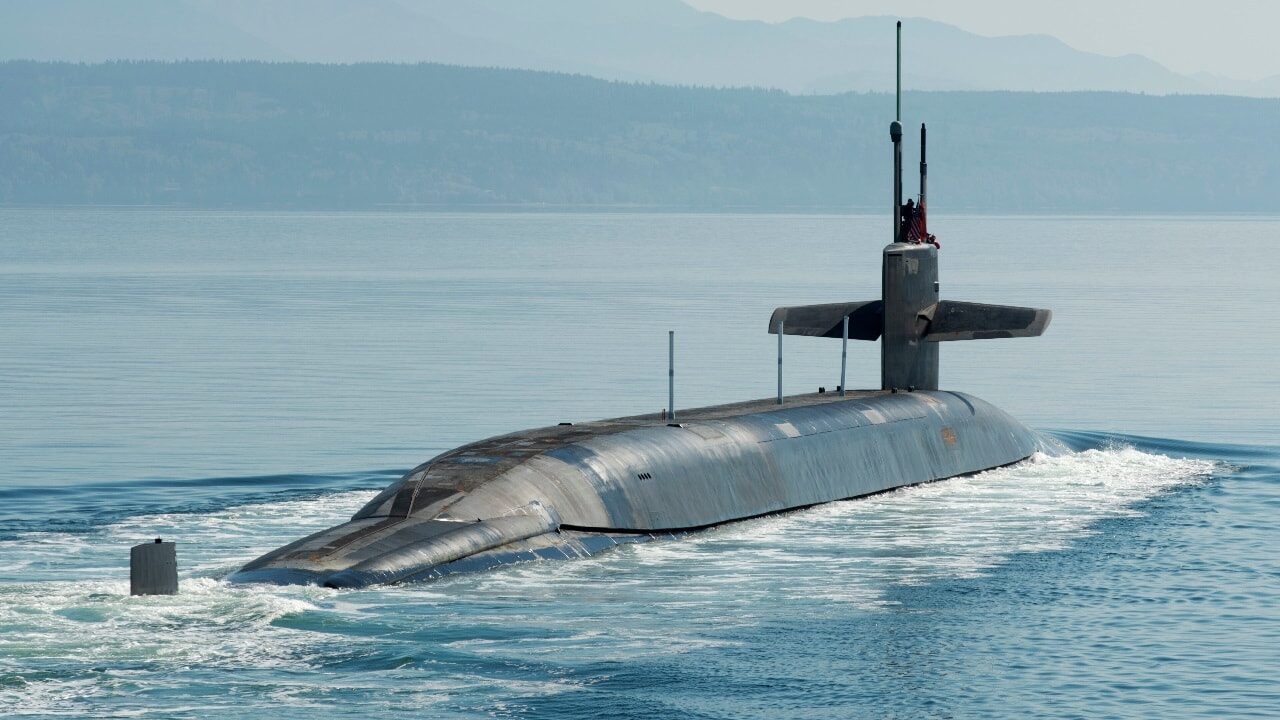
Summary and Key Points: Dr. Robert Kelly argues that a “new nuclear age” is dawning, driven not just by rogue states, but by U.S. allies losing faith in the American nuclear umbrella.
-President Trump’s second-term shift from indifference to “open hostility”—highlighted by threats to take Greenland by force—has shattered the longstanding defense-for-nonproliferation bargain.
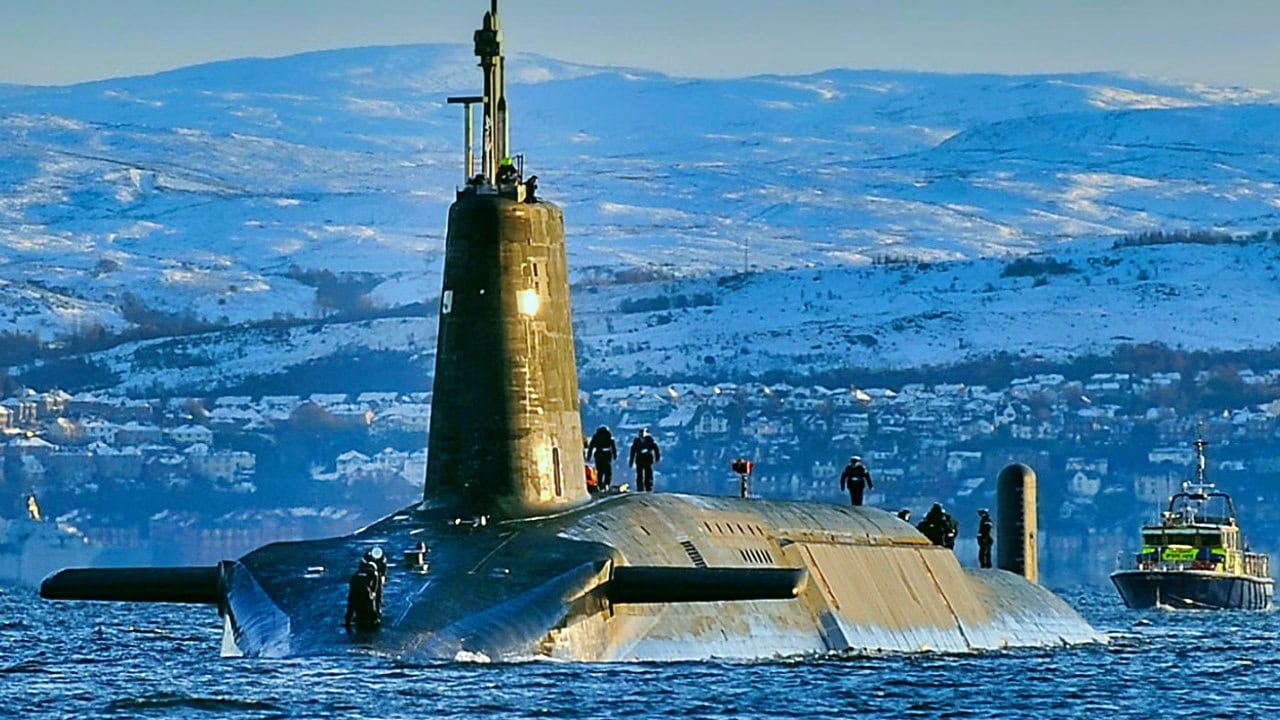
Vanguard-Class SSBN. Image Credit: Creative Commons.
-With the “adults in the room” gone, allies in Europe and Asia now view the U.S. as a potential predator rather than a protector.
-To ensure survival against an increasingly unstable Washington, partners may soon seek their own nuclear deterrents to replace unreliable American promises.
How an “Unstable” Washington is Ending the Age of Non-Proliferation
A new nuclear age seems to be dawning—one during which more countries will be armed with nuclear weapons. Rogue states such as North Korea and Iran are likely to continue pursuing these technologies. These states also are likely to use them, since they both face regional opponents with greater conventional power, as well as the United States. It is understandable that states such as these would pursue nukes.
But U.S. President Donald Trump is encouraging another type of proliferation, among U.S. allies, that is much less recognized though hints of it already are visible. The core problem is that Trump is a deeply unstable ally, which encourages U.S. partners to reconsider their reliance on the US nuclear umbrella.
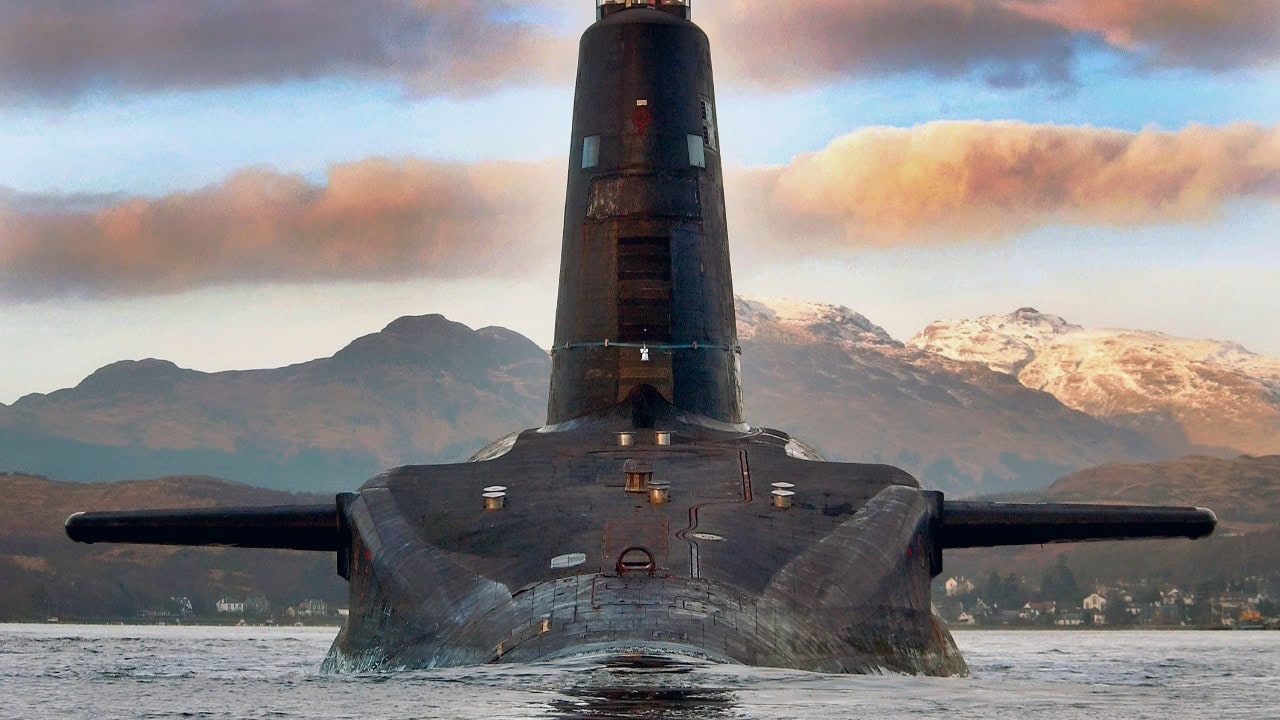
Vanguard-Class Submarine Royal Navy
This problem was known as early as Trump’s first term as president. But in his second term, he has gone beyond indifference toward allies and moved to open hostility. Trump’s expressed desire to take Greenland, by force if necessary, even though it is a territory of a NATO ally, shows the United States drifting from disinterested partner to open opponent of its own allies. Just as traditional American opponents such as North Korea saw nukes as an ultimate guarantee of defense against the United States, so will current U.S. partners and allies if Trump continues to threaten them.
The Traditional US-Ally Nuclear Bargain
States find nuclear weapons attractive for obvious reasons. The weapons are so powerful that the use of even a few against an aggressor would likely end the threat. No state would benefit from a war against another state—even a weak, wealthy one—if that state could retaliate with nuclear weapons. Even just a few nuclear weapons dropped on the attacker’s cities could kill millions, including the attacker’s ruling elites.
This massive killing potential has had a strange, unanticipated effect: peace. No one wants to fight when their own cities might be devastated, so a cold but surprisingly durable, peace fell on great power relations after 1945. So powerful was this effect that international relations theory spoke of a “nuclear revolution.” Despite fifty years of hostility, the United States and Soviet Union never fought a direct conflict, likely because both feared nuclear escalation.
U.S. and Soviet allies benefitted from this nuclear peace, too. Both superpowers extended nuclear deterrence to their partners. An attack on any could provoke a war with the threat of nuclear escalation. That threat also worked; no U.S. or Soviet ally was invaded.
The extension of nuclear deterrence to allies had another benefit: The allies did not need to build their own nuclear weapons. If the superpower patron’s promise to fight on behalf of the allied client was credible, the ally did not need to build its nukes. This kept the number of nuclear weapon-possessing countries far lower than many expected at the beginning of the nuclear era. At the end of the Cold War, there were just five nuclear weapons states: the United States, Russia, France, United Kingdom, and China. Fewer nuclear states meant fewer accidents, less risk of theft or loss, fewer scientists with knowledge to sell, and so on.
Extended nuclear deterrence was a bargain: Allies would desist from nuclearizing if the United States promised to defend them.
Trump is Destroying the Defense-for-Nonproliferation Bargain of US Alliances
Trump is tearing down this longstanding bargain. In his first term, he openly questioned U.S. alliances. He threatened to leave NATO, and he threatened to pull out of South Korea. But U.S. allies looked the other way on such rhetoric and hoped Trump would lose the next election.
The “adults in the room” during Trump’s first term stopped Trump from acting on such impulses. No U.S. allies talked much about nuclearizing back then, and nothing came of Trump’s rhetoric.
But in Trump’s second term, the adults are gone. Trump’s impulsive style is unchecked, as is his tendency to escalate when confronted. This tendency peaked recently with Trump’s oblique military threats against Denmark and Canada. U.S. allies are still quite dependent on the United States after decades of developing tight interoperability. It will take time to unwind their defense from the United States; but many likely will.
The United States is now too unreliable for something as momentous as one’s own nuclear defense. Americans chose to elect Trump a second time, despite his well-established behavior toward allies. No U.S. ally could reasonably expect Trump would risk nuclear escalation to defend them at this time. Indeed, U.S. allies are worried that Trump’s America will seek to predate them. Securing their own nuclear defense is the obvious alternative.
Author: Dr. Robert Kelly, Pusan National University
Dr. Robert E. Kelly is a professor of international relations in the Department of Political Science and Diplomacy at Pusan National University in South Korea. His research interests focus on Security in Northeast Asia, U.S. foreign policy, and international financial institutions. He has written for outlets including Foreign Affairs, the European Journal of International Relations, and the Economist, and he has spoken on television news services such as the BBC and CCTV. His personal website/blog is here; his Twitter page is here.