
Europe Won’t Fight The U.S. Over Greenland—But It Could Evict American Forces
American President Donald Trump has significantly ramped up his bellicose rhetoric about Greenland in recent weeks. While at the moment he has ruled it out, Trump at times in the past appeared to be genuinely contemplating the use of force against Greenland and its owner, Denmark. This action would be a remarkable and catastrophic turn of events.
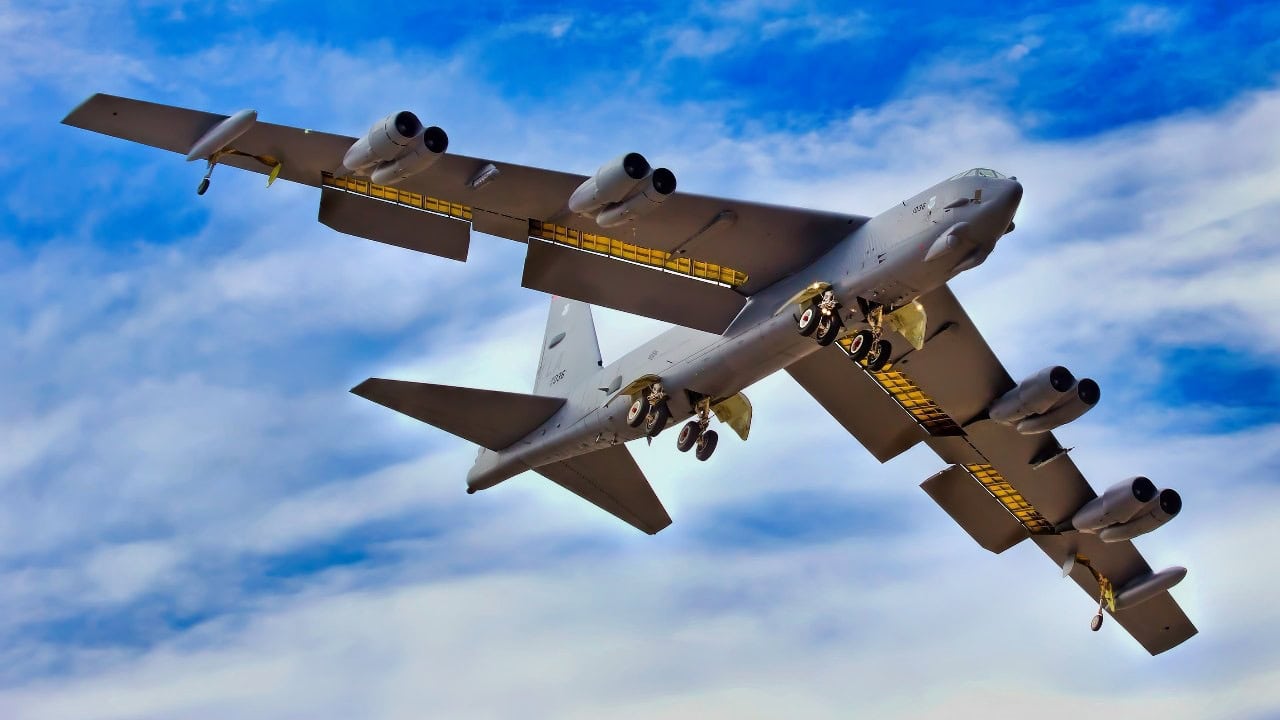
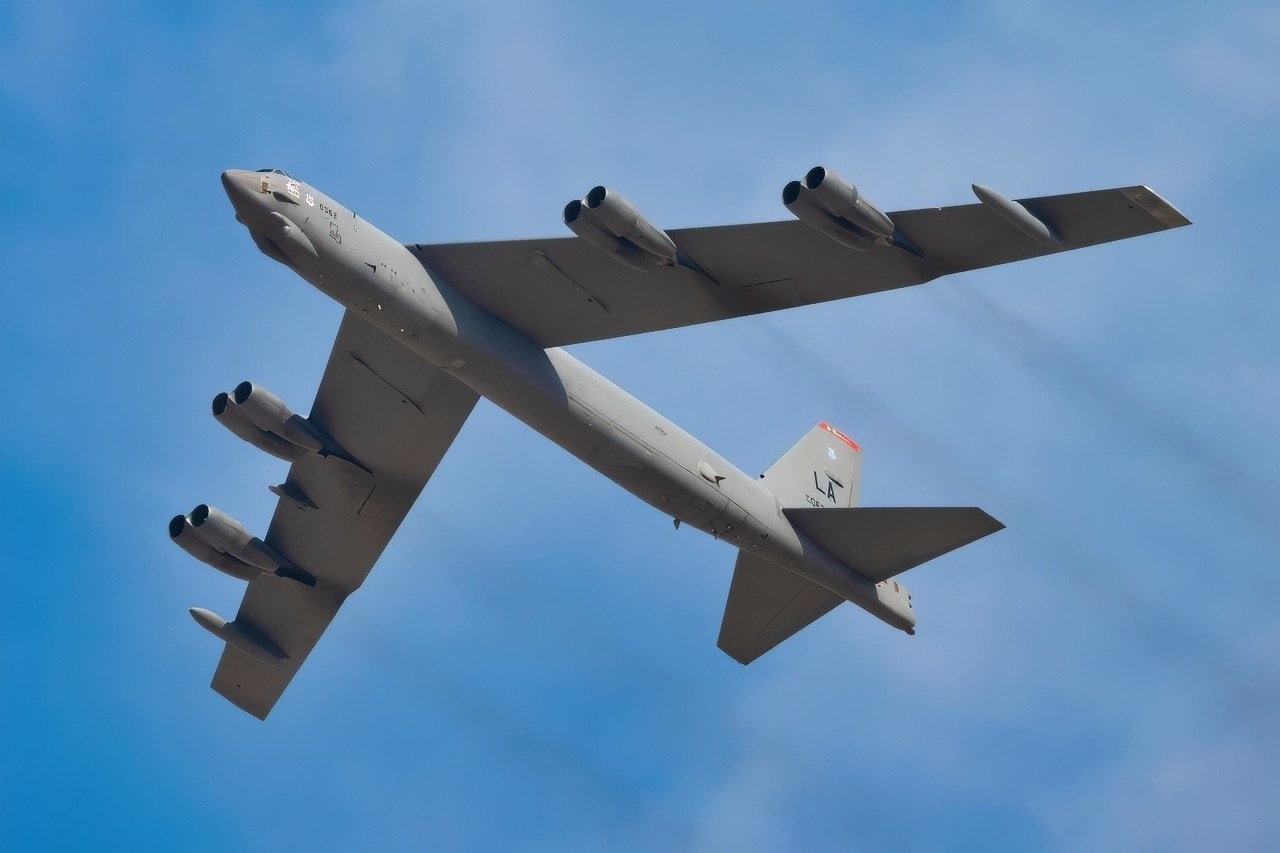
B-52 Bomber. Image Credit: Creative Commons.
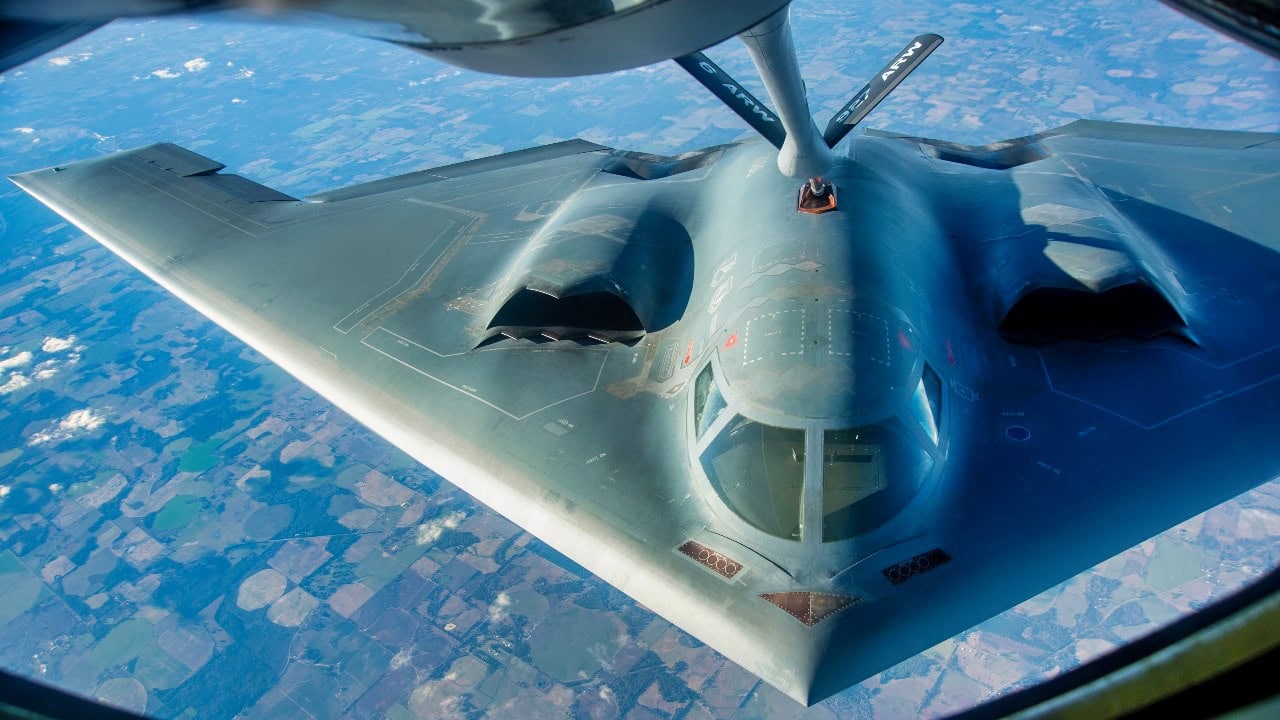
A B-2 Spirit assigned to Whiteman Air Force Base, Mo., receives fuel from a KC-135 Stratotanker, Feb 7, 2021. A B-2 Spirit performed alongside a B-1B Lancer and a B-52 Stratofortress for the Super Bowl LV flyover on Feb. 7, 2021. (U.S. Air Force photo by Airman 1st Class David D. McLoney)
As many commentators have noted, an assault may well break the NATO alliance. NATO is designed to combat external aggression. It has no protocol for the use of force by one member against another. It is, of course, highly unlikely that NATO states would actually fight the US. The US could take the island.
The larger problem is that no NATO member would want to remain in the alliance afterward. NATO would likely break up. The non-American members might re-constitute a regional security structure, perhaps based around the European Union. But America would be expelled, and that would likely mean the closure of US bases and facilities in Europe.
Does MAGA grasp that Europe will Expel the U.S. from the Continent?
It is unclear whether supporters of Trump’s Greenland land grab appreciate this likely outcome. Americans have come to take NATO for granted. The alliance is 70 years old and has accompanied all the ups and downs of America’s superpower career over the decades. The acronym ‘NATO’ has entered common parlance.
European NATO members stood with the US against communism during the Cold War and against Islamic fanatics during the war on terror. Intra-alliance disputes have occasionally been severe, but no president actually sought the alliance’s end. But Trump’s insouciance about NATO’s collapse, as a side effect of his Greenland bid, suggests he doesn’t mind if NATO falls. This is new.
This recklessness may reflect Trump’s own brashness and indiscipline. But the lack of resistance from Trump’s MAGA (Make America Great Again) coalition suggests his supporters do not anticipate negative consequences. MAGA likely anticipates that the Europeans will fold, that there will be no major geopolitical or economic costs to Trump’s aggression. Treasury Secretary Scott Bessent has said as much.
Europe has indeed indulged Trump for a year now. But that was when Trump was mostly a disinterested ally who wanted to shake off NATO burdens. This year, Trump has shifted from indifference to allies to open predation of them. If Trump feels that he can absorb US allies (!), they will obviously resist.
MAGA May Not Care about Europe, but It Does Care about the Middle East
Europe will impose economic penalties in response to a US attack, but more importantly, it will be the geopolitical rupture. Specifically, the US will be forced to rapidly retrench from its European bases as host governments there expel US soldiers, contractors, and their families.
This expulsion will dramatically reduce America’s ability to project power into Europe, Africa, and the Middle East. The US has dozens of bases in Europe. These are its largest in the world outside of the US mainland. They enable the US to project force throughout the region and provide the massive logistical tail needed for modern military operations. In particular, US air bases and friendly ports provide the maintenance and support required by modern, hi-tech air and sea platforms.
As one former US commander in Europe put it, “a large-scale withdrawal would make US power projection slower, costlier, and less effective.”
MAGA might argue that the US does not need to project power into Europe or Africa. Trump has little interest in helping Ukraine in its war against Russia, for example, and he has pushed European states to spend more on defense. And US national interests in Africa have long been minimal.
But Trump’s coalition does care—quite intensely—about US power projection into the Middle East. Trump’s staunchest supporters are evangelical Christians. For them, US alignment with Israel is a core national security priority, as is the ability to strike Muslim states perceived as anti-American.
European logistical hubs help substantially with that. US bases in the Middle East tend to be smaller and more politically controversial with their hosts than in Europe.
Taking Greenland is Not Worth the Risk
Snatching Greenland will end NATO and deprive the US of much of the forward basing it uses to project power into western Eurasia.
US bases in the Middle East, deprived of European logistical support and political alignment, would be tenuously located, surrounded by many hostile countries, and far from home.
The US Navy, for example, would need to steam all the way from North America to the Persian Gulf with little support structure en route.
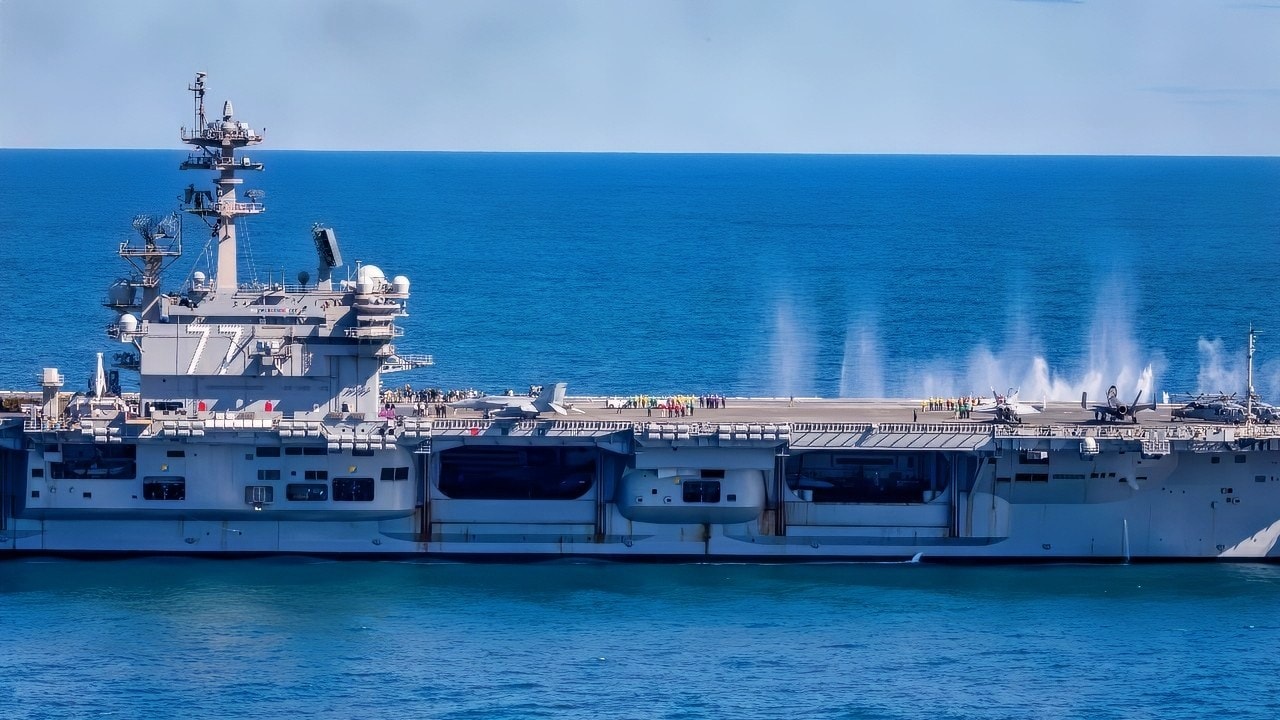
ATLANTIC OCEAN (Oct. 5, 2025) The Nimitz-class aircraft carrier USS George H.W. Bush (CVN 77) transits the Atlantic Ocean while an F/A-18E Super Hornet, attached to the “Pukin Dogs” of Strike Fighter Squadron (VFA) 143 fire rounds into ocean in support of the Titans of the Sea Presidential Review. The Titans of the Sea Presidential Review is one of many events taking place throughout the country to showcase maritime capabilities as part of the U.S Navy’s 250th birthday. America is a maritime nation. For 250 years, America’s Warfighting Navy has sailed the globe in defense of freedom. (U.S. Navy photo by Mass Communication Specialist 2nd Class Mitchell Mason)
If MAGA does not care about NATO, it should at least realize that destroying it will cripple the US position in the Middle East as well.
Author: Dr. Robert Kelly, Pusan National University
Dr. Robert E. Kelly is a professor of international relations in the Department of Political Science and Diplomacy at Pusan National University in South Korea. His research interests focus on Security in Northeast Asia, U.S. foreign policy, and international financial institutions. He has written for outlets including Foreign Affairs, the European Journal of International Relations, and the Economist, and he has spoken on television news services such as the BBC and CCTV. His personal website/blog is here; his Twitter page is here.