
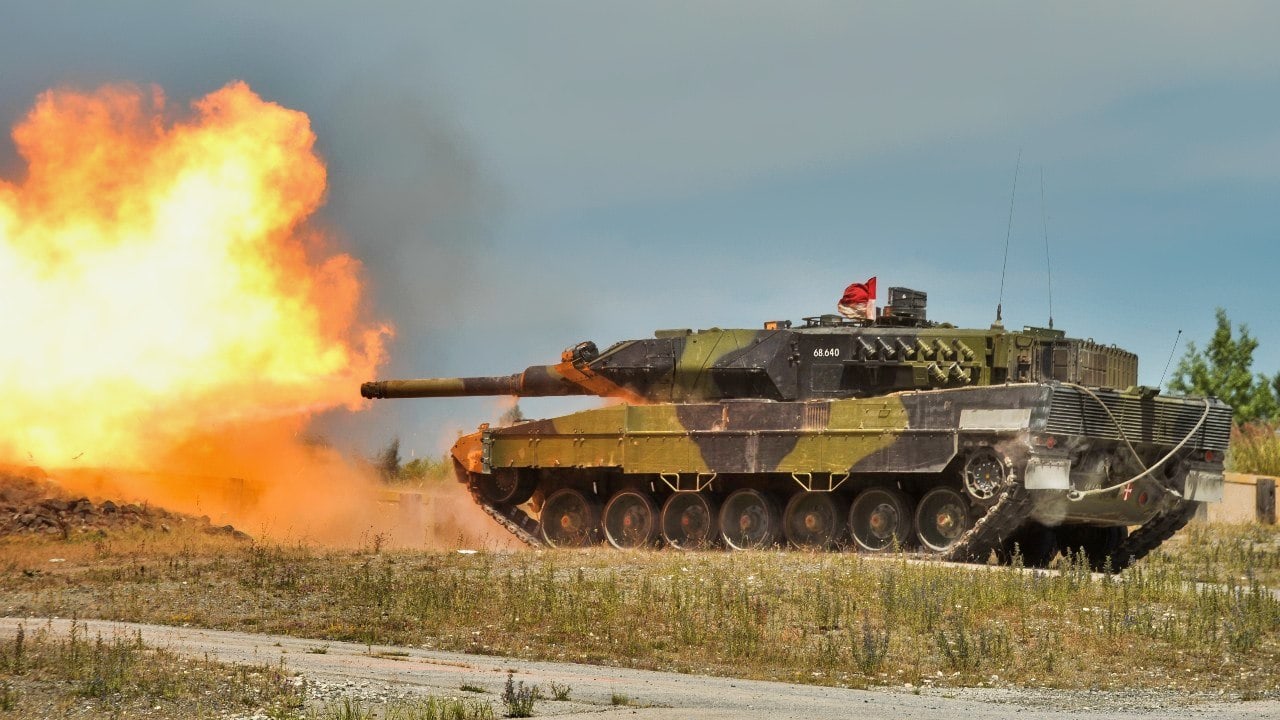
Germany Joins European Military Presence in Greenland
Germany has announced it will send 13 soldiers to Greenland this week as part of a short reconnaissance mission alongside other European partners – a deployment that comes amid deepening tensions within NATO arising as a result of U.S. President Donald Trump’s push for Washington to gain control of the island.
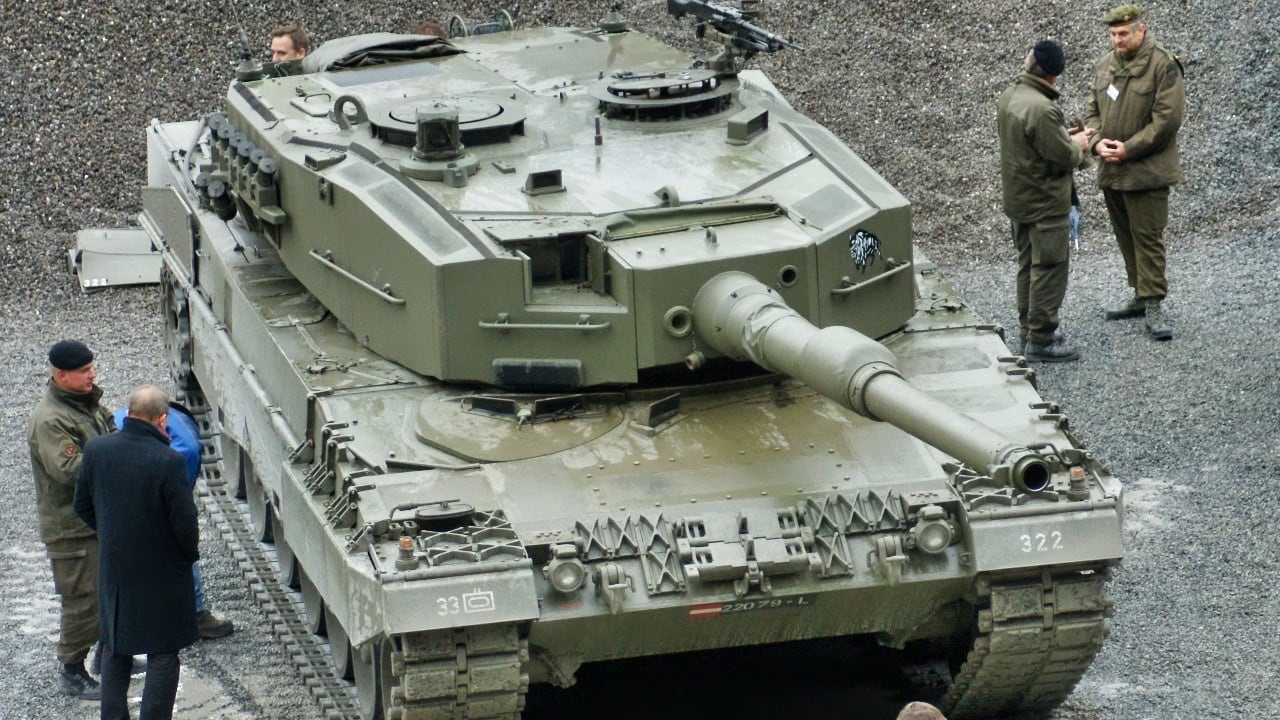
Germany Leopard 2 Tank. Image Credit: Creative Commons.
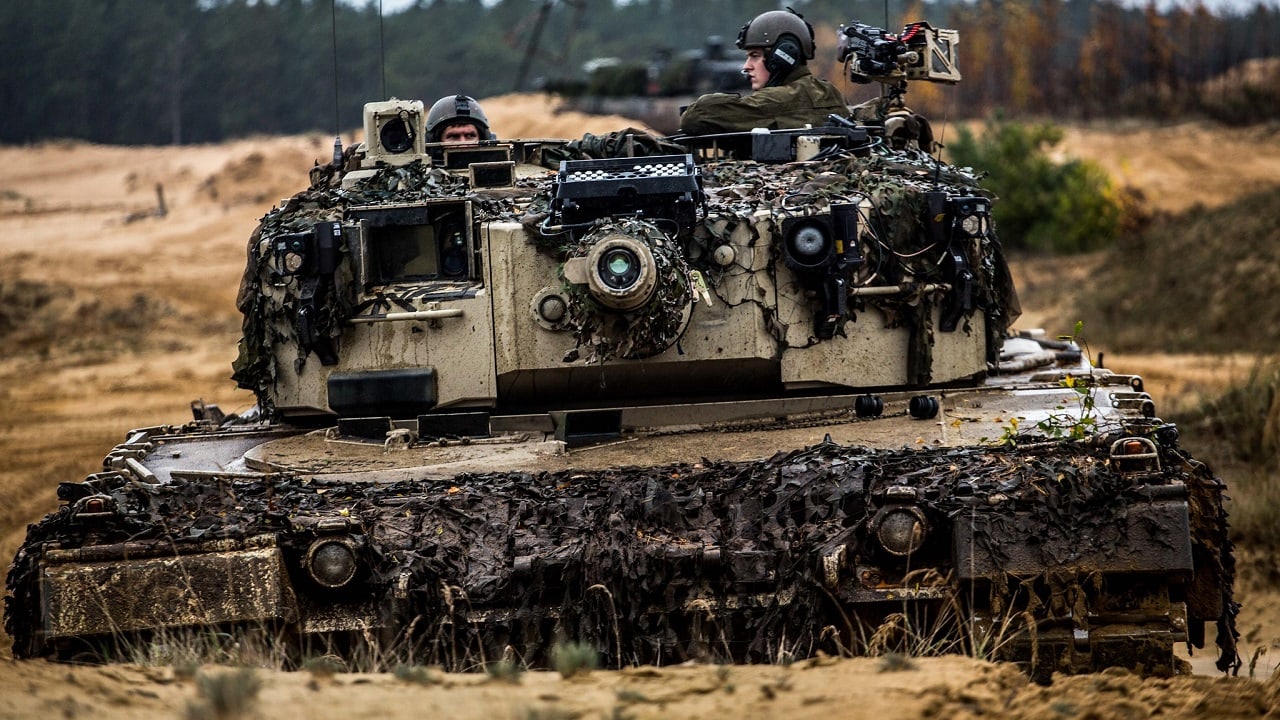
A Norwegian Leopard 2A4 main battle tank during Iron Wolf II in Lithuania. It involves 2,300 troops from 12 NATO Allies. The Lithuanian-led exercise is helping to train the NATO Battlegroup which consists of soldiers from Germany, Belgium, Luxembourg, the Netherlands and Norway. Shot in Rukla, Lithuania.
The German government, responding to a request from Denmark, said the mission will run from Thursday through Saturday and will examine how European forces might contribute to security in the region – including maritime surveillance tasks.
Remarkably, though, the move comes in anticipation of a possible military annexation of the island by the United States – another NATO member. While the Trump administration has not explicitly threatened definite military action to secure control of the island, it is widely believed to be a possibility based on the president’s suggestion that it will be achieved “the easy way” or “the hard way.”
Greenland – an autonomous territory of the Kingdom of Denmark – has become a major geopolitical flashpoint in recent weeks after Trump publicly asserted that the United States must “own” the island to prevent Russia or China from occupying it in the future. The suggestion is by no means unreasonable, nor should it come as a surprise; analysts have been warning about the possibility of Russia or China making moves on the island for years already, and Trump has repeatedly made it clear that his effort to seize Greenland is primarily a matter of national security and preventing expansionist forces in the East establishing control of a strategic island in the Arctic.
The European military presence there is presently small in numbers, but it is significant: allied capitals are, after all, now responding directly to rhetoric from a U.S. president.
Why Greenland Matters
Greenland is strategically valuable because of its location and its existing defense infrastructure. The island sits between North America and Europe, overlooking key North Atlantic sea and air routes that have historically been central to transatlantic security. It also borders the Arctic, where melting ice is opening new shipping lanes and resource access.
The United States already maintains a substantial military presence on the island at Pituffik Space Base (formerly Thule Air Base), which hosts space surveillance and missile warning systems that are critical to North American Aerospace Defense Command (NORAD) and allied early-warning networks.
Under the 1951 defense agreement between the United States and Denmark, the base operates with the consent of the Danish government, the Danish flag must be flown, and U.S. forces are stationed under a NATO framework.
But despite that presence, President Trump continues to claim that the U.S. must move away from its existing tenant agreements and become the outright owner of Greenland. Diplomats and analysts disagree on the specifics here, and while many say that there is no significant threat from the Russian or Chinese military, the fact remains that the territory would be strategically useful if either of those great powers decided that the value was high enough to invade somewhere down the line.
Europe’s Response So Far
Denmark’s request for European military participation in Greenland has resulted in a significant response from allies, with Sweden and Norway both announcing they would send personnel to the island this week. Germany’s announcement follows those commitments, forming a larger multinational reconnaissance and planning effort ahead of more comprehensive activities that are expected in the Arctic.
Officials also confirmed on Thursday, January 15, that a small French military contingent arrived in Nuuk, Greenland’s capital, alongside soldiers from the United Kingdom, Finland, and the Netherlands. The arrival of allied military personnel also came with a promise from French President Emmanuel Macron to send “land, air, and sea assets” soon afterwards.
Not all European leaders are on board, however. Polish Prime Minister Donald Tusk has said that Poland does not plan to join the European deployment to Greenland, but has made it clear his government does not support President Trump’s efforts to seize control of the island.
“A conflict or attempted annexation of the territory of a NATO member by another NATO member would be the end of the world as we know it – and which for many years guaranteed our security,” Tusk said.
According to the German Defense Ministry, the 13 soldiers being deployed are not combat troops but personnel assigned to a reconnaissance and assessment mission, intended to evaluate what specific capabilities Germany and its partners could provide in future Arctic security efforts. Among the capabilities Germany is expected to provide so far are maritime surveillance and logistical support, and there are no plans for permanent basing.
The deployment is scheduled to last just three days, from Thursday, January 15, through Saturday, January 17. German officials have also said that any follow-on presence would depend on consultations with allies.
About the Author:
Jack Buckby is a British researcher and analyst specialising in defence and national security, based in New York. His work focuses on military capability, procurement, and strategic competition, producing and editing analysis for policy and defence audiences. He brings extensive editorial experience, with a career output spanning over 1,000 articles at 19FortyFive and National Security Journal, and has previously authored books and papers on extremism and deradicalisation.