
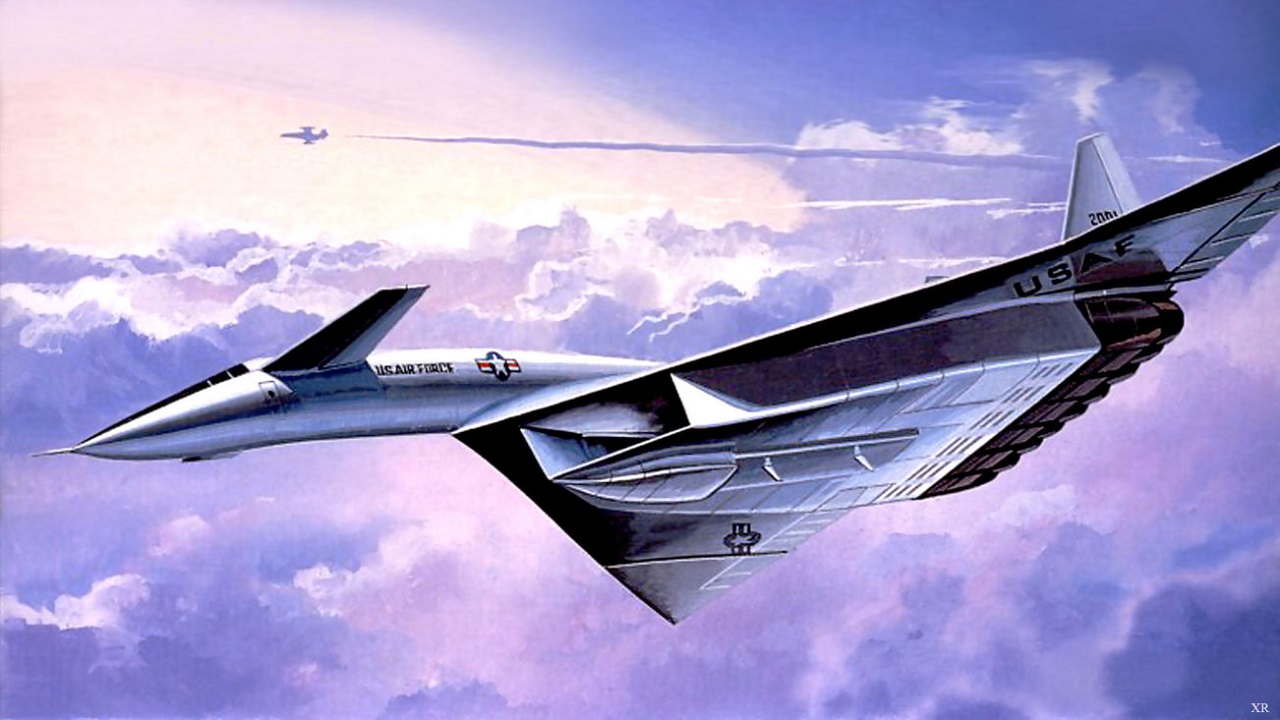
Summary and Key Points: The North American XB-70 Valkyrie was built to cruise at three times the speed of sound — so high and fast that nothing the Soviet Union could field would ever catch it.
-It beat the heat, the speed, and the engineering that should have killed it, and then, in June 1966, one of the only two ever built was lost in a midair collision during a formation flown for a corporate photo shoot. Below we have included original photos of the XB-70 we took back in July of last year.

XB-70 photo taken at U.S. Air Force Museum by 19FortyFive in 2025.

XB-70 photo taken at U.S. Air Force Museum by 19FortyFive in 2025.

XB-70 photo taken at U.S. Air Force Museum by 19FortyFive in 2025.
The Mach 3 Bomber Killed By A Photo Shoot: The Tragic Story Of The XB-70 Valkyrie
The North American XB-70 Valkyrie was one of the most ambitious aircraft the United States ever attempted to build, a six-engine bomber the size of an airliner designed to cruise at three times the speed of sound while carrying nuclear weapons deep into Soviet territory.
The logic behind it was the same logic that produced the SR-71 Blackbird: in an era before capable surface-to-air missiles, the only real threat to a bomber was an enemy interceptor, and an aircraft that could fly faster and higher than any interceptor was effectively untouchable. The Valkyrie was conceived in the 1950s to fly at Mach 3 above 70,000 feet, an altitude and speed combination that no potential enemy would have been able to defend against at the time it was drawn up.
The aircraft North American Aviation produced to meet that requirement was staggering in scale and ambition. It stretched 196 feet in length, spanned 105 feet across its delta wing, and carried an estimated maximum gross weight above 500,000 pounds, powered by six turbojet engines clustered side by side in a single enormous pod beneath the fuselage. For comparison, the B-52 Stratofortress that the Valkyrie was meant to replace cruised at around Mach 0.85, while the Valkyrie was designed to sustain three times that speed for hours at a time, an order-of-magnitude leap rather than an incremental improvement. It was, by any measure, a machine closer to science fiction than to anything else flying.
The Marvel Of Riding Its Own Shockwave
The engineering that made the Valkyrie possible was as exotic as its mission.
To sustain Mach 3 for hours, the aircraft exploited a principle called compression lift, in which the shockwave generated by the aircraft’s supersonic passage through the air was trapped beneath the wing and used to generate additional lift.
The Valkyrie, in effect, rode its own shockwave. The aircraft’s hinged wingtips folded down to a 65-degree angle at high speed, a configuration that trapped the shockwave more effectively and improved stability as the aircraft tore through the upper atmosphere.
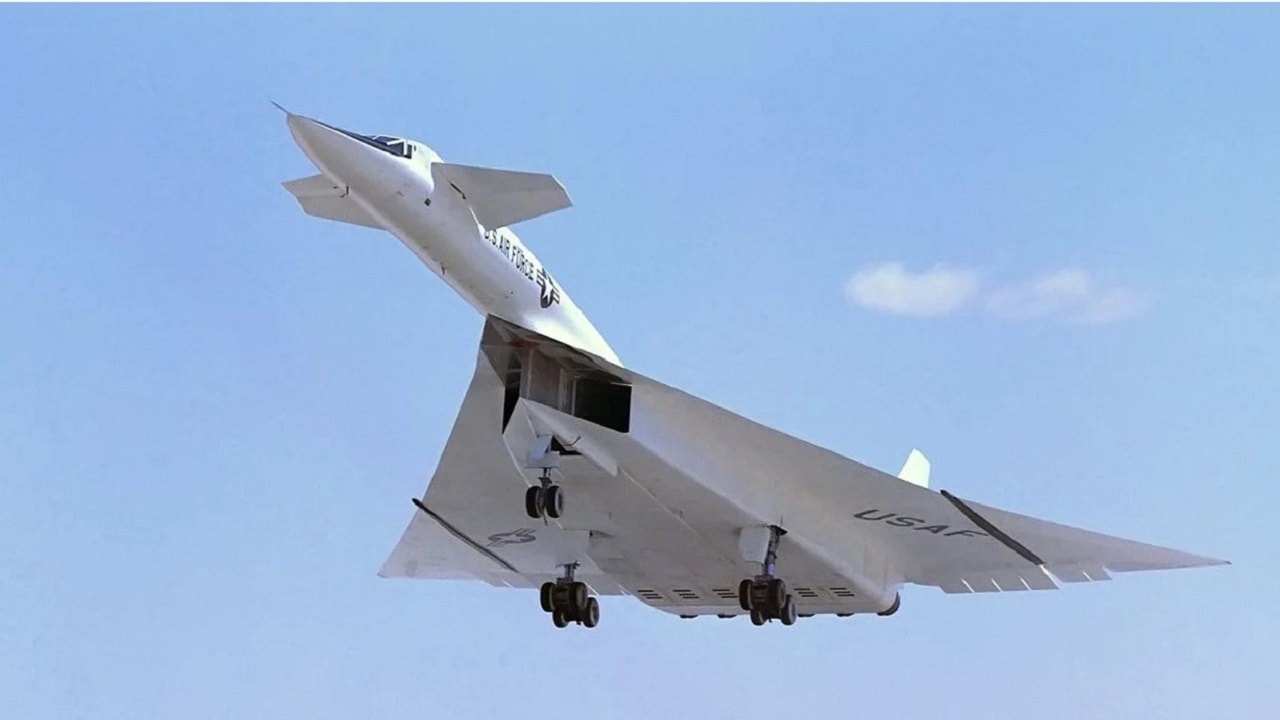
XB-70. Image Credit: Creative Commons.

XB-70. Image Credit: Creative Commons.
The thermal environment of sustained Mach 3 flight forced the same kind of materials revolution that the Blackbird required. The airframe was built largely from stainless-steel honeycomb and titanium to withstand the friction heating that would have destroyed a conventional aluminum structure. Landing the enormous aircraft required three drag chutes to decelerate it on the runway.
Everything about the Valkyrie pushed the boundaries of what 1950s and 1960s engineering could achieve, and the engineers who built it did so with slide rules and wind tunnels rather than computer simulation, inventing solutions as they went.
The Mission That Vanished Before The Aircraft Flew
The cruel irony of the Valkyrie is that the strategic rationale for its existence collapsed while it was still being built. The entire concept rested on the assumption that flying high and fast made a bomber invulnerable, and that assumption died as Soviet air defenses matured. The Soviet S-75 Dvina surface-to-air missile, the same weapon family that would later down Francis Gary Powers’ U-2 and menace the SR-71 over Vietnam, came online and proved more than a match for the high-altitude profile the Valkyrie was designed to fly. The very speed and altitude that were supposed to make the aircraft untouchable were no longer enough once missiles could climb to meet it.
Two developments sealed the program’s fate. The first was the maturation of those surface-to-air missiles, which forced American strategic bombing doctrine to shift away from high-altitude penetration and toward flying low to slip beneath enemy radar, a regime the Valkyrie’s thin delta wing was never designed for.
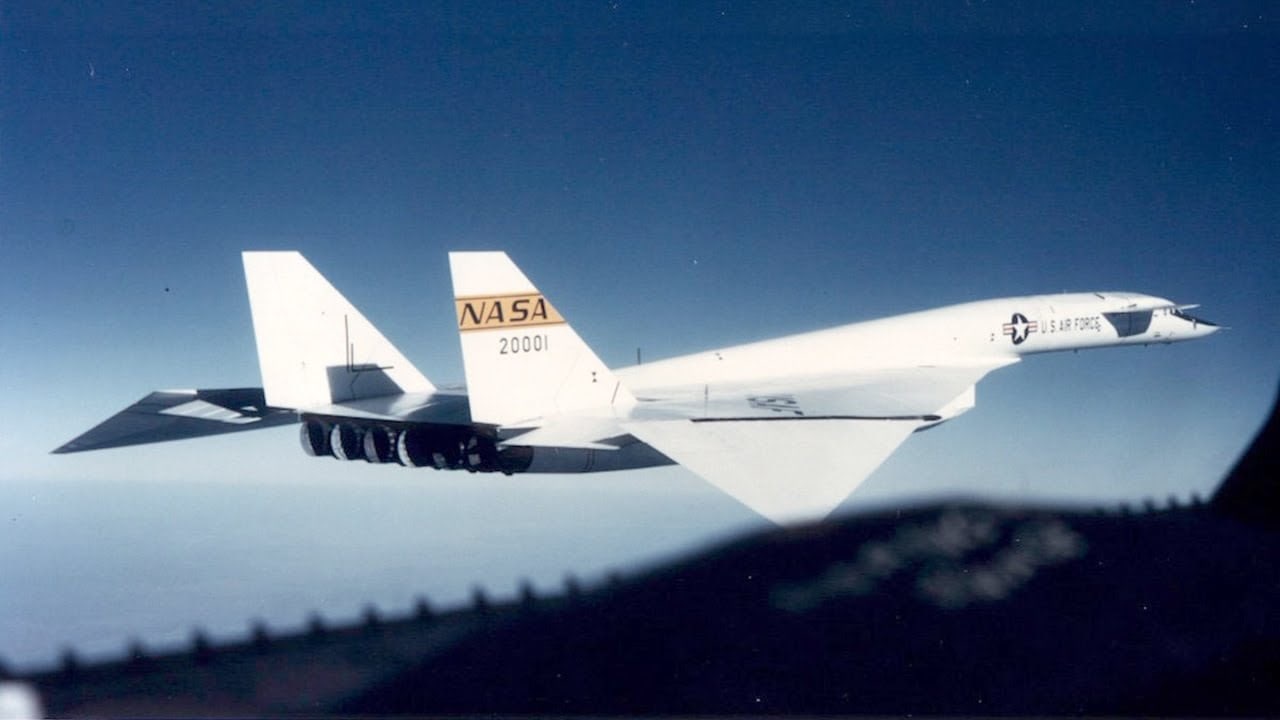
XB-70. Image Credit: Creative Commons.
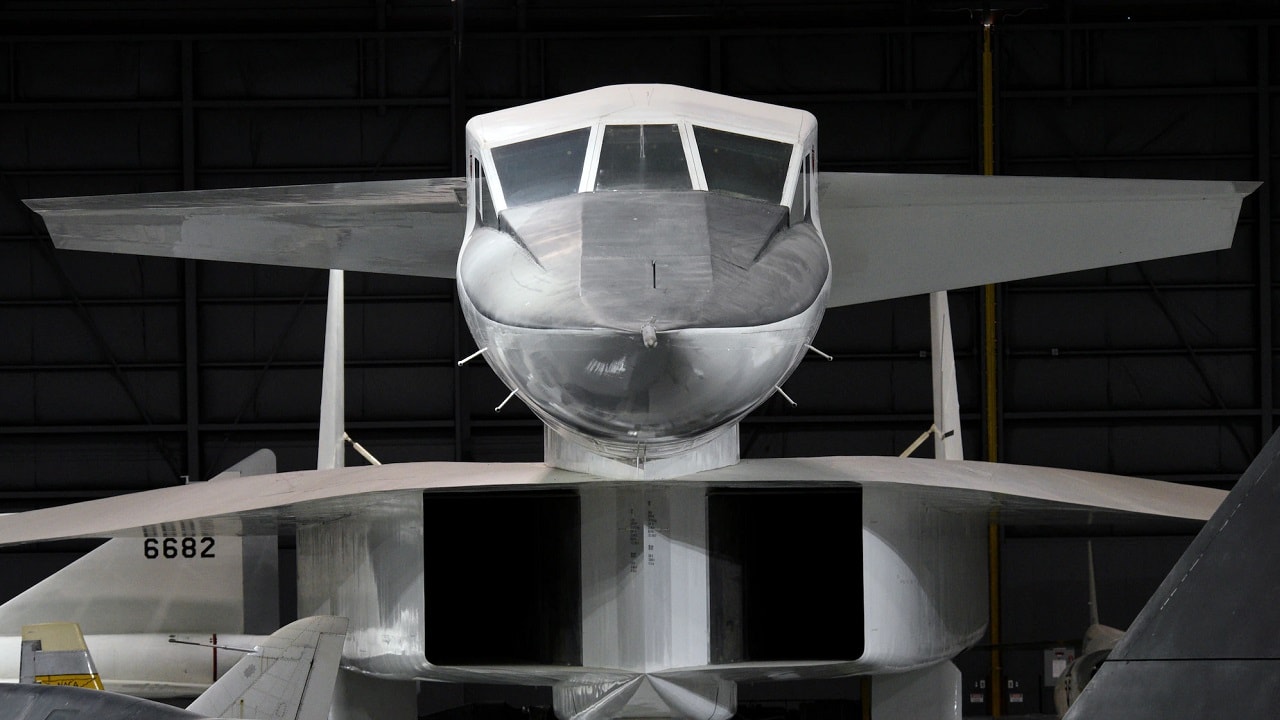
The futuristic XB-70A was originally conceived in the 1950s as a high-altitude, nuclear strike bomber that could fly at Mach 3 (three times the speed of sound) — any potential enemy would have been unable to defend against such a bomber.
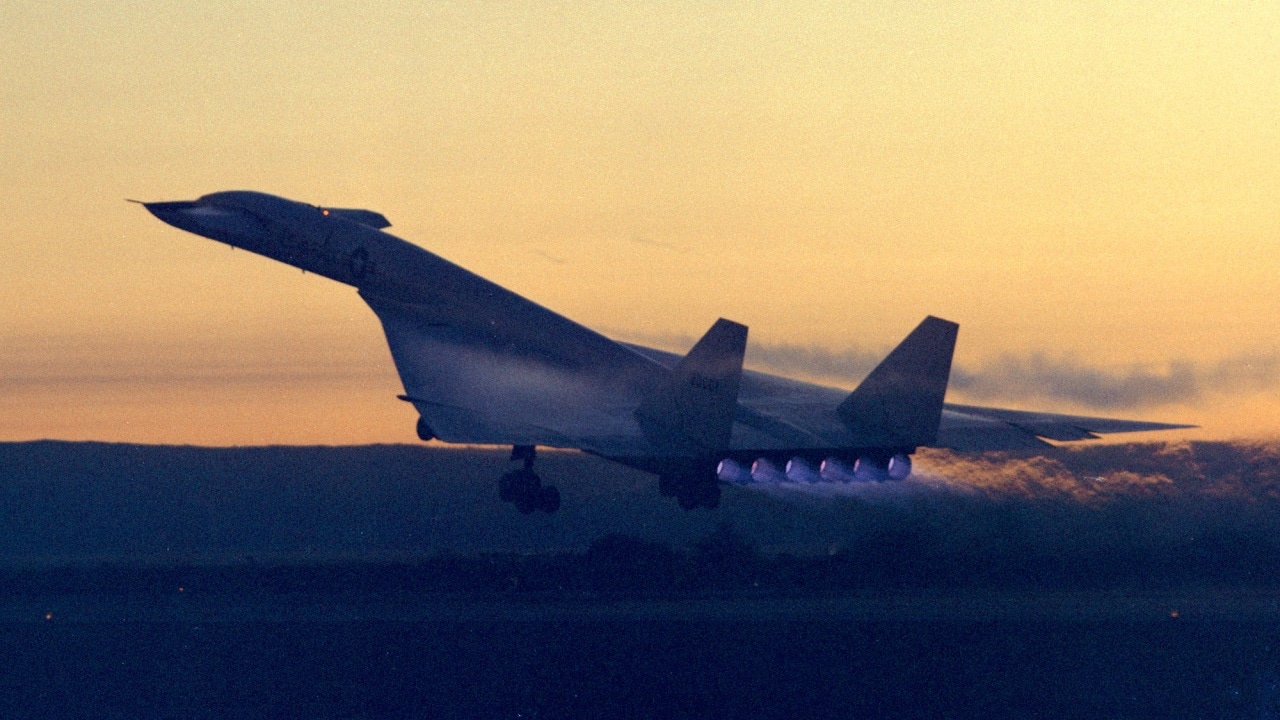
Image is of a an XB-70, another Cold War experimental bomber.
The second was the rise of the intercontinental ballistic missile, a nuclear delivery system that needed no runway, no crew, and no expensive airframe, and that could not be intercepted at all. Against a weapon that cheap and that survivable, a manned Mach 3 bomber looked like an extravagance.
The Kennedy administration canceled the B-70 as an operational bomber program in 1961, and the two prototypes that were eventually completed were redirected into a new life as high-speed research aircraft, gathering data for the American supersonic transport program and for NASA studies of flight at extreme speed.
The Photo Shoot That Destroyed A Valkyrie
By June 1966, the surviving aircraft were flying as research platforms, and it was in that role, not in combat and not in the punishing flight envelope the aircraft was built to explore, that one of the two Valkyries met its end in one of the most senseless accidents in aviation history.
On June 8, 1966, the second XB-70 prototype was assembled into a tight formation with four other aircraft for a publicity photograph. The arrangement had been requested by General Electric, which manufactured the engines on all five aircraft in the formation and wanted an image of its powerplants flying together for a presentation to shareholders.
The Valkyrie was flanked by an F-4 Phantom, a T-38 Talon, a YF-5A, and a NASA F-104 Starfighter flown by the agency’s chief research test pilot, Joe Walker, with the whole formation photographed from a Learjet trailing the group. The aircraft held formation through a racetrack pattern for roughly half an hour.
About a minute after the cameras had finished, disaster struck. Walker’s F-104, holding position just off the Valkyrie’s right wing, was caught in the wake vortex spinning off the bomber’s wingtip and pulled into the larger aircraft.
The Air Force investigation concluded that from the F-104’s position, Walker could not actually see the Valkyrie’s wing without twisting uncomfortably over his shoulder, and that without proper visual reference, he was unable to judge his motion relative to the bomber and drifted into it. The F-104 clipped the Valkyrie’s right wingtip, flipped over, rolled inverted across the top of the bomber, struck both vertical stabilizers, and exploded.
The Valkyrie flew on, straight and level, for sixteen seconds before the loss of its rudders sent it into an uncontrollable spin and a crash north of Barstow, California. The bomber’s pilot, Al White, managed to eject in the aircraft’s clamshell escape capsule, suffering severe injuries including a crushed arm caught as the capsule closed around him. Walker had died instantly in the initial collision.
Carl Cross, the Valkyrie’s co-pilot, was unable to escape and died in the crash. Two pilots and one of the only two Valkyries ever built were gone, destroyed not by an enemy or by the extreme edges of the flight envelope, but by a formation flown for a corporate brochure.
What The Valkyrie Left Behind
The surviving Valkyrie continued flying research missions until its final flight on February 4, 1969, when it was retired to the National Museum of the United States Air Force in Dayton, Ohio, where it remains on display as the sole survivor of a program that cost well over a billion dollars and produced just two aircraft. The senselessness of the 1966 loss has haunted the aircraft’s legacy ever since, in part because the mission that destroyed it served no purpose beyond marketing. Joe Walker himself had reportedly voiced unease about the formation flight before takeoff, a judgment that proved tragically correct.
The Valkyrie’s real legacy lies in the data it produced. Even though it never entered service as a bomber, the aircraft gave NASA and the Air Force an unmatched body of knowledge about sustained flight at Mach 3, about the thermal and structural stresses of high-speed flight, and about the aerodynamics that would inform supersonic transport design for decades.
It pushed aerospace engineering years ahead of where it would otherwise have been, a flying laboratory that happened to be one of the most beautiful and ambitious machines ever to leave the ground.
About the Author: Harry J. Kazianis
Harry J. Kazianis (@Grecianformula) was the former Senior Director of National Security Affairs at the Center for the National Interest (CFTNI), a foreign policy think tank founded by Richard Nixon based in Washington, DC. Harry has over a decade of experience in think tanks and national security publishing. His ideas have been published in the NY Times, The Washington Post, The Wall Street Journal, CNN, and many other outlets worldwide. He has held positions at CSIS, the Heritage Foundation, the University of Nottingham, and several other institutions related to national security research and studies. He is the former Executive Editor of the National Interest and the Diplomat. He holds a Master’s degree focusing on international affairs from Harvard University. Kazianis is Editor-In-Chief of 19FortyFive.

