
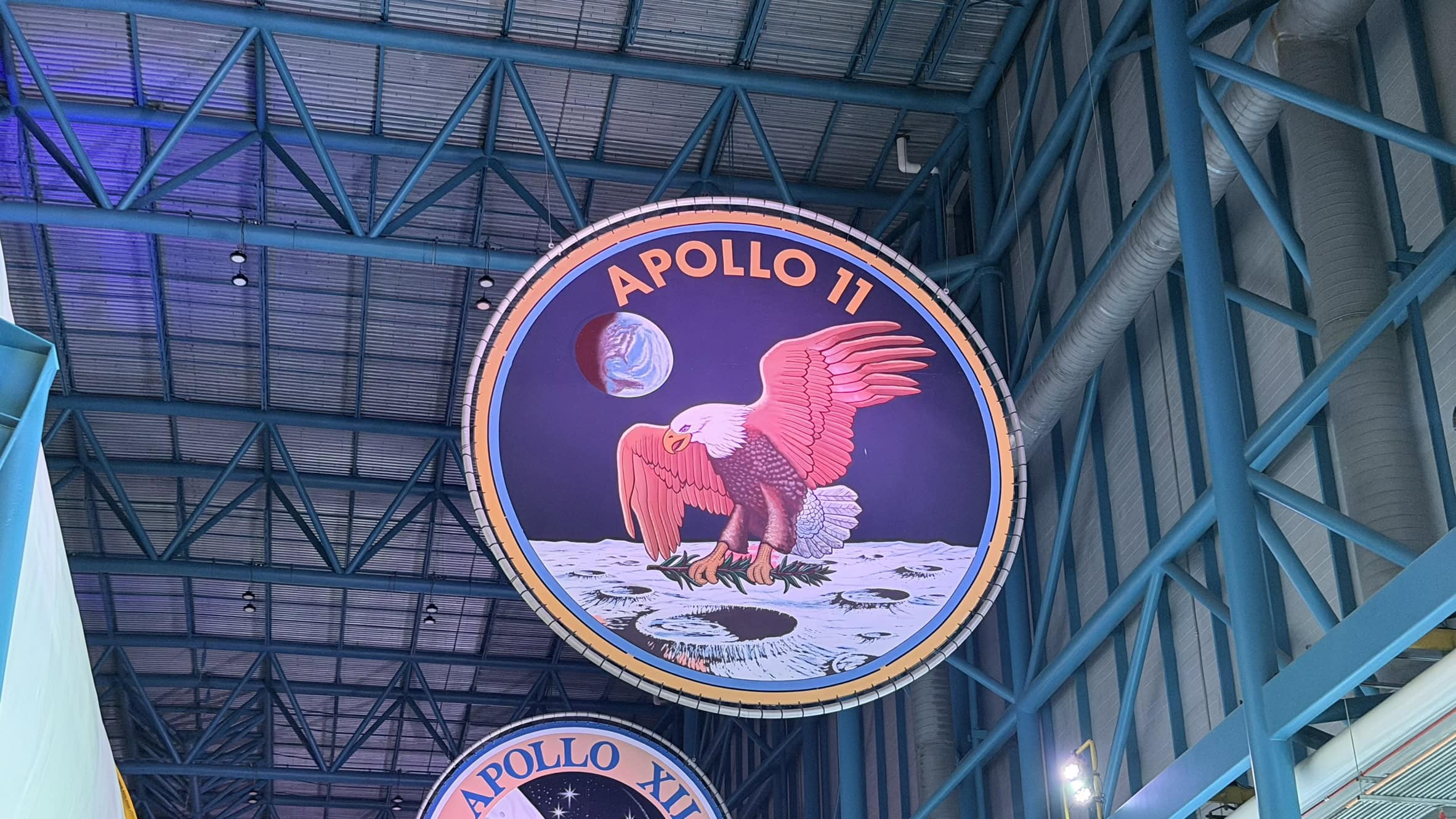
Today is the 57th Anniversary of the Apollo 11 Moon Landing: When I was a child, my father had a prominent poster of the NASA moon landing that featured Neil Armstrong and an awe-inspiring image of the American flag. I looked at this photo every day, and it inspired me to yearn for a renewed emphasis on spaceflight and American exploration of the Final Frontier throughout my childhood.
Today is the 57th anniversary of the Apollo 11 mission’s liftoff, which placed astronauts on the moon and returned them safely home aboard that awesome spacecraft. This was a feat of American ingenuity and primacy in engineering, technology, math, and science. As NASA makes plans and executes its desire to return to the moon with the Artemis program, now is the time to look back at the first lunar visit by humans.
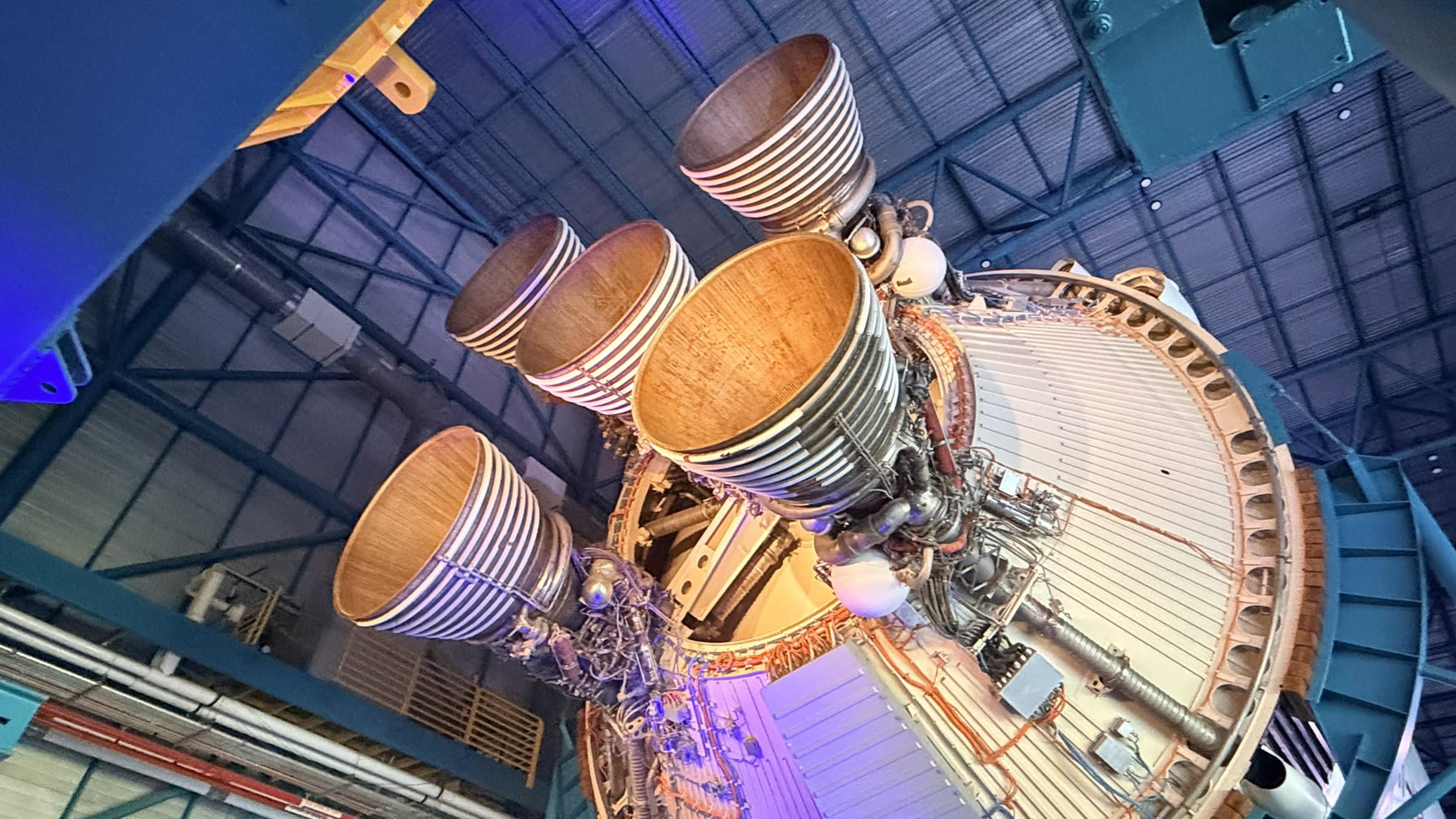
NASA Saturn V Rocket Exhibit at the Kennedy Space Center in Florida. Image by Harry J. Kazianis.
The Inspiration and Leadership Came From JFK
Apollo 11 was designed to carry out the clarion call of space exploration by President John F. Kennedy in 1961. He vowed that America would send astronauts to the moon and return them unscathed.
The Astronauts Would Be Busy on the Lunar Surface
It wasn’t simply a sightseeing trip. The astronauts would use a television camera and transmit moving images back to Earth. They would deploy an experimental solar instrument to create energy. They had another seismic instrument and a Laser Ranging Retroreflector to collect important distance data. The astronauts also removed lunar material for further study upon returning to Earth.
Then There Was the Return Aspect of the Mission
The spacecraft on the return flight would also follow a “free return” trajectory back to the home planet, according to a mission overview from NASA. The engines would not need to fire upon the return.
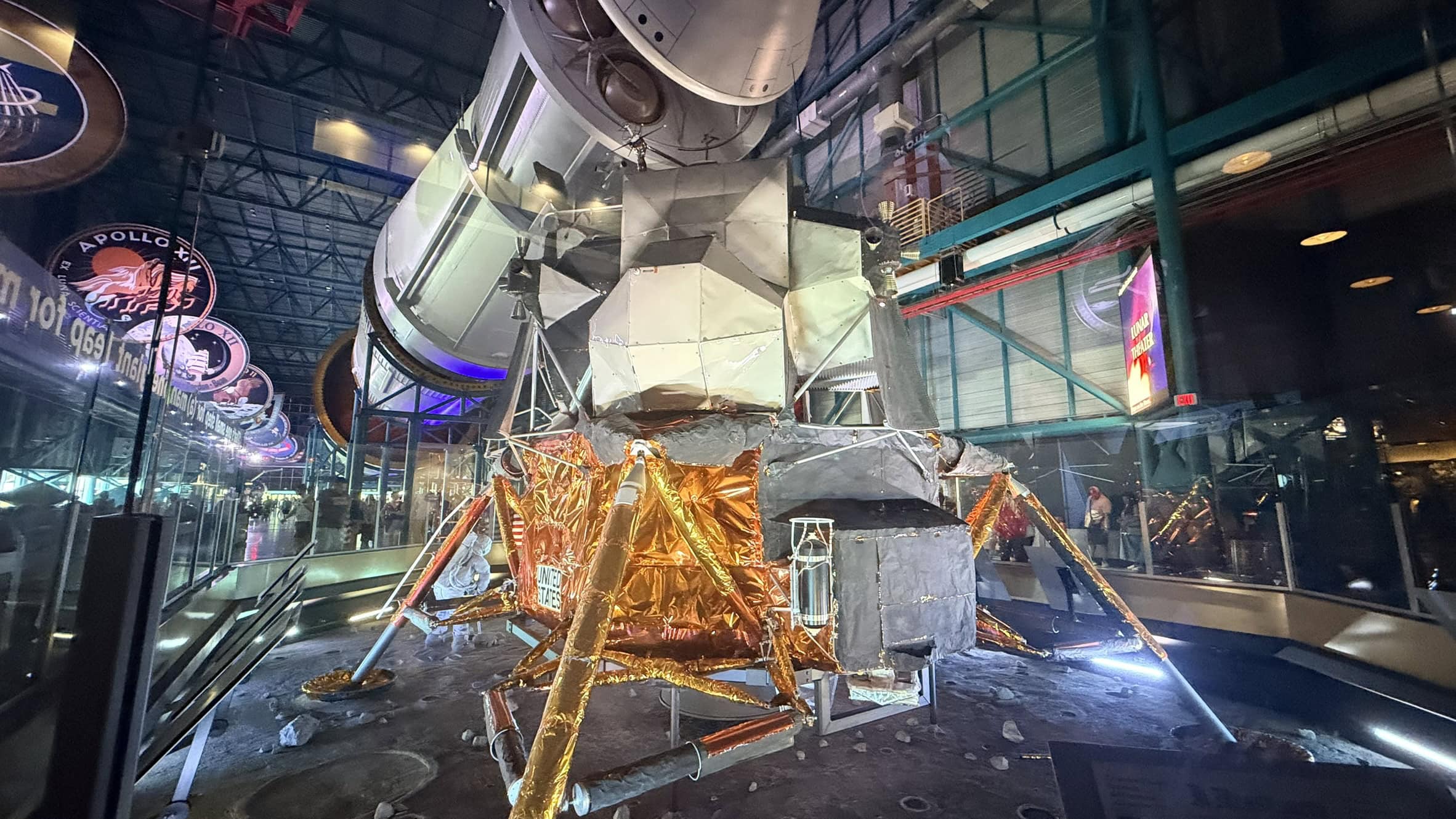
NASA Saturn V Rocket Exhibit at the Kennedy Space Center in Florida. Image by Harry J. Kazianis.
Astronauts Did Not Know What to Expect
July 16, 1969, was the big day, and the world was gripped with “moon fever.” Commander Neil Armstrong, Command Module Pilot Michael Collins, and Lunar Module Pilot Edwin “Buzz” Aldrin were ready to rock and roll. Who knew what was going through their minds as they sat atop the immense Saturn V rocket? This was going to be the flight of a lifetime, and the three astronauts could taste success even though the mission was going to be the most dangerous and difficult in space exploration history.
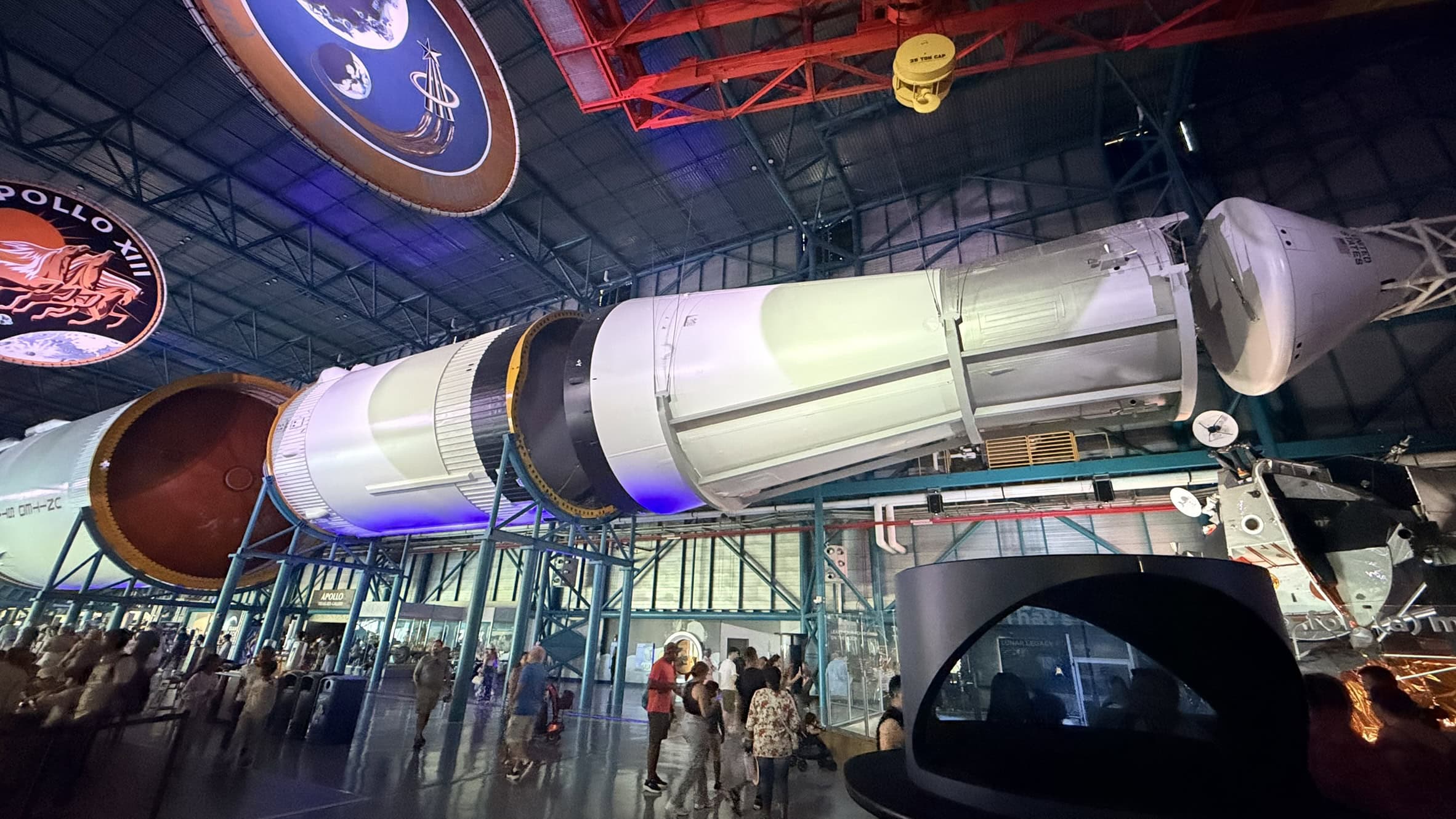
“Two hours, 44 minutes and one-and-a-half revolutions after launch, the S-IVB stage reignited for a second burn of five minutes, 48 seconds, placing Apollo 11 into a translunar orbit. The command and service module, or CSM, Columbia, separated from the stage, which included the spacecraft-lunar module adapter, or SLA, containing the lunar module, or LM, Eagle. After transposition and jettisoning of the SLA panels on the S-IVB stage, the CSM docked with the LM. The S-IVB stage separated and was injected into heliocentric orbit four hours, 40 minutes into the flight,” NASA wrote.
The launch was nearly perfect. The spacecraft only needed two midcourse corrections. The two others planned for a better trajectory were not needed.
Next Stop: The Moon
The next day was important for the mission. The lunar module needed to be checked, and the astronauts were required to make a second transmission from the television cameras. Armstrong and Aldrin suited up and performed these actions with ease. The mission was going well, and the astronauts were looking forward to time on the moon.
NASA Saturn V Rocket Exhibit at the Kennedy Space Center in Florida. Image by Harry J. Kazianis.
Lunar Orbit Was Next on the Checklist
The next part of the mission was to enter lunar orbit. This was going to be an important step for overall success. The spacecraft performed admirably. There was successful retrograde firing for nearly six minutes. This achieved lunar orbit. The astronauts executed another television transmission. Then Armstrong and Aldrin checked the lunar module again.
“At 102 hours, 33 minutes, after Columbia and Eagle had reappeared from behind the moon and when the LM was about 300 miles uprange, powered descent initiation was performed with the descent engine firing for 756.3 seconds. After eight minutes, the LM was at ‘high gate’ about 26,000 feet above the surface and about five miles from the landing site,” NASA recounted.
Tranquil Landing
Then the Eagle landed in the Sea of Tranquility on the moon. The astronauts were supposed to rest for four hours before the moonwalk, but they decided to go for it immediately. Armstrong descended onto the moon and brought a television camera to broadcast to the world. Aldrin came next, about 20 minutes later. They spent about an hour and a half exploring and conducting experiments. They grabbed some sleep and then went back out, staying on the surface for more than 21 hours.
Could This Ever Be Repeated?
The moon landing was one of the most consequential events in U.S. history. I can’t wait for NASA to do this again. There could be a lunar base someday, and this would help the United States visit Mars. I wasn’t alive when it happened, but the Apollo 11 mission still fills me with immense pride regarding what it means to be an American. We should celebrate this anniversary every year to honor the astronauts’ brave actions and willingness to do what was once considered impossible.
About the Author: Dr. Brent M. Eastwood
Author of now over 3,500 articles on defense issues, Brent M. Eastwood, PhD, is the author of Don’t Turn Your Back On the World: A Conservative Foreign Policy and Humans, Machines, and Data: Future Trends in Warfare, plus two other books. Brent was the founder and CEO of a tech firm that predicted world events using artificial intelligence. He served as a legislative fellow for US Senator Tim Scott and advised the senator on defense and foreign policy issues. He has taught at American University, George Washington University, and George Mason University. Brent is a former US Army Infantry officer. He can be followed on X @BMEastwood.