
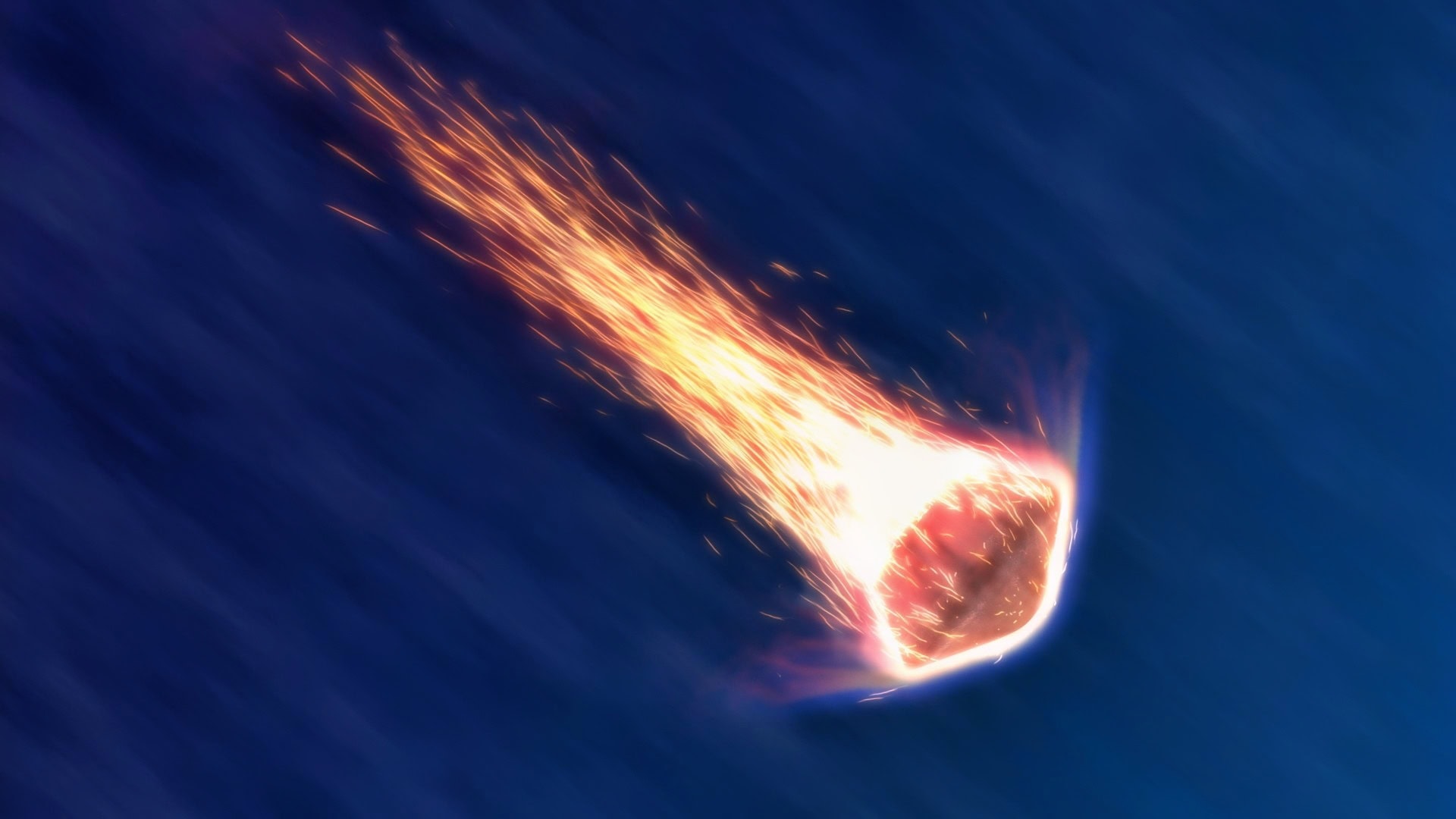
OSIRIS-REx represents one of NASA’s most ambitious planetary science missions, successfully collecting material from asteroid Bennu and returning it to Earth in 2023.
This is only the third asteroid sample-return mission ever completed and NASA’s first ever.
And rather than studying an asteroid remotely, scientists can now analyze pristine material in laboratories using instruments that are simply impossible to launch into space.
Origins of OSIRIS-REx
The mission name stands for Origins-Spectral Interpretation-Resource Identification-Security-Regolith Explorer.
The mission objectives were to study the asteroid Bennu, map its surface, identify a safe sample site, collect material, return that material to Earth, and ultimately, better understand early Solar System history and potentially the origins of life’s building blocks.
Bennu specifically was chosen because it’s a carbon-rich, near-Earth asteroid believed to preserve primitive material dating back roughly 4.5 billion years.
Bennu also contains hydrated minerals indicating interaction with water in its parent body. Scientists believe Bennu is essentially a time capsule from the formation of the Solar System.
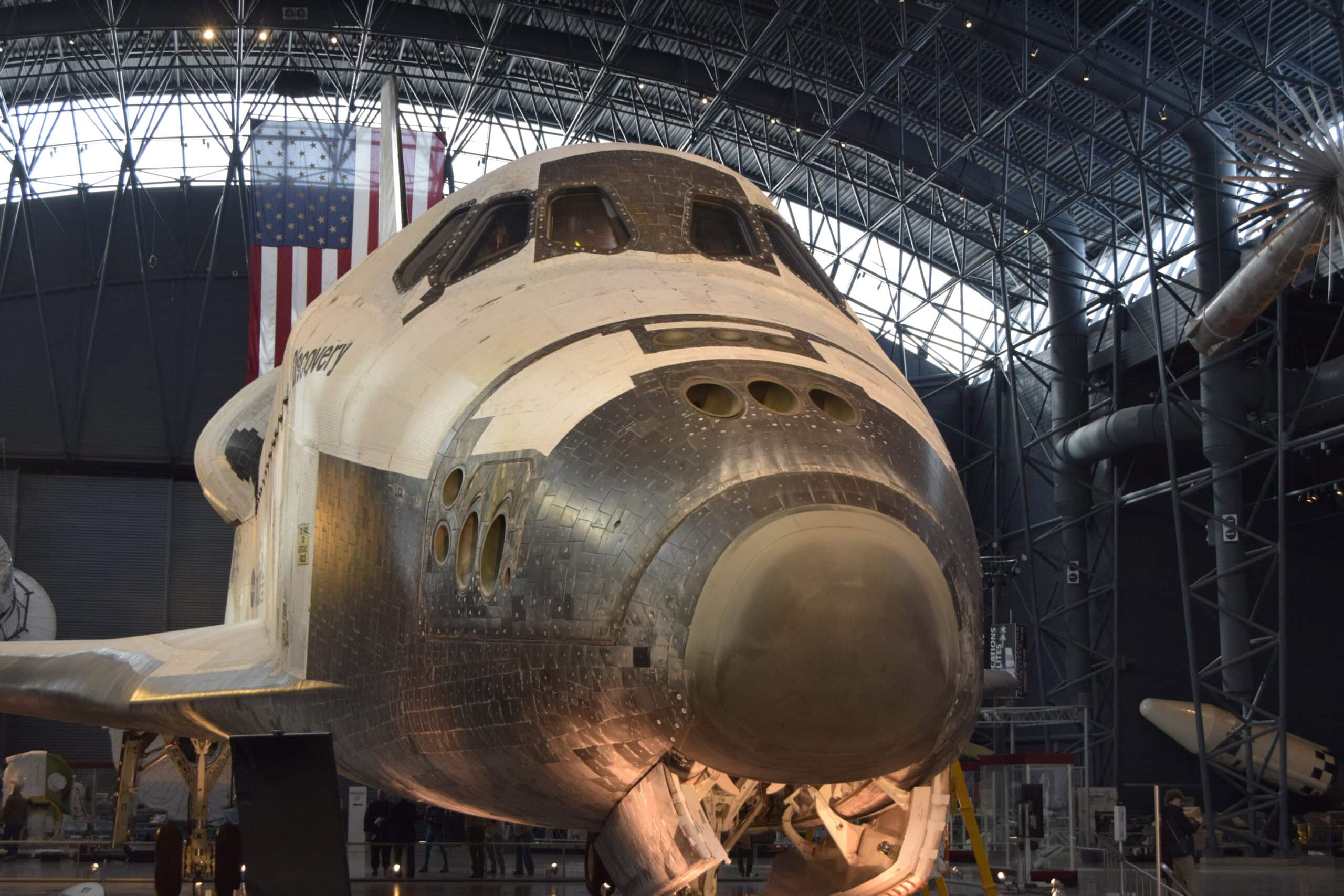
NASA Space Shuttle at the Smithsonian. Image Credit: 19FortyFive Original Photo from Visit in 2025.
The Mission’s Timeline
OSIRIS-REx was launched on September 8th, 2016, and entered an Earth gravity assist in September 2017 before arriving at Bennu in December 2018.
There, the mission conducted extensive mapping, with a sample collection taken on October 20, 2020. The mission finally returned to Earth on September 24, 2023, with the capsule landing at the Utah Test and Training Range.
The mission was challenging. Bennu has almost no gravity and a rugged, boulder-strewn terrain. NASA originally expected a relatively smooth asteroid but instead found hazardous rocks and landing zones that were narrow and demanding.
After surveying four candidate sites, the landing zone “Nightingale” was selected as the primary option while “Osprey” was selected as the backup.
Collecting the Sample
OSIRIS-REx didn’t land permanently. Instead, it performed a Touch-And-Go (TAG) maneuver. After a slow descent, the robotic arm extended; contact lasted only a few seconds.
Then a burst of nitrogen gas fired into the surface, stirring loose dust and rocks, sucking particles into a collector head. Then, the spacecraft immediately backed away.
After sampling, the mission discovered a significant surprise.
NASA’s Kennedy Space Center. Image Credit: Harry J. Kazianis
Cameras revealed the collector overflowing with rocks and dust; debris prevented the sampling head from sealing completely, and material actually began leaking into space.
NASA responded by cancelling planned measurements and immediately stowing the sample earlier than planned to avoid further losses.
Ironically, the mission collected more material than expected. The final returned sample was 121.6 grams (4.29 ounces).
Assessing the Science
Remote spacecraft can photograph, scan, and measure chemistry.
But scientists wanted the sample back on Earth because laboratories there can perform microscopic imaging, isotope analysis, molecular chemistry, searches for organic compounds, and decades of future testing using technologies that haven’t been invented yet.
Only a small portion of the sample will be studied immediately. Much of it is being preserved for future generations.
Scientists ultimately hope that Bennu samples can help answer big questions including: how did planets form; what were conditions like in the early Solar System; how common are carbon-rich compounds; did asteroids help deliver water and organic molecules to Earth?
And because Bennu is relatively unchanged since the Solar System formed, it provides a rare look at primordial building blocks.
Encore Act
OSIRIS-REx will serve again after delivering the Bennu sample. Renamed to OSIRIS-APEX, the next destination will be the asteroid Apophis, which will make an exceptionally close Earth flyby in April 2029.
OSIRIS-APEX will rendezvous with the asteroid, study how Earth’s gravity altered its surface, and use its thrusters to disturb the surface material for additional scientific observations.
OSIRIS-REx demonstrated that NASA can, in fact, navigate to a small asteroid, collect a pristine sample hundreds of millions of miles from Earth, and then safely return that sample home.
Beyond the engineering achievement, the mission gives scientists an unprecedented opportunity to study some of the oldest surviving material in the Solar System.
The material may provide insights into the formation of our planet and life itself.
About the Author: Harrison Kass
Harrison Kass is a writer and attorney focused on national security, technology, and political culture. His work has appeared in Tablet, City Journal, The Hill, The Spectator, and The Cipher Brief. He holds a JD from the University of Oregon and a master’s in Global & Joint Program Studies from NYU. More at harrisonkass.com.