
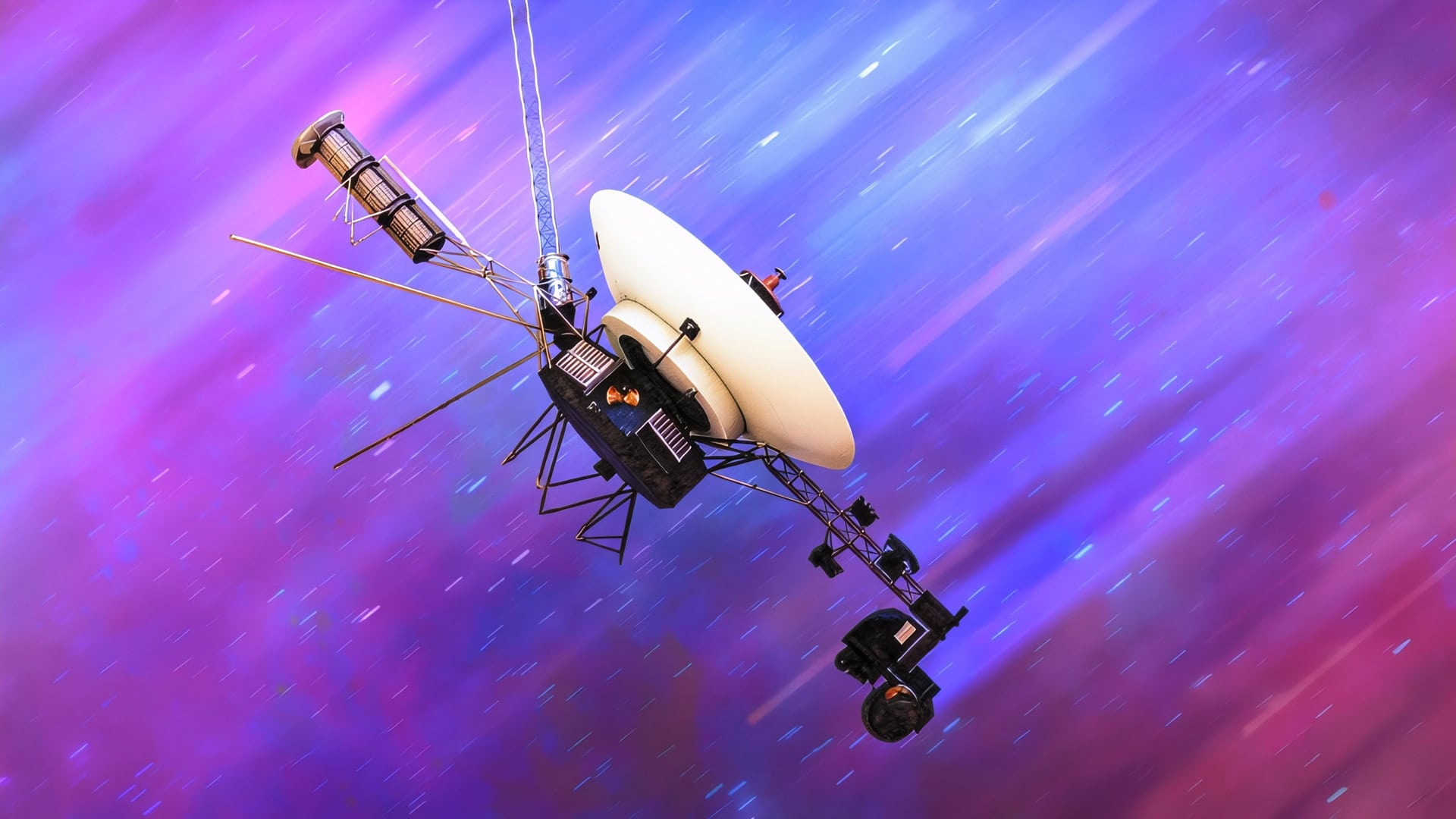
Summary and Key Points: Voyager 1 is about to become the first spacecraft one light-day from Earth, nearly fifty years after NASA launched it in 1977. No machine humanity has built since has flown faster or farther, and that gap raises a real engineering question rather than a science-fiction one. Scientists at NASA, the Johns Hopkins Applied Physics Laboratory, and Columbia University have already studied exactly what a successor would need, from a pragmatic probe that could launch in the 2030s to a sunlight-powered sail weighing less than two kilograms. This is the real menu of machines that could finally overtake Voyager, and why the least glamorous option is the one most likely to win.
Introduction: Beating Voyager 1
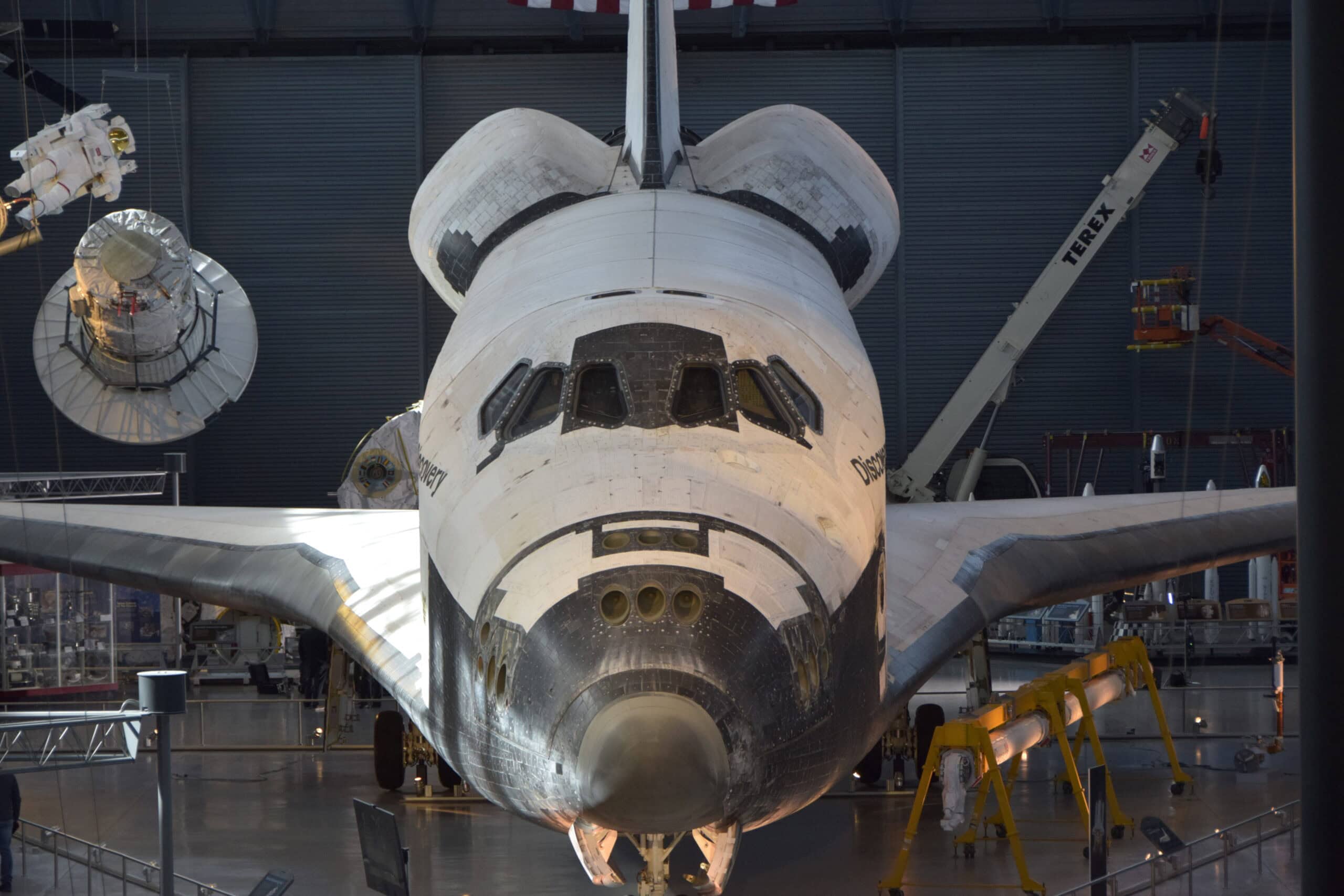
NASA Discover Space Shuttle. This photo was taken back in 2025 and is original to 19FortyFive.com
Voyager 1 is about to become the first object one light-day from Earth, a 1977 spacecraft still whispering home on a plutonium supply the size of a car battery. The wonder of that milestone raises an uncomfortable question: why has nothing humanity has built since gone faster or farther, and what would it actually take to surpass it? The answers exist; they have names and price tags, and they range from a pragmatic NASA probe that could launch in the 2030s to a sunlight-powered sling weighing less than a bag of sugar. The realistic winner is the least glamorous of them.
Voyager 1 is the fastest and most distant object humans have ever made, moving away from the Sun at roughly 38,000 miles per hour, and it earned that record almost by accident. Launched in 1977 to tour the outer planets, it used gravity assists from Jupiter and Saturn to fling itself onto an escape trajectory, and it has coasted outward ever since. Nearly half a century later, nothing has caught it, and nothing has been built to try to catch it in earnest. That gap is the real story behind the awe. Surpassing Voyager is not a matter of waiting for a warp drive. It is a matter of engineering choices that scientists have already studied in detail, and the menu of options reveals how hard the problem is and which approach is most likely to work.
Why Nothing Has Beaten Voyager Yet
The reason no spacecraft has overtaken Voyager comes down to how it got its speed. Voyager did not carry a powerful engine. It borrowed velocity from the gravity of giant planets during a rare alignment that let it slingshot from one to the next, a configuration that occurs roughly once every 175 years. Later probes launched with faster rockets, including New Horizons, which left Earth at a higher speed than Voyager did, yet New Horizons is traveling more slowly through deep space because it never received the enormous gravitational boost Voyager got at Saturn. Raw launch power is not enough.
To beat Voyager, a spacecraft needs either a similarly lucky gravitational shove, a fundamentally new kind of propulsion, or both, and each path forces a different set of trade-offs. The proposals that follow are ordered from the most practical and near-term to the most exotic and distant, and the contrast between them is the whole lesson.
The Pragmatic Front-Runner: NASA’s Interstellar Probe
The most serious candidate is also the most deliberately unglamorous. A few years ago, NASA asked a team at the Johns Hopkins University Applied Physics Laboratory, led by physicist Ralph McNutt, to design a genuine successor to Voyager, and the result is a spacecraft called simply Interstellar Probe.
The design would travel about twice as fast as Voyager 1, roughly 7 astronomical units per year, launch potentially in the 2030s, and run for a primary mission of 50 years with the possibility of operating for more than a century, which would make it the longest-duration mission NASA has ever flown. It would reach several hundred astronomical units from the Sun, with a stretch goal of 1,000, far beyond where the Voyagers will fall silent, and it could swing past a dwarf planet on the way out. The projected cost is comparable to that of the Parker Solar Probe, around $1.5 billion.
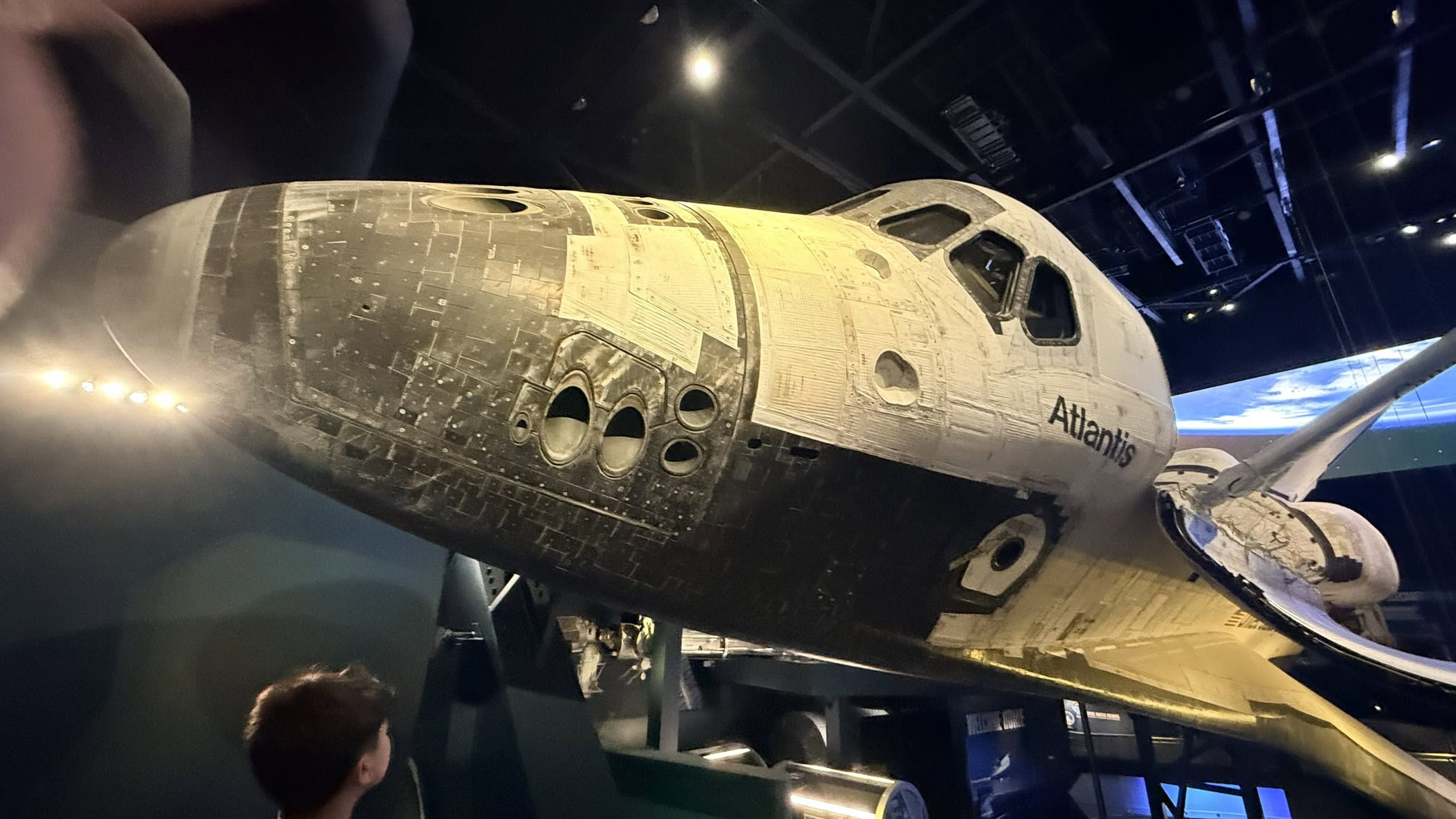
Space Shuttle Atlantic from NASA’s Kennedy Space Center. Image Taken by 19FortyFive.com on 6/28/2026.
The revealing part is how the team chose to reach those speeds. McNutt’s group examined the exotic options, including solar sails and solar-thermal propulsion using a close pass by the Sun, and rejected them. The engineering trade studies kept favoring proven, near-term technology, chemical propulsion combined with a Jupiter gravity assist and a possible burn close to the Sun. McNutt explained the logic plainly, noting that once the heavy heat shield and plumbing required for a solar-thermal maneuver are accounted for, a conventional system on a much lighter spacecraft does the job better.
The deliberate restraint is the point. The team wanted a blueprint that would fly rather than one that would sit on a shelf, and that meant choosing boring hardware that works over spectacular hardware that might not.
The honest catch is that Interstellar Probe remains a concept. As of now, it has no funding and no approved launch date, and outside coverage of the Voyager story has increasingly noted that there is currently no approved mission to follow the Voyagers into interstellar space. The study exists, the science case is strong, and the technology is ready, but no one has yet committed the money to build it.
The Cautionary Tale: Nuclear Propulsion Just Got Canceled
Any honest menu has to include the option that recently died, because it explains why the pragmatic path looks so attractive. Nuclear propulsion has been the dream of deep-space engineers for decades, offering far more efficient thrust than chemical rockets, and NASA’s most recent serious attempt was DRACO, the Demonstration Rocket for Agile Cislunar Operations, developed with DARPA, Lockheed Martin, and BWX Technologies. DRACO was meant to demonstrate a nuclear-thermal rocket engine in space. It did not survive.
The program was paused in January 2025 due to technical and regulatory challenges, then canceled outright that summer after it was left out of the proposed 2026 federal budget, on the grounds that declining conventional launch costs no longer justified its cost. The collapse of DRACO is why a Voyager successor cannot simply assume nuclear propulsion is around the corner. The most powerful near-term option for going fast through deep space was just removed from the table, which pushes any realistic mission back toward chemical propulsion and gravity assists.
The Exotic Ceiling: Breakthrough Starshot and the Laser Wall
At the far end of ambition sits Breakthrough Starshot, announced in 2016 with $100 million in initial funding and a goal that dwarfs everything else on this list: accelerating tiny probes to 20 percent of the speed of light using an enormous ground-based laser array to push lightweight sails. At that velocity, a probe could reach the nearest star system in about twenty years rather than tens of thousands.
The physics is sound in principle, and the concept has attracted serious scientific attention. The obstacle is the power source.
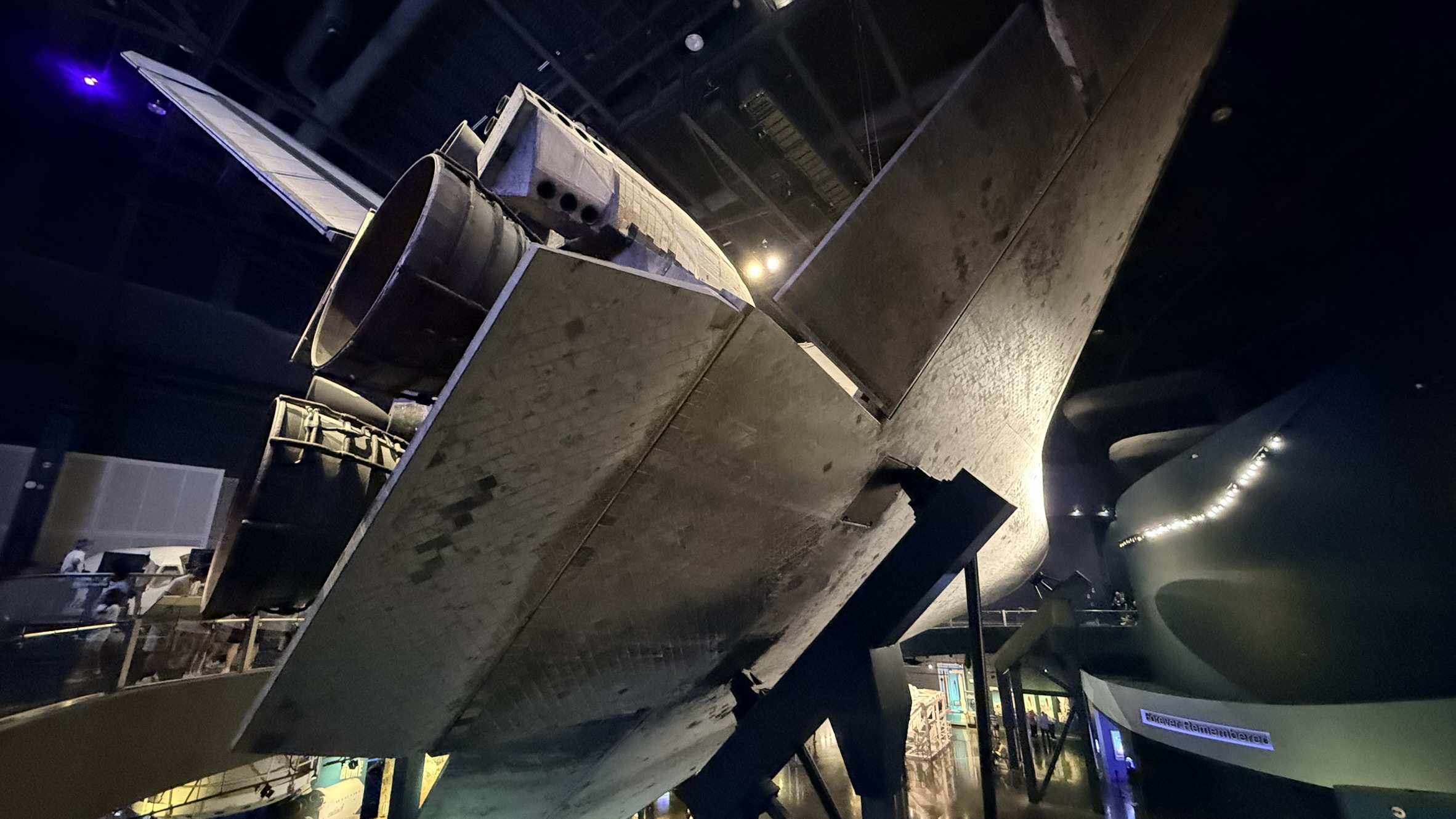
Back of NASA Space Shuttle Atlantis. Image Credit: Harry J. Kazianis
Driving a sail to relativistic speed requires a ground-based laser installation on a scale that current engineering cannot yet approach, a facility whose cost and politics have kept it firmly out of reach nearly a decade after the project began, and analysts surveying the field continue to note that chemical rockets and gravity assists simply cannot scale to useful interstellar speeds without such an energy source. Starshot represents the version of beating Voyager that would truly transform space exploration, sending something to another star within a human lifetime, and it also represents how far current engineering sits from that goal. It is the ceiling, not the near-term plan.
The Fresh Idea: A Sunlight-Powered Sling Named TARS
The newest entry on the menu tries to thread the gap between pragmatic and exotic, and it comes from an astronomer who had watched too many interstellar concepts collapse under their own cost.
David Kipping, who runs the Cool Worlds Lab at Columbia University, published a proposal on arXiv in July 2025, with engineering student Kathryn Lampo, called TARS, short for Torqued Accelerator using Radiation from the Sun, named after the robot in Christopher Nolan’s film Interstellar.
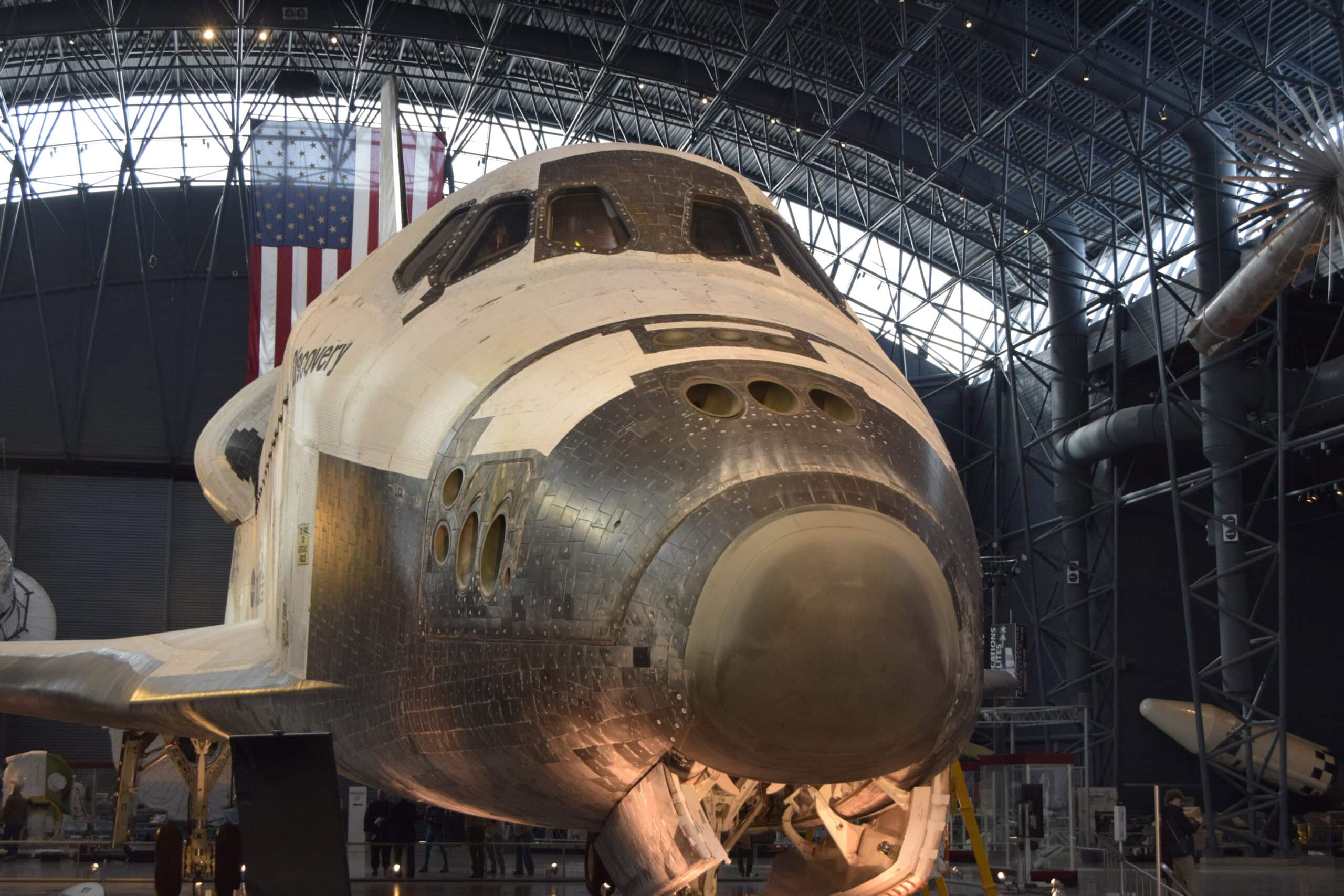
NASA Space Shuttle at the Smithsonian. Image Credit: 19FortyFive Original Photo from Visit in 2025.
Rather than a giant laser or a massive rocket, TARS uses sunlight to spin a long, ribbon-like sail faster and faster until it hurls a tiny payload outward like a slingshot. The entire system weighs about 1.6 kilograms and is built from existing carbon nanotube materials, sidestepping the two problems that sink most interstellar concepts: cost and unproven technology.
At its baseline, the released payload would match Voyager’s speed, but Kipping and Lampo outline ways to push much further, using eccentric orbits that exploit the Oberth effect, a Jupiter gravity assist, and electrically charging the ribbon’s tips to allow far faster spin.
Their calculations suggest a theoretical ceiling around 1,000 kilometers per second, roughly 0.3 percent of the speed of light, several times faster than Voyager.
Kipping has been candid about the limits, noting that even at that speed, reaching the nearest star would take well over a thousand years, and he has placed the design in the public domain to invite other engineers to refine it. His answer to the standard objection, that we should wait for better technology, doubles as the argument for the whole enterprise: rather than wait centuries hoping someone invents a warp drive, start building and iterating now, because there is no guarantee the breakthrough ever comes. TARS is not funded and remains a paper concept, but it shows that the search for new ways to beat Voyager is still producing genuinely novel ideas.
Pragmatism Beats Voyager, Not Warp Drive
Laid side by side, the menu points to a clear and slightly deflating conclusion. The flashiest options, Starshot’s relativistic laser sails and the dream of nuclear-powered starships, are either walled off by physics-scale engineering or, in DRACO’s case, already canceled.
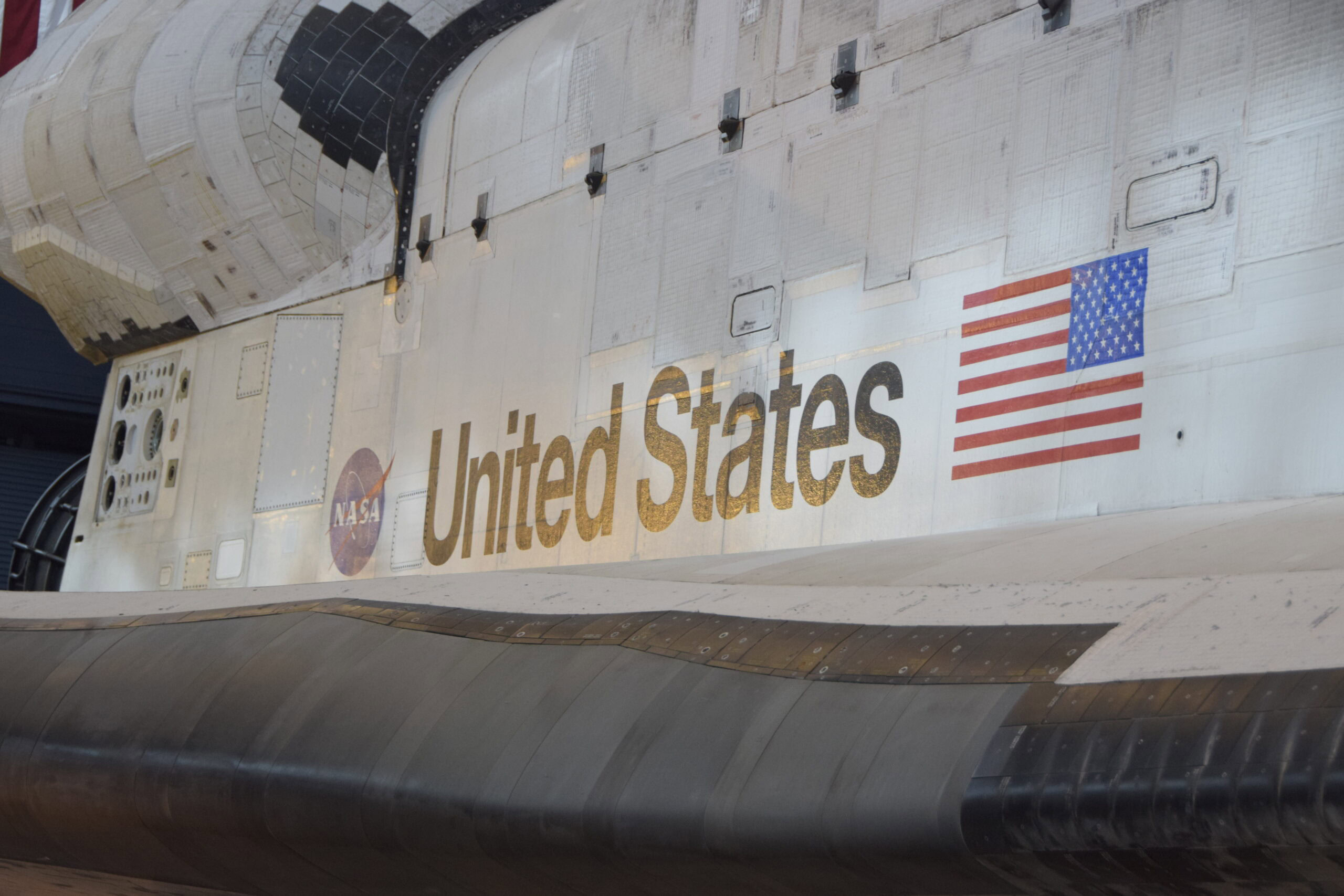
NASA Space Shuttle Discover in 2025. 19FortyFive.com Photo.
The genuinely novel idea, Kipping’s solar sling, is promising and cheap but unproven and still measured in millennia to the nearest star.
The proposal most likely to actually overtake Voyager within the next few decades is the one that refuses to be exotic at all, McNutt’s Interstellar Probe, precisely because it chose reliable chemical propulsion and a well-understood gravity assist over anything that needs a breakthrough.
Beating Voyager, in other words, does not require a leap into science fiction. It requires committing the money to build a careful, near-term spacecraft and accepting that it will fly for half a century.
The timing gives that choice real urgency. The Voyagers are running out of power, losing about four watts a year, and their instruments will go dark before the end of this decade. They are the only spacecraft currently measuring the local interstellar medium, and every day they operate, they gather baseline data a successor would need.
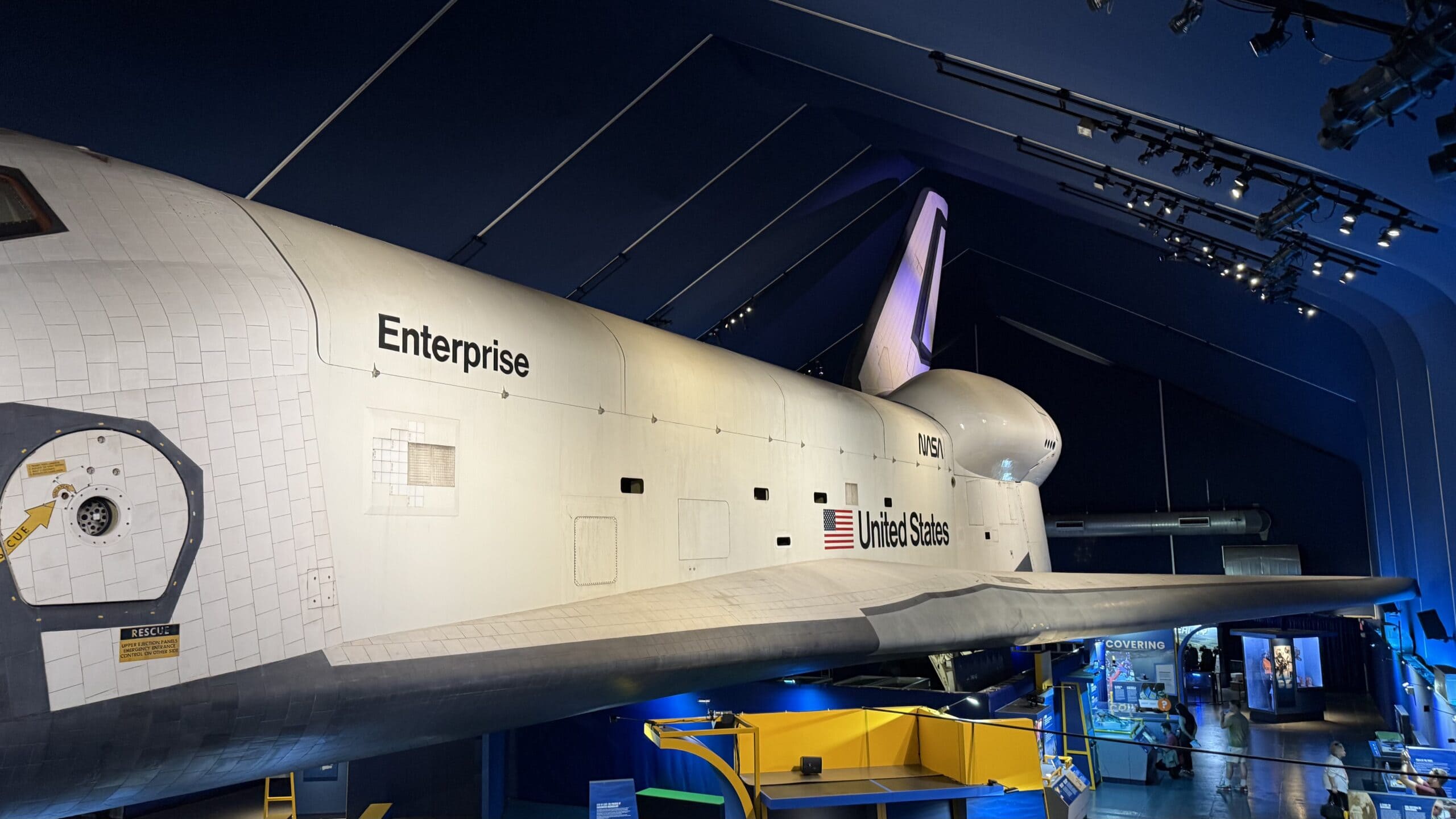
NASA Space Shuttle Onboard USS Intrepid. 19FortyFive.com image.
If decades pass between Voyager falling silent and a new probe reaching interstellar space, the continuity of that record would be broken, and scientists would start over. The machine one light-day away has already shown what a modest spacecraft can accomplish when it is simply allowed to keep going. What it would take to beat it is not a miracle of propulsion but a decision to begin.
About the Author: Harry J. Kazianis
Harry J. Kazianis (@Grecianformula) was the former Senior Director of National Security Affairs at the Center for the National Interest (CFTNI), a foreign policy think tank founded by Richard Nixon based in Washington, DC. Harry has over a decade of experience in think tanks and national security publishing. His ideas have been published in the NY Times, The Washington Post, The Wall Street Journal, CNN, and many other outlets worldwide. He has held positions at CSIS, the Heritage Foundation, the University of Nottingham, and several other institutions related to national security research and studies. He is the former Executive Editor of the National Interest and the Diplomat. He holds a Master’s degree focusing on international affairs from Harvard University.

