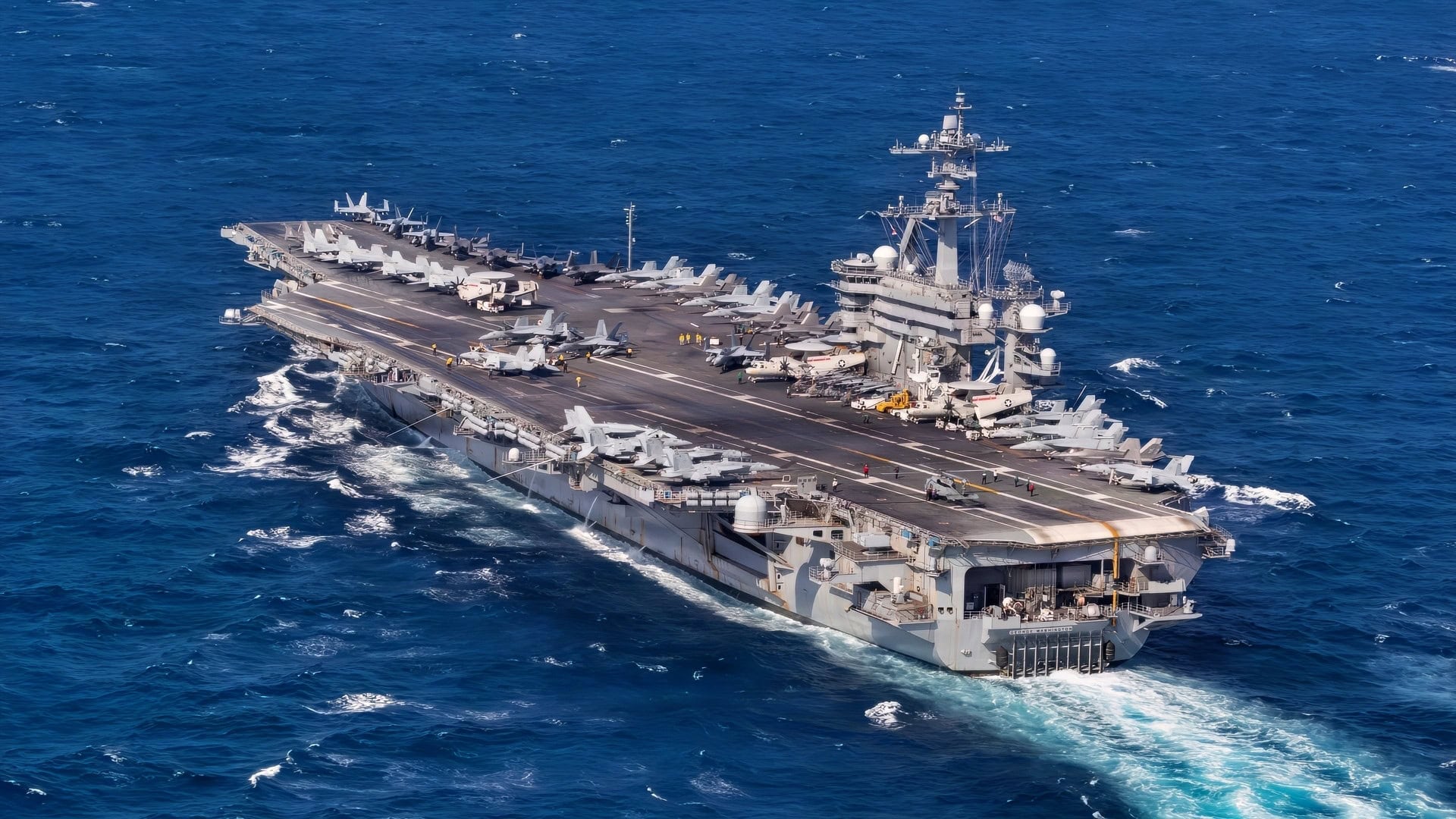
According to numerous reports, an Arleigh Burke-class US Navy (USN) guided-missile destroyer, the USS Benfold (DDG-65), suffered a complete loss of power last month during a deployment in the South China Sea.
The power failure, the Washington Post points out, meant that officers and crew alike were left “without drinkable water, meals, running toilets or air conditioning for four days.”
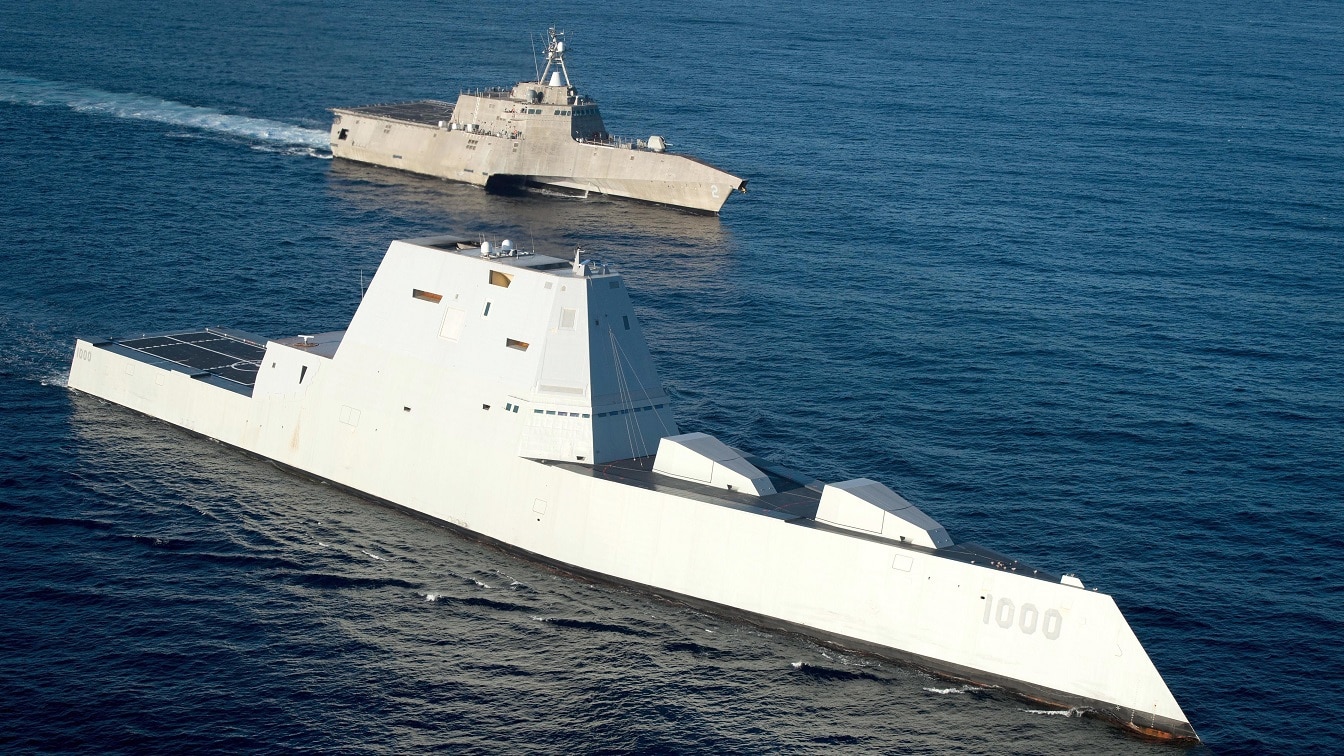
PACIFIC OCEAN (Dec. 8, 2016) The guided-missile destroyer USS Zumwalt (DDG 1000), left, the Navy’s most technologically advanced surface ship, is underway in formation with the littoral combat ship USS Independence (LCS 2) on the final leg of its three-month journey to its new homeport in San Diego. Upon arrival, Zumwalt will begin installation of its combat systems, testing and evaluation, and operation integration with the fleet. (U.S. Navy photo by Petty Officer 1st Class Ace Rheaume/Released)161208-N-SI773-0401
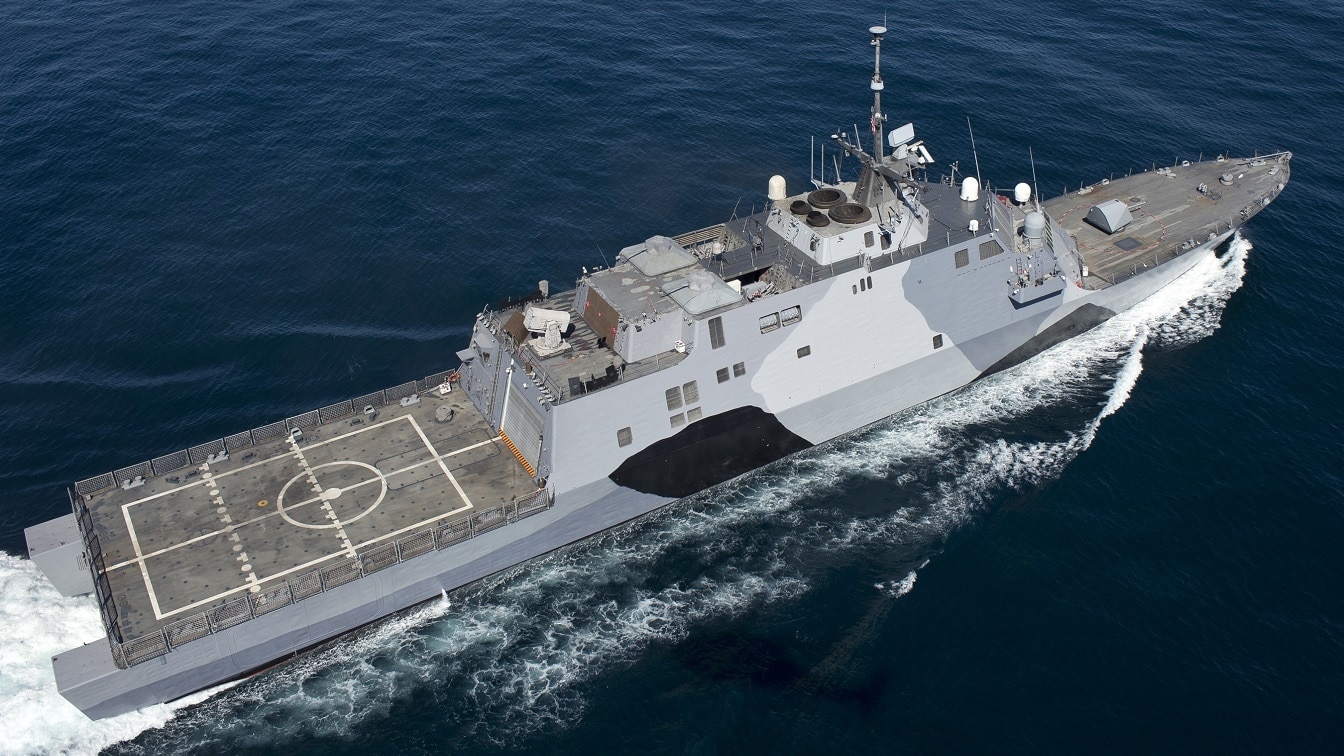
The littoral combat ship USS Freedom (LCS 1) is underway conducting sea trials off the coast of Southern California. Freedom, the lead ship of the Freedom variant of LCS, is expected to deploy to Southeast Asia this spring. (U.S. Navy photo by Mass Communication Specialist 1st Class James R. Evans/Released)
The Benfold was part of a strike group (CSG) supporting the USS George Washington (CVN-73) aircraft carrier at the time when what is described as an “engineering casualty involving its generators” caused the complete loss of on-board power, said the US 7th Fleet spokesman, Cmdr. Matthew Comer. USN officials were also asked why the incident was reported only now, a month later, but they did not respond immediately.
Fortunately for the Benfold’s crew, reports are that other ships in the strike group, namely the cruiser USS Robert Smalls (CG-62), came to the rescue.
While the dead-in-the-water destroyer was being towed to a port facility at Subic Bay in the Philippines for repairs, other vessels were supplying the Benfold with food and water.
Once the ship arrived in port, the crew was provided with contracted housing and meals ashore, again according to Comer’s statement.
The ship’s power was reportedly restored on 30 July, and the Benfold left Subic Bay for Yokosuka, Japan, a week later. It was unclear as of Monday whether it would now join up with the rest of the George Washington Strike Group.
George Washington Carrier Strike Group is scheduled to relieve the Abraham Lincoln CSG in the Middle East. The USS Abraham Lincoln (CVN-72), deployed for 269 days, is heading home. Its return to its home port in San Diego is partly due to increasingly loud complaints from crewmembers’ families over messages they have received about deteriorating conditions aboard the ship.
The Pentagon also reported that the ship had even received a visit from the head of US Central Command (CENTCOM), Adm. Brad Cooper, after numerous reports that crew members were experiencing various problems due to this prolonged deployment.
Decades of Neglect
In the category of “everything is connected to everything else,” the situations aboard these two ships are part of a pattern of distressing situations within the USN, said a now-retired career senior US naval officer.
“If you go back 35 years ago, we had a 600-ship Navy. Now we are going down to about half of that number. That’s the cause of these and other mishaps, breakdowns, and disruptions the service is suffering. And they only get worse from here on in,” he said.
“The oceans did not suddenly become smaller, to begin with. Then, when compared to the early 1990s, we now have a much larger peer competitor in the form of the [Chinese] People’s Liberation Army Navy (PLAN) that is building ships faster than you can count and militarizing the entire South China Sea region by building multiple artificial islands,” he continued.
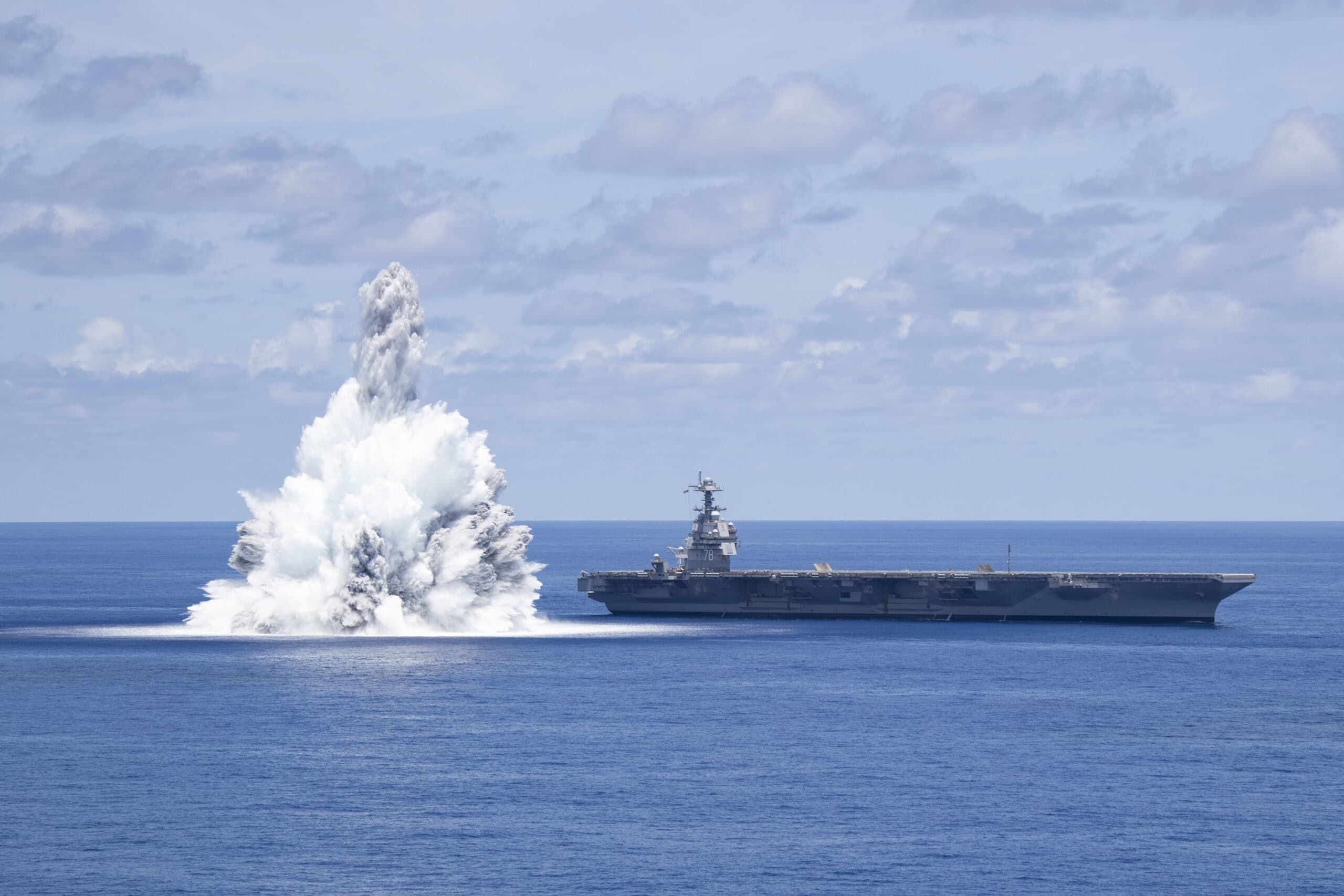
USS Gerald R. Ford (CVN 78) successfully completed the second of three scheduled explosive events for Full Ship Shock Trials (FSST), July 16, 2021. The shock trials are designed to demonstrate the ship’s ability to withstand the effects of nearby underwater explosion and retain required capability. Ford is underway in the Atlantic Ocean for required inspections and preparation for the third FSST explosive event, scheduled for later this month. (U.S. Navy Photo by Mass Communications Specialist Seaman Jackson Adkins)
This strain on the force means ships are spending more time at sea, with longer gaps between port calls or other relief from sea duty.
Both the Lincoln and the Gerald R. Ford carriers have not set post-Vietnam War records for the number of consecutive days at sea.
“When you consider that we used six carriers for Operation Desert Storm [in 1991] and then five carriers more than a decade later for Operation Iraqi Freedom – and then you look at the number of carriers we have now to work with. Well, it does not take a math genius to figure out that we do not have enough of anything: ships, sailors, carrier aircraft, Tomahawk missiles – you name it. Clearly, as is being increasingly reported, the force is overstretched,” he concluded.
The One-Third Rule: The US Navy Can’t Do It All with 100 Ships
Then add that the total number of naval vessels is not the same as the number available for deployment at any one time.
A 300-ship navy operates on a rotational cycle known as the “one-third rule.”
That rule says that on any given day, only one-third of all naval vessels are deployed.
Another one-third are engaged in training activities, and the remaining one-third are in port for maintenance, repairs, and any required modernization.
This equals roughly 100 ships available for all USN worldwide commitments, covering theatres of operation in Europe, the Middle East, and the Indo-Pacific.
As the retired senior naval officer noted, “[P]olicymakers back in Washington expect a global footprint from our Navy, but at the same time we are stretching those 100 available for active-duty ships over a globe that presents ever-expanding regional demands. Expecting our Navy not to suffer catastrophic breakages in the process – to include both people and ships – is a true triumph of hope over experience.”
About the Author: Reuben F. Johnson
Reuben F. Johnson has thirty-six years of experience analyzing and reporting on foreign weapons systems, defense technologies, and international arms export policy. Johnson is the Director of Research at the Casimir Pulaski Foundation. He is also a survivor of the Russian invasion of Ukraine in February 2022. He worked for years in the American defense industry as a foreign technology analyst and later as a consultant for the U.S. Department of Defense, the Departments of the Navy and Air Force, and the governments of the United Kingdom and Australia. In 2022-2023, he won two awards in a row for his defense reporting. He holds a bachelor’s degree from DePauw University and a master’s degree from Miami University in Ohio, specializing in Soviet and Russian studies. He lives in Warsaw.