
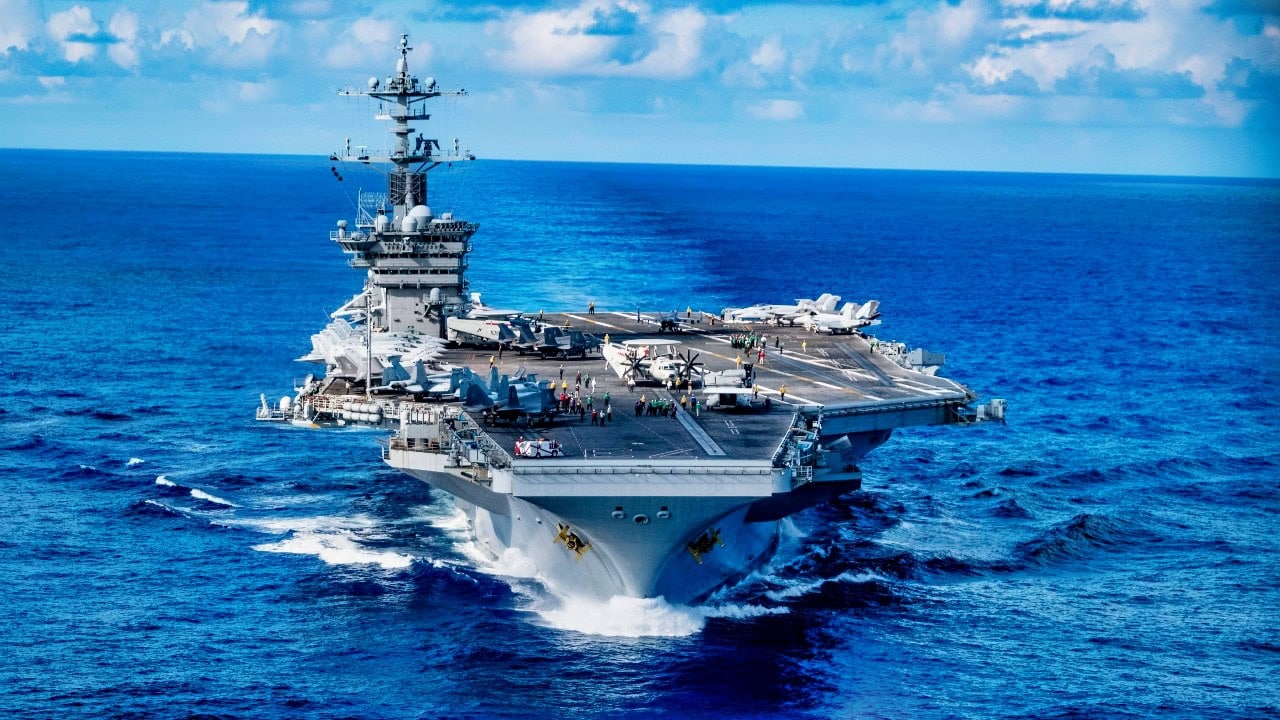
The Navy Blamed Unauthorized Smoking and 90 Gallons of Hidden Oil for a $70 Million Fire on USS George Washington: USS George Washington is a 1,092-foot, roughly 104,000-ton Nimitz-class nuclear aircraft carrier capable of more than 30 knots and operating an air wing of more than 60 aircraft. On May 22, 2008, a ship built for high-tempo combat suffered $70 million in damage from unauthorized smoking beside improperly stored flammable liquids.
The fire started while George Washington was sailing off the Pacific coast of South America toward a new homeport in Japan. Smoke appeared at about 7:50 a.m. as the carrier conducted an underway replenishment with the frigate USS Crommelin. The ships made an emergency breakaway, and George Washington sounded general quarters.
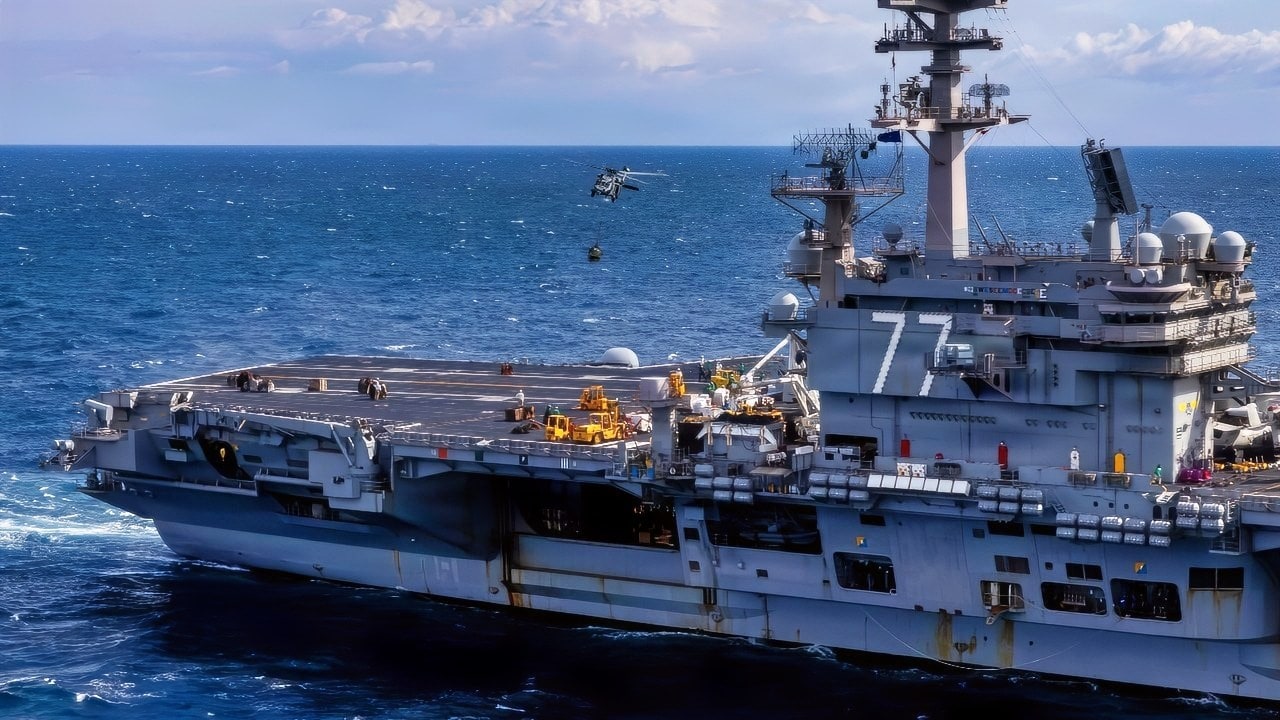
A MH-60S Seahawk helicopter assigned to the “Nightdippers” of Helicopter Sea Combat Squadron (HSC) 5 delivers cargo to the Nimitz-class aircraft carrier USS George H.W. Bush (CVN-77) during a vertical replenishment in the Atlantic Ocean, Feb. 15, 2026. The George H.W. Bush Carrier Strike Group is at sea training as an integrated warfighting team. Composite Training Unit Exercise (COMPTUEX) is the Joint Force’s most complex integrated training event and prepares naval task forces for sustained high-end Joint and combined combat. Integrated naval training provides combatant commanders and America’s civilian leaders highly capable forces that deter adversaries, underpin American security and economic prosperity, and reassure Allies and partners. (U.S. Navy photo by Mass Communication Specialist 2nd Class Mitchell Mason)
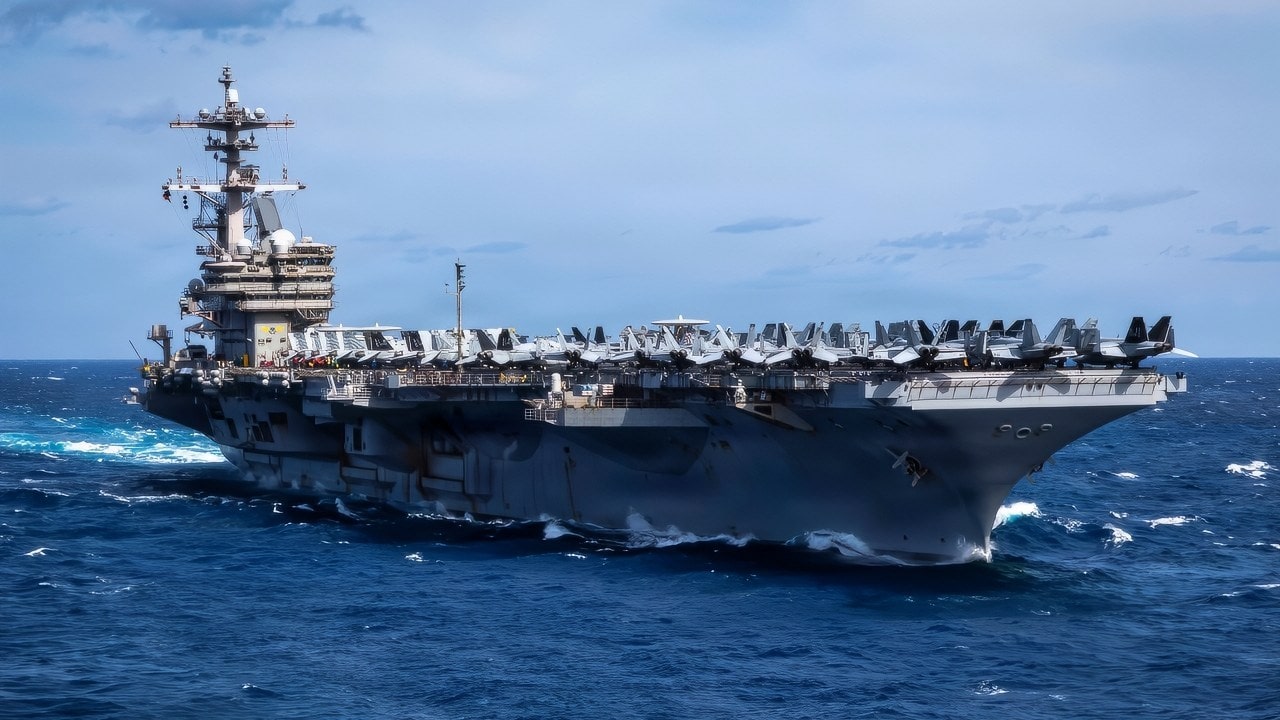
The Nimitz-class aircraft carrier USS George H.W. Bush (CVN 77) transits the Atlantic Ocean, Feb. 15, 2026. The George H.W. Bush Carrier Strike Group is at sea training as an integrated warfighting team. Composite Training Unit Exercise (COMPTUEX) is the Joint Force’s most complex integrated training event and prepares naval task forces for sustained high-end Joint and combined combat. Integrated naval training provides combatant commanders and America’s civilian leaders highly capable forces that deter adversaries, underpin American security and economic prosperity, and reassure Allies and partners. (U.S. Navy photo by Mass Communication Specialist 2nd Class Mitchell Mason)
The crew fought the blaze for about 12 hours. Thirty-seven sailors suffered injuries, including burns and heat stress, but no one died. The propulsion plant remained safe and operational.
Fire, heat, and smoke spread through ventilation ducting and cableways to eight decks and roughly 80 compartments.
Electrical equipment, cables, ventilation systems, and living spaces were damaged.
The final repair estimate reached $70 million.
Aircraft Carrier USS George Washington Was Heading to Japan
George Washington had left Norfolk on April 7, 2008. The carrier sailed around South America because the original Panama Canal locks were too small for a Nimitz-class ship.
Yokosuka would make George Washington the first nuclear-powered American surface warship permanently based outside the United States.
The move carried political weight. Critics in Japan had raised nuclear-safety concerns, and the fire erupted before the carrier reached its new home. George Washington diverted to San Diego and arrived at Naval Air Station North Island on May 27.
Early assessments suggested a limited repair. A closer inspection revealed far more extensive damage.
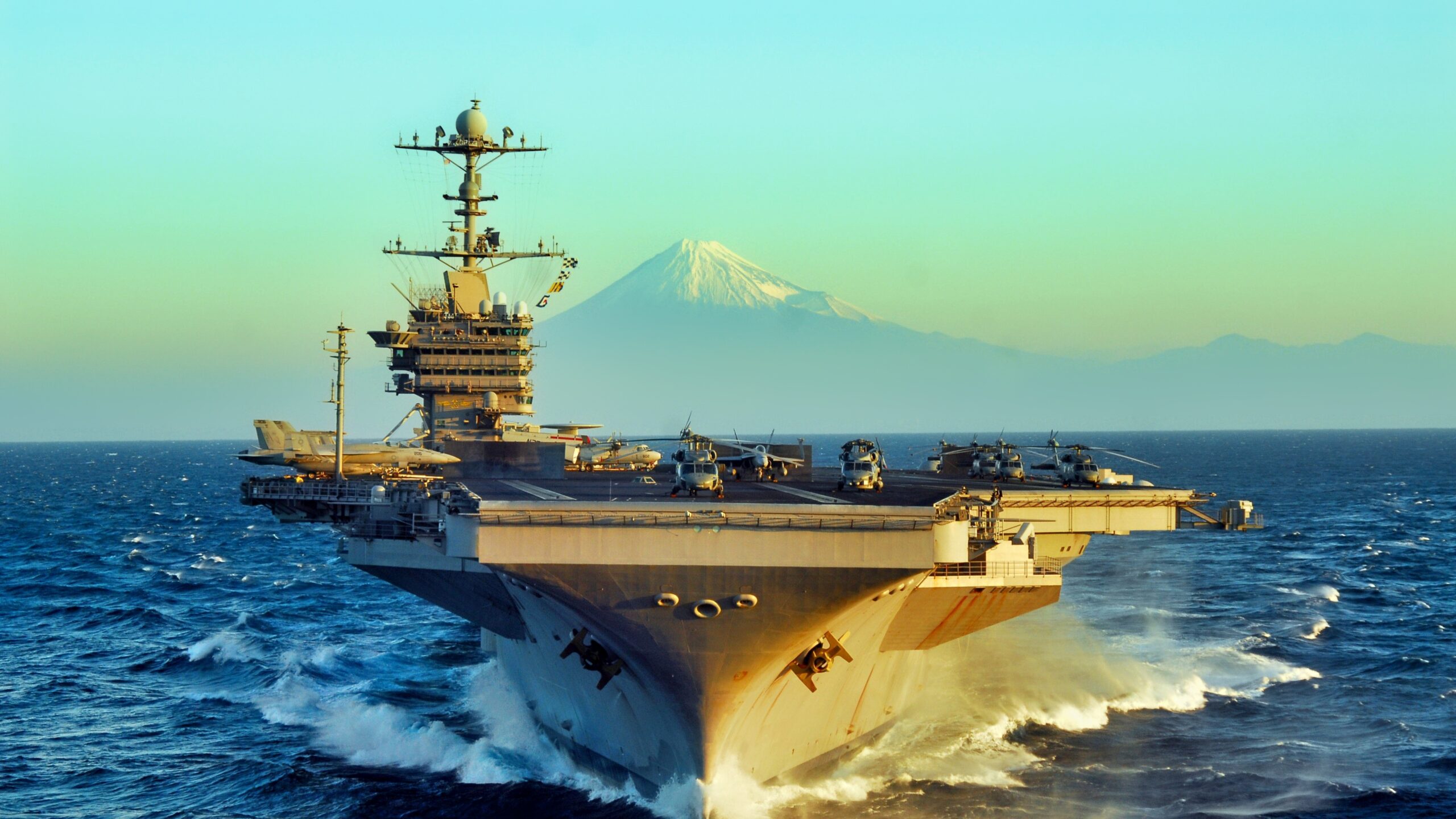
USS George Washington Aircraft Carrier. Image Credit: Creative Commons.
The Flammable Oil Had Already Been Found
The Navy’s investigation placed the likely ignition point in an unmanned uptake space connected to an auxiliary boiler. Unauthorized smoking was the most likely ignition source. The space and adjoining areas contained combustible debris, 90 gallons of refrigerant compressor oil, and 25 gallons of unidentified liquid hazardous waste.
The oil had not gone unnoticed. About a month before the fire, George Washington’s chief engineer found approximately 300 gallons of flammable liquid stored illegally beneath deck plates and ordered its removal.
Personnel failed to place all of it into the ship’s hazardous-material control system. Ninety gallons were instead moved into the uptake space where the fire later began.
The disaster grew from more than one cigarette. Smoking rules were weakly enforced. Hazardous material escaped inventory controls. The compartment was not inspected effectively, and the firefighting diagrams did not fully reflect alterations within the ship.
Ventilation Carried the Fire Through the Aircraft Carrier
The location made the blaze difficult to find and contain. Heat and smoke moved through cableways and ventilation routes, producing a chimney effect through the carrier’s interior. Firefighters chased smoke across several decks and needed nearly eight hours to locate the main seat of the fire.
Damage-control teams entered hot, smoke-filled compartments, rotated exhausted sailors, isolated electrical systems, and rescued trapped shipmates. Their work kept the fire away from the propulsion plant, preventing a fatal disaster.
The response also exposed weaknesses already visible before May 22. George Washington’s damage-control organization had received poor marks during three inspections between June 2007 and April 2008. Investigators identified shortcomings in training, supervision, protective equipment, hazardous-material control and routine oversight.
The Fire Disrupted the Navy’s Pacific Carrier Plan
George Washington remained in San Diego for almost three months. The carrier missed RIMPAC 2008, forcing the retiring USS Kitty Hawk to participate in the multinational exercise near Hawaii. The planned turnover between the two carriers moved to California.
Workers replaced damaged wiring, fiber-optic lines, electrical equipment, ventilation components, and other systems. George Washington left San Diego on August 21 and reached Yokosuka on September 25, months later than originally planned.
The interruption carried a larger warning. A fire below decks has the power to remove a carrier from the fleet as effectively as battle damage. The 1967 USS Forrestal disaster had shown how fuel, ordnance, and failed safeguards turned a small ignition into a mass-casualty event.
The Navy Called the Fire Entirely Preventable
Pacific Fleet commander Adm. Robert Willard described the George Washington fire as entirely preventable. On July 30, the Navy relieved commanding officer Capt. David C. Dykhoff and executive officer Capt. David M. Dober.
Six additional sailors received nonjudicial punishment for hazardous-material violations, negligence, and failure to supervise.
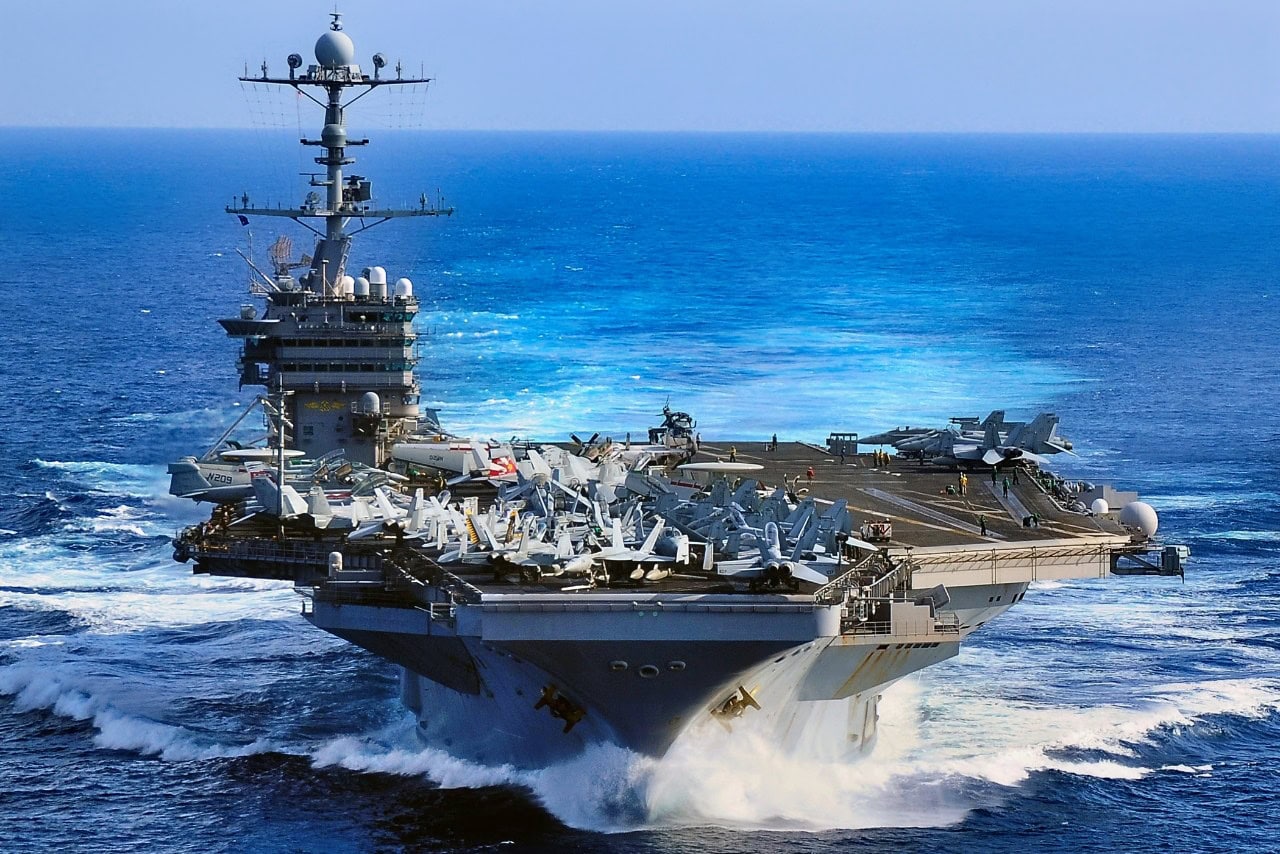
091115-N-6720T-106 PACIFIC OCEAN (Nov. 15, 2009) – USS George Washington (CVN 73) steams through the Pacific Ocean. George Washington, the Navy’s only permanently forward-deployed aircraft carrier, is currently participating in ANNUALEX 21G, a yearly bilateral exercise with the U.S. Navy and the Japan Maritime Self Defense Force. (U.S. Navy photo by Mass Communication Specialist Seaman Adam K. Thomas/RELEASED)
The lesson went beyond smoking in one prohibited compartment.
Aircraft carrier survival depends on ordinary discipline: accurate hazardous-material inventories, clean spaces, frequent inspections, current compartment diagrams, trained repair lockers, and leaders willing to stop unsafe shortcuts.
The Navy later confronted the consequences of weak fire prevention when USS Bonhomme Richard burned for more than four days in 2020 and was written off.
A 2026 fire aboard USS Gerald R. Ford again showed how smoke and heat in support spaces disrupt even the newest carrier.
Naval Safety Command was still using George Washington as a fleetwide warning in 2024. Its hazardous-material guidance repeated the inventory left in the fire space on May 22, 2008: 90 gallons of refrigerant compressor oil and 25 gallons of unidentified liquid hazardous waste.
About the Author: Harry J. Kazianis
Harry J. Kazianis (@Grecianformula) was the former Senior Director of National Security Affairs at the Center for the National Interest (CFTNI), a foreign policy think tank founded by Richard Nixon based in Washington, DC. Harry has over a decade of experience in think tanks and national security publishing. His ideas have been published in the NY Times, The Washington Post, The Wall Street Journal, CNN, and many other outlets worldwide. He has held positions at CSIS, the Heritage Foundation, the University of Nottingham, and several other institutions related to national security research and studies. He is the former Executive Editor of the National Interest and the Diplomat. He holds a Master’s degree focusing on international affairs from Harvard University.

