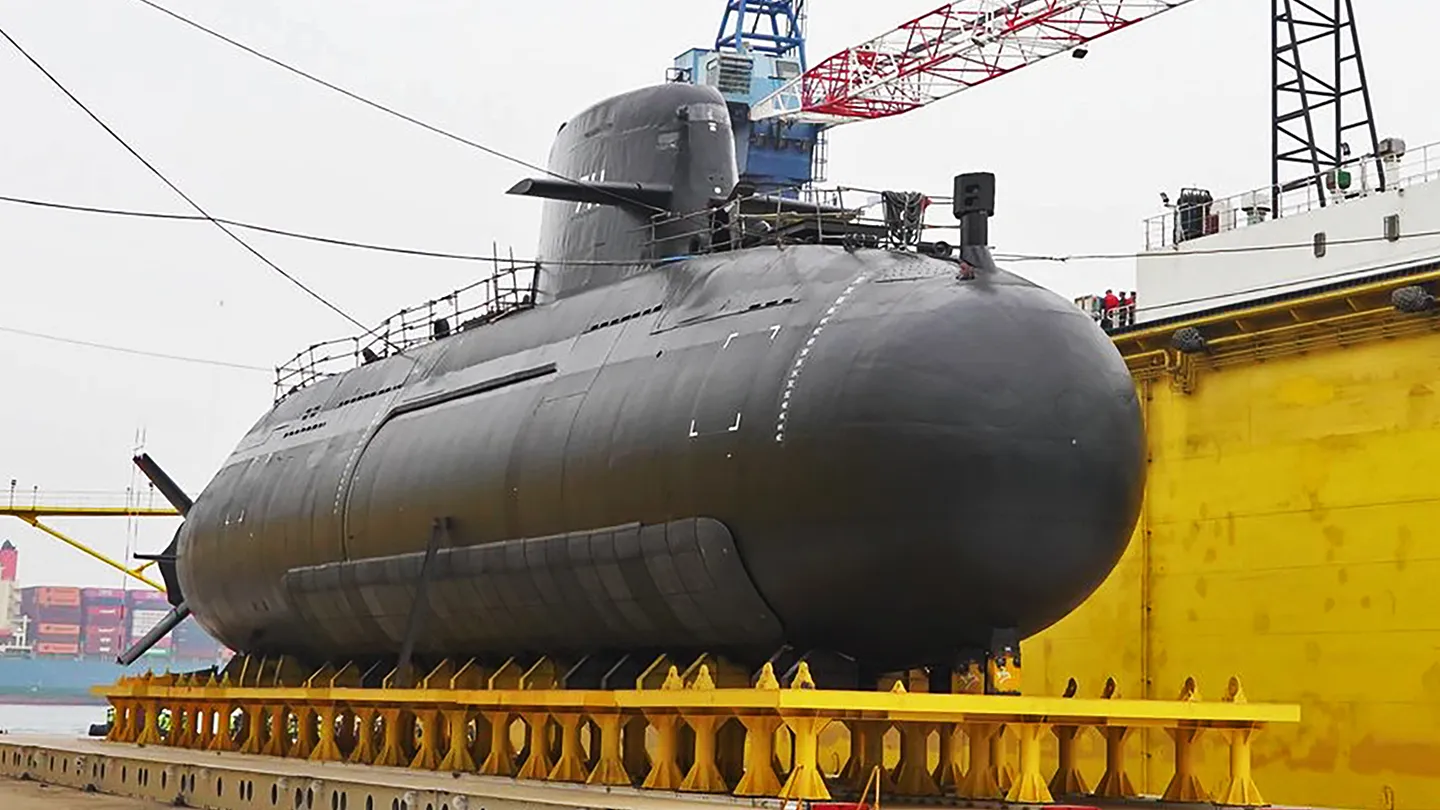
On September 28, 2023, the Republic of China Navy (ROCN) held the launch ceremony for the first indigenously built attack submarine in Taiwanese history: the Hai Kun-class.
The Hai Kun-class is designed to bolster the ROCN’s fledgling submarine fleet and deter any potential Chinese naval blockade.
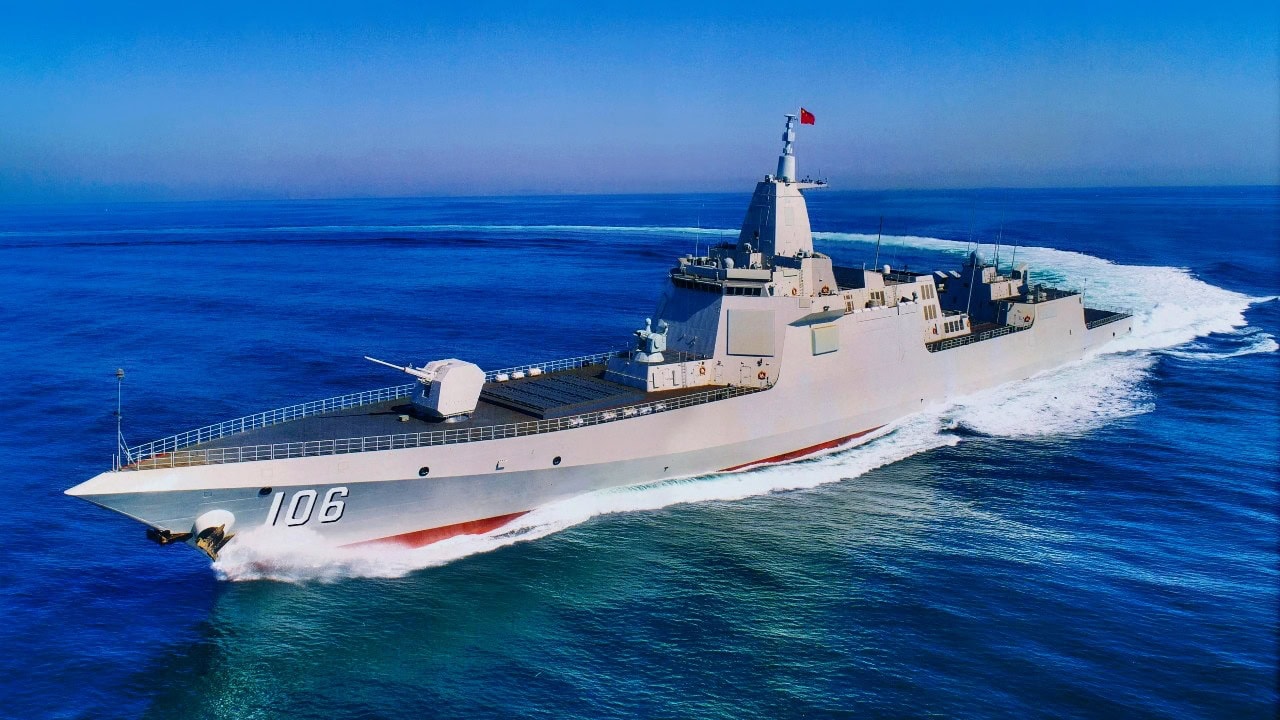
Type 055 Destroyer from China. Chinese Navy Handout/State Media.
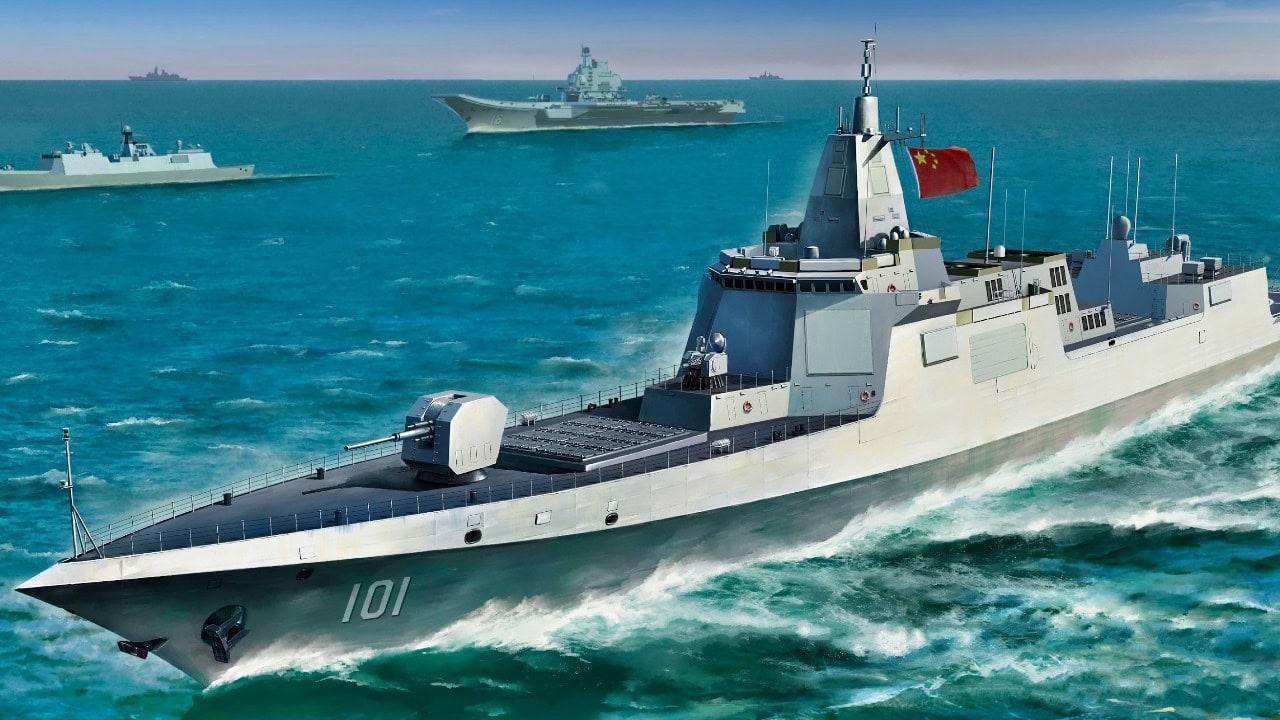
Chinese Navy Warship Created by Artist. Image Credit: Creative Commons.
For a first domestic submarine program, the class is competently designed, even if it is currently missing a few essential features.
The lead ship, Hai Kun (SS-711), is currently undergoing sea trials and is expected to be delivered to the ROCN either by the end of the year or in early 2027.
In the future, Taiwan hopes to field a fleet of eight Hai Kun-class submarines.
Development on the Hai Kun-class
The Hai Kun-class was developed under the Indigenous Defense Submarine (IDS) program. Since the early 2000s, the ROCN has sought to bolster its undersea fleet, especially as the PLAN expands its submarine fleet at breakneck speed.
The Taiwanese Navy currently operates four submarines: two modified Dutch Zwaardvis-class ships, originally designed in the 1970s, and two older American GUPPY-class submarines built during WWII.
Needless to say, it was well past time to modernize the fleet.
The problem, however, was that the U.S., one of Taiwan’s foremost defense partners, stopped manufacturing diesel-electric submarines back in the 1950s in favor of nuclear-powered ships.
Purchasing nuclear submarines from the U.S. was ruled out for several reasons. The U.S. typically does not export nuclear technology to non-nuclear allies, like Taiwan.
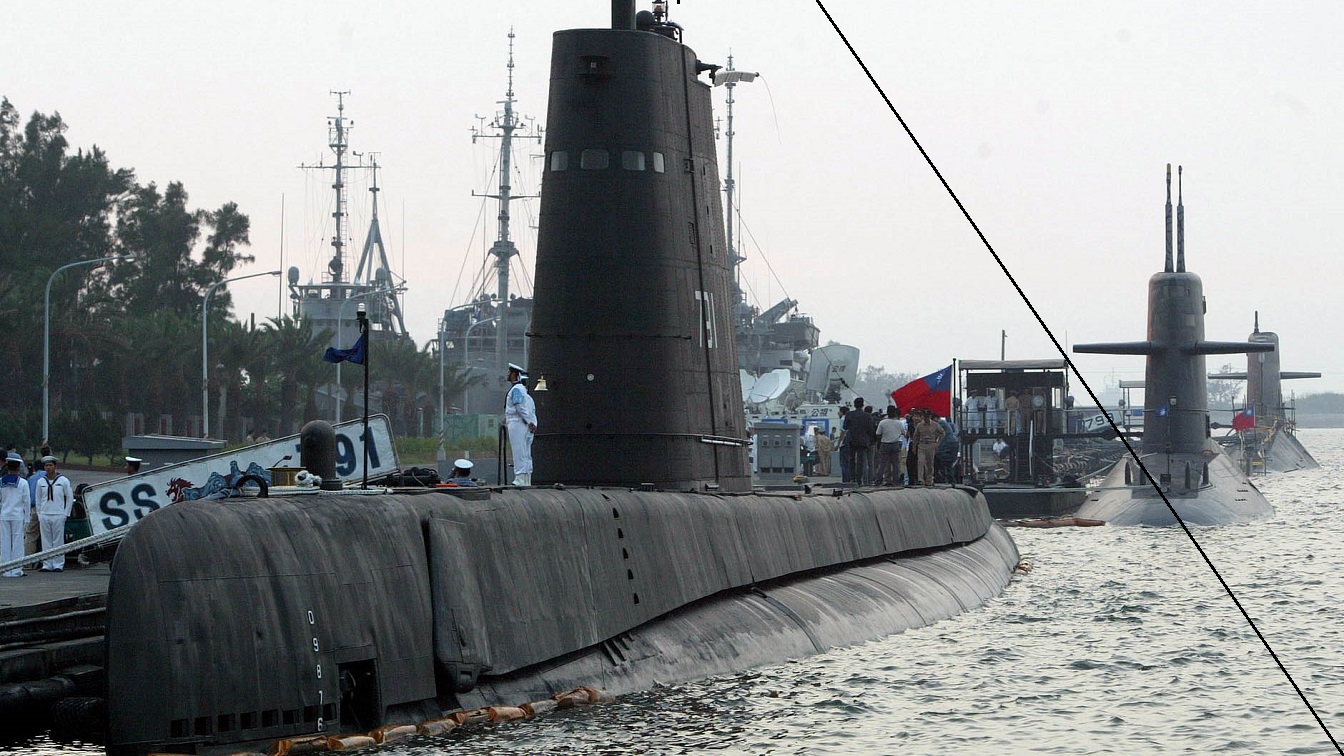
Hai Shih-class submarines from Taiwan. Image Credit: Creative Commons.
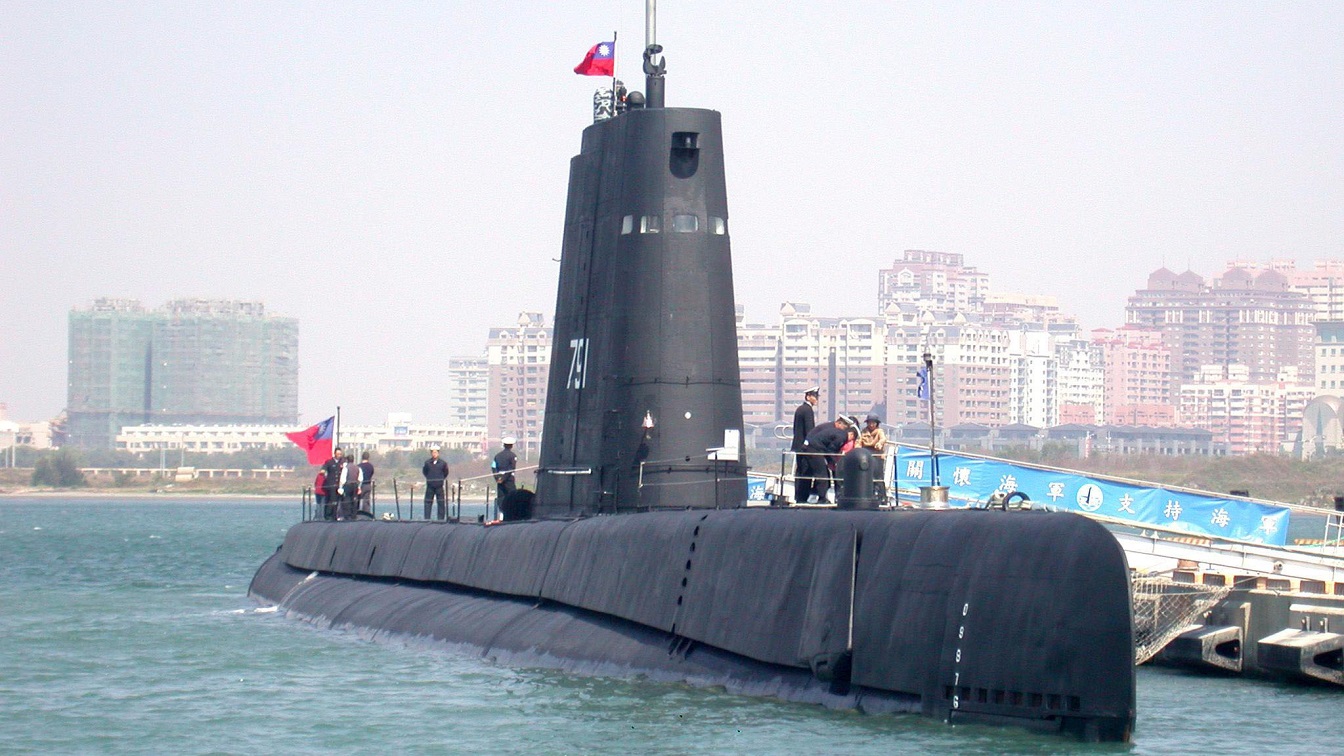
Taiwan’s World War II-era Submarines. Image Credit: ROC Navy.
Additionally, both Washington and Taiwan feared that acquiring nuclear submarines would provoke Communist China. With no foreign options available, the ROCN opted to pursue a domestically produced alternative.
In 2014, the Taiwanese Ministry of National Defense announced that Taiwan would build its own attack submarine with help from the U.S. The IDS program was officially established in 2016, under the codename Hai Chang.
The ROCN considered multiple foreign designs as the basis for the IDS, including proposals from India and Japan. In 2018, the U.S., under Trump, approved a technology transfer to Taiwan, enabling it to build its own submarines.
The move was somewhat controversial, as Trump was considering enacting heavy tariffs against China at the time.
Beijing interpreted the decision to provide submarine technology along with the tariffs as hostile and provocative on Washington’s part.
Nevertheless, the technology transfer was approved, and Taiwan announced that it intended to build eight new attack submarines domestically.
What We Know About the Hai Kun-class
When the Hai Kun-class design was first unveiled, many initially suspected it was heavily influenced by Japanese submarines.
Upon closer inspection, however, the new class shares a lot in common with the Dutch Zwaardvis-class.
This makes sense, as the Zwaardvis (Hai Lung-class in RCON service) is currently active in Taiwan.
The Hai Kun-class uses a similar hybrid double-single hull construction to its Dutch counterpart.
However, the hull design is more refined than the Zwaardvis, and its rudder layout is changed from a traditional cruciform shape to an X-style layout, similar to the Japanese Sōryū-class.
The outer hull, as many have noted, lacks anechoic tiles, which are commonplace on modern stealth submarines.
The Kai Kun-class appears to have a surfaced displacement of around 2,500 tons and a top speed of 18 knots when submerged.
They are estimated to be roughly 70 meters (229 feet) long. Most of the ship’s specs are still highly classified.
A diesel-electric powerplant conventionally powers the class and does not use air-independent propulsion (AIP) technology.
However, some reports say the ship may use lithium-ion battery technology. Lithium-ion batteries store more energy than traditional lead-acid batteries and allow conventional submarines to travel faster in silent mode.
The Japanese Navy recently shifted towards lithium-ion batteries in its attack submarines in favor of AIP, so lacking AIP is not as much of a deal-breaker as some might make it out to be.
The Hai Kun-class is armed with six 533mm torpedo tubes.
The ship is armed with Mk 48 Mod 6 AT heavyweight torpedoes along with submarine-launched Harpoon anti-ship missiles.
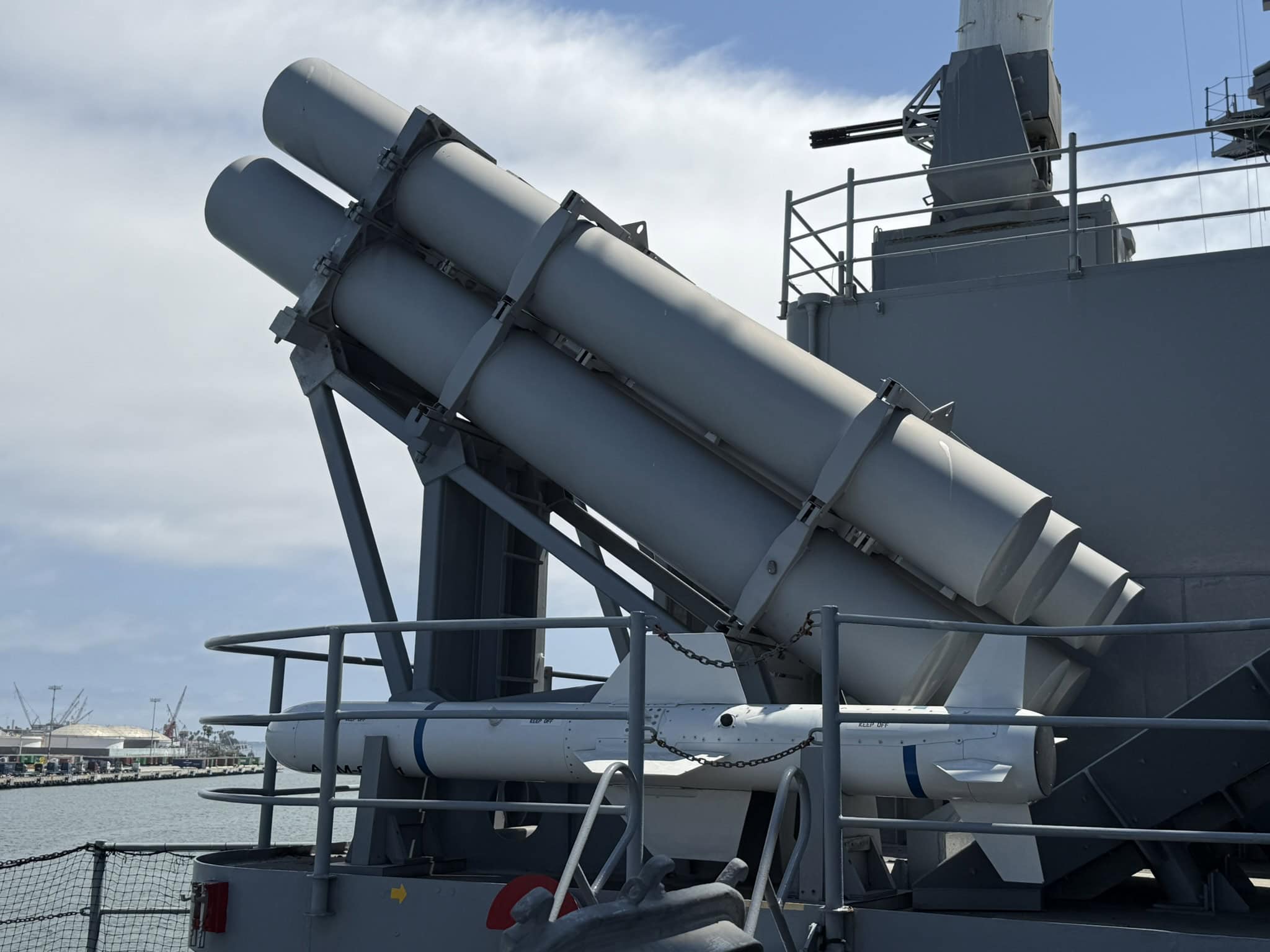
USS Iowa Harpoon Missiles. Photo Credit: 19FortyFive
The class is also reportedly equipped with American-made combat systems. The ship likely also sports bow and flank array sonars, though no information is available about its sensors or electronics.
In Two Words: ‘Less Advanced’
The Hai Kun-class is a capable design, though it is noticeably less advanced than many contemporary designs, especially China’s Yuan-class.
However, for a first domestic submarine program, the Hai Kun-class is competently designed, even if it lacks some features.
That said, the program has experienced multiple delays during construction and sea trials.
Hai Kun was originally scheduled for delivery in November 2025 and then pushed back to June 2026, but for one reason or another, both deadlines were missed.
Even if the Hai Kun-class’s bottlenecks are resolved, the ships face the herculean task of defending Taiwan’s coastal waters against the vast PLAN.
China currently operates around 60-70 submarines—though the real number may be even higher—the majority of which are attack submarines, both nuclear and conventional.
China’s newer submarines, including the improved Yuan- and Shang-class submarines, are likely much quieter than the Hai Kun-class and are much more capable overall.
While the Hai Kun is certainly an improvement over previous submarines, Taiwan’s submarine forces still have a lot of catching up to do if it hopes to deter the PLAN.
About the Author: Isaac Seitz
Isaac Seitz, a Defense Columnist, graduated from Patrick Henry College’s Strategic Intelligence and National Security program. He has also studied Russian at Middlebury Language Schools and has worked as an intelligence Analyst in the private sector.